
Reviewed · SEINE RIVER CRUISES
Bateaux Mouches Sightseeing Cruise on the Seine River in Paris
Seine views without metro stress. This 70-minute Bateaux Mouches cruise gives you big, recognizable Paris in one ride, with views like Notre-Dame, the Louvre, and the Eiffel Tower rising straight from the riverbanks. I especially like the water-level perspective, because you miss fewer details than you would from a bus or cramped sidewalk. I also like the schedule, with departures running throughout the day and evening, so you can match the light and avoid some peak-walk chaos.
The main tradeoff is simple: sound and weather. If you choose the roof or outside seating, it can be cold in winter, and the narration can be hard to catch when it is noisy onboard or when you are sitting in the wrong zone for speakers.
In This Review
- Key things to know before you go
- Why this Seine cruise is one of the easiest Paris introductions
- Getting started at Port de la Conférence, and what to expect at check-in
- Choose your deck: photos, comfort, and why sound can vary
- Place de la Concorde and the Louvre zone, Paris at its most theatrical
- Hôtel de Ville and the Conciergerie, where civic Paris turns revolutionary
- Île de la Cité and Sainte-Chapelle, from ancient settlement to Gothic brilliance
- Île Saint-Louis houses and Pont Neuf, classic Paris angles that reward slow looking
- Musée d’Orsay area, Les Invalides, and how the cruise turns museums into landmarks
- Eiffel Tower timing: best light, best photos, and the sparkle moment
- Food and drinks onboard, and how to avoid feeling nicked at the end
- Crowds, wait times, and how to make boarding smoother
- Who should book this Seine cruise, and who might want a different plan
- Should you book Bateaux Mouches? My take
Key things to know before you go
- Flexible departure times: multiple sailings daily from late morning into the evening, every 30 to 45 minutes.
- Board when you want: you do not have to lock into one exact time slot.
- Two decks, two experiences: inside for comfort, roof top/outside for photos and skyline angles.
- Real “see it all” pacing: the route is built as a fast highlights sweep through Paris’s historic core.
- What you can buy matters: snacks and drinks exist, but they cost extra, and there is no WiFi onboard.
- Expect crowds near boarding: lines can get long, especially around popular hours.
Why this Seine cruise is one of the easiest Paris introductions
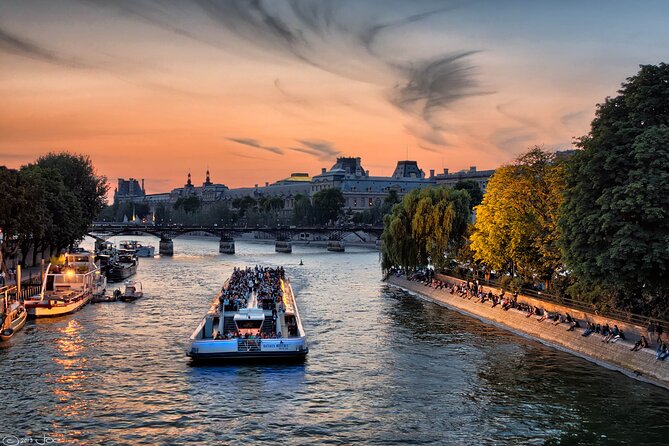
If your first day in Paris feels like a blur of streets, crosswalks, and long lines, this cruise is a clean reset. You get a moving viewpoint that stays steady while the city slides by. That means fewer stairs, fewer waits, and less time trying to spot landmarks from street level.
You also get a smart “map in motion.” From the water, the distance between neighborhoods becomes obvious, and you start to understand why locals and visitors crowd certain bridges and quays. It is the kind of tour that helps you plan the rest of your time without forcing you into a full-day walking marathon.
One more thing I like: this is not a long, complicated itinerary. It is about a short, focused sweep through the most recognizable sights along the Seine, from grand royal squares and palaces to revolution-era reminders and major museum façades.
More boats on the Seine, briefly compared
Getting started at Port de la Conférence, and what to expect at check-in
The experience starts and ends back at Port de la Conférence (75008 Paris). The good news is that this is not an obscure location. It is described as being near public transportation, which matters because Paris traffic and parking can be unpredictable.
Before you board, plan for a short reality check. This is a popular cruise, and boarding can be busy at prime times. Some people run into voucher exchange lines or need an extra step at a ticket desk. The practical move is to arrive with a buffer, not right at the final minute.
Also know what you are choosing: seating is free and you do not reserve specific seats. That can be great if you like browsing for the best view once you are onboard, but it can also mean you end up with your preferred spot only if you board early.
Choose your deck: photos, comfort, and why sound can vary
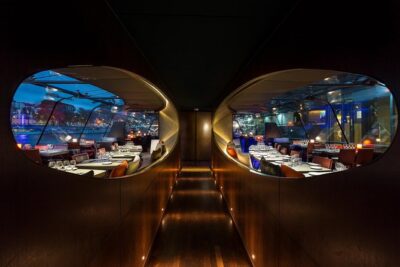
Bateaux Mouches uses two decks: an inside level with air conditioning and a roof top option for open-air views. This is a big deal, because your comfort and your photo angles change instantly based on where you sit.
Here is how I think about the tradeoff:
- Inside deck is where you go when it is cold, windy, or you want a more comfortable ride while listening.
- Roof top/outside is where you go for skyline shots, especially around famous façades and bridges.
Now the part to take seriously: narration. The tour includes guided commentary available in English, and there is audio narration onboard. Still, some riders report that it can be difficult to hear in certain areas, particularly outside or when the boat is loud. If hearing details matters most to you, lean toward the inside deck.
Place de la Concorde and the Louvre zone, Paris at its most theatrical
The cruise starts by passing Place de la Concorde, a royal square designed by architect Gabriel in the 18th century. This is one of those places where the setting looks grand, but the past is grim. In 1792, it was the site of a guillotine where thousands were executed. Later, King Louis Philippe installed an obelisk here in 1836, a gift from Egypt. From the river, it feels like you are sliding past a “stage set” that contains both celebration and consequence.
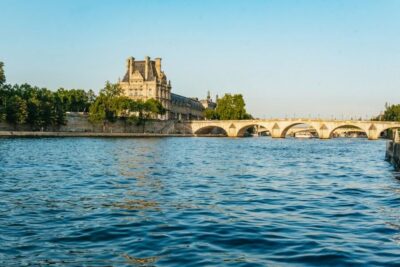
Next comes the Louvre area, where the museum is approached not as a single building but as a whole cultural wall of art and power. The route includes the famous entry approach featuring the glass pyramid designed by architect Ieoh Ming Pei, a modern line that sharply contrasts with the older architecture around it. This is a great moment to look up and notice the way the museum complex dominates the skyline, even when you are still traveling.
Value tip: treat this portion as your “orientation Louvre.” You will not see every wing, but you will see the scale and the river alignment. Later, when you walk the streets, you will recognize what you missed and what you want to revisit.
Hôtel de Ville and the Conciergerie, where civic Paris turns revolutionary
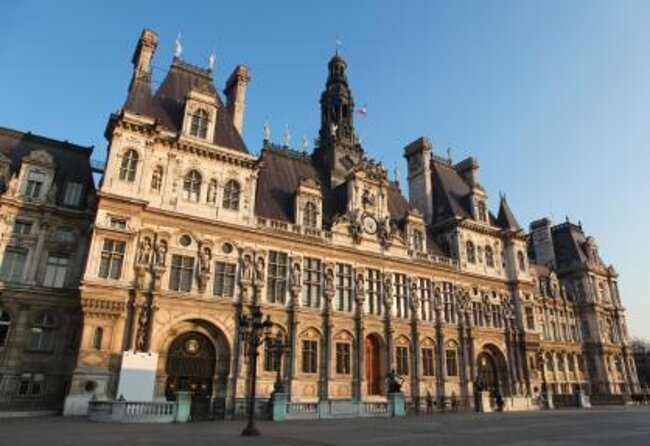
As you continue, the boat tracks along Hôtel de Ville, Paris City Hall. The current building is in a neo-renaissance style and was rebuilt in the 19th century after it burned during the Commune rule in 1871. It is one of those façades that looks polished and official, but it sits on top of a period that was anything but smooth.
Just beyond that story, you pass the Conciergerie, which became a prison during the French Revolution. Even without stepping inside, it is powerful to see how places with real political stakes still shape the river view. It is a reminder that Paris is not only museums and postcards. It is also dates, decisions, and consequences.
If you like history with visuals, this middle segment is a strong reason to do the cruise. You get a “then and now” feeling at eye level, not buried in a guidebook page.
Île de la Cité and Sainte-Chapelle, from ancient settlement to Gothic brilliance
The route then moves into Île de la Cité, often described as the cradle of Paris. Here, the earliest inhabitants, the Parisii, settled in the 3rd century BC. From the water, you can sense why this spot became central. It is a natural geographic anchor, and it is where power and culture keep reappearing over time.
The boat continues past Sainte-Chapelle, known for its Gothic architecture. Construction began in 1163 and wasn’t completed until 1350. It is the kind of landmark that feels like it belongs in a story, and Victor Hugo referenced it in The Hunchback of Notre-Dame. That literary link is useful because it helps you picture the building’s emotional tone, not just its style.
Practical tip: this is a great area to switch camera modes. Wide angle helps with the overall façade feeling, while close shots are easier from steadier river sightlines. If you are outside, watch for wind off the water around bridges.
More Paris hours afloat
- Paris: Evening River Cruise with Music
★ 4.4 · 22,721 reviews - Paris: Louvre Guided Tour with Reserved Access & Boat Cruise
★ 4.3 · 16,353 reviews - Paris: Big Bus Hop-On Hop-Off Tour with Optional Cruise
★ 4.4 · 13,279 reviews - Paris: Tootbus Hop-on Hop-off with optional river cruise
★ 4.3 · 11,924 reviews - Paris: Louvre Museum Entry Ticket With Host and River Cruise
★ 4.6 · 9,926 reviews
Île Saint-Louis houses and Pont Neuf, classic Paris angles that reward slow looking
Next, you pass Île Saint-Louis, formerly known as île aux vaches (cow’s island). Today it is famous for some of the nicest 16th and 17th century houses along the Seine, many associated with architect Le Vau. This is a calmer-feeling stretch than some of the biggest monument zones. The river view here is more intimate, with rooftops and historic street outlines stacking nicely against the water.
Then you reach Pont Neuf, the oldest stone bridge in Paris, opened in 1606. At the center you can spot the equestrian statue of King Henri IV, nicknamed Vert Galant, linked to his reputation for many female conquests. From the water, the bridge becomes more than a crossing. It becomes a reference point, a “spine” the city turns around.
If you want to walk later, take note of the bridge location. This is the kind of sight that makes you want to get off the boat and explore on foot.
Musée d’Orsay area, Les Invalides, and how the cruise turns museums into landmarks
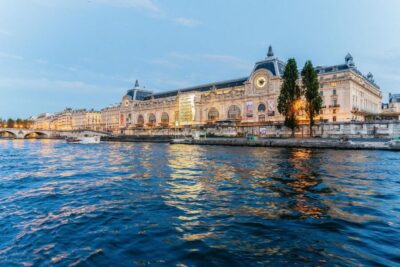
The cruise passes the site of the Musée d’Orsay, which began as a strong architectural structure in 1900, originally designed like a railway station. Today it is a museum, including major Impressionist works. Even if you do not plan to go inside, seeing the building from the river helps you understand why this museum is such a destination. It has a strong sense of arrival.
After that, you pass the Musée de l’Armée at Les Invalides. The building’s dome is adorned with fine gold, and it was originally built as a hospital for war wounded under Louis XIV. It is now home to the tomb of Napoleon I and the military museum. This is another moment where you can see how the same location can shift meaning over centuries, from care and recovery to commemoration and education.
One value angle: these segments help you decide what to prioritize later. If you look at the river and think, I want to explore that building, you have a short list for the rest of your trip.
Eiffel Tower timing: best light, best photos, and the sparkle moment
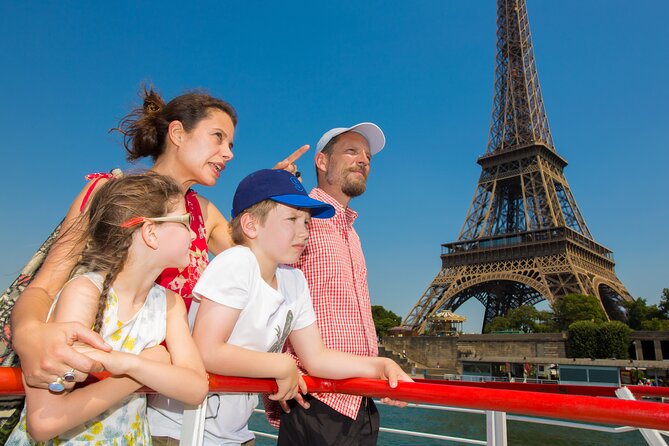
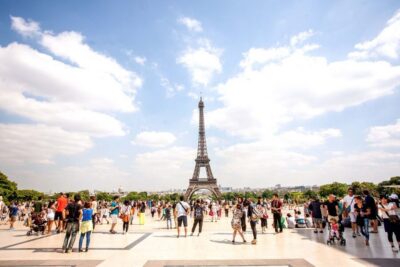
Finally comes the big payoff. You get views of the Eiffel Tower, nicknamed the Iron Lady and designed by engineer Gustave Eiffel for the 1889 World Exhibition. The tower is 324 meters high and weighs about 10,000 tonnes. Even from the river, it hits with scale you cannot fully capture from a distance on the street.
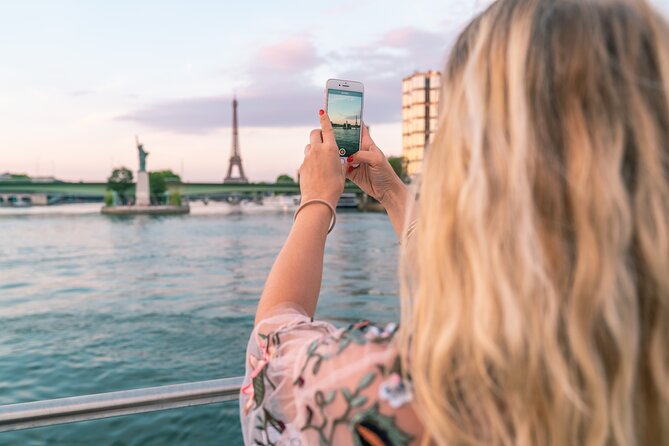
This is also where timing matters. If you pick a departure close to sunset or into evening, you can catch the tower glowing as the city darkens. Several people specifically mention enjoying the lights and the feel of the tower as day turns to night.
Cold check: if you plan to watch from the roof top, dress for wind coming off the water. The river can feel colder than you expect, especially around evening.
Food and drinks onboard, and how to avoid feeling nicked at the end
This cruise includes basics like snacks, soft drinks, and tea or coffee available for purchase, but nothing is listed as fully included beyond the ride. You should expect extra costs for most food and drinks.
Practical approach:
- If you want coffee or hot tea, assume it is extra cost.
- If you want a snack, plan to buy it at the quick food outlet before boarding area or onboard, since it is available for purchase.
- No WiFi onboard, so download anything you need before you leave.
A small caution from experience patterns: some people get frustrated by pricing for water and other simple items. I would bring your own water if you prefer, or at least be mentally ready that onboard purchases are convenience-priced.
Crowds, wait times, and how to make boarding smoother
The cruise is capped at up to 1,000 travelers, which is a helpful number to know when you are imagining how packed the boat can get. And yes, boarding can feel like a mini event, with lines forming at popular times.
From what I see in how these cruises run, your best odds come from arriving earlier in your window and choosing a less chaotic time if your schedule allows. If you are traveling at a busy holiday hour or around sunset, expect pushy boarding energy.
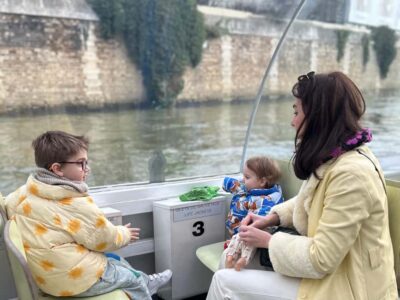
If you are with kids or just want an easier ride, the inside deck can help because it tends to feel more controlled. If you are focused on photos, earlier boarding also helps you secure a better vantage point without constantly weaving around people.
Who should book this Seine cruise, and who might want a different plan
This is ideal for you if you want:
- A fast overview of Paris’s main river landmarks without walking all day.
- A stress-light activity for your first evening, especially when you want to see the Eiffel Tower lit up.
- A family-friendly option, since it is suitable for guests of all ages and includes a restroom onboard.
It might be less ideal if you:
- Care most about deep, detailed listening from the outside deck. Audio can be hard to hear depending on where you sit and how loud the boat gets.
- Are extremely sensitive to cold. The roof top option can be chilly, even when the city itself feels fine earlier in the day.
- Get annoyed by lines and extra steps at ticket exchange. Some departures can be crowded at the quay.
Should you book Bateaux Mouches? My take
Yes, you should book this if your top goal is a short, high-impact view of Paris’s most famous sights from the water. The value is strong when you treat it like an orientation tool: you will walk smarter afterward because you have already seen how the landmarks line up along the Seine.
I would book it especially if you can choose an evening or sunset departure. That is when the Eiffel Tower moment feels most cinematic. If your priority is comfort and listening, you will likely prefer the inside deck, where it is easier to hear the narration.
If you only want one Paris “activity,” and you are balancing time, energy, and weather, this cruise is a solid pick. Just plan for crowds at boarding, bring a warm layer if you will go outside, and set your expectations around onboard snacks and the audio in open-air areas.
More Paris Hours Afloat
- Paris: Evening River Cruise with Music
★ 4.4 · 22,721 reviews - Paris: Louvre Guided Tour with Reserved Access & Boat Cruise
★ 4.3 · 16,353 reviews - Paris: Big Bus Hop-On Hop-Off Tour with Optional Cruise
★ 4.4 · 13,279 reviews - Paris: Tootbus Hop-on Hop-off with optional river cruise
★ 4.3 · 11,924 reviews - Paris: Seine Cruise & Crepe Tasting near the Eiffel Tower
★ 4.4 · 11,231 reviews
The Whole Paris Shelf
- Paris: Louvre Museum Timed-Entrance Ticket
★ 4.6 · 71,977 reviews - Disneyland® Paris 1-Day Ticket
★ 4.6 · 49,412 reviews - Paris: Versailles Palace and Gardens Full Access Ticket
★ 4.6 · 41,579 reviews - Paris: Evening River Cruise with Music
★ 4.4 · 22,721 reviews - Paris: Eiffel Tower Entry Ticket with Optional Summit Access
★ 4.4 · 20,035 reviews
Still on the Seine
- Paris: Seine Cruise & Crepe Tasting near the Eiffel Tower
★ 4.4 · 11,231 reviews - Paris: Seine River Panoramic Views Dinner Cruise
★ 4.3 · 10,611 reviews - Paris: Eiffel Tower Access by Elevator & Seine River Cruise
★ 4.6 · 7,329 reviews - Paris: 3-Course-Dinner Cruise on the Seine with live music
★ 4.7 · 7,248 reviews - Bateaux Parisiens Seine River Gourmet Dinner & Sightseeing Cruise
★ 4.5 · 6,930 reviews
The rest of the Paris write-ups
- Montmartre: Guided Tour for Kids and Families★ 4.9 · 57 reviews
- From Paris: Versailles Palace and Gardens Guided Day Trip★ 4.5 · 57 reviews
- Versailles Palace and Garden Tour with Paris Private Transfers★ 5.0 · 58 reviews
- Louvre Evening Escape – Avoid The Crowds! Semi-Private 6ppl Max★ 5.0 · 58 reviews
- Summit Eiffel Tower Audio Guide Tour with Unlimited Time Access★ 4.5 · 58 reviews
- Private Half Day Historic Tour★ 5.0 · 58 reviews
Seine River Cruises, in full.
 ★ 4.4Paris: Seine Cruise & Crepe Tasting near the Eiffel TowerFrom $2311,231 reviews
 ★ 4.3Paris: Seine River Panoramic Views Dinner CruiseFrom $6410,611 reviews
 ★ 4.6Paris: Eiffel Tower Access by Elevator & Seine River CruiseFrom $797,329 reviews
 ★ 4.7Paris: 3-Course-Dinner Cruise on the Seine with live musicFrom $1357,248 reviews
 ★ 4.5Bateaux Parisiens Seine River Gourmet Dinner & Sightseeing CruiseFrom $1506,930 reviews
 ★ 4.4Paris: Hop-On Hop-Off Seine Cruise Pass with 9 StopsFrom $275,645 reviews
 ★ 4.2Paris: Seine River Bistronomic Dinner CruiseFrom $695,272 reviews
 ★ 4.3Paris : 3-Course Gourmet Dinner Cruise on Seine RiverFrom $1005,205 reviews
Also on these France lists