
Reviewed · D-DAY LANDING BEACHES TOURS
D-Day Beaches Shore Excursion from Le Havre with Packed Lunch
Rangers and wreckage, in one long day. This Le Havre shore excursion strings together Pointe du Hoc, Omaha Beach, and two major cemeteries, timed so you do not miss your ship.
I like two things a lot: the cruise-schedule pickup and return and the fact that lunch is handled for you with a homemade baguette packed meal. The only drawback is that it is a full 10-hour day with some walking, so pack sturdy shoes and do not plan on it being effortless.
In This Review
- Key things you should know before you go
- A cruise-friendly D-Day day from Le Havre
- Le Havre to Normandy: why the route starts with logistics
- La Cambe German War Cemetery: respect with a different viewpoint
- Pointe du Hoc: where the Rangers climbed, and what you can still see
- Omaha Beach: walk the sand, then eat like a local
- Lunch at Omaha: baguette, water, and a small dessert
- Normandy American Cemetery at Colleville-sur-Mer: where names do the work
- Timing, transport, and what a 10-hour pace really means
- Price and value at about $119.72 per person
- Who this tour is best for, and who should think twice
- Should you book this Le Havre D-Day shore excursion?
- FAQ
- Where do I meet for the tour in Le Havre?
- How long is the D-Day shore excursion?
- What lunch is included?
- Is admission included for the stops?
- Is the tour suitable if I am moderately fit?
- What language is the tour offered in?
- What is the cancellation rule if my plans change?
Key things you should know before you go
- Cruise-ready timing: pickup at the cruise terminal and return to the same meeting point, built around arrival and departure.
- German cemetery included: La Cambe gives you one side of the story, so the day feels more honest and human.
- Pointe du Hoc close-up: you get time at the cliffs and memorial area where the Ranger assault is remembered.
- Omaha Beach on foot, not a drive-by: you walk the beach, then your group gets a packed lunch with baguette, water, and a small dessert.
- Real stories from your guide: guides such as Bertrand Couillard, Sam, Ash, and Thelma are described as using photos, maps, and real-person accounts to make 1944 click.
- Manageable group size: the tour caps at 45 travelers, which helps you move as a group without feeling swallowed by crowds.
A cruise-friendly D-Day day from Le Havre
This is the kind of shore excursion you want when you have limited time and a ship schedule that does not care about your travel dreams. You start at the cruise terminal in Le Havre (Quai Roger Meunier), and you end back there. That means you can focus on history instead of playing transportation roulette.
The day is also built as a guided loop. You are not just hopping from viewpoint to viewpoint. You get travel time with a guide framing what you are about to see, and then you get real time at each major stop.
I also appreciate the practical approach to food. Lunch is included as a packed meal, so you are not hunting for a café while your group is waiting on the clock. It is a small detail that can make a big difference on a 10-hour tour.
Other guided visits to the landing beaches and war cemeteries
Le Havre to Normandy: why the route starts with logistics
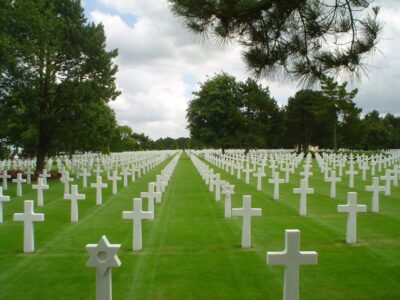
The day begins by leaving Le Havre with an orientation from your guide. Le Havre matters in this story. It sat on the Normandy coast and functioned as a key Allied logistical hub as plans formed for the D-Day invasion.
That first stretch is not just driving time. It helps you connect the dots between strategic planning and the battlefield you will visit later. When a guide talks about how armies move supplies and troops, it makes what comes next feel less like a movie scene and more like a massive real-world operation.
At this stage, you also get a sense of pace. The tour is long enough that you will feel the day, but it is structured enough that you are not stuck doing one stop after another with no breathing room.
La Cambe German War Cemetery: respect with a different viewpoint
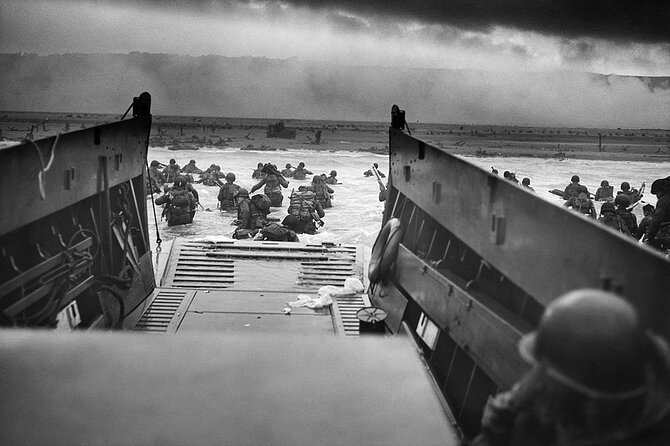
Stop at La Cambe German War Cemetery changes the emotional temperature of the day. Instead of only focusing on Allied stories, you also see graves and the kind of silence that comes with a war that cut across every side.
What I like about including a German cemetery is the perspective it gives you. War history can turn into pure numbers and tactics. Here, the scale shows up as individual lives, arranged with careful order in a quiet place. The guide can help you understand what you are looking at, without turning it into a shouting match about blame.
The ground itself is calm. That matters because D-Day sites can feel intense. The cemetery gives you a pause where you can absorb what you have learned and then carry that perspective forward to the dramatic sites ahead.
Pointe du Hoc: where the Rangers climbed, and what you can still see
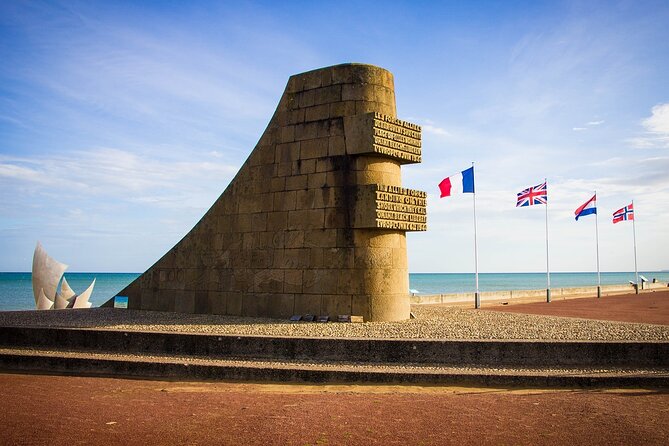
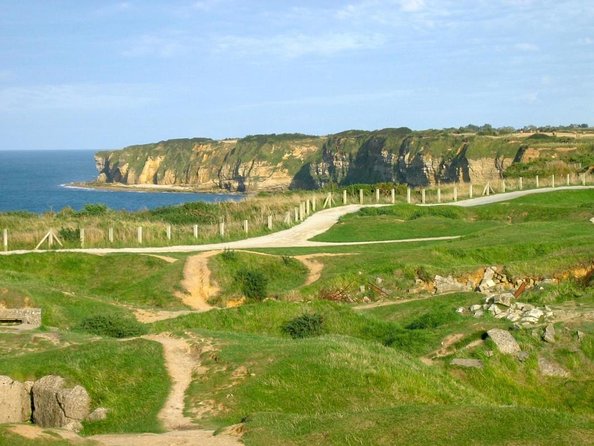
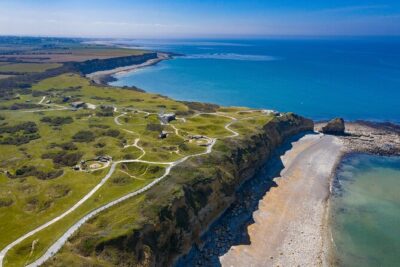
Pointe du Hoc is the kind of stop that pulls you forward before you even read the signs. These are rugged cliffs and a defensive headland that sat between Utah Beach and Omaha Beach. German positions here included fortified areas and artillery that threatened the Allied landings.
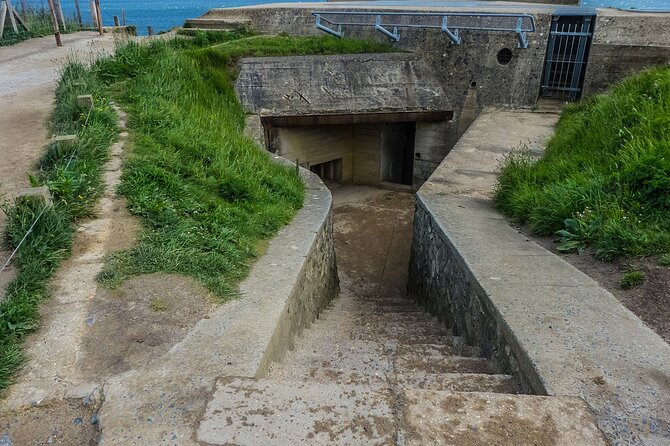
Your walk takes you into the physical reality of the assault. The Rangers scaled cliffs said to be about 100 feet high under heavy fire, aiming to neutralize the guns. Today, you can see bomb craters, destroyed bunkers, and a memorial marking the Rangers’ sacrifice.
One practical consideration: this is not a stop where you want to be unprepared on foot. Even if the time is set, the terrain and standing around for explanations can add up. If you have moderate stamina, wear shoes that feel secure. Your legs will do the math later.
Guides like Bertrand Couillard and Ash are described as using maps, photos, and stories to connect what happened with what you see now. That is exactly what you want here. Pointe du Hoc can feel like dramatic cliffs and monuments if you get only the headlines. With good explanation, it turns into a clear sequence of decisions, risks, and impact.
Omaha Beach: walk the sand, then eat like a local
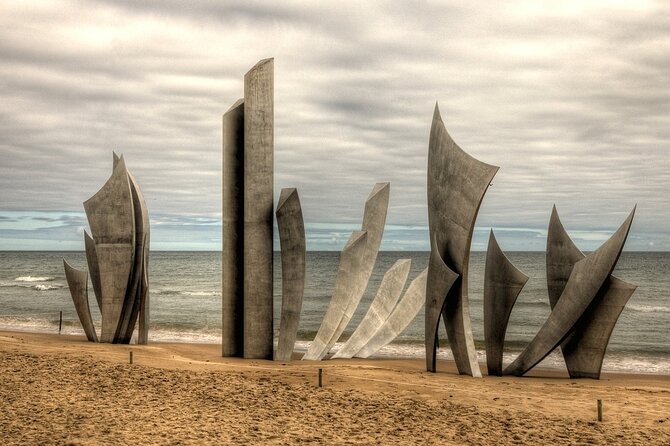
Omaha Beach is the emotional center of many D-Day days, and this itinerary gives you more than a quick pass. You have time to walk along the beach and reflect where the fighting was some of the fiercest of the campaign. It is often called Bloody Omaha for a reason.
I like that the tour does not treat Omaha as a checklist stop. You get a window to stand where troops landed, look across the water, and take in the scale. Even if you do not know the details, your body understands it. You can picture landing craft, panic, and urgency in a way that drives-by viewing cannot match.
Lunch at Omaha: baguette, water, and a small dessert
Right here, the group distributes the included packed lunch. The key is that it is not a generic box meal. It is described as a homemade baguette lunch, plus water and dessert.
Some groups mention a sandwich with ham and cheese, plus chips and small French sweets. The reliable part is the baguette, water, and small dessert. Either way, it is a smart setup for a long day. You get to refuel without losing time to a sit-down restaurant.
Also, eating near the beach is simple but not always comfortable depending on weather. If you are sensitive to wind or chill, bring a light layer you can manage easily.
More of Normandy, reviewed
- Outdoor Escape Game in Étretat
★ 5.0 · 171 reviews - Best of Paris: Stress-Free Tour with River Cruise from Le Havre
★ 4.5 · 141 reviews - From Le Havre Breathtaking Honfleur and Deauville Shore Excursion
★ 4.5 · 100 reviews - From Le Havre: Paris with River Cruise Shore Excursion
★ 4.8 · 99 reviews - Deluxe Paris Shore Excursion from Le Havre with Seine Cruise
★ 4.5 · 79 reviews
Normandy American Cemetery at Colleville-sur-Mer: where names do the work
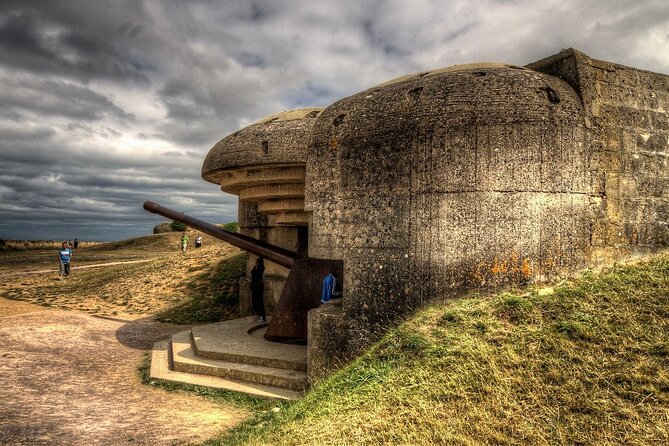
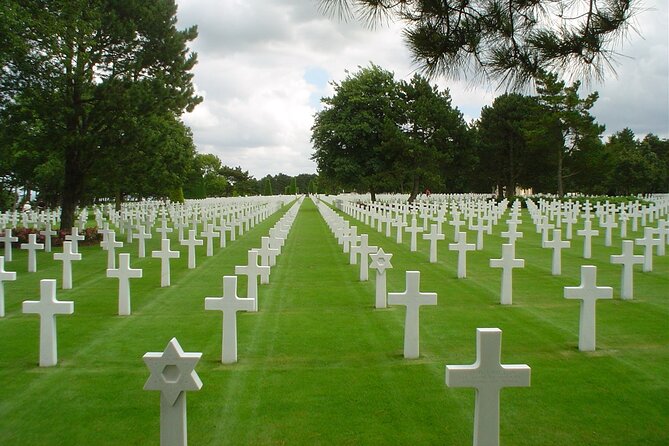
After Omaha, you move to the Normandy American Cemetery at Colleville-sur-Mer. This is a different kind of place. The setting is serene, and the message is direct. More than 9,000 American soldiers are buried here from the Normandy invasion.
The grounds are meticulously maintained. White crosses and Stars of David line up in long rows, and the scale hits you fast because you are not reading about loss, you are walking beside it. This is where the day can get quiet in your head, even if the bus ride was full of facts and maps.
You also get time for reflection at the Memorial Chapel. That small space is built for remembrance. If you want a moment that is not rushed, this is where you can slow down and actually feel the day.
I also appreciate how this stop closes the loop emotionally. You started with Allied planning tied to Le Havre logistics, you saw the cost at La Cambe, you walked into the military objective at Pointe du Hoc, and then you faced the landing at Omaha. The cemetery brings it back to individual lives and final resting places.
Timing, transport, and what a 10-hour pace really means
The tour runs about 10 hours. That includes the travel time between Le Havre and the Normandy sites, plus the guided time at each stop. It is a long day on a cruise shore, so I think the best way to plan is with simple expectations.
First, accept that it will feel like a full day. There is no way around it. Some walking is part of the experience, and you should aim for moderate physical fitness. If you have mobility limits, this may still work, but you should be honest with yourself about stairs, uneven surfaces, and the need to stay together.
Second, remember the schedule matters. The tour is designed to coincide with your ship’s arrival and departure, and it ends back at the meeting point. Guides and drivers described in group accounts are careful about keeping timing so you return with enough slack.
Third, bring comfort for the ride. The drive from Le Havre is long enough that you will probably want something to do or something to keep you warm. Even if your guide talks a lot, long bus time can feel long. Layers help. So does a small snack for before lunch if you are the type who gets hungry early.
Finally, group size helps your sanity. With a maximum of 45 travelers, you are less likely to feel like you are disappearing into a massive crowd. You still stay organized, and you still get to hear what matters.
Price and value at about $119.72 per person
At $119.72 per person, this tour sits in the category of full-day, guided D-Day experiences that add up quickly if you piece them together yourself. The big value point here is what is included.
You get:
- Transportation with pickup and drop-off in Le Havre
- A packed lunch (homemade baguette, water, small dessert)
- A guided day connecting multiple sites
- Admission tickets listed as free for the stops on the schedule
- Mobile ticket and English-speaking guide
When you compare costs, lunch is not a throwaway detail. On these days, “I’ll just grab something nearby” often becomes “we spent 45 minutes searching while the group waits.” Here, the lunch is timed and handled for you.
The other value piece is the combination of stops. Many D-Day tours focus only on the most famous beach viewpoints. This one adds La Cambe German War Cemetery and then finishes at the American Cemetery. That structure gives you a more balanced emotional arc, and it helps you understand the full human cost rather than only one side of the narrative.
One more practical value: the schedule is cruise-compatible. If your shore day is short and your ship departure is fixed, being on the right timeline is part of what you are paying for.
Who this tour is best for, and who should think twice
I think this is a strong fit if you are:
- A history lover who wants the major D-Day sites in one day
- Traveling on a cruise and want a schedule that works with ship timing
- Interested in seeing both Allied and German remembrance sites
It can also work well if you want more than plaques and quick photos. The day is guided, and some guides are specifically described as bringing in stories, maps, and photo support on tablets. That kind of coaching makes a huge difference on sites where your brain needs help placing events in order.
I would think twice if:
- You have trouble with walking on uneven ground or you tire quickly in a full day format
- You prefer long museum-style breaks over multiple site visits
- You want a very casual pace with lots of free time
This is not the kind of tour where you drift. It is planned, structured, and designed to cover key sites without wasting daylight.
Should you book this Le Havre D-Day shore excursion?
If you are choosing between doing nothing, doing a partial tour, or doing a packed but well-timed day, I would lean toward booking this. You get the big sites, plus the balancing perspective of La Cambe and the emotional landing of the American Cemetery. You also avoid one of the biggest cruise-shore problems, hunger and rushed meal hunting.
Book it if you want a clear, guided day that fits your ship schedule. Skip it if your priority is slow travel with lots of free roaming, or if a 10-hour itinerary with moderate walking feels risky for your body.
If you go, wear supportive shoes and bring a layer for cool coastal air. And if you get a guide like Bertrand Couillard, Sam, Ash, or Thelma, pay attention during the stories, because they are what turn this from a checklist into a real understanding of 1944.
FAQ
Where do I meet for the tour in Le Havre?
You meet at Cruise Terminal Le Havre, Quai Roger Meunier, 76059 Le Havre, France. The tour ends back at the same meeting point.
How long is the D-Day shore excursion?
It runs about 10 hours.
What lunch is included?
The tour includes a homemade packed lunch with a French baguette, plus water and a small dessert. Lunch is distributed during the Omaha Beach stop.
Is admission included for the stops?
Admission tickets are listed as free for the stops on the itinerary.
Is the tour suitable if I am moderately fit?
The tour is recommended for travelers with a moderate physical fitness level, and there is some walking involved.
What language is the tour offered in?
The tour is offered in English.
What is the cancellation rule if my plans change?
You can cancel for a full refund up to 24 hours before the experience start time. If you cancel less than 24 hours before, the amount paid is not refunded.
The Whole Le Havre Shelf
- All-in-One Normandy D-Day Landing Beaches and Lunch from Le Havre
★ 5.0 · 201 reviews - Outdoor Escape Game in Étretat
★ 5.0 · 171 reviews - Best of Paris: Stress-Free Tour with River Cruise from Le Havre
★ 4.5 · 141 reviews - From Le Havre: D-Day Beaches Shore Trip with Packed Lunch
★ 4.9 · 101 reviews - From Le Havre Breathtaking Honfleur and Deauville Shore Excursion
★ 4.5 · 100 reviews
More of Normandy
- All-in-One Normandy D-Day Landing Beaches and Lunch from Le Havre
★ 5.0 · 201 reviews - Outdoor Escape Game in Étretat
★ 5.0 · 171 reviews - Best of Paris: Stress-Free Tour with River Cruise from Le Havre
★ 4.5 · 141 reviews - From Le Havre: D-Day Beaches Shore Trip with Packed Lunch
★ 4.9 · 101 reviews - From Le Havre Breathtaking Honfleur and Deauville Shore Excursion
★ 4.5 · 100 reviews
The Landing Beaches, Other Guided Visits
- All-in-One Normandy D-Day Landing Beaches and Lunch from Le Havre
★ 5.0 · 201 reviews - From Le Havre: D-Day Beaches Shore Trip with Packed Lunch
★ 4.9 · 101 reviews
The rest of the Le Havre write-ups
- Deluxe Paris Shore Excursion from Le Havre with Seine Cruise★ 4.5 · 79 reviews
- From Le Havre: Paris with River Cruise Shore Excursion★ 4.8 · 99 reviews
- From Le Havre Breathtaking Honfleur and Deauville Shore Excursion★ 4.5 · 100 reviews
- From Le Havre: D-Day Beaches Shore Trip with Packed Lunch★ 4.9 · 101 reviews
- Best of Paris: Stress-Free Tour with River Cruise from Le Havre★ 4.5 · 141 reviews
- Outdoor Escape Game in Étretat★ 5.0 · 171 reviews