
Reviewed · NORMANDY TOURS
DDay American Beaches and US Airborne Full Day Tour from Bayeux
Normandy hits different with a guide. This full-day Bayeux tour zeroes in on the American story, with small groups up to 7 and an A/C minivan that saves you from the driving headache. I also love how each stop uses maps and visual aids so the battle makes sense, but lunch is not included, so plan ahead for your stomach.
You start in central Bayeux at 9:00 am, then spend about 8 hours 30 minutes visiting major D-Day sites without juggling parking or navigation. The rhythm is built for real conversation too, so you can ask your guide questions instead of listening to a long monologue.
One more practical note: the tour depends on good weather. If it is poor, you will be offered another date or a full refund, so keep that flexibility in mind when you pick your day.
In This Review
- Quick hits
- A Bayeux One-Day Plan for US D-Day Sites
- Small-Group Comfort, Real Questions, and an English-Language Guide
- Omaha Beach: From the First Wave to Bloody Omaha
- Normandy American Cemetery at Colleville-sur-Mer: Paying Respects With Context
- Pointe du Hoc: Ranger Cliffs, Gun Battery Danger, and Bomb Craters
- Sainte-Mère-Eglise: Airborne Stories, the Church Tower, and a Small Town’s Role
- Utah Beach With Theodore Roosevelt Jr at 6:30am
- Angoville-au-Plain Church Aid Station: Two Medics and Around 80 Wounded
- Price and Logistics: Where the $169.31 Feels Like Value
- Best Fit: Who Will Enjoy This Day the Most
- Should You Book This Bayeux Tour or DIY It?
- FAQ
- How long is the tour?
- Where do I meet the tour?
- What time does the tour end?
- How many people are on the tour?
- Is the tour offered in English?
- Is admission included for the stops?
- Does the price include lunch?
- What stops are included in the day?
- Is the transportation air-conditioned?
- What happens if the weather is bad?
Quick hits
- Up to 7 people keeps the tone personal, with time to ask questions
- Round-trip A/C minivan from Place du Québec makes the day easy logistically
- US-focused route: Omaha Beach, Normandy American Cemetery, Pointe du Hoc, Sainte-Mère-Eglise, Utah Beach, Angoville-au-Plain
- Free admission on the scheduled sites means you focus on the meaning, not tickets
- Built-in “see it, then understand it” with maps, pictures, and guided storytelling
A Bayeux One-Day Plan for US D-Day Sites
This is the kind of Normandy day trip I recommend when you want the American campaign without spending a week chasing clues. You get a tight set of stops that connect the beach landings to what happened after, including the Airborne story side of the invasion.
I like the clarity of the route. Omaha leads into the American cemetery, which gives you a solemn reset before you move to the dramatic, cliff-top action at Pointe du Hoc. Then Sainte-Mère-Eglise and Utah keep the focus on airborne and infantry landings, before the day ends with a moving, human-scale story at Angoville-au-Plain.
The best part is pacing. You do not just rush from place to place. You get enough guided time to understand what you are looking at, plus short windows to look around and take it in yourself.
More of Normandy, reviewed
Small-Group Comfort, Real Questions, and an English-Language Guide
The day runs with a maximum of 7 travelers, which is a big deal on battlefield tours. With a smaller group, you can actually ask questions, and your guide can adjust the pace if something lands differently for you.
You also get round-trip transport by minivan from central Bayeux, with air-conditioning for comfort. That sounds basic, but in Normandy summers and shoulder seasons, it matters when you are hopping between sites for most of the day.
This tour is offered in English and uses visuals at each stop, like maps and pictures. In past tours, guides have leaned into story plus geography, so you can connect what happened to what you see today.
Omaha Beach: From the First Wave to Bloody Omaha
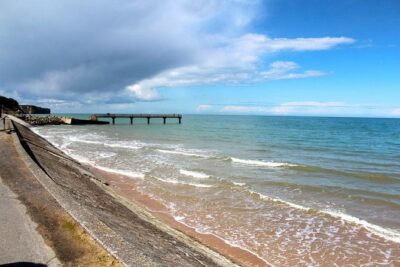
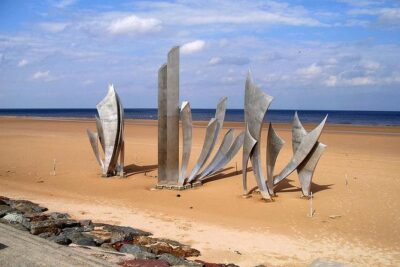
Omaha Beach is where the day starts, and it is a powerful choice for a first stop. You leave Bayeux by minivan and take about a 30-minute drive to Omaha, then spend around 40 minutes at the beach.
Your guide sets you up with maps and images before you stare out at the water. You will focus on where the 1st and 29th US Infantry Divisions landed, and how the German defenses shaped what the first waves faced. The tone here tends to be respectful and specific, with stories of the soldiers who came ashore and the grim difficulty of that terrain.
Practical tip: Omaha is emotionally intense, but it is also a place where details matter. If you are the type who likes to understand locations, directions, and lines of fire, you will get a lot from the guided setup.
Normandy American Cemetery at Colleville-sur-Mer: Paying Respects With Context
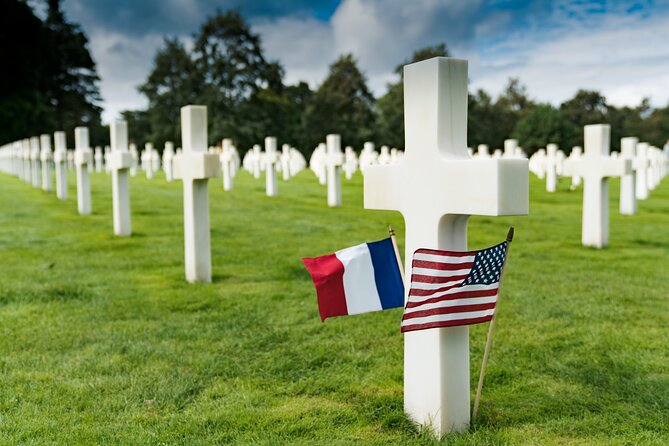
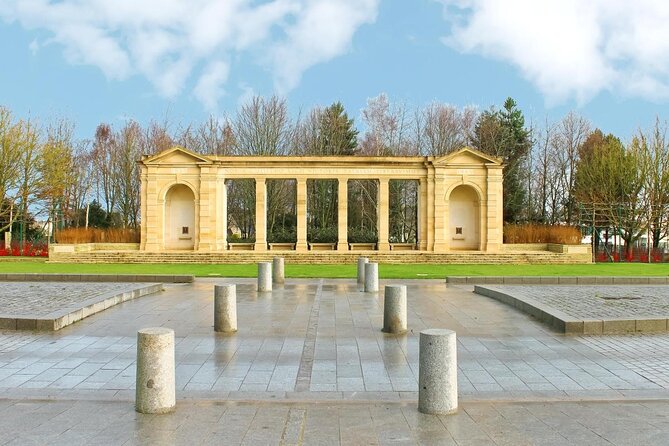
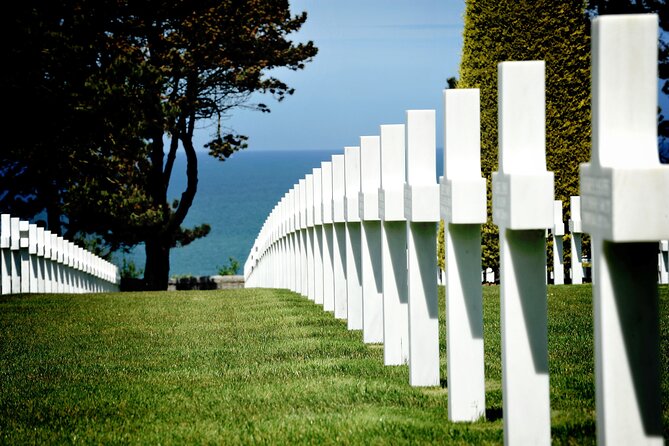
Right behind Omaha is the Normandy American Cemetery, and it is one of those places where context helps you pay better attention. You spend about 1 hour here, and the entry is free.
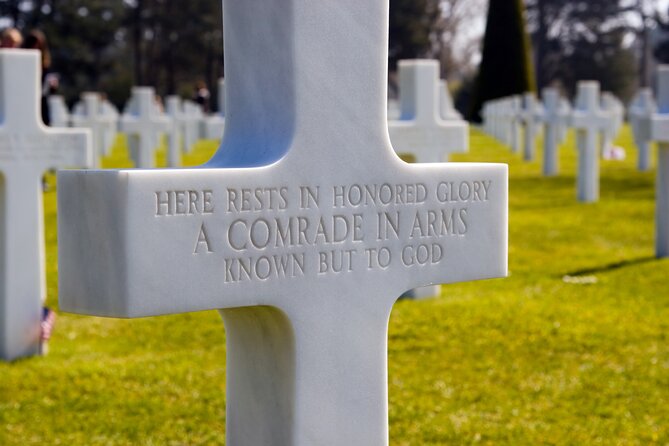
This is the resting place of more than 9,000 American servicemen and women, cared for by the American Battle Monuments Commission. It is described as the most visited D-Day site in Normandy, and once you are inside, you understand why. The symmetry and the scale can hit you even before any facts sink in.
What I like about pairing Omaha with the cemetery is the emotional order. You have the battlefield chaos first, then you shift to a quiet space that honors the cost. Your guide can also explain what you are seeing so it does not become only a photo stop.
Pointe du Hoc: Ranger Cliffs, Gun Battery Danger, and Bomb Craters
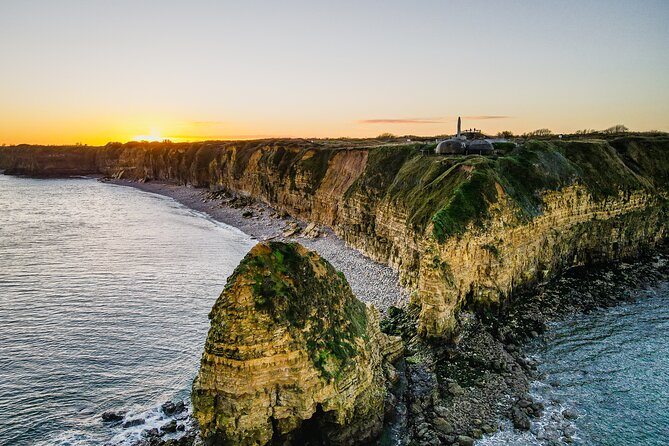
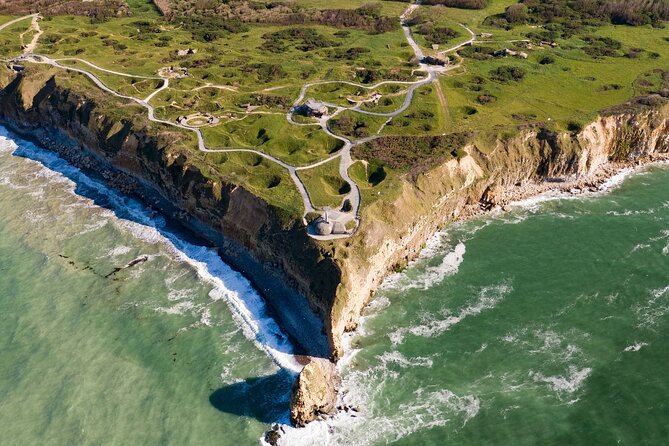
After Omaha and the cemetery, you move on to a site that looks like a war zone even now. Pointe du Hoc gets you right into the action part of the story: the cliffs, the bunkers, and the brutal landscape left behind.
The tour follows the path of the 2nd US Ranger Battalion led by Lieutenant Colonel James E. Rudder, who scaled the cliffs to destroy a German gun battery threatening the broader landing operation. Expect to hear about bomb craters, bunkers, and dugouts, and how this location mattered to the survival of the operation.
It is the kind of stop where visuals help a lot. Standing there without explanation can still be moving, but with guidance you can connect what the Rangers faced to why the mission was so urgent. You also get time to slow down and look, not just walk past.
Sainte-Mère-Eglise: Airborne Stories, the Church Tower, and a Small Town’s Role
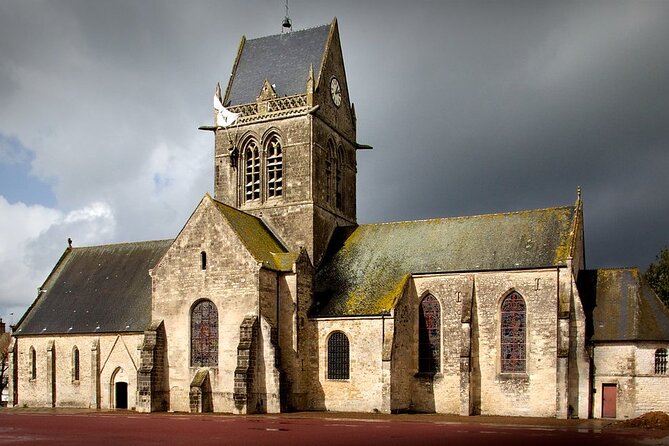
From Pointe du Hoc you head toward Sainte-Mère-Eglise, about a 30-minute drive. Sainte-Mère-Eglise is small, but its role in the Airborne operation is huge.
This is where you hear the story of the first town captured by American paratroopers, including the detail that one paratrooper got stuck up on the church tower during that night. Your guide ties these moments to the larger airborne effort, so it is not just a neat anecdote, it becomes part of how the operation unfolded.
If you like to connect the dots between a battlefield and a town, this stop is a strong one. You can also use this moment for a mental breather in the day, because you are in a town setting, not just standing on a beach edge.
- Normandy Beaches Half-Day Afternoon Trip from Bayeux (A2)
★ 4.5 · 1,116 reviews - Omaha and Utah beaches
★ 5.0 · 1,085 reviews - Normandy Battlefields Tour – American Sites (A3)
★ 5.0 · 876 reviews - Private D-Day Experience from Bayeux
★ 5.0 · 573 reviews - Mont Saint-Michel Day Trip from Bayeux (Shared tour)
★ 5.0 · 540 reviews
Utah Beach With Theodore Roosevelt Jr at 6:30am
Utah Beach is next, reached by a 20-minute drive from Sainte-Mère-Eglise. Here you spend about 2 hours, which helps because Utah is calmer in feel than Omaha, but still full of real battle logic.
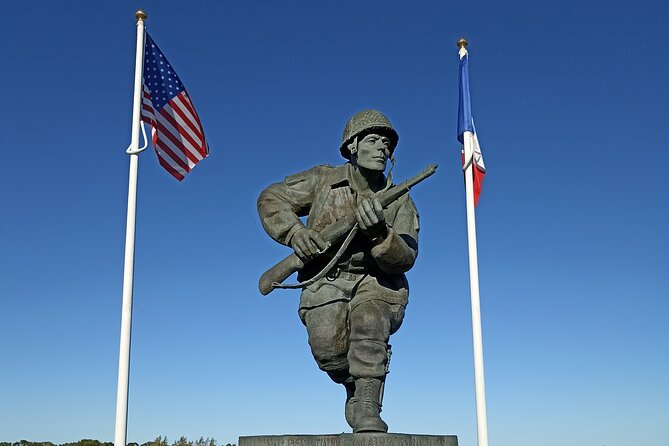
Your guide walks you through how the 4th Infantry Division breached German defenses. The story centers on the first wave led by Brigadier General Theodore Roosevelt Jr, who landed at 6:30am and later received the Medal of Honor.
I appreciate that the guide keeps the focus on what you are seeing. Utah is not only dramatic because of the water. It is dramatic because of what the troops had to overcome on the way in. If you are craving a more organized sense of the landings, this stop often feels like the payoff.
Angoville-au-Plain Church Aid Station: Two Medics and Around 80 Wounded
At the end of the day, you drive about 15 minutes to Angoville-au-Plain. You spend around 45 minutes here, in a church area tied to battlefield care.
This is a site used as an aid-station. Two young medics treated about 80 wounded soldiers for two days, and the story is framed around humanity and dedication in the middle of war. In earlier guides’ recounting, the medics are named Bob Wright and Kenneth Moore, connected to the 101st Airborne, and the account includes care not only for Allied wounded but also German wounded and civilians.
This stop is why I think this tour works as more than a checklist of famous places. The beach sites show strategy and action. Angoville shows what people tried to do once they had the wounded in front of them.
Price and Logistics: Where the $169.31 Feels Like Value
The price is $169.31 per person, and you get a lot for that number. You are paying for round-trip transport from central Bayeux, guided commentary, and a day built around key sites.
A big value point is that the listed stops on the schedule show free admission tickets. That removes the mental overhead of buying access repeatedly, and it lets your time go into listening and looking.
What you should budget for is lunch, since it is not included. Also, expect a long day on the move. Even with an A/C minivan, you will still be standing, walking, and looking at open-air sites. Bring water, wear comfortable shoes, and plan for layers if the weather flips on you.
Best Fit: Who Will Enjoy This Day the Most
This tour is ideal if you are:
- Based in or near Bayeux and want a one-day hit of the American D-Day story
- The kind of person who likes asking questions and getting specifics, not just hearing a general overview
- Interested in both the beach fighting and the airborne angle that ties it together
- Motivated by the emotional weight of Omaha and the American cemetery, where respect matters as much as facts
It is also a nice choice for history lovers who want a social day. With a max group size and lots of Q and A, you are likely to meet people who care about the same details.
Should You Book This Bayeux Tour or DIY It?
Book this tour if you want to get your bearings fast and understand what you are seeing as you go. Driving Normandy yourself can work, but it takes time to plan routes, decide what order to visit, and figure out which angles matter most. This day gives you a focused sequence, plus a guide who brings names, divisions, and locations into the same picture.
Skip it only if you are the type who needs total freedom to linger for hours at one spot, or if you hate long structured days. And if lunch is a deal-breaker, be ready to grab something nearby so you do not end the day underfed.
If your goal is a respectful, well-timed American D-Day overview with strong guidance at every major stop, this is a very solid pick.
FAQ
How long is the tour?
The tour runs about 8 hours 30 minutes.
Where do I meet the tour?
You start at Place du Québec, Pl. du Québec, 14400 Bayeux, France, at 9:00 am.
What time does the tour end?
The tour ends back at the same meeting point.
How many people are on the tour?
This activity has a maximum of 7 travelers.
Is the tour offered in English?
Yes, it is offered in English.
Is admission included for the stops?
Admission tickets are listed as free for the scheduled stops.
Does the price include lunch?
No, lunch is not included.
What stops are included in the day?
The tour includes Omaha Beach, the Normandy American Cemetery at Colleville-sur-Mer, Pointe du Hoc, Sainte-Mère-Eglise, Utah Beach, and Angoville-au-Plain.
Is the transportation air-conditioned?
Yes, round-trip transport in a minivan with A/C is included from central Bayeux.
What happens if the weather is bad?
The tour requires good weather. If it is canceled due to poor weather, you will be offered a different date or a full refund. Free cancellation is available up to 24 hours in advance for a full refund.
Everything Else Filed Under Bayeux
- Normandy American D-Day Beaches Full Day Tour from Bayeux
★ 5.0 · 2,103 reviews - Normandy American D-Day Experience – Group tour from Bayeux
★ 5.0 · 1,566 reviews - Omaha and Band Of Brothers Full Day Tour
★ 5.0 · 1,104 reviews - Omaha Beach D-Day Experience – Afternoon group tour from Bayeux
★ 5.0 · 1,088 reviews - Normandy Battlefields Tour – American Sites (A3)
★ 5.0 · 876 reviews
The Whole Bayeux Shelf
- Normandy American D-Day Beaches Full Day Tour from Bayeux
★ 5.0 · 2,103 reviews - Normandy American D-Day Experience – Group tour from Bayeux
★ 5.0 · 1,566 reviews - Normandy Beaches Half-Day Afternoon Trip from Bayeux (A2)
★ 4.5 · 1,116 reviews - Omaha and Band Of Brothers Full Day Tour
★ 5.0 · 1,104 reviews - Omaha Beach D-Day Experience – Afternoon group tour from Bayeux
★ 5.0 · 1,088 reviews
More of Normandy
- Normandy American D-Day Beaches Full Day Tour from Bayeux
★ 5.0 · 2,103 reviews - Normandy American D-Day Experience – Group tour from Bayeux
★ 5.0 · 1,566 reviews - Normandy Beaches Half-Day Afternoon Trip from Bayeux (A2)
★ 4.5 · 1,116 reviews - Omaha Beach D-Day Experience – Afternoon group tour from Bayeux
★ 5.0 · 1,088 reviews - Normandy Battlefields Tour – American Sites (A3)
★ 5.0 · 876 reviews
The rest of the Bayeux write-ups
- From Bayeux: 2-hour private sidecar tour in Normandy★ 5.0 · 58 reviews
- Private Day Tour of Mont Saint-Michel from Bayeux★ 5.0 · 62 reviews
- Normandy – Mont Saint-Michel Full Day Tour from Bayeux★ 4.5 · 62 reviews
- Omaha Highlights Tour with a DDAY expert from Bayeux★ 5.0 · 63 reviews
- Bayeux: 2-hour tour of the D-Day beaches, by vintage sidecar★ 4.9 · 64 reviews
- Band of Brothers Full Day Tour from Bayeux★ 5.0 · 67 reviews