
Reviewed · NORMANDY TOURS
Full-Day US Battlefields of Normandy Tour from Bayeux (A3LST)
The US D-Day story starts in small Normandy towns. This full-day trip from Bayeux strings together the key American landing sites at Utah Beach and Omaha Beach, plus the cliffside fight at Pointe du Hoc, then closes with the US cemetery above Omaha. You also stop in Sainte-Mère-Église, the town tied to the airborne opening moments of June 6.
I love the small group setup, eight people or fewer, because it makes the guide’s explanations feel personal, not rushed. I also love that the price covers the practical stuff you would otherwise juggle, like air-conditioned minivan transport and included entrance fees at the main stops.
One thing to consider up front: this is a long day with real walking and plenty of outdoor time. Normandy weather can also be harsh, so pack for wind and cold, and expect to read and look closely at the sites rather than just pass through.
In This Review
- Key things I’d circle on this Normandy US battlefields day
- A US D-Day tour from Bayeux that stays human
- The minivan day plan, and why small groups matter
- Sainte-Mère-Église and the Airborne Museum: where the morning begins
- Utah Beach: understanding the US 4th Infantry Division assault
- Pointe du Hoc: cliffs, bunkers, and the Rangers take
- The German cemetery stop at La Cambe: a needed pause
- Omaha Beach and Bloody Omaha: the hardest landing, in plain view
- The American Cemetery at Colleville-sur-Mer: 9,387 names and views
- Price and value for a full day of Normandy entrances
- Timing, walking, and what to pack for wind and cold
- Who this tour suits best
- A quick note on guides and the tone of the day
- Should you book this Bayeux US battlefields tour?
- FAQ
- What are the main stops on the Normandy US battlefields day trip?
- How long is the tour?
- When does the tour start and when do you return to Bayeux?
- Where do you get picked up and dropped off?
- How big is the group?
- Are entrance fees included?
- Is lunch included?
- Is hotel pickup available?
- What if I travel with children or service animals?
- Do I need to cancel far in advance for a refund?
Key things I’d circle on this Normandy US battlefields day
- A tight US-focused route: Utah, Omaha, and Pointe du Hoc, plus Sainte-Mère-Église and both American and German cemeteries
- Small-group guidance: eight people or fewer, with regular stops for context you actually need
- The Pointe du Hoc story on site: craters, casements, gun pits, and the ranger scaling of the cliffs
- Omaha’s scale from multiple angles: you get the beach perspective, then a higher view from the cemetery cliffs
- Emotion built into the day: the US cemetery at Colleville-sur-Mer is a powerful ending
- Included admissions: you pay once and focus on the sites, not the ticket math
A US D-Day tour from Bayeux that stays human
Bayeux is a good base because it keeps the day trip simple. You start in the city, then you work your way through the US landing story in a logical sequence, not a chaotic “hit every beach” sprint.
What makes this tour compelling is that it does not treat June 6 like a single moment. It connects the airborne drop at Sainte-Mère-Église to the ground assaults at Utah and Omaha, and then to the Ranger mission at Pointe du Hoc. That progression helps you understand why objectives mattered, why timing mattered, and why the outcome at Omaha was so brutal.
I also appreciate that the day includes both American and German burial grounds. Even when the focus is American combat, you still get a sense of the full human cost, and it keeps the tone honest rather than one-sided.
More of Normandy, reviewed
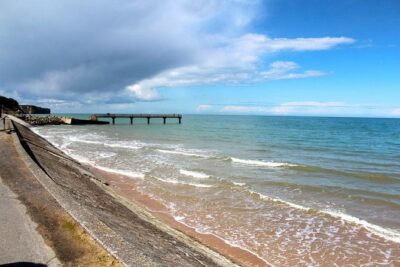
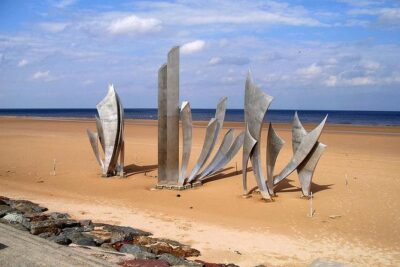
The minivan day plan, and why small groups matter
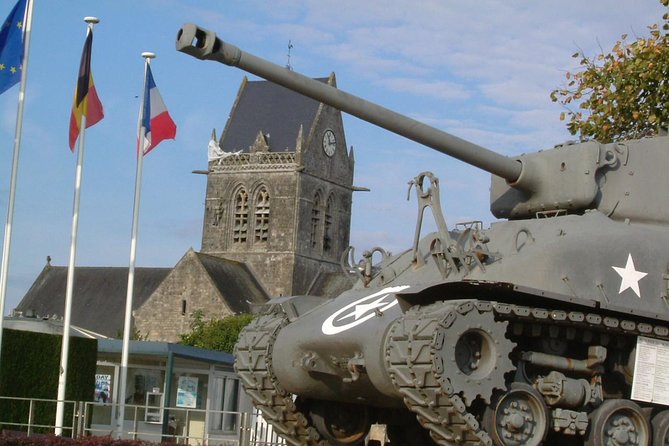
You meet in central Bayeux, either at Bayeux train station or Place de Quebec. The tour runs for about 8 to 8.5 hours, starting at 9:30 am, and returns to Bayeux around 6 pm. That schedule is long enough to feel like a true day on the ground, but it also avoids the grind of spending your whole time in a vehicle.
Transport is by air-conditioned minivan, and the group max is eight travelers. In practice, that means you can hear the guide better during roadside explanations and at viewpoints. It also means your guide can adjust pacing when weather turns or when people need a little extra time in a cemetery.
One practical point: the tour uses a mobile ticket. It is not a big deal, but it means you should have your phone charged and your ticket accessible before you leave.
Sainte-Mère-Église and the Airborne Museum: where the morning begins
Your day starts with Sainte-Mère-Église, with a stop tied to the airborne action at the start of June 6. This is where the story shifts from planning rooms to the chaos of the early hours.
You get about one hour here, including admission to the Airborne Museum. This museum stop is valuable because it gives you a visual and narrative foundation before you go to the beaches. When you later hear about what the US troops were trying to achieve, you will already understand the broader opening moves and the stakes tied to control, timing, and confusion.
After your museum visit, you move on toward Utah Beach. That transition matters, because it helps you connect the airborne story to the later ground assaults rather than treating them as separate chapters.
Utah Beach: understanding the US 4th Infantry Division assault
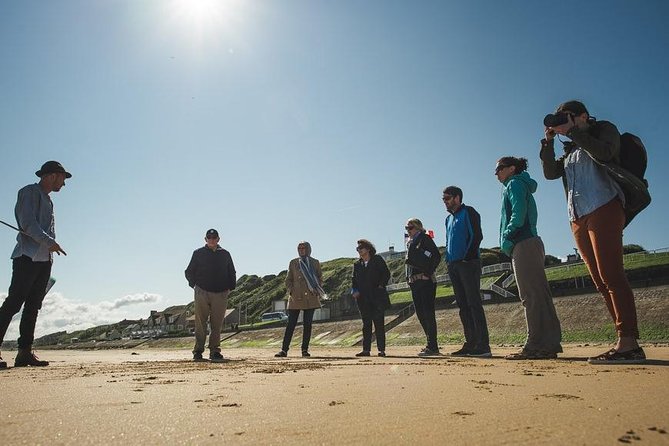
You then head to Utah Beach for about 30 minutes, with admission included. The short time here may sound brief, but the purpose is clear. Utah is part of a US-focused route, and the tour uses that stop to anchor the assault story before you hit the bigger, more famous fight at Omaha.
The guide covers the objectives and events connected with the US 4th Infantry Division assault. That is the key reason this stop works. You are not just staring at sand and sea. You are learning what soldiers were meant to do, what obstacles slowed them, and what success or failure looked like in real terms.
Utah Beach also sets a tone for the day. It is an early chapter, and it gives you a baseline before the tour turns to the highest intensity landing zone on the American side.
Pointe du Hoc: cliffs, bunkers, and the Rangers take
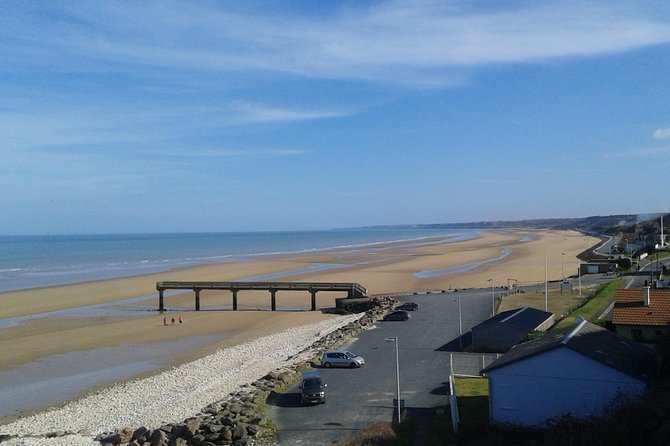
Next comes one of the day’s most dramatic stops: Pointe du Hoc. You get about one hour, including admission. This is the cliffside “highest point between Utah and Omaha” that the tour uses to explain a major mission with high stakes.
Why it matters: Pointe du Hoc was a German battery position, and the US Rangers had to seize it. Seeing the actual features, like bunkers, craters, and German casements and gun pits, changes how you picture the plan. You start understanding why the mission was so dangerous, and how terrain itself became an enemy.
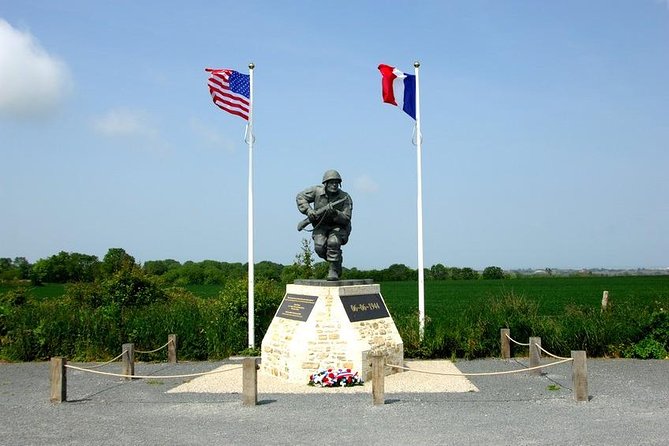
The guide explains how the Rangers scaled the cliffs to seize the battery, and there is also time to visit a monument honoring the rangers. If you care about the tactical side of history, this is usually the stop where the day clicks hardest.
A small reality check: Pointe du Hoc can be windy, and surfaces can be uneven. Wear shoes you can trust, and slow down for the viewing areas.
The German cemetery stop at La Cambe: a needed pause
After Pointe du Hoc, there is a quick stop at the Cimetiere Militaire Allemand de La Cambe for about 30 minutes, with admission free. This is one of those moments that feels short on paper, but it gives your day moral balance.
Even if the tour is designed around American D-Day sites, this cemetery stop helps you understand that the fighting touched German troops too, not just the Allied side. It also creates a natural reset before Omaha, which is where emotions often peak.
If you are the kind of person who likes to say a quiet thank-you to the past by reading names slowly, this is a manageable place to do it without feeling like you need an hour and a half.
- Normandy Beaches Half-Day Afternoon Trip from Bayeux (A2)
★ 4.5 · 1,116 reviews - Omaha and Utah beaches
★ 5.0 · 1,085 reviews - Normandy Battlefields Tour – American Sites (A3)
★ 5.0 · 876 reviews - Private D-Day Experience from Bayeux
★ 5.0 · 573 reviews - Mont Saint-Michel Day Trip from Bayeux (Shared tour)
★ 5.0 · 540 reviews
Omaha Beach and Bloody Omaha: the hardest landing, in plain view
Then you reach Omaha Beach for about 30 minutes, with admission included. The tour calls this the most intensely fought landing beach, and the name Bloody Omaha is tied to that reality.
What I like about the way this stop is framed is that the guide does not treat Omaha like a postcard. You hear why the landings were difficult, and the scale of the beach matters. The beach is described as about four miles (6.4 kilometers) long, and that size helps you grasp the problem commanders faced. You cannot control a whole coastline like a map in your head. You have to fight for it meter by meter.
After your time at Omaha, lunch comes next. Lunch is at your own expense, and that’s typical for Normandy tours, but it is worth planning. Omaha is a tough emotional site, and a break helps you absorb what you just learned.
Once you finish the day’s Omaha story, you head to the cemetery that looks down on the landing zone.
The American Cemetery at Colleville-sur-Mer: 9,387 names and views
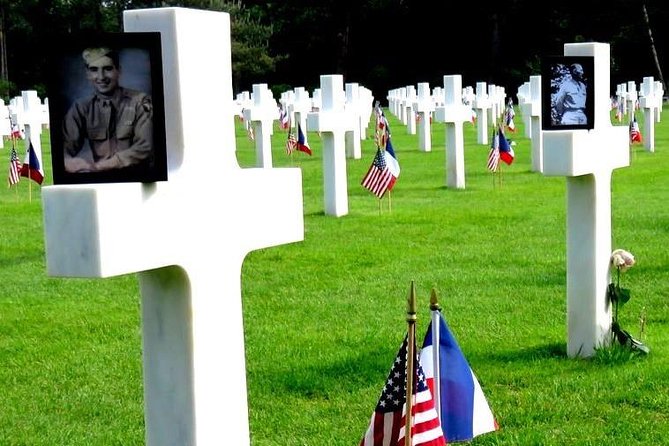
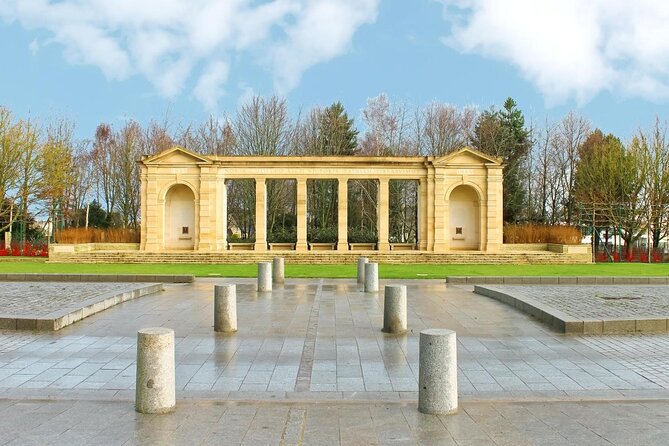
Your final major stop is Cimetiere Americain de Colleville-sur-Mer, for about one hour, with admission included. This is the place many people remember most because it mixes calm order with the weight of mass loss.
The cemetery overlooks Omaha from the cliffs, so you get a “from above” perspective that helps tie the beach and the battlefield back together. The tour also highlights the memorial and notes that 9,387 Americans are buried here.
One detail that stands out from guide practice: in the US cemetery, there is often a flag-lowering moment and the playing of taps. In at least one case, the guide made sure the group could see it. You should not count on exact timing every day, but your best move is simple, stay alert near the time window your guide mentions and do not rush out of your viewing spot.
If you want to connect personally, take time to wander a bit within the cemetery grounds before you head back. Even though the stop is timed at about an hour, it is enough time to find a quiet lane, read a few names, and let the view do its work.
Price and value for a full day of Normandy entrances
This tour costs $154.48 per person, and it includes key items that add up fast: air-conditioned minivan transport, central pickup and drop-off in Bayeux, a local professional driver/guide, and entrance fees for the main stops.
For value, the big question is whether you are buying time and context, not just tickets. You are getting multiple paid sites in one pass: Sainte-Mère-Église Airborne Museum, Utah Beach admission, Pointe du Hoc admission, Omaha Beach admission, the American cemetery admission, plus the German cemetery stop for free. That matters because Normandy drives can be straightforward, but museums and battlefield sites are not.
Another value signal is the rating and recommendation level. With an average rating of 4.9 and 98% recommended, this is not a niche “wing it” tour. It is built to deliver a coherent story without leaving you to figure out logistics between stops.
Could you do this cheaper on your own? Sure, if you drive and manage your own museum time. But if your priority is hearing the right explanations at the right places, the included guide and admissions are usually the difference between a tiring checklist day and a meaningful one.
Timing, walking, and what to pack for wind and cold
This is a long day, and a chunk of it is outdoors. Even when the weather looks fine in Bayeux, the coast can feel harsher once you are up on cliffs or exposed beach viewpoints.
Bring:
- A warm layer you can keep on during stops
- A hat and something windproof if you have it
- Comfortable shoes for standing and walking on uneven ground
- Water, and whatever you need for comfort, since food is your responsibility
Also, expect some reading and looking. Battlefield sites and museums reward the slower pace. If you rush, you miss the details the guide is pointing out.
Who this tour suits best
This is a strong fit if:
- You want a US-focused D-Day route without renting a car
- You care about understanding missions and objectives, not just seeing locations
- You prefer a small group experience with time for questions at stops
- You want your day anchored by the American Cemetery above Omaha
If you hate long days or you need a very light schedule, you might find this one heavy. It is not extreme hiking, but it is still a full-day itinerary with multiple stops and a lot of standing.
A quick note on guides and the tone of the day
What consistently comes through is that the guide experience is a big part of why people rate this so highly. Names that appear in guide feedback include Violane, Louis (Louie), Emmanuel, Jeremy, Rose, Gaëton, Elaine, and Emme.
The common thread is the balance between instruction and respect. People also highlight moments like the cemetery ceremony, and guides helping with restaurant suggestions and timing choices. That matters because the last thing you want in a day like this is to feel like you are being herded.
Should you book this Bayeux US battlefields tour?
If you are doing Normandy for the first time and you want the most important American D-Day sites in one efficient day, I would book it. The tour’s value is not just the beaches, it is the way the stops connect: airborne opening at Sainte-Mère-Église, ground assaults at Utah and Omaha, and the Ranger mission at Pointe du Hoc, capped with the American Cemetery.
Book it if you like guided context and a small-group pace. You should pass if you want a relaxed afternoon or you are traveling with someone who gets overwhelmed by long outdoor segments and lots of stops.
One last practical tip: aim to lock in your date early. The tour is commonly booked well ahead of time, and doing so gives you more choices. Also, if the weather looks grim closer to departure, still go prepared. Normandy wind and rain can change how long you linger at outdoor viewpoints, but the sites and the story are still worth the trip.
FAQ
What are the main stops on the Normandy US battlefields day trip?
You visit Sainte-Mère-Église (including the Airborne Museum), Utah Beach, Pointe du Hoc, Omaha Beach, the US cemetery at Colleville-sur-Mer, and you also stop at the German military cemetery at La Cambe.
How long is the tour?
It runs about 8 hours, approximately 8 to 8.5 hours.
When does the tour start and when do you return to Bayeux?
The start time is 9:30 am, and the tour returns to Bayeux around 6 pm.
Where do you get picked up and dropped off?
Pickup is from Bayeux train station or Place de Quebec in Bayeux only. The tour ends back at the meeting point.
How big is the group?
The maximum group size is 8 travelers.
Are entrance fees included?
Yes. Entrance fees are included for the listed paid sites. The stop at the German military cemetery at La Cambe is free.
Is lunch included?
No. Lunch is not included, so you’ll have time to eat at your own expense.
Is hotel pickup available?
No. There is pickup only in Bayeux, and there is no hotel pickup from Paris.
What if I travel with children or service animals?
Service animals are allowed. Children must be accompanied by an adult.
Do I need to cancel far in advance for a refund?
You can cancel up to 6 days in advance for a full refund. Cancellation rules vary depending on how close you are to the start time.
Everything Else Filed Under Bayeux
- Normandy American D-Day Beaches Full Day Tour from Bayeux
★ 5.0 · 2,103 reviews - Normandy American D-Day Experience – Group tour from Bayeux
★ 5.0 · 1,566 reviews - Omaha and Band Of Brothers Full Day Tour
★ 5.0 · 1,104 reviews - Omaha Beach D-Day Experience – Afternoon group tour from Bayeux
★ 5.0 · 1,088 reviews - Normandy Battlefields Tour – American Sites (A3)
★ 5.0 · 876 reviews
The Whole Bayeux Shelf
- Normandy American D-Day Beaches Full Day Tour from Bayeux
★ 5.0 · 2,103 reviews - Normandy American D-Day Experience – Group tour from Bayeux
★ 5.0 · 1,566 reviews - Normandy Beaches Half-Day Afternoon Trip from Bayeux (A2)
★ 4.5 · 1,116 reviews - Omaha and Band Of Brothers Full Day Tour
★ 5.0 · 1,104 reviews - Omaha Beach D-Day Experience – Afternoon group tour from Bayeux
★ 5.0 · 1,088 reviews
More of Normandy
- Normandy American D-Day Beaches Full Day Tour from Bayeux
★ 5.0 · 2,103 reviews - Normandy American D-Day Experience – Group tour from Bayeux
★ 5.0 · 1,566 reviews - Normandy Beaches Half-Day Afternoon Trip from Bayeux (A2)
★ 4.5 · 1,116 reviews - Omaha Beach D-Day Experience – Afternoon group tour from Bayeux
★ 5.0 · 1,088 reviews - Normandy Battlefields Tour – American Sites (A3)
★ 5.0 · 876 reviews
The rest of the Bayeux write-ups
- From Bayeux: 2-hour private sidecar tour in Normandy★ 5.0 · 58 reviews
- Private Day Tour of Mont Saint-Michel from Bayeux★ 5.0 · 62 reviews
- Normandy – Mont Saint-Michel Full Day Tour from Bayeux★ 4.5 · 62 reviews
- Omaha Highlights Tour with a DDAY expert from Bayeux★ 5.0 · 63 reviews
- Bayeux: 2-hour tour of the D-Day beaches, by vintage sidecar★ 4.9 · 64 reviews
- Band of Brothers Full Day Tour from Bayeux★ 5.0 · 67 reviews