
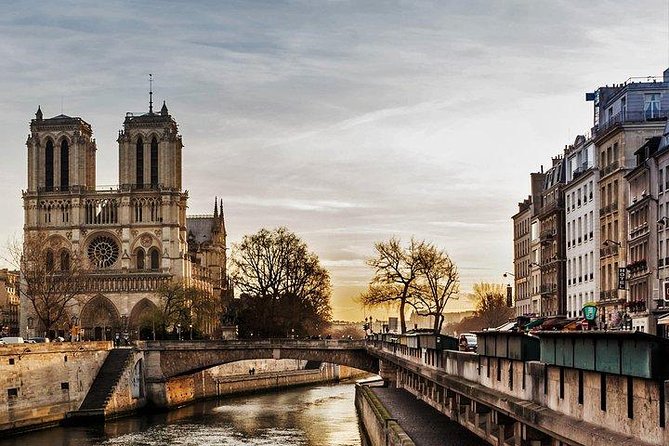
Reviewed · NOTRE-DAME & ILE DE LA CITE
History of Paris City Center w/ Notre Dame Semi-Private 12ppl Max
Paris starts on Île de la Cité. This semi-private route keeps things manageable with a 12-person max, while your guide connects the dots between Gothic churches, royal power, and the Revolution.
I like that you get a real walking-city lesson fast. Guides such as Tamari and Hugo are repeatedly praised for making architecture and dates feel personal, not like a boring lecture.
One thing to consider: several big stops are seen from the outside or without included entry, and Notre-Dame interior is unguided due to regulations. Also, the tour has a moderate walking pace, rain or shine.
In This Review
- Key takeaways before you go
- The Big Idea: Why This 2.5-Hour Route Works
- Starting at Cité Metro: Put Yourself in the Story’s Best Setting
- Île de la Cité and Notre-Dame: Free Entry, but Read the Fine Print
- The Justice Palace, Sainte-Chapelle, and Conciergerie: Power and Fear in One Small Area
- Palais de Justice de Paris (Palais de la Cité)
- Sainte-Chapelle
- The Conciergerie
- Saint-Michel Fountain, Place Dauphine, and the Walking Rhythm Over Bridges
- Fontaine Saint-Michel
- Place Dauphine
- Pont Neuf and the oldest-stone-bridge vibe
- Pont des Arts
- Louvre to Tuileries: What You See Without Paying a Ticket
- Palais-Royal area (Domaine National du Palais-Royal)
- Louvre Museum, but without entry
- Arc du Carrousel and the Tuileries
- Place de la Concorde: Where the Tour Lands and Your Next Choices Begin
- Price and Value: What $59.69 Really Buys You
- Who This Semi-Private Walk Is Best For
- Should You Book It?
- FAQ
- How long is the tour?
- What is the group size limit?
- Is the tour offered in English?
- Is Notre-Dame Cathedral interior included?
- Do I need tickets for Sainte-Chapelle, the Conciergerie, or the Louvre?
- Does the tour run in bad weather?
Key takeaways before you go
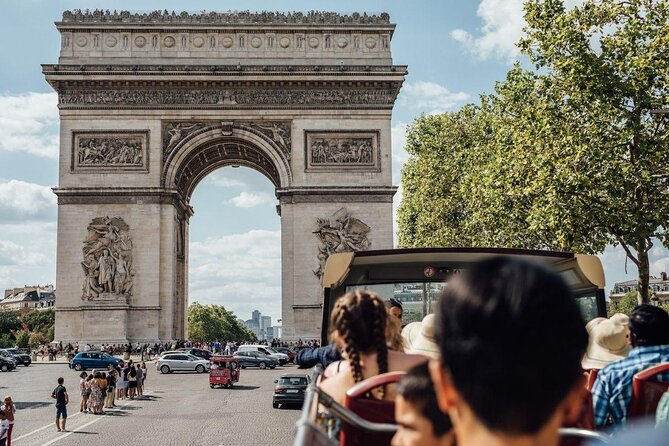
- 12 guests max keeps the group from turning into a slow-moving crowd
- Notre-Dame and Île de la Cité give you the deepest “what am I looking at?” payoff early on
- All-weather scheduling means you are still moving even if the sky is doing its thing
- Some admissions are not included, so you may want extra cash or tickets for Sainte-Chapelle and the Louvre
- Ends at Place de la Concorde, a handy launch point for more exploring
The Big Idea: Why This 2.5-Hour Route Works
This tour is built for people who want Paris highlights without burning an entire day. You cover a lot of ground in about 2 hours 40 minutes, but it is not a sprint. You are in motion through the heart of the city, with your guide acting like a local translator for what you are seeing.
The other smart part is the size. With a maximum of 12, you can actually hear explanations and ask questions. In bigger tours, you often get pushed forward, then you guess what you just passed. Here, the pacing feels more human.
Finally, it is designed to run rain or shine. That matters in Paris, where the weather can change fast and “plan B” is not always fun. Bring a compact umbrella and comfortable shoes, and you will be fine.
More of the Ile de la Cite, reviewed
Starting at Cité Metro: Put Yourself in the Story’s Best Setting
You meet near the entrance to the Cité Métro station on Île de la Cité, then start walking right away. This is not a random starting point. It drops you into the oldest core of Paris, where the city’s layers stack up in a very literal way.
Your guide frames the island’s earlier life, including the Roman predecessor known as Lutetia. Even if you only catch a few minutes of that context, it makes the rest of the walk click. Notre-Dame and the legal buildings around you stop being “just landmarks,” and start being evidence of how power and faith shaped the city.
This first stretch is also practical. You are getting oriented early, and you are walking before you hit the busiest tourist moments.
Île de la Cité and Notre-Dame: Free Entry, but Read the Fine Print
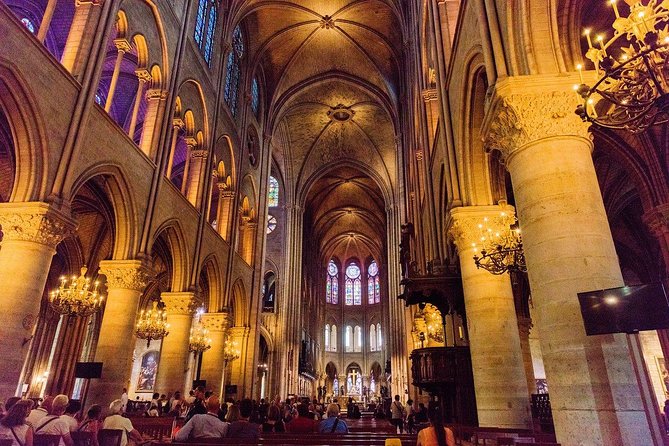
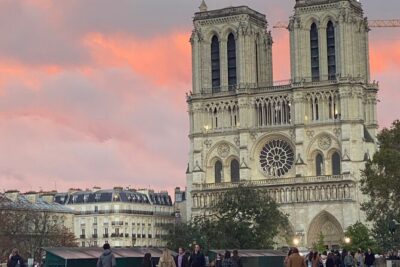
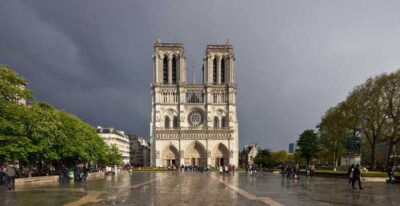
Next comes Notre-Dame Cathedral. The interior visit is free, and it is included, but it is unguided because regulations limit how tours can operate inside.
That could sound like a downer, but it is actually a useful trade-off. You still get the big guided context before and after, then you experience the space at your own pace while inside. If you want to read plaques, linger by points of interest, or just soak in the scale, unguided time can be a plus.
You also get the chance to learn how Notre-Dame fits into the city’s long timeline, including the building’s significance and its restoration after the 2019 fire. The key benefit is clarity: you learn what you are looking at, so the visit feels more meaningful than a quick photo stop.
Tip for your visit: if you care about architecture details, slow down inside. Notre-Dame is a place where rushing makes you miss the best parts.
The Justice Palace, Sainte-Chapelle, and Conciergerie: Power and Fear in One Small Area

After Notre-Dame, the tour keeps you on Île de la Cité for a concentrated hit of historically heavy sites.
Palais de Justice de Paris (Palais de la Cité)
You pass by the Palais de Justice area, once called the Palais de la Cité. This is where the past still feels official and imposing. You get a quick stop that spotlights older surviving buildings, which helps you understand why this part of Paris has always been about authority.
A drawback here is time. Each stop is short, so you get the headline context rather than a deep museum-style walkthrough. If you want to go super deep, you will likely need a separate add-on later.
Sainte-Chapelle
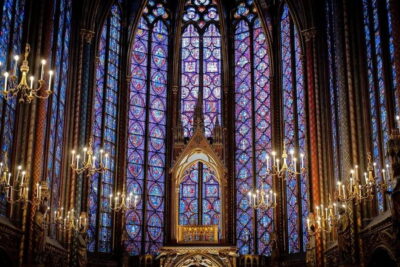
Then comes Sainte-Chapelle, built in only seven years and designed to house precious Christian relics, including Christ’s crown of thorns acquired by Saint Louis. Even a brief stop pays off because you instantly recognize why people travel here: the building is all about soaring Gothic drama.
Important practical note: the tour does not include admission for Sainte-Chapelle. So you will either enjoy what you can see without an included ticket, or plan to purchase entry separately if you want the full interior experience.
More Paris bookings with the group to yourself
- Paris: Private Photoshoot at the Eiffel Tower
★ 4.7 · 2,636 reviews - Top Private Cruises in Paris with French Champagne and surprises
★ 5.0 · 1,553 reviews - Private Paris Airport Arrival Transfer – CDG & ORLY Airports
★ 4.5 · 1,119 reviews - Paris Private Arrival Transfer from Charles de Gaulle (CDG) or Orly (ORY)
★ 4.0 · 1,084 reviews - Private Montmartre Food Tour with Wine, Cheese & Pastries
★ 5.0 · 1,027 reviews
The Conciergerie
The Conciergerie is next, and it is one of the most emotionally intense stops on the route. This is the oldest remaining part of the Palais de la Cité and was once a notorious prison. You will hear how people connected to the Revolution were held there, including famous names such as Marie Antoinette.
This stop is valuable because it gives you human stakes. You are not only looking at stone. You are seeing how ideas turned into consequences.
Saint-Michel Fountain, Place Dauphine, and the Walking Rhythm Over Bridges
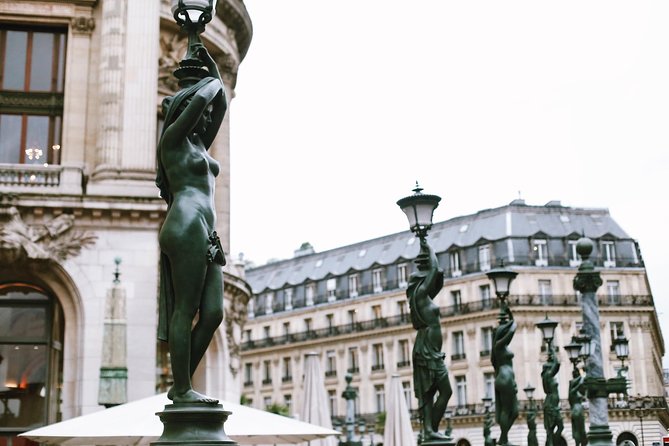
One reason this tour works so well is that it keeps moving through “in-between” spaces where Paris feels like Paris.
Fontaine Saint-Michel
You pass by the Saint-Michel fountain, commissioned by Haussmann under Napoleon III. It is a symbolic fountain showing the archangel Michael vanquishing the Devil, so you get a quick mythology-and-history moment without needing a ticket or an indoor visit.
Place Dauphine
Then you reach Place Dauphine, a historic square tucked away on the island’s western tip. It is tied to Henri IV, which gives the area a royal foundation without it feeling like a stuffy palace district.
Pont Neuf and the oldest-stone-bridge vibe
Now you cross to the left bank via Pont Neuf, considered the oldest stone bridge in Paris. It is also part of the Seine’s UNESCO World Heritage listing, which is a nice touch if you like to understand why something is protected.
This bridge section matters because it teaches you how Paris links neighborhoods. When you walk a bridge, you also learn the city’s scale. It helps you plan the rest of your days more confidently.
Pont des Arts
Next is Pont des Arts, built between 1801 and 1804, described as the first iron bridge in Paris. From a sightseeing point of view, it is a classic connector between the Institut de France area and the Louvre side.
If you like “how did the city evolve” details, these bridge stops are a real bonus. They explain Paris as a living engineering story, not just architecture.
Louvre to Tuileries: What You See Without Paying a Ticket
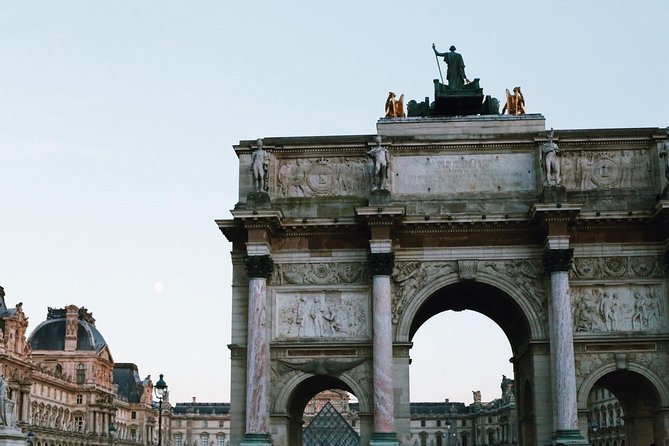
You do not just march past big names. You get just enough of the Louvre and Tuileries area to help you choose what to do next.
Palais-Royal area (Domaine National du Palais-Royal)
You pass by the Palais Royal and gardens area created by Cardinal Richelieu in 1633. You also get a note about royal families using the palace before Versailles took over. Then you stroll nearby where there is a sense of calm, plus modern touches through contemporary sculptures.
Admission is not included for this segment, so again, you are not doing a full inside visit here. But the value is perspective. This is a moment to reset your brain before you hit the densest museum zone in the city.
Louvre Museum, but without entry
When the tour reaches the Louvre, the plan is not a museum admission. Admission is not included, and you mostly focus on key exterior and courtyard moments, including the Cour Carrée and the Louvre Pyramid designed by I.M. Pei.
This is a smart approach for first timers. The Louvre can swallow half a day if you are not careful. Here, you get the most iconic cues so you know what you are looking at if you decide to come back for the ticketed visit later.
Practical advice: if you plan to enter the Louvre, consider timing it for a different day. Trying to do Louvre plus everything else on the same day can leave you exhausted and underwhelmed.
Arc du Carrousel and the Tuileries
You pass the Arc du Carrousel, built to commemorate Napoleon’s military victories, then enter the Tuileries Gardens, described as the oldest park in Paris with history dating back to the 17th century.
This is a nice contrast after all the heavy history. Gardens also give your legs a breather without stopping the tour.
You will even pass by the Tuileries Gardens Bookshop, a small pause that makes the walk feel more like a local stroll and less like a checklist.
Place de la Concorde: Where the Tour Lands and Your Next Choices Begin
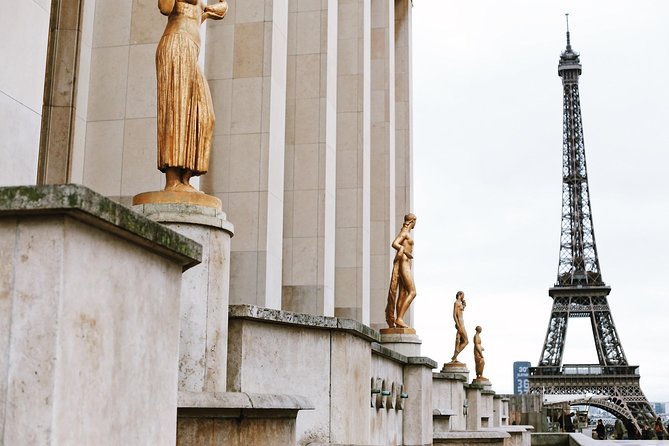
The tour ends at Place de la Concorde, formerly linked with execution sites during the French Revolution. It also marks the start of the Champs-Élysées direction, so it is a very usable endpoint.
This ending is not random. You finish near major transit and major attraction lines, so you can roll directly into another plan: a museum visit, a long walk toward the avenue, or just grabbing a late lunch without wrestling your way back across the Seine.
Price and Value: What $59.69 Really Buys You
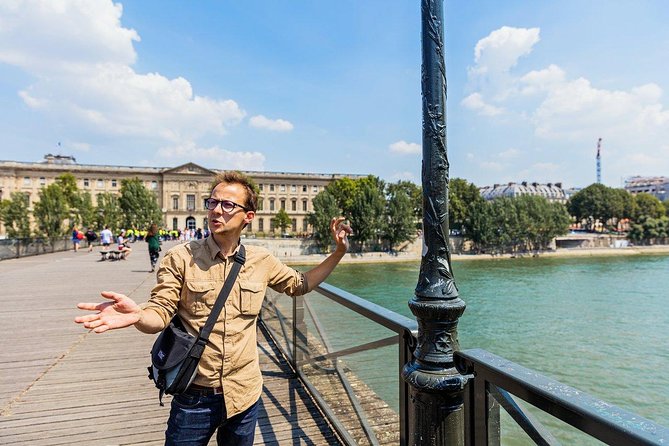
At $59.69 per person for roughly 2.5 hours, you are paying for three things:
- A guided route through dense, confusing areas where it is easy to miss the meaning
- Small-group comfort (12 max), which helps the experience feel personal
- Strategic coverage of multiple major landmarks without you having to plan every stop
You also need to understand what is not included. Some major entries are listed as not included, including Sainte-Chapelle, the Conciergerie, and Louvre admission. Notre-Dame interior is free and included, but it is unguided due to regulations.
So is it value? For first timers, yes, because you are buying clarity and time. If you already know you want full museum time at Sainte-Chapelle and the Louvre, you should budget for those separate tickets. But if your goal is to see the heart of Paris and leave with a map of what matters, this tour is very efficient.
Who This Semi-Private Walk Is Best For
This tour fits best if you are one of these types:
- First time visitors who want major sights in one focused loop
- People who like history but do not want a museum-only day
- Travelers who prefer a small group over big-bus energy
- Anyone who values getting guide context before you decide what to revisit
It might be less ideal if you want long stays inside multiple ticketed attractions. The structure is short stops. You are here for highlights and explanations, not a full deep dive inside every site.
And plan for the walking. The tour calls for moderate physical fitness, and you will be on your feet through city streets and bridges.
Should You Book It?
I would book this if you want a smart first pass through Paris’s central spine. The combination of Île de la Cité, Notre-Dame context, and the walk across classic bridges to Tuileries and Concorde is a well-balanced route. The 12-person cap also makes it feel less stressful, and many of the guides associated with this experience are praised for being able to tailor the pace and answer questions, including guides like Ren, Alex, Alasdair, Lili, and François.
Skip it if you are trying to maximize paid museum time on one day or if unguided interior access at Notre-Dame would frustrate you. The tour is designed for orientation and insight, not for fully ticketed, long-form indoor sightseeing.
FAQ
How long is the tour?
It runs about 2 hours 40 minutes, approximately 2.5 hours.
What is the group size limit?
This is a semi-private tour with a maximum group size of 12 guests.
Is the tour offered in English?
Yes, the tour is offered in English.
Is Notre-Dame Cathedral interior included?
Yes, the Notre-Dame interior visit is included, and the interior is free to enter. It is unguided due to regulations.
Do I need tickets for Sainte-Chapelle, the Conciergerie, or the Louvre?
Admission for Sainte-Chapelle, the Conciergerie, the Palais-Royal segment, and the Louvre Museum is not included. The tour notes which stops require admission tickets on your own.
Does the tour run in bad weather?
Yes. The tour runs in all weather conditions, rain or shine, so wear appropriate clothing and bring a compact umbrella if needed.
With the Group to Yourself in Paris
- Paris: Private Photoshoot at the Eiffel Tower
★ 4.7 · 2,636 reviews - Top Private Cruises in Paris with French Champagne and surprises
★ 5.0 · 1,553 reviews - Private Paris Airport Arrival Transfer – CDG & ORLY Airports
★ 4.5 · 1,119 reviews - Paris Private Arrival Transfer from Charles de Gaulle (CDG) or Orly (ORY)
★ 4.0 · 1,084 reviews - Private Montmartre Food Tour with Wine, Cheese & Pastries
★ 5.0 · 1,027 reviews
The Whole Paris Shelf
- Paris: Louvre Museum Timed-Entrance Ticket
★ 4.6 · 71,977 reviews - Disneyland® Paris 1-Day Ticket
★ 4.6 · 49,412 reviews - Paris: Versailles Palace and Gardens Full Access Ticket
★ 4.6 · 41,579 reviews - Paris: Evening River Cruise with Music
★ 4.4 · 22,721 reviews - Paris: Eiffel Tower Entry Ticket with Optional Summit Access
★ 4.4 · 20,035 reviews
More of the Ile de la Cite
- Paris Île de la Cité and Notre-Dame Walking Tour With Crypt
★ 5.0 · 2,272 reviews - Paris: Eternal Notre-Dame VR Experience Ticket
★ 4.4 · 1,150 reviews - Paris: Notre-Dame Cathedral Exterior Tour & Free Entrance
★ 3.7 · 1,010 reviews - Paris Highlights Bike Tour: Eiffel Tower, Louvre and Notre-Dame
★ 5.0 · 853 reviews - Early Access Paris Notre Dame Cathedral Walking Tour
★ 4.5 · 766 reviews
The rest of the Paris write-ups
- Montmartre French Bistrot Style Food & Wine Tasting Tour★ 4.0 · 26 reviews
- Versailles and Louvre Museum Access and Tour★ 4.5 · 26 reviews
- Skip-The-Line Centre Pompidou Paris Guided Museum Tour – Semi-Private 8ppl Max★ 5.0 · 26 reviews
- Private Highlights of Paris Tuk-Tuk Experience★ 5.0 · 26 reviews
- Discover Paris in a Classic French Car (2cv)★ 5.0 · 26 reviews
- Parisian Romantic Picnic★ 5.0 · 26 reviews
Notre-Dame & Ile de la Cite, in full.
 ★ 4.5Paris: Sainte-Chapelle and Conciergerie Combined TicketsFrom $278,580 reviews
 ★ 5.0Paris Île de la Cité and Notre-Dame Walking Tour With CryptFrom $482,272 reviews
 ★ 4.4Paris: Eternal Notre-Dame VR Experience TicketFrom $361,150 reviews
 ★ 3.7Paris: Notre-Dame Cathedral Exterior Tour & Free EntranceFrom $281,010 reviews
 ★ 5.0Paris Highlights Bike Tour: Eiffel Tower, Louvre and Notre-DameFrom $54853 reviews
 ★ 4.5Early Access Paris Notre Dame Cathedral Walking TourFrom $71766 reviews
 ★ 4.8Paris: Sainte-Chapelle, Conciergerie, Notre Dame Guided TourFrom $88727 reviews
 ★ 4.7Paris: Notre Dame Outdoor Tour with Sainte-Chapelle / Crypt.From $63723 reviews
Also on these France lists