
Reviewed · LYON TOURS
Lyon: City Highlights Walking Tour
Lyon changes fast when someone local points. This walking tour hits the big Lyon icons, plus the traboules (secret passageways) that make the city feel like a story you can walk through. I love that you get two routes for different energy levels, and I especially love the Aidan and Ryan duo style, friendly, interactive, and tuned to real people. One thing to consider is the walking time is real, so comfy shoes matter, and it is not suitable for people over 95.
I took note of how the tour balances iconic views with “wait, what is that?” moments. You also get practical food direction, not generic vending-machine suggestions, plus photo stops built into the flow. If you want food included in the ticket price, you will need to plan that separately.
In This Review
- Why This Lyon Walk Feels Like a Local Day
- Key Highlights You Should Actually Care About
- Choosing Between the 2-Hour 5 km Route and the Shorter 1.5-Hour 2 km Route
- Where the Tour Starts: Place Saint-Jean vs Place Bellecour
- Setting the Tone at Place Bellecour: Lyon’s Main Square in Real Life
- Fourvière Basilica and Roman Theatres: The View and the Time Travel
- Cathédrale Saint-Jean-Baptiste and Vieux Lyon: Medieval to Renaissance Atmosphere
- The Traboules: Secret Passageways You Only Get With a Guide
- Place des Terreaux, Bartholdi Fountain, and Lyon’s Art-Square Power
- The River Saône: A Breather With Context
- Hôtel-Dieu on the Short Route: A Renaissance Hospital Made Useful Again
- Photo Stops and the Pace That Keeps It Fun
- Typical Bouchon Recommendations: What You Get Beyond Sights
- Price and Value: Why $25 Can Be a Smart Use of Time
- Who This Tour Fits Best, and Who Might Want a Different Plan
- Should You Book This Lyon City Highlights Walking Tour?
- FAQ
- How long is the Lyon highlights walking tour?
- What are the differences between the long and short tour options?
- Do I need to speak French to join?
- Is food or drink included?
- Is the Fourvière funicular included?
- Can I cancel or change plans if something comes up?
Why This Lyon Walk Feels Like a Local Day
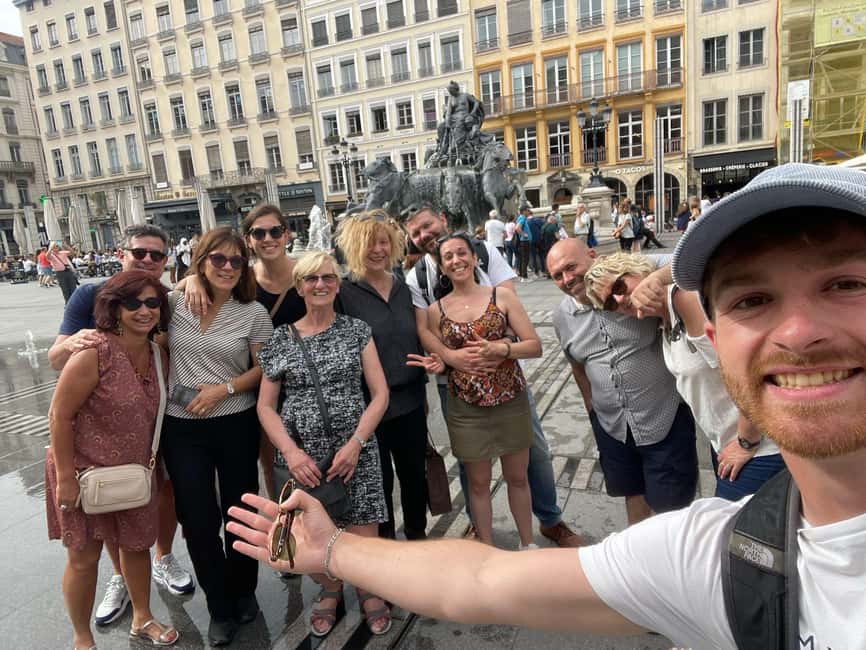
This is not a checklist tour that rushes you past doors and stone. You get a guide who connects Lyon’s layers, Roman beginnings, Renaissance silk and hospital-era stories, and the city’s World War II role, then uses the street itself to make it stick. Aidan (son) and Ryan (father) bring that you-are-here vibe, and they guide in English and French, with Aidan often doing the narration in both languages.
What makes the experience stand out is the mix: a major viewpoint, a Roman stop, a Medieval maze, then a big-city square and river walk. In other words, you get variety in a short time, without the “stand in one spot, listen forever” feeling.
A small group size also helps. Option 1 keeps it intimate (max 10), and Option 2 stays small but larger (max 18). That matters because the traboules are tight, the funicular route can feel busy, and you want questions answered without waiting.
Key Highlights You Should Actually Care About
- Two route lengths with different walking distances (5 km vs 2 km) so you can match your pace
- Aidan or Ryan guide style that mixes history with humor, questions, and real Lyon tips
- Traboules time, including places like La Longue Traboule, where the city feels secret
- Fourvière funicular tickets included on the 2-hour option for an easier climb
- Bouchon restaurant recommendations along the way, plus helpful photos and stop-by-stop context
Other Lyon tours, compared
Choosing Between the 2-Hour 5 km Route and the Shorter 1.5-Hour 2 km Route
Pick Option 1 if you want the full Lyon highlights circuit with the most variety. It runs about 2 hours and covers around 5 km (3.1 miles). The focus is depth and breadth: you see Fourvière Basilica and Roman theatres, then head into Vieux Lyon with traboules, and finish with major squares and landmark buildings like Place Bellecour, Place des Terreaux, and the opera area.
Pick Option 2 if your schedule is tight or your legs need a lighter day. It runs about 1.5 hours, covers about 2 km (1.2 miles), and concentrates on the core old-city hits: Vieux Lyon, traboules, Place Bellecour, and the Saône river, then adds the Hôtel-Dieu stop.
Both options are described as mostly flat, which I appreciate because Lyon can have “up and down” vibes depending on where you end up. Still, you should expect hills around the Fourvière area for the long route, plus stairs inside historic sites.
If you are choosing between the two, here is the practical way to decide:
- Want the most “wow per minute” and don’t mind extra walking, choose Option 1.
- Want the top highlights without committing to 5 km, choose Option 2.
Where the Tour Starts: Place Saint-Jean vs Place Bellecour
Your starting point can vary based on the option you book. You might meet at Place Saint-Jean or at Place Bellecour. That choice subtly changes the feeling of the first minutes.
If you start around Place Saint-Jean, you roll into the Fourvière area with a smoother thematic progression, moving from medieval Lyon toward the viewpoint and Roman layers. If you start at Place Bellecour, you begin in the city’s big public-squares energy, then work your way toward the old quarter.
Either way, the guides are used to group flow. The tempo is built for a walking tour: short guidance, photo stops, and then forward movement.
Setting the Tone at Place Bellecour: Lyon’s Main Square in Real Life
Place Bellecour is the city square that helps you understand Lyon’s scale. The meeting point and early stop give you a quick orientation before you start threading through narrower streets and passageways.
In the tour, you get a guided introduction right at the start, then you transition to transportation (there is a metro/subway segment described). This is a smart move for a short tour. It reduces “time wasted” and gets you to the Fourvière area without your whole morning turning into pure walking.
Fourvière Basilica and Roman Theatres: The View and the Time Travel
On the 2-hour route, the big centerpiece is the Fourvière area. The tour includes Fourvière funicular tickets for the long option, which is a big practical win. You avoid the steep grind and get more energy for the stops that matter.
At Basilica of Notre-Dame de Fourvière, expect guided context and a lot of visual payoff. In reviews, people repeatedly mention the stunning interior details, including the mosaics. I like this kind of stop because it is not just about looking out over the city. It is also about seeing how Lyon uses art and faith to mark identity at the top.
Next is the Ancient Theatre of Fourvière. This is where Lyon stops being “a modern city with old streets” and becomes a Roman site you can stand in. The theatre layer gives you something to compare: you see where entertainment once sat, then later you see how Lyon used passageways and squares for everyday life.
A drawback worth planning for: Fourvière is visually dramatic, but the timing can feel tight if you expect long photo sessions. The tour moves in a sequence, so if you like lingering, you may want to return to Fourvière later on your own day.
Cathédrale Saint-Jean-Baptiste and Vieux Lyon: Medieval to Renaissance Atmosphere
The long route adds Cathédrale Saint-Jean-Baptiste. This stop works as a hinge between the viewpoint and the older streets below. It also gives you a chance to understand Lyon’s religious and civic identity, before you head into the older neighborhoods.
Then you move into Vieux Lyon, the historic old-town core. This is not just about pretty streets. The guide turns it into a timeline you can feel, using what you see to explain why the city developed the way it did.
If you take the shorter route, you still get Vieux Lyon, but the long route gives you more time to let the guide connect dots.
More Lyon walks on the list
- Lyon Highlights & Secrets Walking Guided Tour (small group) including Funicular
★ 5.0 · 831 reviews - Highlights and Hidden Gems of Lyon Guided Walking Tour (English)
★ 5.0 · 750 reviews - Lyon: Vieux Lyon Food Tasting Walking Tour
★ 4.9 · 453 reviews - 4h Complete Lyon Experience: E-Bike, Food Tasting & Old Town Walk
★ 5.0 · 228 reviews - Lyon: Food Walking Tour with a Local Guide
★ 4.8 · 198 reviews
The Traboules: Secret Passageways You Only Get With a Guide
This is the star stop for people who love “how did they build that?” moments. The tour includes the traboules on both options, including La Longue Traboule on the longer route.
Traboules are medieval passageways that cut through buildings, letting people move between streets. On the street, they look like normal doors and courtyards. Inside, they become a hidden city route. That is why a guide matters. You are not just visiting an attraction. You are learning what to notice and how to navigate the space.
Expect the guide to point out details along the way, with enough pacing to keep it fun rather than rushed. In reviews, people loved the “tunnels and doors” aspect, plus the way these passageways make the city feel playful and layered.
Practical note: this is where group size matters. Smaller groups move through tighter spaces more comfortably. Option 1’s max 10 is ideal if you are sensitive to crowding.
Place des Terreaux, Bartholdi Fountain, and Lyon’s Art-Square Power
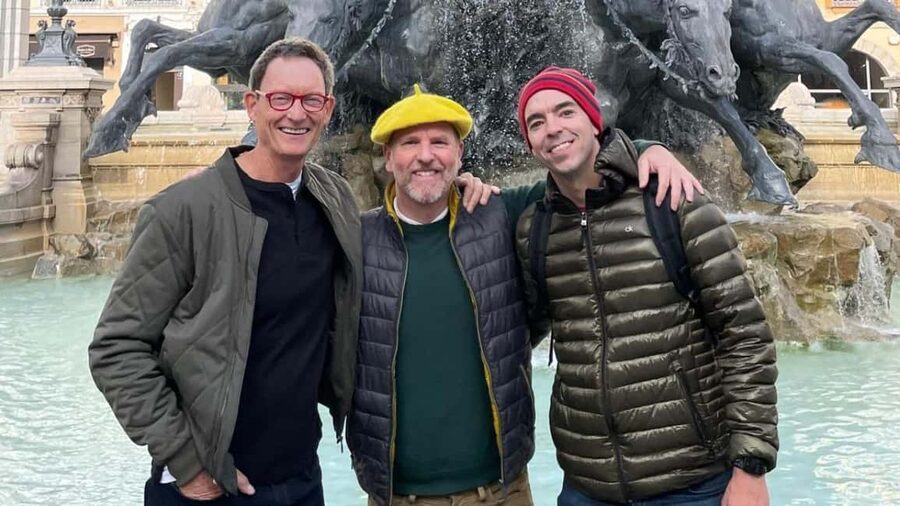
On the long 2-hour route, you get Place des Terreaux, then a Bartholdi Fountain photo stop and guided time. This section shifts you from hidden passageways back to open space and public art.
The value here is contrast. You already walked through narrow, human-scaled routes. Now you stand in a square built for gatherings and a different kind of storytelling. People repeatedly highlight the tour’s architecture and design focus, and this stop fits that exactly.
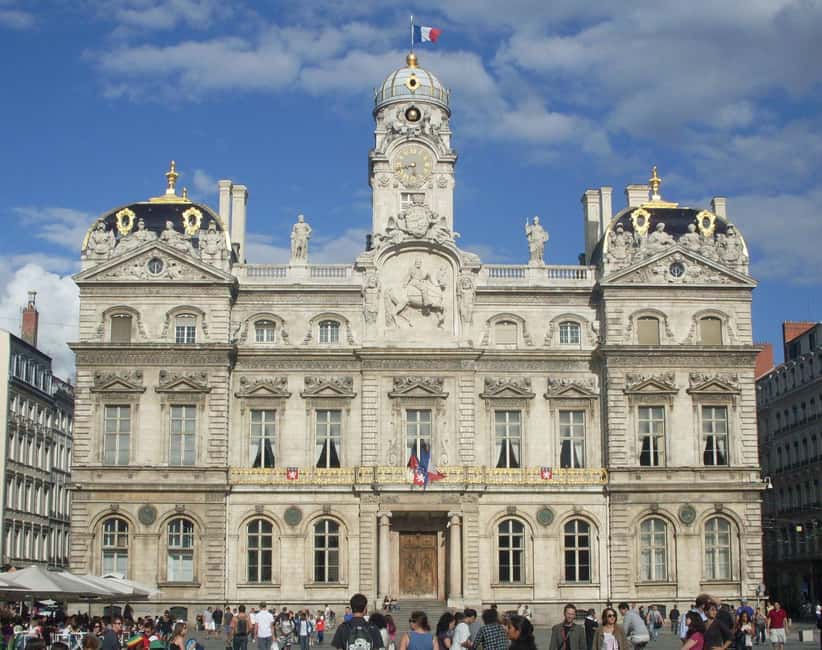
The tour also continues past Lyon’s city hall and toward the opera house area on the long route. If you like civic buildings, you will likely enjoy this stretch. If you are more of a “quick photo and move” person, you may still find it worthwhile because it ties Lyon’s visual identity together.
The River Saône: A Breather With Context
Both options include time by the Saône river. This matters more than it sounds. After tight streets and passageways, you need a change of pace. The river gives that without deleting the “Lyon learning” part.
It also helps you understand the city’s geography, since Lyon’s development ties closely to the waterways. In reviews, people mention bridges over the Rhone and Saône, and while the exact bridge set can vary by route, the river segment is part of the point: it places you in the real geography.
Plan for photos here. You will not get an hour-long photo session, but you will get guided timing and a chance to capture the river views.
Hôtel-Dieu on the Short Route: A Renaissance Hospital Made Useful Again
Option 2 includes Hôtel Dieux, described as Lyon’s imposing Renaissance hospital now used as a hotel and shopping center. This stop gives you a different kind of “old building” story. Instead of a monument that freezes history in place, you see a building repurposed for daily life.
That is a valuable theme for a short trip. It shows that history is not only something you look at. It is something you use, in modern ways, while still honoring the original scale.
If you take Option 1, this particular stop may be swapped out for more Fourvière and old-town routing, so Option 2 is the one that gives you this hospital-to-hotel perspective.
Photo Stops and the Pace That Keeps It Fun
Photo stops are included on the tour, and the guides seem to know where photos matter most: big viewpoints, key architecture angles, and the best spots for groups to regroup.
In reviews, people also mention the guide taking extra pictures and providing helpful maps, including QR codes for your phone, plus keepsakes like a Lyon keychain. I like that because it turns the tour into a practical souvenir, not just a stamp on a calendar.
The pace is often described as well-crafted. That translates to short guided segments, then time to look, then time to ask questions, and then move on. For a 90-minute to 2-hour tour, this pacing helps you feel like you got value without feeling exhausted.
Typical Bouchon Recommendations: What You Get Beyond Sights
Food is not included, but the guide provides typical bouchon restaurant recommendations along the way. That matters because Lyon has strong food culture, and eating well here is about choosing the right kind of place for your mood, not just picking the nearest restaurant.
I also find that a guide’s list helps you avoid the common trap of chasing the most obvious tourist menu. Even without food included in the ticket, the guide’s local choices can improve your day significantly.
If you have dietary needs, you should still check when booking or when you arrive. The tour gives you direction, but it does not guarantee a reservation.
Price and Value: Why $25 Can Be a Smart Use of Time
At $25 per person for a 90-minute to 2-hour experience, the key value question is what you actually receive for your time. This tour includes:
- a live guide in English and French
- tour time that covers major sights efficiently
- photo stops built into the route
- Fourvière funicular tickets on the 2-hour option
That last point matters. Many “highlights walks” leave the transport extras out, and then you end up paying anyway for the climb or the ticket later. Here, the long option folds that cost into the experience.
Is it the cheapest city tour out there? Maybe not. But if you care about getting the right sequence, learning what you are seeing in context, and hitting the traboules without getting lost, it is easy to justify. For first-time visitors, especially, this kind of orientation often pays off the moment you start wandering on your own.
Who This Tour Fits Best, and Who Might Want a Different Plan
This tour is for most ages and physical abilities, but with one clear limit: it is not suitable for people over 95.
It is also built for comfort on your feet, but not for “no walking” days. You get:
- about 5 km on the longer option
- about 2 km on the shorter option
- mostly flat terrain
If you love architectural details, short history explanations that connect the dots, and a few “secret path” surprises, you will probably enjoy both versions. If you only want the broadest overview and minimal walking, the 1.5-hour route is the smarter first bite.
Families can also work well. Reviews mention the guides being patient and thoughtful, including small gifts for children. So if your group has kids, this is one of those tours that seems to handle real life better than rigid, lecture-heavy options.
Should You Book This Lyon City Highlights Walking Tour?
Book it if you want a fast, friendly introduction that mixes Roman, Medieval, and civic Lyon in a route you can repeat later on your own. I especially think it is worth it if you want the traboules experience, because trying to “self-tour” that feeling usually turns into guessing.
Skip or switch plans if you are not up for guided walking, especially on the 2-hour option with about 5 km and the Fourvière area. Also reconsider if you are looking for food included in the price, since you will pay for meals separately.
If you only have a little time in Lyon, this tour is a practical way to get your bearings fast, with guides who clearly enjoy sharing the city and do it in a way that keeps the group moving.
FAQ
How long is the Lyon highlights walking tour?
It runs about 90 minutes to 2 hours, depending on which option you choose.
What are the differences between the long and short tour options?
The longer option is about 2 hours, covers about 5 km, and has a smaller group size (max 10). The shorter option is about 1.5 hours, covers about 2 km, and has a larger group size (max 18).
Do I need to speak French to join?
No. The tour is offered with a live guide in English and French.
Is food or drink included?
No. The tour includes sightseeing, guide, and photo stops, but food and drink are not included.
Is the Fourvière funicular included?
Yes, Fourvière funiculaire tickets are included on the 2-hour tour only.
Can I cancel or change plans if something comes up?
You can cancel up to 24 hours in advance for a full refund, and you can also reserve now and pay later.
Everything Else Filed Under Lyon
- Lyon City Hop-on Hop-off Sightseeing Bus Tour
★ 4.0 · 1,614 reviews - Vieux Lyon Cultural & Historical Walking Guided Tour (English)
★ 5.0 · 942 reviews - Lyon: Private Walking Tour of “Traboules” in the Old Town
★ 5.0 · 866 reviews - Lyon Highlights & Secrets Walking Guided Tour (small group) including Funicular
★ 5.0 · 831 reviews - Highlights and Hidden Gems of Lyon Guided Walking Tour (English)
★ 5.0 · 750 reviews
The Whole Lyon Shelf
- Lyon City Hop-on Hop-off Sightseeing Bus Tour
★ 4.0 · 1,614 reviews - Lyon: Musée de l’illusion Entrance Ticket
★ 3.9 · 1,023 reviews - Vieux Lyon Cultural & Historical Walking Guided Tour (English)
★ 5.0 · 942 reviews - Lyon: Private Walking Tour of “Traboules” in the Old Town
★ 5.0 · 866 reviews - Lyon Highlights & Secrets Walking Guided Tour (small group) including Funicular
★ 5.0 · 831 reviews
More of Lyon
- Lyon City Hop-on Hop-off Sightseeing Bus Tour
★ 4.0 · 1,614 reviews - Lyon: Musée de l’illusion Entrance Ticket
★ 3.9 · 1,023 reviews - Vieux Lyon Cultural & Historical Walking Guided Tour (English)
★ 5.0 · 942 reviews - Lyon: Private Walking Tour of “Traboules” in the Old Town
★ 5.0 · 866 reviews - Lyon Highlights & Secrets Walking Guided Tour (small group) including Funicular
★ 5.0 · 831 reviews
The rest of the Lyon write-ups
- Lyon Old Town Food & Wine Tasting Tour including a Bouchon Lyonnais★ 4.0 · 59 reviews
- Storytelling tour of the Vieux-Lyon for children in French★ 4.8 · 60 reviews
- Lyon UNESCO: Private walking tour★ 5.0 · 61 reviews
- Beaujolais Half Day Wine Tasting Tour★ 4.5 · 62 reviews
- 4h Complete Lyon Experience – E-Bike, Tasting & Walk★ 4.8 · 62 reviews
- Make French Pastries with Professional Chef in Private Atelier★ 5.0 · 66 reviews
Lyon Tours, in full.
 ★ 4.0Lyon City Hop-on Hop-off Sightseeing Bus TourFrom $291,614 reviews
 ★ 3.9Lyon: Musée de l’illusion Entrance TicketFrom $221,023 reviews
 ★ 5.0Vieux Lyon Cultural & Historical Walking Guided Tour (English)From $6942 reviews
 ★ 5.0Lyon: Private Walking Tour of “Traboules” in the Old TownFrom $43866 reviews
 ★ 5.0Lyon Highlights & Secrets Walking Guided Tour (small group) including FunicularFrom $39831 reviews
 ★ 5.0Highlights and Hidden Gems of Lyon Guided Walking Tour (English)From $6750 reviews
 ★ 5.0Food Tour in Lyon – A Full Taste of France by Do Eat BetterFrom $92603 reviews
 ★ 5.0Lyon Old Town Food Tour with 6 French Delicacies & Fine WineFrom $130575 reviews
Also on these France lists