
Reviewed · D-DAY LANDING BEACHES TOURS
Omaha Morning Half Day Tour to visit the landing areas at Omaha Beach
Omaha Beach hits different at street level. In just a half day from Bayeux, you pair real terrain with clear explanations that make the battle make sense. I love that the tour keeps moving so you see the big sites without wasting your day in Normandy.
Two things I especially like are the strong use of maps, photos, and documents to connect what you see on the ground to what happened in 1944, and the small-group feel, capped at 16 people. A possible drawback: it is a tight schedule, so if you like long, slow wandering at each spot, you may want a longer day tour instead.
In This Review
- Key highlights that make this Omaha tour work
- A tight morning circuit of Omaha Beach, the American Cemetery, and Pointe du Hoc
- Where you start in Bayeux (and why Place du Québec makes sense)
- Omaha Beach strong points: seeing WN 62, WN 65, and WN 73 in context
- The Normandy American Cemetery: why the scale hits hard
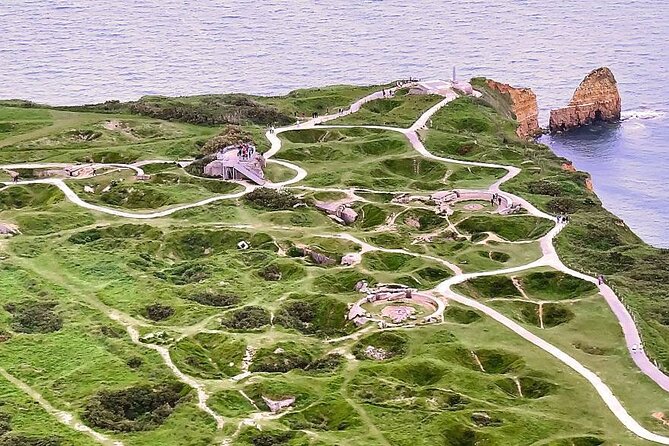
- Pointe du Hoc: the 100-foot cliff and the Rangers story
- Guide style: why the best part is the way the facts are delivered
- Price and what you truly get for $118.56
- Timing that respects your attention span
- What to bring so the morning feels easy
- Who should book this Omaha morning tour
- Should you book the Omaha Beach landing areas tour?
- FAQ
- How long is the Omaha Beach morning half-day tour?
- Where do I meet the tour, and when does it start?
- How many people are in the group?
- What stops will we visit?
- What is included, and do I need tickets for the sites?
- Is it offered in English, and can I cancel for a refund?
Key highlights that make this Omaha tour work
- Small group (max 16), so questions do not get swallowed by the crowd
- Maps and period photos to explain what you are looking at, not just read signs
- Omaha Beach strong points tied to specific WN sites like WN 62, WN 65, and WN 73
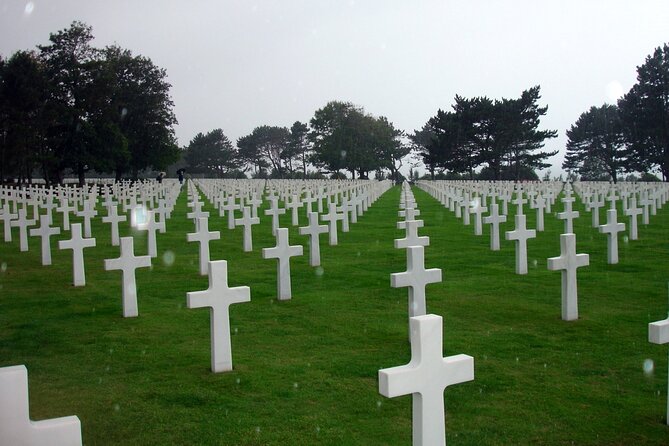
- Normandy American Cemetery with time to walk and take in the scale and stillness
- Pointe du Hoc focused on the cliff landing and the 2nd Rangers Battalion story
- Guides who bring the facts respectfully, with many praised for organized, engaging storytelling
A tight morning circuit of Omaha Beach, the American Cemetery, and Pointe du Hoc
This is a smart choice if you are short on time but you still want the core D-Day stops. You get three major locations in one morning, with guided context before you go stand on the ground where the fight happened. It is the kind of tour that helps you understand what you are seeing, then lets you absorb the mood on your own when you reach the memorials.
The half-day format also helps your brain. When you only have a day or two in Normandy, it is easy to feel like you are rushing from one site to the next. Here, the schedule is compact, so the story builds step by step rather than feeling like disconnected stops.
Other guided visits to the landing beaches and war cemeteries

Where you start in Bayeux (and why Place du Québec makes sense)
You meet at Place du Québec in Bayeux at 8:20 am. That matters because it is early, and Normandy mornings are cooler and less crowded in general. Also, the meeting point is convenient for anyone already planning time around central Bayeux, including a chance to see the well-known Bayeux Tapestry area before or after your tour.
You will end back at the same meeting point. That is a big deal if you want a predictable day. No complicated transfer plans, no guessing where you will be dropped.
A practical note: this is not a hotel pickup. You will want to arrive on time under your own steam, with an easy walk to the meeting spot.
Omaha Beach strong points: seeing WN 62, WN 65, and WN 73 in context
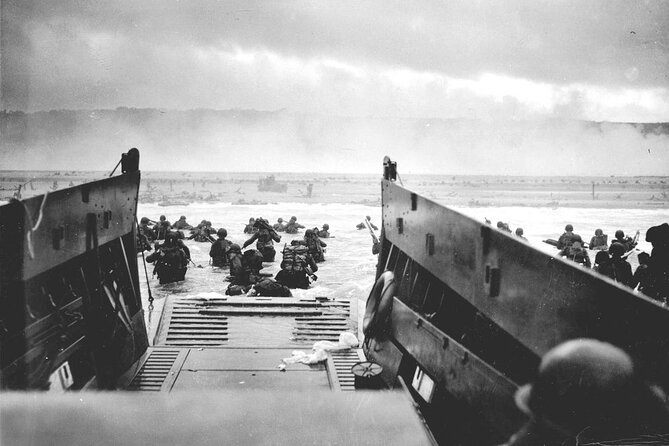
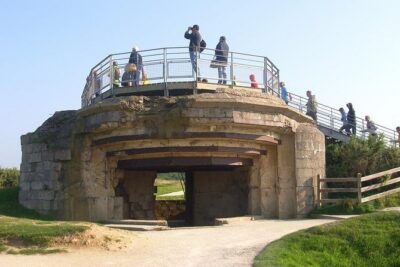
Omaha Beach can feel like one long shoreline until someone helps you break it down. This tour does that right away by pointing out German weapons strong point emplacements, known as Wiederstandnest (WN). You learn the meaning of WN and why these fortified positions mattered for the American landings.
You focus on key strong points tied to specific sectors along the beach, from the Sainte-Honorine-des-Pertes area toward Vierville. The tour specifically stops at:
- WN 62 in the Fox Green sector
- WN 65 in the Easy Red sector
- WN 73 in Dog Green near Vierville
Why those details are valuable: once you know where a strong point sits, you can better understand why progress was so difficult. You are not just viewing a beach, you are mapping the battle to the terrain. And because the guide brings maps and photographs, you are able to connect the real geography to the descriptions you hear.
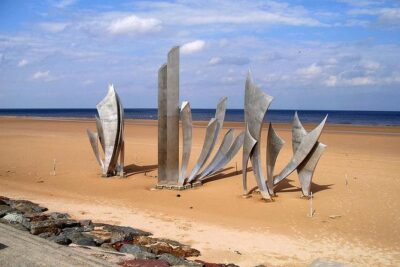
You get about 40 minutes at Omaha Beach. That is enough time to stand, look, and absorb the explanation, without turning it into a marathon. The sites are spread along the coast, so the guided structure helps you focus on the places that carry the most story.
The Normandy American Cemetery: why the scale hits hard
After Omaha, you move to the Normandy American Cemetery in Colleville-sur-Mer. This cemetery runs across 172.5 acres and is one of fourteen permanent American World War II cemeteries built on foreign soil. The numbers also come up: the cemetery contains the remains of 9,387 servicemen and women.
Those facts matter, but the real impact comes from how the space feels when you are there. Even with a guided stop, the cemetery offers a different pace than Omaha Beach. It is calmer, and the tone shifts from battle to remembrance.
You get about 40 minutes here as well. I like that the schedule gives you enough time to walk the grounds and not feel like you are just collecting photos for your camera roll. If you want a quiet moment to stand and read what is in front of you, this time window lets you do that.
Pointe du Hoc: the 100-foot cliff and the Rangers story
Pointe du Hoc is where the day sharpens. The site sits on a cliff about eight miles west of the American Cemetery. This is a monument created by France to honor elements of the 2nd Rangers Battalion, under the command of LTC James E. Rudder, who scaled a cliff said to be 100 feet high.
You also hear the dramatic skepticism behind the plan. An intelligence officer remarked it could not be done, and the Rangers were asked to make it happen anyway. It is the kind of story that gives you a clearer sense of why D-Day planning relied on courage and specialized execution, not just bravery in the abstract.
You get about 40 minutes at Pointe du Hoc. From a pacing point of view, that is a good balance. You can take in the views from the cliff area, follow the story the guide lays out, and still have a little time to stand back and look at the sheer drop and the ocean position.
Guide style: why the best part is the way the facts are delivered
The strongest praise from this tour is not the stops themselves. It is how the stops get explained. Many guides are described as prepared with documents, pictures, and lots of factual material, and they handle questions without turning the session into a lecture.
Names that come up in the guide stories include Remy, Stephen, Teo, Guillaume, Oliver, David Foulk, Thierry, Antoine, Guillaume again, Pierre, Michael, Christian, and Charles. The consistent theme is that guides use visuals to make complex events easier to follow. Some guides also help the group keep a respectful tone, mixing seriousness with the right amount of human warmth.
Another practical advantage: guides pay attention to weather. One review mentions heavy rain and how the guide worked around it so the tour still happened. That is not something you can control, but it is comforting when the person leading the day has a plan.
- Normandy Beaches Half-Day Afternoon Trip from Bayeux (A2)
★ 4.5 · 1,116 reviews - Omaha and Utah beaches
★ 5.0 · 1,085 reviews - Normandy Battlefields Tour – American Sites (A3)
★ 5.0 · 876 reviews - Private D-Day Experience from Bayeux
★ 5.0 · 573 reviews - Mont Saint-Michel Day Trip from Bayeux (Shared tour)
★ 5.0 · 540 reviews
Price and what you truly get for $118.56
The price is $118.56 per person for about four hours. On its face, that is not a cheap outing. But this is one of those tours where the value is in what you are not paying separately and what you are buying that you cannot easily replicate alone.
Here is the value logic:
- You are paying for a local guide who connects the terrain to the battle
- Admission is free for the stops listed in the tour, including the Omaha Beach stop, the American Cemetery, and Pointe du Hoc
- The cost also covers the time management of fitting multiple major WWII sites into one morning
You do not pay for a long private driver itinerary or a full-day program. Instead, you pay for focused interpretation. If you have only a morning and you want it to be meaningful, it can be a good deal.
One caution: drinks are not included. Food and drinks are not included either. So if you need water, coffee, or a quick snack before or after, plan ahead.
Timing that respects your attention span
This tour runs for about 4 hours and starts at 8:20 am. Each major stop is around 40 minutes, which is a sweet spot for a topic this heavy. You get the main explanation, time to stand where things happened, and enough room to feel the site without rushing through it like a checklist.
Also, small-group tours reduce the stop-start delays that larger groups can cause. With a maximum of 16 travelers, you are more likely to get answers to your specific questions, especially if you are the type who wants context like, What was the plan here? Why did it go wrong? Where exactly are we standing?
What to bring so the morning feels easy
Nothing here requires special gear, but comfort matters because this is an early start and you are outdoors.
Bring:
- A layer for morning chill, especially if you visit in cooler months
- Water, since drinks are not included
- Comfortable shoes for walking on uneven ground and cemetery paths
Also, consider using your phone for a few non-tour tasks before you go, since you will be using a mobile ticket format.
If you care about photos, aim to take them during your own quiet moments. The guide’s explanations and maps will give you better photo angles, because you will understand what you are aiming at.
Who should book this Omaha morning tour
This tour is a strong fit if:
- You want the best-known Omaha sites without a full day
- You learn well through visuals, with maps and photos that connect events to geography
- You prefer a small-group experience where questions are welcome
- You want a focused WWII introduction that is respectful and structured
It may not be the best match if:
- You hate tight schedules and want long, independent exploration
- You already know the geography well and would rather spend time elsewhere beyond these three anchors
If you are visiting Bayeux for the Tapestry and you want Normandy history to go with it, this is a practical pairing. You get morning history, then you can return to town for the rest of your day.
Should you book the Omaha Beach landing areas tour?
I think you should book it if you have a morning available and you want the core Omaha Beach story told clearly, with visuals and specific strong-point stops like WN 62, WN 65, and WN 73. The American Cemetery stop gives you the solemn context, and Pointe du Hoc adds the cliff-and-Rangers intensity. For the time you spend, it is hard to beat.
If you can only do one tour and you do not want to spend hours planning your own route, this is a straightforward way to make your visit more than just scenery. Just go in ready for an emotional day, bring water, and wear shoes you can stand in comfortably.
FAQ
How long is the Omaha Beach morning half-day tour?
It is listed as about 4 hours.
Where do I meet the tour, and when does it start?
You meet at Place du Québec in Bayeux at 8:20 am, and the tour ends back at the meeting point.
How many people are in the group?
This tour has a maximum of 16 travelers.
What stops will we visit?
You will visit Omaha Beach landing areas (including specific strong points), the Normandy American Cemetery, and Pointe du Hoc.
What is included, and do I need tickets for the sites?
The tour includes a local guide. Admission tickets are listed as free for the stops. Drinks and food are not included.
Is it offered in English, and can I cancel for a refund?
It is offered in English. You can cancel up to 24 hours before the experience start time for a full refund.
Everything Else Filed Under Bayeux
- Normandy American D-Day Beaches Full Day Tour from Bayeux
★ 5.0 · 2,103 reviews - Normandy American D-Day Experience – Group tour from Bayeux
★ 5.0 · 1,566 reviews - Omaha and Band Of Brothers Full Day Tour
★ 5.0 · 1,104 reviews - Omaha Beach D-Day Experience – Afternoon group tour from Bayeux
★ 5.0 · 1,088 reviews - Normandy Battlefields Tour – American Sites (A3)
★ 5.0 · 876 reviews
The Whole Bayeux Shelf
- Normandy American D-Day Beaches Full Day Tour from Bayeux
★ 5.0 · 2,103 reviews - Normandy American D-Day Experience – Group tour from Bayeux
★ 5.0 · 1,566 reviews - Normandy Beaches Half-Day Afternoon Trip from Bayeux (A2)
★ 4.5 · 1,116 reviews - Omaha and Band Of Brothers Full Day Tour
★ 5.0 · 1,104 reviews - Omaha Beach D-Day Experience – Afternoon group tour from Bayeux
★ 5.0 · 1,088 reviews
The Landing Beaches, Other Guided Visits
- Normandy American D-Day Beaches Full Day Tour from Bayeux
★ 5.0 · 2,103 reviews - Normandy American D-Day Experience – Group tour from Bayeux
★ 5.0 · 1,566 reviews - Omaha and Band Of Brothers Full Day Tour
★ 5.0 · 1,104 reviews - Omaha Beach D-Day Experience – Afternoon group tour from Bayeux
★ 5.0 · 1,088 reviews - Omaha and Utah beaches
★ 5.0 · 1,085 reviews
The rest of the Bayeux write-ups
- From Bayeux: 2-hour private sidecar tour in Normandy★ 5.0 · 58 reviews
- Private Day Tour of Mont Saint-Michel from Bayeux★ 5.0 · 62 reviews
- Normandy – Mont Saint-Michel Full Day Tour from Bayeux★ 4.5 · 62 reviews
- Omaha Highlights Tour with a DDAY expert from Bayeux★ 5.0 · 63 reviews
- Bayeux: 2-hour tour of the D-Day beaches, by vintage sidecar★ 4.9 · 64 reviews
- Band of Brothers Full Day Tour from Bayeux★ 5.0 · 67 reviews