
Reviewed · SEINE RIVER CRUISES
Seine River Direct Access Guided Cruise
Paris from the water feels different.
This Seine River direct-access guided cruise is a quick, low-effort way to see a stack of Paris icons in about an hour, with an onboard guide narrating as you glide past. I love that it runs on a 100% electric boat and gives you panoramic windows for photos without craning your neck. One thing to consider: it is a short ride, so you are getting views and stories, not a deep stop-and-explore tour.
What I like most is how “guided” this feels. The narration connects landmarks like the Eiffel Tower, Notre-Dame, the Louvre, and the big showpiece bridges so you understand what you are looking at while it is still right in front of you.
The main drawback is simple weather reality. If you book in cooler months, it can get chilly and windy on outdoor decks, and in hot weather the boat can feel stuffy before it gets underway.
In This Review
- Key reasons this cruise works so well
- Port de Suffren start: fast in, fast out
- Electric boat comfort plus panoramic windows
- Live narration in English, and how to make it work
- The 1-hour route: what you will actually see from the water
- Eiffel Tower area, plus the American Church and Invalides
- Bridges with political stories: Alexandre III and Pont de la Concorde
- Orsay station turned museum, then Institut de France
- Pont Neuf masks, Île de la Cité, and Pont Saint-Michel
- Notre-Dame Cathedral: what to notice while you pass by
- Tournelle Bridge, Arab World Institute, and Île Saint-Louis charm
- Hôtel de Ville and the Louvre: civic power and art scale
- Place de la Concorde, Grand Palais, and Chaillot at the Trocadéro side
- Champagne and refreshments onboard, plus the 18+ rule
- Weather reality: windy decks and hot boats
- Where this fits your Paris schedule
- Price and value: why $25.23 can make sense
- A few smart moves before you board
- Should you book the Seine River Direct Access Guided Cruise?
- FAQ
- How long is the Seine River direct-access guided cruise?
- Where does the cruise start and end?
- Is there a live guide on board?
- Is the narration offered in English?
- Is champagne included in the price?
- Is the boat electric?
- Do I need a printed ticket?
Key reasons this cruise works so well
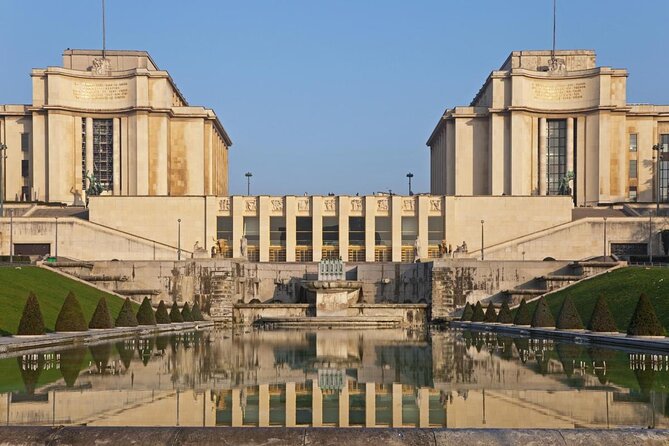
- A live guide on board explains what you are seeing as the shoreline slides by
- Panoramic windows make landmark spotting easier than you might expect
- 100% electric cruising keeps the ride feeling clean and modern
- A packed route in one hour covers major sights without heavy walking
- Two departure windows (morning and afternoon) help you fit it into your day
Port de Suffren start: fast in, fast out
Your sailing starts at 2 Port de Suffren (75007). That location matters because it is on the south side of the Seine, which tends to make it easy to line up with other things you want to do that day. You also end back at the same meeting point, so you are not solving a puzzle at the end of your cruise.
You will use a mobile ticket, and the experience is labeled as near public transportation. In real life, that means you can usually roll right in from a metro ride without needing a complicated transfer.
More boats on the Seine, briefly compared
Electric boat comfort plus panoramic windows
This cruise runs on a 100% electric boat, which is a big quality-of-life detail. You are not dealing with the heavy exhaust feel you can get on older motorboats, and the whole trip just seems calmer.
The ride is designed around panoramic windows, so you can watch the river sights unfold even if you are sitting inside. That matters because the Seine is pretty, but the weather can be stubborn, especially in shoulder seasons.
Group size is also part of the comfort equation. With a stated maximum of 220 travelers, this is not billed as a tiny skiff, but you should still feel like you can find a good angle for photos if you show up on time.
Live narration in English, and how to make it work
This is a guided cruise with narration in English, delivered live onboard. Most of the value here comes from the guide turning the scenery into something you can picture: what the landmark is, why it was built, and what it symbolizes in Paris.
Do expect that you will need to listen a bit actively. On at least one sailing, the English delivery was harder to understand, so do not plan on multitasking. If you are traveling with kids, that is exactly where a live guide helps, because the commentary gives the ride a storyline rather than just being background noise.
The 1-hour route: what you will actually see from the water
This is an about 1-hour cruise, so think of it as a moving slide show with real context. The itinerary reads like a greatest-hits list, but you are not stopping at every site. Instead, you see them from the Seine as the narration hits each one.
Also, the cruise is described as including sights through panoramic windows, so you can track the route even if you spend part of the hour inside. Here is the route breakdown in the order you are guided through.
Eiffel Tower area, plus the American Church and Invalides
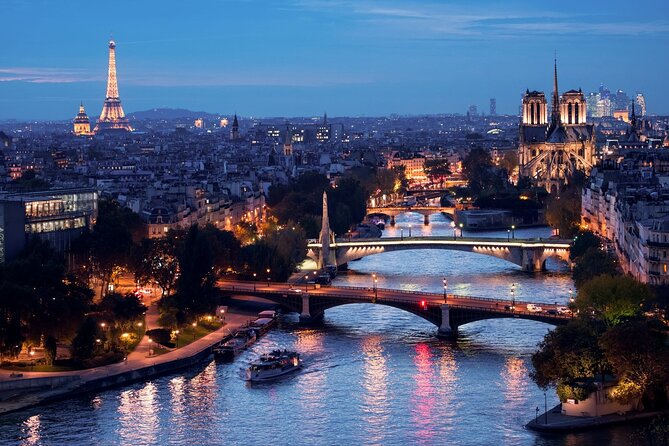
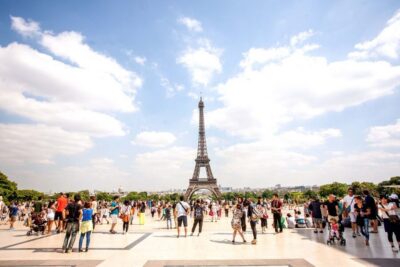
You start with the Eiffel Tower, and the guide’s explanation makes it more than a postcard. You learn that Gustave Eiffel’s tower was built for the 1889 Universal Exhibition, completed in just over two years, and that Parisians were scandalized by the height and metal look at the time. You also get the detail that it was originally intended for only about 20 years, but the 1903 radio antenna extension is what helped it survive.
Next up, you look toward the American Church in Paris. It is notable for being the first American Church built outside the US in 1931, and you get the stained-glass connection tied to Louis Comfort Tiffany, which is listed as a historic monument.
Then the narration brings in the Hôtel des Invalides. You hear it was built on orders of Louis XIV as a military hospital for injured soldiers and officers. Today, the royal chapel there is tied to Napoleon I’s tomb, so it is one of those sights that feels ceremonial rather than just scenic.
Bridges with political stories: Alexandre III and Pont de la Concorde
The cruise highlights Alexandre III Bridge, built for the 1900 Universal Exhibition and designed to seal the Franco-Russian Alliance. You get the visual symbolism built into the bridge itself, including the Paris coat of arms covered in gold leaf and the nymph figures representing the Seine. The narration also points out the mirror idea on the other side, with Saint Petersburg and nymphs symbolizing the Neva.
After that comes Pont de la Concorde, a bridge with revolutionary leftovers. The stones used here come from the former Bastille prison, which was stormed in 1789, so the bridge carries literal material from a turning point in French history. From the bridge line, the narration also orients you toward what is nearby, including the Palais Bourbon on one side and the Place de la Concorde on the other.
More Paris tours that come with a guide
- Paris: Louvre Guided Tour with Reserved Access & Boat Cruise
★ 4.3 · 16,353 reviews - Louvre Museum Masterpieces Guided Tour with Access
★ 4.5 · 12,023 reviews - Louvre Museum – Exclusive Guided Tour (Entry Included)
★ 5.0 · 6,296 reviews - Louvre Priority Access with Mona Lisa Escort or Guided Option
★ 4.0 · 4,420 reviews - Louvre Museum: Skip-the-Line Small Group Guided Tour
★ 4.6 · 3,960 reviews
Orsay station turned museum, then Institut de France
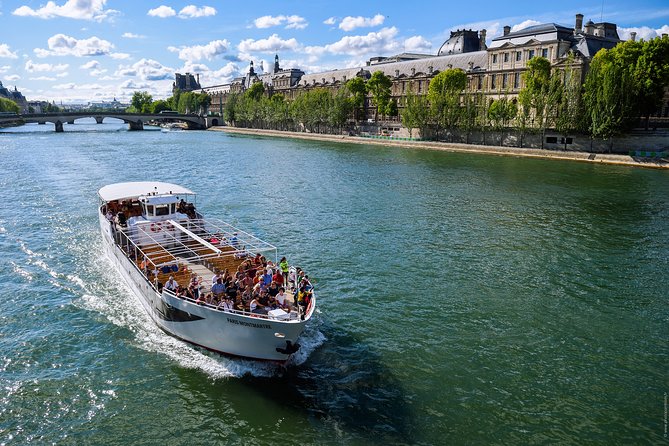
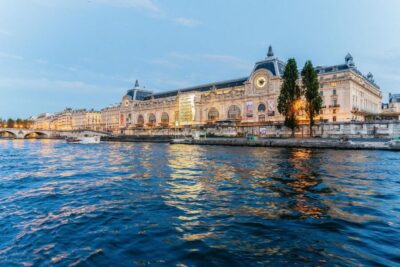
One of the best moments on a Seine cruise is seeing buildings you associate with museum time, but from a totally different angle. Here, you get the former Orsay railway station, built for the 1900 Universal Exhibition with a line leading toward the south-west of France. The big story is that it became a museum in the 1980s, now known for 19th-century art, including artists like Renoir, Monet, and Van Gogh.
Then you glide past the Institut de France area, tied to the former Collège des Quatre Nations. The narration explains that cardinal Mazarin funded the construction in 1661 and that it houses five academies. The Académie Française is singled out because its members help shape and update the official French dictionary.
Pont Neuf masks, Île de la Cité, and Pont Saint-Michel
The cruise includes Pont Neuf, which is notable because it is the oldest bridge in Paris and was the first stone bridge to include pavements rather than houses along the edges. The famous detail here is the 381 grimacing stone masks, each individually decorated and unique.
Then the guide turns to Île de la Cité, described as the presumed birthplace of Paris. You hear about the Parisii tribe settling there around 300 years before the Common Era and calling the island Lutetia.
After that comes Pont Saint-Michel. You get the Napoleon III connection, hinted in the two imperial Ns on its pillars. The narration also uses the bridge to point your attention toward the Latin Quarter, tied to the University of Paris students who spoke Latin until the 19th century.
Notre-Dame Cathedral: what to notice while you pass by
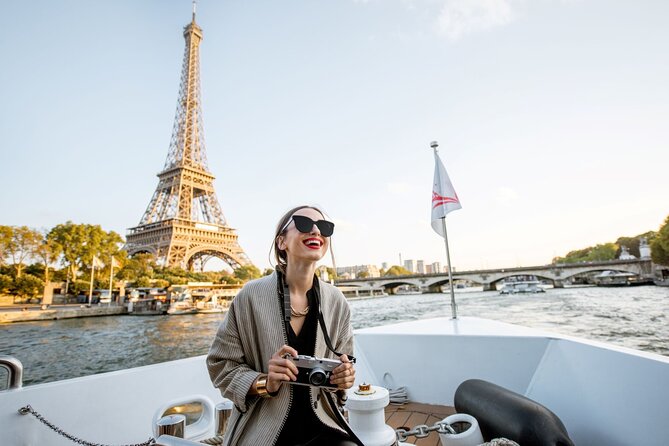
Notre-Dame is one of the stops named directly as Cathedrale Notre-Dame de Paris. Even if you are not going inside during the cruise, the guide gives you a mental checklist: construction started in 1163 and it was completed nearly two centuries later, in 1345. You learn it features gargoyles and sculptures, and you hear about the Rose du Midi, a south rose window dedicated to the New Testament and connected to a gift from Saint Louis.
You are also told that the admission ticket is free. Even so, use that as a clue that Notre-Dame is meant to feel like a public landmark you can plan to visit later, not just a photo stop.
Tournelle Bridge, Arab World Institute, and Île Saint-Louis charm
The narration brings in Tournelle Bridge, and the guide calls your attention to a statue of Saint Genevieve, patron saint of Paris. The statue’s sculptor is identified as Paul Landowski, who later sculpted Christ the Redeemer in Rio de Janeiro, so it is a fun line that connects Paris art to a world-famous landmark.
Next is the Arab World Institute, inaugurated in 1987 by President François Mitterrand. The point of this stop is cultural rather than architectural dominance: it focuses on history, art, society, religions, and science in the Arab world.
Then you reach Île Saint Louis, where the cruise gives you that classic Paris island vibe. It is described as having prestigious 17th-century town houses, with examples like Hotel Lambert and Hotel Lauzun. The narration also adds the human layer, noting that celebrities like Charles Baudelaire and Georges Moustaki have lived there.
Hôtel de Ville and the Louvre: civic power and art scale
You pass the Hôtel de Ville de Paris, the city council seat since 1357. The guide highlights its Neo-Renaissance style influences and notes that it is open to visitors. You also get a detail about its banquet hall design, which is modeled on the Hall of Mirrors template in Versailles.
Then the route brings in the Louvre. The narration frames it as a former royal palace turned museum in 1793, and it leans into scale: the Louvre is described as Paris’s largest monument, with more than four kilometers of façades and nearly 14 kilometers of galleries. You also get the headline collection names: Winged Victory of Samothrace, Venus de Milo, and of course Mona Lisa.
From a cruise, you will not “experience” the art the way you would inside. But getting the Louvre’s size and location understood while you are on the Seine makes your later museum day feel more intentional.
Place de la Concorde, Grand Palais, and Chaillot at the Trocadéro side
The narration returns to Place de la Concorde, explaining it as the site where Louis XVI and Marie-Antoinette were executed during the French Revolution. The central feature is the obelisk from Luxor in Egypt, described as 34 centuries old and brought to France in 1836.
After that comes the Grand Palais, built for the 1900 Universal Exhibition. The glass roof is called one of the largest in Europe, and you learn it now serves as a venue for cultural events and exhibitions, including a funfair and the largest skating rink in Europe.
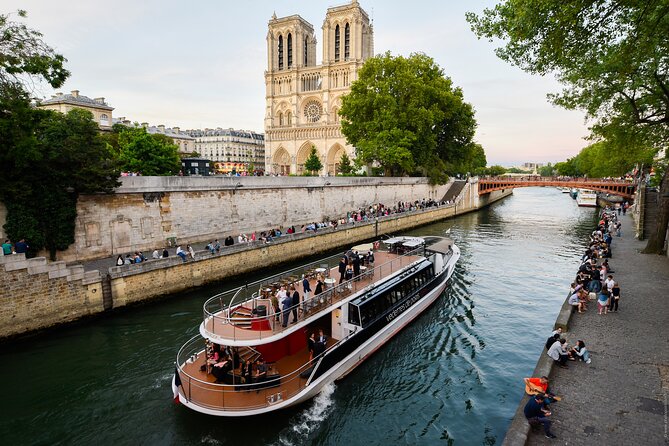
Finally, you get the Palais de Chaillot at Place du Trocadero. It was built in 1937 for a Universal Exhibition and includes two Neoclassical pavilions flanking an esplanade with views over the Trocadero gardens. The narration lists what it houses, including the City of Architecture and Heritage, the National Navy Museum, the Museum of Humankind, and the National Theatre of Chaillot.
Champagne and refreshments onboard, plus the 18+ rule
Champagne is not automatically included. It is available for purchase onboard, and the listing specifically calls out Duval Leroy Champagne as the referenced glass if you do not select otherwise.
They also note an 18+ serving rule for alcoholic drinks. If you are traveling with minors under 18, they will be served non-alcoholic drinks.
One practical advantage is that there is an onboard spot for refreshments. That means you can buy something without disembarking, which is handy when your cruise is only an hour long and you do not want to lose time.
Weather reality: windy decks and hot boats
Weather is the make-or-break variable with river cruises. In October and November, it can be chilly and windy on the top deck, so pack a hat or something that blocks wind. If you are traveling in summer heat, plan for the opposite problem: you might find the boat feels hot before it starts moving, and airflow inside can be limited until you are underway.
My advice is to dress in layers, even when the forecast looks mild. You can start inside and shift outdoors once the breeze kicks in, which makes the ride feel comfortable rather than miserable.
Where this fits your Paris schedule
This cruise is best when you want quick perspective. If it is your first time in Paris, or you are on a tight schedule, the route gives you a smart overview of major areas you will likely want to revisit.
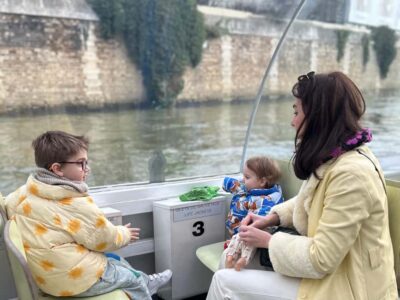
It also fits families. The guided format is built for holding attention, and you are not stuck watching a screen. It works well for parents who want a break from constant walking without turning the hour into a lecture.
That said, it is not designed for serious museum immersion. If you want to go deep into the Louvre’s wings or spend time inside Notre-Dame, this is the warm-up, not the main event.
Price and value: why $25.23 can make sense
At $25.23 per person, you are paying for three things: time savings, expert narration, and a scenic route that hits many landmarks in a single, low-effort hour.
Compared with building a similar set of views yourself, you avoid logistics and you get context while the sights are in front of you. Compared with a longer sightseeing day, you also avoid the fatigue hit that comes from hopping between multiple stops.
Where the value shifts is if you plan to buy alcohol. Champagne is available onboard, so if you treat that as part of your budget, it stays predictable. If you do not, you can keep it simple and enjoy the cruise itself.
A few smart moves before you board
- Get there a bit early so you can choose where you sit, especially if you want outdoor views.
- Bring a windbreaker or hat for cooler months, even if the forecast looks okay.
- Keep your boarding info handy on your phone in case staff need it quickly.
- If you are traveling with someone who needs extra help, tell the crew early. There is a track record of accommodating groups by adjusting how they queue.
Also, keep in mind that this experience depends on weather. If conditions are poor, you might be offered another date or a full refund.
Should you book the Seine River Direct Access Guided Cruise?
Book it if you want a simple, guided way to see Paris highlights from the Seine with English narration and minimal walking. It is a strong choice for first-timers, time-crunched travelers, and anyone who likes learning what they are looking at while views are still fresh.
Skip it if you expect museum-level visits, or if you get frustrated when you cannot hear commentary clearly. It is also not ideal if you hate weather swings, because you may want outdoor deck time for the best angles, and that can mean wind or heat depending on the season.
FAQ
How long is the Seine River direct-access guided cruise?
The cruise is about 1 hour.
Where does the cruise start and end?
It starts at 2 Port de Suffren, 75007 Paris, France, and ends back at the same meeting point.
Is there a live guide on board?
Yes. The cruise includes a live guide.
Is the narration offered in English?
Yes, it is offered in English.
Is champagne included in the price?
Champagne is not included. Champagne is available to purchase onboard.
Is the boat electric?
Yes. The cruise is on a 100% electric boat.
Do I need a printed ticket?
No. A mobile ticket is provided.
More Paris Tours That Come With a Guide
- Paris: Louvre Guided Tour with Reserved Access & Boat Cruise
★ 4.3 · 16,353 reviews - Louvre Museum Masterpieces Guided Tour with Access
★ 4.5 · 12,023 reviews - Louvre Museum – Exclusive Guided Tour (Entry Included)
★ 5.0 · 6,296 reviews - Versailles: Skip-the-Line Guided Palace Tour and Full Access
★ 4.6 · 5,214 reviews - Louvre Priority Access with Mona Lisa Escort or Guided Option
★ 4.0 · 4,420 reviews
The Whole Paris Shelf
- Paris: Louvre Museum Timed-Entrance Ticket
★ 4.6 · 71,977 reviews - Disneyland® Paris 1-Day Ticket
★ 4.6 · 49,412 reviews - Paris: Versailles Palace and Gardens Full Access Ticket
★ 4.6 · 41,579 reviews - Paris: Evening River Cruise with Music
★ 4.4 · 22,721 reviews - Paris: Eiffel Tower Entry Ticket with Optional Summit Access
★ 4.4 · 20,035 reviews
Still on the Seine
- Paris: Seine Cruise & Crepe Tasting near the Eiffel Tower
★ 4.4 · 11,231 reviews - Paris: Seine River Panoramic Views Dinner Cruise
★ 4.3 · 10,611 reviews - Paris: Eiffel Tower Access by Elevator & Seine River Cruise
★ 4.6 · 7,329 reviews - Paris: 3-Course-Dinner Cruise on the Seine with live music
★ 4.7 · 7,248 reviews - Bateaux Parisiens Seine River Gourmet Dinner & Sightseeing Cruise
★ 4.5 · 6,930 reviews
The rest of the Paris write-ups
- Montmartre: Guided Tour for Kids and Families★ 4.9 · 57 reviews
- From Paris: Versailles Palace and Gardens Guided Day Trip★ 4.5 · 57 reviews
- Versailles Palace and Garden Tour with Paris Private Transfers★ 5.0 · 58 reviews
- Louvre Evening Escape – Avoid The Crowds! Semi-Private 6ppl Max★ 5.0 · 58 reviews
- Summit Eiffel Tower Audio Guide Tour with Unlimited Time Access★ 4.5 · 58 reviews
- Private Half Day Historic Tour★ 5.0 · 58 reviews
Seine River Cruises, in full.
 ★ 4.4Paris: Seine Cruise & Crepe Tasting near the Eiffel TowerFrom $2311,231 reviews
 ★ 4.3Paris: Seine River Panoramic Views Dinner CruiseFrom $6410,611 reviews
 ★ 4.6Paris: Eiffel Tower Access by Elevator & Seine River CruiseFrom $797,329 reviews
 ★ 4.7Paris: 3-Course-Dinner Cruise on the Seine with live musicFrom $1357,248 reviews
 ★ 4.5Bateaux Parisiens Seine River Gourmet Dinner & Sightseeing CruiseFrom $1506,930 reviews
 ★ 4.4Paris: Hop-On Hop-Off Seine Cruise Pass with 9 StopsFrom $275,645 reviews
 ★ 4.2Paris: Seine River Bistronomic Dinner CruiseFrom $695,272 reviews
 ★ 4.3Paris : 3-Course Gourmet Dinner Cruise on Seine RiverFrom $1005,205 reviews
Also on these France lists