
Reviewed · SEINE RIVER CRUISES
Seine River Guided Cruise by Vedettes de Paris
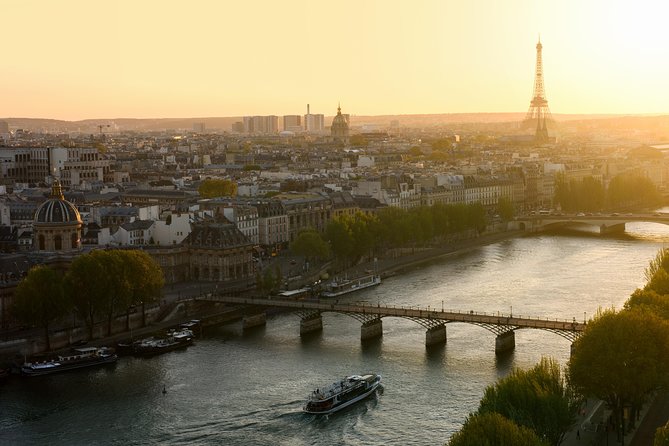
A Seine cruise is the easiest way to read Paris. This one by Vedettes de Paris pairs a 100% electric boat with live English and French commentary, plus optional snack and drink packages. I especially like the fast, time-friendly 1 hour format and the way you get clear views of iconic sights like Notre Dame and Musée d’Orsay from the water, not across crowded streets. One watch-out: if the boat is busy outside or it is cold, you may find the narration harder to catch from the top deck, so plan to adjust seats.
You can also time it for day or evening. Go during the daytime to see landmarks in context, or pick an evening slot for the City of Lights look, when monuments glow along the river. For a first trip or a reset day, it is a smart use of time, especially if you want photos without the stress of walking between stops.
In This Review
- Key highlights and practical tips
- What $25.23 gets you on a 1-hour electric Seine cruise
- Picking the right departure time: day landmarks or evening lights
- Where you board at Port de Suffren and what to do when you arrive
- Audio narration setup: live guide plus a commentary app
- The route along the Seine: from Eiffel Tower views to Palais de Chaillot
- Eiffel Tower to the bridges that define the skyline
- Pont Alexandre III and Pont de la Concorde: gold, myths, and revolutionary echoes
- Museum riverfront energy at Orsay and the Institut de France
- Pont Neuf to Pont Saint-Michel: older Paris in stone and names
- Île de la Cité and Notre-Dame: the spiritual center from the water
- Arab World Institute, Île Saint-Louis, and the civic heart
- Louvre to Place de la Concorde: from royal palace to revolutionary square
- Grand Palais, the Flame of Liberty, and Palais de Chaillot
- Comfort, seating, and real-world issues that affect your experience
- Drinks and snacks: simple add-ons, not a full meal
- Who should book this Seine cruise, and who might want something else
- Should you book Vedettes de Paris Seine River Guided Cruise?
Key highlights and practical tips
- 100% electric boat for a quieter, modern-feeling cruise on the Seine
- Live English and French guide, plus a free commentary app in several other languages
- Short and sweet 1 hour route, packed with major riverside landmarks
- Optional champagne and snack packages, so you can turn it into a small treat
- Good for photos, especially the Eiffel Tower views and the big bridge set-pieces
- Bring your patience for cold weather choices, because sound and comfort can vary by deck
What $25.23 gets you on a 1-hour electric Seine cruise
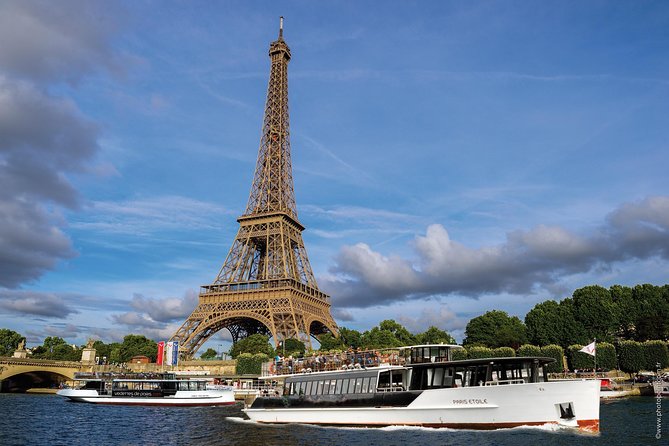
At about $25.23 per person, this is priced like a “high value” Paris classic. You are not buying a long tour. You are buying a clean, modern ride that gives you big-picture sightlines along the river. For many visitors, that is the real cost saver here. One hour on the water can replace several minutes of transit and wayfinding between major landmarks.
The 100% electric part matters more than it sounds. Electric boats tend to feel smoother and less harsh, which makes a big difference when you are listening to commentary and trying to enjoy the view instead of battling noise. Even better, the experience is built around short viewing moments of landmark after landmark, so you do not have to commit to a half day just to see the highlights.
You should still expect that not every seat will give the same experience. A few visitors noted audio can be hard to hear outdoors. If sound is your priority, choose your seating with care, especially if you are on the top deck.
More boats on the Seine, briefly compared
Picking the right departure time: day landmarks or evening lights
Vedettes de Paris runs multiple departures throughout the day, which is great because you can fit it around other plans. If your goal is to orient yourself, take the daytime option. You’ll get clearer views of building details and river banks, including bridges, churches, and museum façades.
If your goal is mood and photos, go for an evening cruise. People consistently like the “City of Lights” effect at night, and it makes sense. Along this route, the illuminated landmarks create strong photographic lines and reflections on the water.
If you are unsure, here is the simple rule I use: daytime if you want to learn the layout, evening if you want to feel the magic. Either way, the time on board is short enough that you still have plenty of day left for walking.
Where you board at Port de Suffren and what to do when you arrive
The meeting point is at 2 Port de Suffren, 75007 Paris, near V75R+HJ7. It is in a central area, and the tour notes that it is near public transportation, which helps a lot if you are juggling other activities.
Practical tip: arrive before your departure time. The cruise schedule is set up so you can board in advance of daily departures, which reduces last-minute stress. This is especially helpful when you are coordinating with another timed attraction, like an Eiffel Tower visit.
Also know the boat has limits. No baggage is accepted on board, so travel light. If you have a daypack, plan how you will manage it before you get to the pier.
Audio narration setup: live guide plus a commentary app
The cruise uses live guide narration in English and French. On top of that, you get a free mobile application with commentary in Spanish, Italian, German, and Dutch. This is a nice safety net. If you miss a sentence because you are photographing or you step to a different part of the deck, you can still follow along.
One thing to keep in mind: sound can be inconsistent depending on where you sit and how windy it is. Several people found the narration difficult to hear from the outdoor top deck, and others said the guide sounded rushed on their sailing. That does not mean the cruise is bad, it means your experience can change based on conditions.
My advice: if it is cold, consider staying inside if your ticket allows access to warmer areas. If you want the best sightlines, go outside for key moments like bridges and the Eiffel Tower. Just switch strategically.
The route along the Seine: from Eiffel Tower views to Palais de Chaillot
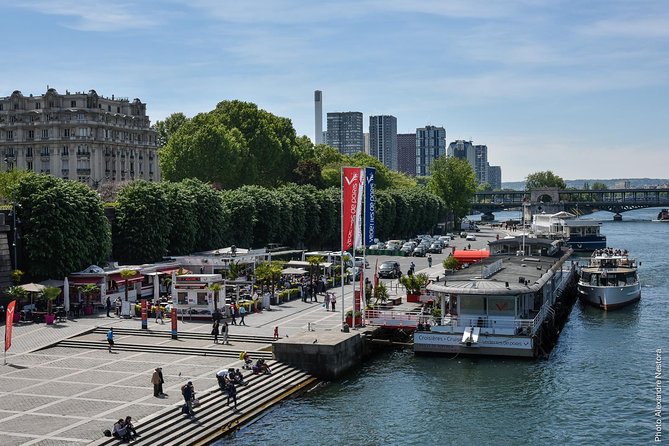
This cruise is built like a moving photo strip. As you travel, you get commentary timed to what you can actually see from the water. Here’s how the major stops shape the experience, and what to watch for at each.
Eiffel Tower to the bridges that define the skyline
The tour begins with the Eiffel Tower as a reference point, and the narration covers its origin as a 1889 Universal Exhibition project. You also learn the quick timeline behind its construction and why it initially caused controversy for Parisians. From the river, the best part is scale. The tower feels different when you are not looking up from a lawn, you are watching it rise straight out of the city fabric.
Soon after, you pass religious and cultural landmarks that add variety to the usual “just museums and monuments” Seine storyline. You’ll hear about the Holy Trinity Cathedral (Russian Orthodox) and its Franco-Russian school and cultural center, then the American Church in Paris, known for its green clock-tower and stained-glass by Louis Comfort Tiffany.
From there, you move into classic grand landmarks. Hôtel des Invalides is a major one, tied to Louis XIV’s military hospital and today’s royal chapel, which houses the tomb of Napoleon I. If you have only seen Invalides from the street before, this gives you a new angle and helps the complex feel more connected to the river.
More Paris tours that come with a guide
- Paris: Louvre Guided Tour with Reserved Access & Boat Cruise
★ 4.3 · 16,353 reviews - Louvre Museum Masterpieces Guided Tour with Access
★ 4.5 · 12,023 reviews - Louvre Museum – Exclusive Guided Tour (Entry Included)
★ 5.0 · 6,296 reviews - Louvre Priority Access with Mona Lisa Escort or Guided Option
★ 4.0 · 4,420 reviews - Louvre Museum: Skip-the-Line Small Group Guided Tour
★ 4.6 · 3,960 reviews
Pont Alexandre III and Pont de la Concorde: gold, myths, and revolutionary echoes
The cruise then brings you under Pont Alexandre III, built for the 1900 Universal Exhibition and linked to the Franco-Russian Alliance. The narration points out gold leaf on the central coat of arms and the nymph figures representing the Seine, plus the other side referencing Saint Petersburg and the Neva. This is one bridge where the details feel worth slowing down for. When you can see the sculpture lines from a moving boat, it’s easier to appreciate why Parisians consider it special.
Next is Pont de la Concorde. You learn it uses stones from the former Bastille prison, a reminder of how the French Revolution reshaped the city. The bridge also acts like a visual signpost to major civic buildings and squares.
Museum riverfront energy at Orsay and the Institut de France
One of the biggest emotional switches in the route is when you hit the Musée d’Orsay area, introduced through the story of the former Orsay railway station for the 1900 Universal Exhibition. The station later became the museum in the 1980s, and the narration connects it to 19th-century art, including names like Renoir, Monet, and Van Gogh.
Then you pass the Institut de France, formerly the Collège des Quatre Nations. You’ll hear how Cardinal Mazarin funded it and that it houses five academies, with the Académie Française tied to updates of the official French dictionary. This stop helps you understand why Paris is not only monuments. It is institutions, language, and ideas.
Pont Neuf to Pont Saint-Michel: older Paris in stone and names
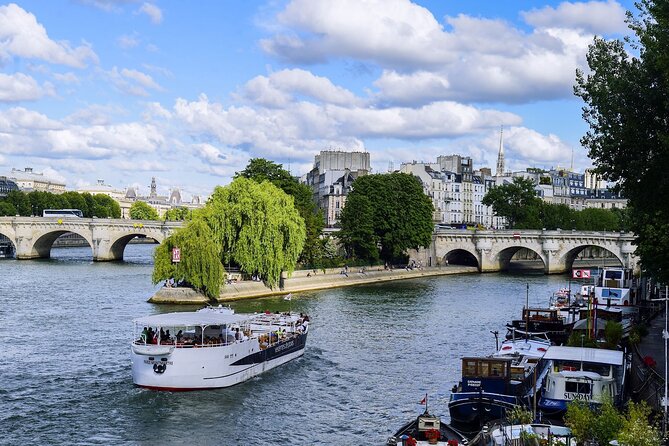
You also glide by Pont Neuf, described as the oldest bridge in Paris and a key stone bridge built with pavements rather than houses lining it. The famous part here is the 381 grimacing stone masks, individually decorated. If you care about sculpture details, this is a fun one to watch pass, because each face feels like a little snapshot.
Then comes Pont Saint-Michel, requested by Napoleon III, with two imperial Ns on its pillars. The narration also ties the bridge to the Latin Quarter, based on the older history of students speaking Latin.
Île de la Cité and Notre-Dame: the spiritual center from the water
This cruise loop reads like a greatest-hits package, and Île de la Cité is the spiritual and historical anchor. You’ll hear about its early settlement by the Parisii tribe and its older name, Lutetia.
The highlight most people look for is Notre-Dame Cathedral, with construction starting in 1163 and finishing in 1345. You’ll get commentary on gargoyles and sculptures and the south rose window called Rose du Midi, tied to the New Testament and associated with Saint Louis. Even if you have seen Notre-Dame before, hearing the details while you are looking at the façade from the river often makes it feel more legible.
The narration also includes the statue of Saint Genevieve, patron saint of Paris, sculpted by Paul Landowski, who later did the Christ the Redeemer statue in Rio de Janeiro. That name-link is exactly the kind of “wait, that’s connected” moment people like from river commentary.
Arab World Institute, Île Saint-Louis, and the civic heart
As you continue, you pass the Arab World Institute, inaugurated in 1987, with a focus on history, art, society, religions, and science related to the Arab world. This stop gives the route more modern cultural texture, not just medieval and imperial layers.
Then you cross to Île Saint-Louis, known for 17th-century town houses like Hôtel Lambert and Hôtel Lauzun. The narration also notes it as one of the more prestigious areas, with a mention of residents including Charles Baudelaire and Georges Moustaki. Watching the smaller island from the Seine helps you understand why it feels distinct from the main, busier riverbanks.
Next comes Hôtel de Ville de Paris, the city council seat since 1357, with Neo-Renaissance inspiration and references to its banquet hall design. From the water, the building reads like a statement of governance, not just architecture.
You also pass the Conciergerie, first built under Philip IV and later used as a prison. The narration highlights Marie-Antoinette’s final two months there before her execution at Place de la Concorde in 1793. This is another stop where the commentary adds emotional weight because it ties the stone walls to a clear timeline.
Louvre to Place de la Concorde: from royal palace to revolutionary square
You will also see the Louvre, described as a royal palace turned museum in 1793. The narration includes big visitor scale and examples like the Winged Victory of Samothrace, Venus de Milo, and the Mona Lisa. From the river, the Louvre’s size hits differently. It looks like a continuous city boundary rather than a single museum block.
After that, the route includes Place de la Concorde, tied directly to the execution of Louis XVI and Marie-Antoinette during the French Revolution. The central obelisk from Luxor in Egypt is also covered, including its age and the fact it was brought to France in 1836. This part is great for taking in how Paris repurposes history into present-day public space.
Grand Palais, the Flame of Liberty, and Palais de Chaillot
The cruise then reaches the Grand Palais, built for the 1900 Universal Exhibition, famous for its glass roof described as the largest in Europe, and used today for exhibitions and cultural events. The narration also mentions it as a venue for a funfair and large skating rink in winter.
You’ll also see the Flame of Liberty, described as a gift from the United States and the International Herald Tribune, created as thanks for restoring the Statue of Liberty in New York. This is a smaller, more symbolic landmark than some of the others, but it adds a “world connection” note to the route.
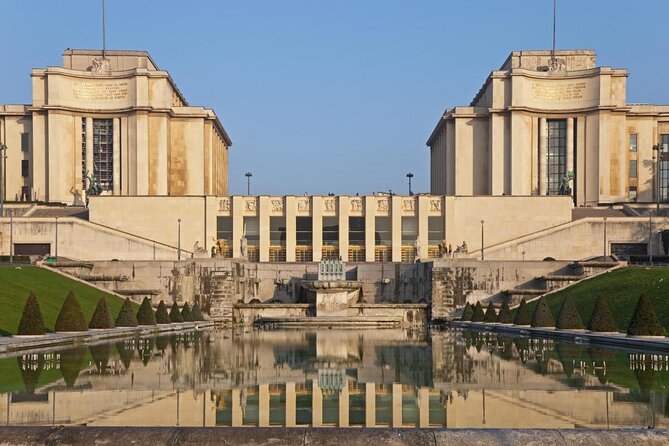
Finally, you end near the Palais de Chaillot by Trocadéro, built for the 1937 Universal Exhibition. The narration notes two Neoclassical pavilions, plus esplanades and institutions inside, including museums tied to architecture and heritage, the National Navy Museum, the Museum of Humankind, and the National Theatre of Chaillot.
Comfort, seating, and real-world issues that affect your experience
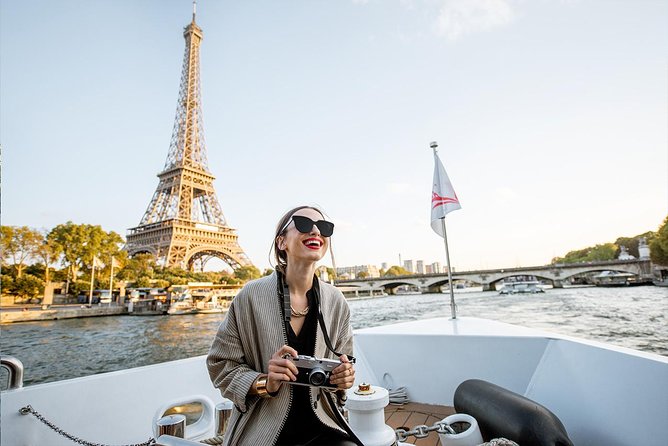
Overall, the cruise has a strong reputation for organization and value. People liked that boarding is quick and smooth, and they often say the guide keeps things moving at the right pace for a one hour slot.
Still, two practical things matter:
- Sound quality depends on where you sit. Several people struggled to hear narration clearly outdoors. If the wind is up or it is crowded, you might have to choose between top deck views and easy listening.
- Weather affects comfort. In colder months, people noted blankets available if you choose the upper deck. If you are sensitive to cold, that detail is worth planning around.
If you care about sightlines, one review trend was that this boat can feel smaller than some of the larger river vessels, which helps with crowd flow and photo access. You also get a “just right” feel for time, especially if you are doing other heavy walking that day.
Drinks and snacks: simple add-ons, not a full meal
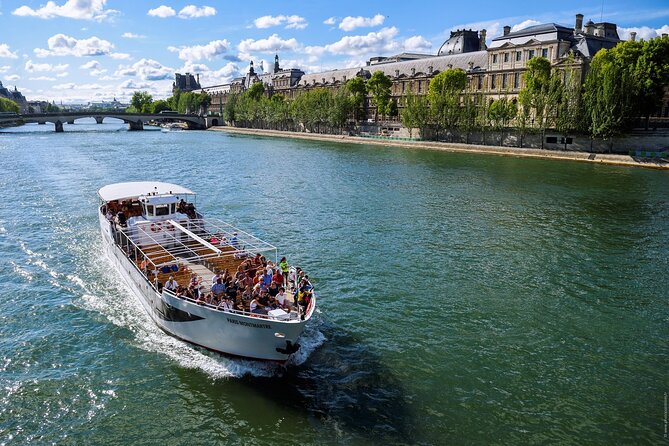
If you select a champagne option, you get a glass of champagne included. The information also says champagne is only bookable for adults, so if you are traveling with kids and want the adult champagne add-on, you’ll need separate bookings.
For the Gourmand option, the included treat is a pancake or cookie with soft drink. There are also drink and snack packages available beyond those options.
For most people, this is a bonus, not a replacement for dinner. Plan to eat normally before or after. The big win is that you can make the cruise feel a little celebratory without committing to a full restaurant stop.
Who should book this Seine cruise, and who might want something else
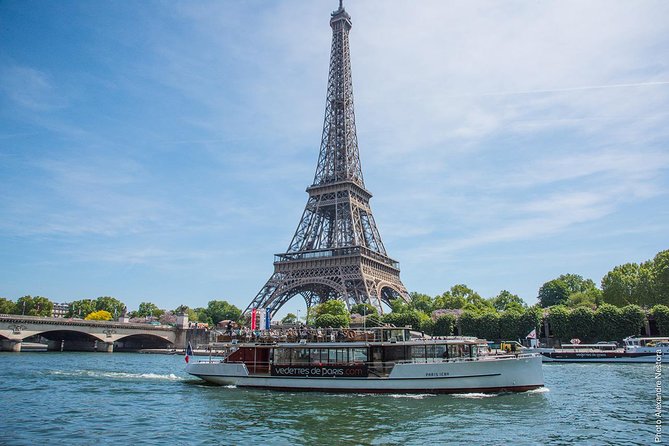
This is ideal for:
- First-time visitors who want to see a lot fast without sprinting across Paris
- People who like listening to stories while looking at landmarks
- Travelers with limited time who still want a “real Paris highlight”
- Photo-focused trips, since the river view naturally gives variety compared to street-level sightseeing
You might consider another option if:
- You are extremely sensitive to audio clarity and prefer a tour where narration is always perfectly audible
- You expect a long guided explanation at each stop, because the format is tightly paced for one hour
Should you book Vedettes de Paris Seine River Guided Cruise?
I think you should book this if you want a straightforward, time-saving introduction to Paris landmarks with live English and French narration and a modern 100% electric boat. At this price point, it is hard to beat for a one hour “big picture” experience, especially if you plan your timing for daytime orientation or evening glow.
Book it when you can pick your seat thoughtfully, and when you are okay adapting for weather and sound. If you want a relaxing way to connect the dots between monuments, bridges, and neighborhoods from the river, this is a solid choice.
More Paris Tours That Come With a Guide
- Paris: Louvre Guided Tour with Reserved Access & Boat Cruise
★ 4.3 · 16,353 reviews - Louvre Museum Masterpieces Guided Tour with Access
★ 4.5 · 12,023 reviews - Louvre Museum – Exclusive Guided Tour (Entry Included)
★ 5.0 · 6,296 reviews - Versailles: Skip-the-Line Guided Palace Tour and Full Access
★ 4.6 · 5,214 reviews - Louvre Priority Access with Mona Lisa Escort or Guided Option
★ 4.0 · 4,420 reviews
The Whole Paris Shelf
- Paris: Louvre Museum Timed-Entrance Ticket
★ 4.6 · 71,977 reviews - Disneyland® Paris 1-Day Ticket
★ 4.6 · 49,412 reviews - Paris: Versailles Palace and Gardens Full Access Ticket
★ 4.6 · 41,579 reviews - Paris: Evening River Cruise with Music
★ 4.4 · 22,721 reviews - Paris: Eiffel Tower Entry Ticket with Optional Summit Access
★ 4.4 · 20,035 reviews
Still on the Seine
- Paris: Seine Cruise & Crepe Tasting near the Eiffel Tower
★ 4.4 · 11,231 reviews - Paris: Seine River Panoramic Views Dinner Cruise
★ 4.3 · 10,611 reviews - Paris: Eiffel Tower Access by Elevator & Seine River Cruise
★ 4.6 · 7,329 reviews - Paris: 3-Course-Dinner Cruise on the Seine with live music
★ 4.7 · 7,248 reviews - Bateaux Parisiens Seine River Gourmet Dinner & Sightseeing Cruise
★ 4.5 · 6,930 reviews
The rest of the Paris write-ups
- Montmartre: Guided Tour for Kids and Families★ 4.9 · 57 reviews
- From Paris: Versailles Palace and Gardens Guided Day Trip★ 4.5 · 57 reviews
- Versailles Palace and Garden Tour with Paris Private Transfers★ 5.0 · 58 reviews
- Louvre Evening Escape – Avoid The Crowds! Semi-Private 6ppl Max★ 5.0 · 58 reviews
- Summit Eiffel Tower Audio Guide Tour with Unlimited Time Access★ 4.5 · 58 reviews
- Private Half Day Historic Tour★ 5.0 · 58 reviews
Seine River Cruises, in full.
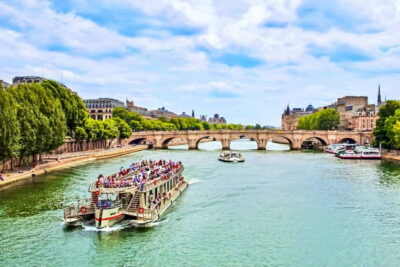 ★ 4.4Paris: Seine Cruise & Crepe Tasting near the Eiffel TowerFrom $2311,231 reviews
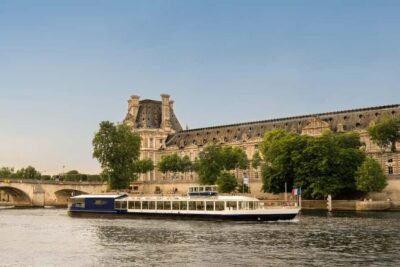 ★ 4.3Paris: Seine River Panoramic Views Dinner CruiseFrom $6410,611 reviews
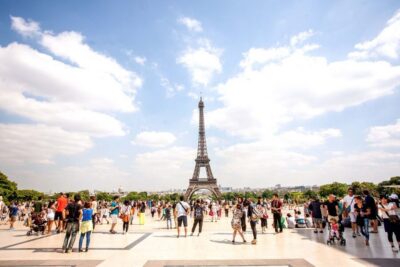 ★ 4.6Paris: Eiffel Tower Access by Elevator & Seine River CruiseFrom $797,329 reviews
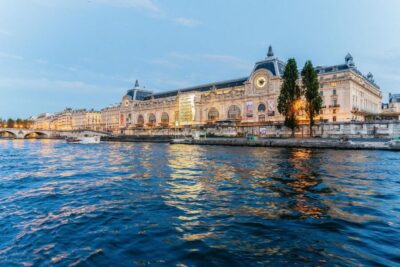 ★ 4.7Paris: 3-Course-Dinner Cruise on the Seine with live musicFrom $1357,248 reviews
 ★ 4.5Bateaux Parisiens Seine River Gourmet Dinner & Sightseeing CruiseFrom $1506,930 reviews
 ★ 4.4Paris: Hop-On Hop-Off Seine Cruise Pass with 9 StopsFrom $275,645 reviews
 ★ 4.2Paris: Seine River Bistronomic Dinner CruiseFrom $695,272 reviews
 ★ 4.3Paris : 3-Course Gourmet Dinner Cruise on Seine RiverFrom $1005,205 reviews
Also on these France lists