
Reviewed · FRANCE
Sports, fun and educational discovery of Paris
Paris shows up fast when you run. I love that it is private for your party, and I love the hassle-free pickup from your hotel or apartment so your morning starts without a scavenger hunt.
This is a running tour, so one consideration is the moderate physical fitness requirement. You’ll be moving for about 2 to 3 hours, and most stops are for seeing and learning outside, not going deep into major museum interiors.
In This Review
- Key things that make this Paris run special
- Entering Paris by running, with pickup that actually helps
- Louvre area, quick history, and courtyards you can actually see
- Tuileries Gardens, moving exercise, and a calmer kind of sightseeing
- Place de la Concorde: big square, big stories, quick photos
- Palais Garnier viewpoint: Opera architecture in a few minutes
- Along the river: the run-your-own photo walk moment
- Île de la Cité: central Paris and a fast history sampler
- Musée d’Orsay exterior appreciation, then a view-game with the Eiffel Tower
- Champs-Élysées stretch and Hôtel des Invalides context
- Palais-Royal and the courtyards that make Paris feel intimate
- Pont Neuf: the oldest-bridge type of moment
- Petit Palais if it is open: a short interior bonus
- What the tour does not do, and why that can be a feature
- Pace, fitness, and why non-runners can still enjoy it
- Photos and the small things that make memories stick
- Price and value: $104.52 for a private running tour that saves time
- Weather matters, so plan smart
- Should you book this Paris running tour?
- FAQ
- How long is the Paris running tour?
- Does the tour include hotel or apartment pickup?
- Is the tour private?
- Will we enter museums during the run?
- Are photos included, and how do I get them?
- What if the weather is bad?
- Can I cancel for a full refund?
Key things that make this Paris run special
- Private, just your group: no crowds, no waiting around for stragglers.
- Hotel or apartment pickup inside Paris: you start where you sleep.
- Photos handled for you: the guide shoots pictures during the run and sends them later via Dropbox.
- Stories with context at landmark speed: you get history lessons while you’re on the move.
- Seine and central-island focus: Louvre area, river sights, Île de la Cité, then Orsay and beyond.
- Mostly no museum entry: built for sightseeing flow, with a short interior stop only if Petit Palais is open.
Entering Paris by running, with pickup that actually helps
If you want Paris without the usual stop-start stress, this kind of tour makes sense. You get a structured route that links major sights, but you’re moving the whole time. That changes everything. You start to feel the city, not just look at it.
The biggest practical win is the pickup. You meet the guide right at your hotel lobby or at the bottom of your apartment building inside Paris. That means you avoid the early-morning scramble of finding a meeting point, plus you lose less time. Also, because it’s private for your party, the pace and needs of your group are easier to manage. In one set of reviews, the guide named JC kept an easy rhythm so a non-runner in the party could still enjoy the stories.
One more detail I appreciate: the guide brings maps and historical pictures, and you get those documents at the end. It’s not just a moment on the sidewalk, you leave with something you can refer back to while you plan your next stops.
Still comparing options? These are other tours in Paris we have reviewed.


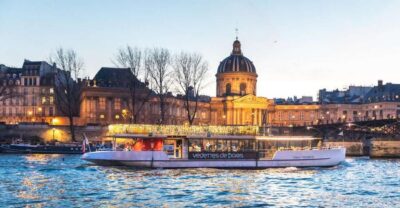
Louvre area, quick history, and courtyards you can actually see
The tour begins around the Louvre. You’ll learn the museum’s background and the major facts that make it matter, then you get to see some nicer passages and courtyards. The point here is not to complete a full museum visit. It’s to get your bearings and understand what you’re looking at while you’re already in motion.
Expect a short, efficient stop. That’s good news if your Paris time is tight. The drawback is also obvious: if you were hoping for a deep dive into the Louvre galleries, you won’t get that here. Based on how the tour is set up, most big sites are viewed from the outside or in surrounding areas, with interior time limited to the places that are specifically allowed.
Still, a Louvre-start works because it’s a natural anchor. Once you know the essentials, the rest of the run becomes easier to follow. You’ll spot patterns, see how different neighborhoods relate, and understand why these buildings were placed where they were.
Tuileries Gardens, moving exercise, and a calmer kind of sightseeing
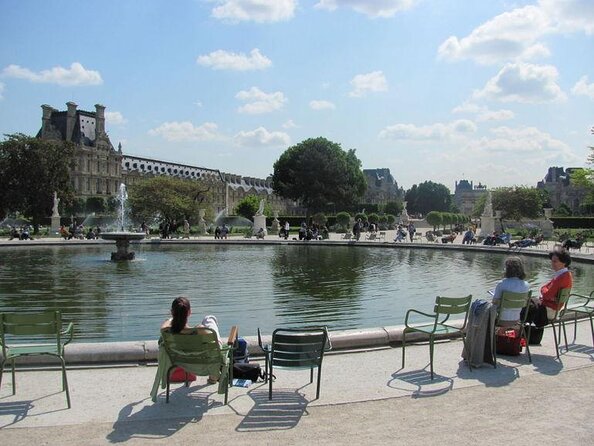
Next comes the Jardin des Tuileries. This stop is built around a running-friendly park experience. You learn about the Tuileries Palace and the gardens, then you get to keep moving inside the green space.
This part is a nice balance. Paris can feel like a wall of monuments if you do it by bus or one long walking route. The Tuileries break adds breathing room, and the information sticks better when you’re not in a crowd. Even if you only have a small window, it’s a smart way to mix exercise with context.
If you hate running on uneven ground, you’ll want to mention that early. The tour is designed for a moderate fitness level, but every guide will still need to manage footing and pace.
Place de la Concorde: big square, big stories, quick photos
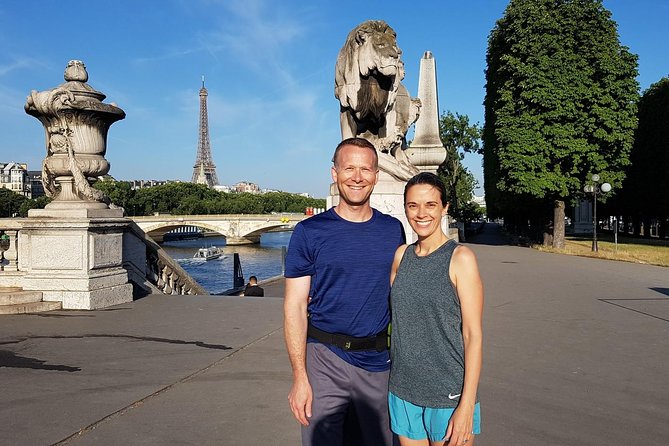
Then you hit Place de la Concorde. This is one of those Paris squares where the location alone makes you curious. The guide talks through the major stories tied to the site, and you’ll have time for pictures and a quick pause.
What makes this stop valuable is that it connects you to the city’s political and cultural shifts. A square like this is not random space. It has a role, and once you understand that, it stops being just a postcard background.
The stop is brief, but that’s part of the formula. You’re building an arc through the city rather than spending the whole morning stuck at one location.
Palais Garnier viewpoint: Opera architecture in a few minutes
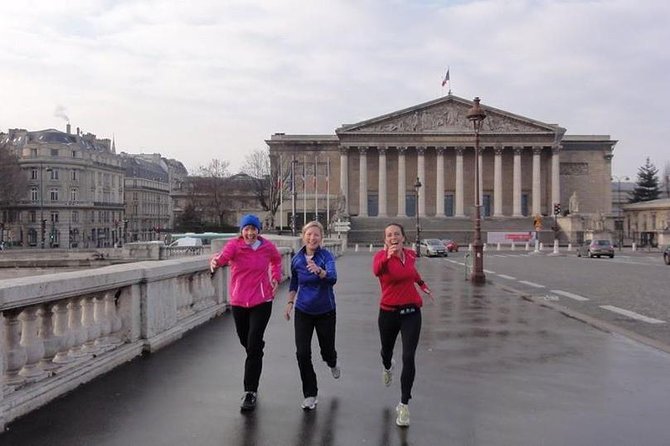
After Concorde, you’ll reach Palais Garnier. You’ll admire the view of the Opera from the outside and learn about the big changes made during the 19th century.
This is a strong stop for people who like architecture but don’t want to wait in long lines. You get the key story beats and the visual impact, then you move on. If you’re the type who usually walks past iconic buildings without knowing why they were built the way they were, this kind of guided timing helps a lot.
Along the river: the run-your-own photo walk moment
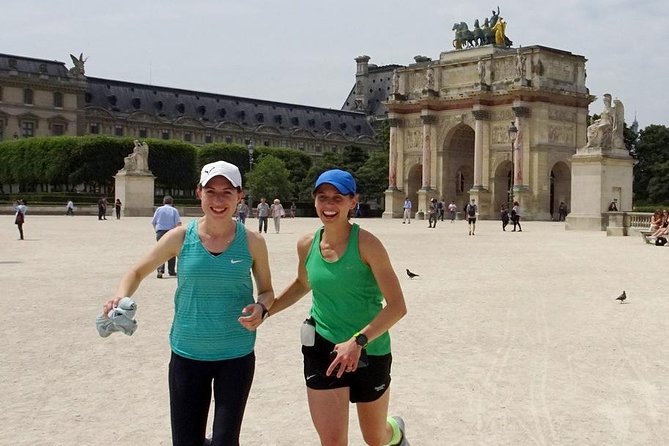
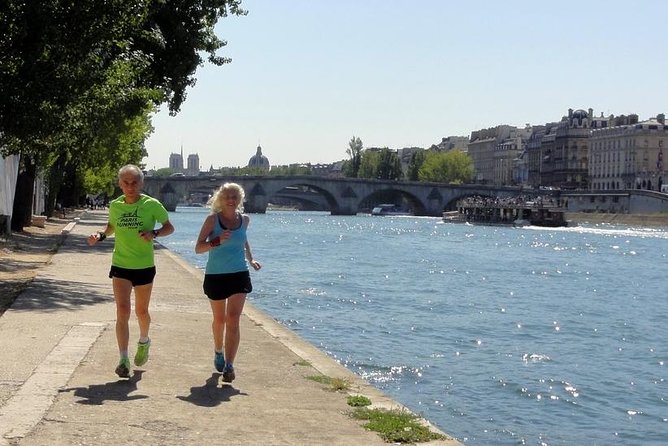
A major chunk of the experience is a running stretch along the river. This is where the tour feels most like an adventure. You get information as you go, and you also get a natural photo rhythm because your movement gives you shifting angles.
This section is especially good for first-timers because it ties multiple landmarks together. You see how the city lines up. You understand what’s across the water. And you start noticing sightlines you would miss if you stayed on one street the whole time.
One note: because it’s a run, the exact timing and viewpoints can depend on the route and conditions. The good part is that the guide is guiding you through it, so you’re not stuck trying to figure out where to stand for the best shot.
- Paris: Louvre Museum Timed-Entrance Ticket
★ 4.6 · 71,977 reviews - Disneyland® Paris 1-Day Ticket
★ 4.6 · 49,412 reviews - Paris: Versailles Palace and Gardens Full Access Ticket
★ 4.6 · 41,579 reviews - Paris: Evening River Cruise with Music
★ 4.4 · 22,721 reviews - Paris: Louvre Guided Tour with Reserved Access & Boat Cruise
★ 4.3 · 16,353 reviews
Île de la Cité: central Paris and a fast history sampler
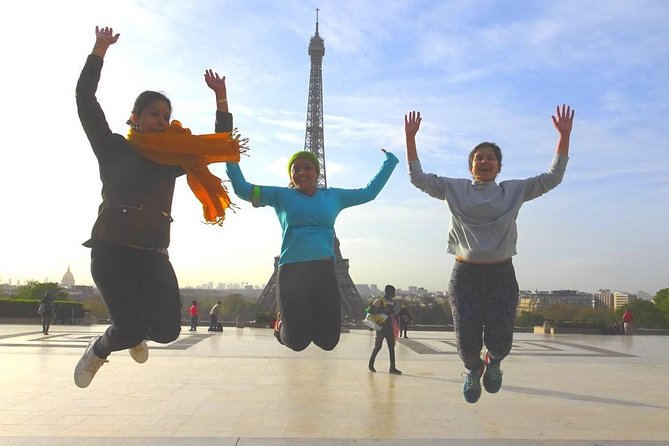
The tour’s heart continues at Île de la Cité, the central island with layers of history. Here, the route includes many famous stops you’ll learn about, such as the Conciergerie, Sainte-Chapelle, Palais de Justice, Notre-Dame, the Marché aux fleurs, Hôtel-Dieu, and Préfecture de Police.
You won’t be spending hours inside every site. This is a seeing-and-understanding run. But there’s still a lot to gain because the guide can connect the pieces. When you’re on the island, you can look at the building cluster and understand how the city’s religious, legal, and daily life evolved side by side.
This is also a great area for anyone who likes walking close to history. You’re in the zone where you can picture older Paris without needing an audiobook tour.
Musée d’Orsay exterior appreciation, then a view-game with the Eiffel Tower
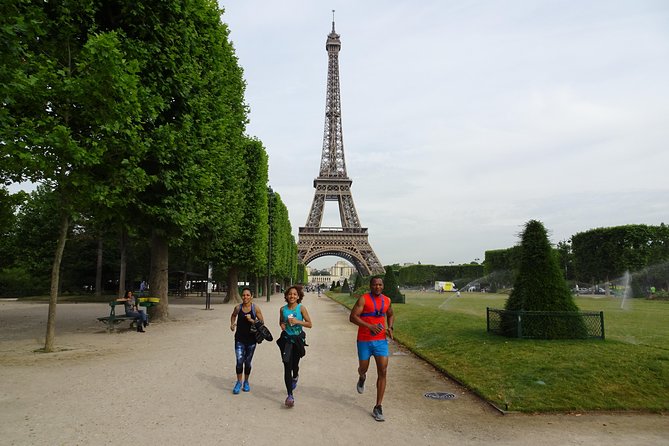
Next up: Musée d’Orsay. You’ll admire the building and learn about its history in the time you have.
Then comes the Eiffel Tower moment. Depending on your location and your tailored route, you may see it very closely or from farther away. The key is that the Eiffel Tower is visible from multiple spots along the way, so you’re not stuck waiting for one single perfect angle.
If your group likes photos, this is often when people start smiling harder. It’s not just a landmark cameo. It’s a visual payoff after the earlier history stops.
Champs-Élysées stretch and Hôtel des Invalides context
As the route continues, you’ll run along Champs-Élysées and learn as you go. After that, you’ll take in Hôtel des Invalides with historical context.
This part is useful because it covers the Paris you’ve seen in movies, but with explanations that add meaning. Champs-Élysées is easy to treat like a shopping strip. With the guide talking through why it developed the way it did, you get more than storefronts. You get a sense of how Paris built its grand ceremonial corridors.
And Invalides adds a different tone. It shifts you from surface glamour to important national history, still within the same easy-running flow.
Palais-Royal and the courtyards that make Paris feel intimate
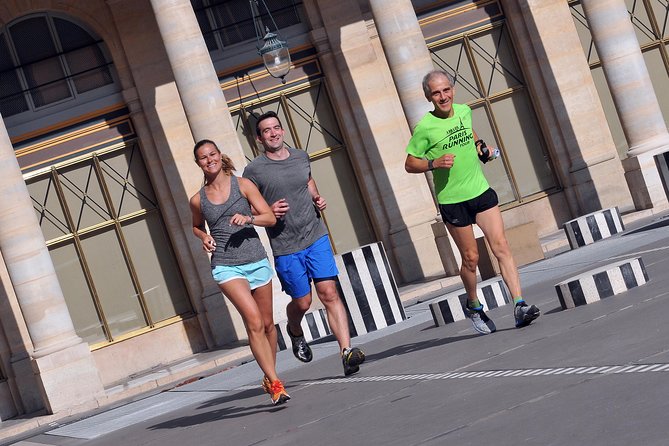
Then the tour heads toward Domaine National du Palais-Royal. You’ll admire a set of historical spaces: courtyard areas, the garden, and the galleries.
This stop is one of those places where Paris can surprise you. It looks compact compared to the huge squares nearby, but that’s exactly why it works on a running tour. You can learn quickly, see something pretty, and keep the energy up.
Depending on your tailored-made route, you may also pass by another park area. The idea is to keep your run varied, with scenery changes that keep attention from drifting.
Pont Neuf: the oldest-bridge type of moment
You’ll reach Pont Neuf, and the guide will explain its significance as the oldest bridge of Paris, as well as how many other bridges fit into the city’s bridge story.
Pont Neuf is a perfect running stop because it’s a clear landmark with meaning. You don’t need to be a bridge nerd to get it. The guide makes it click, then you’re back on your route.
Petit Palais if it is open: a short interior bonus
Depending on the time of day and the route, if Petit Palais is opened, you may get a short visit of the building. Otherwise, you’ll still get the exterior stop and context.
This is the one place where interior access may pop up. It’s also why this tour feels balanced. You get a mostly running-and-seeing structure, and you still have a chance at a little extra in the middle if conditions allow.
What the tour does not do, and why that can be a feature
The tour is built around movement and landmark context. That also means you generally won’t enter major museums. Admission tickets are listed as free for the sights included, and the tour is set up so you’re mostly looking and learning rather than paying to walk through indoor collections.
That can feel like a downside if your plan is museum-heavy. But if your plan is first-time Paris with smart context, it can be exactly what you want. You’ll cover a lot of the city’s “I should know this” landmarks in a short window.
It’s also a good fit if you want to pair this with a later, deeper museum visit. Do this run early, then come back on your own when you already understand what you’re seeing.
Pace, fitness, and why non-runners can still enjoy it
The guide expects a moderate physical fitness level. That doesn’t mean you need to be a marathoner. It means you should feel comfortable running at an easy pace and keeping that rhythm for a couple of hours.
If someone in your party is not a runner, this tour can still work because the guide can control pacing. In the reviews, JC kept things easy enough for a partner who was not running while they enjoyed the stories.
My practical advice: be honest at the start about your comfort level. The tour is private, so you’re not stuck matching a random group’s pace.
Also, wear shoes you can handle for a city run. Paris streets can be a mix of textures. Good support matters more than you’d think when you’re half sightseeing, half exercising.
Photos and the small things that make memories stick
You get bottled water, which matters in warm weather. The guide also uses a camera to take photos you want. After the tour, you receive the images through the Dropbox system.
This is one of those details that makes the whole experience feel smoother. You are not asking strangers to take your picture every ten minutes. You can focus on being present, and you still leave with photos that look like you actually did something, not just blurry attempts at a selfie.
I also like the way the guide documents the learning. You get maps and historical pictures at the end, which helps you turn the run into a bigger trip story.
Price and value: $104.52 for a private running tour that saves time
At $104.52 per person, this is not a bargain-bin activity. But for Paris, it’s reasonably priced given what’s included.
You’re paying for:
- Private tour for your group
- Hotel or apartment pickup
- A guided route through a long list of major sights
- Water, plus guide photos sent after
- Historical support materials to keep after the tour
Where you get value is time. In a 2 to 3 hour window, you get a connected sweep from the Louvre zone into central island sights, then through Orsay and classic avenues. If you tried to do this on your own, you’d spend extra time figuring out routes, stops, and how to connect the story threads.
If you only want one museum or only want inside visits, you might find a different tour style better. But if you want an active, guided introduction to Paris landmarks, this price can feel fair.
Weather matters, so plan smart
This experience requires good weather. If it gets canceled due to poor weather, you’ll be offered a different date or a full refund.
That’s actually comforting, because it means the operator is thinking about safety and comfort. If you hate running in rain, keep that in mind when you choose your day.
Should you book this Paris running tour?
Book it if you want Paris to feel active and guided. It’s especially good for first-timers who want a fast understanding of what they’re seeing, plus a workout that keeps your morning moving. It’s also a solid choice if you like photos and you don’t want the responsibility of photographing everything yourself.
Think twice if you want heavy museum time. This tour is mostly about seeing and learning from the street and surrounding spaces, not touring indoor collections for hours. Also, if running is a hard no for your group, you might feel uncomfortable with the moderate fitness expectation.
If you fit the sweet spot, this can become the part of your trip that helps everything else make sense.
FAQ
How long is the Paris running tour?
The duration is about 2 to 3 hours.
Does the tour include hotel or apartment pickup?
Yes. Pickup is included, and the guide comes to meet you at your hotel lobby or at the bottom of your apartment building.
Is the tour private?
Yes. It is private, and only your group participates.
Will we enter museums during the run?
You’ll see many sites, but you generally won’t enter inside. A short interior visit may happen at Petit Palais if it is opened, under the tour conditions.
Are photos included, and how do I get them?
Yes. A camera is used to take photos during the tour, and you receive the photos afterward via Dropbox.
What if the weather is bad?
The experience requires good weather. If it’s canceled due to poor weather, you’ll be offered a different date or a full refund.
Can I cancel for a full refund?
Yes. You can cancel up to 24 hours in advance for a full refund. Canceling less than 24 hours before the start time is not refundable.
The Whole Paris Shelf
- Paris: Louvre Museum Timed-Entrance Ticket
★ 4.6 · 71,977 reviews - Disneyland® Paris 1-Day Ticket
★ 4.6 · 49,412 reviews - Paris: Versailles Palace and Gardens Full Access Ticket
★ 4.6 · 41,579 reviews - Paris: Evening River Cruise with Music
★ 4.4 · 22,721 reviews - Paris: Eiffel Tower Entry Ticket with Optional Summit Access
★ 4.4 · 20,035 reviews
The rest of the Paris write-ups
- Montmartre: Guided Tour for Kids and Families★ 4.9 · 57 reviews
- From Paris: Versailles Palace and Gardens Guided Day Trip★ 4.5 · 57 reviews
- Versailles Palace and Garden Tour with Paris Private Transfers★ 5.0 · 58 reviews
- Louvre Evening Escape – Avoid The Crowds! Semi-Private 6ppl Max★ 5.0 · 58 reviews
- Summit Eiffel Tower Audio Guide Tour with Unlimited Time Access★ 4.5 · 58 reviews
- Private Half Day Historic Tour★ 5.0 · 58 reviews