
Reviewed · BORDEAUX WINE TOURS
Bordeaux: Wine Masterclass with Cheese and Charcuterie Board
Bordeaux wine class, made practical and fun. You get a guided tasting workshop in a central wine bar, plus a food pairing that makes the lessons stick. What I like most is the sensory tasting method you practice right away, and the way you compare left bank vs right bank wines in the same sitting. One drawback to consider, it is aimed at adults and teens 16 and up, so if you are traveling with younger kids, this one will not work.
I also like that the teaching is built around real concepts you can use later, like terroir, grape varieties, appellation, vinification, aging, storage, and wine service. And in a city where wine talk can get showy, this keeps it clear and approachable. You will be in good hands with instructors like Antoine, Hugo, Anna, Enzo, Vincent, and Xavier, who show up as consistently enthusiastic in the role.
In This Review
- Key highlights you will feel fast
- Finding Olala Bordeaux and settling in for 90 minutes
- What happens in the tasting sequence, from first sip to final comparison
- The white wine opener: training your senses before reds take over
- Bordeaux grape varieties: why the single-grape reds matter
- Left bank vs right bank, plus a grand cru pour you will remember
- Cheese and charcuterie pairing: the food lesson that makes wine click
- Instructors, teaching style, and how the class stays fun
- Price and value: why 53 dollars can make sense in Bordeaux
- Who this masterclass suits best, and who should skip it
- Quick tips for getting more out of your tasting
- Should you book Bordeaux Wine Masterclass with Cheese and Charcuterie?
- FAQ
- How long is the Bordeaux wine masterclass?
- What wines are included in the tasting?
- Where do I meet the guide?
- Is the class suitable for children or teens?
- Are pets allowed?
- What languages are the instructors?
Key highlights you will feel fast
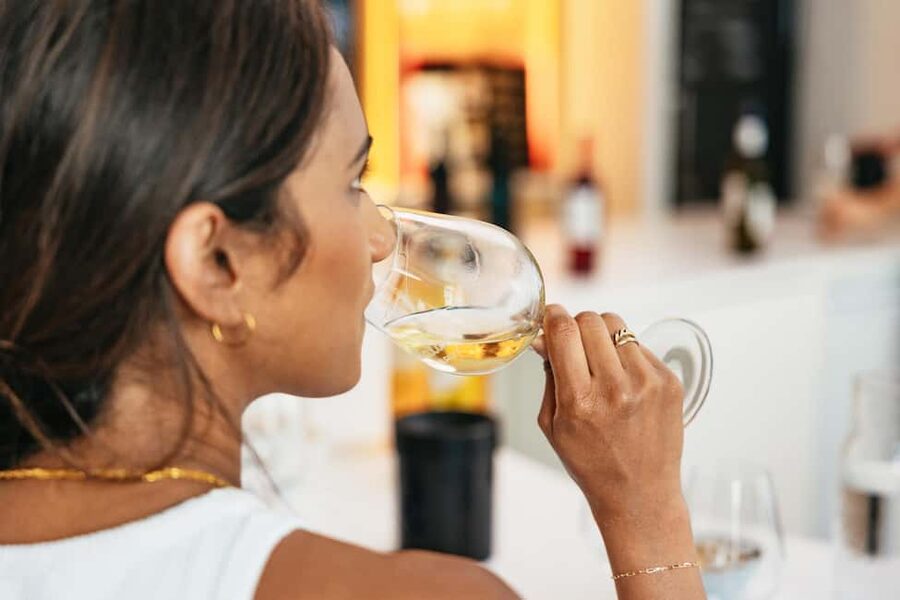
- A structured 90-minute tasting with 1 white and 5 red wines, not a random sip-and-squat session
- Training your eyes, nose, and palate using a repeatable tasting method
- Regional red grape focus with single-grape pours that explain what Bordeaux reds actually taste like
- Left bank vs right bank comparison, including one Bordeaux grand cru
- Cheese and charcuterie pairings plus baguette and water to keep it all balanced
- Central location near Quinconces tram stop, easy to fit into a day in Bordeaux
Finding Olala Bordeaux and settling in for 90 minutes
This experience starts at Olala Bordeaux, a five-minute walk from the Quinconces tram stop. If you are using the tram, lines B, C, or D will get you close, then you walk the last bit. That matters because Bordeaux mornings (and evenings) can fill up fast, and you want a tasting class that feels like part of your day, not a separate mission.
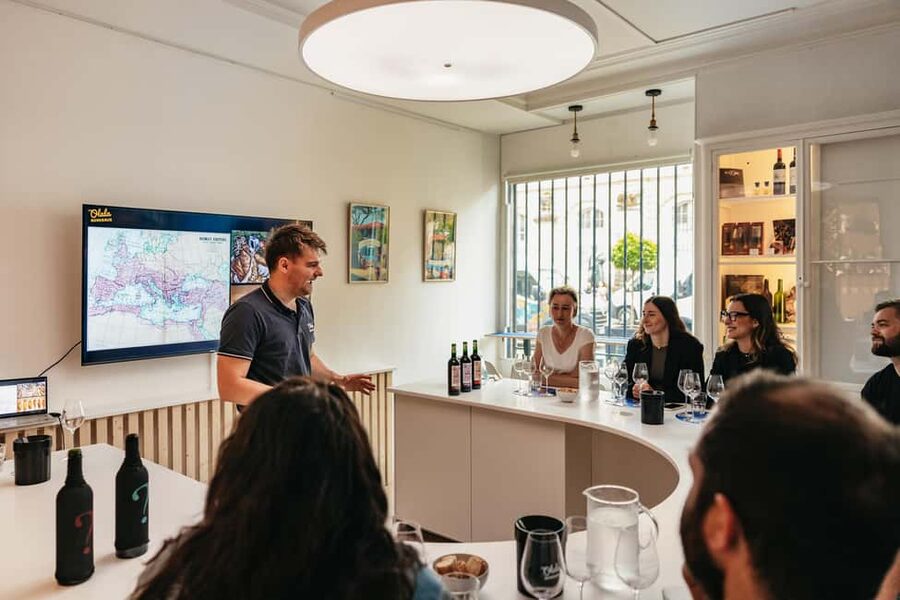
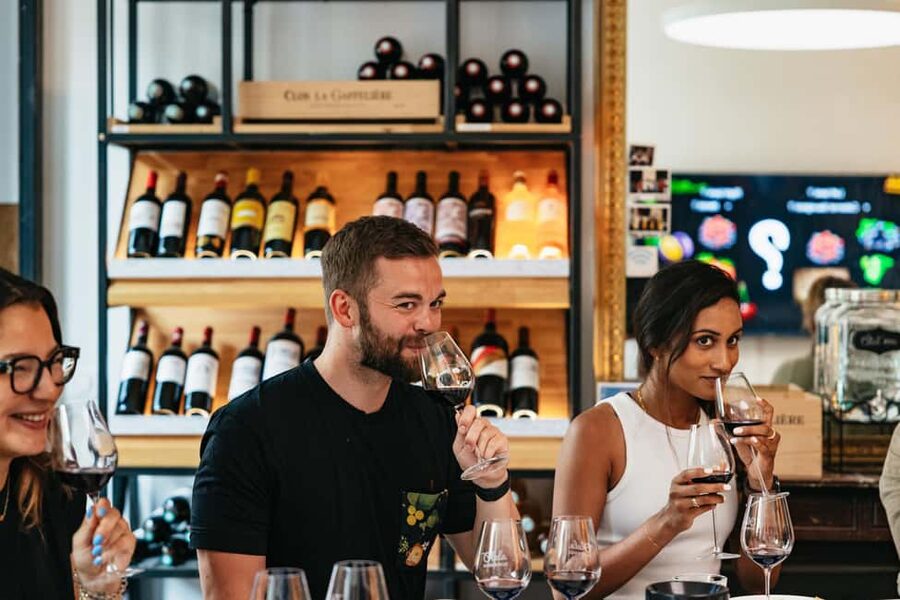
The venue is set up as a wine-bar style learning space. You are not stuck in a loud hallway or a back office. Reviews point out a well-arranged tasting room, with a relaxed pace and a setup that makes it easy to watch, smell, and taste without feeling rushed. Since the class runs about 90 minutes, it hits a sweet spot: long enough to learn the method, short enough that you can still wander Bordeaux afterward.
One more practical note: the class is offered in English and French. That means if you want to ask questions and keep pace, you can. Also, the wines and the schedule can vary, but the experience stays the same quality. So you should show up expecting a consistent learning framework, even if a specific bottle changes.
More Bordeaux estates and tastings
What happens in the tasting sequence, from first sip to final comparison
The workshop is paced like a guided lesson, not just a flight of wines. You begin with a white wine. The point is not to speed through it. The guide uses it to help you wake up your senses, then you learn the key steps of tasting using a universal method. That matters because Bordeaux can be overwhelming when you first start. If you do not know what to look for, every glass blurs together.
After the white, you move into three glasses of regional single-grape red wines. This is one of the smartest choices in the lineup. Bordeaux is famous for blending, but understanding single grapes first gives you a baseline. You start noticing how the grape’s natural character shows up in aroma and taste, before you even get to blend logic.
Then comes the final act: two fine wines, one from the left bank and one from the right bank. One of them is a Bordeaux grand cru. This is where the tasting becomes more than theory. You are tasting two styles that people love to argue about, and you get direct practice sorting what you are tasting into left bank traits versus right bank traits. It is a simple way to turn a concept you read about into something you can actually identify.
Throughout, the guide talks through core wine topics in plain language. You hear terms like terroir, grape varieties, appellation, classification, vinification, aging, and storage, plus how wine service works. Even if you only catch part of the vocabulary, the tasting gives you a sensory anchor.
The white wine opener: training your senses before reds take over
Starting with a white may sound like a warm-up. It is more like a calibration. Whites are often a little easier to separate by acidity, fruit aromas, and how the wine feels on your palate. That gives you a chance to practice the tasting method without the heavier weight of red tannins.
In the room, you are taught how to look at the wine, smell it, then taste it with a focus on specific sensations. Reviews mention sensory attention, like visual checks, aroma work, and tasting techniques that helped people feel confident ordering wine later. One reviewer even mentioned an aroma sample kit, which can be a helpful trick if you want extra support identifying scents.
What you should take away from this part is simple: you are learning a process you can repeat at restaurants. You start asking better questions of the glass. Is the nose showing fruit, floral notes, or more earthy character? Does the acidity feel crisp or softened? That is how you stop guessing and start tasting on purpose.
Bordeaux grape varieties: why the single-grape reds matter
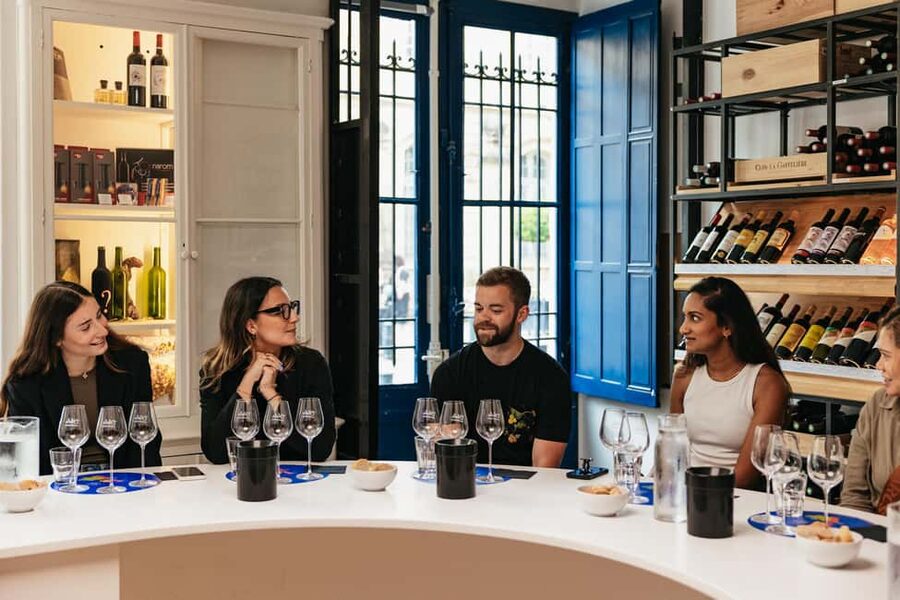
The three single-grape red pours are where the class becomes practical for real-world drinking. Bordeaux reds are often discussed in the language of blends and classifications. That can make beginners feel like they missed an assignment. Here, you get the grape-level building blocks first.
As you taste, you learn to pick out characteristics tied to Bordeaux’s regional red grapes. The guide explains how blending is common practice in the region, and you start connecting why single grapes show different flavors and structures than the finished blend might. You are training your palate to notice patterns. That makes later restaurant wine conversations easier because you can respond with what you actually taste, not just what the label claims.
I like this approach because it lowers the intimidation factor. Even if you are new, you can still follow along, because you are not expected to memorize every classification on day one. You taste, then you label, then you taste again.
And since the wines can vary, the exact grape lineup might not be identical from session to session. But the lesson is consistent: single grape understanding first, then Bordeaux logic.
Left bank vs right bank, plus a grand cru pour you will remember
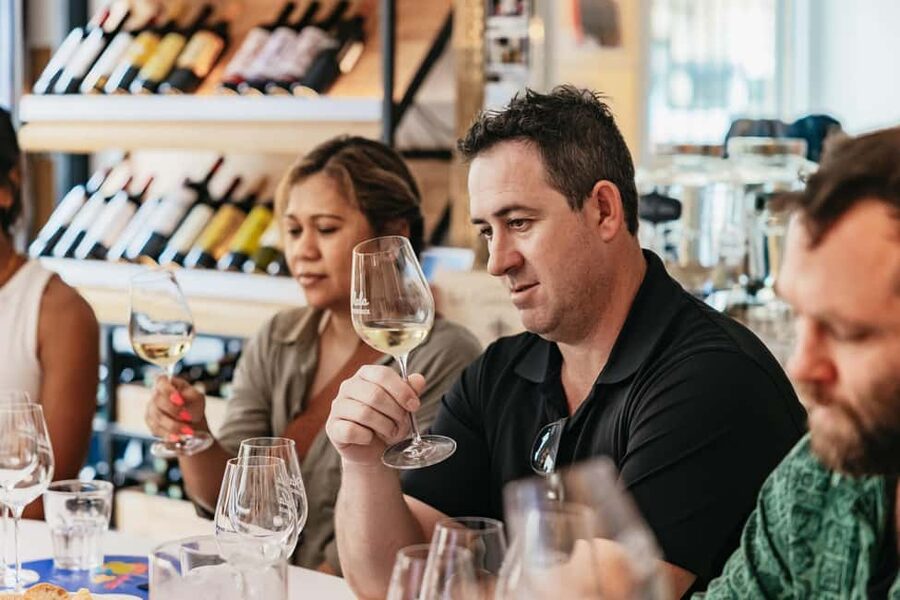
The final two wines are the big storyline. You taste one from the left bank, then one from the right bank, and one of these is a Bordeaux grand cru. This is the moment when many people realize they have been thinking about Bordeaux the wrong way.
Left bank wines are often associated with a certain structure and flavor direction, while right bank wines are often associated with a different set of traits. Even if you have only read about it before, tasting side by side gives you a clearer sense of what those words mean in real life.
In a class like this, you are not just sipping. You are comparing. You are also being coached to notice what changes when you shift banks. That can mean changes in tannin feel, fruit expression, and how the wine’s aromas sit in your nose. The grand cru element also adds a thrill factor, but the real value is what it teaches: how quality, terroir, and winemaking choices can show up in the glass in a way your senses can track.
If you like Bordeaux arguments, you will probably enjoy this part. If you dislike them, you will still benefit, because the tasting becomes your personal proof instead of a debate.
Cheese and charcuterie pairing: the food lesson that makes wine click
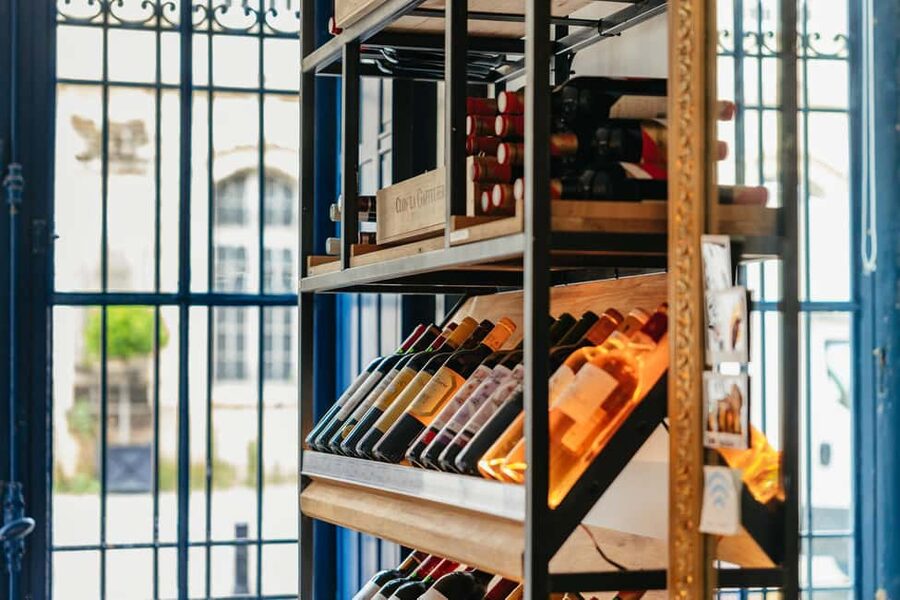
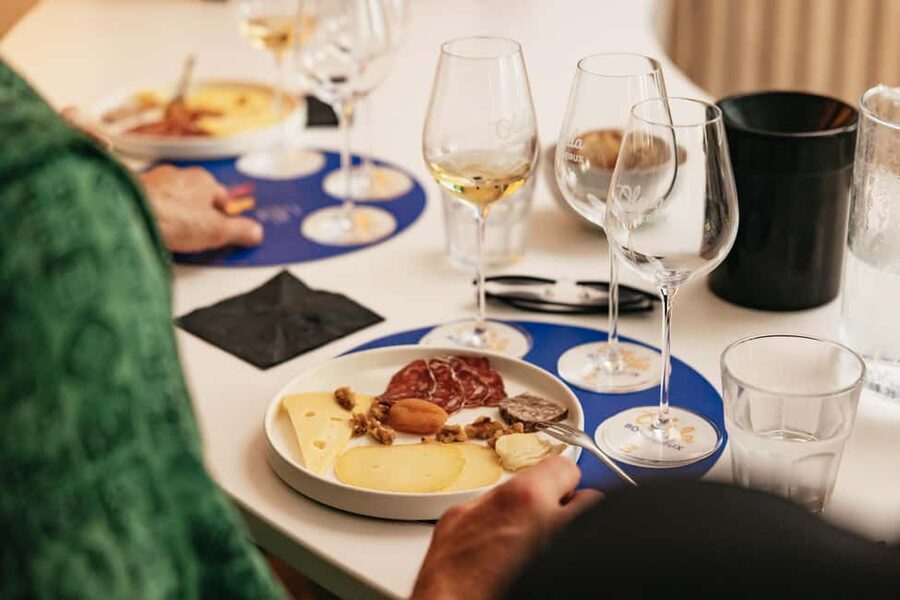
Wine gets easier when you have something to eat. Here you get a cheese and charcuterie board with baguette, plus water. The pairing is not just a snack. It is part of the teaching.
Cold cuts and cheese have textures and flavors that help reveal what the wine is doing. Fat can soften harsh edges. Salt can sharpen fruit perception. And the tang or funk in certain cheeses can make aromas pop. Pairings like this also keep the tasting comfortable. When you are practicing the tasting method, you want your palate ready for each new pour, not tired from dryness.
Reviews highlight that the food component is a standout. People talk about the overall quality of the plate and how well it worked with the wines. Since the exact cheese and charcuterie selection can vary, think of it as a Bordeaux-style pairing lesson more than a single menu guarantee. But the pattern should be consistent, and the goal is the same: help you connect flavor to structure.
Practical tip: take a small bite, then a sip. Then stop and notice. If you taste first and eat after, you get less learning out of it. This is one of those small changes that makes the whole experience more effective.
Other Bordeaux wine visits
- Saint Emilion Day Trip with Sightseeing Tour & Wine Tastings from Bordeaux
★ 5.0 · 1,120 reviews - Saint Emilion Half-Day Trip with Wine Tasting & Winery Visit from Bordeaux
★ 4.5 · 1,034 reviews - From Bordeaux: St. Emilion Village Half-Day Wine Tour
★ 4.7 · 728 reviews - Saint-Emilion Electric Bike Day Tour with Wine Tastings & Lunch
★ 5.0 · 696 reviews - From Bordeaux: Half-Day Saint-Émilion Tour and Wine Tasting
★ 4.6 · 657 reviews
Instructors, teaching style, and how the class stays fun
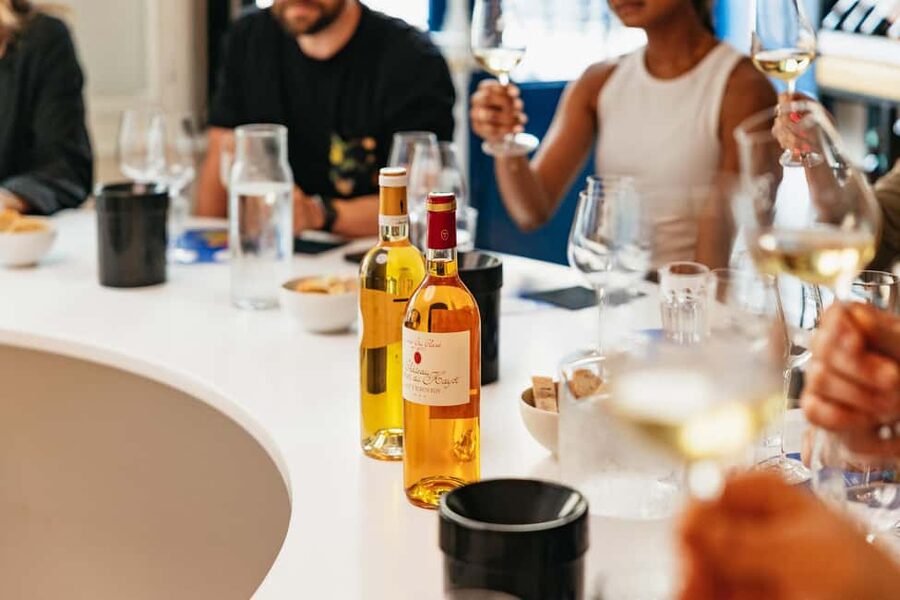
A big reason this masterclass earns such high praise is delivery. Instructors in the program show up as friendly, humorous, and eager to explain. Names you may see include Antoine, Hugo, Anna, Enzo, Noe, Vincent, Anton, Xavier, Olivier, and others. The consistent thread is that the guides help you feel comfortable asking questions and learning step by step.
One review mentioned a blind-tasting moment, where people tested what they learned. Even if your session does not include that exact game, the structure is designed to make you actively participate. That is what turns wine talk into actual progress.
Another pattern in the feedback: the class is helpful for beginners but still rewarding for people with some experience. If you are a beginner, the tasting method gives you handles. If you already know wine terms, the comparison between banks and the grape-first approach can sharpen your understanding fast.
Price and value: why 53 dollars can make sense in Bordeaux
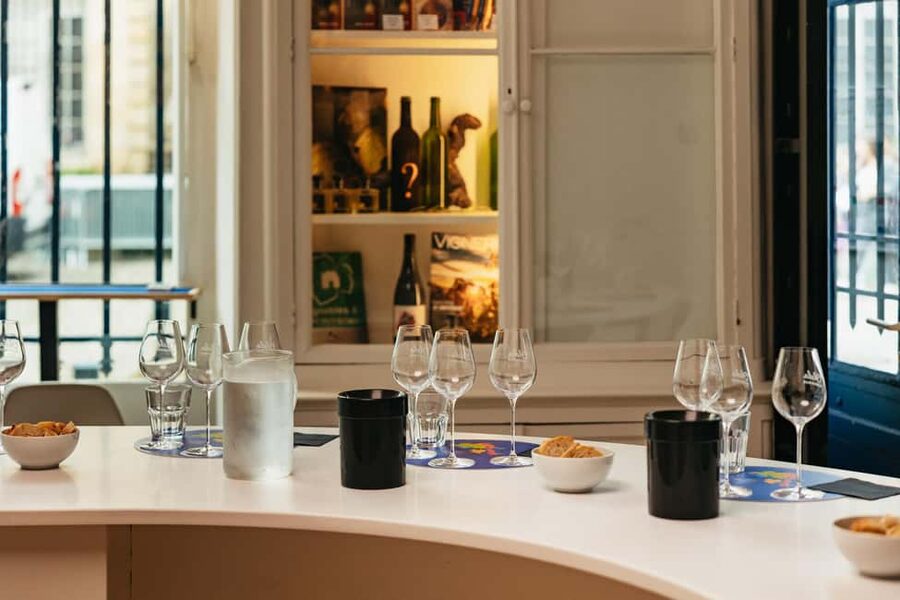
At about $53 per person for roughly 90 minutes, you are not just paying for wine. You are paying for instruction, tasting glasses, the wine lineup (1 white and 5 reds), and a cheese and charcuterie board with baguette and water. That is meaningful value in a major wine city because tasting alone can cost more than you expect, and food pairing at the right moment is part of the learning.
The value calculation also depends on what you want. If you just want to drink, you might spend less elsewhere. If you want to walk away able to taste and describe wine with more confidence, this class gives you a framework you can reuse at every meal. People specifically mention learning how to look, smell, and taste wine properly, and feeling more prepared to order at restaurants afterward.
Also, because the wines and schedule may vary, you are less likely to feel stuck if your favorite named bottle is not on that exact list. You still get the same learning arc.
Who this masterclass suits best, and who should skip it
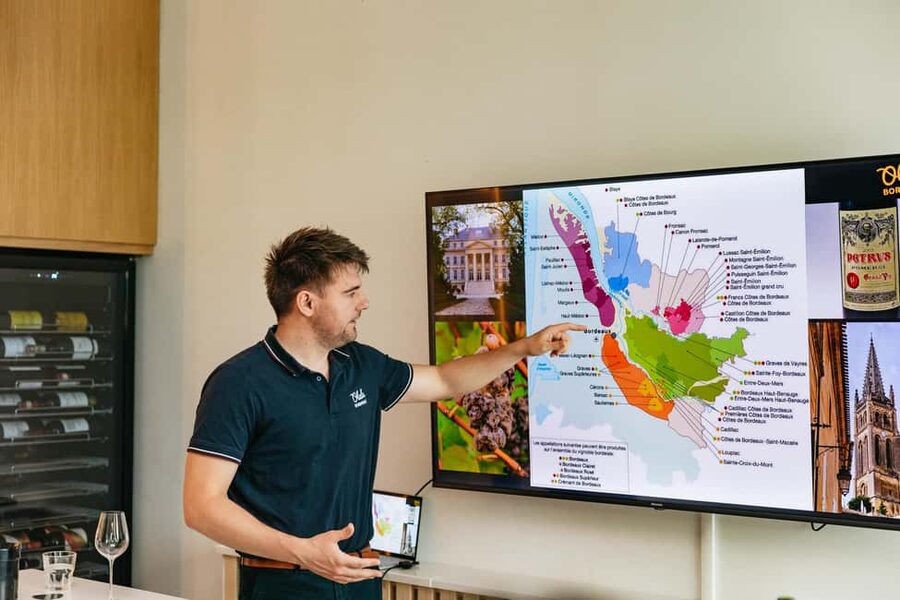
This is a great fit for adults and teens 16 and up who want Bordeaux wine education without the intimidating tone. It is also a strong choice if you are short on time. A 90-minute format is realistic on travel days when you still want to see the city.
It is not suitable for children under 16. Pets are also not allowed. Unaccompanied minors are not accepted, so if you are traveling with a teen and an adult companion, double-check the age rule before you go.
If you hate being rushed, you will likely appreciate the pacing. Multiple reviews describe a relaxed atmosphere, plenty of time to taste, and clear explanations. And if you enjoy meeting other people, the class format tends to create an easy, social vibe, because everyone is tasting and discussing the same few wines.
Quick tips for getting more out of your tasting
You will get the most value if you go with a curious, slightly nerdy mindset. Not too nerdy, just enough to notice details.
- Take notes on the first white wine, especially acidity and aroma.
- When the single-grape reds arrive, focus on one thing at a time, fruit or tannin or aroma.
- For left bank vs right bank, do not try to memorize labels. Taste for structure and feel first.
- Use the food. One bite before each sip will make the pairing lesson much clearer.
- If a guide offers an aroma sample or tasting prompt, say yes. It speeds up learning.
Should you book Bordeaux Wine Masterclass with Cheese and Charcuterie?
If you want Bordeaux education that actually changes what you notice in a glass, book this. The structure is strong, you taste enough variety to learn something real, and the cheese and charcuterie board turns the lessons into something your palate understands.
Skip it only if you are traveling with kids under 16, or if your goal is purely to drink casually with no interest in tasting technique and wine vocabulary. Otherwise, for a central, 90-minute class that leaves you better at choosing wine after you leave, it is a smart use of your Bordeaux time.
FAQ
How long is the Bordeaux wine masterclass?
The experience lasts 90 minutes.
What wines are included in the tasting?
You get 1 white wine and 5 red wines, along with water. The tasting includes a first white, three regional single-grape reds, and two additional fine wines, including one from a Bordeaux grand cru.
Where do I meet the guide?
Meet your guide at Olala Bordeaux, which is a five-minute walk from the Quinconces tram stop. Tram lines B, C, or D can help you get there.
Is the class suitable for children or teens?
No. Children under 16 are not allowed.
Are pets allowed?
No, pets are not allowed.
What languages are the instructors?
The class is offered in English and French.
More Bordeaux Wine Visits
- Bordeaux: Cité du Vin Entry Ticket and Wine Tasting
★ 4.6 · 3,885 reviews - Bordeaux: River Garonne Cruise with Glass of Wine and Canelé
★ 4.5 · 3,630 reviews - From Bordeaux: Afternoon Saint-Emilion Wine Tasting & snack
★ 4.8 · 1,581 reviews - Medoc or Saint Emilion Wine Tasting and Chateau from Bordeaux
★ 5.0 · 1,415 reviews - Saint Emilion Day Trip with Sightseeing Tour & Wine Tastings from Bordeaux
★ 5.0 · 1,120 reviews
The Whole Bordeaux Shelf
- Bordeaux: Cité du Vin Entry Ticket and Wine Tasting
★ 4.6 · 3,885 reviews - Bordeaux: River Garonne Cruise with Glass of Wine and Canelé
★ 4.5 · 3,630 reviews - From Bordeaux: Afternoon Saint-Emilion Wine Tasting & snack
★ 4.8 · 1,581 reviews - Medoc or Saint Emilion Wine Tasting and Chateau from Bordeaux
★ 5.0 · 1,415 reviews - Saint Emilion Day Trip with Sightseeing Tour & Wine Tastings from Bordeaux
★ 5.0 · 1,120 reviews
More Bordeaux Estates
- Bordeaux: Cité du Vin Entry Ticket and Wine Tasting
★ 4.6 · 3,885 reviews - Bordeaux: River Garonne Cruise with Glass of Wine and Canelé
★ 4.5 · 3,630 reviews - From Bordeaux: Afternoon Saint-Emilion Wine Tasting & snack
★ 4.8 · 1,581 reviews - Medoc or Saint Emilion Wine Tasting and Chateau from Bordeaux
★ 5.0 · 1,415 reviews - Saint Emilion Day Trip with Sightseeing Tour & Wine Tastings from Bordeaux
★ 5.0 · 1,120 reviews
The rest of the Bordeaux write-ups
- Bordeaux: Saint-Emilion Village Day Trip, 2 Chateaux & Lunch★ 4.8 · 57 reviews
- The Ultimate Bordeaux Food Tour: Full Meal & Fine Wines★ 4.8 · 61 reviews
- Bordeaux Food and Wine Tour : Authentic Artisanal Flavors★ 5.0 · 62 reviews
- No Diet Club : Bordeaux Food Tour in Bordeaux center !★ 4.9 · 62 reviews
- Bordeaux: Private Tour in a Citroën 2CV★ 4.7 · 64 reviews
- Bordeaux: St-Emilion and Medoc Wine Day Tour with Lunch★ 4.8 · 64 reviews
Bordeaux Wine Tours, in full.
 ★ 4.6Bordeaux: Cité du Vin Entry Ticket and Wine TastingFrom $273,885 reviews
 ★ 4.5Bordeaux: River Garonne Cruise with Glass of Wine and CaneléFrom $223,630 reviews
 ★ 4.8From Bordeaux: Afternoon Saint-Emilion Wine Tasting & snackFrom $1121,581 reviews
 ★ 5.0Medoc or Saint Emilion Wine Tasting and Chateau from BordeauxFrom $1141,415 reviews
 ★ 5.0Saint Emilion Day Trip with Sightseeing Tour & Wine Tastings from BordeauxFrom $2501,120 reviews
 ★ 4.6Saint-Émilion: Grand Cru Classé Winery Visit and TastingFrom $231,118 reviews
 ★ 4.5Saint Emilion Half-Day Trip with Wine Tasting & Winery Visit from BordeauxFrom $1331,034 reviews
 ★ 4.7From Bordeaux: St. Emilion Village Half-Day Wine TourFrom $129728 reviews
Also on these France lists