
Reviewed · LA ROCHELLE & ATLANTIC COAST TOURS
Discover La Rochelle: Discovery Walking Tour of La Rochelle
La Rochelle makes sense fast on foot. This 2-hour Discovery Walking Tour strings together towers, the old port, and key city sites with John Mcguiggan telling the stories in clear, practical language. You get a strong sense of what shaped modern La Rochelle, from medieval walls to wartime sea connections, all without needing to buy extra passes.
What I like most is the budget-friendly pace and the payoff. You also get solid, on-the-ground advice for the rest of your trip, including restaurant ideas and what to watch for around the old town after the tour ends. One consideration: tower access is not included, so if you want to go inside, plan for separate tickets and a little extra time.
In This Review
- Key highlights to know before you go
- Why this 2-hour walking loop is great value for La Rochelle
- John Mcguiggan’s style: fun facts, jokes, and useful next steps
- Stop 1: Chain Tower, Lantern Tower, and Saint Nicholas Tower viewpoints
- Stop 2: The Vieux Port loop that keeps you grounded
- Plage de la Concurrence and the western side story
- Porte de la Grosse-Horloge and what old city walls really mean
- Hôtel de Ville at Place de Verdun: civic power and city origins
- Marche Central de La Rochelle: where commerce becomes everyday culture
- Walking past the surviving walls and into the bohemian lanes
- Eglise St-Sauveur and the iconoclastic war impact
- Phare du quai Valin: maritime navigation, two lighthouses, one lesson
- Who this tour suits best, and who might want something else
- Should you book this walking tour?
- FAQ
- How long is the Discovery Walking Tour of La Rochelle?
- What does the tour cost?
- Is admission to the towers included?
- Where do you meet and where does the tour end?
- Is the tour offered in English?
- What is the cancellation policy for a full refund?
Key highlights to know before you go
- A tight loop that keeps you oriented: you start at Place de la Chaîne and end at La Rochelle Town Hall.
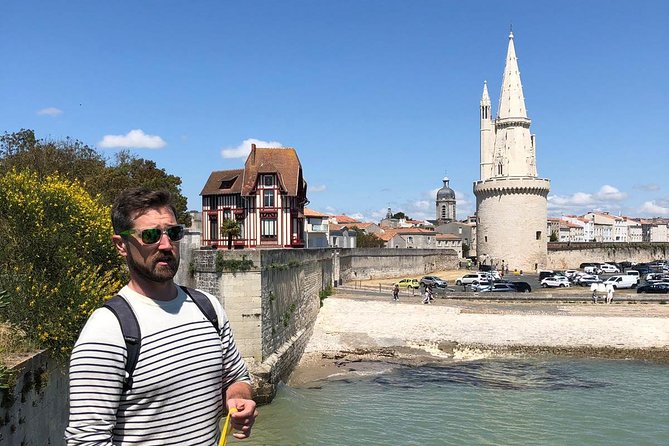
- Tower viewpoints without pressure: you see Chain Tower, Lantern Tower, and finish near Saint Nicholas Tower, but entries cost extra.
- Old port focus with return stops: you pass the Vieux Port several times so it stays your reference point.
- WWII and maritime navigation stories: Plage de la Concurrence and Phare du quai Valin connect the city to the sea.
- Food and local culture moments: the tour includes the Marche Central area and cues for what to eat, plus a playful hidden-cat type of stop.
Why this 2-hour walking loop is great value for La Rochelle
If you only have a short window, this tour is built for that reality. It lasts about 2 hours, and the route is designed as a loop around the most meaningful parts of the city, not a random line across town. That matters because La Rochelle is a port city where the streets, harbor edges, and old walls explain the place. Walking the loop helps you remember what you saw.
At $48.39 per person, you are mostly paying for a guide, a smart route, and the help to connect the dots. Tickets for the towers are not included, so think of the price as paying for context and orientation, not for entry fees. If you plan to add tower visits later, this tour works as your planning session. It also helps that the group is capped at 35 people, which keeps things from feeling chaotic.
Also, you get a mobile ticket and the tour runs in English. That combination is practical when you are hopping between sites in a coastal city where you do not want to fuss with printed paperwork. The fact that it is booked about 41 days in advance says a lot too, it usually means the timing works for most visitors, especially for a first morning or early afternoon.
More along the Atlantic coast
John Mcguiggan’s style: fun facts, jokes, and useful next steps
A big reason this tour earns top marks is the way John Mcguiggan runs it. The tone coming through in the experience is friendly and humorous, but the goal is not just entertainment. John makes the history easy to follow, then pairs it with practical suggestions so your time after the tour is better spent.
You can expect questions during the walk and a guide who adjusts the energy to the group. That shows up in pacing too. The stops are short, so the walk does not drag, but you still get enough story at each site to understand why it mattered.
The best part for me, as a reader planning my own trip, is that the guidance does not end when the tour ends. You’ll likely leave with restaurant recommendations and ideas for what to do around the old town that day and the next. Past tours have included food or drink highlights like Pineau, and there are even mentions of small extra moments such as an unexpected tasting and a playful hidden-cat style challenge with a sweet follow-up. It’s the kind of added value that makes a short tour feel more personal.
One extra note: there is a mention of a light show idea tied to the cathedral area. Even if you do not catch a show on the day you go, it signals the value of having someone point you toward events you might otherwise miss.
Stop 1: Chain Tower, Lantern Tower, and Saint Nicholas Tower viewpoints
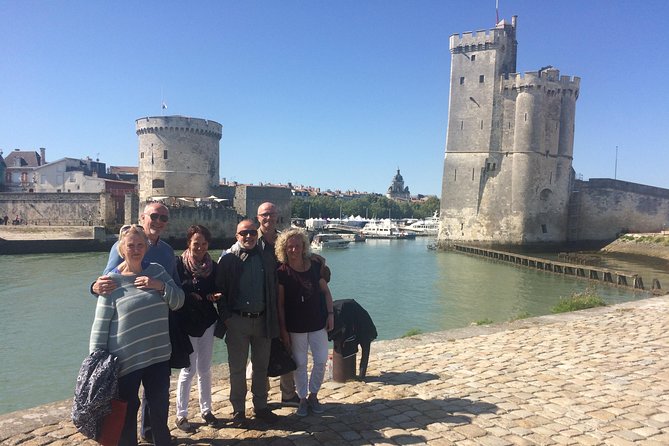
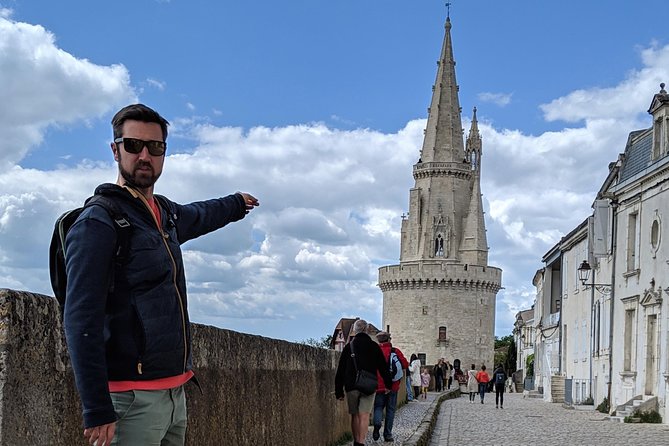
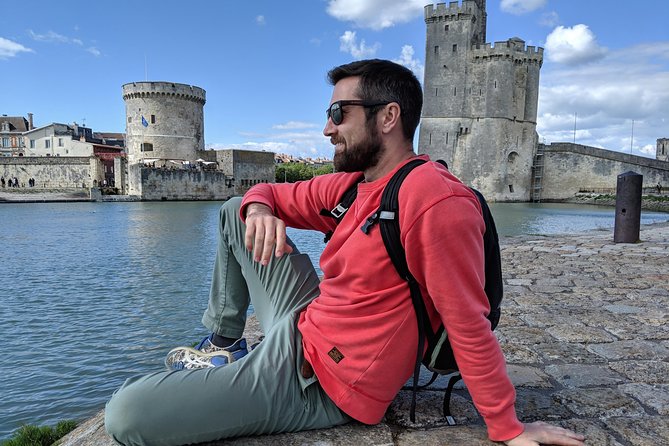
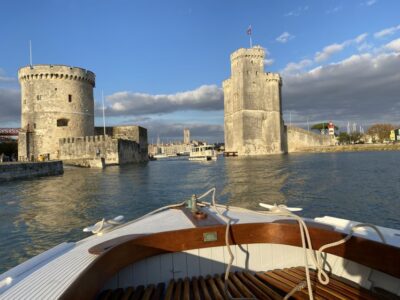
The tour starts at Place de la Chaîne, and the first stretch is about seeing La Rochelle’s tower story from the outside. You begin by the Chain Tower, then you pass by views near the Lantern Tower, and the first segment ends beside the Saint Nicholas Tower.
This is smart for a first stop. Towers in La Rochelle were not just pretty markers; they were part of how the city controlled access and communicated across water. Even without entering, the viewpoints help you understand the city’s maritime logic: what lines up with harbor edges, where towers sit relative to movement, and why certain spots became important.
A drawback to plan for: tower admission is not included. So if you want interior access, you will need to budget time and add separate tickets. Also, because the stop is mainly outside views, you will get the best experience if you take a moment to look carefully at placement and spacing. Bring your curiosity, not just your camera.
Stop 2: The Vieux Port loop that keeps you grounded
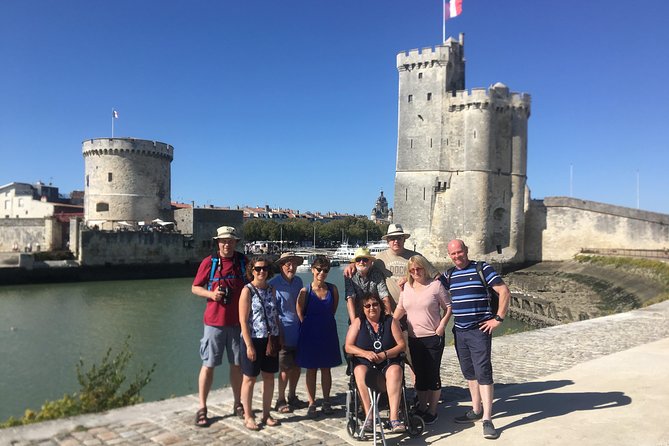
The center of gravity is the Vieux Port de La Rochelle, the old port area. You start and end near it, and you pass by the port multiple times during the route. That repeated return is more than a scenic detail. It keeps your orientation simple. When you are walking a new city, having a familiar reference point reduces stress and helps you navigate later.
At this stop, the guide connects the port’s past to how the city functions now. You also pass along the route toward the Fort des Dames area by way of Porte des Deux Moulins. Even though you are not sitting at a museum, you are building context step by step.
What you should look for during this segment is the relationship between the harbor edge and the nearby gates and towers. The city’s fortifications and maritime structures are linked, and the tour uses the port as the anchor that ties it all together.
Plage de la Concurrence and the western side story
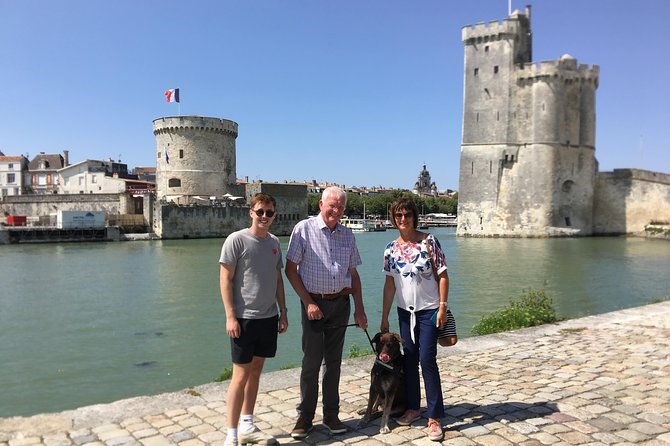
Next comes a breather at Plage de la Concurrence. The tour spends time beside the beach, then shifts toward the western side of La Rochelle, including the newer port area. This is where the tour adds a more modern historical layer, including La Rochelle’s role during World War 2.
If you think of La Rochelle only as a pretty coastal escape, this stop helps correct that. The sea is not just scenery here, it is history, trade patterns, and strategic value. The beach setting also makes the stories feel grounded because you are literally standing where maritime life meets the city.
The practical downside: you are outdoors. In dodgy weather, you might feel it more on this segment than in the old-town lanes. Pack a light layer you can handle walking with, and keep an eye on timing so you do not rush through the story part just to get out of wind.
Porte de la Grosse-Horloge and what old city walls really mean
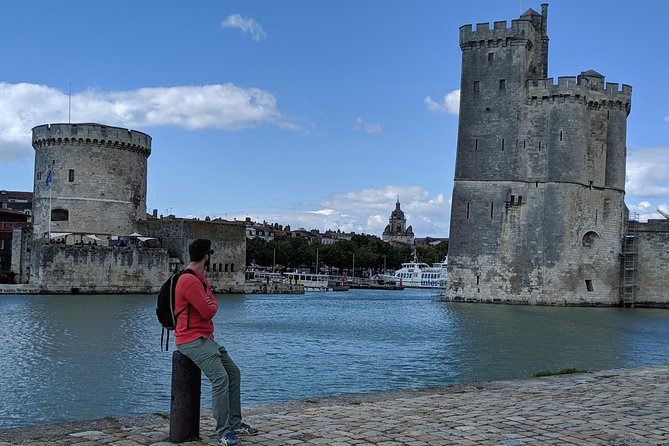
At Porte de la Grosse-Horloge, you get a stop outside the gate and a clear talk about how the old city walls worked and what trade looked like in that era. Gates like this were not random decorations. They were controlled transitions, places where movement into and out of the walled area had consequences.
This stop also helps you connect why La Rochelle’s center feels shaped by water and movement. When you understand walls and gates as systems, you start seeing the city as a set of routes rather than just a collection of monuments.
You will likely spot the gate, then the guide ties it to the bigger picture of defense and commerce. That is the point: you get the why, not just the where. And once you understand the city’s trade logic, the market stop later makes even more sense.
- Planet Exotica entrance ticket
★ 4.0 · 310 reviews - The Océâmes Treasure in La Rochelle
★ 5.0 · 193 reviews - La Rochelle: Sailing Cruise
★ 4.7 · 192 reviews - La Rochelle: 1-Hour Boat Tour of the Bay
★ 4.7 · 130 reviews - La Rochelle: Boat trip to Fort Boyard (2h00)
★ 4.4 · 88 reviews
Hôtel de Ville at Place de Verdun: civic power and city origins
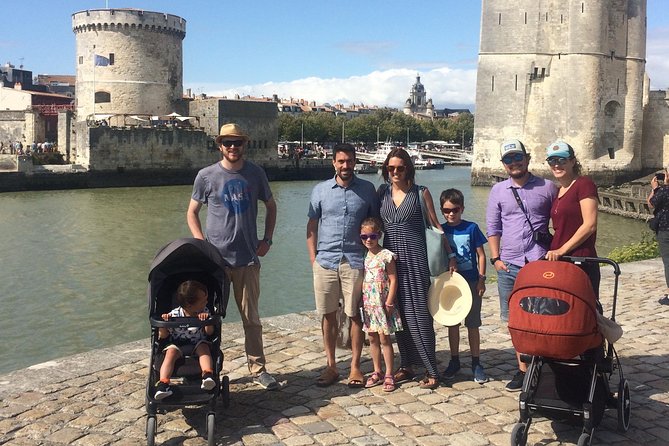
You next reach Hôtel de Ville, the oldest working town hall in France, and you talk about how civic power helped develop La Rochelle. This is one of those stops that could feel dry on paper, but it works because it explains the city’s choices. Town halls mattered because decisions about port activity, infrastructure, and local governance affected everyone who lived and worked here.
Then the tour moves to Place de Verdun, outside the cathedral area. You discuss the origins of La Rochelle, which gives you a historical starting point before the tour moves into the commercial heart of the city again. Cathedral-adjacent places are often where myths, power, and community story overlap, and the guide uses the setting to point out why this square matters.
One personal planning tip: if the guide recommends an evening light show or event linked to the cathedral, take it seriously. In coastal cities, the evening atmosphere can be when the old stone feels most alive. It’s an easy add-on when you already know which building is the key one to watch.
Marche Central de La Rochelle: where commerce becomes everyday culture
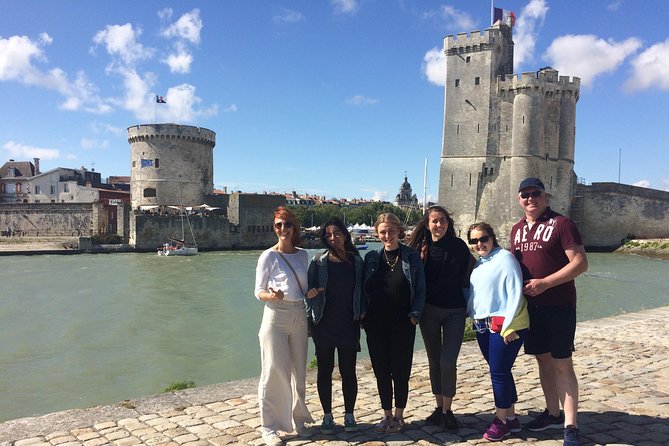
The tour’s most directly food-focused moment comes at Marché Central de La Rochelle. Here, the guide explains how commerce developed and highlights key food and drink specialties of the region. You also get a sense of what people probably shop for and eat day to day, not just special-occasion items.
Even if you do not plan to eat during the tour, this stop is valuable. Markets tell you what a city values and how locals eat around the seasons. In La Rochelle, market energy is part of the atmosphere, and understanding that makes the rest of your dining decisions easier once you’re free to explore on your own.
A practical drawback: the tour stop is short. If you want to browse deeply, you’ll need to return on your own. Think of this as your navigation tool for later, not a full market shopping experience.
Walking past the surviving walls and into the bohemian lanes
On the way back, you walk along the only surviving part of the walls of La Rochelle. That is a powerful contrast point. After seeing gates and tower viewpoints, seeing what’s left behind helps you understand what changed over time. It’s also a good moment for photos because you can see how the remaining wall section fits into streets and sightlines.
You also pass a statue of a famous French war hero. The point of that stop is to keep the city’s layered story in view, where maritime trade and conflict both shaped the identity.
Then the tour heads into a more bohemian neighborhood, where you discover unique boutiques and bars. This is one of my favorite parts of the route logic because it stops the tour from feeling only like monuments and dates. You get a taste of the city’s texture: storefronts, the kind of places you might wander into without a plan, and the side of La Rochelle that feels lived in.
Eglise St-Sauveur and the iconoclastic war impact
The walk ends with another meaningful viewpoint at Eglise St-Sauveur. You stop outside the church and talk about a famous relic and how this church reflects the effects of the iconoclastic wars. This stop is brief, but it adds weight. The tour has been moving from medieval structures to port history to wartime connections, and this segment ties the story to religious conflict and its lasting physical marks.
Even without going inside, the exterior conversation can help you see the building as more than architecture. You start noticing how conflict shapes what gets preserved, what gets damaged, and how communities rebuild. If you like history that has real consequences you can still see, this stop is one of the best uses of those extra minutes.
Near the end, the route also passes by the famous Guingette area to see if there is anything going on. If you catch music, drinks, or a lively moment, it can be a perfect transition from tour mode to wandering mode.
Phare du quai Valin: maritime navigation, two lighthouses, one lesson
The final stop is Phare du quai Valin, a lighthouse by the quay. Here, the guide discusses why the two lighthouses mattered for maritime navigation in La Rochelle. This is where the walking tour comes full circle. You started with towers tied to harbor control, and you finish with a lighthouse tied to safe passage.
A lighthouse story is never just about ships. It’s about how a city manages risk and guides movement when conditions change. That helps you read the harbor better even after you leave the tour.
This is also a good moment to slow down. You can look back at where you’ve walked, then look out toward the water and imagine how navigation signals shaped daily life. It’s the kind of closing insight that makes the whole 2 hours feel connected.
Who this tour suits best, and who might want something else
This is ideal if you:
- want an efficient first overview of La Rochelle
- like your history connected to real places like ports, walls, and gates
- want practical restaurant and activity pointers from a local guide
- prefer a guided route when walking outdoors for about two hours
It might not be the best fit if you:
- expect every stop to include entry tickets, because tower access is not included
- want deep time at museums or inside buildings, because the tour is designed for quick highlights
- hate walking in wind or rain, since parts of the route go outdoors around the western side and quay areas
Should you book this walking tour?
My decision checklist is simple. If you are arriving with limited time and you want to get your bearings fast, book it. The route coverage is strong, the pacing works, and the guide’s mix of humor, city storytelling, and trip suggestions is a big part of the value.
If you already planned to visit towers the same day, you still should book this tour, just plan your tower entries separately so you do not feel rushed. Use this walk to learn what you should prioritize, then come back to enter what you actually care about.
Bottom line: if you want a short, well-guided path through La Rochelle’s most meaningful areas, with John Mcguiggan leading and practical tips that help you plan the rest of your stay, this is a smart bet.
FAQ
How long is the Discovery Walking Tour of La Rochelle?
The tour lasts about 2 hours.
What does the tour cost?
The price is $48.39 per person.
Is admission to the towers included?
No. Access or entry to the towers is not included, even though the tour includes tower viewpoints.
Where do you meet and where does the tour end?
You meet at Place de la Chaîne, 17000 La Rochelle, France, and end at La Rochelle Town Hall, 3 Pl. de l’Hôtel de ville, 17000 La Rochelle, France.
Is the tour offered in English?
Yes, it is offered in English.
What is the cancellation policy for a full refund?
You can cancel up to 24 hours in advance of the experience for a full refund.
Everything Else Filed Under La Rochelle
- La Rochelle: 1-Hour Boat Tour of the Bay
★ 4.7 · 130 reviews - Discovery Walking Tour of La Rochelle
★ 4.9 · 72 reviews
The Whole La Rochelle Shelf
- La Rochelle: 2-Hour Sunset Sailing Cruise
★ 4.8 · 652 reviews - Planet Exotica entrance ticket
★ 4.0 · 310 reviews - La Rochelle: Catamaran Cruise
★ 4.8 · 252 reviews - La Rochelle: Coastline Sailing Cruise
★ 4.7 · 240 reviews - The Océâmes Treasure in La Rochelle
★ 5.0 · 193 reviews
More of the Atlantic Coast
- La Rochelle: 2-Hour Sunset Sailing Cruise
★ 4.8 · 652 reviews - La Rochelle: Catamaran Cruise
★ 4.8 · 252 reviews - La Rochelle: Coastline Sailing Cruise
★ 4.7 · 240 reviews - The Océâmes Treasure in La Rochelle
★ 5.0 · 193 reviews - La Rochelle: Sailing Cruise
★ 4.7 · 192 reviews
The rest of the La Rochelle write-ups
- Discovery Walking Tour of La Rochelle★ 4.9 · 72 reviews
- La Rochelle: Boat trip to Fort Boyard (2h00)★ 4.4 · 88 reviews
- La Rochelle: 1-Hour Boat Tour of the Bay★ 4.7 · 130 reviews
- The Océâmes Treasure in La Rochelle★ 5.0 · 193 reviews
- Discover La Rochelle: Discovery Walking Tour of La Rochelle★ 5.0 · 228 reviews
- La Rochelle: Coastline Sailing Cruise★ 4.7 · 240 reviews
La Rochelle & Atlantic Coast Tours, in full.
 ★ 4.8La Rochelle: 2-Hour Sunset Sailing CruiseFrom $40652 reviews
 ★ 4.8From La Rochelle: Sailing Cruise to Fort BoyardFrom $53623 reviews
 ★ 4.8La Rochelle: Catamaran CruiseFrom $40252 reviews
 ★ 4.7La Rochelle: Coastline Sailing CruiseFrom $33240 reviews
 ★ 5.0The Océâmes Treasure in La RochelleFrom $50193 reviews
 ★ 4.7La Rochelle: Sailing CruiseFrom $45192 reviews
 ★ 4.7From Bordeaux: Arcachon Bay Full Day Tour and Oyster LunchFrom $187167 reviews
 ★ 4.7La Rochelle: 1-Hour Boat Tour of the BayFrom $20130 reviews
Also on these France lists