
Reviewed · LATIN QUARTER & LE MARAIS WALKS
Le Marais District & Jewish Quarter Guided Walking Tour 12ppl Max
The Marais tells its story on foot. This guided walk stitches together old Paris landmarks and the streets of the Jewish Quarter in about 2 and a half hours.
I especially like two things: first, the small-group format (12 max) keeps it question-friendly and manageable. Second, you get a rare mix of set-piece sights like Place des Vosges and real neighborhood streets such as the Pletzl and Rue des Francs Bourgeois.
One thing to plan for up front: this route is not designed for wheelchair access or those with walking disabilities, and it does not include entry into any synagogues.
In This Review
- Key things to know before you lace up
- Le Marais in 2 and a half hours, plus the Jewish Quarter
- Starting at Saint-Paul, then stepping into Saint-Paul-Saint-Louis
- Hotel de Sully courtyard: Renaissance meets Baroque attitude
- Place des Vosges: the square you use as your mental map
- Rue des Francs Bourgeois: fashion street with history under it
- Musée Carnavalet area: where Paris past gets practical
- Pletzl streets: the Jewish Quarter focus where it feels real
- Why you do not go inside synagogues, and what you still get
- Centre Pompidou exterior: modern art contrast in one easy move
- Hôtel de Ville and Saint-Gervais-Saint-Protais: the day closes in historic authority
- The guide matters: look for the energy and the follow-up answers
- Value check on price: what you’re really paying for
- How to handle the walking, weather, and crowd control
- Who this tour is for, and who should skip it
- Should you book the Le Marais and Jewish Quarter guided walk?
- FAQ
- What is the duration of this Le Marais and Jewish Quarter walking tour?
- How big is the group?
- What language is the tour offered in?
- Are synagogues included in the tour?
- Are admission tickets included for the stops?
- Does the tour run if it rains?
- Where do I meet the guide?
- Do you include hotel pickup or drop-off?
- Is the tour refundable if I cancel?
Key things to know before you lace up
- 12 people max on a semi-private walk, with an English-speaking guide
- 2.5 hours of mostly outdoor walking, rain or shine
- Synagogue entry is not included, so you learn from the streets and nearby landmarks
- Most stops are free to see from the outside, but Musée Carnavalet and Centre Pompidou entry are not included
- Expect a route that can change for national celebrations, with alternate routing still aimed at key highlights
Le Marais in 2 and a half hours, plus the Jewish Quarter
This tour is built for pacing. You move through one of Paris’ most walkable areas without feeling like you’re bouncing from one far-off stop to another. It’s a guided loop through Le Marais, with a strong focus on the old Jewish Quarter, and then a finish that swings from historic City Hall to the modern punch of Pompidou.
I like the balance here. You get the postcard places, but you also get the connective tissue between them, the courtyards, streets, and corners that make the district feel lived-in.
More walks through the Latin Quarter and the Marais
Starting at Saint-Paul, then stepping into Saint-Paul-Saint-Louis
You begin in the heart of Le Marais, right around Saint-Paul. The first proper anchor is the 17th-century Église Saint-Paul-Saint-Louis, built by the Jesuits. The guide points out how its design was inspired by the Gesù church in Rome, which helps you see why French religious architecture often has these cross-city echoes.
This opening stop sets the tone. The Marais is not just medieval cobblestones, it’s also layered religious and political ambition. Even if you normally skip churches, this one is an easy win because it’s short and story-driven.
Hotel de Sully courtyard: Renaissance meets Baroque attitude
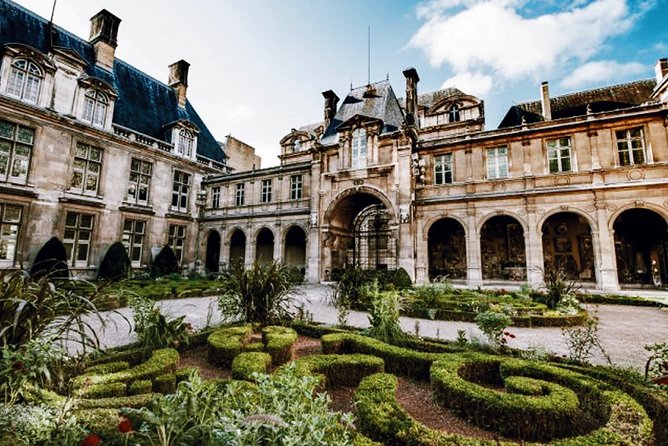
Next you pass the Cour et jardin de l’Hotel de Sully. The building dates to 1624 to 1630 and is tied to Renaissance style with Baroque elements. You’re not only looking at pretty facades here, you’re learning how this district became a major stage for powerful residents.
You’ll get about ten minutes at this stop. It’s enough time to spot the architectural details and understand why the hotel is still such a recognizable marker of the Marais’ “royal-adjacent” era.
Place des Vosges: the square you use as your mental map
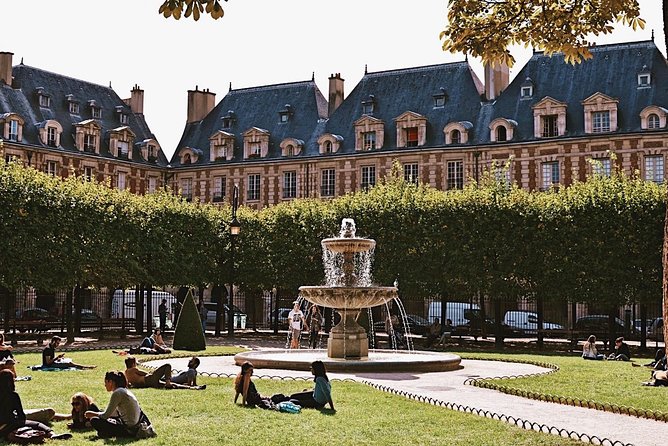
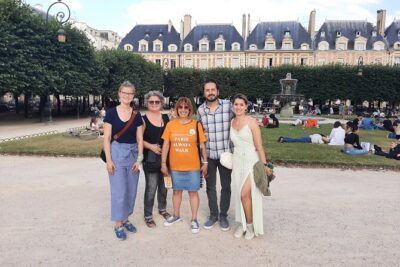
Then it’s onto Place des Vosges, often described as the oldest planned square in Paris. The guide treats it like a reference point, because once you understand this space, the rest of the Marais makes more sense.
Plan on a slow stroll. This is one of those places where you can stand still for a minute, look up, and instantly feel the difference between old planning and modern growth.
Rue des Francs Bourgeois: fashion street with history under it
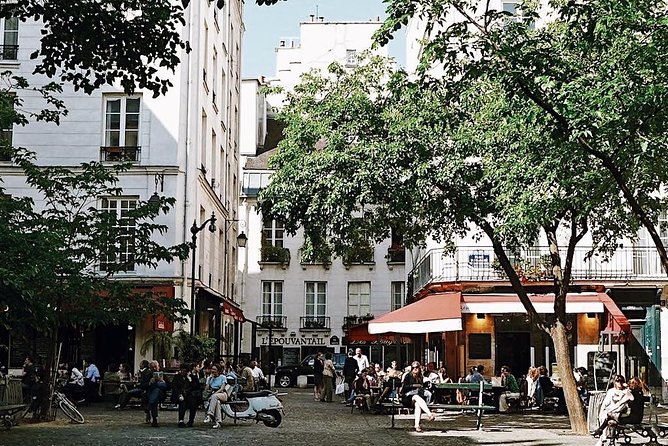
From Place des Vosges you move along Rue des Francs Bourgeois. The tour frames it as a long, interesting street that today feels trendy, thanks to fashion boutiques. The trick is that you’re seeing it with historical context, not just as a shopping corridor.
This is also a good stretch for photos. The street gives you classic Marais rhythm: storefronts, side streets, and the occasional architectural surprise you would easily walk past on your own.
Musée Carnavalet area: where Paris past gets practical
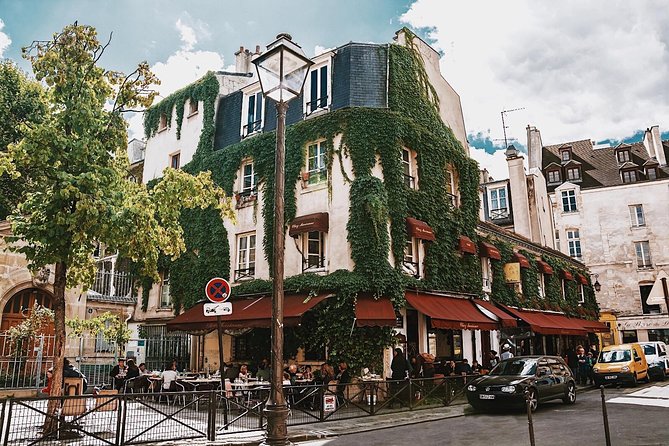
The route includes the Hôtel Carnavalet and then the Musée Carnavalet. The tour is quick at this point, around ten minutes, and you’ll learn why the Hôtel Carnavalet matters as a Renaissance architecture example.
Important practical note: the museum admission is not included. If you want to go inside, you’ll need to plan that separately. Still, the outside context is useful, because it explains what you’re looking at before you ever buy a ticket elsewhere.
More Paris tours that come with a guide
- Paris: Louvre Guided Tour with Reserved Access & Boat Cruise
★ 4.3 · 16,353 reviews - Louvre Museum Masterpieces Guided Tour with Access
★ 4.5 · 12,023 reviews - Louvre Museum – Exclusive Guided Tour (Entry Included)
★ 5.0 · 6,296 reviews - Versailles: Skip-the-Line Guided Palace Tour and Full Access
★ 4.6 · 5,214 reviews - Louvre Priority Access with Mona Lisa Escort or Guided Option
★ 4.0 · 4,420 reviews
Pletzl streets: the Jewish Quarter focus where it feels real
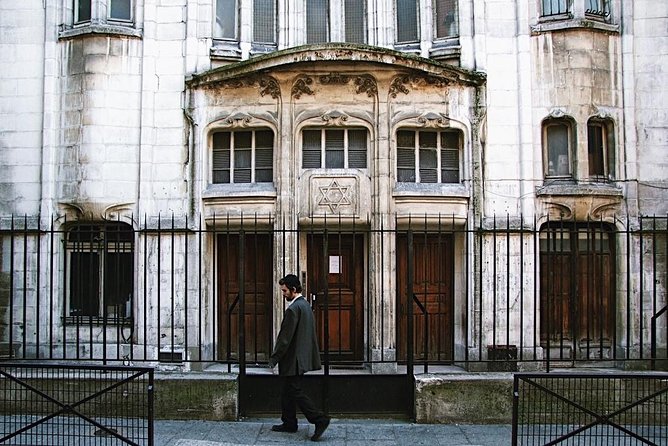
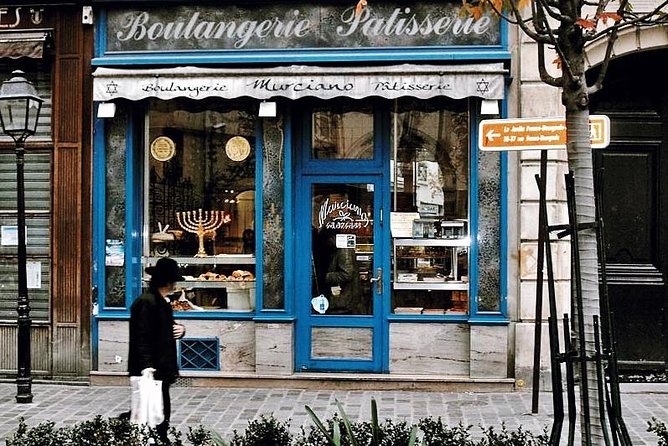
After the Marais landmarks, the tour turns toward the old Jewish Quarter, centered around the Pletzl area. You walk along Rue des Rosiers, a key street in this neighborhood. The experience here is less about grand monuments and more about everyday history, the kind you can sense in the shopfronts and street layout.
Then there’s Jardin des Rosiers, a small garden hidden between buildings and behind boutiques. This stop adds a moving historical layer tied to Joseph Migneret, a school principal who helped dozens of students during World War II by hiding them, and who was eventually arrested and killed. The guide’s job here is to connect that story to the place, so the garden becomes more than a quiet break.
This is one of the most meaningful parts of the route, and it’s also one of the easiest to appreciate. You get a short pause, a clear story, and a chance to reset your feet for the next stretch.
Why you do not go inside synagogues, and what you still get
The tour does not include entry into any synagogues. That’s for security reasons, and it means your visit stays focused on the streets, churches, courtyards, and neighborhood landmarks rather than inside worship spaces.
Even without synagogue interiors, you still get the heart of the narrative: how the community shaped the Marais in the 18th and 19th centuries, and how the district developed into what it is today. If synagogue access is a must for you, you’ll want to plan a separate visit timed to opening rules. This walk is about place-based understanding more than gated religious tourism.
Centre Pompidou exterior: modern art contrast in one easy move
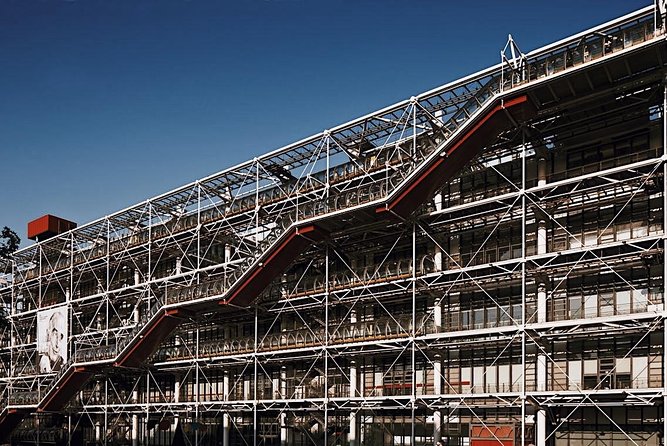
Near the end, you head toward the Centre Pompidou. The tour focuses on the exterior, known for its high-tech style and unmistakable look. You’ll also hear the idea behind the cultural complex: France’s first Minister of Cultural Affairs wanted different forms of art and literature under one roof.
Centre Pompidou admission is not included here. That’s fine, because the route still makes sense as a “before and after” contrast. You finish the day’s story with modern Paris, not just more old stone.
Hôtel de Ville and Saint-Gervais-Saint-Protais: the day closes in historic authority
The tour ends at Hôtel de Ville, the city’s local administration building. It has been the municipality headquarters since 1357, and it gives you a strong sense of how governance and public life shaped Paris over centuries.
Right next to it, you’ll catch a glimpse of Église Saint-Gervais-Saint-Protais, described here as the first example of French Baroque style in Paris. It also has a newer role: it is now tied to the Monastic Fraternities of Jerusalem.
If you want a natural way to continue your day after the walk, this is a good finish point. You’re not dumped in an empty corner. You’re ending in one of the central areas where it’s easy to find something to eat and then wander.
The guide matters: look for the energy and the follow-up answers
A big reason this tour consistently scores well is the guide style. You’ll see recurring guide names like Hugo, Eden Mele, Adrien, Tamari, and Alasdair linked with the same pattern: strong storytelling, lots of detail without turning it into a lecture, and real patience for questions.
What that means for you on the street is simple. If you ask why something is shaped a certain way, you don’t get a shrug. You get a real explanation, plus extra context that helps you notice details later while you’re walking on your own.
It also helps that the group size caps at 12. With fewer people, guides can adapt. If one person is curious about architecture and another wants Jewish Quarter context, you are more likely to get time for both.
Value check on price: what you’re really paying for
The price is $59.69 per person for about 2 and a half hours. For this area, that can be a good deal because so many stops are free to see from the outside. This tour lists multiple free admission stops, including Saint-Paul-Saint-Louis, Place des Vosges, Jardin des Rosiers, Hôtel de Ville, and the nearby Saint-Gervais-Saint-Protais.
Two stops are not included for admission: Musée Carnavalet and Centre Pompidou. So you are paying mainly for guidance, routing, and interpretation, not for entrance fees.
Also, there’s a smart practical angle: you’re paying for someone to connect the dots between royal-era architecture and the Jewish Quarter’s development. If you are the type of person who gets more out of walking with context than walking with a map, this is the kind of tour that justifies the cost.
On the logistics side, you should factor that there’s no hotel pickup or drop-off. You’ll start near Saint-Paul and end in Le Marais. A taxi or rideshare can be worth it if your feet are already tired.
How to handle the walking, weather, and crowd control
This walk runs rain or shine. Paris weather is unpredictable, so dress for it. Bring comfortable shoes, and if it’s wet, expect slippery sidewalks in older parts of the Marais. A water bottle is a smart idea since the tour is continuous walking.
No large bags or suitcases are allowed. That means you should travel light, especially if you’re doing this on the same day as museum hopping.
The route can also change due to national celebrations. When that happens, the tour still aims to show all the highlights, just on an adjusted path. That’s a good thing to know, because it reduces the worry of a street closure derailing your whole plan.
One more detail that matters in real life: you need to provide a mobile phone number (with country code). That helps the team coordinate on the ground.
Who this tour is for, and who should skip it
This is a great pick for first-timers who want orientation fast. If you want a solid overview of Le Marais, plus the Jewish Quarter focus, in one organized loop, the structure works well.
It also suits people who like history with practical street-level storytelling. You’re not staring at plaques for two hours. You’re learning why certain places mattered, then walking to the next scene.
If you use a wheelchair or need accessibility-first routing, this tour is not recommended. The tour also says it requires moderate physical fitness, so if long walking days usually drain you, you might need to plan a lighter schedule before or after.
Should you book the Le Marais and Jewish Quarter guided walk?
Book it if you want to get your bearings in Le Marais with a guide and then keep those mental connections after you leave. The route gives you the big visual hits like Place des Vosges, but it also spends time where meaning lives in everyday streets, Rue des Rosiers and the Jardin des Rosiers.
I’d skip it if your main goal is synagogue interior access. This tour is designed around security restrictions, so it won’t meet that specific expectation. And if your mobility is limited, the walking format is likely to be a poor fit.
If you are flexible, a bit curious, and you like asking questions, this is one of those “start here, then wander better” Paris experiences.
FAQ
What is the duration of this Le Marais and Jewish Quarter walking tour?
The tour runs for about 2 hours 30 minutes.
How big is the group?
It is a semi-private tour, with a maximum of 12 travelers.
What language is the tour offered in?
The tour is offered in English.
Are synagogues included in the tour?
No. The tour does not include entry into any synagogues, due to access restrictions for worshippers for security reasons.
Are admission tickets included for the stops?
Many stops are free, but admission tickets are not included for Musée Carnavalet and the Centre Pompidou.
Does the tour run if it rains?
Yes. The tour will run rain or shine.
Where do I meet the guide?
The start point is Saint-Paul 75004 Paris, France. The end point is Le Marais, Paris.
Do you include hotel pickup or drop-off?
No. Hotel pickup or drop-off is not included.
Is the tour refundable if I cancel?
Yes, free cancellation is available up to 24 hours in advance for a full refund.
Everything Else Filed Under Paris
- Paris: Louvre Guided Tour with Reserved Access & Boat Cruise
★ 4.3 · 16,353 reviews - Paris: Big Bus Hop-On Hop-Off Tour with Optional Cruise
★ 4.4 · 13,279 reviews - Louvre Museum Masterpieces Guided Tour with Access
★ 4.5 · 12,023 reviews - Versailles: Skip-the-Line Tour of Palace with Gardens Access
★ 4.7 · 9,778 reviews - Mona Lisa & Louvre Masterpieces Tour with Reserved Access
★ 4.6 · 6,812 reviews
The Whole Paris Shelf
- Paris: Louvre Museum Timed-Entrance Ticket
★ 4.6 · 71,977 reviews - Disneyland® Paris 1-Day Ticket
★ 4.6 · 49,412 reviews - Paris: Versailles Palace and Gardens Full Access Ticket
★ 4.6 · 41,579 reviews - Paris: Evening River Cruise with Music
★ 4.4 · 22,721 reviews - Paris: Eiffel Tower Entry Ticket with Optional Summit Access
★ 4.4 · 20,035 reviews
Latin Quarter and Marais, More Walks
- Award-Winning Paris French Bakery Experience — Le Marais, 4th Arr
★ 4.5 · 1,186 reviews - Paris Le Marais Food Tour With 10+ Tastings, Cheese, Wine & More
★ 5.0 · 985 reviews - Paris Le Marais District Original Food and Wine Tasting Tour
★ 4.5 · 880 reviews - Paris Bike Tour Hidden Secrets in the Latin Quarter & Le Marais neighborhoods
★ 5.0 · 766 reviews - Paris: Food and Wine Tasting Walking Tour in Le Marais
★ 4.9 · 446 reviews
The rest of the Paris write-ups
- Montmartre French Bistrot Style Food & Wine Tasting Tour★ 4.0 · 26 reviews
- Versailles and Louvre Museum Access and Tour★ 4.5 · 26 reviews
- Skip-The-Line Centre Pompidou Paris Guided Museum Tour – Semi-Private 8ppl Max★ 5.0 · 26 reviews
- Private Highlights of Paris Tuk-Tuk Experience★ 5.0 · 26 reviews
- Discover Paris in a Classic French Car (2cv)★ 5.0 · 26 reviews
- Parisian Romantic Picnic★ 5.0 · 26 reviews
Latin Quarter & Le Marais Walks, in full.
 ★ 4.5Award-Winning Paris French Bakery Experience — Le Marais, 4th ArrFrom $1141,186 reviews
 ★ 5.0Paris Le Marais Food Tour With 10+ Tastings, Cheese, Wine & MoreFrom $102985 reviews
 ★ 4.5Paris Le Marais District Original Food and Wine Tasting TourFrom $157880 reviews
 ★ 5.0Paris Bike Tour Hidden Secrets in the Latin Quarter & Le Marais neighborhoodsFrom $54766 reviews
 ★ 4.9Paris: Food and Wine Tasting Walking Tour in Le MaraisFrom $113446 reviews
 ★ 4.5Paris Latin Quarter Pub Crawl Bars and ClubsFrom $30394 reviews
 ★ 5.0Le Marais/Paris – The Historic, Trendy, Jewish, LGBT districtFrom $48341 reviews
 ★ 5.0Paris Le Marais Food & Wine Tour with Eating EuropeFrom $163297 reviews
Also on these France lists