
Reviewed · BORDEAUX WINE TOURS
Libourne: Winery Tour with Wine and Chocolate Tasting
Chocolate and wine in the vines? At Château Cruzeau near Libourne, I like the family-run château feel and the wine and dark chocolate pairings that make the tasting fun, not fussy. The only catch: it is a tight 75-minute experience, so you will not get a long, deep technical seminar.
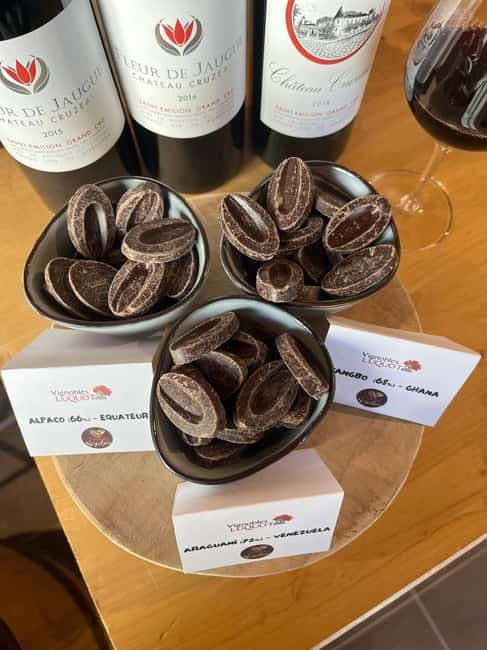
You walk through a 12-hectare property in Saint-Emilion Grand Cru country, right on the border with Pomerol. The visit includes vineyard talk, a look at the vat room and barrel cellar, and a guided tasting of 3 wines matched with 3 chocolates from Les Chocolats de Sophie.
In This Review
- Key highlights at a glance
- A 75-minute tour that feels personal, not rushed
- Getting to the meeting point in Libourne without stress
- Walking the vines: Luquot farm choices and soil life
- Vat room and barrel cellar: where the tour turns real
- The tasting: 3 wines paired with 3 dark chocolates
- How the Saint-Emilion and Pomerol border shows up in the glass
- Price and value: what $21 buys you in real terms
- What to ask your guide during the tour (so you get more out of it)
- Who this tour suits best in Libourne
- Should you book Château Cruzeau’s wine and chocolate tasting?
- FAQ
- How long is the Château Cruzeau wine and chocolate tour?
- Where is the meeting point?
- What do you taste during the tour?
- Is transportation included?
- Are meals included?
- What languages are available for the live tour guide?
- Is the tour wheelchair accessible?
- What should I bring?
- Are there any timing restrictions during the year?
Key highlights at a glance
- 12-hectare, five-generation family property managed by the Luquot family
- Vineyard talk in the middle of the vines, including soil life and farm choices
- Vat room and barrel cellar visit for a real behind-the-scenes look
- 3 wines plus 3 dark chocolates paired in a way that teaches your palate
- English or French guide, with flexible explanations
- Wheelchair accessible and year-round by appointment
A 75-minute tour that feels personal, not rushed
This is the kind of wine experience that works even when you have limited time. You get a full arc in about 75 minutes: you start outside in the vineyard, you see winemaking spaces (vat room and barrel cellar), then you finish with a tasting that pairs wine with dark chocolate.
The value is strong for a few reasons. First, you are not just looking at bottles. You see where the wine is made, and you taste multiple wines side by side so you can notice differences faster than you would with just one glass. Second, the chocolate pairing adds a second flavor reference point, which makes the tasting more understandable, even if you are not a wine person.
One more practical note: the duration matters. If you want a very long tasting with lots of pours, you may feel that three wines is too short. But if you want clarity, variety, and a satisfying finish without spending half your day, this hits the sweet spot.
Getting to the meeting point in Libourne without stress
You meet at 152 Av. de l’Épinette (Accueil). The address matters because this tour is appointment-based, so you want to arrive a few minutes early to keep things smooth.
If you are coming by train from Bordeaux, I love the local tip that saves time. When you step off the train, do not trust Google Maps blindly. A nearby free bus number 4 stop is reportedly right by the area you need, and it brings you close to the château. That kind of detail can turn a frustrating walk into a quick hop.
Also, bring a camera. There are vineyard views and inside-the-cellar moments that are worth capturing, as long as your guide allows photos where you are standing.
Walking the vines: Luquot farm choices and soil life
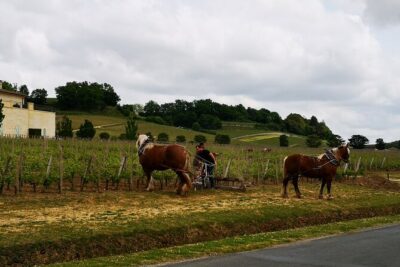
The tour begins in the vines, not in a tasting room. That is a big part of why this works. When you stand among the plants, the explanations about farming practices make more sense. You can look at the setting while you learn, and you are not mentally stuck in a classroom vibe.
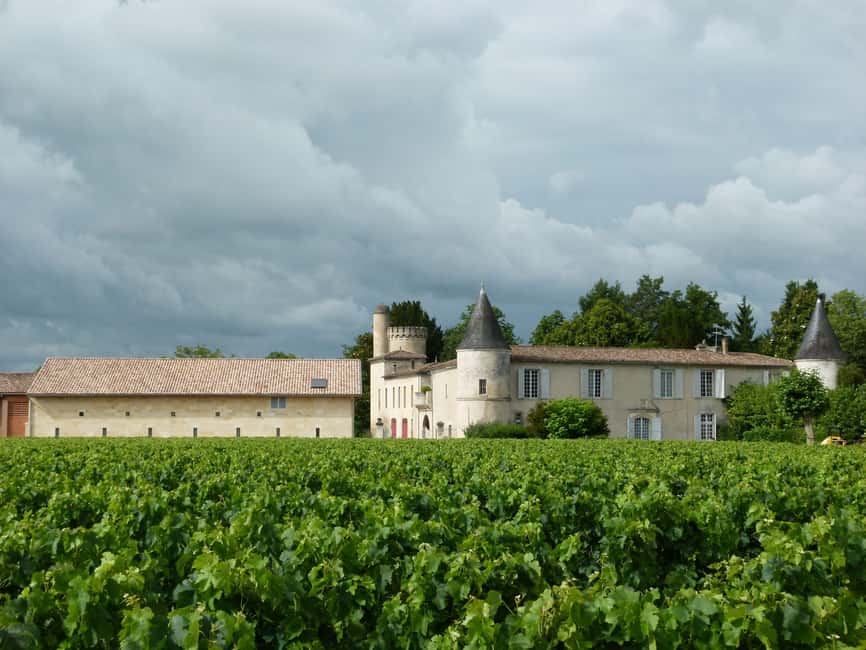
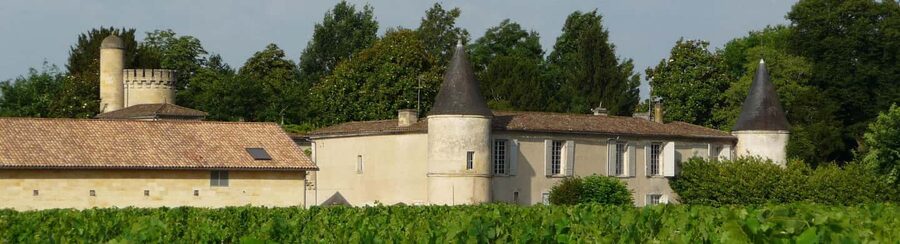
Château Cruzeau is a 12-hectare family property run by the Luquot family for five generations. Even in a short visit, that generational continuity shows up in how the guide explains the estate. You are not hearing generic slogans. You are hearing how a specific place manages the vineyard and what they believe shapes the wine’s character.
One of the most interesting ideas you get here is the role of soil life. The guide talks about agricultural practices and how the vineyard’s living systems connect to what ends up in the glass. You might not leave with a textbook-level explanation, but you will leave with a clearer sense of why two nearby vineyards can taste different even when grapes are in the same general region.
Another useful angle is that the estate promotes environmentally friendly practices. You do not need to be a sustainability expert to care. If you like understanding how a wine is made beyond just the label, this adds a thoughtful layer.
Vat room and barrel cellar: where the tour turns real
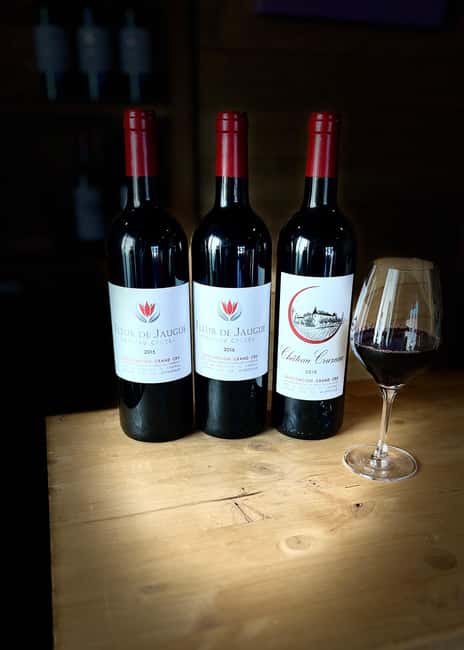
After the vineyard walk, you move into the production spaces: the vat room and the barrel cellar. This is where the tour earns its keep. Seeing tanks and barrels up close turns the talk into something physical you can picture when you taste later.
You also get a guided flow to the visit, so you are not wandering around trying to decode what is what. Even if you are brand-new to wine terms, the guide’s job is to connect the process steps to what you will notice in the tasting.
A quiet benefit here: the tour structure prevents information overload. You get the vineyard context first, then you see the winemaking environment, then you taste. That order helps your brain link cause and effect, even during a compact 75-minute schedule.
The tasting: 3 wines paired with 3 dark chocolates
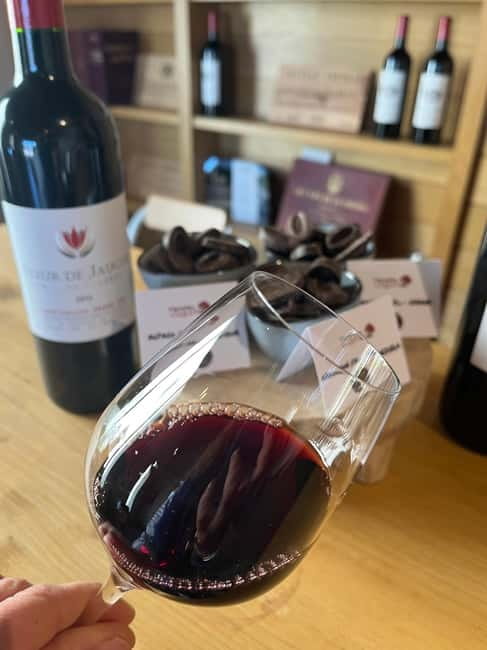
The final stretch is the fun part, and it is not just a random snack stop. You taste 3 wines from the property, paired with 3 dark chocolates from Les Chocolats de Sophie in Libourne.
Pairing wine with chocolate is surprisingly educational. Dark chocolate has bitterness and cocoa depth, plus sweetness and texture. That means it can either soften harsh edges in wine or highlight differences between wines. When you taste multiple pairings back to back, it is easier to learn what you like and why.
From the way the guide demonstrates the tasting, you should expect to notice contrast. The tasting is designed to show differences between the wines clearly, not just to hand you a glass and wish you luck. If you have ever wondered why people say one red is fruitier while another feels drier or more structured, this kind of side-by-side format is a shortcut.
A neat detail I picked up from actual experiences on this tour: at least one tasting involved dark chocolates described as coming from South America. That does not mean every pairing is the same all year, but it tells you the chocolate selection is chosen with intention, not pulled from a generic box.
If you love chocolate, great. If you do not, you can still benefit. You can treat the chocolate as a flavor tool that changes how each wine tastes, which is exactly what the pairing is trying to teach you.
How the Saint-Emilion and Pomerol border shows up in the glass
Château Cruzeau sits in Saint-Emilion Grand Cru territory, on the border with Pomerol. Even if you do not plan to chase every appellation nuance on your trip, this context helps you understand why the estate is interesting.
Think of it like this: you are tasting from a place influenced by two neighboring wine cultures. In your glass, you are likely to notice that mix of styles, structure, and fruit expression. The guide’s explanations about farm choices and soil life help you connect those regional influences to vineyard realities.
Also, you are tasting property wines from the same estate you toured. That makes comparisons simpler. You are not guessing which “style” you like from a dozen unrelated producers. You are learning how this one estate communicates through both farming choices and winemaking steps.
Price and value: what $21 buys you in real terms
At about $21 per person, this tour is priced like a smart lunch, but it gives you much more than a meal. For that money, you get:
- a guided vineyard visit
- a vat room and barrel cellar look
- a tasting of 3 wines from the property
- a pairing with 3 dark chocolates from a local chocolatier
The value shows up in the pacing. You get multiple learning moments without paying for a half-day tour or a private driver. And you end with tastings that make the earlier explanations stick.
Where you should manage expectations is in the depth. This is not a multi-hour masterclass. You will not leave with detailed tasting sheets for every single step in production. But you will leave with a clear sense of the estate, the winemaking spaces, and a practical introduction to how wine changes when it meets food.
If you buy wine afterward, treat it as a personal souvenir of what you actually saw and tasted here. Many people leave wanting to bring at least one bottle back to their own kitchen table, where you can redo the pairings at home.
What to ask your guide during the tour (so you get more out of it)
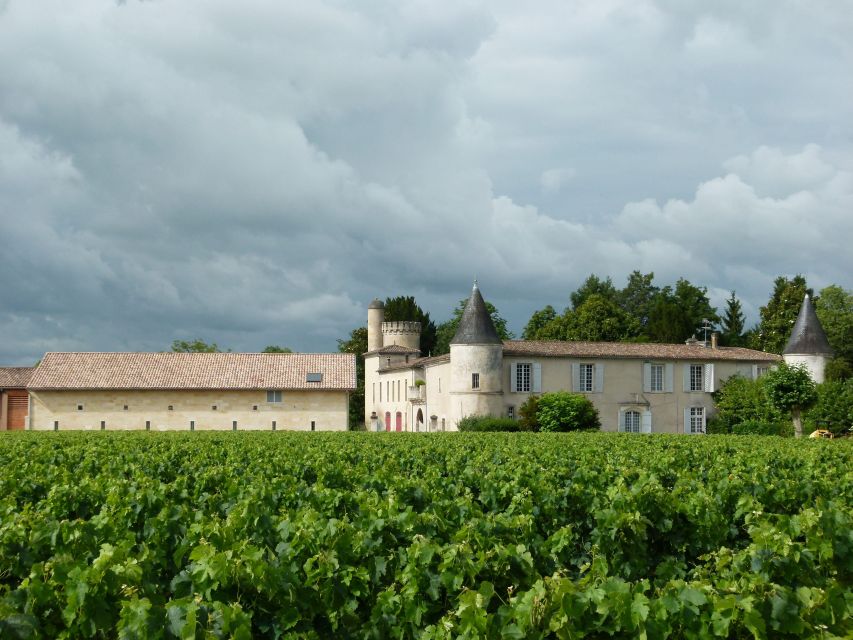
This tour is led by live guides in English or French, and the tone tends to be friendly and responsive. I like experiences where you can ask questions without feeling silly. Here, you can ask for clarification on the vineyard part, then tie it back to what you taste.
If you want to maximize the benefit in 75 minutes, ask things like:
- How do their agricultural practices connect to what you taste?
- What do they expect you to notice when comparing the three wines?
- How does the chocolate change the wine, and which pairing is the most different?
Also, if you are unsure about your French or English comfort level, you can aim for clarity. One traveler shared that the guide was flexible about switching languages so nothing was missed, which is exactly what you want.
You might also hear the guide named Jessica, and there are repeated stories of the host being part of the family and very welcoming. That matters because it usually means you get less script and more real conversation.
Who this tour suits best in Libourne
This fits best if you want an authentic, family-run stop that explains the process without drowning you in jargon. It is also a good option if you are traveling with a mixed group. One person described bringing a teenager who enjoyed it, and another mentioned a partner who is not a wine drinker still had a good time. Chocolate helps, but so does the guided structure.
You will probably enjoy it if:
- you want a hands-on vineyard-to-cellar visit
- you like learning in short bursts
- you enjoy tasting multiple wines side by side
- you want a more personal stop than the big corporate tours
You might not love it if:
- you want a long tasting with many pours
- you are looking for a deep technical fermentation breakdown
- you strongly dislike dark chocolate, since the pairing is part of the experience
Should you book Château Cruzeau’s wine and chocolate tasting?
I think you should book this tour if your goal is simple and satisfying: see the vineyard, step into the winemaking spaces, taste three estate wines, and end with a chocolate pairing that makes the tasting easier to understand. The short duration makes it workable on a busy day, and the family-run feel is the kind of detail you remember later.
Book it too if you are new to wine. The tour is structured to guide your palate, not test your knowledge. And if you are already a wine lover, the visit gives you something real to anchor your tasting choices, because you are tasting from the same place you just toured.
If you want a long, very technical session, you may feel this is too short. But for most people, especially those who want value and a genuine family estate experience in Libourne, this is a very strong pick.
FAQ
How long is the Château Cruzeau wine and chocolate tour?
It lasts about 75 minutes.
Where is the meeting point?
The meeting point is at Accueil, located at 152 Av. de l’Épinette.
What do you taste during the tour?
You taste 3 wines from the property and 3 dark chocolates from Les Chocolats de Sophie.
Is transportation included?
No, transportation is not included.
Are meals included?
No, meals are not included.
What languages are available for the live tour guide?
The guide offers live tours in English and French.
Is the tour wheelchair accessible?
Yes, the tour is wheelchair accessible.
What should I bring?
Bring a camera.
Are there any timing restrictions during the year?
It runs all year round by appointment, so you should check available starting times.
Bordeaux Wine Tours, in full.
 ★ 4.6Bordeaux: Cité du Vin Entry Ticket and Wine TastingFrom $273,885 reviews
 ★ 4.5Bordeaux: River Garonne Cruise with Glass of Wine and CaneléFrom $223,630 reviews
 ★ 4.8From Bordeaux: Afternoon Saint-Emilion Wine Tasting & snackFrom $1121,581 reviews
 ★ 5.0Medoc or Saint Emilion Wine Tasting and Chateau from BordeauxFrom $1141,415 reviews
 ★ 5.0Saint Emilion Day Trip with Sightseeing Tour & Wine Tastings from BordeauxFrom $2501,120 reviews
 ★ 4.6Saint-Émilion: Grand Cru Classé Winery Visit and TastingFrom $231,118 reviews
 ★ 4.5Saint Emilion Half-Day Trip with Wine Tasting & Winery Visit from BordeauxFrom $1331,034 reviews
 ★ 4.7From Bordeaux: St. Emilion Village Half-Day Wine TourFrom $129728 reviews
Also on these France lists