
Reviewed · LYON TOURS
Lyon Walking Tour: Explore Top Sights & Hidden Gems
Lyon clicks when you walk it. This 2-hour, English tour strings together Lyon’s biggest landmarks with the quieter details that make the city feel real, from Grand Hotel-Dieu to the traboules around Vieux Lyon.
I like two things most. First, the small-group vibe, which makes it easy to hear your guide and ask questions. Second, the way the walk helps you spot what to look for on your own after, especially courtyards, passageways, and the stories tied to each corner.
One consideration: the route has uneven surfaces, stairs, and narrow passageways, so it may not be the best fit if you have trouble walking or use a wheelchair.
In This Review
- Key Highlights You’ll Notice
- Getting Your Bearings in Lyon, One Two-Hour Walk
- Price and What You Actually Get for $36
- Start at Place Bellecour, Finish at Saint-Jean
- Grand Hotel-Dieu: More Than a Pretty Facade
- Place des Jacobins: The Fountain with Artist Faces
- Passerelle du Palais-de-Justice: Saône River Views on a Pedestrian Bridge
- Vieux Lyon and Traboules: Courtyards You Would Miss
- Place Saint-Jean: The Closer, Surprising Ending
- Why the Guide Matters, Especially in English
- Timing, Comfort Stops, and How to Prepare
- Who This Tour Is Best For
- Should You Book This Lyon Walking Tour?
Key Highlights You’ll Notice
- A fast orientation to Lyon’s core sights in about two hours
- Hotel-Dieu, Place des Jacobins, and Vieux Lyon as the main anchors
- Traboules and courtyards explained so you actually understand what you’re seeing
- A practical, photogenic bridge stop at Passerelle du Palais-de-Justice
- A strong end point at Saint-Jean Cathedral for easy next steps
- English guiding that can be personable and question-friendly
Getting Your Bearings in Lyon, One Two-Hour Walk

If you only have a short window in Lyon, this kind of walking tour is pure value. You get the big names of the city, but the best part is how the guide links them into a route that makes sense. You start near Place Bellecour, then finish by Cathédrale Saint-Jean-Baptiste, which is a smart way to close the loop on your first day.
I especially like that the pace is broken into bite-sized chunks. The itinerary keeps moving, but it also gives you moments to pause at key places, including spots where people can sit or catch shade. In warm weather, that matters more than you’d think, because Lyon’s old streets can feel busy and sun can hit hard.
The tour is also built for real sightseeing, not just passing by buildings. You’re guided toward the visual details that are easy to miss on your own, like how Lyon’s architecture changes from street to courtyard and how the city’s layout connects areas across the Saône.
Other Lyon tours, compared
Price and What You Actually Get for $36
At $36 per person for about 2 hours, this works out to a pretty fair rate for a guided history-and-streets combo. The main reason it feels like good value is that you’re not paying for “seeing one monument.” You’re paying for someone to help you read the city.
The tour includes a professional guide and the full two-hour walking format. And the stops you hit along the way are listed as admission ticket free, which reduces the usual headache of trying to decide what costs money and what does not.
One more practical point: the experience is capped at a maximum of 30. In real life, some groups can be much smaller, which shows up in the feedback. A small group makes the tour feel more personal, and it also helps you hear the guide clearly when you’re weaving through narrow streets.
Start at Place Bellecour, Finish at Saint-Jean
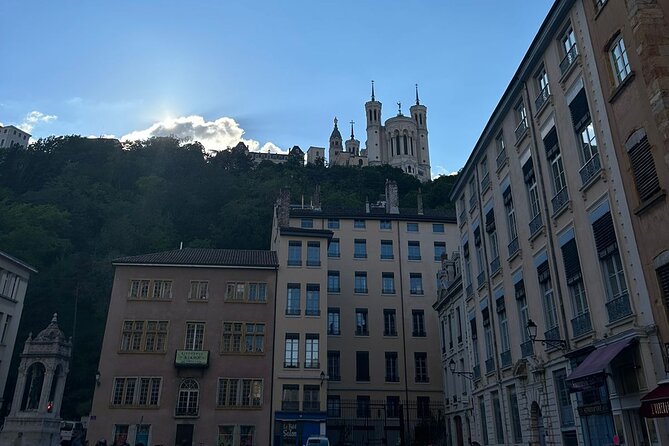
Most people underestimate how much start and end points matter. This one makes your day easier.
You begin at the Office du Tourisme et des Congrès de la Métropole de Lyon on Pl. Bellecour. From there, you’re walking into Lyon’s older fabric without wasting time on long transfers. You also get a clean “first step” that is easy to find, and that sets a relaxed tone for the whole tour.
You end near Pl. Saint-Jean, close to Saint-Jean Cathedral. That final location is ideal because it puts you in the right zone for your next move. Whether you want to wander, take photos, or keep exploring the old town, you’re not left stranded at some far corner.
Grand Hotel-Dieu: More Than a Pretty Facade
The first stop is Grand Hotel-Dieu, tied to one of Lyon’s oldest hospital sites, founded in the 12th century. What makes this stop interesting is that it is no longer just an old building sitting quietly in the background. It has been transformed into a cultural and commercial space, so you can connect the past to what is happening now.
Even if you are not a big museum person, this stop helps you understand Lyon’s layers. A hospital is a city story, not just architecture. You’ll hear how this place fits into the longer rhythm of Lyon life, from medieval foundations into modern use.
A minor reality check: this is an early stop, so you’ll want comfortable shoes and a good attitude. You’re starting with an “anchor” sight and then moving on, so you’ll get the most out of it if you pay attention to what the guide points out, not just the overall view.
Place des Jacobins: The Fountain with Artist Faces
Next comes La Place des Jacobins and its famous fountain with four sculpted figures representing prominent artists from Lyon. It’s one of those details that you can walk past and never really understand. With a guide, you get the meaning behind what you’re seeing.
This stop is short, but it does a useful job. It gives you a break from pure building-spotting and shifts you toward Lyon’s creative identity. The fountain is a reminder that Lyon’s history is not only politics and trade, it is also art and craftsmanship.
Practical tip: fountains are great photo subjects, but they can be busy. If you want the best shots, stand slightly off to the side while the group listens, then step in briefly when the guide finishes a point.
Passerelle du Palais-de-Justice: Saône River Views on a Pedestrian Bridge
Then you cross Passerelle du Palais-de-Justice, a 19th-century pedestrian bridge that connects Vieux Lyon to the Presqu’île. This is one of the tour’s “reset” moments. Up to this point you’re mostly inside the street canyon of the old city, and now you get open air and water views.
What you’ll appreciate here is the perspective. Lyon’s identity is tied to its rivers, and seeing the Saône from a bridge helps your brain map the city. You can start to understand why neighborhoods feel distinct and why certain areas feel linked even when they seem far apart.
If you like photos, this is a strong moment to slow down. Even if you’re not trying to take a dozen pictures, get one good shot of the river and the surrounding buildings. It’s the kind of image that helps you remember the route later when you’re wandering on your own.
More Lyon walks on the list
- Lyon Highlights & Secrets Walking Guided Tour (small group) including Funicular
★ 5.0 · 831 reviews - Highlights and Hidden Gems of Lyon Guided Walking Tour (English)
★ 5.0 · 750 reviews - Lyon: Vieux Lyon Food Tasting Walking Tour
★ 4.9 · 453 reviews - 4h Complete Lyon Experience: E-Bike, Food Tasting & Old Town Walk
★ 5.0 · 228 reviews - Lyon: Food Walking Tour with a Local Guide
★ 4.8 · 198 reviews
Vieux Lyon and Traboules: Courtyards You Would Miss
The heart of the walk is Vieux Lyon, one of Europe’s largest Renaissance districts. The name tells you the style, but the real story is in the details. Here’s where you’ll hear about traboules, courtyards, and historic buildings that connect street to street in unexpected ways.
Without guidance, it is easy to miss traboules because they do not look like attractions from far away. They often read like a side door, a corridor, or an entry you would assume is private. With the guide leading you, you learn how to recognize them and why they exist.
The best part is how this stop changes your touring behavior. After you’ve been pointed toward these connections, you start spotting them everywhere. That is what makes the tour feel useful beyond the two hours.
A real caution from the experience: some parts involve uneven surfaces, stairs, and narrow passageways. Most people can do it, but if you have mobility limitations, plan your expectations carefully.
Place Saint-Jean: The Closer, Surprising Ending
You wrap up around Place Saint-Jean and the final stretch toward Saint-Jean Cathedral. The tour notes that there are a few more stops along the way, kept as a surprise to keep the experience special. That approach works because it prevents the walk from becoming a checklist.
This is also where your orientation pays off. By the time you reach this area, you’ve already seen the hospital story, the artist fountain, the river bridge, and the traboules. So when you land near the cathedral zone, it feels like the final chapter rather than a random finish.
If you are the kind of person who likes to keep exploring after a tour, this ending is a gift. It puts you at a landmark everyone recognizes, but it also keeps you close to smaller streets and side lanes where Lyon’s atmosphere happens.
Why the Guide Matters, Especially in English
The standout theme across the experience is the guide. Names like Anne show up repeatedly, along with other guides such as Quentin and different English-speaking guides. The consistent point is that the commentary blends history with practical “what you’re looking at” details.
Several people highlight that the guide answers questions, keeps the pace moving, and adds small stories and trivia to break things up. That matters because a walking tour can turn into a lecture if the tone is off. Here, it sounds like the guide is using humor and pacing to keep energy up.
One review even notes an added detail about connections between houses and the value of finding traboules. Another mentions the ease of hearing even when someone is slightly hard of hearing. That tells me the group size and guide volume likely stay reasonable, which helps you enjoy the walk instead of straining.
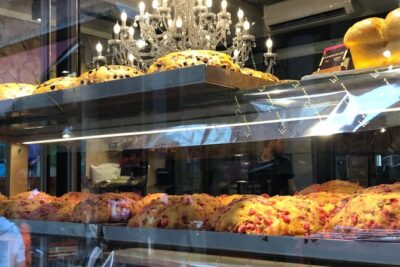
Also, don’t ignore the food angle. There is at least one mention of picking up brioche aux pralines during the tour. That does not mean every day includes shopping time, but it suggests the guide is open to pointing you toward tasty stops in the area.
Timing, Comfort Stops, and How to Prepare
The tour runs about two hours and breaks into short segments at each key place. That makes it doable even if you are arriving with jet lag or you have another plan the same day.
Comfort-wise, you’ll likely appreciate the fact that the itinerary includes stopping points and some shady areas, which can help in warmer months. Still, Lyon’s old town is not designed for smooth walking. Bring shoes you trust. You will see uneven surfaces, stairs, and tight passages.
If you hate rushed tours, this one may feel just right. People describe the pace as fast only because they were enjoying the stories, not because they felt shoved along.
Who This Tour Is Best For
This is a strong fit if you want:
- A first-day orientation that makes future self-guided wandering easier
- A quick hit of Lyon’s biggest neighborhoods without long museum time
- An English explanation that helps you understand why things look the way they do
- A small-group experience where questions are welcome
It is also a reasonable pick if you like mixing architecture and human stories. Hospital origins, artist symbolism in a fountain, and hidden urban passageways might sound random on paper, but together they tell Lyon’s “how it works” story.
Where you should think twice: if walking is difficult, especially over uneven ground, stairs, and narrow passages.
Should You Book This Lyon Walking Tour?
Yes, if you want a smart, efficient introduction to Lyon’s core sights and the street-level details that make the old town click. At $36 for about two hours, with free-entry stops and a guide-led route that ends right by Saint-Jean Cathedral, it’s a practical way to start exploring without getting lost in pure guessing.
I would book it early in your trip. Once you understand the traboules and courtyard logic, your later walks feel more confident and less random. If you have mobility constraints, assess your comfort with uneven streets and narrow passageways before you commit.
Everything Else Filed Under Lyon
- Lyon City Hop-on Hop-off Sightseeing Bus Tour
★ 4.0 · 1,614 reviews - Vieux Lyon Cultural & Historical Walking Guided Tour (English)
★ 5.0 · 942 reviews - Lyon: Private Walking Tour of “Traboules” in the Old Town
★ 5.0 · 866 reviews - Lyon: City Highlights Walking Tour
★ 4.9 · 847 reviews - Lyon Highlights & Secrets Walking Guided Tour (small group) including Funicular
★ 5.0 · 831 reviews
The Whole Lyon Shelf
- Lyon City Hop-on Hop-off Sightseeing Bus Tour
★ 4.0 · 1,614 reviews - Lyon: Musée de l’illusion Entrance Ticket
★ 3.9 · 1,023 reviews - Vieux Lyon Cultural & Historical Walking Guided Tour (English)
★ 5.0 · 942 reviews - Lyon: Private Walking Tour of “Traboules” in the Old Town
★ 5.0 · 866 reviews - Lyon: City Highlights Walking Tour
★ 4.9 · 847 reviews
More of Lyon
- Lyon City Hop-on Hop-off Sightseeing Bus Tour
★ 4.0 · 1,614 reviews - Lyon: Musée de l’illusion Entrance Ticket
★ 3.9 · 1,023 reviews - Vieux Lyon Cultural & Historical Walking Guided Tour (English)
★ 5.0 · 942 reviews - Lyon: Private Walking Tour of “Traboules” in the Old Town
★ 5.0 · 866 reviews - Lyon: City Highlights Walking Tour
★ 4.9 · 847 reviews
The rest of the Lyon write-ups
- Lyon Old Town Food & Wine Tasting Tour including a Bouchon Lyonnais★ 4.0 · 59 reviews
- Storytelling tour of the Vieux-Lyon for children in French★ 4.8 · 60 reviews
- Lyon UNESCO: Private walking tour★ 5.0 · 61 reviews
- Beaujolais Half Day Wine Tasting Tour★ 4.5 · 62 reviews
- 4h Complete Lyon Experience – E-Bike, Tasting & Walk★ 4.8 · 62 reviews
- Make French Pastries with Professional Chef in Private Atelier★ 5.0 · 66 reviews
Lyon Tours, in full.
 ★ 4.0Lyon City Hop-on Hop-off Sightseeing Bus TourFrom $291,614 reviews
 ★ 3.9Lyon: Musée de l’illusion Entrance TicketFrom $221,023 reviews
 ★ 5.0Vieux Lyon Cultural & Historical Walking Guided Tour (English)From $6942 reviews
 ★ 5.0Lyon: Private Walking Tour of “Traboules” in the Old TownFrom $43866 reviews
 ★ 4.9Lyon: City Highlights Walking TourFrom $25847 reviews
 ★ 5.0Lyon Highlights & Secrets Walking Guided Tour (small group) including FunicularFrom $39831 reviews
 ★ 5.0Highlights and Hidden Gems of Lyon Guided Walking Tour (English)From $6750 reviews
 ★ 5.0Food Tour in Lyon – A Full Taste of France by Do Eat BetterFrom $92603 reviews
Also on these France lists