
Reviewed · MARSEILLE & CALANQUES TOURS
Marseille: Essential Guided Walking Tour of the City
Marseille makes sense on foot. This 150-minute guided walk turns 2,600 years of layering into a route you can actually picture, with Charles as your friendly storyteller and navigator. I especially loved the shift from hilltop views in Le Panier to the maritime drama at Vieux Port, plus the Roman weight of Saint Victor Abbey and the terrace views at Le Pharo. One caution, you cover about 5 kilometers and it is not wheelchair-friendly.
This tour is built for people who want the highlights without racing. Charles keeps the pace steady for a small group of up to 8, and many stops come with little map moments and clear explanations so you understand what you are looking at, not just that it is old. You also get bilingual guidance in French and English, so you are not stuck guessing your way through street signs and stonework.
Plan ahead for comfort. Wear shoes you trust for uneven sidewalks and bring water, because food and drinks are not part of the tour. If the sun is strong, you will want sunglasses and light protection, since you will be outside for most of the walk.
In This Review
- Key things I found most useful
- Meeting La Major, getting oriented fast
- Le Panier: artful streets with serious age behind them
- Church of Accoules and the calm that breaks the pace
- Rue de la République, then the Cannebière energy
- Vieux Port: forts, ships, and WWII memories at dockside
- Cours Honoré d’Estienne d’Orves: a pause with context
- Saint Victor’s Abbey: Roman architecture you can feel
- Le Pharo and Palais du Pharo terraces: the view payoff
- How the route length and pace actually affect you
- Price and what you get for $41
- Who should book this Marseille walk
- Should you book this tour or skip it?
- FAQ
- Where is the meeting point?
- How long is the tour?
- How far do we walk?
- Is it a small group?
- What languages are offered?
- Where do we end the tour?
- Is the tour wheelchair accessible?
- Can I cancel and get a full refund?
- What should I bring?
Key things I found most useful
- Charles’s local storytelling makes Marseille’s timeline feel practical, not textbook
- Le Panier’s hillside setting gives you great viewpoints over the port area
- Vieux Port + the forts tie the city’s trade, navigation, and wartime memories together
- Saint Victor’s Romanesque feel helps you spot architectural layers as you walk
- Le Pharo and Palais du Pharo terraces are where the views earn their walk
Meeting La Major, getting oriented fast
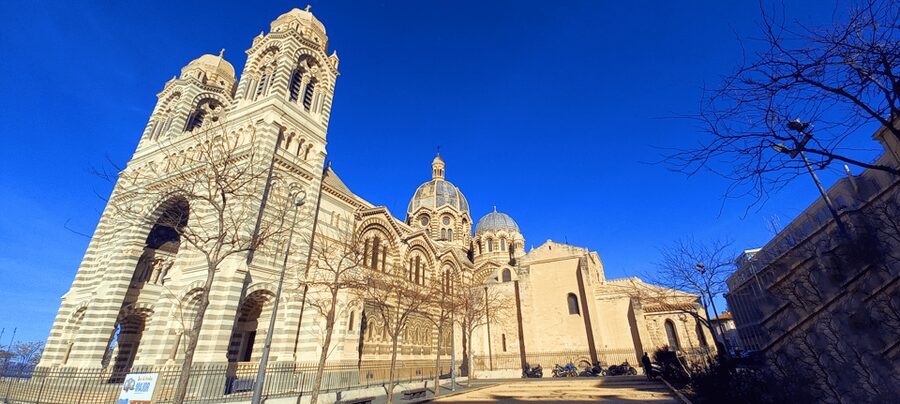
You start at Cathédrale Basilique Sainte-Marie-Majeure, nicknamed La Major. The building alone sets the mood: Neo-Byzantine and Romanesque style, big presence, and enough visual detail that you immediately stop and look up. Your guide, Charles, will be wearing a white cap, which makes finding him simple even when the square feels busy.
This first stretch matters because it gives you a mental map. Before you wander into side streets, Charles frames Marseille as a port city that kept reinventing itself. That one idea changes how you read the rest of the walk. Instead of seeing random landmarks, you see choices the city made over time.
If you arrive a bit early, scan the façade and notice how the style mixes. It is an easy warm-up exercise before you move from stone icon to street-level life.
More of Marseille and the calanques
Le Panier: artful streets with serious age behind them
Le Panier is where Marseille starts feeling like a real neighborhood, not just a list of sights. You head there in the early part of the tour, and the hilltop terrain helps you understand why this area became such a stronghold of daily life. As you walk, you get street art murals mixed with the slower rhythms of older lanes.
What I like here is the balance. You are not only chasing pretty photos. You also get context for what older Marseille looked like, and why people kept building on this hillside above the harbor.
A few specific stops help anchor the visit:
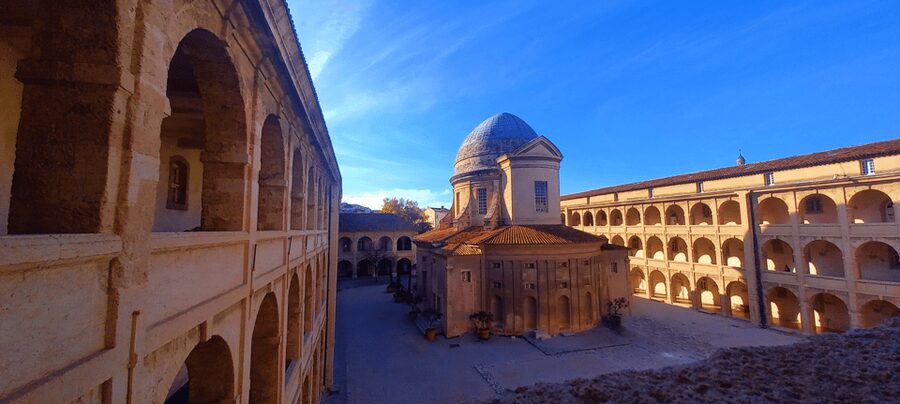
- Vieille Charité hospital: you get a sense of institutional history in a place that still feels human-scale.
- Windmill Hill: a calm pause for looking out over the port area and the sea horizon.
A practical tip: bring your phone camera, but also take a moment with your eyes up. The best view moments here are the ones you notice before you start photographing, when you can feel the angle of the city.
One mild drawback is that Le Panier’s streets can feel tight and a little uneven. If you are traveling with limited mobility, this section may feel more demanding. Comfortable shoes are not optional.
Church of Accoules and the calm that breaks the pace
After Le Panier’s lanes, you pass by the Church of Accoules. This is the kind of stop that rewards attention. It is not the biggest building on the route, but it helps you keep Marseille’s layer-cake history in view while you move between different styles of streets.
You also get a short guided window here that gives your legs a break without making the tour feel like a series of bus stops. For me, those short pauses are what keep a walking tour from turning into a long march.
Rue de la République, then the Cannebière energy
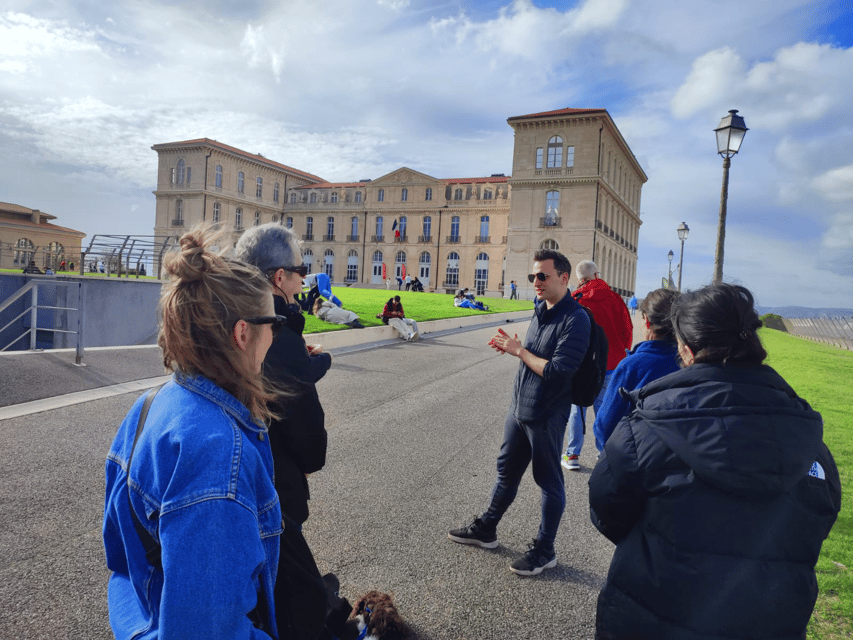
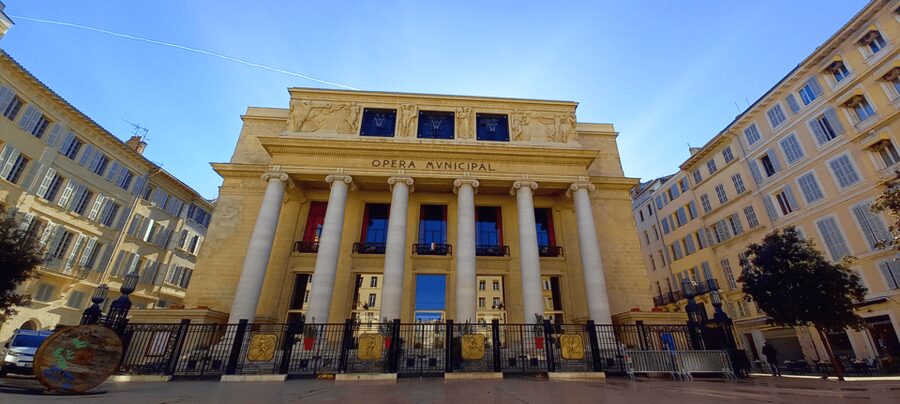
As you head toward the more central streets, the mood shifts. You walk along Rue de la République and also down through the area associated with Cannebière, Marseille’s lively main-street vibe. This part is valuable because it shows how the city’s public life spills across commerce, services, and everyday movement.
What to look for as you go:
- shop fronts and small workshops that give Marseille a working feel
- street layout, which makes it easier to picture how people used to move between districts
Charles tends to connect these busy streets to the city’s older logic. You begin to understand why the port mattered, why certain neighborhoods concentrated activity, and how the urban grid shaped daily life. Even if you do not care about architecture, the street-level explanations make it easier to navigate later on your own.
Vieux Port: forts, ships, and WWII memories at dockside
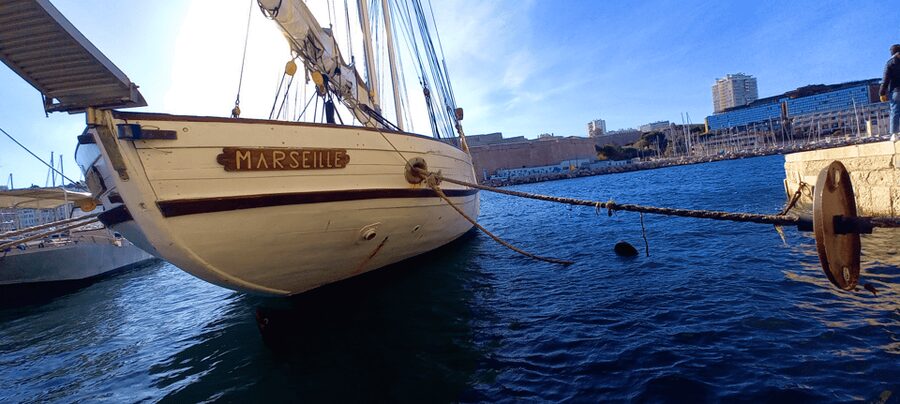
Then you arrive at Vieux Port, Marseille’s harbor core. The change in air and sound is real. Boats and yachts bob in the water nearby, and the port gives you a physical sense of why this city grew where it did.
Two key landmarks stand watch:
- Forts Saint-Jean and Saint-Nicolas
These forts are more than photo props. They help you understand the harbor as a defensive, strategic space, not only a pretty waterfront. Charles also adds the human part by sharing Marseille’s wartime story during World War II, especially the dockside realities and the city’s tragic experiences.
I found this portion especially thoughtful because it refuses to treat the port as just scenery. You see why maritime history and conflict history overlap here, and you carry that understanding into every later waterfront walk you take.
If you want a practical win: pause at Vieux Port and do a quick scan. Look from the water up to the surrounding buildings, then back down to the waterline. That glance helps you see the city’s “why” instantly.
Cours Honoré d’Estienne d’Orves: a pause with context
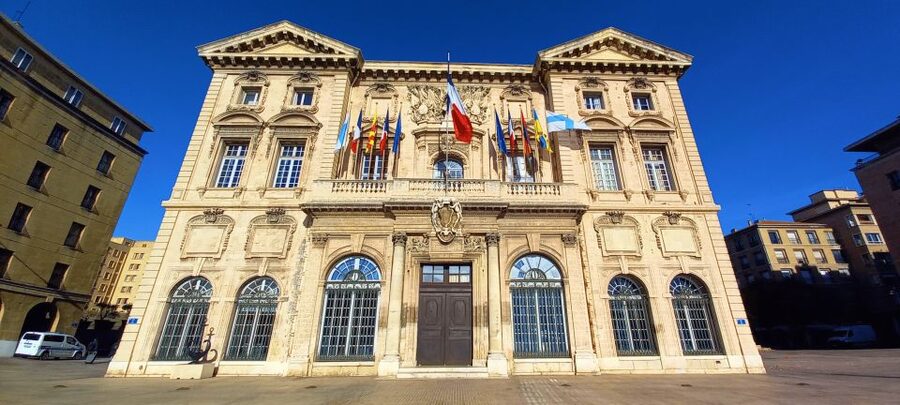
Next comes Cours Honoré d’Estienne d’Orves, another short stretch that keeps the walk moving while still giving your brain time to catch up. This is one of those segments where the guide’s job is to connect dots, not just point at sights.
Even when the setting feels like an ordinary city street, Charles ties it back to the broader Marseille story. That is where the tour feels like a guided experience instead of a scenic stroll. You learn to watch how Marseille’s geography and history influence what you see today.
More Marseille tours that come with a guide
- From Marseille: Calanques National Park Guided Hike
★ 4.8 · 489 reviews - Marseille: City Highlights Guided Half-Day E-Bike Tour
★ 4.8 · 325 reviews - Marseille: Half-Day City Highlights Guided Walking Tour
★ 5.0 · 273 reviews - Marseille: Urban Hiking Tour with a Local Guide
★ 4.9 · 198 reviews - Marseille: Essential Guided Walking Tour of the City
★ 4.9 · 161 reviews
Saint Victor’s Abbey: Roman architecture you can feel
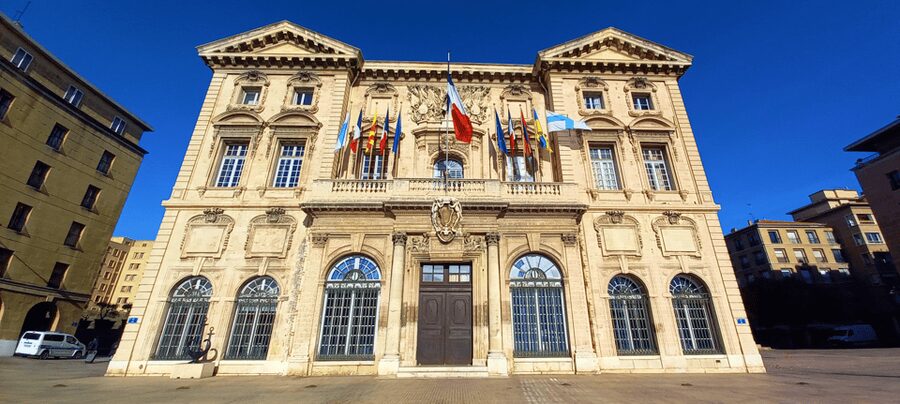
One of the tour’s strongest stops is Saint Victor’s Abbey. You get guided time and scenic viewing along the way, and the architecture is the star. Charles points out the Roman architecture feel, and once you start looking for it, you notice how the stone and layout carry a sense of gravity.
Then you get a dedicated break period, with time for sightseeing and scenic views on the way. That matters on a tour like this. A walking schedule can turn stressful if you are always “on.” The break gives you a chance to slow down, regroup, and actually process what you just learned.
I recommend using that break to do two things:
- Drink water before you feel thirsty.
- Look back at the route you came from. It helps your brain lock in the geography.
Le Pharo and Palais du Pharo terraces: the view payoff
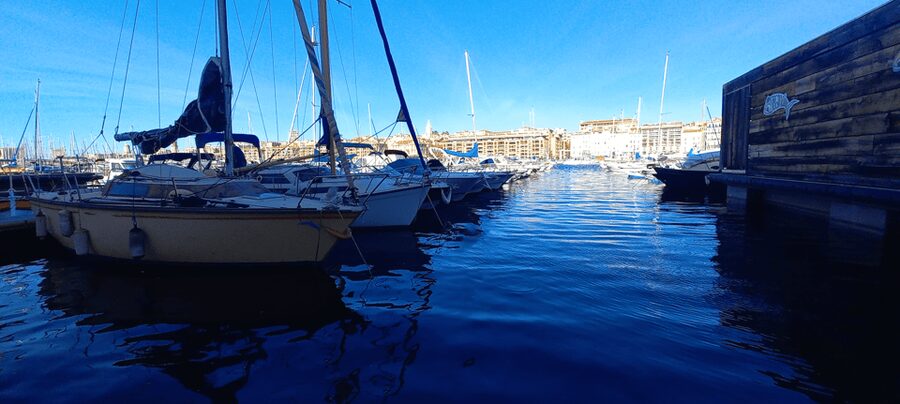
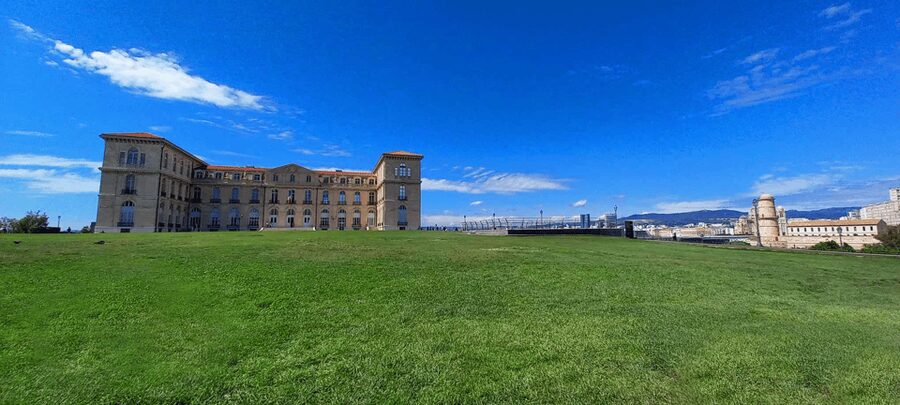
The last stretch takes you to Le Pharo, a place known for ornate façade details and sweeping terraces. This stop works because it is both architecture and scenery. The guide’s explanations help you see the building as part of the city’s bigger story, not just a viewpoint.
You also get a chance to take in views of the Palais du Pharo. This is a grand palace built in the mid-19th century by Napoleon III for Empress Eugénie. Even if you are not a palace person, it helps to know what power and patronage looked like in this corner of Marseille.
What makes Le Pharo special on this tour is the way it closes the circle. You start near La Major, you walk through old districts and the working harbor, then you end at a place where the city’s ambition and coastline come into focus.
How the route length and pace actually affect you
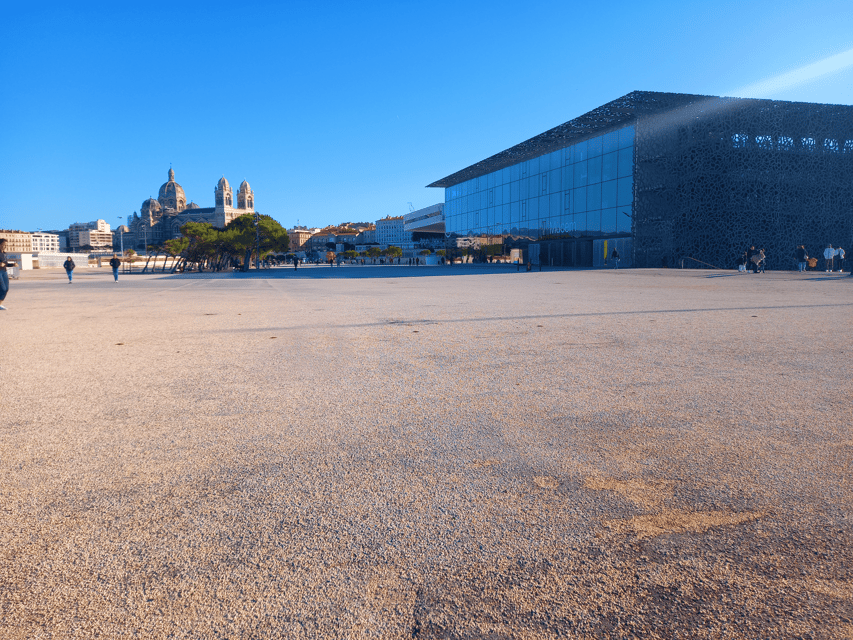
This is a 150-minute walk covering about 5 kilometers. That is a realistic half-day effort for many people, especially if you are comfortable on sidewalks and can handle a few uneven patches.
Why the timing matters: the tour is long enough to connect ideas, but short enough that you are not drained by the time the views hit. Reviews and firsthand feedback around Charles often mention how the pace works and how the small group format makes conversation easy, not awkward. You get space for questions without stopping every 30 seconds.
Charles also uses tools like diagrams and photos to help you picture how Marseille changed over time. That kind of visual support is a big deal when you are standing in front of buildings that have shifted function or meaning across centuries.
If you are heat-sensitive, plan for shade breaks. You will likely have pauses built in, but you should still bring water and dress for the weather.
Price and what you get for $41
At about $41 per person for 150 minutes, this tour lands in the value zone for Marseille. You are paying for three things that are hard to replace on your own:
- a guided narrative that ties together neighborhoods, the harbor, and major architectural stops
- a local bilingual guide, Charles, who can answer questions as you walk
- a concentrated route that hits both big-name landmarks and smaller context stops
Is it worth it if you only want the postcards? Maybe not. But if you want to understand what you are looking at while you still keep time to explore on your own, the cost feels fair.
Also consider your alternative. If you do these sights one by one without a guide, you might see beautiful places but miss the “why” that makes them click. This tour is designed to help the city make sense quickly.
Who should book this Marseille walk
This is a strong match if you:
- are on a first visit and want to get your bearings fast
- like history that connects to street-level places, not museum-only stories
- want a small group experience with real Q and A
- care about maritime Marseille, from ancient roots through World War II memories
It might be less ideal if you:
- have trouble with sustained walking
- need wheelchair access, since the tour is not suitable for wheelchair users
If you come with a mixed group, the 150-minute format helps. You can keep it as the first “orientation” step, then build the rest of your day around specific neighborhoods you liked most.
Should you book this tour or skip it?
I think you should book it if you want Marseille to feel personal and readable by the end of the walk. The combination of La Major, Le Panier, Vieux Port with the forts, Saint Victor’s Abbey, and Le Pharo terraces is exactly the kind of route that turns a few hours into real understanding.
Skip it only if you truly dislike guided walking, hate crowds even in small groups, or you know you cannot handle about 5 kilometers outside. If you are comfortable walking and you want the story behind what you see, this is one of the best “start here” ways to experience Marseille.
FAQ
Where is the meeting point?
Meet your guide in front of La Major Cathedral in Marseille (Cathédrale Basilique Sainte-Marie-Majeure, dit La Major). The guide wears a white cap.
How long is the tour?
The walking tour lasts about 150 minutes.
How far do we walk?
This tour covers a 5 kilometer route.
Is it a small group?
Yes. The group is limited to 8 participants.
What languages are offered?
The live tour guide speaks French and English.
Where do we end the tour?
There are two drop-off locations: Old Port of Marseille and Palais du Pharo.
Is the tour wheelchair accessible?
No, it is not suitable for wheelchair users.
Can I cancel and get a full refund?
Yes. Free cancellation is available up to 24 hours in advance for a full refund. Reserve now and pay later is also offered.
What should I bring?
Bring comfortable shoes, sunglasses, water, and food and drinks if you want them. Wear comfortable clothes and dress for the weather.
Everything Else Filed Under Marseille
- Marseille: City Sightseeing Hop-On Hop-Off Bus Tour
★ 3.8 · 2,820 reviews - Marseille: Côte Bleue Calanques Half-Day Kayak Tour
★ 4.7 · 877 reviews - Marseille Food Tour – Full Meal of Local Tastes by Do Eat Better
★ 5.0 · 530 reviews - Marseille: Calanques Catamaran Tour & Standup Paddle
★ 4.8 · 411 reviews - Marseille: OM Stadium Tour at the Orange Velodrome
★ 4.5 · 402 reviews
The Whole Marseille Shelf
- Marseille: City Sightseeing Hop-On Hop-Off Bus Tour
★ 3.8 · 2,820 reviews - Marseille: Côte Bleue Calanques Half-Day Kayak Tour
★ 4.7 · 877 reviews - Marseille Food Tour – Full Meal of Local Tastes by Do Eat Better
★ 5.0 · 530 reviews - Marseille: Calanques National Park Guided Hike with Picnic
★ 4.9 · 516 reviews - From Marseille: Calanques National Park Guided Hike
★ 4.8 · 489 reviews
Marseille and the Calanques
- Marseille: City Sightseeing Hop-On Hop-Off Bus Tour
★ 3.8 · 2,820 reviews - Marseille: Côte Bleue Calanques Half-Day Kayak Tour
★ 4.7 · 877 reviews - Marseille Food Tour – Full Meal of Local Tastes by Do Eat Better
★ 5.0 · 530 reviews - Marseille: Calanques National Park Guided Hike with Picnic
★ 4.9 · 516 reviews - From Marseille: Calanques National Park Guided Hike
★ 4.8 · 489 reviews
The rest of the Marseille write-ups
- E-Bike Rental in Marseille with our brand new Virtual Guide !!★ 5.0 · 81 reviews
- 5-Hour Private Sightseeing Tour of the Provence from Marseille in Luxury Car★ 5.0 · 81 reviews
- Marseille: Calanques National Park Boat Trip with Swimming★ 4.6 · 82 reviews
- Market & Perched Villages of the Luberon Day Trip from Marseille★ 5.0 · 85 reviews
- Guided kayak excursion in creeks★ 4.5 · 89 reviews
- Private French Pastry Class in Marseille★ 5.0 · 90 reviews
Marseille & Calanques Tours, in full.
 ★ 3.8Marseille: City Sightseeing Hop-On Hop-Off Bus TourFrom $272,820 reviews
 ★ 4.7Marseille: Côte Bleue Calanques Half-Day Kayak TourFrom $64877 reviews
 ★ 4.8Cannes: 2.5-Hour Esterel Calanques Boat ExcursionFrom $88808 reviews
 ★ 5.0From Sagone/Cargèse: Scandola Calanques Piana Girolata SwimmingFrom $76670 reviews
 ★ 5.0Marseille Food Tour – Full Meal of Local Tastes by Do Eat BetterFrom $89530 reviews
 ★ 4.9Marseille: Calanques National Park Guided Hike with PicnicFrom $41516 reviews
 ★ 4.8From Marseille: Calanques National Park Guided HikeFrom $41489 reviews
 ★ 4.1Marseille: Musée de l’Illusion Entry TicketFrom $22488 reviews
Also on these France lists