
Reviewed · STREET ART
Paris: Belleville Street Art Tour with an Artist
Street art in Paris has a real pulse. I love the artist-led walk through Belleville, and I love how the story sounds different when you hear it standing right in front of the walls. One catch: the route includes hills, stairs, and long standing, so it can be rough if you do not handle that well.
This tour is built around people who actually make street art. You may meet guides like Stefan or Marie, and the vibe is less lecture, more conversation, with chances to share your opinions on what you see. I also like the practical structure, 135 minutes that end with a view and often a live Saturday finish.
You should expect an outdoors experience in all weather, plus a small amount of Paris perspective, literally. Since Belleville is one of the city’s big hills, the panoramic stop is part of the payoff, and Saturdays can include a live performance and sometimes even a free drink tied to inaugurating a new wall.
In This Review
- Key Highlights You’ll Care About
- Belleville Street Art, Explained Like It’s Happening Now
- Finding the Meeting Point at Aux Ours, and Why Being Early Matters
- The Walk Itself: What 135 Minutes Feels Like on Belleville’s Hills
- How Belleville Street Art Grew: From Squats to Studios
- The People Behind the Paint: Nemo, Jérôme Mesnager, Philippe Herard
- Community Activities Beyond Murals (Poetry, Gardening, and Participation)
- The Panoramic Stop: Why Belleville’s Second-Largest Hill Matters
- Saturday Finale: Live Performance and Sometimes a Free Drink
- Price and Value: Is $47 Worth It?
- Practical Tips So You Don’t Lose Time or Comfort
- Who This Tour Is Best For, and Who Should Rethink It
- Should You Book This Belleville Street Art Tour?
- FAQ
- Where does the tour meet?
- How long is the Belleville street art tour?
- Is the tour in English?
- What is included in the price?
- Is video recording allowed?
- What should I know about weather and walking?
Key Highlights You’ll Care About
- Artist-guided street art education focused on what you see, not just what you read
- Belleville neighborhood context dating back to the early 1980s artist influx
- Specific artist and group names you can start spotting later around Paris
- Panoramic Paris views from Belleville’s hill
- Saturday finale with a live performance and sometimes a free drink for a new wall
Belleville Street Art, Explained Like It’s Happening Now
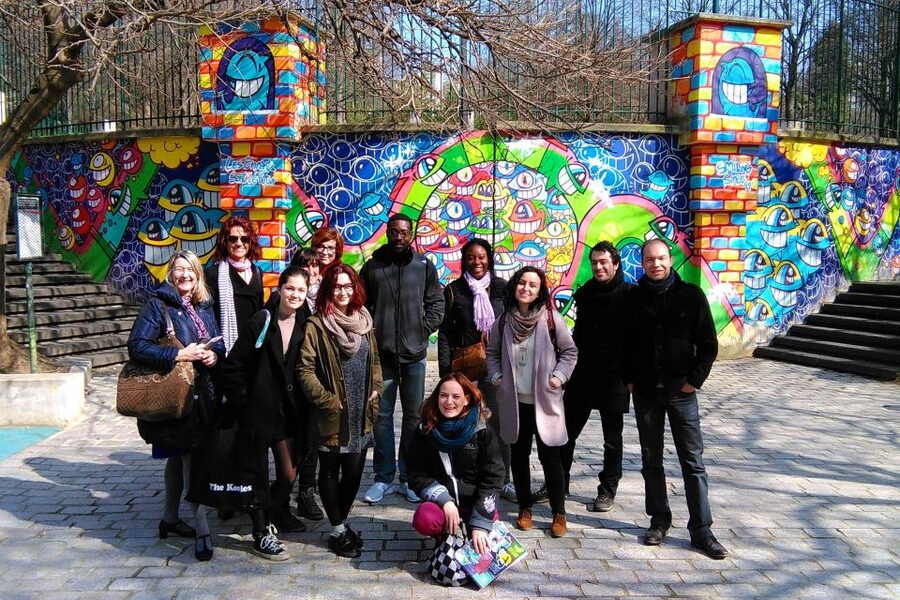
Belleville is the kind of Paris corner that feels like it has its own calendar. Long before the rest of the city caught on, artists came here looking for space, and over time that moved from squats to working studios, galleries, and community spots. That matters because street art is not only decoration in this neighborhood. It is a living culture, with people building scenes, not just painting walls.
I like that the tour frames Belleville as an artist destination since the early 1980s, when many poor artists moved into squats. You get how those rough beginnings slowly transformed into the art ecosystem you see today, with groups and associations helping keep the momentum going. It is easier to understand why the artwork feels layered once you know the neighborhood formed through need, experimentation, and community rather than permits and planning meetings.
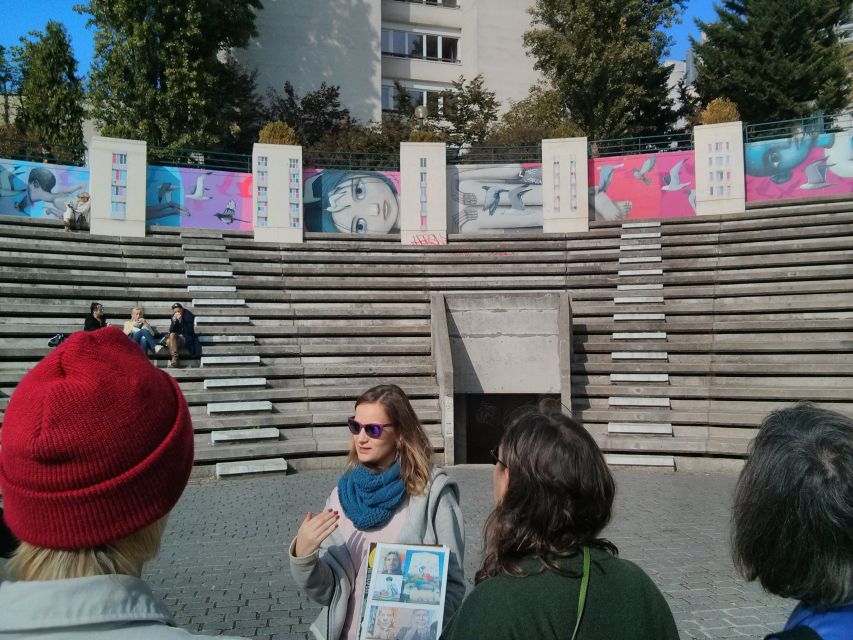
The guide role is also a big deal. The tour emphasizes a leader with at least 6 years of street art tour experience, and the reviews back up that many guides are themselves street artists. That is where the tour earns its money, because you get practical street-art talk, like how murals get made and what different artists are trying to communicate.
Finding the Meeting Point at Aux Ours, and Why Being Early Matters
The tour meets at the bottom of the stairs on the side of the restaurant Aux Ours, at 62 Rue Villiers de l’Isle Adam. You should plan to arrive at least 5 minutes early for check-in, because the tour starts on time. If you are late, you may miss the tour and there is no refund or reschedule.
This is one of those details that seems small, until it costs you a morning or afternoon. So here is the practical move: go a little earlier than you think you need. Belleville streets can be slightly confusing if you are not used to navigating hills and side lanes, and you do not want a last-minute scramble while wearing shoes that are not ready for stairs.
No hotel pickup and drop-off is included, so build time into your walk or transit from where you stay. The tour is 135 minutes long, and you will feel that time, because it is not a sit-and-watch setup.
The Walk Itself: What 135 Minutes Feels Like on Belleville’s Hills
This is a moderate walk with a lot of standing. You will go up and down hills and several stairs, and the tour is conducted entirely outdoors in all weather conditions. If you already know your body does not like steep climbs or repeated stairs, treat that as a real signal, not a “maybe it will be fine.”
The upside is that Belleville’s terrain makes the art feel more present. Street art often reads differently at street level, on a corner, or just around a stair bend. The route is designed to keep you moving through the neighborhood rather than parked in one place.
Also, you will want comfortable shoes. The tour gives that advice for a reason, and the hill walking is not just for the photo. You are going to be in those shoes for a while, and you should not waste your energy on foot discomfort.
How Belleville Street Art Grew: From Squats to Studios
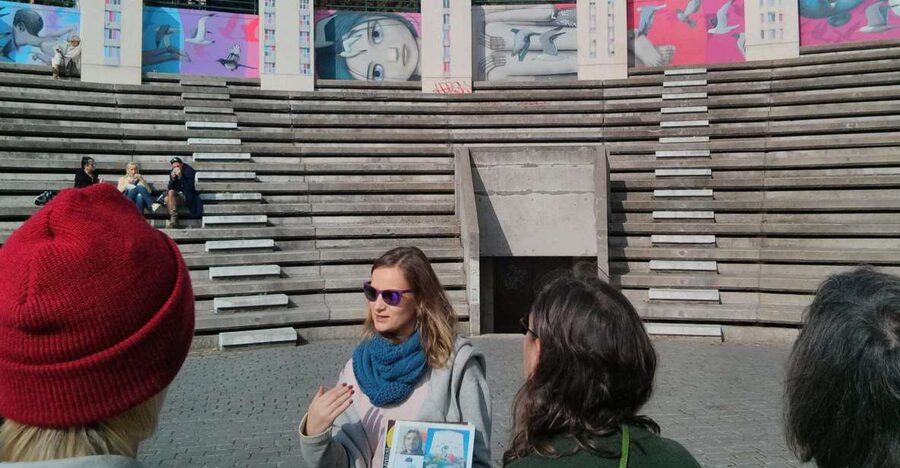
The heart of the tour is the neighborhood origin story. Belleville became a magnet for artists in the early 1980s, when many artists moved into squats. Over the years, those spaces evolved into art galleries, studios, and community areas.
Here is why that history is valuable: street art changes its style and attitude based on what kind of community produces it. When artists have access to a network, you often see more collaboration and more “you should learn this from each other” energy. When artists are isolated, you might see more lone, defiant work. Belleville sits in that middle zone, where need created spaces, and then culture kept those spaces active.
The guide also helps you connect street art in Paris across time. You learn how the street art scene formed and matured, so when you wander the city later, you can start recognizing what is active, what is older, and what is part of a broader movement rather than a one-off wall.
The People Behind the Paint: Nemo, Jérôme Mesnager, Philippe Herard
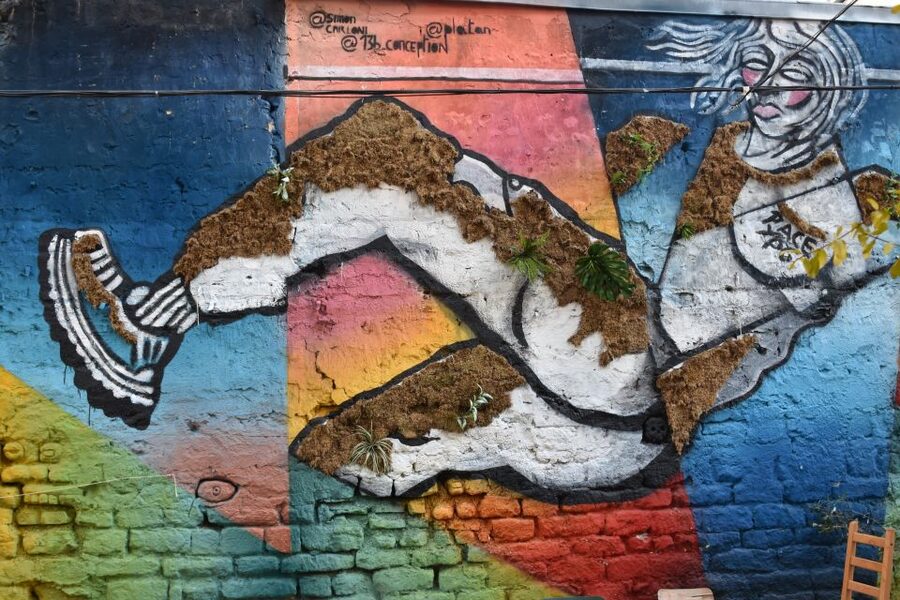
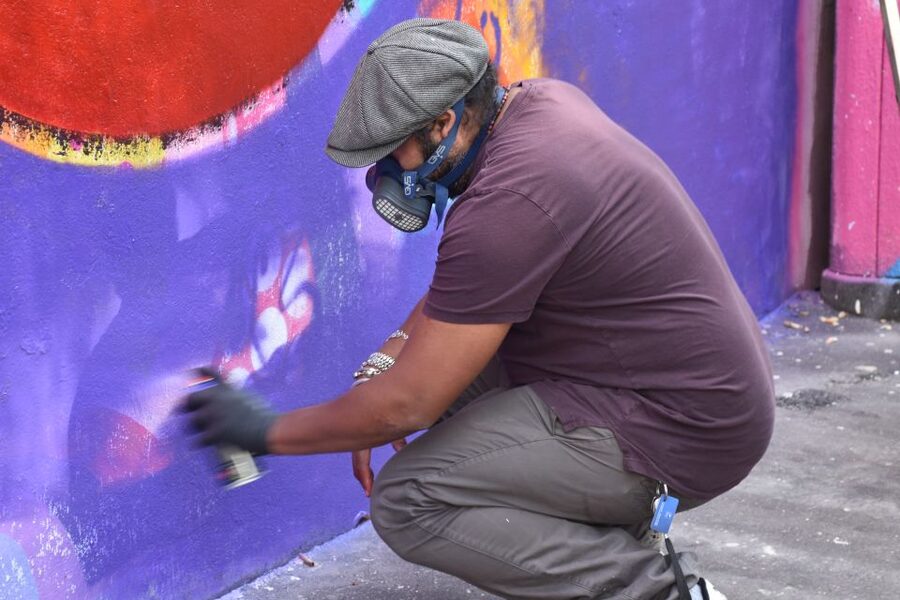
One of the fun things about this tour is getting names you can later look for with better context. You will hear about French artists including Nemo, Jérôme Mesnager, and Philippe Herard. The point is not trivia. It is learning how different artists approach their work, and what themes or styles made them recognizable in the first place.
The tour also brings in organizations and associations such as Art Azoi and Le M.U.R. Those groups often bring international artists to the scene, which helps explain why Belleville can feel both local and globally connected at the same time.
If you like street art beyond the surface level, this section is where you start building your own mental map. You are not just seeing murals. You are learning how scenes connect, how artists get invited, and how communities keep art moving forward.
Community Activities Beyond Murals (Poetry, Gardening, and Participation)
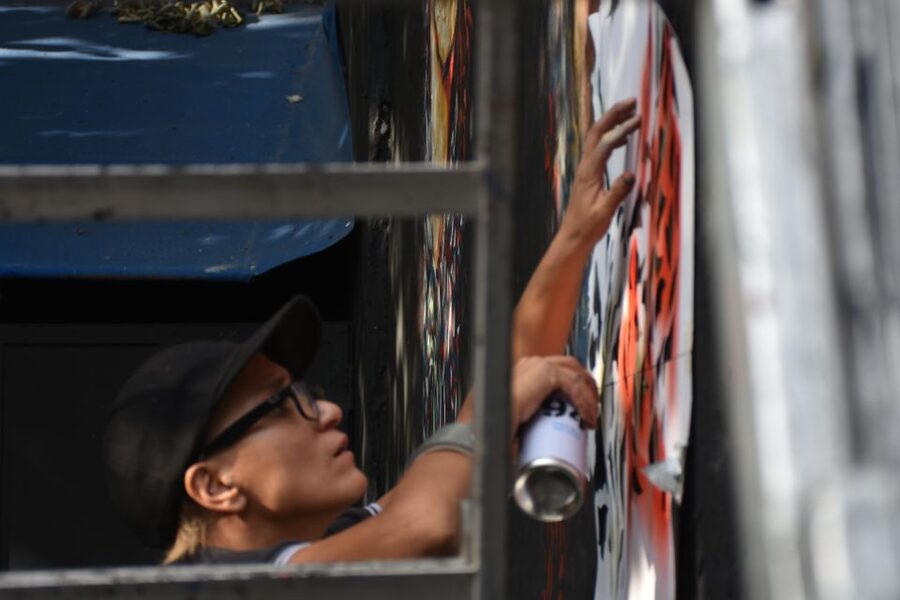
Street art in Belleville is not limited to painting. The tour explains how the artistic community often invites locals to participate in activities like poetry and gardening as well as art-making.
That detail matters because it changes how you view the neighborhood. It is easy to think street art is only about images on walls. In Belleville, it is also about people using public space to create culture. When a neighborhood supports that kind of participation, the street art becomes part of day-to-day identity rather than a short-lived spectacle.
Even the way the tour interacts with you supports that idea. In the feedback, guides are described as friendly and able to spark discussion, including getting you to share your opinions while walking. That makes the experience feel like a two-way street, and it helps you notice more than you would on your own.
The Panoramic Stop: Why Belleville’s Second-Largest Hill Matters
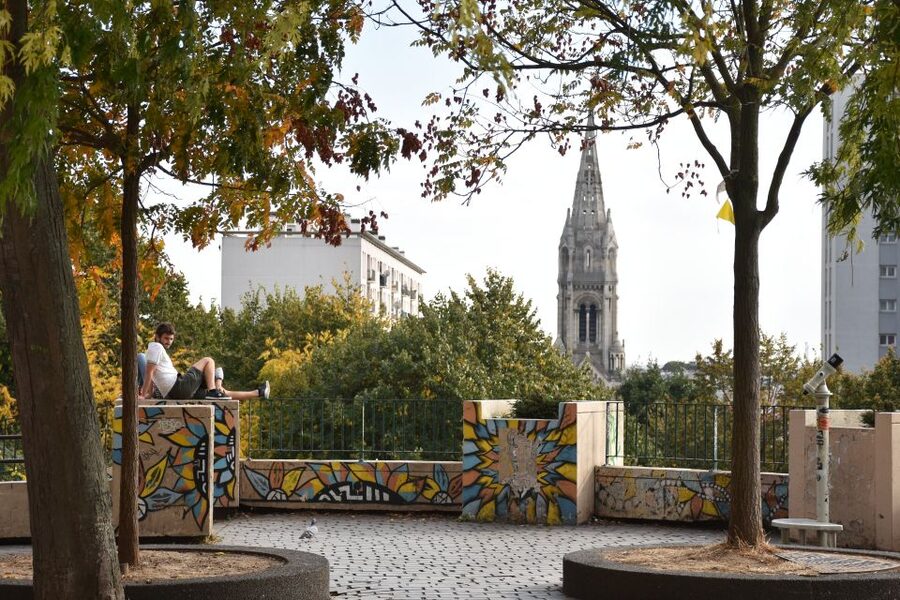
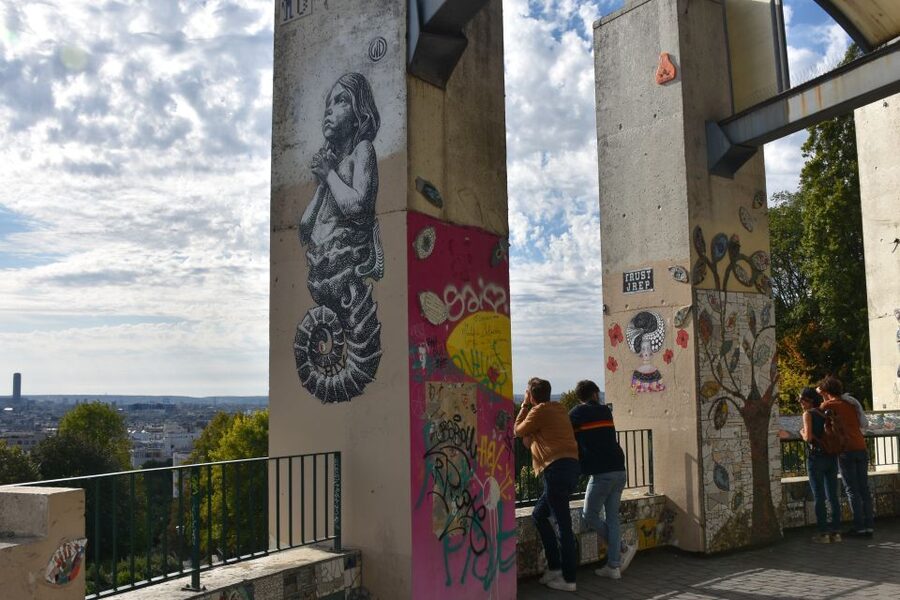
Belleville is the second largest hill in Paris, and the tour includes a wonderful panoramic view of the city. This is not just a scenic break. It is a perspective reset.
From higher ground, the neighborhood geometry makes more sense, and you can better see why street art works well in these steep lanes. You also get that classic Paris payoff, where you suddenly understand the city’s scale and how different quarters relate.
If you are prone to getting cold or wet, bring a practical layer. The view section is outdoors, and the tour runs in all weather conditions. The climb to get there is part of the effort, so you should keep yourself comfortable enough to enjoy the payoff.
Saturday Finale: Live Performance and Sometimes a Free Drink
The tour ends on Saturdays with a live performance. Sometimes there is even a free drink to inaugurate the new wall in the area.
That ending feels special because it turns street art from something static into something social. A mural opening, a performance, and an active community moment gives you a final piece of context, even if you came in just hoping to see great artwork.
If you are visiting on a different day, you still get the main street art walk plus the panoramic view. The Saturday elements are an added bonus, not the only reason the tour exists.
Price and Value: Is $47 Worth It?
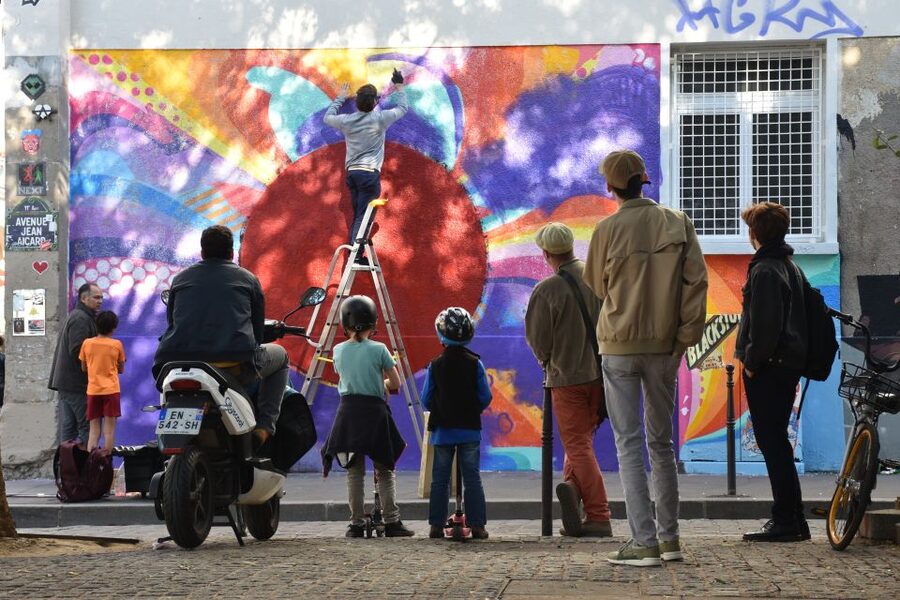
At about $47 per person for 135 minutes, you are paying for two things: time with an expert guide and access to a neighborhood story you would struggle to piece together alone.
This is not a “pay for walking” deal. The tour is designed so the guide connects the art to the neighborhood’s evolution, including the early 1980s artist influx and how places turned into galleries and studios. When your guide is a working street artist, that also tends to translate into sharper explanations, like why certain murals look the way they do and how artists think about place.
You are also not paying extra for the guide, and the tour includes a live performance on Saturdays. Food and drinks are not included, so do not plan on this being a meal. But for the blend of history, guided street art viewing, and a city view, I think the price lands in a fair zone.
Practical Tips So You Don’t Lose Time or Comfort
Here is how to set yourself up for a smoother tour.
- Wear comfortable shoes, because you will handle stairs and uneven walking.
- Bring a passport or ID card as it is requested.
- Expect long standing and outdoor time, so dress for the weather, not for the forecast alone.
- If you plan to record video, skip the idea. Video recording is not allowed on this tour.
- Aim to arrive early at the meeting point so you do not risk missing the start.
One more thing that improves the experience: come with a curious mindset. This tour is set up for you to look closely and talk about what you notice. If you treat it like a checklist, you will miss the fun part, the conversation and the meaning behind the art.
Who This Tour Is Best For, and Who Should Rethink It
This tour is a great fit if you want Paris street art in context. It is especially good for people who like neighborhoods beyond the biggest postcard sites and who enjoy walking while learning how a scene formed.
It is not suitable for people with back problems, people with mobility impairments, or wheelchair users. The route includes moderate walking, long periods standing, and hills and stairs, and the tour is outdoors in all weather.
If you have a firm grip on your walking limits and you enjoy street art as a culture, not just images, you will likely have a strong time. And if you want to leave Belleville knowing what names and groups to keep an eye out for around Paris, this tour is a smart starting point.
Should You Book This Belleville Street Art Tour?
I would book it if you want a more authentic Paris side than the usual landmarks. The tour’s best strength is the way it connects street art to Belleville’s origin story, the artists who shaped it, and the community groups that keep bringing people in. Add in the panoramic view and the Saturday live performance, and you get a solid mix of learning and experience.
I would hesitate if stairs and prolonged standing are tough for you, or if you expect a mostly flat, casual stroll. This one is outdoors, it involves hills, and it runs in all weather.
If you match that, you get a very focused way to understand why Belleville street art looks the way it does, and you will come away seeing more in Paris streets afterward.
FAQ
Where does the tour meet?
It meets at the bottom of the stairs on the side of the restaurant Aux Ours at 62 Rue Villiers de l’Isle Adam.
How long is the Belleville street art tour?
The duration is 135 minutes.
Is the tour in English?
Yes, the live tour guide speaks English.
What is included in the price?
A professional guide is included, and there is a live performance every Saturday.
Is video recording allowed?
No, video recording is not allowed.
What should I know about weather and walking?
The tour is entirely outdoors, in all weather conditions, and includes moderate walking with hills, stairs, and long periods of standing.
Street Art, in full.
 ★ 5.0Belleville Street Art Tour with an ArtistFrom $48237 reviews
 ★ 5.0Montmartre Street Art Tour with an ArtistFrom $48144 reviews
 ★ 5.0Street Art tour in Paris – Discover Paris murals !From $71130 reviews
 ★ 4.7Paris: Graffiti and Street Art WorkshopFrom $70108 reviews
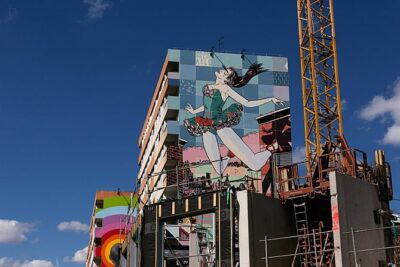 ★ 5.0Murals XXL Street Art TourFrom $6898 reviews
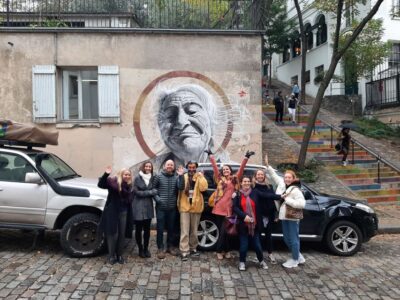 ★ 4.8Paris: Montmartre Street Art Tour with an ArtistFrom $4758 reviews
Also on these France lists