
Reviewed · WORKSHOPS
Paris: Graffiti and Street Art Workshop
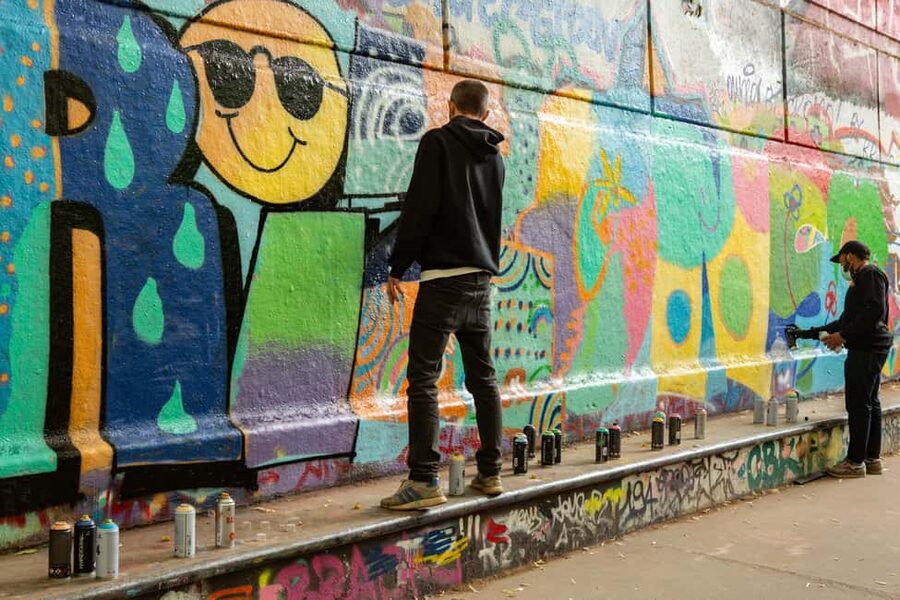
Spray paint and Paris streets feel close. This 2 hour graffiti workshop near Café Poinçon pairs real street artists with step by step practice, so you go from learning lettering effects to adding final details on a collective mural.
I love the way instructors like Benjamin break down spray technique, including how close you hold the can for clean lines. I also like the team format, where you build a lettering design together before you put it on the wall.
My only hesitation is fit for smaller hands, since the workshop is aimed at ages 12 and up and spray control can be tricky for younger kids.
In This Review
- Quick highlights
- Where You Start: Opposite Café Poinçon and Setup in Plain View
- First Lesson: Spray Can Technique for Lettering That Looks Right
- Practice Walls: Effects, Exercises, and Getting Your Hand Under Control
- Choosing Your Lettering Design: Team Planning With Artistic Feedback
- The Final Wall and the Collective Mural Moment
- Language, Instruction Style, and How Your Group Experience Feels
- Practical Stuff You Should Plan For (Comfort Matters)
- Price and Value: Why $70 for Two Hours Can Be Worth It
- Who Should Book This Paris Graffiti Workshop
- Should You Book This Graffiti and Street Art Workshop?
- FAQ
- How long is the Paris graffiti workshop?
- How much does it cost?
- Where do we meet?
- What languages are the instructors?
- Is it only for experienced graffiti artists?
- What’s included with the ticket?
- What should I wear?
- Can I cancel or change my plans?
Quick highlights
- Meet real street artists who teach technique, not just a demo
- Lettering design as a team, with guidance on what will read well on a wall
- Spray control practice, including clean lines and fine details
- Effects and refinement, like stripes and lettering variations
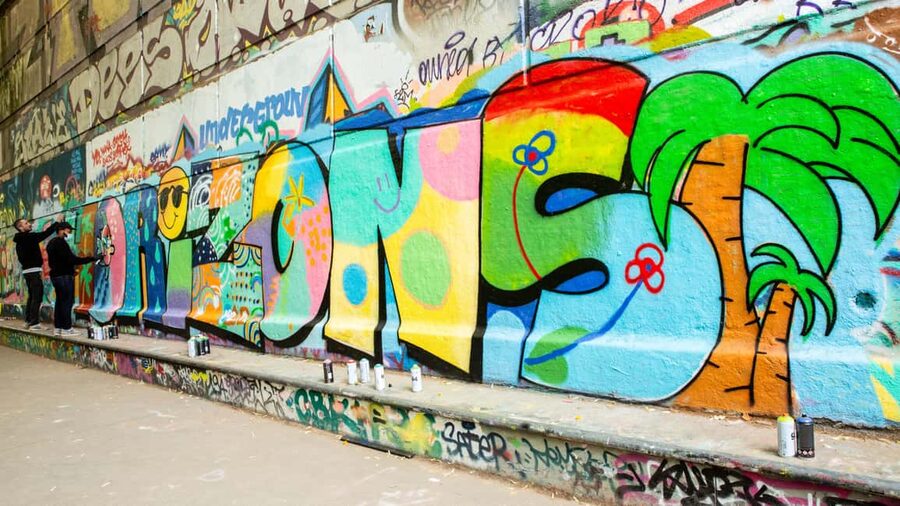
- Add final touches to a large collective mural
- Beginners welcome, as long as you’re ready to try spray painting outdoors
Where You Start: Opposite Café Poinçon and Setup in Plain View
The workshop begins right where street life is already happening, opposite Café Poinçon. You don’t go into a building. Instead, you meet the artist in front, which keeps things simple and fast when you’re trying to get from sightseeing mode to art mode.
From there, you get geared up for spray work. The materials are provided, including spray cans and basic drawing tools like pencils, plus protective gloves and a mask. You’ll also be working outdoors, so dress for it. Comfortable clothes matter more than style here, because your hands will move constantly and you may get a little paint on sleeves or shoes even when you’re careful.
If you like activities with clear structure, this one delivers. You’re not wondering what to do next. The artists run you through technique, then straight into practice, then into a final group mural moment.
One small practical note: bring nothing fancy you’d be upset about if it got paint dust or a smudge during the process.
Still comparing options? These are other tours in Paris we have reviewed.


First Lesson: Spray Can Technique for Lettering That Looks Right
The heart of the class is the basics of spray painting, explained in a way that actually helps you produce results. You start with technique, including learning how to use spray paint and what adjustments change the look.
A standout detail from the way instructors teach is can distance. Benjamin, one of the graffiti experts who has led groups, explained that the crispness of lines depends a lot on how close you hold the can to the wall. That’s the kind of advice you can feel immediately. If you’re too far, the line softens. If you’re too close, you can oversaturate. Getting that middle ground is what turns messy blobs into readable lettering.
You’ll also learn the building blocks of graffiti style: lettering, fine lines, stripes, and other effects. Even if you’ve never held a spray can, you can make visible progress quickly because the class breaks the skill into manageable steps instead of throwing you straight into final artwork.
This is also where your mindset shifts. Graffiti is not just bold color. It’s control, pressure, and timing, repeated until your hand starts cooperating.
Practice Walls: Effects, Exercises, and Getting Your Hand Under Control
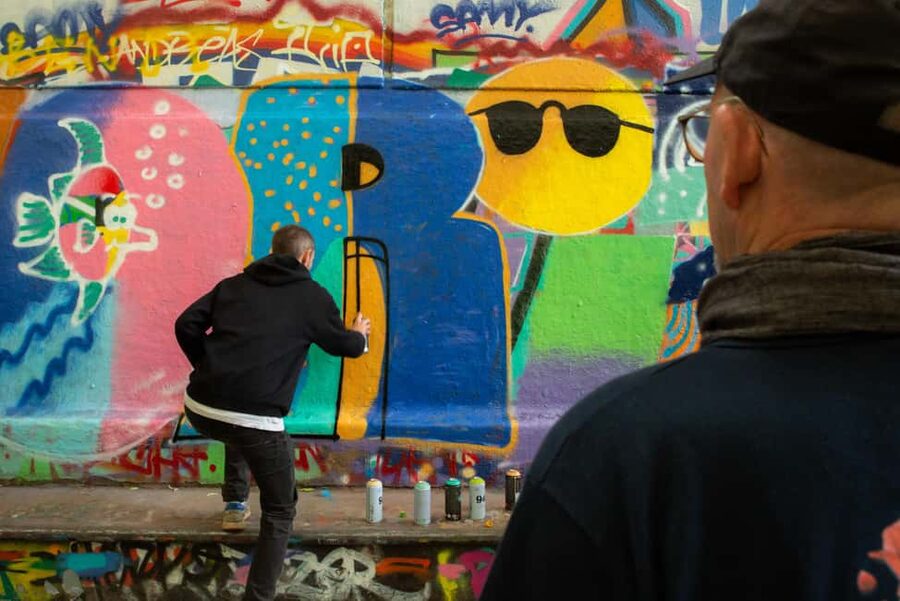
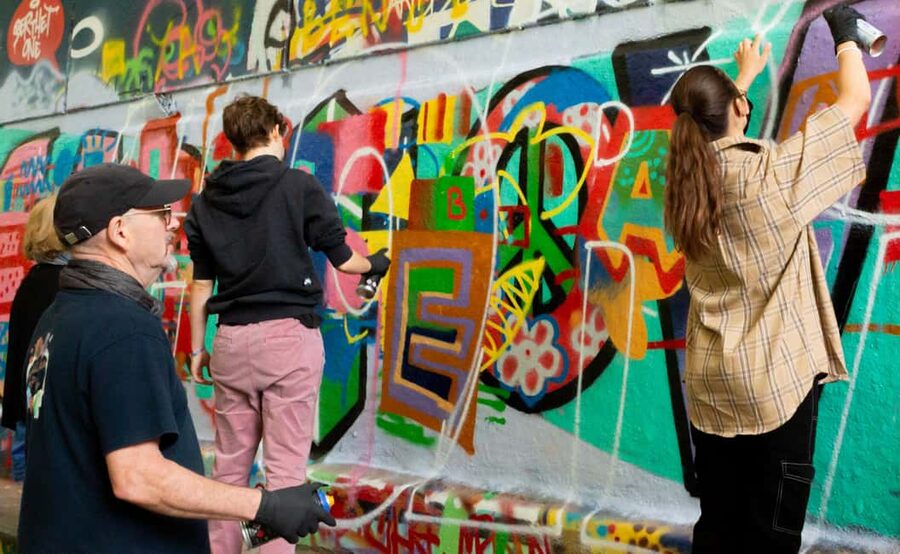
Before you commit to your final design, you do wall exercises with the artists. Think of these as training wheels. You test how different passes look, how to keep spacing consistent, and how certain effects show up with graffiti-style movement.
What I like about this setup is that it lowers pressure. You’re allowed to experiment while the instructors are there, pointing out what to change. You’re learning effects and learning how they connect to lettering structure. The goal is to make the final piece smoother and more intentional.
The class also focuses on details that beginners usually miss. Fine lines are hard. They require a steady hand, a consistent sweep, and a spray pattern you can repeat. Once you get a handle on stripes and edge control, your lettering starts to look more like graffiti and less like marker practice.
You’ll get to try different techniques, then refine them. This matters because graffiti art lives or dies by the small choices. One adjusted line weight can make the whole letter shape feel better.
If you get stuck, don’t. This workshop is built around guidance. The instructors are there step by step.
Choosing Your Lettering Design: Team Planning With Artistic Feedback
After the warm-up exercises, you move into the fun part: designing your lettering. You’ll choose a lettering design with help from the artists, so you’re not left staring at blank ideas on your own.
In practice, this is where the workshop turns into collaborative street art. You and your group develop a concept that you can actually execute on a real wall, not just sketch on paper. It also helps that the instructors are constantly steering your choices toward things that will read clearly and look good from a few steps away.
You also learn different effects so you can refine your creation. That means you’re not locked into one look. You can adjust your plan based on how your lines and fills behave on the wall during training.
What this section teaches you, even if you never become a graffiti artist yourself, is a valuable art skill: how to build a design that works at scale. Walls are unforgiving. So the class helps you pick options that won’t collapse under the reality of paint, texture, and distance.
And yes, it’s okay if your first version isn’t perfect. The goal is growth in two hours, and you get the feedback you need to keep momentum.
The Final Wall and the Collective Mural Moment
By the time you reach the mural phase, you’re not just practicing. You’re contributing. The workshop ends with your work becoming part of a collective mural in Paris, and the instruction is geared toward letting you add the last details with confidence.
This is the moment when the activity feels like street art, not a craft class. A large mural changes the scale of everything. Lettering must fit the space. Edges matter. Your contribution has to match the overall look the team is building.
You’ll have both spray and brush work depending on what the artists are guiding you to do, and the process is structured so you’re not handed a task you cannot complete. You get technique teaching first, practice second, then the final responsibility.
I also appreciate that this is a group project where your artwork still counts. Even if you think you’re a beginner, you’re creating something that is visually part of the final piece, not just watching.
If you’re the type who likes leaving with proof of doing something tangible, this delivers. You end the workshop with something you helped make.
Language, Instruction Style, and How Your Group Experience Feels
The workshop runs with instructors who speak English and French. If you’re not fluent, you’re not going to be left behind. One reason people rave about this type of class is that the teaching is practical. You don’t need to memorize vocabulary. You need to learn what to do with your hands.
Groups can vary in mix, and the instructors adjust their approach. In at least one group, Benjamin navigated between languages to make sure everyone understood the techniques as they learned them. That’s a great sign if you’re traveling with mixed language ability or you just want a smoother experience without stress.
Another plus is that the activity is designed to work for all group sizes. You are not dependent on perfect group coordination for the class to run. The artists guide the workflow.
Where you should mentally prepare is the reality of hands-on painting. You’ll be focused, moving, and learning quickly. If you prefer quiet museum time, this won’t feel like that. But if you like doing, experimenting, and laughing a little while your letters take shape, you’ll probably have a good time.
- Paris: Louvre Museum Timed-Entrance Ticket
★ 4.6 · 71,977 reviews - Disneyland® Paris 1-Day Ticket
★ 4.6 · 49,412 reviews - Paris: Versailles Palace and Gardens Full Access Ticket
★ 4.6 · 41,579 reviews - Paris: Evening River Cruise with Music
★ 4.4 · 22,721 reviews - Paris: Louvre Guided Tour with Reserved Access & Boat Cruise
★ 4.3 · 16,353 reviews
Practical Stuff You Should Plan For (Comfort Matters)
This is an outdoor artistic activity. The instructions are clear: wear comfortable clothing that can handle paint tools and a bit of mess.
Here’s what you should assume:
- You’ll wear a mask and gloves, and you’ll need to move with them on.
- You may feel a bit paint-dusty even when the gear is provided.
- Your hands will get most of the action, so consider clothes where you can roll sleeves or avoid delicate fabrics.
If you’re bringing kids, the class is officially for ages 12 and up. One important consideration from a family perspective is that smaller fingers can make spray control harder. So if you’re traveling with a younger child, think seriously about whether they can manage the tools comfortably.
For adults and teens, this is a friendly starting point. Beginners can go from blank idea to finished contribution because the steps are structured.
Price and Value: Why $70 for Two Hours Can Be Worth It
At $70 per person for two hours, the price can sound like a lot until you look at what’s included.
You’re paying for:
- Instruction from real street artists
- Guided practice with spray cans
- Protective gloves and mask
- The supplies you need so you can create right away, including tools like pencils and the painting materials
- A final outcome that becomes part of a collective mural
In other words, this isn’t just a viewing experience where you watch someone else do the work. You’re learning technique and leaving with a real contribution. That’s where the value comes from.
Also, you don’t need to spend time or money hunting for equipment. Materials are provided, and the workshop is designed for first-time participation.
If you’re trying to fit Paris art into a tight schedule, two hours is manageable. And if your day is flexible, the booking system includes reserve now, pay later, plus free cancellation up to 24 hours in advance. That reduces the risk of planning around weather or schedule changes.
Who Should Book This Paris Graffiti Workshop
This workshop fits best if you want one of those memorable Paris moments that feels different from typical sightseeing.
I’d especially recommend it if:
- You’re curious about street art culture and want to understand techniques from the artists themselves
- You like hands-on activities, even if you’re not naturally artistic
- You enjoy team projects and want the satisfaction of contributing to a shared mural
- You’re traveling with teens who need something more active than a standard tour
It’s also a good fit for mixed skill levels, since the class explicitly welcomes beginners.
If you’re extremely sensitive to masks, or you hate the idea of outdoor spray paint even for a short time, this might not be your favorite format. But for most people who can handle a short, guided, creative session, it’s a strong choice.
Should You Book This Graffiti and Street Art Workshop?
Yes, you should book if you want a real skill moment, not just a photo opportunity. The combination of real artists, step-by-step spray technique, and a final collective mural contribution is the whole point of the experience. You’ll learn practical control like line crispness and effects, and you’ll see how design choices work on a wall.
You might skip it if you’re only interested in street art as a viewer, not as a doer. Or if you’re bringing a younger child who may struggle with small tool handling, the workshop’s age focus makes that a key deciding factor.
If you’re on the fence, treat it like this: two hours, guided practice, materials included, and a finished contribution to a mural in Paris. That’s a pretty tidy deal.
FAQ
How long is the Paris graffiti workshop?
The workshop lasts 2 hours.
How much does it cost?
It costs $70 per person.
Where do we meet?
Meet opposite Café Poinçon. Don’t enter the building. The artist will present themselves in front.
What languages are the instructors?
The instructor speaks English and French.
Is it only for experienced graffiti artists?
No. The workshop is open to budding artists and beginners alike, and it is suitable for ages 12 and up.
What’s included with the ticket?
Paint and brushes are included, along with protective gloves and a mask.
What should I wear?
Wear comfortable clothing suitable for an outdoor artistic activity.
Can I cancel or change my plans?
You can cancel up to 24 hours in advance for a full refund. You can also reserve now and pay later.
The Whole Paris Shelf
- Paris: Louvre Museum Timed-Entrance Ticket
★ 4.6 · 71,977 reviews - Disneyland® Paris 1-Day Ticket
★ 4.6 · 49,412 reviews - Paris: Versailles Palace and Gardens Full Access Ticket
★ 4.6 · 41,579 reviews - Paris: Evening River Cruise with Music
★ 4.4 · 22,721 reviews - Paris: Eiffel Tower Entry Ticket with Optional Summit Access
★ 4.4 · 20,035 reviews
The rest of the Paris write-ups
- Montmartre: Guided Tour for Kids and Families★ 4.9 · 57 reviews
- From Paris: Versailles Palace and Gardens Guided Day Trip★ 4.5 · 57 reviews
- Versailles Palace and Garden Tour with Paris Private Transfers★ 5.0 · 58 reviews
- Louvre Evening Escape – Avoid The Crowds! Semi-Private 6ppl Max★ 5.0 · 58 reviews
- Summit Eiffel Tower Audio Guide Tour with Unlimited Time Access★ 4.5 · 58 reviews
- Private Half Day Historic Tour★ 5.0 · 58 reviews
Workshops, in full.
 ★ 4.5Fragonard Paris: Mini Perfume WorkshopFrom $361,924 reviews
 ★ 5.0Paris Cooking Class and Lunch with Wine plus Market Visit OptionFrom $2401,024 reviews
 ★ 5.0Paris Croissant Small-Group Baking Class with a ChefFrom $157910 reviews
 ★ 4.3Paris: Macaron Class at Galeries LafayetteFrom $67905 reviews
 ★ 4.5Fragonard Eze: Perfume Making Class and Factory TourFrom $36743 reviews
 ★ 4.8Paris: 2-Hour Perfume Creation WorkshopFrom $115731 reviews
 ★ 4.9Paris: French Croissant Baking Class with a ChefFrom $159712 reviews
 ★ 4.5Grasse: Perfume Making Class and Fragonard Factory TourFrom $36684 reviews
Also on these France lists