
Reviewed · CITY TOURS
Paris: City Center Group Tour in German
Paris rewards people who walk with purpose. This tour strings together major sights into a clear, learnable route from the Opéra area to Île de la Cité, with storytelling that makes the city easier to remember. I like that you get both context and quick photo stops, and I especially like the way the guide answers questions and keeps the group moving.
You’ll also get a few standout moments that feel made for first-time visitors, like the Pont Neuf factoid and the Notre-Dame views after its 2024 reopening. One possible drawback: it’s only 2 hours and entry fees are not included, so you’re mostly seeing exteriors and key areas rather than doing deep museum time.
In This Review
- Key things I’d watch for
- Why this 2-hour city center walk makes Paris click
- Meeting at 7 Rue Meyerbeer: what you’ll need to find
- Palais Garnier: the opera story behind the seating rules
- Place Vendôme and Place de la Concorde: power changes in real space
- Tuileries Garden: a calmer moment with views toward the Champs-Élysées
- Louvre Museum area: seeing the pyramid with historical context
- Pont Neuf and the Seine: learning the bridge that anchors the city
- Île de la Cité finish: Notre-Dame after the 2024 reopening
- The guide factor: German hosting and real Q and A
- Making the most of the walk: simple choices that matter
- Price and value: what you pay for in this format
- Who should book this tour, and who might not
- Should you book this city center group tour?
- FAQ
- Where does the tour start?
- How long is the tour?
- What language is the guide?
- What sights are included in the walk?
- Are museum entry fees included?
- Is food and drinks included?
- Is the tour cancelable?
Key things I’d watch for
- A tight 2-hour route through the historic center, easy to follow on foot
- Landmark stories tied to big moments like the French Revolution and Napoleon-era Paris
- Real photo stops at major squares and gardens, not just a “walk and hope” experience
- Pont Neuf context that explains why it is the oldest bridge in Paris
- Île de la Cité and Notre-Dame after its 2024 reopening, timed as a satisfying ending
- German guides with strong Q and A, with guides like Marilena and Lasse highlighted in feedback
Why this 2-hour city center walk makes Paris click
Paris can feel like a pile of great buildings until someone gives you a mental map. This tour does that job fast by walking a classic spine through central Paris. You move from Palais Garnier into elegant squares, down through the Tuileries Garden, across the Seine, and toward Île de la Cité. By the time you finish, you should be able to picture where things are and how they connect.
What makes this approach valuable is the mix of scale and storytelling. You’re not only looking at famous places, you’re hearing the kinds of details that stick: opera seating rules tied to women, the Place de la Concorde as a dramatic stage for the Revolution, and the Louvre Pyramid controversy when it was first built. Those aren’t just trivia facts, they change how you look at the monuments in front of you.
And because it is a group walking tour, the pace stays practical. The reviews mention small groups and smooth walking, which matters in Paris where sidewalks and crowds can vary block by block.
Meeting at 7 Rue Meyerbeer: what you’ll need to find
You start at 7 Rue Meyerbeer, in front of the Cadillac store. It helps that the guide is easy to spot: look for a person carrying a HelpTourists bag and wearing a pink baseball cap.
This is one of those small details that can save you stress. Paris has plenty of look-alike storefronts and tight street corners, so arriving a few minutes early is smart. Once you’re at the starting point, you can settle in quickly, take a breath, and be ready to walk without hunting for your group.
Palais Garnier: the opera story behind the seating rules
The tour begins with a photo stop at Palais Garnier, also known as the Opéra Garnier. The building is already impressive, but the guide’s job is to give it meaning. Expect the kind of behind-the-scenes history that turns a facade into a snapshot of social rules.
One story that stands out is about women not being allowed to sit in certain opera seats. When you hear that while looking at the grand interior spaces from the outside and along the area, you start noticing how theater design reflected class and permission in earlier eras. It makes the neighborhood feel less like a postcard and more like a place where real life, power, and etiquette were on display.
Photo note: even if you are not going inside, you can usually get a good exterior framing. Wear shoes that handle uneven pavement, because central Paris streets can be a mix of smooth and gritty sections.
Place Vendôme and Place de la Concorde: power changes in real space
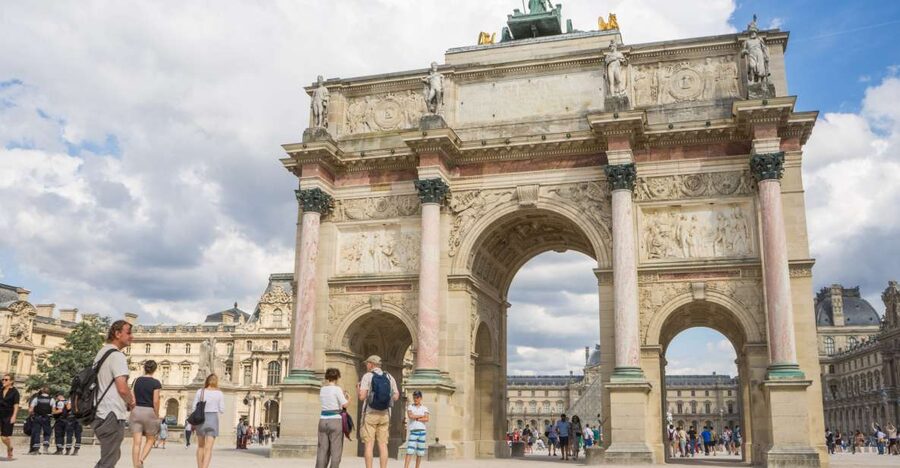
After Palais Garnier, the route hits Place Vendôme for another photo stop. This square is compact, elegant, and designed to impress. The value here is orientation. Once you’ve seen Vendôme in context, it becomes easier to place other landmarks you’ll see later in your trip.
Then you move toward Place de la Concorde, where the guide adds the French Revolution angle. The key point is how dramatic the location became during that era. Concorde is famous today as a grand meeting point, but it also used to be a stage for momentous political events. Hearing that while you’re standing in the space helps you connect the city’s layout to its past.
If you like history that explains why things are positioned where they are, this section is your payoff. It is not just names and dates. It’s what the city looked like when power was changing hands.
Tuileries Garden: a calmer moment with views toward the Champs-Élysées
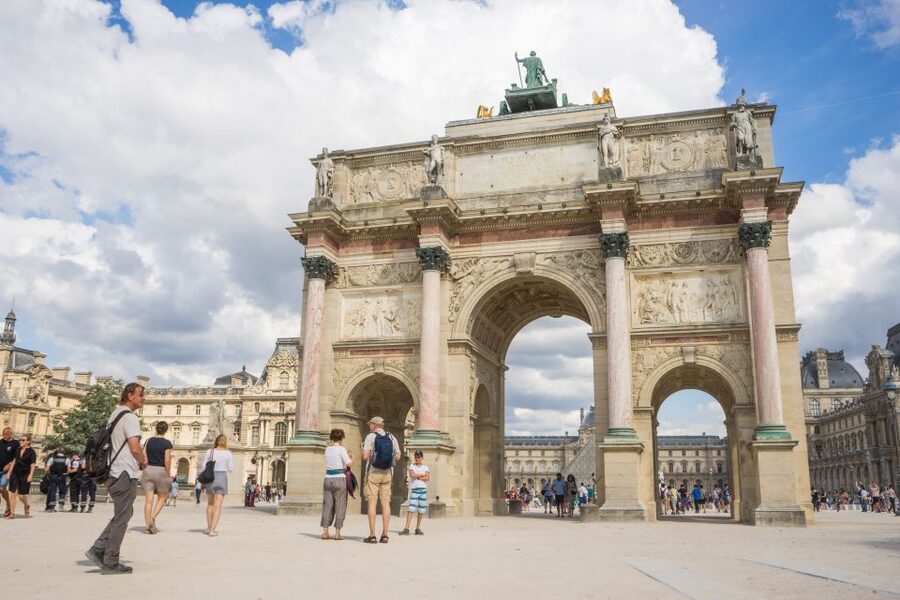
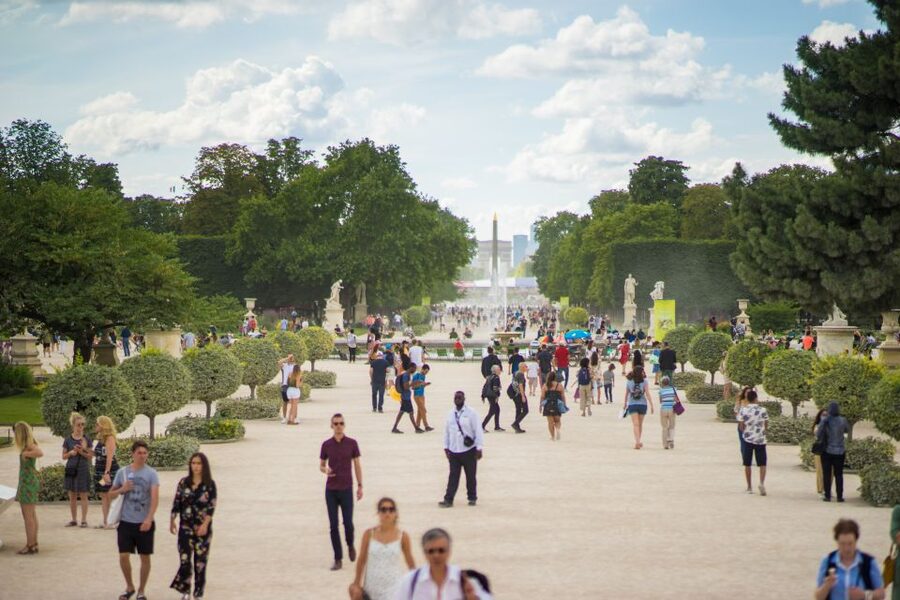
Next comes the Tuileries Garden. This is a break from pure architecture gazing and a chance to reset your legs. The tour uses the garden to give you a pleasant walking stretch with views toward the Champs-Élysées area.
Why this stop matters: gardens in Paris are not filler. They are part of how the city breathes. The Tuileries area also helps you understand why so many people romanticize this part of town. It is a space where the city’s big power buildings give way to strolling geometry, benches, and long sightlines.
Practical tip: if you tend to take lots of photos, this is where you’ll feel glad the tour includes a garden segment. You can slow your pace for a minute without falling behind, and the background scenery looks good from multiple angles.
Louvre Museum area: seeing the pyramid with historical context
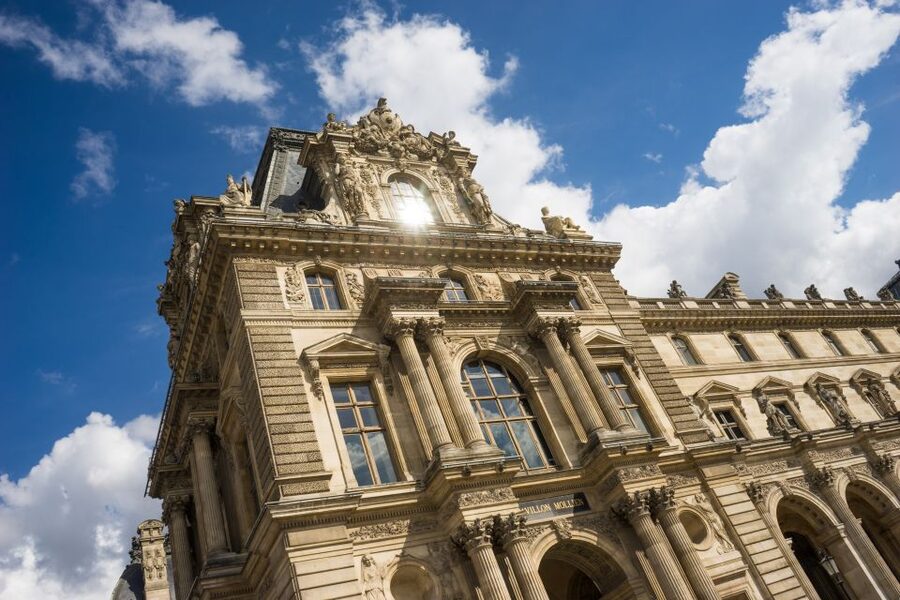
You’ll reach the Louvre Museum with a photo stop. The exterior and the broader surroundings matter here, because the guide explains why the Louvre Pyramid caused controversy when it was first built.
That kind of story is useful even if you have zero interest in art history. It helps you read modern Paris as part of an ongoing argument, not just as a frozen museum label. Paris always has layers: old monuments, new designs, and public debate about what belongs where.
And since entry fees are not included, you should treat this stop as a chance to orient yourself for a future museum visit. If you plan to go inside later, you’ll know the general setting and where the pyramid sits relative to the rest of the area.
Pont Neuf and the Seine: learning the bridge that anchors the city
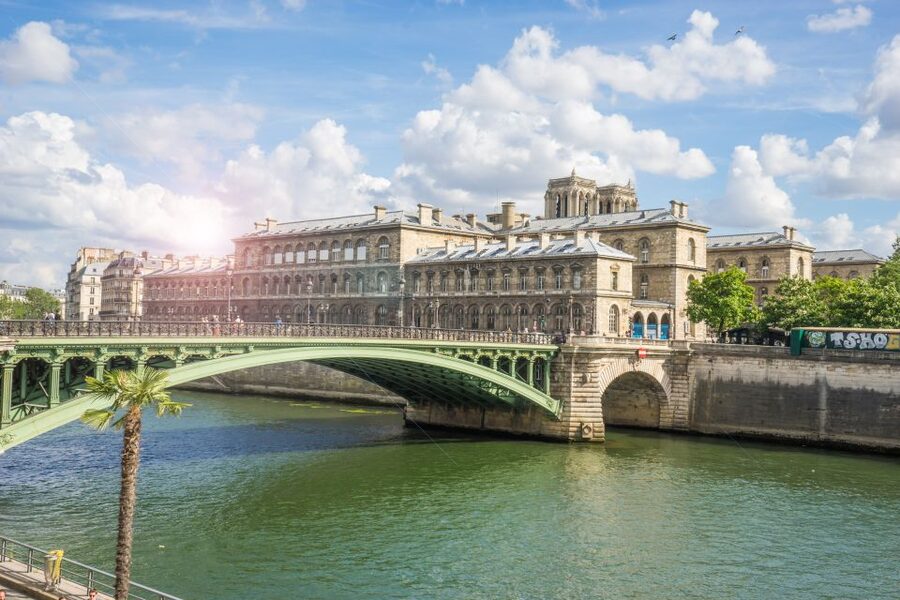
One of the most satisfying parts is the walk toward Pont Neuf. The guide frames it with a detail that makes it memorable: Pont Neuf is the oldest bridge in Paris.
Bridges are more than crossings. They shape movement patterns, connect neighborhoods, and influence how people experience the river. Hearing the oldest-bridge fact while you’re near the Seine makes you look for how the span fits into the city’s bigger layout.
If you are the type who likes small factual hooks that turn into visual anchors, this is your moment. It gives you a simple landmark to remember, even after you leave.
Île de la Cité finish: Notre-Dame after the 2024 reopening
The tour finishes on Île de la Cité, where you’ll admire Notre-Dame Cathedral after its 2024 reopening. This ending location is smart because it is one of the most iconic parts of central Paris and it naturally pulls together the city’s different eras.
Even without going inside, the surroundings tell a story. Île de la Cité has always been the heart area for movement, religion, and power. Ending your walk here means your mental map of Paris gets a “center of gravity” point you can return to later.
Also, because the tour wraps up here, it is a convenient place to continue on your own. You can stay in the area longer, wander, grab a coffee nearby, or simply enjoy the Cathedral views at a slower pace after the group walk ends.
The guide factor: German hosting and real Q and A
This tour is led by a live German-speaking guide. That sounds basic, but in practice it is a big deal for comprehension. If you prefer German explanations in Paris, this is one of the easier ways to make sure you understand the why behind each stop.
The feedback highlights guides like Marilena and Lasse as entertaining and skilled at answering questions. That matters because a good walking guide does more than recite facts. They help you turn what you see into a plan for what you do next.
You’ll also get insider recommendations for restaurants, museums, and local spots. The tour does not promise specific venues, but it does give you starting points that fit your interests, which can save you time later when you are deciding what to do with your limited trip days.
Making the most of the walk: simple choices that matter
This is a 2-hour, on-foot tour, so a few practical habits make a noticeable difference.
- Bring comfortable shoes. Central Paris sidewalks and stairs can be uneven, and you’re on your feet for the whole session.
- Plan to take fewer photos than you think. Stop for the key shots, then let the guide talk. The stories are the point.
- Ask one or two questions early. Guides typically have enough time to answer thoughtfully, and questions help them tailor what they emphasize.
- Use the tour as an orientation tool. After you finish, you should feel more confident navigating. Let that confidence guide your next museum or meal decision.
If you’re someone who likes to understand a city by walking it, this tour fits perfectly. If you want long museum entrances or detailed interior time, you’ll need to pair it with separate tickets and plans later.
Price and value: what you pay for in this format
At $35 per person for about 2 hours, this tour is priced like a practical city-center orientation walk. The value is in three areas.
First, it bundles a logical route through major landmarks without requiring you to stitch together public transit and map reading. Second, it adds context that makes famous sights more than just pictures. Third, you get insider tips that can change your schedule and help you avoid wasting a day on the wrong museum or the wrong time slot.
What’s not included matters too. Entry fees and tips are not included, and food and drinks are not included. So think of this as a guided walk and story session, not a museum ticket package.
If you do just one guided experience early in your trip, this is a solid choice. It sets you up to enjoy the rest of Paris with better instincts.
Who should book this tour, and who might not
This tour is ideal for:
- First-time visitors who want orientation and context in a compact time window
- Returning travelers who already know the big sights but want better understanding of the stories behind them
- People who prefer a German-language guide and a straightforward walking plan
It may not be the best fit if:
- You want heavy interior time in museums or cathedrals during the same 2 hours
- You’re looking for a deeply specialized theme like pure art history only, or pure architecture only
The “sweet spot” is broad. You’ll get enough variety to keep it interesting, and enough structure to keep you from feeling lost.
Should you book this city center group tour?
If your goal is to feel oriented fast and you like history explained in plain, human terms while you walk, I’d book it. The route hits the places you’ll see again in photos and maps, and the guide stories make them easier to connect in your head.
Also, you get a real benefit from the German hosting and the guide style described in feedback, like the engaging approach from Marilena and Lasse and the ability to answer questions. For $35, that blend of clarity, pace, and practical tips is strong value.
Just go in with the right mindset: this is a smart walk with photo stops and stories, not a museum marathon. If you want that, you’ll likely be happy you booked.
FAQ
Where does the tour start?
The meeting point is in front of the Cadillac store at 7 Rue Meyerbeer, 75009 Paris.
How long is the tour?
The tour lasts 2 hours.
What language is the guide?
The tour guide speaks German.
What sights are included in the walk?
You pass major spots such as Palais Garnier, Place Vendôme, Place de la Concorde, the Tuileries Garden, the Louvre Museum area, Pont Neuf, and the end point at Île de la Cité with Notre-Dame after its 2024 reopening.
Are museum entry fees included?
No. Entry fees are not included.
Is food and drinks included?
No. Food and drinks are not included.
Is the tour cancelable?
Yes. Free cancellation is available up to 24 hours in advance for a full refund.
City Tours, in full.
 ★ 3.8Marseille: City Sightseeing Hop-On Hop-Off Bus TourFrom $272,820 reviews
 ★ 3.5Eiffel Tower Summit Option with Seine River Cruise and City TourFrom $1202,176 reviews
 ★ 5.0Paris in a Day: Louvre or Orsay, Eiffel Tower, City Walk & CruiseFrom $1571,956 reviews
 ★ 4.7Paris: City Highlights Bike TourFrom $501,835 reviews
 ★ 4.0Lyon City Hop-on Hop-off Sightseeing Bus TourFrom $291,614 reviews
 ★ 4.0Paris: Eiffel Tower Hosted Tour, Seine Cruise and City TourFrom $1161,507 reviews
 ★ 5.0Paris City Center Free Walking Tour (Tip-Based)From $31,340 reviews
 ★ 4.6Paris: City and River Seine Tour on an Amphibious BusFrom $461,052 reviews
Also on these France lists