
Reviewed · WALKING TOURS
Paris City Center Free Walking Tour (Tip-Based)
Paris gets easier when you have a plan.
This tip-based city center walking tour stitches together the sites you see in postcards with the stories that explain why Paris looks the way it does. I like that it focuses on big turning points, from the French Revolution to Napoleon, while you’re still outside and moving.
I also love how practical the experience feels. You’ll get a smooth route across key landmarks, plus real-world “where to go next” ideas like where to grab lunch around Place Dauphine.
One thing to consider: you’re not going inside the big-ticket interiors. The tour keeps you outside major monuments, so if your main goal is museum time or cathedral interiors, you’ll need a separate ticket for that.
In This Review
- Key things to know before you go
- Tip-Based Pricing: What You Pay and What You Should Budget
- Meeting Point to Tuileries: A Smart Central Loop
- Île de la Cité and Notre-Dame: The Core of Paris Starts Early
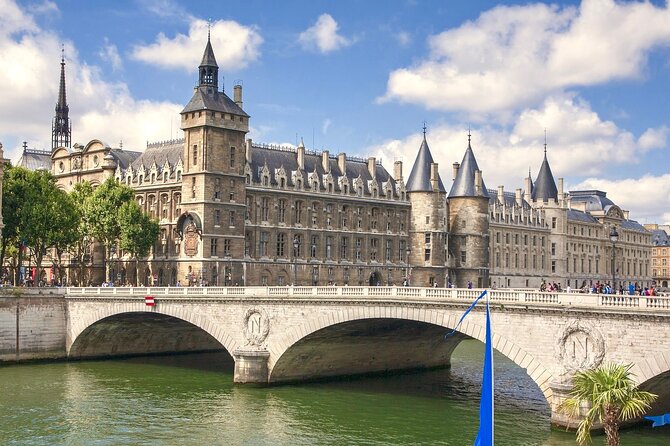
- Saint-Michel Fountain and Pont Saint-Michel: Reconstruction and WWII Clues
- Place Dauphine and Henri IV: A Tranquil Lunch Stop That Makes Sense
- Pont Neuf to the Louvre Perimeter: Old Bridge Secrets and the Mona Lisa Context
- Arc de Triomphe du Carrousel and the Tuileries: Napoleon to Royal Gardens
- Eiffel Tower Views Without Museum Pressure: How 1889 Happened
- Guides Make the Difference: Ezra, Alberto, Sanna, and Others
- Practical Tips to Enjoy the Full 2 Hours 15 Minutes
- Who This Tour Fits Best
- Should You Book Paris City Center Free Walking Tour (Tip-Based)?
- FAQ
- How long is the Paris City Center Free Walking Tour?
- Where does the tour start and where does it end?
- What is the price, and is it really free?
- What language is the tour offered in?
- Does the tour enter Notre-Dame Cathedral or the Louvre Museum?
- How are tips accepted?
- How big are the groups?
- What if the weather is bad?
- Is free cancellation available?
Key things to know before you go
- Outside-only highlights at Notre-Dame and the Louvre, with viewpoints that still make sense.
- Story-first route built around French Revolution and Napoleon, not random facts.
- Flat, central walking that fits first-timers, even when it’s cold or rainy.
- Guides use a microphone so the whole group can hear clearly in busy areas.
- Tip payments are electronic (credit, debit, electronic payments) rather than cash-based.
- Ends at the Tuileries, so you’ll make your way home from a different area.
Tip-Based Pricing: What You Pay and What You Should Budget
This is a low-cost, tip-based walking tour with a stated price of about $3.62 per group (up to 9). The “free tour” model means the real cost is what you choose to tip, and the experience is built on guides earning that trust in real time.
Here’s the practical catch. Tips are accepted only via credit/debit and electronic payments, and VAT is added to contributions. So plan like it’s a paid activity: bring a card you can use without stress. If you were hoping for a simple cash tip, this one won’t work that way.
Value-wise, I think it’s strongest when you’re short on time. In about 2 hours 15 minutes, you cover a compact slice of Paris that includes Île de la Cité, bridges over the Seine, royal squares and gardens, and major monuments. That means you’re buying time and context, not just photo stops.
More Paris walks on the list
Meeting Point to Tuileries: A Smart Central Loop
The tour starts at Fontaine Saint-Michel, Pl. Saint-Michel (75005 Paris), and it ends in the Tuileries Garden area (75001). That end point matters because it’s not a loop where you hop back to your exact starting spot. You’ll want to plan your next move accordingly, especially if you’re connecting to a train or a pre-booked ticket later that day.
Expect a group size up to 50. You can also expect your guide to manage sound well, since multiple guides have used a microphone and amplifier for clear audio even in louder streets. One review even called out that the setup helped larger groups stay connected to the story.
The walking is mostly manageable, and the terrain is central and fairly flat. Still, you should treat it as a proper sightseeing walk: you’ll be on your feet, and you’ll spend time standing at corners and viewpoints.
Duration is about 2 hours 15 minutes (approx.). It can feel like time flies because the guide keeps the narrative moving. But if you need frequent seating breaks, this is not the kind of tour that builds in long rests.
Île de la Cité and Notre-Dame: The Core of Paris Starts Early
The tour begins on Île de la Cité, the island tied to the earliest heart of Paris. You’ll hear how the Parisii tribe established temples more than 2000 years ago, then how power shifted as the Roman Empire took control. This first stop works because it gives you a mental map before you start crossing into the modern city.
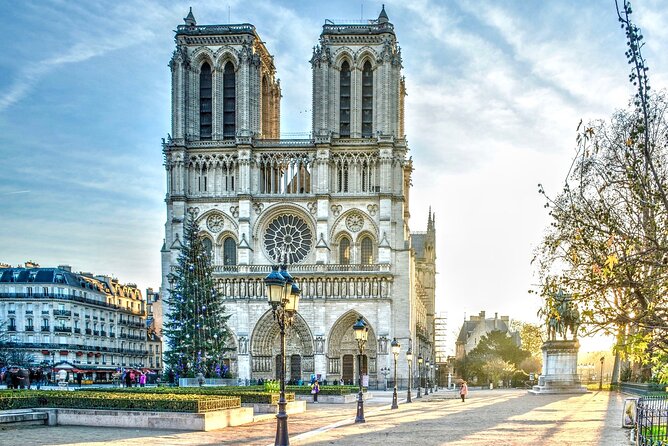
Next comes Notre-Dame de Paris. You won’t enter, but you’ll still cover a huge timeline: its construction starting in 1163, major historical phases, and the later story that includes the 2019 fires. The guide also connects the cathedral to political upheaval, including the French Revolution and Napoleon’s coronation.
What I like about an outside approach here is that it keeps your brain engaged. You’re not waiting in lines or stuck inside with crowds. Instead, you can look at the building, orient yourself, and then let the guide explain how events shaped what you see today.
Potential drawback: if you specifically want the interior atmosphere, stained glass close-ups, or the full cathedral experience, you’ll need to add that on your own.
Saint-Michel Fountain and Pont Saint-Michel: Reconstruction and WWII Clues
The story continues with the Fontaine Saint-Michel, built during the grand reconstruction of Paris. This stop is a good reminder that Paris didn’t always look like it does now. A lot of what you see in central streets is the result of rebuilding decisions, not just “old city” luck.
Then you head to Pont Saint-Michel, where the tour turns sharply visual. You’ll see references to bullet holes from WWII, and your guide explains why Paris was not destroyed in the way you might expect during the war. It’s history you can actually point at, not only read about.
This is one of those moments where the tour feels especially worth it. Most people walk over bridges and keep moving. Here, you pause, look, and understand the scars and choices behind the scenery.
Place Dauphine and Henri IV: A Tranquil Lunch Stop That Makes Sense
After the heavier history, the route softens at Place Dauphine. The guide explains how this square is among the first projects tied to Henri IV, and you’ll also see why it’s known for restaurants. The idea is smart: by the time you reach Place Dauphine, you’ve been walking and listening for a while, so this area becomes a natural place to grab a coffee and something to eat.
Then you’ll move to the equestrian statue of Henri IV, with Seine views as your backdrop. Even if you’re not a monarch-history person, the guide makes the reign feel human by explaining that it was short but meaningful.
I like this section because it helps the tour avoid turning into a pure lecture. You get viewpoints, you get an easy “look around” moment, and the story keeps the city grounded.
Pont Neuf to the Louvre Perimeter: Old Bridge Secrets and the Mona Lisa Context
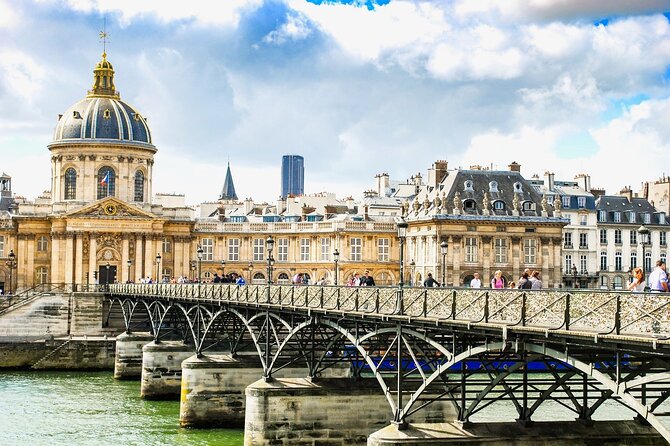
At Pont Neuf, you’re at the oldest bridge in Paris, and it’s packed with stories. You’ll hear about Henry IV finishing the bridge in 1607, plus colorful local history like tooth pullers of Paris. It’s the kind of detail that makes the city feel lived-in, not like a set of museum exhibits.
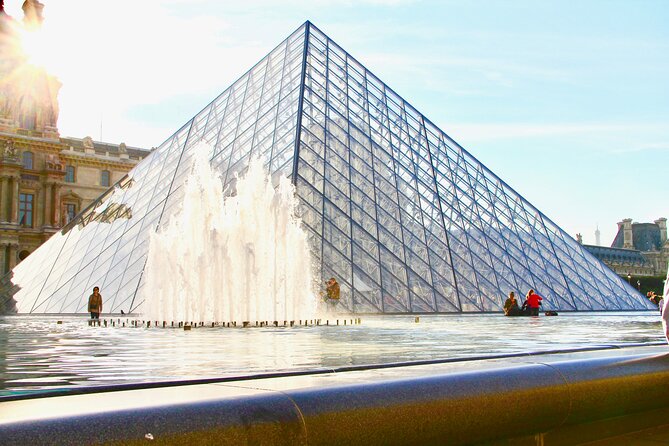
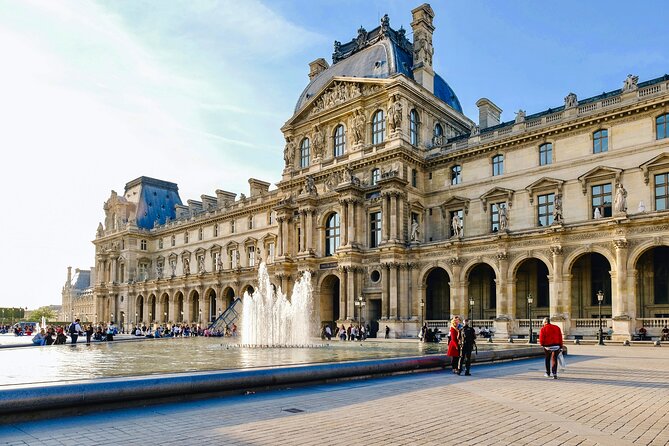
Next you reach the Louvre area, and this is another outside-only stop. You won’t enter the museum, but you’ll get the key context: stories tied to Leonardo da Vinci and why the Mona Lisa became so famous. You’ll also hear how Francis I built the foundations of the Louvre as a fortress and a palace.
The best part here is the view angle. The tour highlights the glass pyramid area and uses the spot to explain what you’re seeing. You’re learning the why behind the landmark, without needing to fight through museum crowds for hours.
More ways around Paris
- Eiffel Tower Summit Option with Seine River Cruise and City Tour
★ 3.5 · 2,176 reviews - Paris in a Day: Louvre or Orsay, Eiffel Tower, City Walk & Cruise
★ 5.0 · 1,956 reviews - Paris: City Highlights Bike Tour
★ 4.7 · 1,835 reviews - Paris: Eiffel Tower Hosted Tour, Seine Cruise and City Tour
★ 4.0 · 1,507 reviews - Paris City Center Free Walking Tour (Tip-Based)
★ 5.0 · 1,340 reviews
Arc de Triomphe du Carrousel and the Tuileries: Napoleon to Royal Gardens
You’ll then stop at the Arc de Triomphe du Carrousel, built by Napoleon. The guide connects it to Napoleon’s rise as a master of Europe, so it doesn’t feel like a random triumphal arch along the route. It reads like a visual timeline.
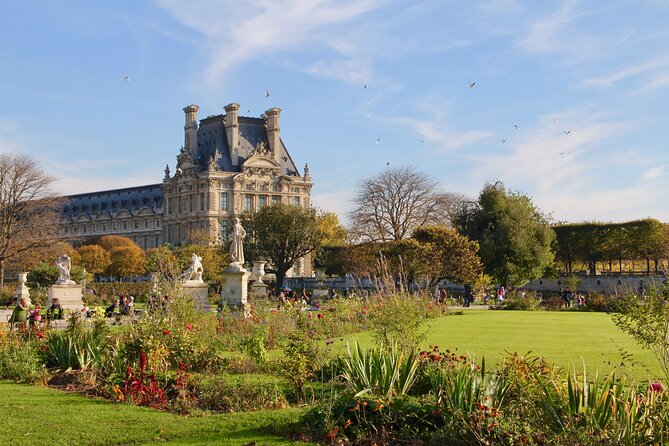
After that, you transition into greenery at the Jardin des Tuileries. This stop works because it’s both scenic and explanatory. You’ll hear how the area moved from tile factory to royal gardens, and you’ll see sculptures, statues, and fountains while the guide shares the “why” behind the design choices. The tour even ties the landscape planning to the same artist associated with the Versailles garden style, aiming for a sense of mystique and majesty.
If you’re tired of standing still, the Tuileries gives you walking space. It’s also a good mental reset between monuments.
Eiffel Tower Views Without Museum Pressure: How 1889 Happened
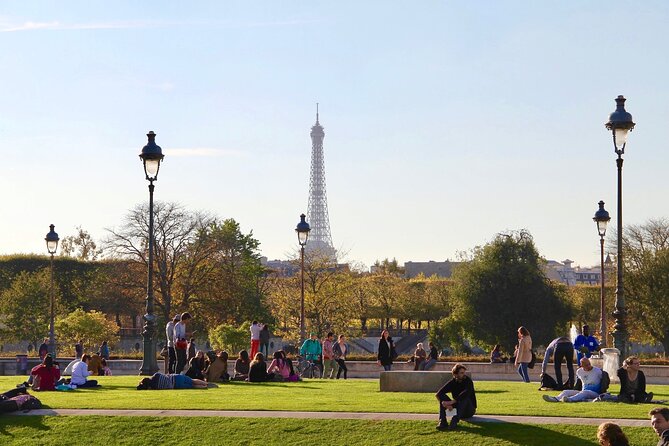
The tour ends with the Eiffel Tower view from the Tuileries side. You’ll get unbeatable sightlines from the gardens, and the guide explains how Gustave Eiffel managed the construction in 1889.
This final stop is satisfying because it gives you a clear payoff. You started at the earliest heart of Paris on Île de la Cité, and you end with the most recognizable symbol of later Paris. Along the way, the guide keeps returning to major eras, so the tower isn’t just a photo. It becomes a chapter in the city’s story.
Guides Make the Difference: Ezra, Alberto, Sanna, and Others
The most praised aspect of this tour is the guiding style. Names that come up again and again include Ezra, Alberto, Sanna, Bruce, Kiara, and Michael. What you’ll notice in the way they teach is a mix of clear explanations, humor, and a pacing that keeps the group engaged.
Several guides are known for storytelling that feels lively rather than dry. You might even get extra time for questions when the group is in the mood to talk, and you’ll often hear that the guide checks the group’s needs and adjusts if someone is falling behind.
Sound quality is another theme. More than one guide is described as using a microphone and amplifier so people in the back can still hear in busy streets. That matters on a walking tour, because without sound support, you lose the story fast.
One practical lesson from the overall experience: show up at the correct meeting point and be ready for the tour to start on time. This is not a “wander in later” kind of event.
Practical Tips to Enjoy the Full 2 Hours 15 Minutes
Here’s how to make the day smoother, especially if it’s your first time in Paris.
Wear shoes you can stand in for long stretches. Even when the route is fairly flat, you’ll be stopping and looking a lot.
Use the restroom before you start if you can. Break options during a tour can be limited until the later part of the route.
Bring a card for tips. Since tips are only accepted via credit/debit and electronic payments, you avoid last-minute scrambling.
Dress for weather. The tour requires good weather. If it’s canceled for poor conditions, you’ll be offered another date or a full refund.
Finally, keep your expectations realistic about access. You’ll see Notre-Dame and the Louvre from outside, plus viewpoints and context. You’re not buying a fast-track ticket into the cathedral or the museum itself.
Who This Tour Fits Best
This is a great match if you want:
- A first-day intro to central Paris with a logical route.
- A history-driven walk focused on the French Revolution and Napoleon.
- A tour that gives you context fast, before you go off on your own.
- A way to see major monuments without the stress of museum lines.
It may not be your best choice if you mainly want:
- Inside access to Notre-Dame or deep time in the Louvre.
- A long sit-down experience with minimal standing.
- A route that returns to the exact starting point.
Should You Book Paris City Center Free Walking Tour (Tip-Based)?
I’d book it if your goal is to get your bearings and understand the big themes behind the sights. The route is compact, the storytelling is consistently praised, and the tour does a nice job connecting the city’s landmarks to major eras like the French Revolution and Napoleon. Ending in the Tuileries area also makes sense, because you’re positioned near more central sights afterward.
Just go in with the right plan: expect outside views, plan for solid walking and standing, and bring a card for electronic tips. If that fits how you like to travel, this is a high-value way to understand Paris quickly and enjoy your day without getting stuck in crowds too early.
FAQ
How long is the Paris City Center Free Walking Tour?
It runs about 2 hours 15 minutes (approx.).
Where does the tour start and where does it end?
The start is Fontaine Saint-Michel, Pl. Saint-Michel, 75005 Paris. The tour ends at Tuileries Garden, 75001.
What is the price, and is it really free?
The tour is tip-based, with a stated price of about $3.62 per group (up to 9). Your contribution is handled through tips.
What language is the tour offered in?
The tour is offered in English.
Does the tour enter Notre-Dame Cathedral or the Louvre Museum?
No. The tour does not enter the cathedral, and it does not enter the Louvre Museum.
How are tips accepted?
Tips are accepted only via credit/debit cards and electronic payments. VAT is added to contributions.
How big are the groups?
The tour has a maximum of 50 travelers.
What if the weather is bad?
The tour requires good weather. If it is canceled due to poor weather, you will be offered a different date or a full refund.
Is free cancellation available?
Yes. You can cancel up to 24 hours in advance for a full refund.
More Paris Walks on the List
- Paris Top Sights Half Day Walking Tour with a Fun Guide
★ 5.0 · 2,893 reviews - Montmartre Hidden Gems and Scenic Highlights Walking Tour
★ 5.0 · 2,684 reviews - Montmartre Hill French Gourmet Food and Wine Tasting Walking Tour
★ 5.0 · 2,588 reviews - Paris Île de la Cité and Notre-Dame Walking Tour With Crypt
★ 5.0 · 2,272 reviews - Paris: Montmartre Cheese, Wine & Pastry Guided Walking Tour
★ 4.8 · 2,255 reviews
Everything Else Filed Under Paris
- Paris: Louvre Guided Tour with Reserved Access & Boat Cruise
★ 4.3 · 16,353 reviews - Paris: Big Bus Hop-On Hop-Off Tour with Optional Cruise
★ 4.4 · 13,279 reviews - Louvre Museum Masterpieces Guided Tour with Access
★ 4.5 · 12,023 reviews - Versailles: Skip-the-Line Tour of Palace with Gardens Access
★ 4.7 · 9,778 reviews - Mona Lisa & Louvre Masterpieces Tour with Reserved Access
★ 4.6 · 6,812 reviews
The Whole Paris Shelf
- Paris: Louvre Museum Timed-Entrance Ticket
★ 4.6 · 71,977 reviews - Disneyland® Paris 1-Day Ticket
★ 4.6 · 49,412 reviews - Paris: Versailles Palace and Gardens Full Access Ticket
★ 4.6 · 41,579 reviews - Paris: Evening River Cruise with Music
★ 4.4 · 22,721 reviews - Paris: Eiffel Tower Entry Ticket with Optional Summit Access
★ 4.4 · 20,035 reviews
The rest of the Paris write-ups
- Montmartre: Guided Tour for Kids and Families★ 4.9 · 57 reviews
- From Paris: Versailles Palace and Gardens Guided Day Trip★ 4.5 · 57 reviews
- Versailles Palace and Garden Tour with Paris Private Transfers★ 5.0 · 58 reviews
- Louvre Evening Escape – Avoid The Crowds! Semi-Private 6ppl Max★ 5.0 · 58 reviews
- Summit Eiffel Tower Audio Guide Tour with Unlimited Time Access★ 4.5 · 58 reviews
- Private Half Day Historic Tour★ 5.0 · 58 reviews
Walking Tours, in full.
 ★ 5.0Paris Top Sights Half Day Walking Tour with a Fun GuideFrom $762,893 reviews
 ★ 5.0Montmartre Hidden Gems and Scenic Highlights Walking TourFrom $382,684 reviews
 ★ 5.0Montmartre Hill French Gourmet Food and Wine Tasting Walking TourFrom $1452,588 reviews
 ★ 5.0Paris Île de la Cité and Notre-Dame Walking Tour With CryptFrom $482,272 reviews
 ★ 4.8Paris: Montmartre Cheese, Wine & Pastry Guided Walking TourFrom $1272,255 reviews
 ★ 5.0Paris in a Day: Louvre or Orsay, Eiffel Tower, City Walk & CruiseFrom $1571,956 reviews
 ★ 4.9Paris: Montmartre Highlights Walking Tour with a Local GuideFrom $341,668 reviews
 ★ 5.0★ Walking Tour of Old Nice and Castle HillFrom $391,318 reviews
Also on these France lists