
Reviewed · PRIVATE
Paris Private Guided Tour in a Vintage Open Top French Car
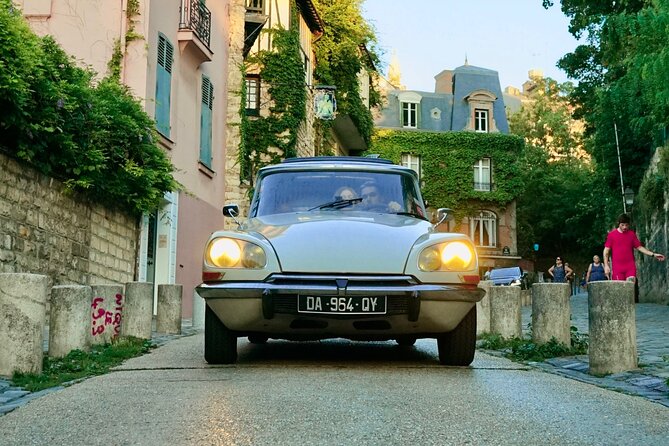
A vintage open-top car turns sightseeing into theater. This private Paris tour pairs the romance of a classic Citroën with live commentary from Benjamin, so you spend your time looking at real landmarks and hearing what shaped them. It is also built for small groups, up to four, which makes it feel personal instead of like you are just queued up with everyone else.
I especially like the live, on-the-move storytelling that happens as you pass each monument. You get context on what you are seeing, plus practical “where to go next” guidance so the rest of your trip makes more sense.
The one drawback to plan for is the 2-hour pace. The stops are short, and like any city tour, heavy traffic or bad weather can affect timing even when the driver tries to keep things smooth.
In This Review
- Key things to know before you ride
- Why a vintage open-top Citroën DS is a smart way to see Paris
- Benjamin’s route: how the 2-hour loop actually feels
- Champs-Élysées and Élysée Palace: Paris at full spotlight
- Les Invalides: Napoleon’s golden dome and military memory
- Eiffel Tower and Arc de Triomphe: two icons, two different kinds of drama
- Grand Palais, Petit Palais, and Pont Alexandre III: Paris in gold and glass
- Place de la Concorde and the Luxor Obelisk: history in a straight line
- Palais Bourbon, La Madeleine, and the Tuileries: power, faith, and a walkable pause
- Musée d’Orsay and the Seine crossings: how to spot the best angles
- The Louvre zone, Place Vendôme, and Opéra Garnier: art meets luxury
- Sainte-Trinité, Pigalle, and Place du Tertre: nightlife history and artist streets
- Montmartre in one ride: Sacré-Cœur and the streets behind the postcard
- Comfort, safety, and what the price buys you
- The main trade-offs to consider before booking
- Should you book this private vintage car tour?
Key things to know before you ride
- Private ride for up to 4, with the flexibility to tailor the route around what you want to see.
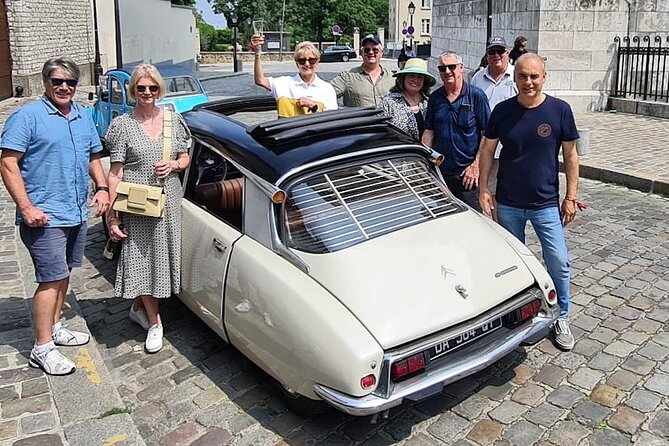
- Vintage open-top Citroën comfort, including heating and plenty of legroom, with lots of photo-friendly pull-offs.
- Benjamin’s live commentary in English, focused on history and culture as you pass major sights.
- Pickup and drop-off inside central Paris zones, so you start closer to the good stuff and finish where you choose.
- Montmartre plus the classics in one loop, including Sacré-Cœur views and the Arc de Triomphe area.
- Best timing window is late morning through mid-afternoon to reduce time lost in traffic.
Why a vintage open-top Citroën DS is a smart way to see Paris
Paris is one of those cities where buses can feel efficient but kind of dead. In an open-top vintage car, the city hits you in more ways at once: sights roll by at street level, you hear the rhythm of neighborhoods, and you get that postcard feeling without needing to dress for it.
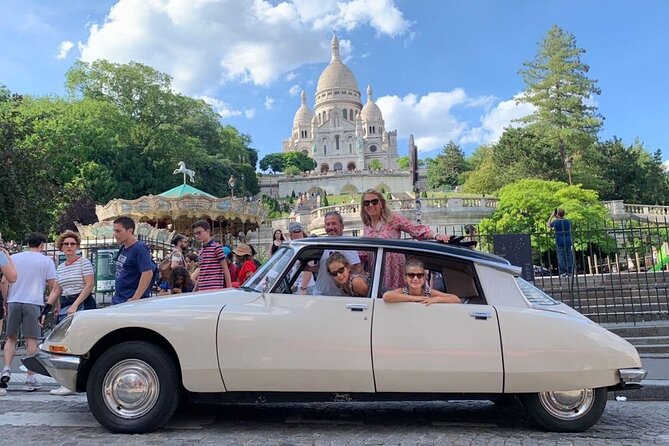
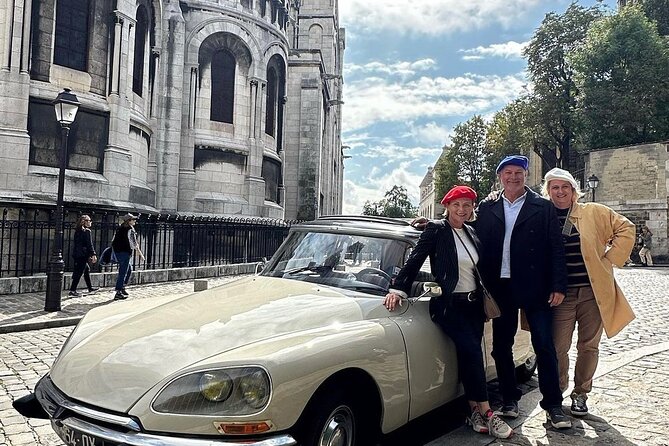
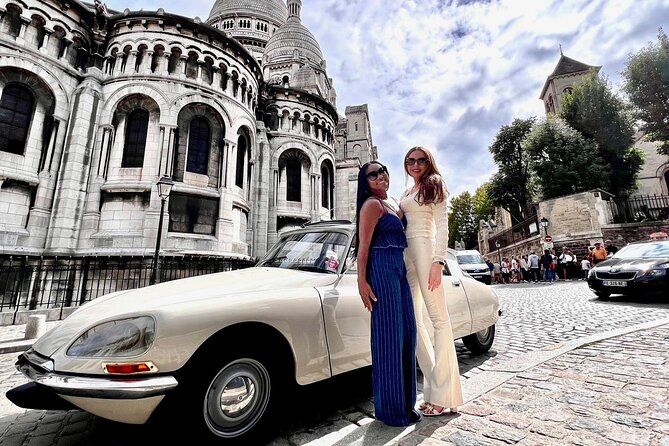
This tour is built around a 1970s-era open-top Citroën experience (often described as a 1972 Citroën DS). The car has heating, and reviews also call out comfortable seats and good legroom. That matters in Paris because you might be excited about the views but still want your body to feel good while you are bouncing through tight streets.
And because it is private, you are not stuck listening to a generic script while you watch everyone else’s phone cameras get tired first. You are with Benjamin, a local operator who delivers the commentary in English and adjusts the pacing to the group.
More Paris tours that come with a guide
Benjamin’s route: how the 2-hour loop actually feels
The tour is about two hours, which sounds short until you realize the goal is not to “do everything.” The goal is to give you a high-impact tour that helps you orient yourself fast, hit key landmarks, and then send you off with smart follow-up ideas.
I like how the route touches several “greatest hits” areas without making you do a full walking day. You start near the Champs-Élysées and the Élysée Palace and then move through major monuments and Seine-side sights, before finishing in Montmartre territory.
You’ll likely notice two things during the ride:
- Stops are brief, usually enough for photos and quick landmark orientation.
- Benjamin keeps the tour moving with an eye on traffic, so you are not just sitting at red lights for half the time.
One practical detail: it runs with a best schedule window between 10AM and 4PM to avoid traffic jams. That is not a small point, because in Paris traffic can turn a “quick loop” into a long wait if you are careless with timing.
Champs-Élysées and Élysée Palace: Paris at full spotlight
You start on the Champs-Élysées, the iconic avenue where the city’s luxury and pageantry show up fast. Even if you have seen it in photos before, being in the car lets you feel the scale more than walking does. You see how the avenue lines up with bigger sights and how it funnels views down the center of Paris.
A key stop here is the Élysée Palace, the French President’s official residence. You are not going to treat it like a museum stop. It’s more about seeing where political power lives in the middle of a city that also loves art, design, and public life.
If you like atmosphere, this segment is a win. You get a sense of how Paris can look both ceremonial and everyday at the same time, especially as the guide connects what you are seeing to how the city developed.
Les Invalides: Napoleon’s golden dome and military memory
From the Champs-Élysées, the route flows toward Les Invalides, known for its commanding golden dome and its major role in French military history. This is one of those Paris landmarks that can feel like a lot even from outside, because it carries weight in both architecture and national symbolism.
It also gives you a strong “contrast moment.” You go from political spectacle on a grand avenue to a monument that is basically a memory machine. Benjamin’s commentary helps you understand why that matters, instead of just recognizing the dome as a photo background.
Even with a short stop, this area works well on a car tour because it is dramatic from the street, and you can take in the surrounding feel without committing to long entry lines.
Eiffel Tower and Arc de Triomphe: two icons, two different kinds of drama
The next classic hit is the Eiffel Tower, framed with nearby Paris streets, including Rue de l’Université just steps from the monument area. The tower is famous, but the point here is not to “admire it from far away.” The car tour lets you get a variety of angles while staying comfortable and moving efficiently.
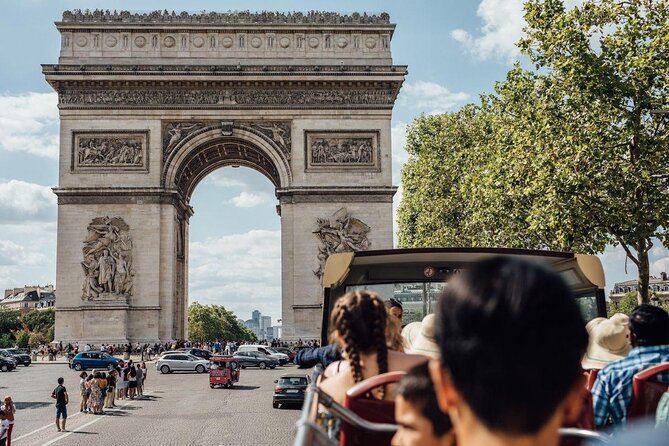
The itinerary also includes time near the Arc de Triomphe, another symbol that carries a different mood. It honors France’s heroes and forces you to think about the city as something shaped by conflict, celebration, and national identity.
In practice, Benjamin also tends to find great viewpoints for photos. One detail that stands out in the tour experience is that you may get access to a top-tier Eiffel Tower perspective depending on routes and traffic conditions.
Grand Palais, Petit Palais, and Pont Alexandre III: Paris in gold and glass
This part of the ride is a visual feast if you like architecture. You pass or stop around the Grand Palais, with its glass-domed grandeur, and the Petit Palais, which pairs elegant design with calmer garden-like surroundings.
Then you hit Pont Alexandre III, widely considered one of Paris’s most ornate bridges. The golden sculptures and the long, sweeping views make it a natural photo target, and being in an open car makes the whole moment feel more cinematic than standing on the sidewalk.
A car tour is especially useful here because you get the “wow” while avoiding the slow shuffle that can happen around busy river crossings. You also get the guide’s context fast, so the bridge is not just pretty. It becomes a clue about how Parisians built their public spaces to feel like culture, not just transportation.
More Paris bookings with the group to yourself
- Paris: Private Photoshoot at the Eiffel Tower
★ 4.7 · 2,636 reviews - Top Private Cruises in Paris with French Champagne and surprises
★ 5.0 · 1,553 reviews - Private Paris Airport Arrival Transfer – CDG & ORLY Airports
★ 4.5 · 1,119 reviews - Paris Private Arrival Transfer from Charles de Gaulle (CDG) or Orly (ORY)
★ 4.0 · 1,084 reviews - Private Montmartre Food Tour with Wine, Cheese & Pastries
★ 5.0 · 1,027 reviews
Place de la Concorde and the Luxor Obelisk: history in a straight line
Next up is Place de la Concorde, anchored by the Luxor Obelisk. This is one of those places where the city quietly reminds you it has stories older than its current streets. The obelisk connects eras and continents, and the guide’s commentary helps you understand why it is sitting here in the middle of Paris.
This stop also matters for your trip planning. It is a hub where several neighborhoods feel close on a map but take time to reach if you rely only on buses. Seeing it early gives you a better mental layout for later days.
Palais Bourbon, La Madeleine, and the Tuileries: power, faith, and a walkable pause
You’ll pass the French National Assembly at Palais Bourbon, which gives a clear sense of where legislative power lives along the Seine. Then the route moves toward La Madeleine, known for its grand neoclassical façade and richly decorated interior.
After that, the Tuileries Gardens provide a needed change of pace. Even on a short car tour, the gardens give you a green break in the middle of all the stone and monuments. If you want to plan your next day, this is useful because it connects major areas, including easy walking paths between the Louvre zone and Place de la Concorde.
Musée d’Orsay and the Seine crossings: how to spot the best angles
The tour includes the Musée d’Orsay area and several nearby points along the river, plus a mention of drifting along the Seine or walking bridges for views. Even if you do not step inside museums during this tour, seeing the restored station building from the outside helps you understand why people plan entire evenings here.
Then comes the crossing rhythm: Pont de la Concorde and the broader Seine scene. This is where you’ll start to see Paris as more than landmarks. You see the water as a connector, a place where views line up and neighborhoods feel linked.
If you’re the type who likes to know where to stand later, this is the segment that helps most. You leave knowing which river directions look best and which bridge angles you’ll want to return to with more time.
The Louvre zone, Place Vendôme, and Opéra Garnier: art meets luxury
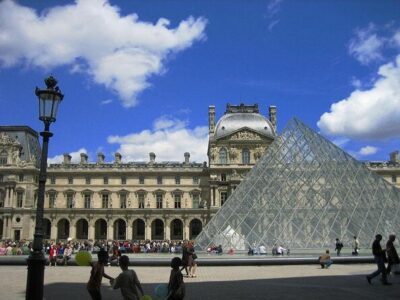
The itinerary also touches the Louvre area and the famous glass pyramid zone. You get the biggest art name in the world in a fast, orientation-friendly way. For serious museum time, you’ll still want to come back, but the car stop gives you an efficient mental map.
From there you move into Place Vendôme, known for luxury shopping and the Vendôme Column. It’s a great contrast after the broader monument scale. Here it is more about refined Paris street drama and design.
Then you head toward Opéra Garnier, with its ornate architecture and deep cultural pull. Even from outside, it reads as a different kind of Paris. It is less “national monument” and more “grand stage,” and Benjamin’s commentary helps you connect the building to the kind of city Paris wants to be.
Sainte-Trinité, Pigalle, and Place du Tertre: nightlife history and artist streets
As the tour progresses, it shifts to areas associated with creativity and nightlife. You pass La Sainte-Trinité, then head toward Pigalle, which is famous for cabarets, historic music venues, and a mixed neighborhood energy.
After Pigalle, the ride moves toward Place du Tertre and the artist square vibe that people associate with Montmartre. The point of these stops on a short tour is not to “browse for hours.” It’s to show you where the art culture happens, so when you walk later, you know what you are seeing and where the character comes from.
This is also the area where you can use Benjamin’s advice to plan an evening. If you want a first-time route, this is where he can help you choose the right streets depending on your interests.
Montmartre in one ride: Sacré-Cœur and the streets behind the postcard
Finally, you climb into Montmartre, and this is where the open-top experience feels extra fun. Even when the stop times are brief, the streets and viewpoints give you that “different Paris” feeling: steeper lanes, older-looking architecture, and a neighborhood that has long been tied to art.
The itinerary includes a stop for the Montmartre stairs and the Basilique du Sacré-Cœur. Sacré-Cœur is famous for its gleaming white domes and sweeping views. On a car tour, you are basically using the vehicle to get you close to the start of the story, while still allowing time for a photo moment and quick atmosphere check.
Then you loop through Montmartre’s major landmarks and streets, including:
- Le Chat Noir, tied to the legendary cabaret history of artists and writers
- Rue de l’Abreuvoir, with its old-house feel
- Le Moulin Rouge area, known for the cabaret and the red windmill facade
- Clos Montmartre, the vineyard tradition inside the neighborhood
- Saint-Pierre de Montmartre, one of the older churches here
- Rue Lepic, famous for classic Paris charm and film-era references
- Moulin de la Galette, another historic windmill landmark
- Van Gogh’s House in the area
- La Maison Rose, a well-known pink bistro stop point
- Wall of I Love You, where Je t’aime appears in many languages
- Plus a look at Parc Monceau and Courcelles at the outskirts of the route for a calmer change of scenery
You might notice something: this is less about museum depth and more about tying together a neighborhood story. That is exactly what you want in a short tour. You get a mental map of Montmartre, so your next stroll feels like you are following a trail, not just wandering.
Comfort, safety, and what the price buys you
Let’s talk value. The price is $361.74 per group up to 4 people for about 2 hours. If you split it four ways, that lands around the $90-ish per person range for a private car and live guide. If you have fewer than four, the cost per person climbs, so this is best when you truly travel as a small group.
What you are really paying for is not just “a ride.” It is:
- Private transportation with heating and comfortable seats
- Bottled water
- Professional driver insurance and safety focus
- A local guide, Benjamin, who is both the operator and the person explaining the sites in English
- Pickup and drop-off within central zones, and you can request drop-off at your chosen location inside the pickup area
One reason it can feel like a bargain is that it replaces multiple taxis and reduces time spent figuring out how to reach each area. In Paris, time is expensive. A two-hour guided route in a vehicle that gets you close to stops can be a smart way to spend your energy.
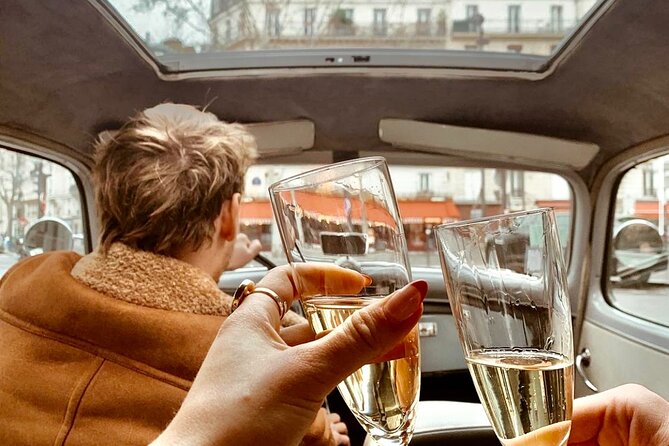
If you care about photo ops, the open-top format and quick stops matter too. People end up with more shots because you are positioned for angles without turning your day into a long search.
The main trade-offs to consider before booking
This is where I want you to go in with your eyes open.
First, Montmartre includes stairs and walking even if it is only a short climb for viewpoints. If you want a totally no-exertion tour, this might not be your best match.
Second, the tour is short by design. You might get great photos at the Eiffel Tower, the Arc de Triomphe, and the Montmartre viewpoints, but you will not linger for museum-level depth.
Third, like any Paris itinerary, traffic can affect timing. There was at least one real-world situation where road closures and heavy traffic caused a delay and changed the flow. The driver will do what they can, and the tour is built to avoid the worst traffic windows, but you still should plan some flexibility.
Lastly, there is an age rule to keep in mind: children under 10 are not allowed because of seat belt limitations on the back seats.
Should you book this private vintage car tour?
I think this is a strong choice if you want a first-time Paris overview that feels stylish, not rushed to death, and still gives you real context. It is especially good for couples and small groups who want:
- Classic landmarks in a single loop, including Eiffel Tower and Arc de Triomphe
- A guide like Benjamin who brings history into a story you can actually remember
- Montmartre without spending your whole day figuring out logistics
- A photo-friendly open-top experience with heating for comfort
I would skip it if you want long museum time, if you are traveling with kids under 10, or if you need a fully no-walking itinerary. Also, if you are going during a period when roads are constantly changing, you may want to build in extra buffer for the two-hour window.
If you match the vibe, this is the kind of tour you book for the “wow factor,” then keep using afterward when you plan your next day on foot. The route gives you a mental map, and the commentary gives you the reasons behind what you are seeing, which is the best kind of souvenir.
More Paris Tours That Come With a Guide
- Paris: Louvre Guided Tour with Reserved Access & Boat Cruise
★ 4.3 · 16,353 reviews - Louvre Museum Masterpieces Guided Tour with Access
★ 4.5 · 12,023 reviews - Louvre Museum – Exclusive Guided Tour (Entry Included)
★ 5.0 · 6,296 reviews - Versailles: Skip-the-Line Guided Palace Tour and Full Access
★ 4.6 · 5,214 reviews - Louvre Priority Access with Mona Lisa Escort or Guided Option
★ 4.0 · 4,420 reviews
Everything Else Filed Under Paris
- Paris: Louvre Guided Tour with Reserved Access & Boat Cruise
★ 4.3 · 16,353 reviews - Paris: Big Bus Hop-On Hop-Off Tour with Optional Cruise
★ 4.4 · 13,279 reviews - Louvre Museum Masterpieces Guided Tour with Access
★ 4.5 · 12,023 reviews - Versailles: Skip-the-Line Tour of Palace with Gardens Access
★ 4.7 · 9,778 reviews - Mona Lisa & Louvre Masterpieces Tour with Reserved Access
★ 4.6 · 6,812 reviews
The Whole Paris Shelf
- Paris: Louvre Museum Timed-Entrance Ticket
★ 4.6 · 71,977 reviews - Disneyland® Paris 1-Day Ticket
★ 4.6 · 49,412 reviews - Paris: Versailles Palace and Gardens Full Access Ticket
★ 4.6 · 41,579 reviews - Paris: Evening River Cruise with Music
★ 4.4 · 22,721 reviews - Paris: Eiffel Tower Entry Ticket with Optional Summit Access
★ 4.4 · 20,035 reviews
The rest of the Paris write-ups
- Montmartre: Guided Tour for Kids and Families★ 4.9 · 57 reviews
- From Paris: Versailles Palace and Gardens Guided Day Trip★ 4.5 · 57 reviews
- Versailles Palace and Garden Tour with Paris Private Transfers★ 5.0 · 58 reviews
- Louvre Evening Escape – Avoid The Crowds! Semi-Private 6ppl Max★ 5.0 · 58 reviews
- Summit Eiffel Tower Audio Guide Tour with Unlimited Time Access★ 4.5 · 58 reviews
- Private Half Day Historic Tour★ 5.0 · 58 reviews
Private, in full.
 ★ 4.7Paris: Private Photoshoot at the Eiffel TowerFrom $412,636 reviews
 ★ 5.0Top Private Cruises in Paris with French Champagne and surprisesFrom $4821,553 reviews
 ★ 4.5Private Paris Airport Arrival Transfer – CDG & ORLY AirportsFrom $571,119 reviews
 ★ 4.0Paris Private Arrival Transfer from Charles de Gaulle (CDG) or Orly (ORY)From $541,084 reviews
 ★ 5.0Private Montmartre Food Tour with Wine, Cheese & PastriesFrom $3021,027 reviews
 ★ 4.0Louvre Museum Timed Entry Ticket – Optional Private GuideFrom $48940 reviews
 ★ 4.0Paris Private Louvre Museum, Must See, 1H30 Tour.914 reviews
 ★ 5.0The Musée d’Orsay Guided Tour Orsay Museum Semi-Private 6ppl MaxFrom $144904 reviews