
Reviewed · PRIVATE
Paris WW2 The German Occupation Small group or Private tour
Four years, one city, hard truths. This Paris WW2 occupation tour uses real addresses and real power centers, from Palais-Royal to Place de la Concorde, to explain how daily life shifted under the Germans and how French resistance and collaboration shaped events.
What I like most is the focus on people, not just monuments. You get a guide who works like an instructor, with context for why things happened and plenty of room to ask questions. I also like how the stops connect across the city, so a street corner can link to spy networks, seized hotels, and even Nazi art operations.
One consideration: this is an outdoor walking tour through central Paris, and the pace can mean lots of standing and walking in weather. Plan for about 2 miles total, and dress for wind and cold if you go in shoulder season.
In This Review
- Key things to know before you go
- Paris WW2 in one walk: why this tour works
- Meeting point and how the tour is paced
- Palais-Royal area: the starting point for power and politics
- The Louvre to Place de la Concorde corridor: one city, many fronts
- Rue de Rivoli and nearby streets: Gestapo, collaboration, resistance, art
- Jeu de Paume and looted art: why this stop hits hard
- Place de la Concorde: the monuments and the wartime marks
- Holocaust and the Marais question: what the general tour includes
- Chris Pollard’s guide style: how the tour stays personal
- Price and value for money in central Paris
- Practical tips so you enjoy the walk
- Who this tour is best for
- Should you book Paris WW2 the German Occupation tour?
- FAQ
- Where do I meet for this tour?
- How long does the tour last?
- How large is the group?
- What does the tour cover around Rue de Rivoli?
- Does the general tour include the Holocaust memorial or the Marais?
- Is there a minimum number of people needed to run the tour?
Key things to know before you go
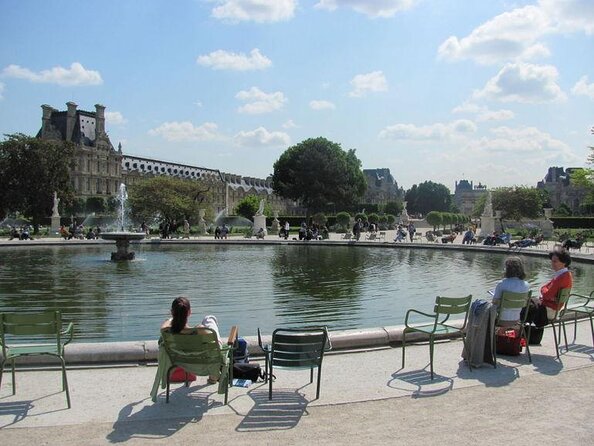
- You start at Palais-Royal area, not the Tuileries. Meet at Palais-Royal Metro exit 5, Place Collette, opposite Comédie-Française.
- Small group size, max 10. The format is designed so you can actually talk, not just listen.
- It is not a script. Chris Pollard prepares his material, answers questions, and adjusts depth based on what your group wants.
- You cover major Occupation landmarks by theme. The story runs across the city, from Gestapo sites to looted art at Jeu de Paume.
- Holocaust coverage is general on the main tour. If you want Shoah-focused depth or a different route, you need to request it as a private Shoah tour.
- The exact mix of stops can vary. The tour is built for quality, so timing and interests can shift what you spend time on.
Paris WW2 in one walk: why this tour works
This tour takes the Occupation out of the textbook and puts it back where it belonged, on the streets of central Paris. You move through the western core between the Louvre area and Place de la Concorde, where key institutions, commandeered spaces, and resistance activity all intersected during the German presence.
The best part is the way the guide ties behavior to pressure. Instead of treating history like a chain of dates, the tour treats it like cause and effect: German policies and Paris politics changed over time, and French choices followed those shifting realities. If you want the big picture and also crave specifics, this format hits both.
You should also know the style. This is not a museum route with a fixed, chronological checklist. The guide builds a story around people, including French collaborators, resistance networks, German military priorities, and the way antisemitism intensified over time. It is an educational walk that keeps returning to the human side of Occupation life.
More Paris bookings with the group to yourself
Meeting point and how the tour is paced
You meet at Palais-Royal Metro exit 5, Place Collette, on Rue Saint-Honoré, opposite the Comédie-Française. From there, you work your way through central Paris toward the monumental areas around Place de la Concorde.
Expect a small group, up to 8 to 10 people max in semi-private format, and a strict limit of 10 travelers. That size matters. In a crowd, a guide has to speak at you. Here, the guide can actually bounce questions back to the group, clarify details, and slow down when something genuinely needs explaining.
Timing is usually around 3 to 3.5 hours, though the broader booking window is 3 to 4 hours depending on how your route and questions land that day. Plan on outdoor time. One of the most repeated tips from past participants is to dress in layers and be ready to stand, because this is not the kind of tour where you keep popping into indoor stops every 10 minutes.
Palais-Royal area: the starting point for power and politics
The tour begins in the Palais-Royal area, a smart choice because it anchors you in the heart of Paris. Even before you hit the more famous wartime sites, you start getting orientation on what the Occupation meant in practice and what led Europe into war in the first place.
This opening sets your mental map. The guide frames the Germans and the French systems that interacted during those years, and then you build outward toward the places where authority was visible and felt. It is also where you learn how the same neighborhood could host very different roles at different times, from official control to covert opposition.
If you like being able to picture history, this is where it starts clicking. You begin to see that Paris was not a set of isolated attractions during the Occupation. It was one political system, spread across streets and buildings, with people constantly making choices under pressure.
The Louvre to Place de la Concorde corridor: one city, many fronts
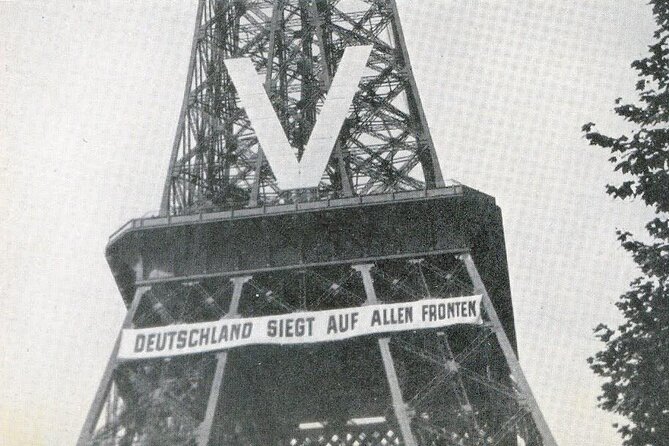
After the first orientation moment, the tour focuses on the corridor between the Louvre area and Place de la Concorde, including nearby streets. This is where the tour’s theme becomes clear: it is not only about what Germans did, but also about how French institutions, collaborationist movements, and resistance groups responded.
What makes this area especially valuable is concentration. You are walking between major landmarks, but the guide connects them through smaller details too, like a discreet doorway, a commandeered hotel, or a site tied to communications and surveillance. These connections are what turn central Paris into an Occupation map.
There is also a practical upside. You do not need to understand French history deeply in advance to follow along. The guide builds context as you go, so each stop adds another layer, rather than dumping everything at the beginning.
Rue de Rivoli and nearby streets: Gestapo, collaboration, resistance, art
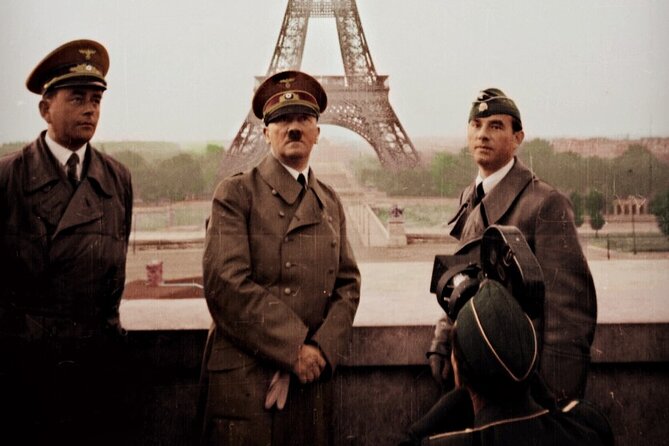
This section is the heart of the tour. Around Rue de Rivoli and the surrounding streets, you cover a dense concentration of significant Occupation sites and stories. The guide gives you a snapshot strong enough to matter, but flexible enough to match your interests.
Here are the kinds of stops you can expect in this zone:
- The secret HQ of the Gestapo in Paris. You get insight into how enforcement worked beyond public appearances.
- The PPF and its leader. The guide explains the largest collaborationist group in France and how collaboration functioned as a political force.
- The Louvre exterior. Even when you are not entering, you connect the symbol to what was happening around it.
- Hôtel Meurice, German Army HQ for Paris. Command centers help you understand how occupation policy filtered down to daily life.
- Place Vendôme and the Ritz connection. This is where the tour ties famous names to wartime realities, including Chanel’s presence and the way anti-Nazi meetings took shape inside German forces’ circles.
- Societe Maurice Duclos, the early Allied spy network. You also learn about radio and intelligence efforts, which adds a real sense of urgency to the resistance story.
- The Continental Hotel, under German army control. Again, the tour shows you how hotels became instruments of control.
- Rue Rouget de Lisle, where the organic French Resistance began in October 1940. This turns a street into a turning point.
- Jeu de Paume, Nazi storage and processing of looted art. You see how culture was exploited.
- Place de la Concorde, including visible and hidden scars from the Liberation. You end this whole part with evidence you can spot in the built environment.
Two practical notes here. First, because the tour is designed around quality rather than a rigid checklist, the exact sequence and how long you spend at each place can shift based on questions. Second, the guide repeatedly returns to why people acted as they did, including differences between German aims and French pressures.
Jeu de Paume and looted art: why this stop hits hard
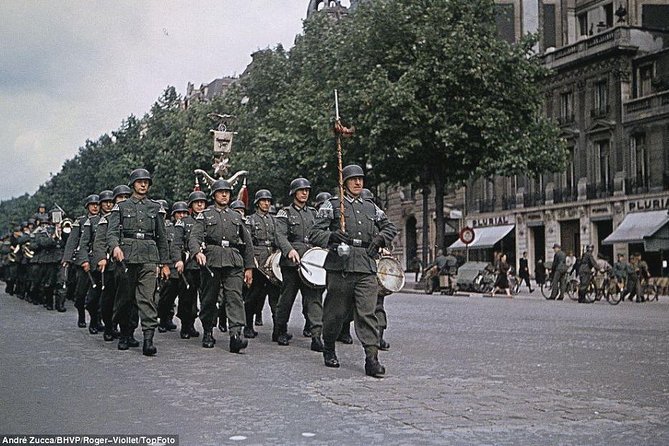
One stop that tends to stay with people is Jeu de Paume. The tour focuses on what Nazis did with stolen artworks during the Occupation, including storing, processing, and preparing them for shipment back to Germany.
This is not just a story about art theft. It is about control. When you understand that artworks were treated like movable assets, you start to see how the Occupation worked through institutions, networks, and logistics, not only through arrests and propaganda.
If you care about culture, restitution, or the ethics of heritage, this stop gives you a real framework. It also complements the political sides of the tour, because it shows how ideology and power used prestigious spaces and high society networks.
- Paris: Louvre Museum Timed-Entrance Ticket
★ 4.6 · 71,977 reviews - Disneyland® Paris 1-Day Ticket
★ 4.6 · 49,412 reviews - Paris: Versailles Palace and Gardens Full Access Ticket
★ 4.6 · 41,579 reviews - Paris: Evening River Cruise with Music
★ 4.4 · 22,721 reviews - Paris: Louvre Guided Tour with Reserved Access & Boat Cruise
★ 4.3 · 16,353 reviews
Place de la Concorde: the monuments and the wartime marks
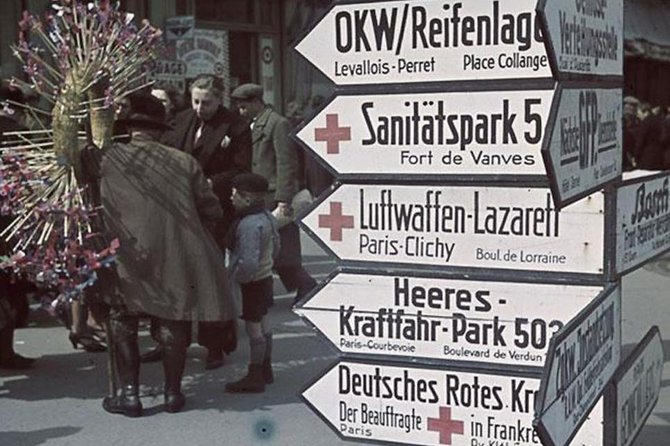
The tour usually ends around Place de la Concorde, often within that 3 to 3.5 hour window, though some days run a bit closer to the longer end if your group asks questions.
This square matters because it is layered. It began as Place Louis XV in the 18th century, long before WWII, but the Occupation and Liberation left their own physical evidence and moral weight.
You will cover key points such as:
- Louis XVI and Marie Antoinette facing the guillotine here
- wartime command and power structures, including the Twin Naval Ministry and Hôtel Crillon as German HQs
- the Grand Palais, described here as the largest freestanding building in Paris and the only one actually destroyed during the Occupation and Liberation
- bullet holes and hidden scars tied to fighting for liberation
- the Luxor obelisk, a famous sight that also acts like a geographic anchor in the narrative
This is the stop where you feel how a city preserves memory, sometimes in plain sight. It is also where the guide’s teaching style comes through. You do not just hear facts. You understand what you are looking at and why those marks matter.
Holocaust and the Marais question: what the general tour includes
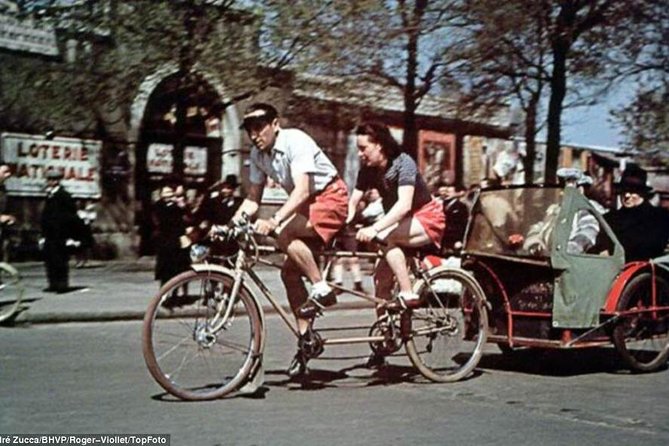
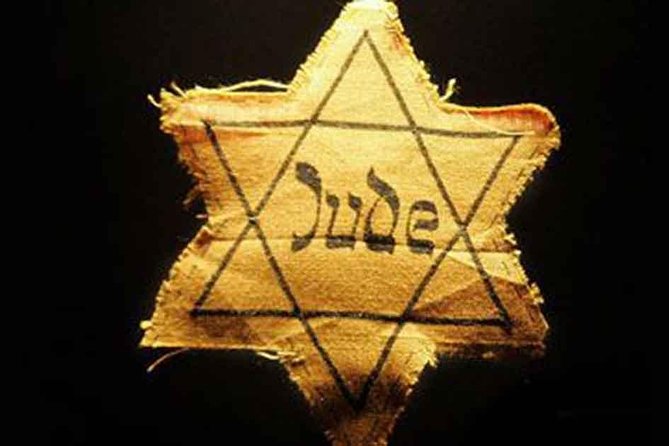
This is important to get right before you book. On the general Occupation tour, the guide does discuss antisemitism and the rise of the Vichy government, and the broader conditions for Jewish people in Paris during the early-to-mid period of the Occupation.
However, the tour is not built as a full Shoah-focused route. The guide’s approach is that a subject like the Holocaust deserves a dedicated tour to do it justice, and the main walk is limited by time because it also covers other themes like resistance and collaboration.
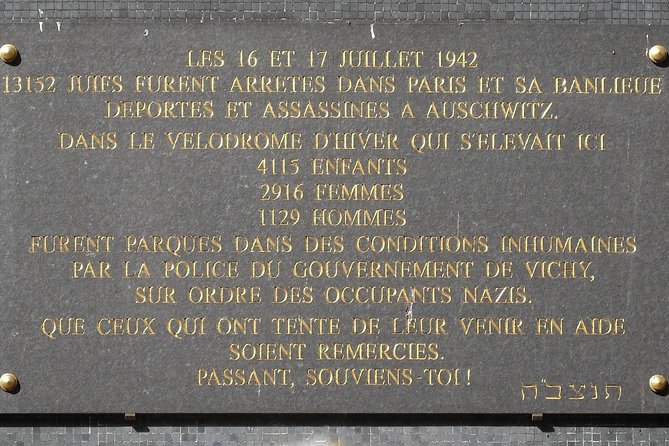
Past participants also note that the Shoah memorial stop or ending in the Marais is not guaranteed on the general format. If you want a route that includes Holocaust-specific stops or a Shoah-focused itinerary, you should request the appropriate private Shoah tour option.
Chris Pollard’s guide style: how the tour stays personal
A lot of tours promise personalization. This one tries to actually deliver it.
Chris Pollard is described as enthusiastic and very prepared, with a strong command of WWII occupation details in Paris. He also does not rely on reading a script. Instead, his material is organized around explanations and answers, and he adjusts depth based on what you want to learn.
In practice, that means you can ask questions and get real responses, not a quick detour and back to the sidewalk. Some reviews emphasize that he uses photos and visual aids where relevant and that he weaves multiple themes together, so the story feels connected rather than chopped into unrelated stops.
There is also a practical “value beyond the walk” element. After the tour, he sends book lists and resources tailored to what you showed interest in. For people planning more time in France, that extra layer helps you keep learning instead of treating the tour as a one-off.
Price and value for money in central Paris
At $108.84 per person for roughly 3 to 4 hours, you are paying for a specialized walking experience with a high instructor-to-participant ratio, capped at 10 travelers. The value comes from three areas.
First, the route is built around significant sites that would be hard to connect on your own without a guide. Second, the small-group format means you get to ask questions, and the guide can slow down when the topic deserves it. Third, the tour is structured as education, not a rushed checklist. Even when the itinerary shifts slightly, the focus stays on clarity and meaning.
If you compare this to typical large-city tours that cram in dozens of stops, this feels like better time. You trade breadth for understanding, and you leave with specific names and addresses you can look up later.
Practical tips so you enjoy the walk
Here’s how to make this tour easier on your body and your schedule:
- Dress for outdoor time. One of the most consistent tips is to bring layers, especially on cold or windy days.
- Bring water. The tour is outdoors, and you may want to buy something nearby if the group pauses for a break.
- Expect standing. Some participants noted standing for long stretches, so choose comfortable shoes.
- Use your questions strategically. If you care most about resistance, art theft, collaboration, or how antisemitism escalated, mention it. The guide can tailor the depth.
- Know the distance range. Reviews suggest around 2 miles over about 4 hours, depending on pacing.
Also, keep in mind the weather dependency. Since the tour is heavily outdoor-based, a weather-related cancellation can happen, with an alternate date or a full refund offered.
Who this tour is best for
This is a strong match if you want:
- a focused, small-group Occupation walk across central Paris
- names and places tied together in a coherent story
- time to ask questions and get real answers from Chris Pollard
- a guide who connects German occupation policy to what French people faced day-to-day
It might be less ideal if you want a casual highlights tour with lots of quick photo stops, or if you need heavy indoor seating and frequent breaks.
Should you book Paris WW2 the German Occupation tour?
Book it if you want a small-group, street-level look at the German Occupation that explains why people acted the way they did. The combination of tight group size, the guide’s preparation, and the focus on connections across the city gives you more understanding than a standard sightseeing loop.
I would especially book if Jeu de Paume and the Resistance-collaboration-art intelligence themes interest you. Just make sure you know what you are getting on the Holocaust coverage, and if you want Shoah-specific depth, choose the private Shoah option.
If you want history on your feet, with time for questions and a real sense of place, this is a solid use of a half day in Paris.
FAQ
Where do I meet for this tour?
You meet at Palais-Royal Metro exit 5, Place Collette, on Rue Saint-Honoré, opposite the Comédie-Française.
How long does the tour last?
It usually runs about 3 to 3.5 hours, with the overall booking window listed as approximately 3 to 4 hours.
How large is the group?
This is a small-group experience with a maximum of 10 travelers, and semi-private bookings are limited to 8 to 10 people.
What does the tour cover around Rue de Rivoli?
Around Rue de Rivoli and nearby streets, the tour focuses on major Occupation-linked sites, including Gestapo activity, collaborationist networks, German-controlled hotels, Rue Rouget de Lisle, Jeu de Paume, and key areas around Place de la Concorde.
Does the general tour include the Holocaust memorial or the Marais?
The general tour discusses antisemitism and the conditions for Jewish people during the Occupation, but it does not include Holocaust-specific depth as a dedicated Shoah tour. Stops like the Shoah memorial or ending in the Marais are only expected if specifically requested as part of a private Shoah tour.
Is there a minimum number of people needed to run the tour?
Yes. The tour requires a minimum of 4 people to run.
With the Group to Yourself in Paris
- Paris: Private Photoshoot at the Eiffel Tower
★ 4.7 · 2,636 reviews - Top Private Cruises in Paris with French Champagne and surprises
★ 5.0 · 1,553 reviews - Private Paris Airport Arrival Transfer – CDG & ORLY Airports
★ 4.5 · 1,119 reviews - Paris Private Arrival Transfer from Charles de Gaulle (CDG) or Orly (ORY)
★ 4.0 · 1,084 reviews - Private Montmartre Food Tour with Wine, Cheese & Pastries
★ 5.0 · 1,027 reviews
Everything Else Filed Under Paris
- Paris: Louvre Guided Tour with Reserved Access & Boat Cruise
★ 4.3 · 16,353 reviews - Paris: Big Bus Hop-On Hop-Off Tour with Optional Cruise
★ 4.4 · 13,279 reviews - Louvre Museum Masterpieces Guided Tour with Access
★ 4.5 · 12,023 reviews - Versailles: Skip-the-Line Tour of Palace with Gardens Access
★ 4.7 · 9,778 reviews - Mona Lisa & Louvre Masterpieces Tour with Reserved Access
★ 4.6 · 6,812 reviews
The Whole Paris Shelf
- Paris: Louvre Museum Timed-Entrance Ticket
★ 4.6 · 71,977 reviews - Disneyland® Paris 1-Day Ticket
★ 4.6 · 49,412 reviews - Paris: Versailles Palace and Gardens Full Access Ticket
★ 4.6 · 41,579 reviews - Paris: Evening River Cruise with Music
★ 4.4 · 22,721 reviews - Paris: Eiffel Tower Entry Ticket with Optional Summit Access
★ 4.4 · 20,035 reviews
The rest of the Paris write-ups
- Montmartre: Guided Tour for Kids and Families★ 4.9 · 57 reviews
- From Paris: Versailles Palace and Gardens Guided Day Trip★ 4.5 · 57 reviews
- Versailles Palace and Garden Tour with Paris Private Transfers★ 5.0 · 58 reviews
- Louvre Evening Escape – Avoid The Crowds! Semi-Private 6ppl Max★ 5.0 · 58 reviews
- Summit Eiffel Tower Audio Guide Tour with Unlimited Time Access★ 4.5 · 58 reviews
- Private Half Day Historic Tour★ 5.0 · 58 reviews
Private, in full.
 ★ 4.7Paris: Private Photoshoot at the Eiffel TowerFrom $412,636 reviews
 ★ 5.0Top Private Cruises in Paris with French Champagne and surprisesFrom $4821,553 reviews
 ★ 4.5Private Paris Airport Arrival Transfer – CDG & ORLY AirportsFrom $571,119 reviews
 ★ 4.0Paris Private Arrival Transfer from Charles de Gaulle (CDG) or Orly (ORY)From $541,084 reviews
 ★ 5.0Private Montmartre Food Tour with Wine, Cheese & PastriesFrom $3021,027 reviews
 ★ 4.0Louvre Museum Timed Entry Ticket – Optional Private GuideFrom $48940 reviews
 ★ 4.0Paris Private Louvre Museum, Must See, 1H30 Tour.914 reviews
 ★ 5.0The Musée d’Orsay Guided Tour Orsay Museum Semi-Private 6ppl MaxFrom $144904 reviews