
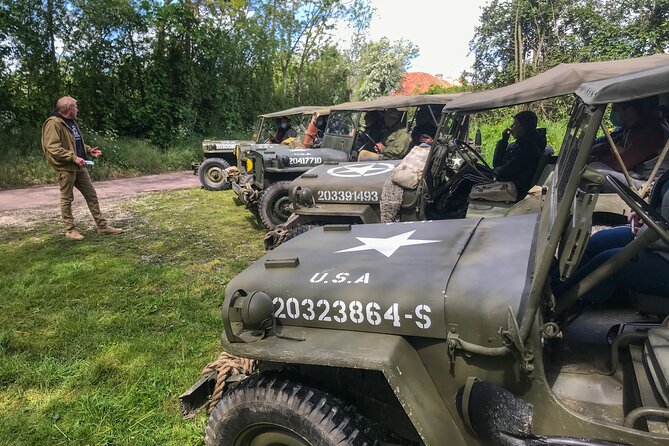
Reviewed · D-DAY LANDING BEACHES TOURS
Private Guided Tour in WW2 Jeep of the Landing Beaches
A WWII jeep in Normandy makes history feel close. You ride between real paratrooper landing areas and finish at Utah Beach, with a guide who ties the places into the story of June 6, 1944. The route is built for short stops, quick context, and then real looking.
What I like most is the private setup and the chance to get direct explanations while you’re rolling through the countryside. I also like that the itinerary is practical and focused on airborne operations first, then connects that to the beach landings at Utah Beach. You can tell this is designed for people who want more than drive-by photos.
One thing to consider: the total time is about 2 hours, so each stop is brief. Also, the coast can be windy, so plan for cool air even when the sun is out.
In This Review
- Key highlights worth your time
- WWII jeep route from Sainte-Mère-Eglise to Utah Beach
- Price per group: when $302.34 makes sense
- What you do in about 2 hours (and why the timing works)
- Stop 1: Sainte-Mère-Eglise and the parachutist John Steele
- Stop 2: Turqueville in the 101st Airborne area
- Stop 3: Beuzeville au Plain and the Thomas Meehan crash site
- Stop 4: Saint-Germain-de-Varreville and Franck Lilyman’s landing
- Stop 5: Utah Beach and Atlantic Wall remains
- What the guide style adds (Thomas, Flavie, Arthur, and maps)
- Practical tips so you enjoy the jeep ride more
- Meeting point and how to plan around it
- Should you book this WWII jeep tour?
- FAQ
- Is this a private tour?
- How many people can join the tour?
- How long does the tour last?
- What language is the tour offered in?
- Where does the tour start and end?
- Is lunch included?
- Are there admission tickets for the stops?
- What stops are included?
- Is a mobile ticket used?
- What weather should I plan for?
Key highlights worth your time
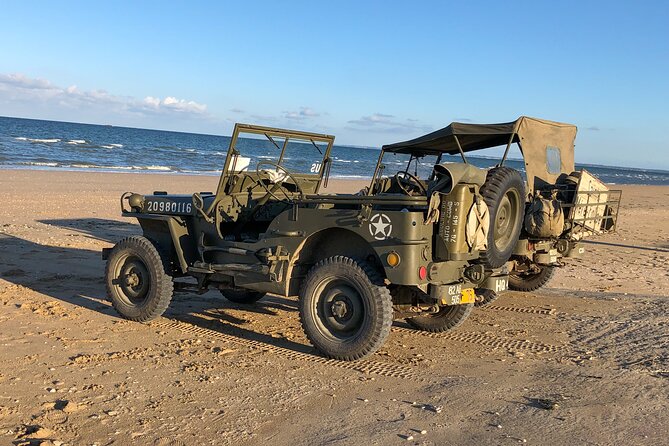
- WW2-style jeep ride on backroads, not just a quick bus shuffle
- Airborne first, beach second route from Sainte-Mère-Eglise to Utah Beach
- Free stops with short, meaningful stops along the way
- English private guidance with maps and site details (often with photos)
- Small group limit for a calmer, more question-friendly experience
- Wind and weather ready tip to keep the ride comfortable
WWII jeep route from Sainte-Mère-Eglise to Utah Beach
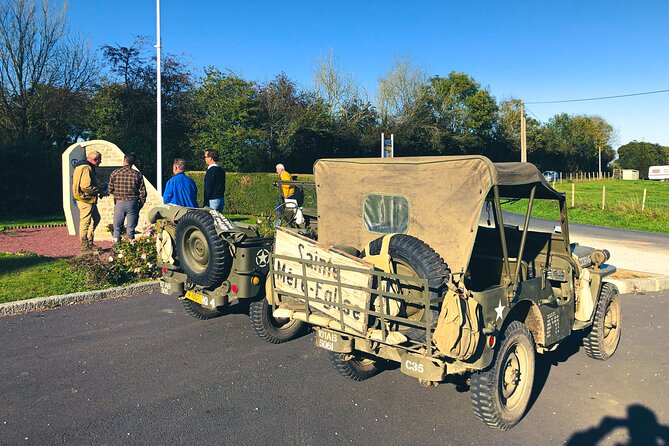
If you care about D-Day beyond the big headlines, this tour is a smart way to get your bearings fast. You start in Sainte-Mère-Eglise, then work your way through the airborne drop area villages, and end at Utah Beach with a look at Atlantic Wall remains.
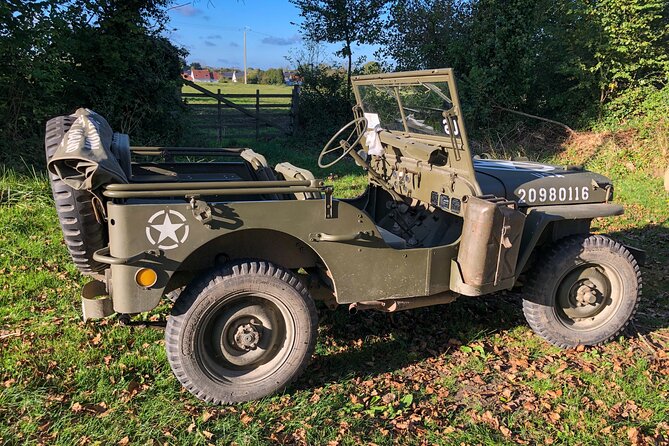
The jeep part matters. A modern car can get you there, but a WWII jeep makes the setting feel different, because you’re sitting lower and moving at the pace of the lanes. It also gives you a fun, memorable way to see places you might otherwise just miss or drive past.
The tour is offered in English and runs as a private experience, with a mobile ticket. You’re not trying to keep up with a crowd, which is a big deal at historic sites where you usually want to pause and look longer than planned.
Still comparing options? These are other tours in Mont St Michel we have reviewed.
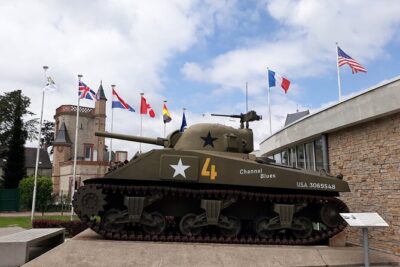

Price per group: when $302.34 makes sense
The price is $302.34 per group (up to 3). That sounds steep until you do the simple math.
- If it’s just you or two people, it’s still paying for private transport and guided interpretation.
- If you go as a full group of three, the cost per person becomes much easier to stomach.
The value also comes from the format. You get private transportation included, and the stops are built around short, guided moments rather than lots of waiting. The tour does not include lunch, so budget for a snack or plan to eat before or after.
What you do in about 2 hours (and why the timing works)
This is an about 2-hour experience with five main stops. Each stop is timed to keep you moving while still giving you enough context to understand what you’re seeing.
Here’s the practical rhythm:
- You get a site location, what happened there, and why it matters.
- You look around for a bit, then you move on before you lose the thread of the story.
- The final stop at Utah Beach ties the airborne side to the beach assault area.
That pacing is useful when you’re on a Normandy schedule with multiple stops. You don’t want to spend the whole day doing just one pocket of history, especially when you’re trying to connect the dots across the D-Day story.
Stop 1: Sainte-Mère-Eglise and the parachutist John Steele
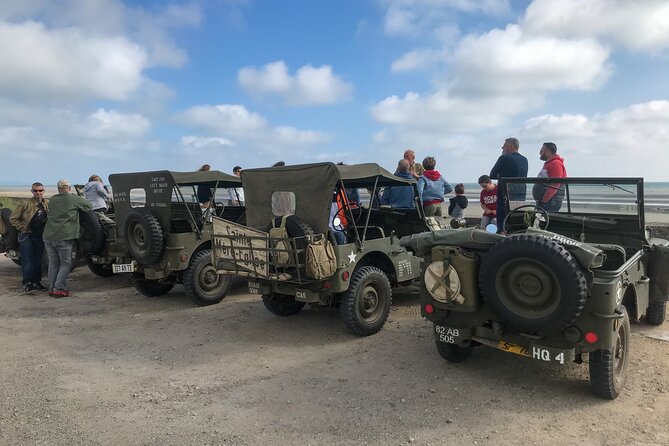
You begin in Sainte-Mère-Eglise, a village that has become shorthand for the D-Day airborne experience. This stop focuses on Holy Mother Church, plus the famous parachutist John Steele.
Holy Mother Church is known for that long-day movie connection, but the point here is not the film. It’s the location itself and the role of the area during the jump. You’ll get a quick orientation, and then you can look at the church and surroundings with a much clearer sense of what people were facing that night and morning.
This is also a good stop for photos because Sainte-Mère-Eglise is easy to understand at a glance, and the guide can point out what you should pay attention to before you move on to the quieter roads.
Stop 2: Turqueville in the 101st Airborne area
Next you head toward Turqueville, described as being in the airborne areas associated with the 101st. This stop is short, but it’s the kind of stop that helps the story stop feeling abstract.
Instead of only hearing about big operations, you see how the jump area connected to real villages and real farmland. That matters, because airborne troops didn’t land in a single perfect point. They scattered, regrouped, and tried to operate in difficult conditions.
If you like your history tied to geography, this stop is where it starts to click. You’re building a mental map while the guide keeps the story organized.
Stop 3: Beuzeville au Plain and the Thomas Meehan crash site
Beuzeville au Plain is where the tour shifts from general airborne territory to a specific crash site tied to Thomas Meehan’s plane. This stop is about 20 minutes, giving you time to absorb the meaning of the location without rushing.
What makes this stop valuable is the specificity. When a guide links a named individual and a known event to the ground in front of you, the history becomes less like a timeline and more like real people and real outcomes.
This is also a place where you’ll benefit from listening carefully to how the guide explains what happened and why that point is remembered. Don’t worry about having background knowledge. The tour is set up to explain the connections as you go.
Stop 4: Saint-Germain-de-Varreville and Franck Lilyman’s landing
Saint-Germain-de-Varreville is the village where the first American paratrooper, Franck Lilyman, landed. It’s another short stop, but it’s also a neat waypoint because it gives you a clear “before and after” feeling in the story.
This is the kind of location that turns the airborne story from a unit-level concept into a human one. You’re learning that the invasion wasn’t one big moment. It was many small landings, many moving pieces, and then the struggle to connect and carry out objectives.
The practical value here is that you’ll start to recognize the types of terrain and village layouts the airborne troops would have been dealing with. Even if you’re not a military history nerd, that perspective makes the final beach stop land harder.
Stop 5: Utah Beach and Atlantic Wall remains
Utah Beach is your finish line, and it’s where the tour earns its name as more than just a ride through dunes. You’ll visit the landing beach area tied to American soldiers on June 6, 1944.
The guide will also point out remains of the Atlantic Wall. That part is important because it connects the story of D-Day to the defensive system the Allies had to confront. Seeing remnants in place gives the history weight. You can look at the shape of the terrain and understand why these fortifications mattered.
Also, if you’re sensitive to wind, plan for it. One helpful tip from real tour experiences: bring a windbreaker and warmer layers. Coastal weather can be changeable, and you’ll be outside long enough to feel it.
What the guide style adds (Thomas, Flavie, Arthur, and maps)
The tour’s real strength is how the guide teaches the story while you’re moving. Names that show up in past experiences include Thomas, Flavie, and Arthur. Different guides have different presentation styles, but there are common themes you can expect.
For example, you may use maps and photos to recreate strategy and tactics while you drive. That helps a lot if you’re new to D-Day, because you can connect what you’re hearing to where it likely happened.
If you happen to get Thomas, you might get detailed explanations supported by maps and photos, plus stories gathered from research and conversations with veterans over the years. If you get Flavie, you might see the use of photos and visual materials to explain what you’re seeing on the ground. If you get Arthur, you might hear clear, structured context that helps the locations make sense fast.
None of this requires prior knowledge. The best moment is when the guide points out why a certain patch of land matters, then you look and realize you would not have guessed it alone.
Practical tips so you enjoy the jeep ride more
Here are a few practical moves that make this kind of tour easier and more comfortable.
- Dress for wind, even in good weather. Keep a windbreaker handy for the coast.
- Wear comfortable shoes. You’ll have short pauses to look and step around near historic points.
- Bring a light layer. Normandy can feel cooler near the beach.
- Plan food around the tour. Lunch is not included, so eat before or after.
- Have your questions ready. With a max of 3 travelers, you can ask follow-ups without feeling rushed.
Also, since this ends back at the meeting point, you don’t have to plan a complicated end-of-tour transfer. You’re simply done where you started.
Meeting point and how to plan around it
Your meeting point is Parking Rue Eisenhower, at 14 Rue Eisenhower, 50480 Sainte-Mère-Église, France. The tour ends back at the same meeting point.
It’s near public transportation, which can be helpful if you’re arriving without a car. Starting and ending at the same spot also makes it easier to fold into a day that includes other Normandy stops.
Because the tour is offered in English and uses a mobile ticket, you’ll want to have your phone ready and your confirmation message accessible within your travel window.
Should you book this WWII jeep tour?
Book it if:
- You want a private guided way to connect airborne landings to what happens at Utah Beach.
- You like history that is tied to specific named places, not just general explanations.
- You enjoy hands-on travel, meaning you value the feeling of moving through the countryside in a period-style vehicle.
Skip it, or consider another option if:
- You expect long stays at each stop. This is a fast, focused 2-hour route.
- You prefer beach time as the main event and don’t care as much about the airborne side of the story.
My bottom line: this is a strong choice for first-time Normandy visitors who want context and a memorable format. The WWII jeep ride adds fun, but the real win is the way the guide helps you understand why each village stop matters, and how that leads naturally to Utah Beach and Atlantic Wall remains.
FAQ
Is this a private tour?
Yes. It is listed as a private guided tour with private transportation included.
How many people can join the tour?
The maximum group size is 3 travelers.
How long does the tour last?
It lasts about 2 hours.
What language is the tour offered in?
The tour is offered in English.
Where does the tour start and end?
It starts at Parking Rue Eisenhower, 14 Rue Eisenhower, 50480 Sainte-Mère-Église, France, and ends back at the same meeting point.
Is lunch included?
No, lunch is not included.
Are there admission tickets for the stops?
Admission tickets are listed as free for each of the stops included in the route.
What stops are included?
The tour visits Sainte-Mère-Eglise, Turqueville, Beuzeville, Saint-Germain-de-Varreville, and Utah Beach.
Is a mobile ticket used?
Yes. The tour uses a mobile ticket.
What weather should I plan for?
Bring a windbreaker and warm clothing, since the area can get quite windy. Service animals are allowed.
Everything Else Filed Under Mont St Michel
- 2-Hour Guided Walking tour of the Mont Saint Michel
★ 4.0 · 203 reviews
The Whole Mont St Michel Shelf
- Airborne Museum Admission Ticket
★ 5.0 · 424 reviews - 2-Hour Guided Walking tour of the Mont Saint Michel
★ 4.0 · 203 reviews - Mont-Saint-Michel bay walk
★ 4.5 · 182 reviews - Normandy Victory Museum admission ticket
★ 5.0 · 58 reviews
The rest of the Mont St Michel write-ups
- Private Guided Tour in WW2 Jeep of the Landing Beaches★ 5.0 · 110 reviews
- Mont-Saint-Michel bay walk★ 4.5 · 182 reviews
- 2-Hour Guided Walking tour of the Mont Saint Michel★ 4.0 · 203 reviews
- Airborne Museum Admission Ticket★ 5.0 · 424 reviews