
Reviewed · DORDOGNE & SARLAT TOURS
Sarlat la Canéda: The Dordogne valley by canoe
The Dordogne by canoe is pure freedom. This descent is one of the best ways to see the valley up close, with slow paddling, castles on cliffs, and chances to stop for swimming and picnics. I like how the setup keeps things calm and simple, even if you are new to paddling, and one thing to watch is that big boats can make the water a bit choppy near certain bridges.
What I like most is the mix of river time and real scenery. You get a relaxed downstream glide past limestone cliffs, caves, villages, and châteaux, with wildlife sightings like kingfishers and birds of prey reported by paddlers. The other big plus is the self-paced rhythm, you can dock for lunch or take a break whenever the river beach calls.
The main drawback is timing and effort. Short routes feel effortless, but longer options can turn into a longer paddle session, and there are stretches with very little current where you will want to work a bit. If you go in hot weather, plan for sun, because some stretches have limited shade.
In This Review
- Key things to know before you go
- Why paddling the Dordogne feels different than driving
- Picking your route: 2 hours of calm or 6 hours of castles
- What the day feels like: paddling, swims, and river pauses
- Castles, cliffs, caves, and one movie-style river bend
- Canoes Loisirs setup: kit, maps, transport, and real organization
- Where you can stop: lunch breaks and easy docking
- What to pack for comfort in real Dordogne weather
- Price and value: is $29 per person a good deal?
- Who this suits best, and who should rethink
- Should you book the Dordogne canoe descent?
- FAQ
- Where does the canoe trip start and end?
- How long is the Dordogne canoe ride?
- Is this experience offered in English?
- What is included with the canoe rental?
- Do I need to be an experienced paddler?
- Can I swim during the trip?
- Are service animals allowed?
- What is the cancellation policy?
- Can the trip be canceled due to river conditions?
Key things to know before you go
- Start at Vitrac, ride downstream, and return by shuttle so you can focus on the river, not on logistics
- Self-paced canoe time with stops for picnics, snacks, and swims when you spot a good landing
- Routes vary from about 2 hours to around 6 hours, with castle-focused options like 4-castle and 6-castles
- Wildlife spotting is a highlight, including birds like kingfishers, buzzards, and kites
- English is available, and the staff is consistently described as welcoming and organized
- Watch for choppy water near bridges with larger boats, and stay out of their path
Why paddling the Dordogne feels different than driving
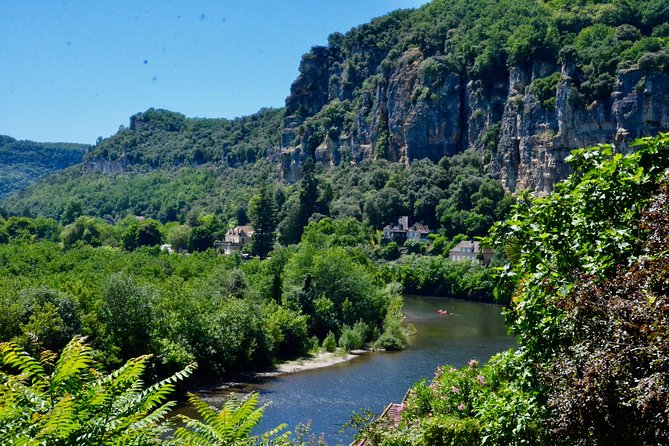
If you have seen the Dordogne Valley from the road, you have seen only part of the story. From the canoe, you get a slower pace and a better angle on the cliffs, the stone villages, and the castles perched above the waterline. It is also an easy way to feel connected to the landscape without planning a full day of walking.
I especially like that this trip is built around river time, not a packed itinerary. You are not racing from stop to stop, you are floating and deciding when to pause. That matters in the Dordogne, where the best moments often happen when you stop and look, rather than when you rush to the next viewpoint.
The ecological angle also clicks on the water. Canoes are quiet, and you tend to hear and notice more, birds, insects, and the river’s own soundtrack. Even if you are not a hardcore outdoors person, it is the kind of calm activity that makes the valley feel big in a good way.
One more thing I appreciate is how beginner-friendly it feels. Most people can participate, and the activity is described as peaceful and surprisingly easy for new paddlers. You still should expect a learning curve for steering at first, but it is usually manageable once you get your rhythm.
More of the Dordogne
Picking your route: 2 hours of calm or 6 hours of castles
The big decision is how long you want to be on the water. The descent is offered in options that run from about 2 to 6 hours, and the longer routes are often framed around how many châteaux you will see.
A shorter ride is a great fit if you want Dordogne highlights without committing to a full day. One commonly mentioned option is a 2.5-hour paddle focused on five châteaux, with a downstream route that typically runs from the Vitrac riverside toward just past Beynac, then back by shuttle. This style is good when you also plan to explore Sarlat la Canéda, nearby villages, or viewpoints on foot.
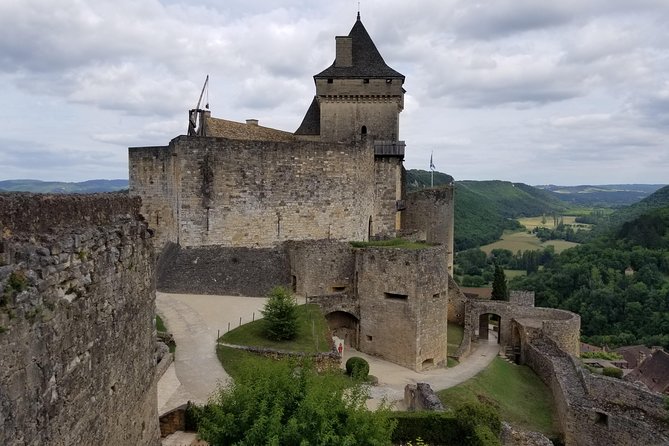
If you want more time and more architecture, choose the longer castle routes. Reviews mention a 4-castle option that can take roughly 5 to 6 hours of paddling time to complete the full length, and a longer 6-castles trip around 6 hours. On these longer days, you get more scenery and more chances to settle into a full-on river day, but you also need to be realistic about effort, especially where the current is minimal.
Here is the practical takeaway: if your goal is relaxation, lean short. If your goal is a full day with fewer breaks from the river, pick longer. Either way, the key is matching the paddle duration to your energy and your heat tolerance.
What the day feels like: paddling, swims, and river pauses
The experience is built around slow, downstream paddling. The Dordogne here moves gently, so the canoe glides more than it churns. That makes it a strong choice for couples, families, and anyone who wants movement without intense exertion.
Most people describe the journey as peaceful and scenic, and that peace is real. You pass limestone cliffs and stretches of forest, and the river feels like it is doing its own thing while you drift alongside. You also get moments where you can easily dock to stretch, snack, or swim, especially on hot days. One review notes warm, clean water and a fun ride, which is exactly how it tends to feel in summer.
Wildlife can show up without you searching. I would not count on seeing specific birds every time, but reports include kingfishers, buzzards, kites, and dragonflies. If you keep an eye on the banks and slow down during stops, you will get more than just views of stone and water.
The best part of the pacing is control. You decide when to go, when to rest, and when to enjoy the river beach vibe. Several comments praise the freedom to set your own speed, explore a small village during a stop, and return when you are ready rather than when a group schedule forces you out.
Castles, cliffs, caves, and one movie-style river bend
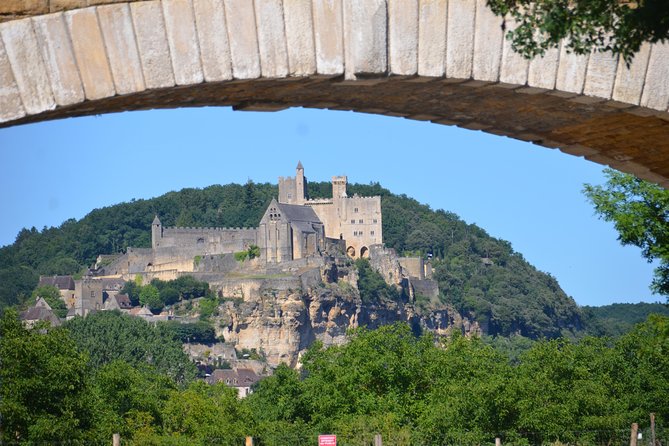
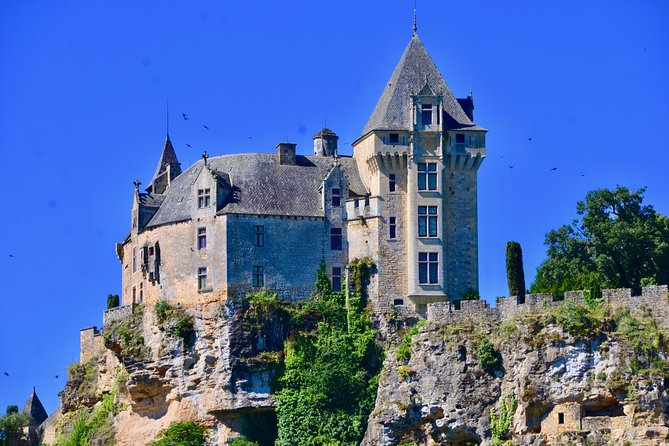
The signature appeal of canoeing this part of the Dordogne is the view of châteaux and cliffside architecture. You get the castles from below, which changes their scale and drama. Instead of seeing them as distant silhouettes from a lookout, you watch them come into view along the river edge.
A big name on this route is Beynac. One route description highlights paddling downstream to just past Beynac, which is the kind of anchor landmark that helps you feel oriented even if you are not studying a map.
You also pass under ancient bridges and alongside limestone cliffs. Reviews mention grottoes and cliffs, plus prehistoric ledges visible from the water. That is a neat shift from typical Dordogne sightseeing, because you get to see how human history and natural rock formations relate to the river.
There is also a fun cultural touch. One review references a bend in the river where a scene from the movie Ever After was filmed. You will not get a narration on every detail, but if you recognize the shape of the river at that point, it adds a special kind of delight.
Now, the balanced note: more water traffic can affect comfort. One review points out that larger boats travel up and down the river between a couple of bridges, creating choppy water. This is not a dealbreaker, and it can even feel exciting, but you should steer with care and get out of the way when you see bigger boats approaching.
Canoes Loisirs setup: kit, maps, transport, and real organization
The operator matters on a canoe trip, and here the service descriptions are consistently strong. Canoes Loisirs provides the canoe and the gear you need, plus safety equipment and a map, and they run the day with clear instructions. That combination reduces stress, especially if it is your first time on the Dordogne by water.
Transport is also a big part of the value. The trip is downstream, so you need a return system. You can expect a shuttle or bus back to the starting area, with frequent returns mentioned in route descriptions. Some paddlers also used a pickup service from Sarlat to get to the canoe point, which can make the day feel smoother and less time-consuming.
One practical detail I appreciate from the reviews is timing help. People arrive early and the team still finds a way to get you to the start point without leaving you hanging. That small bit of flexibility can make the difference between a relaxed start and a slow wait.
Staff attitude is another strong theme. Descriptions include welcoming, professional, and humorous, plus good English from the team. For visitors who do not speak much French, it is reassuring when staff can explain the basics clearly, show you how to handle the canoe, and help you feel confident right away.
There is also a real-life lesson about weather and water conditions. One review mentions a cancellation due to high water levels, which is a reminder that safety overrides plans. If you are traveling in shoulder seasons or after storms, keep your expectations flexible, and consider building a little buffer into your schedule.
Finally, there is a rare but important story about care with belongings. In one case, a canoe became stranded near the 4th bridge, a rescue followed, and a waterproof bucket stayed with the canoe. The next day, personal items were delivered to a hotel. It is not the normal way the day goes, but it signals that they take problems seriously and follow through.
Where you can stop: lunch breaks and easy docking
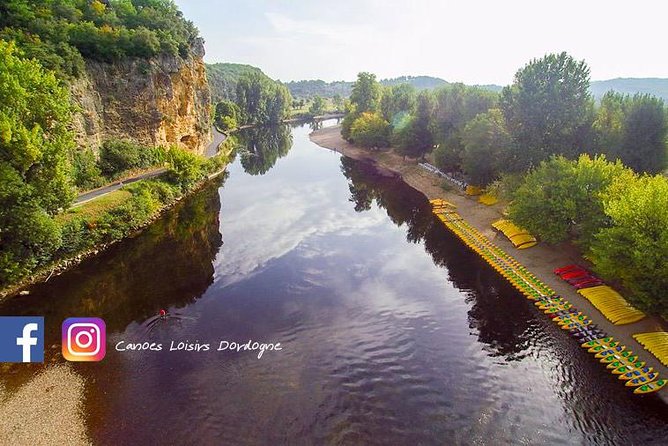
One reason canoe trips feel so good in the Dordogne is the built-in chance to change the rhythm. You can stop along the route for snacks or lunch, then hop back in when you are ready.
Some reviews mention docking easily for lunch, even during a self-paced route. Others describe grabbing food like burgers and fries and pairing it with a bottle of wine at a stop area. That is very Dordogne in spirit, simple and direct, with the river doing the heavy lifting.
A practical drawback to plan around is how you use your stops. If you rush through because you have dinner plans, you might miss the best part of the day, exploring a village or taking extra time on a river beach. If you can, give yourself enough cushion so you do not feel forced to paddle just to meet a schedule.
Also, remember that longer routes mean longer time away from your car. If you are traveling with a phone, snacks, and a light bag, bring what you need for a few hours of river time. Since you will not want to keep rummaging, pack smart and keep the essentials where you can reach them.
- Sturgeon Fish-Farm Visit and Caviar Discovery Tasting in Neuvic
★ 4.5 · 81 reviews - The greedy Rando quad of Nico
★ 5.0 · 45 reviews - Visit of the Troglodytic Village of Madeleine
★ 4.5 · 44 reviews - Canoe Butterfly
★ 4.5 · 42 reviews - The greedy Rando Trotter of Theo
★ 5.0 · 27 reviews
What to pack for comfort in real Dordogne weather
Sun and heat are the big ones. Reviews repeatedly mention bringing sunscreen, sunglasses, and a hat. Depending on the time of day, there may not be much shade, so a hat is not optional if you burn easily.
Water shoes are helpful. One review says they were helpful but not absolutely essential, and another suggests having some kind of sandal or shoe that works around the water. You will likely step on uneven rocks or pebbled land when you dock.
Sunglasses matter more than you might think. The river surface glare can get intense, and clear vision helps you steer smoothly and avoid surprises near the banks.
If it is a warm day, pack for the possibility of swimming. A lot of people jump in when the water and temperature line up. Even if you do not plan to swim, having a dry bag or at least a way to protect a phone and cash can be smart, especially for longer rides.
And for the first hour, keep it simple. You will probably adjust how you sit and how you paddle. If you overcomplicate things with lots of gear changes mid-ride, you will lose the easy flow that makes this trip work.
Price and value: is $29 per person a good deal?
At about $29.04 per person, this is priced like a value day, not a premium guided tour. The question is what you get in return for that money, and the answer is a lot of time on the water with key support.
You are not paying just for a canoe. You are also paying for the equipment, safety gear, and map. You are paying for the downstream design and the shuttle or bus return system that brings you back after your paddle. In some cases, pickup from Sarlat is offered, which adds even more convenience.
For what it costs, the real value is flexibility. Instead of being trapped in a rigid schedule, you glide at your own pace. You get stops for picnics, snacks, and swimming, plus the freedom to enjoy castles and cliffs without the strain of constant walking.
It helps that the river is gentle for many riders, so the outing works for a wide range of ages and comfort levels. Reviews also highlight punctuality, cleanliness of equipment, and professional staff, which adds to the sense that you are paying for a system that runs smoothly, not just a rental.
The only time price feels less like a deal is if you pick the longest option and then decide to rush through stops due to later plans. If you want value, give the river the time it deserves.
Who this suits best, and who should rethink
This canoe descent is a strong match for you if you want an outdoor day that still feels easy. It is ideal for couples who want views and calm, families who need an activity that works for mixed ages, and friends who want something active but not intense.
If you like castles, this route is a practical way to see them without climbing stairs or doing a long day of walking. You get the architecture from a different angle, from river level, and it changes how the châteaux look.
It is also a good pick if you want a break from driving. You can spend the day floating while the valley slides by. Several reviews point to it as a highlight and a peaceful break, even when the weather is not perfect.
When should you rethink it? First, if you get cranky in hot sun, choose your departure time carefully and pack for sun protection. Second, if your biggest priority is a perfectly smooth ride, be aware of occasional choppiness near areas with larger boats. Third, if you are set on a fully low-effort day, shorter routes are smarter because longer options can include stretches that require more paddling when the current is minimal.
If you have a tight schedule, pick a 2 to 3 hour option and plan other sightseeing around it. If you want the river to be the main event, go longer and actually build your day around paddling, breaks, and a long lunch.
Should you book the Dordogne canoe descent?
I would book it if you want a classic Dordogne experience with real variety: castles, cliffs, caves, villages, plus the chance to swim and watch wildlife, all at a pace you control. The combination of self-pacing, helpful English-speaking staff, and easy transport back after your ride makes it feel like a smart plan, not a gamble.
It is also a good value play for a region that can get expensive if you only do day tours. For the money, you get hours on the river and a different kind of view that you cannot easily replicate from a car.
Book with confidence, and do yourself a favor by bringing sun protection, decent dock-friendly footwear, and an open mind about river conditions. If you do that, you will come away with the kind of Dordogne memory that feels quiet, scenic, and surprisingly full of story.
FAQ
Where does the canoe trip start and end?
The canoe descent leaves from the Vitrac riverside in the area of Domme, then you paddle downstream and return by shuttle or bus back to the canoe base area.
How long is the Dordogne canoe ride?
Durations are offered from about 2 to 6 hours, depending on the specific route option you choose.
Is this experience offered in English?
Yes. The tour is offered in English.
What is included with the canoe rental?
The company provides the canoe and necessary kit, including safety equipment and a map, plus the transport system for getting back after your paddle.
Do I need to be an experienced paddler?
No. Most people can participate, and the ride is described as easy enough for beginners, though you may feel a little nervous at first while you learn how to steer.
Can I swim during the trip?
Yes, swimming is part of the experience when conditions are right, and stops along the way let you get out for breaks.
Are service animals allowed?
Yes, service animals are allowed.
What is the cancellation policy?
You can cancel for a full refund if you do so up to 24 hours in advance of the experience start time.
Can the trip be canceled due to river conditions?
In at least one case, a trip was cancelled due to high water levels. This suggests safety and river conditions can affect whether the paddle runs.
The Whole Bergerac Shelf
- Dordogne Day Tour : Prehistory and The Art of the Caves from Sarlat
★ 4.5 · 105 reviews - Sturgeon Fish-Farm Visit and Caviar Discovery Tasting in Neuvic
★ 4.5 · 81 reviews - Dordogne Villages Half Day Tour from Sarlat
★ 4.5 · 63 reviews - Sarlat Gourmet Tour and Market Visit
★ 5.0 · 49 reviews - The greedy Rando quad of Nico
★ 5.0 · 45 reviews
Deeper Into the Dordogne
- Dordogne Day Tour : Prehistory and The Art of the Caves from Sarlat
★ 4.5 · 105 reviews - Dordogne Villages Half Day Tour from Sarlat
★ 4.5 · 63 reviews - Sarlat Gourmet Tour and Market Visit
★ 5.0 · 49 reviews
The rest of the Bergerac write-ups
- The greedy Rando Trotter of Theo★ 5.0 · 27 reviews
- Canoe Butterfly★ 4.5 · 42 reviews
- Visit of the Troglodytic Village of Madeleine★ 4.5 · 44 reviews
- Sarlat Gourmet Tour and Market Visit★ 5.0 · 49 reviews
- Dordogne Villages Half Day Tour from Sarlat★ 4.5 · 63 reviews
- Sturgeon Fish-Farm Visit and Caviar Discovery Tasting in Neuvic★ 4.5 · 81 reviews
Dordogne & Sarlat Tours, in full.
 ★ 4.5Lascaux IV: Full Replica Cave Experience TicketFrom $26334 reviews
 ★ 4.8From Vitrac: Dordogne River Canoe RentalFrom $34162 reviews
 ★ 4.6From Sarlat: Beynac & Domme Tour & Dordogne Boat RideFrom $129137 reviews
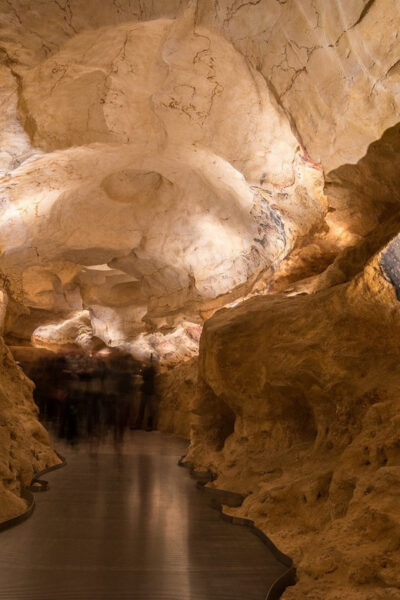 ★ 4.9From Sarlat-la-Canéda: Lascaux IV and Cave Art Full-Day TourFrom $265122 reviews
 ★ 4.5Dordogne Day Tour : Prehistory and The Art of the Caves from SarlatFrom $199105 reviews
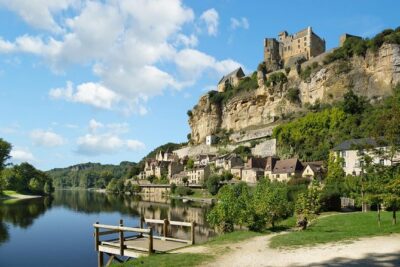 ★ 4.5Dordogne Villages Half Day Tour from SarlatFrom $9663 reviews
 ★ 4.6Sarlat Gourmet Tour & Market Visit with TastingsFrom $10057 reviews
 ★ 5.0Sarlat Gourmet Tour and Market VisitFrom $10249 reviews
Also on these France lists