
Reviewed · DORDOGNE & SARLAT TOURS
From Sarlat-la-Canéda: Lascaux IV and Cave Art Full-Day Tour
Prehistory in Dordogne hits fast, and it hits hard. I love how this day strings together Lascaux IV with real cave art and cliff-dwelling history, all with an English live guide like Lena or Ann calling out what you should notice. One watch-out: La Roque Saint-Christophe involves climbing stairs, so it is not a fit if you have mobility limits.
You also get the kind of pacing that makes a long day feel doable. The van rides keep things simple, you stop in the right order depending on Lascaux IV time slots, and the caves run on strict schedules, which is where having a guide saves you stress. You will still want warm layers, because cave temperatures run around 14°C inside.
In This Review
- Key highlights at a glance
- A small-group prehistory day out of Sarlat-la-Canéda
- Les Eyzies and the Cro-Magnon entry point that makes cave art click
- Rouffignac near Peyzac-le-Moustier: real cave art, real atmosphere
- Montignac free time before Lascaux IV: where lunch and reset actually help
- Lascaux IV: why the reproduction still feels astonishing
- La Roque Saint-Christophe: the cliffside shelters and a stair test
- Price and value: is $265 worth it?
- Getting the most out of it: timing, language, and comfort
- Should you book the Lascaux IV and cave art tour from Sarlat?
- FAQ
- How long is the Lascaux IV and cave art full-day tour?
- Where do we meet in Sarlat-la-Canéda?
- What is the July departure time?
- Is the tour available in August?
- Is the tour wheelchair accessible?
- Are there height or age limits for children?
- What should I bring for the caves?
- Are pets allowed?
- Is lunch included?
Key highlights at a glance
- Skip-the-line access for Lascaux IV, so you spend more time looking and less time waiting
- Les Eyzies National Prehistory Museum first, so the cave art lands with context
- Rouffignac cave art near Peyzac-le-Moustier, a different style than Lascaux IV
- A small group limited to 8, with a driver-guide and audio support in the van
- La Roque Saint-Christophe cliff homes, with guided explanation in a dramatic setting
A small-group prehistory day out of Sarlat-la-Canéda
This is the kind of Dordogne day trip that works best when you want the big names without playing logistics Tetris. You meet at the Place Pasteur bus stop in Sarlat-la-Canéda and then head out by van. The group stays small, capped at 8 participants, which matters when you are visiting places that control entry times.
What I like most is that you are not racing from one ticket counter to another. You get a sequence built around how these sites actually operate. And because the tour includes an English live guide, you are not left staring at signs while guessing what you are looking at.
There is also a practical comfort angle. The van is set up for hearing the guide clearly, and people note the microphone volume helps even from seats farther back. Still, if you care a lot about where you sit, keep in mind there is usually no seat switching during the day.
Finally, the day runs rain or shine, so plan for damp weather on the road and slick steps near cliff sites. Comfortable walking shoes are not optional.
More of the Dordogne
Les Eyzies and the Cro-Magnon entry point that makes cave art click
You start with Les Eyzies de Tayac-Sireuil, the prehistory center of gravity in the region. The guide brings you into the story before you hit the caves, starting with the area’s landmark discovery: the first five Cro-Magnon skeletons found there in 1868. That matters, because it reframes the cave drawings as human communication, not museum decor.
The National Prehistory Museum (opened in 2004) gives you a structured tour through artifacts and themes. It is described as having the largest prehistoric collection in the world, and even if you do not see every gallery, the way it is paced helps you connect the dots between people, tools, and what came later in art.
This is also a good “mental warm-up.” Your brain starts to recognize patterns: what we know versus what we infer, and how paleolithic lives connect to the landscapes around them. I find this kind of front-loaded context makes the cave visits much more rewarding, because you are not just looking for famous figures. You are looking for meaning.
One small drawback to consider: museum time can feel heavier if you are craving only outdoor cave experience. In practice, the schedule is designed so you are not stuck indoors for hours. But if you are very museum-averse, plan to treat this stop as your short, high-impact primer.
Rouffignac near Peyzac-le-Moustier: real cave art, real atmosphere
Next you head toward Peyzac-le-Moustier, where the focus turns to cave art at Rouffignac. Rouffignac is a different experience from the famous Lascaux setting. Instead of a “recreated” environment, you are dealing with an authentic cave setting carved by time and water, and the guide helps you see what changes in perception when you are underground.
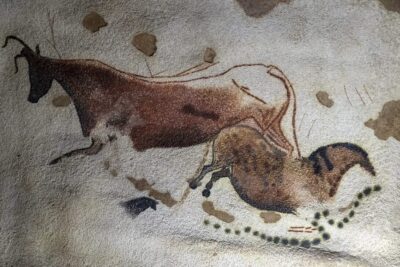
Rouffignac is also a nice counterpoint to Lascaux IV. Lascaux IV is the star for many bucket lists, but Rouffignac’s art and the way it sits in the cave space gives you another angle on how late ice age humans recorded animals and daily life in symbols you can still feel.
If you have read about these caves, you might expect the day to feel repetitive. It does not. The guide points out contrasts and helps you notice why one cave might feel more like a grand hall and another might feel more like you are walking through a natural archive.
A practical note: cave conditions demand comfort. Even with short visits, you will want warm layers and shoes with real grip. It is not just cold, it is also damp.
Montignac free time before Lascaux IV: where lunch and reset actually help
You base yourself in Montignac for a stretch of free time before the main Lascaux IV visit. This is not dead time. It is the buffer that keeps the day from feeling like a blur of entrances, explanations, exits, and rushing.
Use this break for something real: a slow lunch, a quick coffee, or a walk around the area to break up the underground focus. Several guides over the years are known for giving lunch recommendations, and this stop is when those suggestions become useful, not just theoretical.
You also get a psychological reset. Lascaux IV is a headliner, and your attention will work better if you are not already fried from standing in lines and sitting on road time. The free time gives you breathing room without costing you cave access.
One more thing: Lascaux IV requires coordinated timing. That is why the tour sometimes adjusts the order of visits depending on the reserved time slots at Lascaux IV. In other words, your day is managed so you do not end up stuck waiting at the wrong place.
Lascaux IV: why the reproduction still feels astonishing
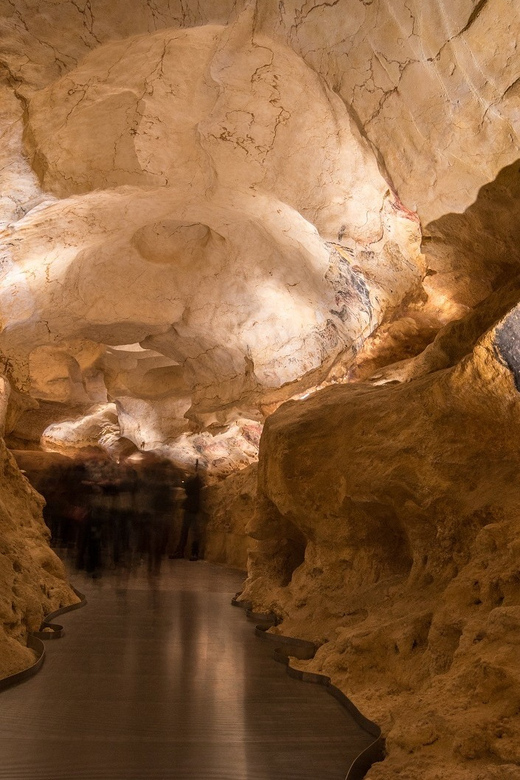
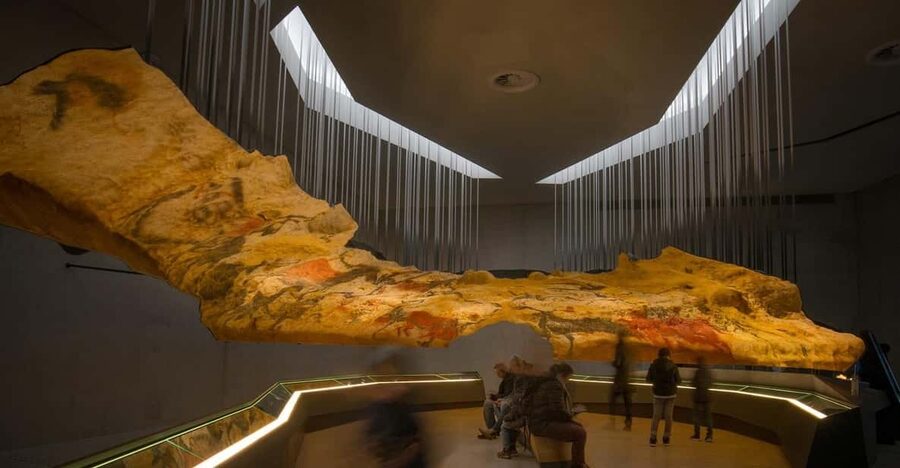
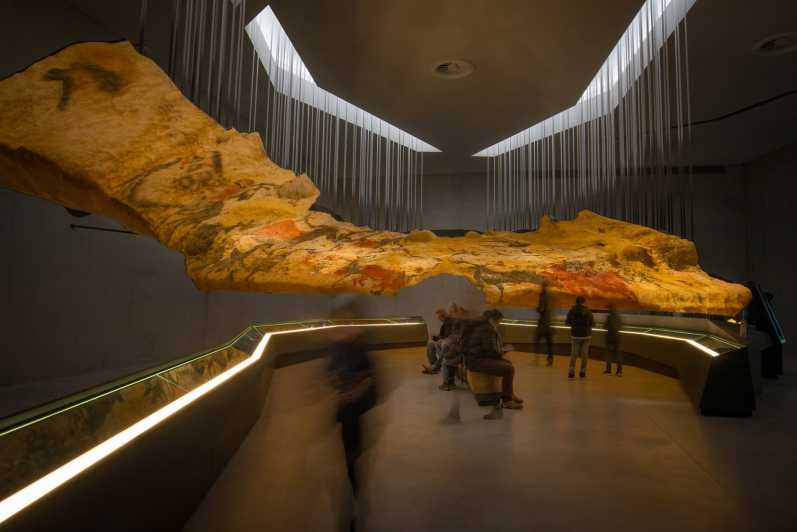
Then comes the reason many people book: Lascaux IV at Montignac. This is the replica complex opened in 2016, designed to recreate the original cave and the art with scientific and artistic care. The big selling point is not just the copy. It is the attention paid to how the cave looks, feels, and reads visually.
Here is what makes it impressive in real-world terms. The reproduction used a reinforced concrete shell built with shipbuilding-style techniques. The cave relief is reconstituted with fine detail, and the polychrome paintings are recreated using natural pigments, described as being executed in the style and approach of the originals, from about 17,000 years ago.
Even if you come in knowing it is a reproduction, the experience can still land. I like how the building around it is treated as part of the story, not a sterile container. You are not just staring at images. You are seeing a designed environment that tries to preserve atmosphere.
Two practical language points matter here. First, English tours of Lascaux IV are limited, and many cave visits are in French. Second, the guide’s role is structured: cave narration is explained before and after the cave visit, because simultaneous translation is strictly forbidden inside the cave. So yes, you will have an English-speaking guide, but inside the cave itself you might not get spoken translation the way you expect from some other tours.
Also plan for the cold. Cave temperatures are around 14°C (57°F) inside. Bring warm jackets, even if the day above ground feels mild.
La Roque Saint-Christophe: the cliffside shelters and a stair test
You end at La Roque Saint-Christophe, a troglodyte site perched on a sheer limestone cliff. This is not just “more old stuff.” It is an engineering story told through stone. The sheer cliff has been inhabited since Paleolithic times, and the guided explanation connects prehistoric shelters to the realities of building and living along a cliff face.
This is one of the stops that gives you a “how did they do that?” reaction. You are seeing architecture that grew out of survival needs, not out of comfort or aesthetics. The guide helps you understand how ancient people adapted to the cliff, and why the site still feels dramatic even today.
But this is also where you should be honest about physical comfort. The information you have is clear: the visit involves climbing stairs, so it is not indicated for guests with mobility issues. If you have limited stamina, or you dislike steep steps, consider whether you can handle it before you book.
If you can, though, you will likely love the ending. By the time you reach La Roque, the day’s themes click into place: caves, shelters, and the way people shaped daily life around the terrain.
Price and value: is $265 worth it?
At $265 per person for a 9-hour outing, this is not a budget day trip. But it is not random pricing either. You are paying for three big things: a professional guide in English, transport in a small van, and access coordination to time-controlled sites like Lascaux IV.
The value gets stronger when you compare what you avoid. You avoid the headache of arranging your own route and dealing with tight cave schedules. You also get help with interpretation, which is a major part of what you are paying for. These sites are famous, but you still need someone to tell you what to notice, and that is exactly where this tour earns its price.
Add in the small group size and the skip-the-line access for Lascaux IV, and the cost starts looking more reasonable. You also get multiple stops in one day, including the National Prehistory Museum and a final cliffside site, instead of choosing just one and missing the rest of the region’s story.
The main “hidden” cost to plan for is food. Meals and drinks are not included, so your day budget should include lunch and any snacks you want along the way.
Getting the most out of it: timing, language, and comfort
A few planning details can make the difference between a great day and an annoying one.
Timing and order: Your itinerary order can shift based on Lascaux IV reserved time slots. In July, departure is 8:30am instead of 9am. The tour is not available in August, so plan your calendar carefully.
Cave language reality: Even with an English-speaking guide, English cave tours at Lascaux IV are limited. Cave narration is structured around the rule that simultaneous translation is forbidden inside. Expect the guide to handle explanation around the cave visit, so listen closely before you enter and right after you exit.
Cold and layers: Cave temperatures are about 14°C. Bring a warm jacket, not just a thin layer. If you tend to get cold easily, add another layer.
Shoes and stairs: You will be walking at least a fair amount, and La Roque includes stairs. Comfortable walking shoes help with grip and fatigue.
Group dynamics: Small group is a plus, but it can also mean you will spend the whole day with the same people and the same seating. One drawback that comes up is being in the last row with no seat switching. If you dislike being in the back, you might want to arrive early to check in so you can choose a spot if possible.
Should you book the Lascaux IV and cave art tour from Sarlat?
Book it if you want a focused Dordogne prehistory day with Lascaux IV plus real cave art, a museum primer, and a cliffside ending. The best fit is someone who values expert interpretation, hates planning around timed admissions, and can handle cool caves and some stairs.
Skip it or rethink if you have mobility limitations due to the stairs at La Roque Saint-Christophe, or if you want fully English narration inside the cave itself every minute. Cave language is limited, and the guide will explain before and after rather than translating live inside.
If you do book, pack warm layers and good shoes, and give yourself patience for the schedule juggling that keeps Lascaux running on time. With that, you should get a day that feels more like a guided story than a checklist.
FAQ
How long is the Lascaux IV and cave art full-day tour?
The tour lasts 9 hours.
Where do we meet in Sarlat-la-Canéda?
You meet at the Place Pasteur bus stop in Sarlat-la-Canéda.
What is the July departure time?
In July, departure is at 8:30am instead of 9am.
Is the tour available in August?
No, it is not available in August.
Is the tour wheelchair accessible?
No. It is not suitable for wheelchair users.
Are there height or age limits for children?
Children under 4 years old cannot join this tour.
What should I bring for the caves?
Bring a passport or ID card and comfortable shoes. Warm jackets are highly recommended since temperatures inside the caves are around 14°C.
Are pets allowed?
No, pets are not allowed on this tour.
Is lunch included?
Meals and drinks are not included.
Everything Else Filed Under Sarlat La Caneda
- From Sarlat: Beynac & Domme Tour & Dordogne Boat Ride
★ 4.6 · 137 reviews - Sarlat Gourmet Tour & Market Visit with Tastings
★ 4.6 · 57 reviews - From Sarlat: Half-Day Skip-the-Line Lascaux IV Tour
★ 4.9 · 42 reviews - Sarlat: Private Tour to the Dordogne Valley
★ 5.0 · 32 reviews
The Whole Sarlat La Caneda Shelf
- From Sarlat: Beynac & Domme Tour & Dordogne Boat Ride
★ 4.6 · 137 reviews - Sarlat Gourmet Tour & Market Visit with Tastings
★ 4.6 · 57 reviews - From Sarlat: Half-Day Skip-the-Line Lascaux IV Tour
★ 4.9 · 42 reviews - Sarlat: Private Tour to the Dordogne Valley
★ 5.0 · 32 reviews
Deeper Into the Dordogne
- From Sarlat: Beynac & Domme Tour & Dordogne Boat Ride
★ 4.6 · 137 reviews - Sarlat Gourmet Tour & Market Visit with Tastings
★ 4.6 · 57 reviews - From Sarlat: Half-Day Skip-the-Line Lascaux IV Tour
★ 4.9 · 42 reviews - Sarlat: Private Tour to the Dordogne Valley
★ 5.0 · 32 reviews
The rest of the Sarlat La Caneda write-ups
- Sarlat: Private Tour to the Dordogne Valley★ 5.0 · 32 reviews
- From Sarlat: Half-Day Skip-the-Line Lascaux IV Tour★ 4.9 · 42 reviews
- Sarlat Gourmet Tour & Market Visit with Tastings★ 4.6 · 57 reviews
- From Sarlat-la-Canéda: Lascaux IV and Cave Art Full-Day Tour★ 4.9 · 122 reviews
Dordogne & Sarlat Tours, in full.
 ★ 4.5Lascaux IV: Full Replica Cave Experience TicketFrom $26334 reviews
 ★ 4.5Sarlat la Canéda: The Dordogne valley by canoeFrom $29297 reviews
 ★ 4.8From Vitrac: Dordogne River Canoe RentalFrom $34162 reviews
 ★ 4.6From Sarlat: Beynac & Domme Tour & Dordogne Boat RideFrom $129137 reviews
 ★ 4.5Dordogne Day Tour : Prehistory and The Art of the Caves from SarlatFrom $199105 reviews
 ★ 4.5Dordogne Villages Half Day Tour from SarlatFrom $9663 reviews
 ★ 4.6Sarlat Gourmet Tour & Market Visit with TastingsFrom $10057 reviews
 ★ 5.0Sarlat Gourmet Tour and Market VisitFrom $10249 reviews
Also on these France lists