
Reviewed · VERDUN & WWI BATTLEFIELDS
Somme Battlefields Small-Group Day Trip with John Monash Centre from Paris
Somme morning starts before Paris wakes. This small-group WWI day trip pairs a long drive with stops at Delville Wood and the Sir John Monash Centre, and that mix of walking and multimedia makes the story stick. I love the way the sites help you picture what happened on the ground, and I like that the guide brings context for why the battle unfolded the way it did, but plan for a very long day and food is on your own.
You’ll also see the Lochnagar crater, preserved at huge scale, plus memorials that anchor remembrance for the British and Commonwealth forces. One possible drawback is simple timing, this tour is about covering major sites, so you will not have hours to linger at every location.
In the best moments, guides like Regis, Honoré, Julian, and Heniere turn dates into clear scenes and keep the group moving without losing the emotional weight. Still, a small number of comments flag that some guides can get too loud at sensitive spots, so if you want quiet, you should set the tone early.
In This Review
- Quick hit points to know before you go
- Why the Somme Day Trip From Paris Feels So Focused
- The 6:50am Minivan Plan: Getting to the Western Front
- Delville Wood Cemetery and Quiet Respect
- Lochnagar Crater and the Frontline You Can Walk
- Sir John Monash Centre and Villers-Bretonneux ANZAC Memorials
- Pozières and Mouquet Farm: The Australian Impact in 1916
- Thiepval Memorial, Ulster Tower, and Beaumont-Hamel Trenches
- Péronne’s Historial Museum and the End of the Story
- Price, Fit, and Should You Book This Tour?
- FAQ
- How long is the Somme battlefields small-group day trip from Paris?
- What are the main stops on the tour?
- Where does the tour start and end?
- What time does the tour begin?
- How big is the group?
- Is food included?
- Is admission included for the main sites?
- Can I cancel and get a full refund?
Quick hit points to know before you go
- Delville Wood Cemetery: a final resting place for more than 5,500 WWI soldiers, including Australian servicemen connected to the Somme fighting
- Lochnagar Crater: a preserved mine crater, 330 feet (100 meters) across, that makes the battle feel physical
- Sir John Monash Centre: an interactive, modern way to understand Australia’s Western Front role
- Villers-Bretonneux Australian National Memorial: commemoration for 10,729 Australians, with the Dawn Service tradition on April 25
- Historial de la Grande Guerre (Péronne): a museum stop with more than 50,000 historic objects tied to both military and civilian life
Why the Somme Day Trip From Paris Feels So Focused
This is the kind of day trip that trades optional sightseeing for one big, meaningful goal. The Somme battle is spread across fields, villages, and cemeteries, so having a structured route matters. You get guided explanations of the causes and aftermath of the Battle of the Somme, then you walk through key places where you can actually see what the landscape became during WWI.
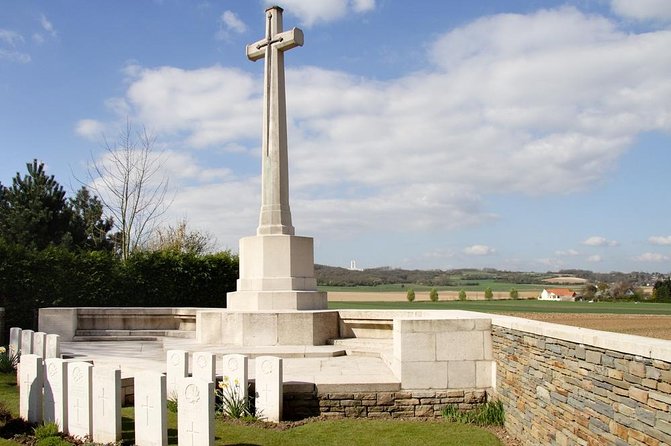
I also like that the experience does not just point at monuments. It includes remembrance sites tied to multiple forces, including British and Commonwealth links, plus Australian memorials that many visitors care about personally. When you stand in a cemetery like Delville Wood, or look at a memorial naming men with no known grave, the history lands in a very direct way.
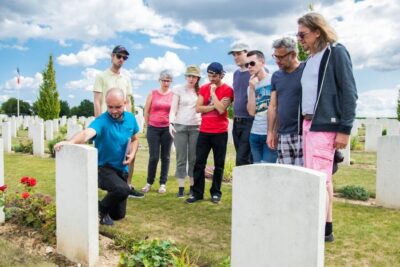
The emotional tone is strong, so it helps that the tour is designed as a small group. That gives the guide room to explain what you are seeing, not just move a crowd from stop to stop. The other side of that is you should be ready for the feeling of the day: this is not casual sightseeing.
Other visits to the Verdun and Somme battlefields
The 6:50am Minivan Plan: Getting to the Western Front
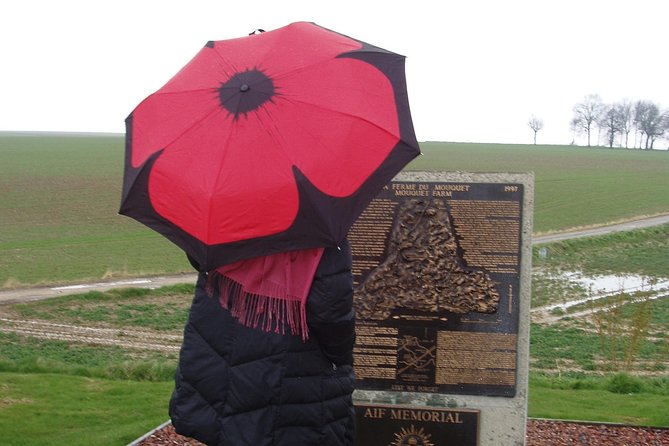
The day starts early, with pickup around 6:50am in central Paris at Le Duplex2 bis Av. Foch. From there, you head north by air-conditioned minivan, which is a practical way to cover ground without losing time to transfers. The tour runs about 11 hours total, ending back in Paris near the Arc de Triomphe area.
Here’s what that means for your planning. You will spend a lot of the day in transit between sites, but you also gain something important: you avoid the stress of driving and parking around several battlefield locations in one day. The route is built to include the most famous and most meaningful stops, including places that are difficult to reach on your own without careful logistics.
The tour operates in all weather conditions, so dress like you mean it. Expect early cold, wind, and damp depending on the season, and plan for outdoor time at cemeteries, memorial viewpoints, and the preserved crater area. A moderate fitness level is recommended, mainly because you will be walking and standing for explanations in outdoor spaces.
Delville Wood Cemetery and Quiet Respect
Delville Wood Cemetery at Longueval is one of those places where the silence hits hard, even before you hear the details. This cemetery holds more than 5,500 fallen soldiers from World War I, and the site’s role in the Somme story is closely tied to the Australian experience of the battle.
What I like about this stop is how it sets the emotional baseline for the day. You are not just seeing objects, you are seeing the end point of the war for thousands of men. When you pair a cemetery visit with the guide’s context about why the battle happened and what followed, it prevents the day from becoming a list of sights.
Be prepared for how personal this can feel. One review mentioned the desire for quiet moments at sacred sites, and that is a fair expectation. If you want a pause for reflection, it helps to take it on your own as well, step aside for a minute, and keep your pace slow when you can. A sensitive guide can shape the experience, but you still control your own behavior and the tone you bring to the space.
Lochnagar Crater and the Frontline You Can Walk
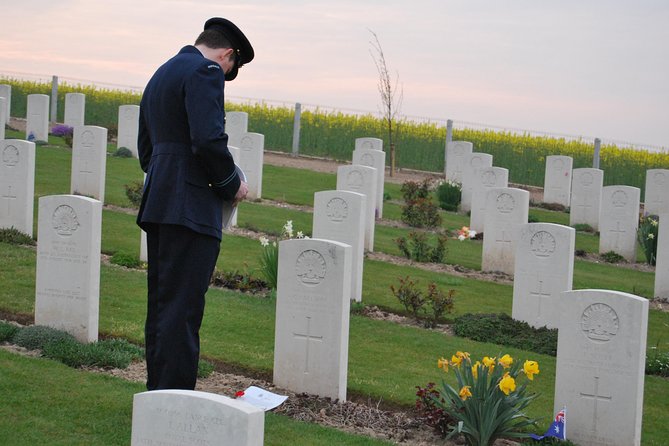
Lochnagar Crater is a standout because it makes the scale of the fighting impossible to ignore. The mine crater at Lochnagar is preserved and preserved intentionally, measuring 330 feet (100 meters) across. Visiting it gives you a real sense of how the ground itself was altered by the battle, not just who fought there.
This is also one of those stops that works well for first-timers. Even if you know only the basics of the Somme, the crater helps you understand why 1916 so often gets remembered as a grinding fight over space. The guide’s explanations typically connect the crater to the broader battle context, helping you connect the big picture to one specific piece of terrain.
If there’s a drawback, it’s that the crater is an outdoor site and time is finite. You will get your moment there, but this is a full-day schedule, not an all-afternoon linger. Wear shoes that handle uneven ground, and bring a layer, because even on a nice day, crater areas can feel exposed.
Sir John Monash Centre and Villers-Bretonneux ANZAC Memorials
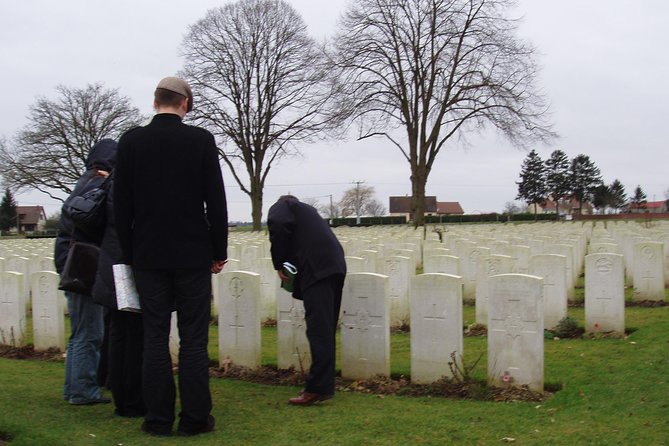
If you care about Australian remembrance, Sir John Monash Centre and the Australian National Memorial are central. The Monash Centre sits on the grounds of the Villers-Bretonneux Military Cemetery, adjacent to the Australian National Memorial. The centre is designed as a modern hub for the Australian Remembrance Trail, using interactive media and immersive elements to explain the Australian Western Front experience.
I love how this stop bridges the gap between emotion and understanding. Cemeteries make you feel, but interactive explanations help you grasp what the units did and where they fit into the wider Western Front. The admission here is free on the tour, and you generally get about an hour to take it in.
Then you step into the Australian National Memorial, which commemorates all Australian soldiers who fought in France and Belgium during the First World War. Officially, 10,729 Australian servicemen are commemorated there, and the site connects directly to the ANZAC Day Dawn Service tradition held every April 25.
One practical tip: allow yourself to look at details. Names and inscriptions can be what you remember most later, especially if you have personal connections or you are trying to map stories from home to this part of France.
Pozières and Mouquet Farm: The Australian Impact in 1916
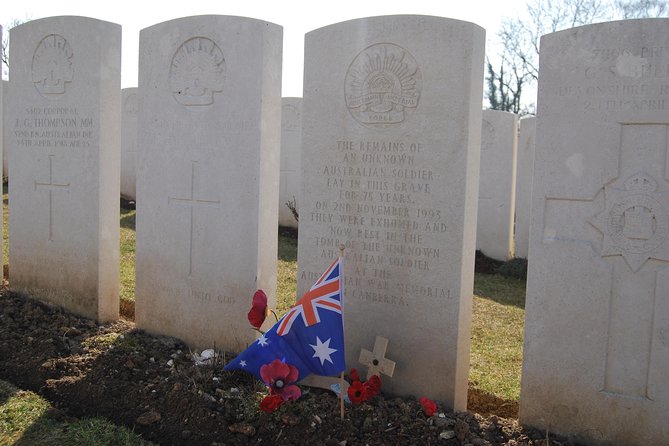
The Somme is not one single event. It’s a set of linked battles around villages, ridges, trenches, and supply lines, and Pozières is one of the places where Australian soldiers played a major role.
You’ll visit Australian battlefield sites connected to the fighting in the Pozières and Mouquet Farm area. The route also includes a stop at the 1st Australian Division Memorial near the ruins of the Gibraltar blockhouse. This memorial commemorates the officers, non-commissioned officers, and men of the First Australian Division who attacked, took, and held Pozières village between 23 and 26 July 1916.
One small but meaningful detail in this area: there’s an Australian flag that still flies over Pozières. It’s the kind of ongoing reminder that keeps the sites from feeling frozen in time.
If you are planning your expectations, keep it simple. This part of the day is about seeing the specific terrain linked to Australian actions, then letting the guide connect that terrain to the bigger battle. Since the day is packed, you will not memorize everything, but you’ll leave with a stronger sense of how the battle moved and what it cost.
- Paris: Louvre Museum Timed-Entrance Ticket
★ 4.6 · 71,977 reviews - Disneyland® Paris 1-Day Ticket
★ 4.6 · 49,412 reviews - Paris: Versailles Palace and Gardens Full Access Ticket
★ 4.6 · 41,579 reviews - Paris: Evening River Cruise with Music
★ 4.4 · 22,721 reviews - Paris: Louvre Guided Tour with Reserved Access & Boat Cruise
★ 4.3 · 16,353 reviews
Thiepval Memorial, Ulster Tower, and Beaumont-Hamel Trenches
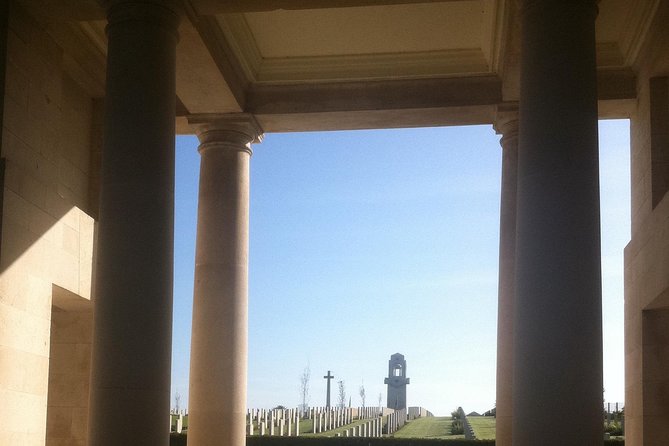
Thiepval Memorial is where the day starts talking about absence in a very direct way. The Thiepval Memorial is dedicated to missing British soldiers, and paired with other memorial structures in the region, it gives you a sense of how widely the losses spread across national lines.
Ulster Tower is another key stop in this memorial cluster. For many visitors, it helps to see how remembrance architecture differs across communities. The guide’s interpretation matters here, because the memorials can feel like they are simply listing names until you understand what they were created to solve: how to commemorate men without known graves.
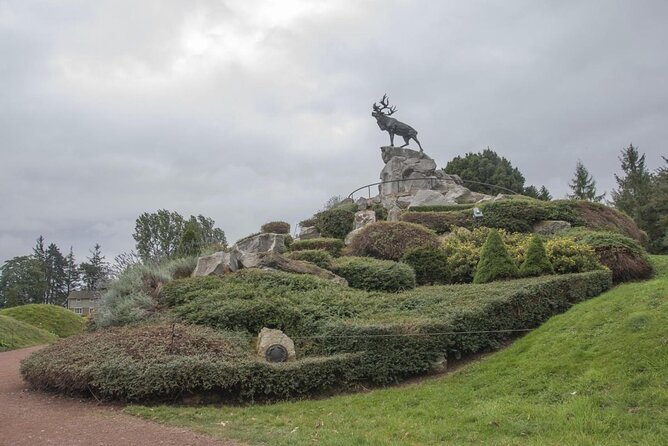
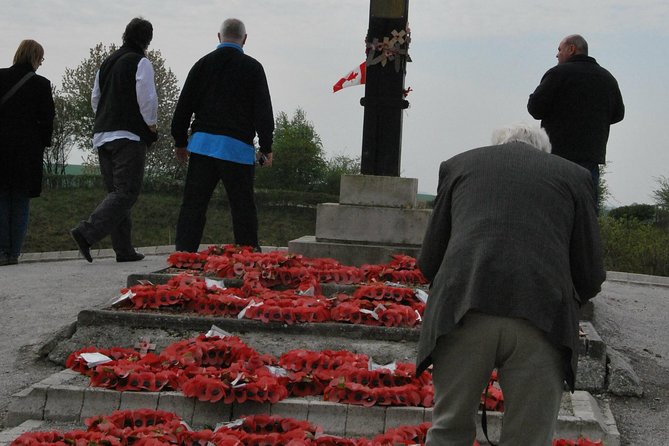
You also visit the Beaumont-Hamel Newfoundland memorial area, including battlefields and trenches. Seeing preserved trenches and the related memorial spaces helps you understand the physical shape of the fight, and it adds another layer to the story beyond the cemetery sites. One of the biggest values of this tour is that it does not only focus on one country’s storyline. You get multiple Commonwealth perspectives, and the route keeps you aware that this was a shared catastrophe, not a single-nation tragedy.
Péronne’s Historial Museum and the End of the Story
By late day, the schedule shifts from outdoor sites to a museum built to help you make sense of it all. The Historial de la Grande Guerre in Péronne is part of the tour, and it’s designed around the origins and aftermath of the conflict, not just battle scenes.
This museum is described as well put together and it includes an enormous collection, with more than 50,000 historic objects related to military and civilian life in wartime France. That matters because the Somme is often reduced to battlefield headlines. A museum stop brings back the human scale, how civilians lived, how war reshaped daily life, and how the conflict affected far more than the front line.
I recommend using the museum time to reset your brain. After hours outdoors, your eyes and feet need a break, and your understanding needs organization. Even if you do not read every label, follow the themes the guide points out and you’ll leave with a clearer mental map of what you saw earlier in the day.
Price, Fit, and Should You Book This Tour?
At $294.36 per person, this is not a budget day trip. But it is also not just a ride to one location. You are paying for a structured route across multiple major memorial sites, guided interpretation in English, transport in an air-conditioned minivan, and admission where it applies at key stops. The small-group format also matters, because it helps the day feel personal rather than rushed through.
This tour fits best if you want a one-day Somme introduction with strong Australian remembrance elements. It’s also a good choice if you want to see Delville Wood, Lochnagar Crater, Thiepval, and Villers-Bretonneux without coordinating transport on your own. Reviews repeatedly highlight the guides, with people praising the way guides like Regis, Honoré, Julian, and Heniere explained events and handled questions.
The main reasons you might hesitate are the obvious ones. It’s long, you will rely on your own food and drinks, and the day can be emotionally intense. Also, if you have a strong need for quiet, go in prepared to advocate gently for space at sensitive moments, because one less ideal experience described a guide who was too loud at the wrong times.
If you want a meaningful, well-structured day trip from Paris that connects the Somme to remembrance you can actually stand in, I’d call this a strong booking. Just treat it like a solemn appointment, not a casual excursion.
FAQ
How long is the Somme battlefields small-group day trip from Paris?
It runs for about 11 hours. The day starts early in the morning and ends back in Paris in the early evening.
What are the main stops on the tour?
You visit key Somme sites including Delville Wood Cemetery, Lochnagar Crater, Sir John Monash Centre, the Australian National Memorial at Villers-Bretonneux, the Thiepval memorial area, and the Historial WWI museum in Péronne.
Where does the tour start and end?
The pickup is at Le Duplex2 bis Av. Foch, 75116 Paris. The drop-off is at Arc de Triomphe Pl. Charles de Gaulle, 75008 Paris.
What time does the tour begin?
The start time is 6:50am.
How big is the group?
The tour is described as a small group with a limit of up to eight for a personalized experience. The included information also states a maximum of 16 participants.
Is food included?
No. Food and drinks are not included, so plan to purchase your own meals during the day.
Is admission included for the main sites?
Yes. Admission tickets are listed as free for the Sir John Monash Centre and the Australian National Memorial, and admission is included for the Thiepval Memorial and Lochnagar Crater.
Can I cancel and get a full refund?
Yes, you can cancel for a full refund up to 24 hours before the experience starts. If you cancel less than 24 hours before, the amount paid is not refunded.
The Whole Paris Shelf
- Paris: Louvre Museum Timed-Entrance Ticket
★ 4.6 · 71,977 reviews - Disneyland® Paris 1-Day Ticket
★ 4.6 · 49,412 reviews - Paris: Versailles Palace and Gardens Full Access Ticket
★ 4.6 · 41,579 reviews - Paris: Evening River Cruise with Music
★ 4.4 · 22,721 reviews - Paris: Eiffel Tower Entry Ticket with Optional Summit Access
★ 4.4 · 20,035 reviews
Verdun and the Somme, Other Visits
- Somme Battlefields from Paris with Australian memorial & Amiens Cathedral
★ 5.0 · 228 reviews - WWI Somme Battlefields Day Trip from Paris
★ 4.9 · 111 reviews
The rest of the Paris write-ups
- Montmartre: Guided Tour for Kids and Families★ 4.9 · 57 reviews
- From Paris: Versailles Palace and Gardens Guided Day Trip★ 4.5 · 57 reviews
- Versailles Palace and Garden Tour with Paris Private Transfers★ 5.0 · 58 reviews
- Louvre Evening Escape – Avoid The Crowds! Semi-Private 6ppl Max★ 5.0 · 58 reviews
- Summit Eiffel Tower Audio Guide Tour with Unlimited Time Access★ 4.5 · 58 reviews
- Private Half Day Historic Tour★ 5.0 · 58 reviews