
Reviewed · ALSACE WINE ROUTE TOURS
Colmar: Unusual Walking Tour with a local guide
Colmar changes fast with the right guide. I love how this small group walk makes medieval Alsace feel personal through on-the-ground stories, and I also love the mix of Bartholdi statues with major German Imperial landmarks in Colmar’s south district. One drawback: it is still a 2-hour stroll on uneven old-town streets, so it is not a good fit if you need mobility support.
You meet at the Bruat Fountain in the Parc du Champ de Mars, then your guide steers you through the medieval core before pushing you toward the grander, more monumental side of town. The tour runs in French and English, and the small group format makes it easy to ask questions and get real answers.
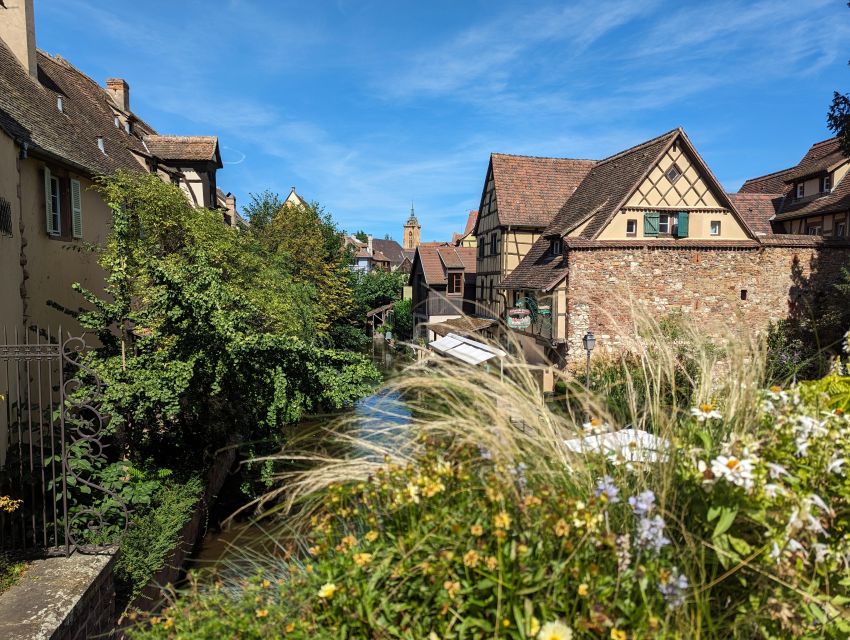
I like that the route treats Petite Venise like a highlight, not the only destination. You get the famous canal-area vibe, but you also head into smaller streets to see it without being stuck in the thickest crowd.
In This Review
- Key highlights at a glance
- Why this Colmar walking tour feels different from the usual old-town loop
- Getting started at Bruat Fountain, what the 2 hours really covers
- Medieval Colmar and the side streets beyond the famous canal views
- Auguste Bartholdi statues: how Colmar explains Liberty before you see it
- Colmar’s south district in the German Imperial era, Cour d’Appel to Chateau d’Eau
- The guide’s real value: humor, answers, and where to eat after the walk
- Price and value at about $41 for 2 hours in a group of 6
- Who should book, and who should skip
- Should you book this Colmar unusual walking tour?
- FAQ
- How long is the Colmar unusual walking tour?
- How much does the tour cost?
- Where do I meet the guide?
- What languages are offered?
- Is it a small group tour?
- Is the tour suitable for people with mobility impairments?
- Can I cancel for a refund?
- Can I reserve now and pay later?
Key highlights at a glance
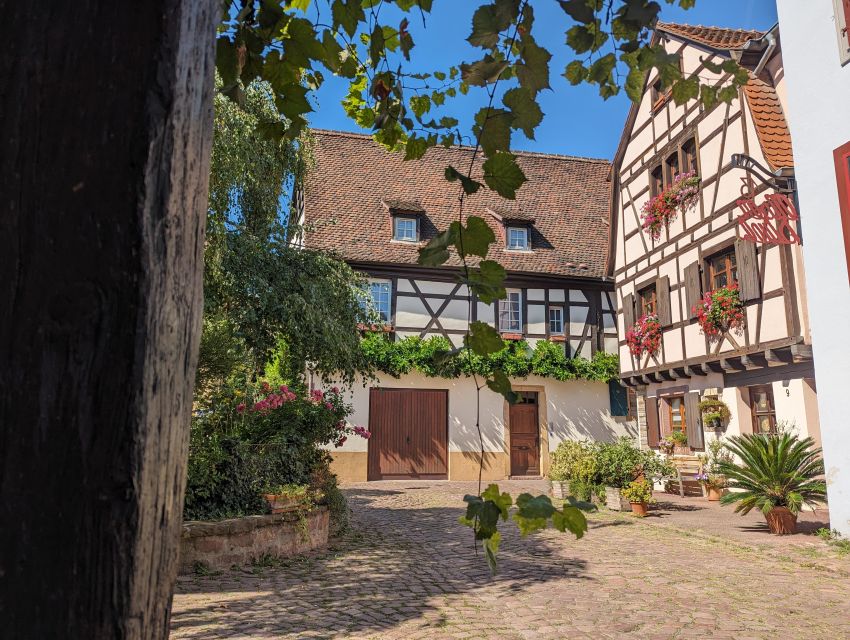
- Medieval streets with real-life context, not just dates and facts
- Petite Venise side lanes, so you can see the canals without the crush
- Auguste Bartholdi statues, tied to Colmar’s heroes and identity
- German Imperial-era landmarks in the south district, including Cour d’Appel and the big Chateau d’Eau
- Monumental scale moments, like the Central Train Station area, seen through local perspective
- Food and drink recommendations from your guide, built for how you actually travel
Why this Colmar walking tour feels different from the usual old-town loop
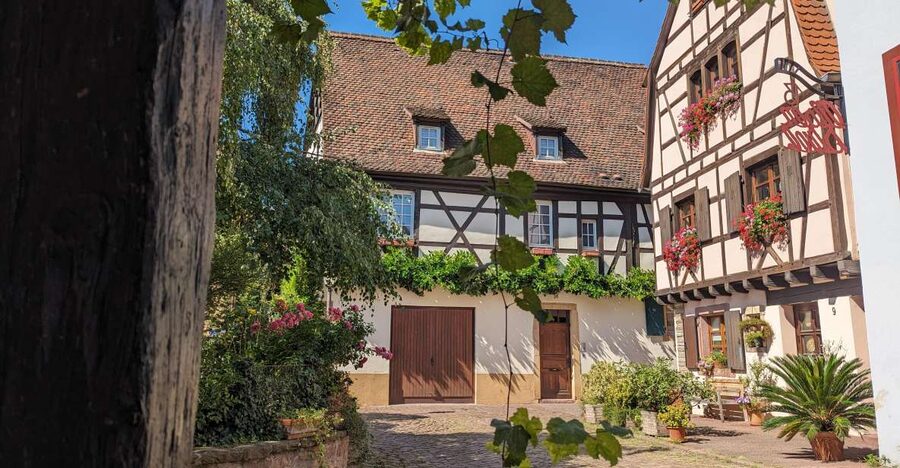
Colmar can be all postcard charm if you rush it. This tour slows you down on purpose, with a local guide who turns buildings into story clues. You’re not only looking at pretty façades, you’re learning what those shapes meant to the people who lived here.
Two parts make it especially appealing. First, you get medieval Colmar through anecdotes that connect daily life, local character, and the big back-and-forth history of Alsace. Second, you don’t stop at the canal district. You also get Auguste Bartholdi’s sculpture legacy and then move into Colmar’s south district for the German Imperial-era monuments.
The pace tends to stay “walking and chatting,” which works well for most people who want context without sitting in a museum. And because the group is limited to 6, you’re less likely to feel like you’re watching a guide talk at you from the front.
Further along the Alsace wine route
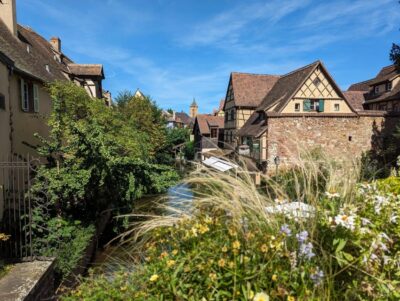
Getting started at Bruat Fountain, what the 2 hours really covers
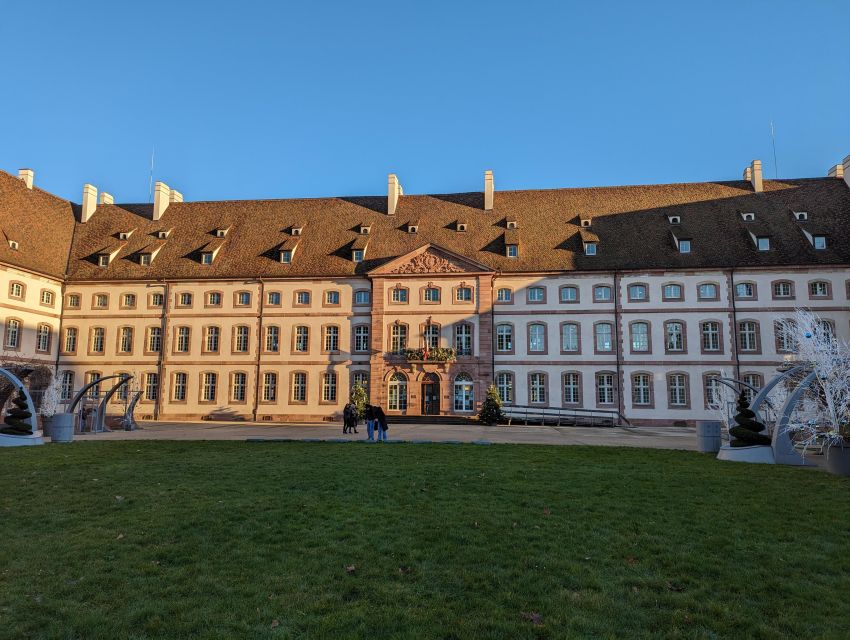
The meeting point is the Bruat Fountain, right in the middle of the Parc du Champ de Mars. That matters because you start from a clear, easy landmark rather than hunting for a tiny street corner. After a quick introduction, you’ll head into the medieval city area where the guide sets the tone with stories and the kind of details you would normally walk past.
This is a true walking tour, with a total duration of 2 hours. Starting times depend on availability, so it is worth checking what works for your day. If you can, pick a slot that leaves you time afterward to wander independently, because the tour is designed to give you a better mental map of what to do next.
Because the tour is offered in French and English, it is also built for mixed-language groups. In practice, that means the guide can handle questions and keep everyone oriented without making you feel lost if you are not fluent.
Finally, do not over-plan shoes. You will be walking old streets, and you will want something comfortable enough for small climbs and uneven surfaces. It’s only 2 hours, but old towns add up.
Medieval Colmar and the side streets beyond the famous canal views
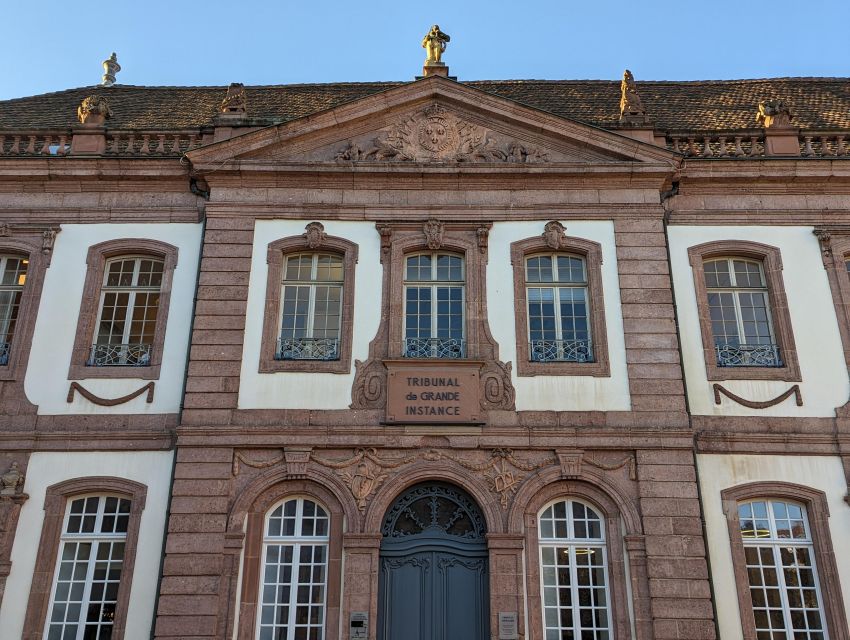
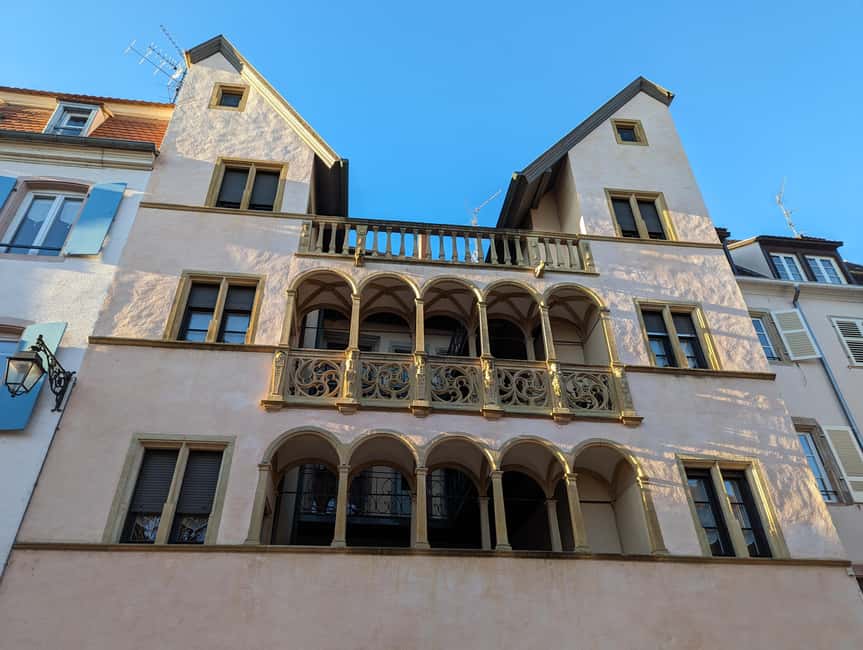
The first stretch is all about medieval Colmar, with a focus on how regular people lived and what the architecture was doing for them. Your guide explains the city’s past in a way that helps you notice patterns as you walk: where power shows up in stone, where daily life leaves small traces, and how the street layout reflects older priorities.
Then you shift toward la Petite Venise. Yes, you will see the canal-area charm. But the point here is not to repeat the most crowded photo stops. The tour specifically aims to take you into smaller streets so you can enjoy the scenery at a calmer angle.
I love this approach because Colmar’s best moments are often the quiet ones. A bend in the street, a sign with old lettering, a façade detail you would miss while trying to line up a perfect picture. With a guide, those details become meaningful, not just decoration.
If it is raining, you can still have a great time. Old towns are beautiful in bad weather, and a good guide keeps the stories flowing even when visibility is lower. One of the nice perks from past visitors is that a rainy day did not ruin the vibe, and the humor kept the group smiling.
Auguste Bartholdi statues: how Colmar explains Liberty before you see it
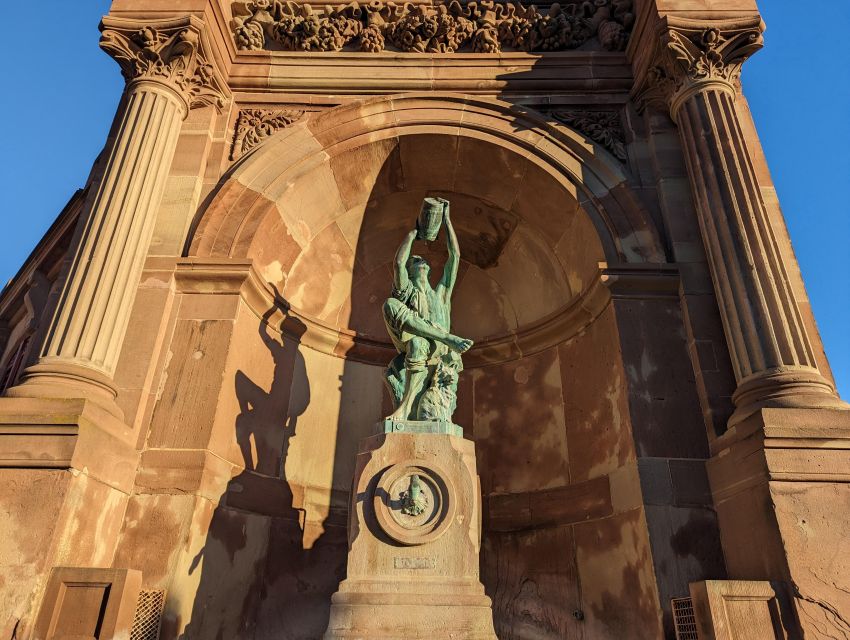
One of the most distinctive parts of this tour is the focus on Auguste Bartholdi. Your guide points out the statues and connects them to Colmar’s local heroes and Bartholdi himself, the sculptor associated with the Statue of Liberty.
This is a great stop for two reasons. First, it gives you a new way to read the city’s symbolism. Instead of treating sculptures like random street ornaments, you understand why they’re there and what they were meant to say. Second, it gives you a human scale to world-famous names. Bartholdi stops being a distant famous artist and turns into a Colmar story.
You also learn how Colmar’s identity is tied to the people it celebrates. That matters in Alsace, where French and German influences overlap in visible ways. Seeing Bartholdi through a local lens makes the whole region feel less abstract.
If you are the type who likes to photograph statues, signs, and corners, this section will feel made for you. You’ll have a reason to look up, not just for pretty angles, but to catch the story your guide is building.
Colmar’s south district in the German Imperial era, Cour d’Appel to Chateau d’Eau
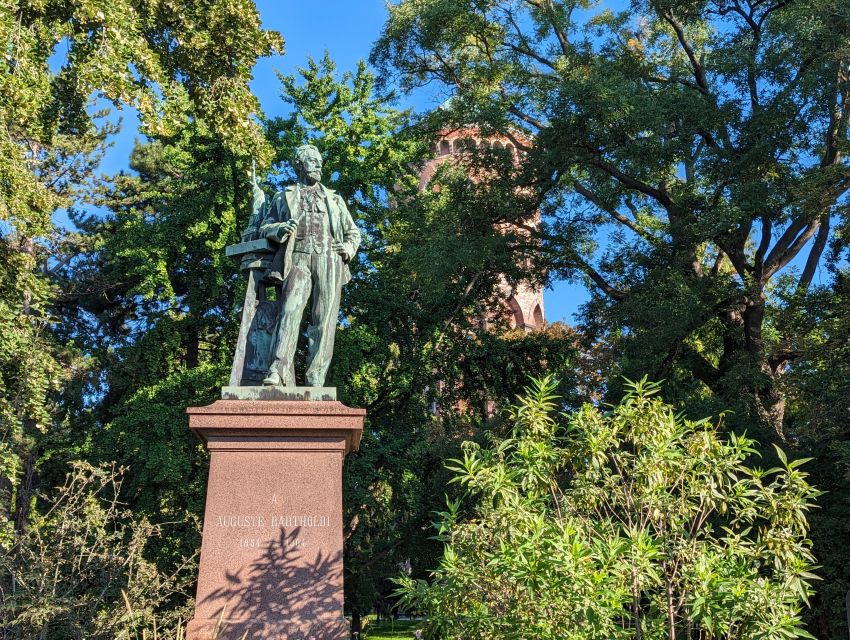
After the medieval core and the Bartholdi focus, the tour swings into the south district and the German Imperial era. This is where Colmar surprises people who expected the whole city to look medieval forever.
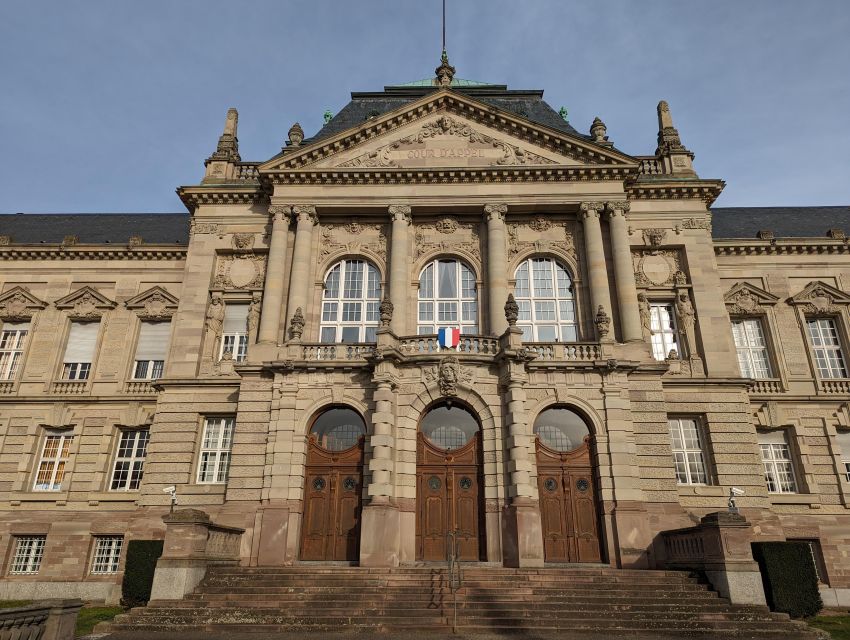
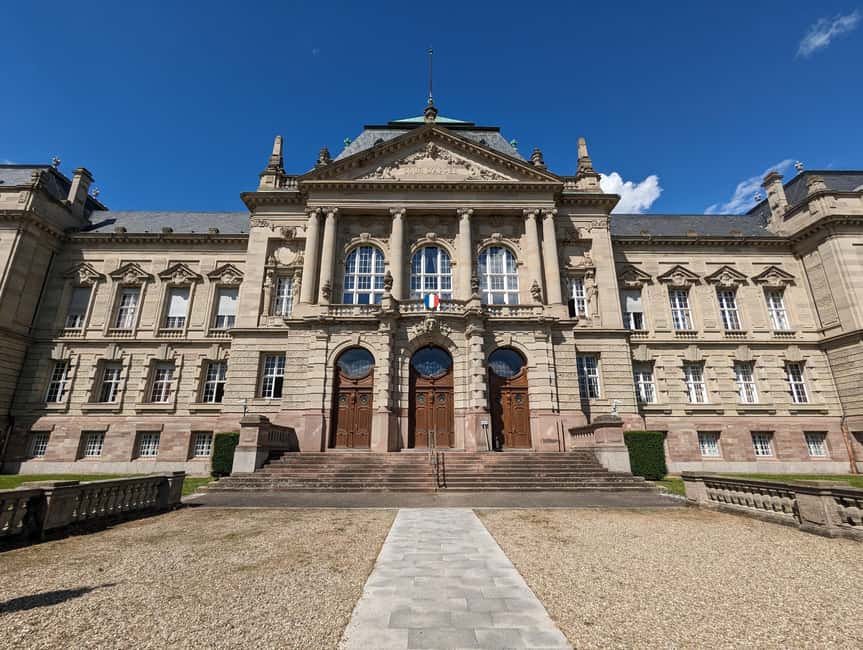
You’ll see monumental landmarks, including the Cour d’Appel and the huge Chateau d’Eau. The Central Train Station area is also part of the route, and it works well because it helps you understand how major eras shaped not only buildings, but the sense of progress and civic power.
I like this shift because it prevents Colmar from becoming one-style sightseeing. Your eye gets trained to notice how the city changes character depending on what period you are in. You can literally feel the history moving as you walk from older street fabric into grander civic architecture.
This section is especially useful if you want to grasp the Alsace story as a back-and-forth between French and German influence. You are not studying borders in a textbook. You’re seeing it in façades, scale, and what the city chose to build big.
So if you like architecture, or if you simply want Colmar to make more sense than a pile of pretty corners, don’t skip this part of the tour.
The guide’s real value: humor, answers, and where to eat after the walk
The tour is not just about where you go. It’s also about how your guide teaches you to look. A recurring theme in guide praise is the combination of clear historical explanations and a relaxed, amusing delivery. That matters because Alsatian history can be complicated, and a friendly tone helps it land without getting heavy.
You also get practical guidance. Your guide will share tips on the best local places to eat and drink after the tour. That is the kind of advice you can’t reliably pull from a generic guidebook, because it’s built for what is near your path and what locals actually enjoy.
One more small but important benefit: the tour can feel interactive. Visitors have highlighted that questions are welcomed, and that the guide answers in a way that keeps people engaged. There’s even mention of a relaxed pace and the possibility of tailoring what the guide shows based on interests, which is a smart way to keep adults and younger visitors from zoning out.
If you want to do Colmar in a way that feels like a good conversation with someone who cares, this is exactly the format.
More Colmar tours that come with a guide
- Colmar: Unusual Walking Tour with a local guide
★ 4.9 · 194 reviews - Colmar: Private Guided Walking Tour of the City Center
★ 4.1 · 36 reviews
Price and value at about $41 for 2 hours in a group of 6
At around $41 per person for a 2-hour walking tour, you are paying for three things: time, guidance, and a route that blends multiple eras. You also benefit from a small group size of limited to 6 participants, which usually means you get more attention than the big bus-style tours.
Compared with spending that time on your own, the value comes from the context. Colmar is pretty even without help, but the tour gives you a way to understand why certain places matter. That turns your later wandering into something smarter, because you already know what you are looking at.
It also helps that the tour is led in French and English, so you can match your comfort level. And if you like to travel flexibly, the reserve now and pay later option is available, plus free cancellation up to 24 hours in advance for a full refund.
One more reality check: because it is a walking tour, you should treat it as “on-your-feet sightseeing,” not a casual stroller stroll. If you’re used to walking through old streets, you’ll be fine. If you struggle with uneven ground, this may be more work than you want.
Who should book, and who should skip
This tour is a strong match if you want Colmar to feel deeper than just scenic. If you care about Alsace history, or you want to understand the French-German story through actual streets and monuments, you’ll get more out of your day.
It also fits families well. Past visitors have called out that even a 15-year-old stayed engaged, which says something about the guide’s storytelling style and pacing.
You should consider skipping if mobility is a concern. The tour is not suitable for people with mobility impairments, and that’s because it is built around walking in an old-city environment.
One more plus: it is described as dog friendly. If you travel with a dog and you prefer not to leave them behind, this is worth checking in advance for fit with your needs.
Should you book this Colmar unusual walking tour?
Book it if you want a guided Colmar experience that connects medieval life, Bartholdi symbolism, and German Imperial-era monuments in just 2 hours. It’s ideal as an early-day tour because it gives you bearings, then you can explore with better eyes the rest of the time.
Skip it if you want a totally unstructured wander, or if you need a more accessible route. Also skip if you already plan to study Colmar’s history heavily on your own, because this tour’s main value is the guide’s ability to make sense of the city fast.
If you’re open to walking, asking questions, and being guided through the “why” behind the architecture, this one is easy to recommend. It is an efficient way to see more than the usual top sights, with a local touch and practical food and drink suggestions to finish your day right.
FAQ
How long is the Colmar unusual walking tour?
The tour lasts 2 hours.
How much does the tour cost?
The price is listed as $41 per person.
Where do I meet the guide?
You meet at the Bruat Fountain, located in the middle of the Parc du Champ de Mars.
What languages are offered?
The live tour guide offers French and English.
Is it a small group tour?
Yes. The group is limited to 6 participants.
Is the tour suitable for people with mobility impairments?
No. It is not suitable for people with mobility impairments.
Can I cancel for a refund?
Yes. Free cancellation is available up to 24 hours in advance for a full refund.
Can I reserve now and pay later?
Yes. You can reserve now and pay later.
Everything Else Filed Under Colmar
- From Colmar: 4 Wonders of Alsace Day Tour
★ 4.9 · 492 reviews - Colmar: 2-Hour Segway Tour
★ 4.5 · 379 reviews - Colmar: Highlights Walking Tour and Wine Tasting
★ 4.9 · 209 reviews - Alsace villages half day tour from Colmar
★ 5.0 · 186 reviews - ICONICS Tour: 1/2 day on the Wine Route, visit of 2 Villages + Tasting.
★ 5.0 · 159 reviews
The Whole Colmar Shelf
- From Colmar: 4 Wonders of Alsace Day Tour
★ 4.9 · 492 reviews - Alsace 4 Wonders Small-Group Day Trip from Colmar
★ 5.0 · 380 reviews - Colmar: 2-Hour Segway Tour
★ 4.5 · 379 reviews - Colmar: Highlights Walking Tour and Wine Tasting
★ 4.9 · 209 reviews - Alsace villages half day tour from Colmar
★ 5.0 · 186 reviews
More of the Alsace Route
- From Colmar: 4 Wonders of Alsace Day Tour
★ 4.9 · 492 reviews - Alsace 4 Wonders Small-Group Day Trip from Colmar
★ 5.0 · 380 reviews - Colmar: 2-Hour Segway Tour
★ 4.5 · 379 reviews - Colmar: Highlights Walking Tour and Wine Tasting
★ 4.9 · 209 reviews - Alsace villages half day tour from Colmar
★ 5.0 · 186 reviews
The rest of the Colmar write-ups
- Christmas across the 3 borders★ 5.0 · 33 reviews
- Colmar: Private Guided Walking Tour of the City Center★ 4.1 · 36 reviews
- Colmar: Chocolate creation workshop at Choco-Story★ 4.5 · 39 reviews
- Colmar: Express Walk with a Local in 60 minutes★ 4.7 · 39 reviews
- Self-Guided and Interactive City Tour – Colmar★ 4.5 · 45 reviews
- Through Alsace Vineyards and Wine Villages Private Bike Tour★ 5.0 · 47 reviews
Alsace Wine Route Tours, in full.
 ★ 5.0Colmar, Medieval Village & Castle Small Group from StrasbourgFrom $241769 reviews
 ★ 4.7From Strasbourg: Best Of Alsace Historical Day TripFrom $147633 reviews
 ★ 4.9From Colmar: 4 Wonders of Alsace Day TourFrom $159492 reviews
 ★ 5.0Alsace 4 Wonders Small-Group Day Trip from ColmarFrom $163380 reviews
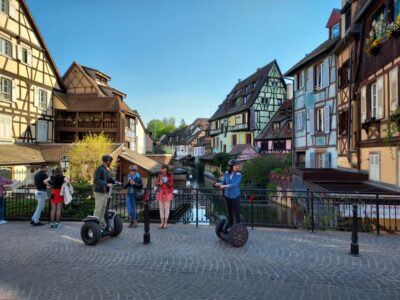 ★ 4.5Colmar: 2-Hour Segway TourFrom $70379 reviews
 ★ 4.8Alsace Half-Day Wine Tour from StrasbourgFrom $153346 reviews
 ★ 4.5Alsace Wine Route Small Group Half-Day Tour with Tasting from StrasbourgFrom $157291 reviews
 ★ 5.0Alsace Wine Route Wineries & Tasting Small Group Guided Tour from StrasbourgFrom $260229 reviews
Also on these France lists