
Reviewed · FULL-DAY
Full day Australian Battlefields Tour
Somme battles feel personal here. This full-day private tour knits together Amiens Cathedral and the most meaningful Australian WW1 sites in the Somme, with time built in for reflection, not just photos.
I love how the day moves from big monuments to specific stories, and how the guide can tailor the pacing to what you care about most. One thing to think about first: it is an all-day outing (about 8 hours) and lunch is on you, so plan for a long day in the field and pack layers for weather.
In This Review
- Key highlights to look for
- From Amiens to the front line of 1916: what the day really feels like
- Amiens Cathedral: your calm start before the weight of the Somme
- Villers-Bretonneux and the Australian story on the Western Front
- Villers-Bretonneux Military Cemetery: where respect is the point
- Sir John Monash Centre: the hands-on memorial you will remember
- Australian Corps Memorial: names carved into the meaning of a place
- The Somme valley viewpoints: learning the terrain behind the battles
- Chipilly viewpoint and the Battle of the Somme context
- The 58th British Division Memorial and the horse monument detail
- Brebières Basilica: neo-Byzantine architecture rebuilt after total destruction
- Lunch at Le Hygge: a practical break in the middle of heavy sites
- Lochnagar Crater: the ground that was engineered to change everything
- Pozières and the 1st Australian Division Memorial: sacrifice you can map
- The windmill memorial and the story of tanks nearby
- Mouquet Farm: another Pozières-linked point of the story
- Thiepval Memorial for the Missing: when names are the story
- Beaumont-Hamel and Newfoundland identity: a separate island story on the same battlefield
- Price and logistics: is $253.97 good value for this kind of day?
- Who this tour suits best (and who might want something else)
- Should you book this Australian Battlefields Tour from Amiens?
- FAQ
- When does the tour start, and is there pickup?
- How long is the full day Australian battlefields tour?
- Is the tour offered in English?
- Is lunch included?
- Are any admissions included?
- Can I cancel for a full refund?
Key highlights to look for
- Amiens Cathedral: a chance to see one of the biggest Gothic cathedrals in the world, celebrating 800 years.
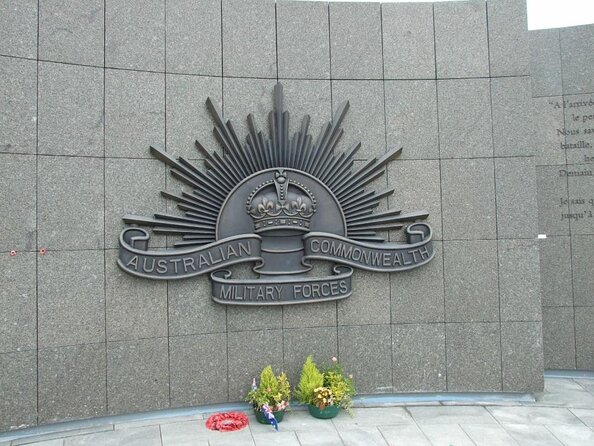
- Villers-Bretonneux Memorials: cemetery, Australian Corps Memorial, and the ANZAC dawn connection.
- Sir John Monash Centre: interactive, multimedia storytelling focused on ordinary Australians on the Western Front.
- Lochnagar Crater: a first-day-of-the-Battle-of-the-Somme mine crater, huge and unforgettable in person.
- Pozières battle ground: Australian sacrifice explained at the 1st Division Memorial and nearby memorial points.
- Thiepval and Beaumont-Hamel: the scale of the missing at Thiepval, then Newfoundland identity at Beaumont-Hamel.
From Amiens to the front line of 1916: what the day really feels like
This is a full-day drive and walk in the Somme region, built around Commonwealth memories, especially Australia. You start at 9:00 am, and the tour runs around 8 hours, which is just enough time to cover the big sites without turning it into a sprint. Because it is a private tour, you and your group set the tone, ask questions, and get oriented as you go.
The rhythm matters. The day is organized so you gradually learn the map, then the battles, then the names and places behind them. That flow is what keeps the Somme from feeling like random stops stuck in a checklist.
Also, your guide will meet you in person and you should be able to spot them by the guide badge. You get a mobile ticket, and the tour is in English, which makes it easier to follow every detail without slowing down.
Still comparing options? These are other tours in Amiens we have reviewed.

Amiens Cathedral: your calm start before the weight of the Somme
You begin with Amiens Cathedral, and it is a smart warm-up. It is celebrating 800 years this year, and it is described as the largest Gothic cathedral in the world. Even if you are not a cathedral superfan, seeing the scale in person helps you understand why this region has always been built around grand, durable stone and community identity.
On the drive, the guide shares background on Amiens from the Middle Ages to now. That matters because the Somme story is not only about trenches, it is also about a living area with people and economies before and after the war.
Practical note: this is a walking and standing kind of stop, but not a long hike. If your legs are sensitive, wear comfortable shoes early, because later the day includes short walks at memorials and viewpoints.
Villers-Bretonneux and the Australian story on the Western Front
Once you reach Villers-Bretonneux, the tour tightens focus on the Australian WW1 experience. This is where the day shifts from learning the war to seeing how deeply it landed on the ground.
Villers-Bretonneux Military Cemetery: where respect is the point
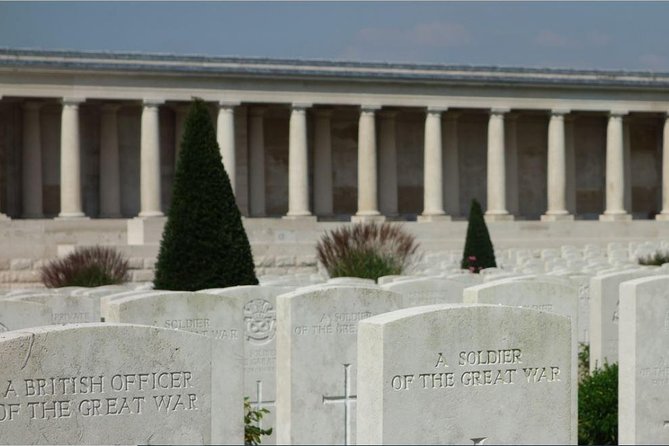
At the Villers-Bretonneux Military Cemetery, you stand on hallowed ground that links Australia directly to the Western Front. The guide explains Australia’s part in WW1 and highlights the Allied counter-attack in April 1918. You also get time to pay respect at the graves of the “Diggers.”
What I like here is that the schedule gives you actual breathing room, not just a quick stop-and-go. Even if you are visiting for history, you still come away with a sense of what personal loss looks like when it is laid out in rows.
Sir John Monash Centre: the hands-on memorial you will remember
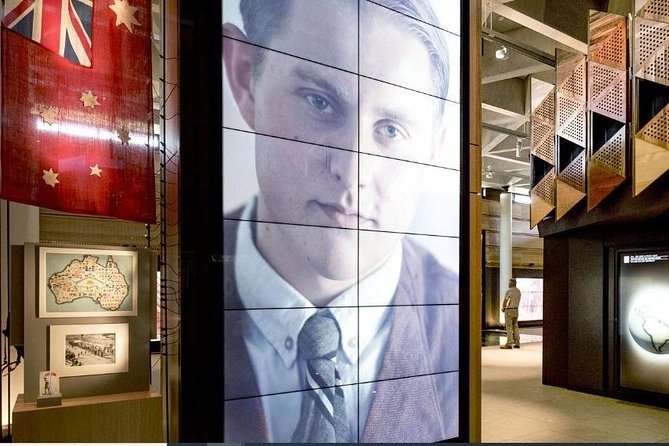
Then comes the Sir John Monash Centre, and this is the stop many people circle as their favorite for a reason. The centre tells Australia’s story through interactive media and immersive experiences, using words from those who served, including letters and diaries. You see life-size images and you are guided through the journey of ordinary Australians, not just military strategy.
The centre is about 1 hour, and admission is included. If you want one practical tip, it is this: go in with a slightly slower pace than you think you need. The best sections hit harder when you let them settle.
One more honest heads-up from real-world experience in this region: the centre can sometimes be closed, so it pays to keep your expectations flexible and ready to make the most of the other memorial stops if that happens on your date.
Australian Corps Memorial: names carved into the meaning of a place
Next is the Australian Corps Memorial, set at the heart of the CWGC cemetery. It is described as the last memorial of the Great War to be erected, inaugurated on 22 July 1922. The walls engrave 10,729 Australian servicemen.
Even if you do not know every name, the sheer number creates an instant scale shock. The guide also connects it to the ANZAC Day dawn gathering, which helps you understand why this location still matters today.
The Somme valley viewpoints: learning the terrain behind the battles
After Villers-Bretonneux, you shift from memorial sites into the wider geography of the Somme. This is a key part of making sense of 1916. When you understand the valleys and sightlines, the battles stop being abstract dates and start feeling like real movement through real ground.
Chipilly viewpoint and the Battle of the Somme context
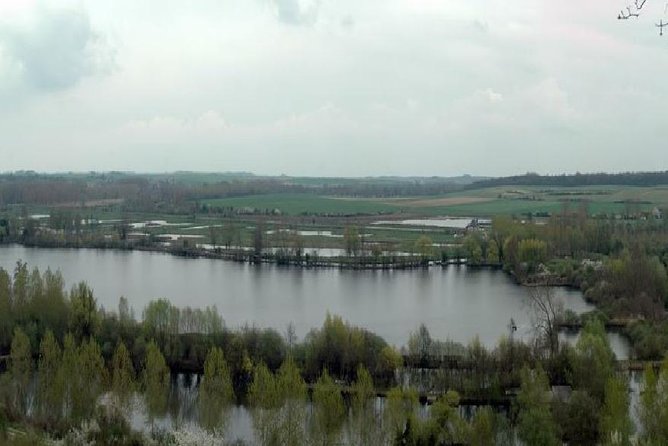
At Chipilly, you get a short stop from the Camp Cesar viewpoint for a panoramic look at the Somme valley, the area that gave its name to the famous Battle of the Somme in 1916. You also get discussion of the battle’s beginning: why it was planned and what nations took part.
This is also where the guide’s storytelling style shows up. You do not just see a view, you understand why anyone thought they could win here, and what it cost when reality hit.
The 58th British Division Memorial and the horse monument detail
You will briefly stop to see the 58th British Division Memorial at Chipilly. It is a stone monument of a soldier comforting his wounded horse, inaugurated in 1922, by French sculptor Henri Gauquié. It is a reminder that war affected people and animals in the same brutal economy of survival.
Even though this is not an Australian-only stop, it adds context. Commonwealth battlefields are shared maps, and you feel that more when you see allied memorials built into the same terrain.
Brebières Basilica: neo-Byzantine architecture rebuilt after total destruction
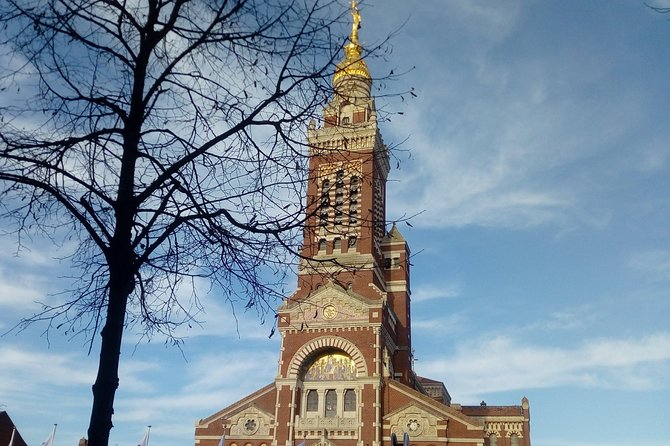
Next is Basilica Notre Dame de Brebières, described as neo-Byzantine style and built at the end of the 19th century. The basilica was destroyed during the Great War, then reconstructed identically by Edmond Duthoit, the son of the original architect.
The dome is covered with gold sheets and bears the statue of the Virgin Mary holding baby Jesus. The guide shares the story attached to this statue during WW1, which is where architecture becomes more than scenery. It turns into a symbol of rebuilding, faith, and local identity after catastrophe.
This is also a good pause point. After Lochnagar Crater and Pozières, your brain needs one stop that is about meaning and restoration rather than raw battlefield mechanics.
Lunch at Le Hygge: a practical break in the middle of heavy sites
Between the major battlefield stops, you get about 1 hour for lunch at Le Hygge Restaurant Brasserie. Lunch is not included, so budget for it, and plan to keep it simple and quick. This kind of day has a lot of emotional and physical weight, and you want fuel that does not slow you down.
If you can, eat something you can digest easily and save your heavy choices for another meal. You will likely spend the afternoon standing at memorials, reading plaques, and walking short distances, and comfort really matters.
Pro tip: if you have family connections, this is a good time to write down the names you want to ask about later. The guide may be able to connect you with relevant details during the day.
Lochnagar Crater: the ground that was engineered to change everything
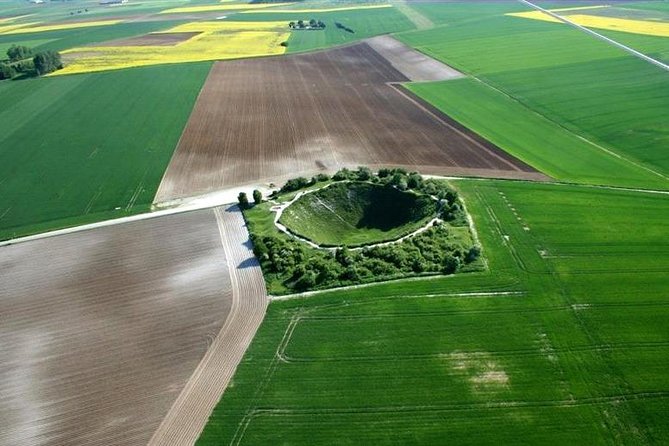
Then you reach Lochnagar Crater, in the 1916 Battle of the Somme sector. This site was created by a large mine placed under German front lines on the first day of the Battle of the Somme. It was one of 19 mines placed beneath the German lines, from the British section of the Somme front, to help infantry advance at the start.
The size is staggering: about 70 feet deep and 330 feet wide, described as the largest crater in the Somme. Seeing it gives you a different kind of understanding than reading about it. It makes the battle feel like an industrial act, not just a clash of soldiers.
Your stop time is about 20 minutes, and it is the kind of visit where you will want a few quiet moments. Photos are fine, but the bigger win is taking in the scale and letting your mind connect it to what happened immediately afterward.
Pozières and the 1st Australian Division Memorial: sacrifice you can map
From Lochnagar, the tour moves to Pozières, where Australian memory gets extremely specific. At the 1st Australian Division Memorial, the guide explains the battle, with reference to Australian official historian Charles Bean and the intensity of loss there. Pozières saw around 7,000 Australian lives lost, in a battle running from 23 July to 3 September 1916.
This stop is about 20 minutes, which is enough time to learn the story and still have time to stand with it. The tour doesn’t rush you through the details, but it also keeps you moving so you do not get stuck only reading text.
The windmill memorial and the story of tanks nearby
You also visit the Windmill site at Pozières, established as an Australian memorial in the 1930s based on Charles Bean’s suggestion. It commemorates 23,000 casualties, including some who died in the surrounding countryside. Opposite this area stands the Tank Memorial, where the guide talks about the role of tanks on the Western Front and what changed in modern warfare.
Even if tanks are not your main interest, this adds balance. It shows you that WW1 memorials are not only about the worst of static trench lines, they also capture attempts to break the stalemate.
Mouquet Farm: another Pozières-linked point of the story
The day includes Mouquet Farm as an additional memorial stop. You might find it particularly meaningful when you already feel the emotional weight building at Pozières, because Mouquet Farm helps connect the fighting to the wider network of locations around the area.
Thiepval Memorial for the Missing: when names are the story
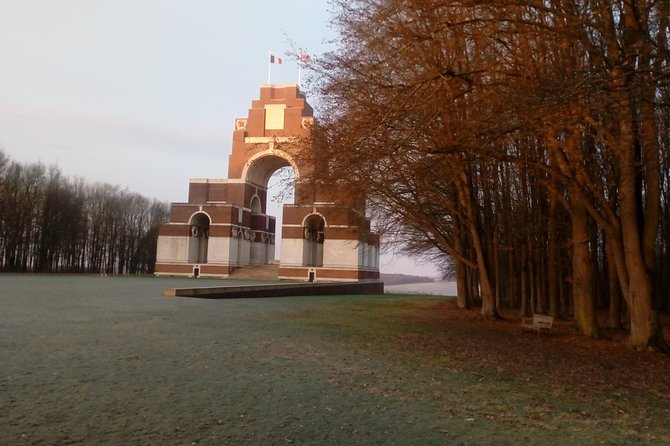
By the time you reach the Memorial de Thiepval, the day moves from battles to the long aftermath of the missing. The Memorial of the Missing is described as the largest British war memorial in the world, overlooking the rolling countryside of the Somme.
It engraves names of over 72,000 soldiers who were missing or whose bodies were found but not identified. The guide also explains what it meant to families when someone was missing, and how that uncertainty stretched far beyond the fighting.
You get about 45 minutes here, which tells you this stop is not meant to be skimmed. Read a few names carefully, then pause and let the message sink in. This is a different kind of grief from cemetery rows, and it hits in a quieter way.
You will also see the nearby Ulster Tower, Northern Ireland’s national war memorial, opened in 1921. It commemorates men of the 36th Division and those from Ulster who served in WW1. From the hilltop, you may still see traces of the Somme front lines and the remains of a German machine gun post in the field opposite.
Beaumont-Hamel and Newfoundland identity: a separate island story on the same battlefield
The tour ends by shifting toward Memorial Terre-neuvien de Beaumont-hamel at the Newfoundland Memorial Park. This is described as the largest battlefield site in the Somme and as the memorial dedicated to all Newfoundlanders who served in WW1.
The guide explains that the Battle of the Somme was the first major engagement for the regiment, where they suffered staggering losses on 1 July 1916. The ground was purchased in 1921 by women of Newfoundland and their government, and it became a symbol of sacrifice and a source of identity for the island.
You get about 30 minutes here, which is a good length. It gives you time to understand what Newfoundland contributed, and it helps you see that the Somme is not a single national story. It is the overlapping grief of multiple communities who fought and waited in different ways.
Price and logistics: is $253.97 good value for this kind of day?
At $253.97 per person, this is not a cheap day trip, but it is also not just a “bus to monuments” experience. You are paying for an experienced English-speaking guide plus a schedule built around major, meaningful sites and included admissions.
Here’s where value shows up:
- Sir John Monash Centre admission is included, and the rest of the stops listed here have free admissions.
- The tour includes all fees and taxes, so you are not surprised at the gate.
- It is private, so the guide can adjust to your interests and questions instead of talking through one standard script.
The main cost you still control is lunch, since it is not included. So the true cost is more like the ticket price plus whatever you choose for a meal.
If you want the best value, come prepared with at least one detail to ask about. Even a name from your family tree can turn a general history explanation into something personal and memorable.
Who this tour suits best (and who might want something else)
This is ideal if you want an Australian-focused WW1 day with real site context. You get major Australian memorial stops, the Monash Centre storytelling, and then a wider Commonwealth lens at Thiepval, Ulster Tower, and Beaumont-Hamel.
It also suits people who want structure. The day includes set times like 20 minutes at several memorials and 45 minutes at Thiepval, so you will know roughly how the pacing works. The guide can also be flexible with interests, and there is evidence of personal touches like researching family details ahead of time.
This might be less ideal if you hate long days or you want a low-intensity outing. The tour asks for moderate physical fitness level and you will spend time standing and walking at sites. Comfortable shoes are not optional.
Should you book this Australian Battlefields Tour from Amiens?
If your heart is in WW1 memory and Commonwealth history, I think this is a strong booking. The mix of memorials, interactive storytelling at the Monash Centre, and battlefield ground like Lochnagar Crater and Pozières gives you more than “sightseeing.” You come away with a map in your head and a sharper sense of what names and places actually mean.
Book it if you want:
- Australian WW1 focus with strong site context
- A guide who can connect details to questions, including family connections
- Included admissions where they count, especially Sir John Monash Centre
Consider another option if you prefer very short tours, or you are not up for an all-day schedule with multiple standing stops. Otherwise, this is exactly the kind of day that turns history into something you feel.
FAQ
When does the tour start, and is there pickup?
The tour starts at 9:00 am, and pickup is offered. Your guide will wear a guide badge so you can identify them.
How long is the full day Australian battlefields tour?
The duration is listed as about 8 hours.
Is the tour offered in English?
Yes. The tour is offered in English.
Is lunch included?
Lunch is not included. The tour includes about 1 hour for lunch at Le Hygge Restaurant Brasserie, but you will pay for your meal.
Are any admissions included?
All fees and taxes are included. The Sir John Monash Centre admission is included, and the other listed stops are marked as free admission.
Can I cancel for a full refund?
Yes, you can cancel for a full refund up to 24 hours before the experience’s start time.
The Whole Amiens Shelf
- Musee Somme 1916 Admission Ticket
★ 4.5 · 105 reviews
The rest of the Amiens write-ups
- Full day Australian Battlefields Tour★ 5.0 · 92 reviews
Full-Day, in full.
 ★ 4.4Paris: Parc Astérix Full-Day Entrance TicketFrom $631,697 reviews
 ★ 4.4From Paris: Full-Day Loire Valley Chateaux TourFrom $1271,269 reviews
 ★ 4.8From Nice: The Best of the French Riviera Full Day TourFrom $1121,130 reviews
 ★ 4.8From Paris: Reims and Champagne Tasting Full-Day TourFrom $411610 reviews
 ★ 4.8Bordeaux: Saint-Emilion and Medoc Full-Day Wine ExperienceFrom $212582 reviews
 ★ 4.0From Paris: Full-Day Guided Tour of VersaillesFrom $152548 reviews
 ★ 4.5Nausicaá National Sea Center: Full-Day Entry TicketFrom $35541 reviews
 ★ 5.0Paris: Your Perfect Private Customized Day Tour–Half or Full DayFrom $249536 reviews