
Reviewed · PARIS ART MUSEUMS
Musee Somme 1916 Admission Ticket
War below ground hits different.
This museum experience puts you in the middle of the Somme WWI story, including the staggering reality that 56,000 British soldiers were killed on the first day alone. I love the multi-language format (English, French, German, Dutch), and I also like the way the visit mixes trench scenes, artifacts, and sound-light effects for an unforgettable sense of place. One drawback to plan for: the museum is not actually in the center of Amiens, it is about 20 miles out, so factor that travel time in.
You enter through an entrance hall by the Basilica and then slip into a 250-meter-long tunnel, about 10 meters below the surface. The staging is careful, and the mood is intense in a way that still feels educational, not just dramatic. If you want an easy walk with lots of fresh-air time, you will get it at the end, but the main body is definitely underground.
The payoff comes when you exit into Albert’s town park and the city’s Arboretum, with views over the Ancre River and its cascades. For most people, this works as a focused 1 to 3 hour visit, especially if you like museum storytelling that stays grounded in real objects.
In This Review
- Key points at a glance
- Musee Somme 1916, the trench museum you walk into
- Entry experience: the tunnel, the staging, and the pacing
- Four languages: how English fits into the experience
- Trench warfare storytelling: fifteen alcoves and real artifacts
- Sound and light effects: realistic, but still a museum
- Gallery of Heroes: nine individuals, shifting the focus
- Exiting to daylight: Albert’s town park and the Ancre River
- Price and value: why $9.67 can make sense here
- Practical timing: opening hours and how to fit it in
- What to bring, and what to expect when you arrive
- Who should book Musee Somme 1916
- Should you book? My decision guide
- FAQ
- How long does the Musee Somme 1916 ticket visit take?
- Where is the museum, relative to Amiens?
- What languages are available for the visit?
- What is included with the admission ticket?
- Are food and drinks included?
- What are the opening hours?
- Is there a limit on group size?
- Do children need to be accompanied by an adult?
Key points at a glance
- 250-meter underground tunnel that starts you 10 meters below the surface
- Four languages available for the visit, including English
- Fifteen trench-warfare alcoves plus 25 display cabinets of artifacts
- Sound and light effects that make the bombardment scenes feel real
- Gallery of Heroes featuring nine individuals and their war contributions
- Exit through the Arboretum for Ancre River views after the heavy history
Musee Somme 1916, the trench museum you walk into
Musee Somme 1916 is built around one idea: you should not just read about the Somme campaign, you should feel how war life could be crowded, underground, and claustrophobic. The layout is what makes it work. You start above ground near the Basilica, then you move into a long tunnel, 10 meters down, and that drop sets the tone right away.
I like that it is not only about dates and big-picture strategy. It is about how the war looked and sounded from the inside. The museum tells the story in scenes, supports it with physical artifacts and weaponry, and then finishes with a more personal section on individuals. That mix helps you keep your bearings, even while the subject matter is brutally heavy.
Still comparing options? These are other tours in Amiens we have reviewed.
Entry experience: the tunnel, the staging, and the pacing
The visit begins in an entrance hall by the Basilica. From there, you head into a 250-meter tunnel that runs about 10 meters below the surface. This is not a quick hallway. It is a slow ramp into the museum’s world, and it changes how you perceive everything that comes after.
As you leave the tunnel, you do not go straight into the main rooms. You pass through the souvenir shop, then transition toward Albert’s town park. That exit path matters because it keeps the experience from ending abruptly. You get a shopping and reflection moment, and then you step back into daylight, where the air feels different.
Timing-wise, plan for 1 to 3 hours depending on how closely you study the artifacts and how long you pause at the sound-and-light moments. The museum structure makes it easy to move at your own pace, because the storytelling is broken into distinct sections you can linger in.
Four languages: how English fits into the experience
One of the most practical perks here is the language choice. The museum visit is available in English, French, German, and Dutch. For many people, that is the difference between a museum you speed through and one you actually understand.
When a museum offers multiple languages, it usually means the experience has been planned so the story works for different audiences, not just translated after the fact. That is especially important in war history, where small details, naming, and context can make a big difference.
If you are traveling with mixed-language group members, this is a rare case where everyone can do the same core visit without splitting into separate activities. The experience also runs for a small group size, with a maximum of 15 travelers, so you are less likely to feel swallowed by a large crowd.
Trench warfare storytelling: fifteen alcoves and real artifacts
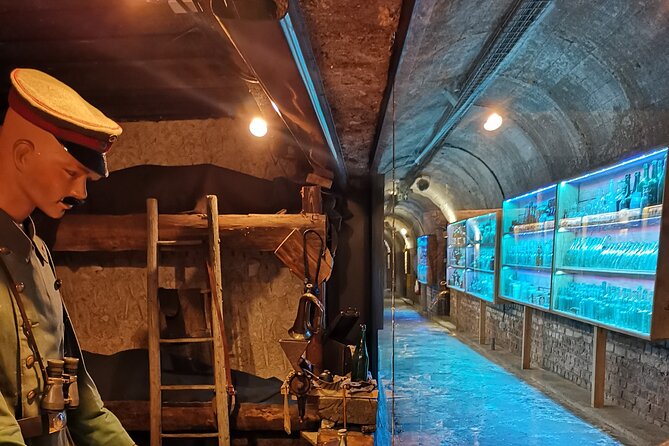
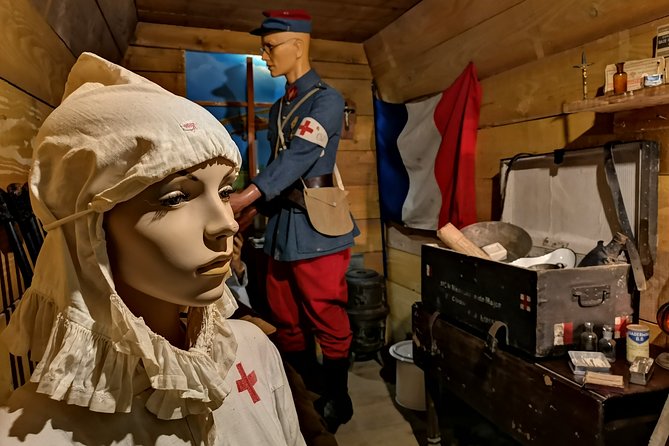
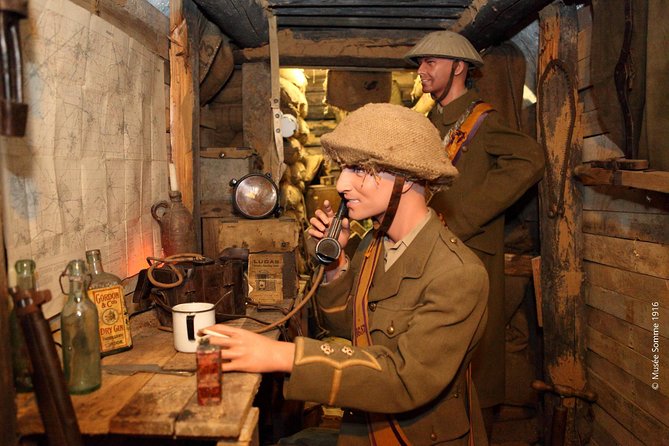
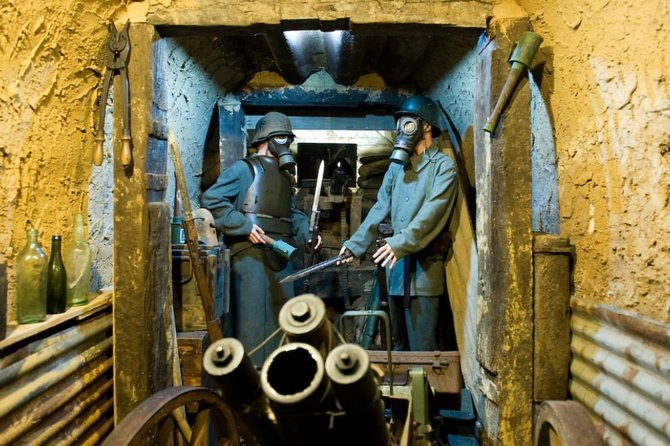
The core of Musee Somme 1916 is a sequence of fifteen trench-warfare scenes arranged in alcoves. These are not random dioramas. They are meant to carry you through the logic of trench life and trench warfare as it played out on the Somme in 1916.
After the tunnel, you enter this series and begin to see how the museum builds its narrative. You are guided by the scene order, and each stop keeps a clear focus on war conditions rather than turning into a general WWI exhibition. That makes it feel more coherent, like you are following a storyline instead of reading disconnected panels.
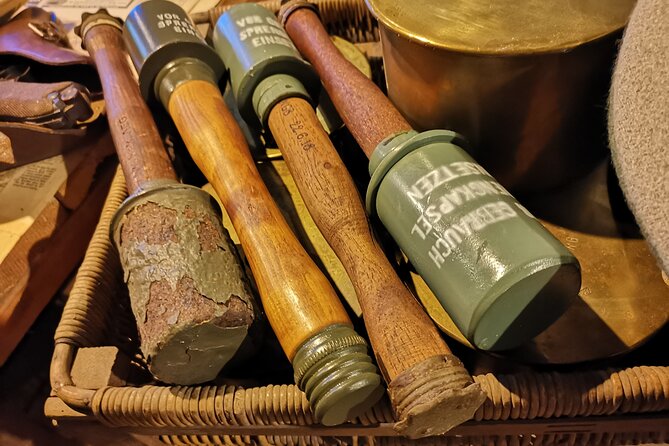
What strengthens the storytelling is that it is paired with objects. There are 25 display cabinets where you can study WWI-era items and weaponry. Even if you are not a weapons person, you can learn a lot from seeing how equipment looked and how it was used. Physical displays also slow you down in a good way, because they encourage careful looking.
Sound and light effects: realistic, but still a museum
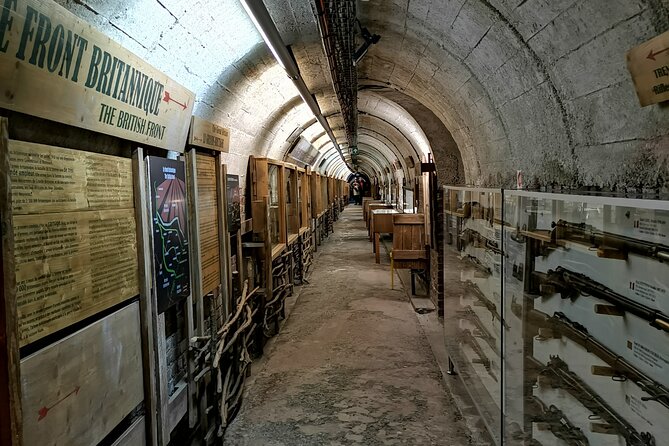
Musee Somme 1916 uses sound and light effects to pull you back into the time of the Great War. In practical terms, that means some moments are designed to simulate bombardments and the tense atmosphere that went with them.
This is where I think the museum shines for most visitors. Effects help translate something that is impossible to fully imagine from books alone. The staging can make you understand why soldiers felt trapped and why conditions were so relentless.
That said, if you are sensitive to loud audio or intense lighting, you might want to take breaks during the strongest moments. The museum is not a theme park, but the design aims to create realistic feelings, and the subject matter is already heavy.
Gallery of Heroes: nine individuals, shifting the focus
The last part of the visit is the Gallery of Heroes, dedicated to nine individuals who distinguished themselves during the war. This section gives you a different kind of closure. Instead of only thinking in terms of units and battles, you are nudged toward personal stories.
I like this structure because it prevents the experience from becoming one-note. You still deal with suffering and scale, but you also get a reminder that history is made of real people, with real actions and decisions.
There is an emotional punch here, and it can spark complicated feelings. War remembrance is rarely tidy, and the museum’s portraits and reconstructions are designed to provoke thought, not just admiration. If you prefer your history strictly factual with no emotional styling, this may feel more intense than you expect. If you are okay with reflection, it lands well.
Exiting to daylight: Albert’s town park and the Ancre River
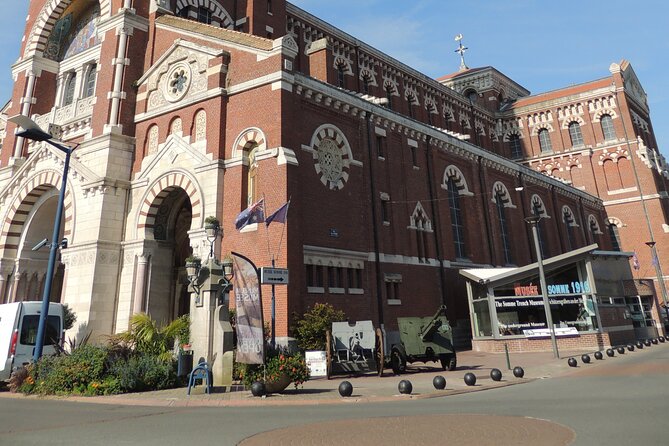
The museum exit is part of the experience. When you finish the indoor sections, you come out into Albert’s town park and the city’s Arboretum. Then you can discover the Ancre River, including its cascades and the views over the water.
This is not just a nice stroll. After spending time underground with trench scenes and battlefield effects, stepping into open air gives your brain a reset. The shift from enclosed war spaces to a calmer landscape helps you process what you just saw.
If you like finishing a museum visit by walking off your thoughts, this helps. It gives you an easy way to spend a few extra minutes outside without feeling like you have to plan anything complicated.
Price and value: why $9.67 can make sense here
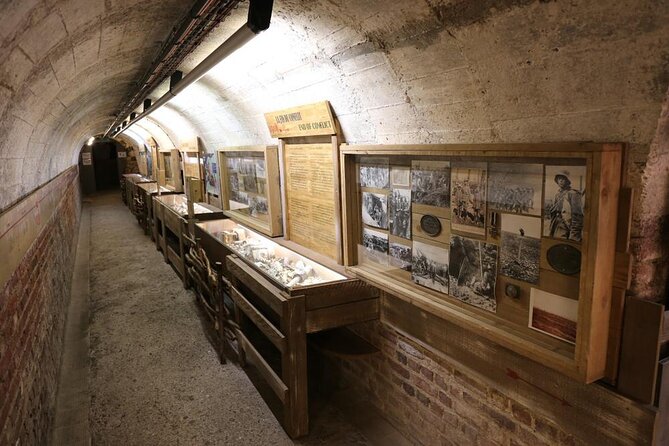
At $9.67 per person, the price is surprisingly easy to justify for what you get. This is a ticketed museum visit with admission included, plus a new free app. You are also getting access to a multi-part, multi-sensory layout: underground tunnel, fifteen alcoves of scenes, 25 artifact cabinets, and sound-light effects.
Value comes from the time-to-understand ratio. For many visitors, the visit is long enough to absorb context and short enough to avoid museum fatigue. You get 1 to 3 hours of focused content without having to commit to a whole day.
One more value point: the small group size (up to 15 travelers) tends to keep the experience feeling more controlled and less chaotic than big, bus-group museum days. That matters because the content is intense. You want space to look, read, and slow down.
Practical timing: opening hours and how to fit it in
Musee Somme 1916 is open Monday to Sunday, 9:00 AM to 6:00 PM, for the period listed in 2026. That wide daily window makes it easier to plan around your other stops in the region.
Because the museum is about 20 miles out from Amiens, you will do best if you treat it like a dedicated visit rather than an add-on you squeeze in during a tight city-only itinerary. Start your day with it, then use the afternoon for lighter activities. Or do the reverse if you already have Amiens plans.
In terms of energy level, expect the underground portion to feel mentally heavy. Build in a little buffer time after, so you are not rushing straight to something loud and crowded.
What to bring, and what to expect when you arrive
The basics are simple. You are visiting a museum with underground sections, galleries, and display cabinets, so comfortable shoes are a good idea. You might also want a moment of patience for the most intense sound-light segments.
Food and drinks are not included, so if you need lunch you will have to plan around it. Since the exit leads you into Albert’s town park area, you may find that you want to keep your next step flexible after your visit.
Also, while the museum experience is designed for most travelers, it is best when children are supported by an adult. If you are traveling with kids, this can still be a meaningful family stop, and the museum’s structured storytelling helps keep attention.
Who should book Musee Somme 1916
This is ideal if you:
- want a WWI museum with a strong sense of place, not just text panels
- like guided narrative layouts that move in clear steps through the story
- prefer multi-language access so everyone in your group can follow along
- enjoy museums that end with a walk and views, not only indoor rooms
It is also a good fit for history travelers who care about artifacts and the physical side of war, not only strategy maps. And if you are the type who likes to slow down at display cabinets and actually read what is in front of you, you will get more out of the visit.
If you dislike emotional war remembrance or you are easily overwhelmed by intense sound effects, consider whether you want a gentler museum day instead. The subject matter here is not light.
Should you book? My decision guide
Book Musee Somme 1916 if you want a short, high-impact museum experience that uses location, staging, and artifacts to make WWI feel real. The tunnel, the fifteen alcoves, the artifact cabinets, and the sound-light effects are exactly the kind of design that turns information into understanding. I also think the language options and the free app make it practical for international visitors.
Skip it or reconsider if you are only looking for a quick stop inside Amiens city center, because the museum sits about 20 miles out and feels like its own destination. Also, if you know you cannot handle strong audiovisual moments, plan to take breaks during the intense scenes.
If you do book it, go in expecting an emotional museum. Then let the Arboretum and Ancre River views give you a smoother landing after all that history.
FAQ
How long does the Musee Somme 1916 ticket visit take?
The visit is approximately 1 to 3 hours.
Where is the museum, relative to Amiens?
It is located in the Amiens area of France, but it is not in the center of Amiens. Plan for it to be about 20 miles past Amiens.
What languages are available for the visit?
The museum experience is available in English, French, German, and Dutch.
What is included with the admission ticket?
The experience includes the admission ticket and a new free app.
Are food and drinks included?
No. Food and drinks are not included.
What are the opening hours?
For the listed period in 2026, it is open Monday through Sunday from 9:00 AM to 6:00 PM.
Is there a limit on group size?
Yes. The experience has a maximum of 15 travelers.
Do children need to be accompanied by an adult?
Yes. Children must be accompanied by an adult.
The Whole Amiens Shelf
- Full day Australian Battlefields Tour
★ 5.0 · 92 reviews
The rest of the Amiens write-ups
- Musee Somme 1916 Admission Ticket★ 4.5 · 105 reviews
Paris Art Museums, in full.
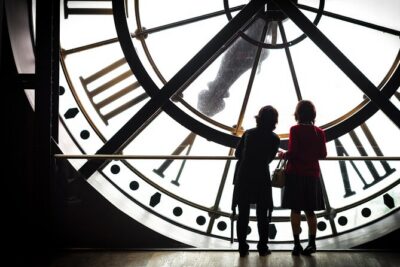 ★ 5.0Paris in a Day: Louvre or Orsay, Eiffel Tower, City Walk & CruiseFrom $1571,956 reviews
 ★ 4.6Paris: Musée d’Orsay Entry Ticket and Seine River CruiseFrom $491,344 reviews
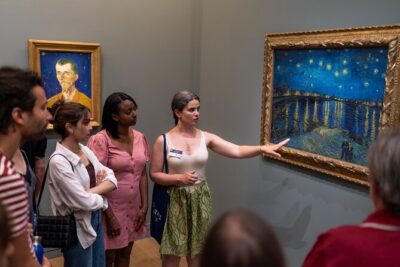 ★ 4.5Paris: Musée d’Orsay Skip-the-Line Tour with Expert GuideFrom $671,145 reviews
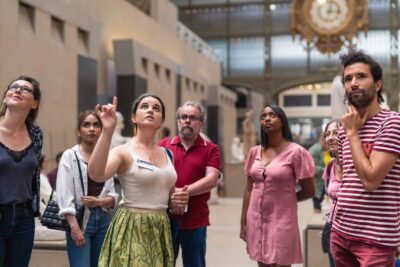 ★ 4.8Musée d’Orsay Skip-the-Line Tour with Expert GuideFrom $821,088 reviews
 ★ 3.9Lyon: Musée de l’illusion Entrance TicketFrom $221,023 reviews
 ★ 5.0The Musée d’Orsay Guided Tour Orsay Museum Semi-Private 6ppl MaxFrom $144904 reviews
 ★ 5.0Louvre & Musée d’Orsay Guided Museum Tour Semi-Private 6ppl MaxFrom $288619 reviews
 ★ 4.5Paris Musée d’Orsay Fully Guided TourFrom $71556 reviews
Also on these France lists