
Reviewed · LATIN QUARTER & LE MARAIS WALKS
Le Marais District & Jewish Quarter – Exclusive Guided Walking Tour
A first-time in the Marais is easy to get lost in. This tour helps you connect the dots fast, with clear guide-led storytelling from medieval lanes to royal squares. I also love that it mixes major sights like Place des Vosges with the Jewish Quarter streets around the Pletzl, all in a tight 2.5 hours.
Two big wins for your trip planning: you get a smart route that hits standout landmarks without bouncing between far-flung areas, and you get top-notch, organized guiding that makes architecture and names actually make sense. Even in rain, guides like Eden and Hugo are known for keeping the group moving and explanations easy to follow.
One thing to consider: this walk is mostly outside, and it does not include entry into synagogues. If your priority is seeing inside religious sites, you will need to plan that separately.
In This Review
- Key things to know before you go
- Entering the Marais, where every street has a chapter
- A 2.5-hour route that stays readable, even with real Paris crowds
- Saint-Paul-Saint-Louis and Hôtel de Sully: start with “old Paris” royalty
- Place des Vosges: the square you should actually stop for
- Musée Carnavalet area: Paris before the postcard
- The Pletzl and Rue des Francs Bourgeois: Jewish Quarter streets without the inside access
- Jardin des Rosiers and Joseph-Migneret: a quiet wartime lesson
- Centre Pompidou and Hôtel de Ville finish: old Paris meets modern Paris
- After the tour: how to use your new Marais map
- Who should book this Marais and Jewish Quarter tour?
- Should you book it or skip it?
- FAQ
- Is the tour offered in English?
- Is this tour private?
- How long is the walking tour?
- Where does the tour start and end?
- Are synagogues included in the tour?
- Do I need tickets for Musée Carnavalet and Centre Pompidou?
- Does the tour run in bad weather?
- Do I have to provide a phone number?
- Can I cancel for a full refund?
Key things to know before you go
- Royal Marais to Jewish Quarter, all on foot in one smooth loop
- Place des Vosges and the major squares you will otherwise only half-notice
- Hôtel Carnavalet area to understand how Paris looked before today’s city
- Rue des Rosiers and its memorial garden, Joseph-Migneret included
- Small-group feel with the option to go fully private
- Two museum-admission stops are extra, while many other sights are free to view
Entering the Marais, where every street has a chapter
Le Marais can feel like Paris at two speeds: Instagram-famous charm on the main lanes, then quieter corners where the city’s long timeline shows up in stone and street layout. This tour is built for that exact contrast. You start with the Marais as an important historic area beyond old Paris’s center, then move toward why it became such a defining neighborhood for Jewish life in the 18th and 19th centuries.
The guide’s job is to make all those names and dates usable. Instead of a list of facts, you get a storyline that links the architecture to what happened here, so you can actually picture the place as it changed over time. Guides such as François and Adrian are often praised for making that history feel clear and organized, not like a school lecture.
The practical benefit is huge: after 2.5 hours, you will know where you are, what you are looking at, and which streets are worth slowing down later. That matters in Paris, because Le Marais rewards curiosity, and this tour teaches you where to aim it.
More walks through the Latin Quarter and the Marais
A 2.5-hour route that stays readable, even with real Paris crowds
The tour runs about 2.5 hours, and it’s designed to be manageable on foot. The pace fits moderate physical fitness, and it continues in all weather, rain or shine. That means you should dress for a long walk, not a quick stroll.
You will be walking from landmark to landmark, with short time blocks that keep the day moving. Many stops are “see it from the outside” moments, plus brief context so you understand why that specific building or square matters. The guide also manages the group well, and that shows up in reviews mentioning organization and clarity, even during busy days or weather.
One small but important detail: you are asked to provide a mobile phone number (with country code). Paris tours often rely on quick contact if the route changes, and this one notes that it can happen.
Also plan for this: national celebrations can affect the route. When that happens, you still see the highlights but the path may shift, and refunds or discounts are not offered in those cases. In other words, expect Paris to be Paris.
Saint-Paul-Saint-Louis and Hôtel de Sully: start with “old Paris” royalty
Your first stop grounds you in the 17th century with Église Saint-Paul-Saint-Louis. It was built by the Jesuits, inspired by the famous Gesù church design in Rome. Even if you only catch the exterior, the guide’s explanation helps you connect the look of the church to a bigger European story.
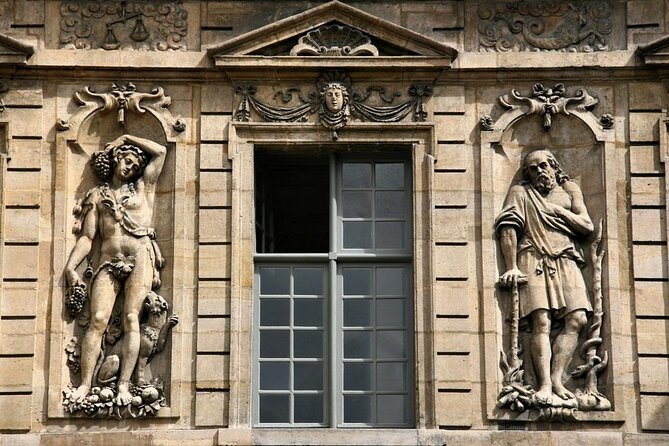
Next you pass Hôtel de Sully, built between 1624 and 1630. This is one of those buildings that feels impressive in person, but it can also feel like “just another grand façade” if you do not know what to look for. Here, you get the Renaissance design with baroque elements, plus why the Marais was a major stage for monumental building during that period.
Then comes a key transition: the tour sets you up to understand the Marais as both a historic zone and a lived neighborhood. That matters because Le Marais is now known for trendy shopping. This tour gives you the earlier context so you do not experience it as a theme park.
If you like architecture and religious history, this opening sequence sets the tone well. If you are less into buildings, the explanation still helps because the guide links the structures to people and power.
Place des Vosges: the square you should actually stop for
It’s easy to walk past squares in Paris like they are just wide spots to cross. The tour treats Place des Vosges like what it is, the oldest planned square in Paris and one of the most beautiful public spaces in the city.
You get time to experience it properly, not just a photo stop. The guide’s commentary helps you understand why this kind of designed space was important, and how it fits into the royal story of the Marais.
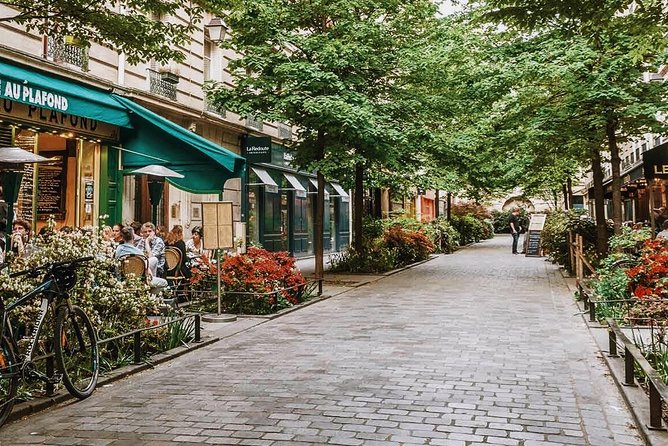
After that, you walk along Rue des Francs Bourgeois, a longer street known for fashion boutiques and a very current, trendy feel. The trick is that you will not see it as random shopping. You get a sense of how the Marais’s physical layout kept shaping life here, even as tastes changed.
This is where the tour becomes useful for your day after the tour. You will know the difference between a street you can browse quickly and one where it’s worth lingering, because you’ll understand what kind of place you’re in.
Musée Carnavalet area: Paris before the postcard
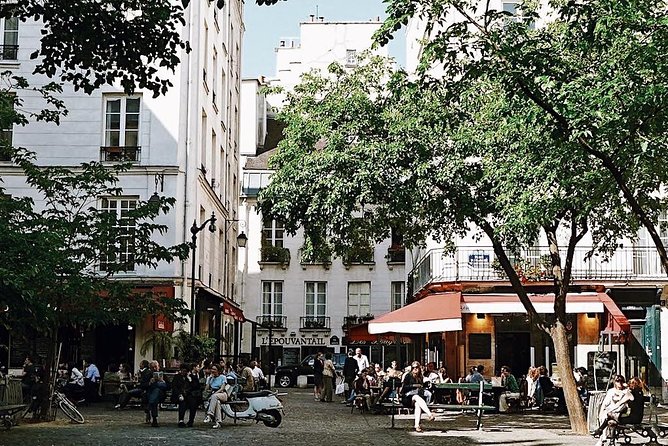
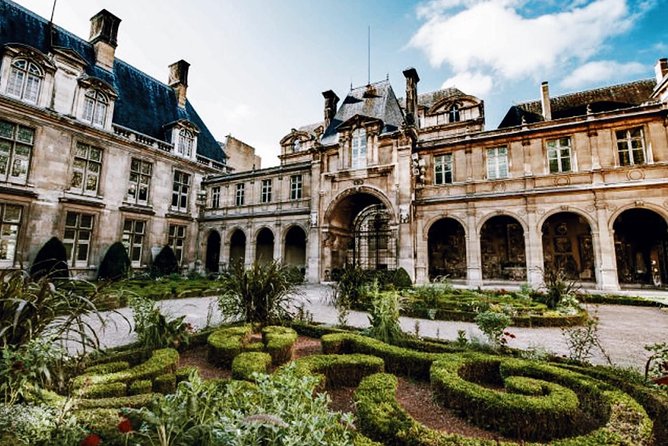
One of the most practical segments is the area around Hôtel Carnavalet and the Musée Carnavalet, which focuses on the history of Paris. The building itself is a rare example of Renaissance architecture in Paris, and that makes it a strong stop even if you are not planning to spend museum time later.
Important detail: Musée Carnavalet admission is not included. So you are mainly looking at the site and getting the context that helps you decide whether to enter the museum on your own. The tour gives enough story that the museum feels relevant, not like extra homework.
Why this helps you as a traveler: if you only do one museum in Paris, you might choose based on what you want to feel. The Marais tour pushes you toward “understand the city” mode, because you hear how Paris grew and changed across centuries.
If you do enter the museum, you will likely find that you can follow the exhibits better because the guide has already put the neighborhood’s role into place.
The Pletzl and Rue des Francs Bourgeois: Jewish Quarter streets without the inside access
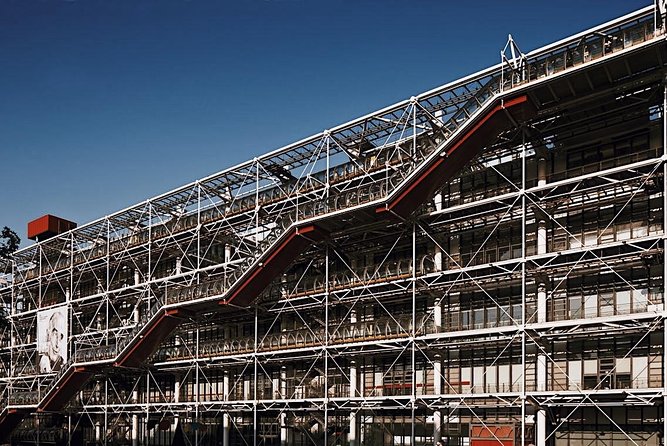
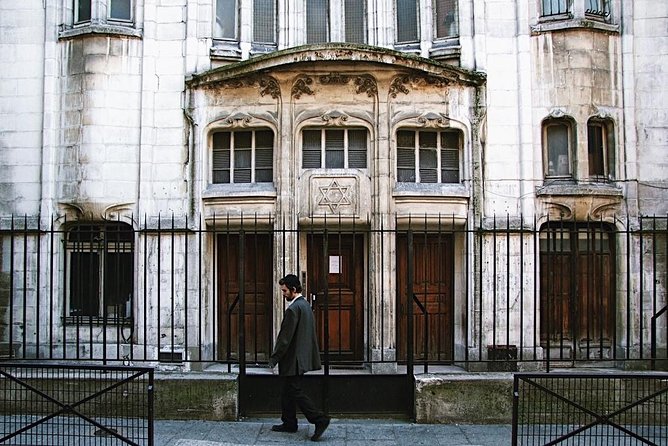
The Jewish Quarter portion is the heart of the tour. You move through the streets associated with the Pletzl, where bakeries and boutiques give the area its everyday energy. You also walk Rue des Rosiers, which sits at the center of the Jewish Quarter.
You should know this clearly: the tour does not include entry into synagogues, since access is restricted for security reasons. That can be disappointing if your dream is to see religious interiors, stained glass, and private spaces up close. On the upside, you still learn the meaning behind streets and landmarks, and you do it in the exact neighborhood where the stories developed.
The best way to think about this portion is that you are learning from the street geography. You see where people lived, worked, and gathered, and you connect that to the historical arc the guide lays out. Guides are often praised for blending Jewish history with Parisian context, so the neighborhood feels like it belongs to the full city story, not a side note.
One review-related consideration shows up here too: if you are hoping for lots of detail about current Jewish life in Paris, this tour may focus more on historical landmarks than on today’s community. Still, the streets themselves give you plenty to notice and explore after.
More Paris tours that come with a guide
- Paris: Louvre Guided Tour with Reserved Access & Boat Cruise
★ 4.3 · 16,353 reviews - Louvre Museum Masterpieces Guided Tour with Access
★ 4.5 · 12,023 reviews - Louvre Museum – Exclusive Guided Tour (Entry Included)
★ 5.0 · 6,296 reviews - Louvre Priority Access with Mona Lisa Escort or Guided Option
★ 4.0 · 4,420 reviews - Louvre Museum: Skip-the-Line Small Group Guided Tour
★ 4.6 · 3,960 reviews
Jardin des Rosiers and Joseph-Migneret: a quiet wartime lesson
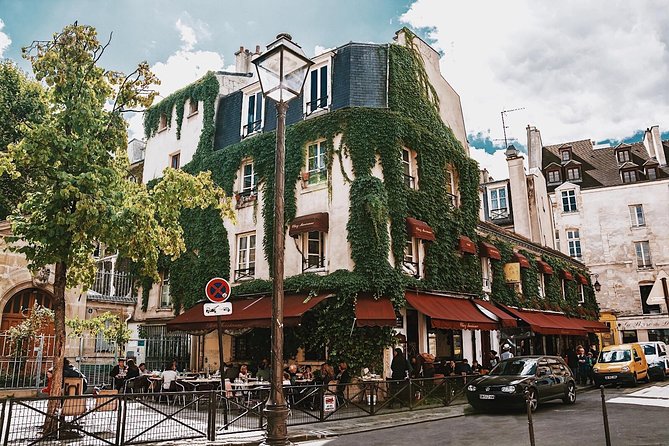
A short walk leads you to Jardin des Rosiers, a small garden tucked between buildings and hidden behind shops. This stop works because it interrupts the noise of shopping streets with a still, respectful moment.
The garden honors Joseph Migneret, a school principal who helped dozens of students by hiding them in his home during World War II. He was later arrested and killed. The guide’s explanation turns the space into a memory you can actually carry with you.
What I like about this part is how it balances the tour. Earlier stops can feel like you are collecting landmarks. Here, you slow down and absorb what those landmarks represent in human terms.
If you are sensitive to moving stories, give yourself a second before continuing. This garden is small, but the meaning is not.
Centre Pompidou and Hôtel de Ville finish: old Paris meets modern Paris
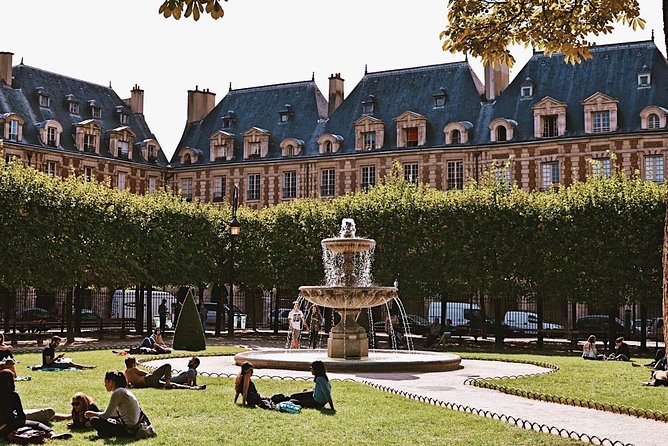
As you approach the end, you shift from the deep historic core toward landmarks that show Paris’s different eras.
First, you get to Centre Pompidou, known for contemporary art and its high-tech exterior style. Admission is not included, so you are viewing it as an architectural and cultural milestone from outside. The guide ties it to the idea of bringing together different forms of art and literature in one place, connected to France’s cultural ministry at the time.
Then the tour ends at Hôtel de Ville (City Hall). This isn’t just another impressive façade. It has served as the municipality’s headquarters since 1357, so it anchors the administrative side of Paris history in a very literal way.
Just next to Hôtel de Ville, you also catch a glimpse of Église Saint-Gervais-Saint-Protais, noted as an early example of French baroque style in Paris. The church is now associated with the Monastic Fraternities of Jerusalem, which again gives you a fresh angle on how religious space can evolve over time.
You finish with a strong sense of both worlds: centuries of governance and culture, then the modern “Paris of institutions and art” energy.
After the tour: how to use your new Marais map
The best part of a guided walk is what it gives you after. When you leave, you should be able to do two things: navigate confidently and choose where to linger.
In Le Marais, that usually means heading back toward the streets you learned were historically meaningful, not just the ones with the biggest crowds. Rue des Rosiers and the Pletzl area are great for a later browsing loop, especially if you want snacks and a slower pace after the tour.
Place des Vosges is also ideal for a follow-up stroll. Early evening can change the feel a lot, and you will already know what you are looking at, which makes it more satisfying than another quick pass.
If you want to go one step further, you can decide about Musée Carnavalet right then. Since the museum entry is not included, your guide’s context helps you decide if you want to spend your time inside.
Overall, this tour is a strong “orientation plus story” experience. It makes the rest of your Marais day feel smarter.
Who should book this Marais and Jewish Quarter tour?
This is a great fit if you want:
- a structured, short walking format that covers a lot without exhausting you
- strong background on the Marais and the Jewish Quarter from a guide who keeps stories clear
- a route that hits top landmarks like Place des Vosges, Hôtel de Ville, and Saint-Paul-Saint-Louis
It’s also a good choice if you are traveling solo or as a couple and you like the security of a planned route. Reviews often highlight guides like Hugo, Eden, Alasdair, Adrian, François, and Agustina/Agustina-type names for being organized, easy to hear, and engaging, including when the weather turns.
The main mismatch is for people who specifically want synagogue interiors or a lot of modern community programming. The tour intentionally does not include synagogue access, and the stops around the Jewish Quarter are street-based and landmark-based.
Should you book it or skip it?
I think you should book if your goal is to leave Paris with a real sense of how the Marais became what it is today, plus the ability to walk the neighborhood afterward without guessing. At $59.69 for about 2.5 hours, you are paying for a tight route, a focused guide, and the interpretation that turns famous addresses into meaningful places. Since most sights are free to view and only a couple of entries are extra, it’s a good value structure.
Skip it if you want mostly museum time, synagogue entry, or deep coverage of today’s Jewish community. For that, you will need a different plan.
If you are curious, comfortable walking a couple of hours, and you want the Marais to make sense, this one is an easy yes.
FAQ
Is the tour offered in English?
Yes, the tour is offered in English.
Is this tour private?
It is described as a private walking tour/activity, where only your group participates. The included private guide detail may not apply if you choose a semi-private option.
How long is the walking tour?
The duration is about 2 hours 30 minutes (about 2.5 hours).
Where does the tour start and end?
It starts in Saint-Paul 75004 Paris, France and ends in Le Marais, Paris.
Are synagogues included in the tour?
No. The tour does not include entry into any synagogues because access is restricted for security reasons.
Do I need tickets for Musée Carnavalet and Centre Pompidou?
Musée Carnavalet and Centre Pompidou are marked as admission ticket not included, so you would need to pay separately if you want to enter.
Does the tour run in bad weather?
Yes. The tour runs rain or shine.
Do I have to provide a phone number?
Yes. It is imperative that you provide guests with a mobile phone number (including country code).
Can I cancel for a full refund?
Yes. You can cancel up to 24 hours in advance for a full refund. If you cancel less than 24 hours before the start time, the amount paid is not refunded.
Everything Else Filed Under Paris
- Paris: Louvre Guided Tour with Reserved Access & Boat Cruise
★ 4.3 · 16,353 reviews - Paris: Big Bus Hop-On Hop-Off Tour with Optional Cruise
★ 4.4 · 13,279 reviews - Louvre Museum Masterpieces Guided Tour with Access
★ 4.5 · 12,023 reviews - Versailles: Skip-the-Line Tour of Palace with Gardens Access
★ 4.7 · 9,778 reviews - Mona Lisa & Louvre Masterpieces Tour with Reserved Access
★ 4.6 · 6,812 reviews
The Whole Paris Shelf
- Paris: Louvre Museum Timed-Entrance Ticket
★ 4.6 · 71,977 reviews - Disneyland® Paris 1-Day Ticket
★ 4.6 · 49,412 reviews - Paris: Versailles Palace and Gardens Full Access Ticket
★ 4.6 · 41,579 reviews - Paris: Evening River Cruise with Music
★ 4.4 · 22,721 reviews - Paris: Eiffel Tower Entry Ticket with Optional Summit Access
★ 4.4 · 20,035 reviews
Latin Quarter and Marais, More Walks
- Award-Winning Paris French Bakery Experience — Le Marais, 4th Arr
★ 4.5 · 1,186 reviews - Paris Le Marais Food Tour With 10+ Tastings, Cheese, Wine & More
★ 5.0 · 985 reviews - Paris Le Marais District Original Food and Wine Tasting Tour
★ 4.5 · 880 reviews - Paris Bike Tour Hidden Secrets in the Latin Quarter & Le Marais neighborhoods
★ 5.0 · 766 reviews - Paris: Food and Wine Tasting Walking Tour in Le Marais
★ 4.9 · 446 reviews
The rest of the Paris write-ups
- Montmartre: Guided Tour for Kids and Families★ 4.9 · 57 reviews
- From Paris: Versailles Palace and Gardens Guided Day Trip★ 4.5 · 57 reviews
- Versailles Palace and Garden Tour with Paris Private Transfers★ 5.0 · 58 reviews
- Louvre Evening Escape – Avoid The Crowds! Semi-Private 6ppl Max★ 5.0 · 58 reviews
- Summit Eiffel Tower Audio Guide Tour with Unlimited Time Access★ 4.5 · 58 reviews
- Private Half Day Historic Tour★ 5.0 · 58 reviews
Latin Quarter & Le Marais Walks, in full.
 ★ 4.5Award-Winning Paris French Bakery Experience — Le Marais, 4th ArrFrom $1141,186 reviews
 ★ 5.0Paris Le Marais Food Tour With 10+ Tastings, Cheese, Wine & MoreFrom $102985 reviews
 ★ 4.5Paris Le Marais District Original Food and Wine Tasting TourFrom $157880 reviews
 ★ 5.0Paris Bike Tour Hidden Secrets in the Latin Quarter & Le Marais neighborhoodsFrom $54766 reviews
 ★ 4.9Paris: Food and Wine Tasting Walking Tour in Le MaraisFrom $113446 reviews
 ★ 4.5Paris Latin Quarter Pub Crawl Bars and ClubsFrom $30394 reviews
 ★ 5.0Le Marais District & Jewish Quarter Guided Walking Tour 12ppl MaxFrom $59361 reviews
 ★ 5.0Le Marais/Paris – The Historic, Trendy, Jewish, LGBT districtFrom $48341 reviews
Also on these France lists