
Reviewed · LYON TOURS
Lyon’s History and Must-Sees with a Local! (English Walking Tour)
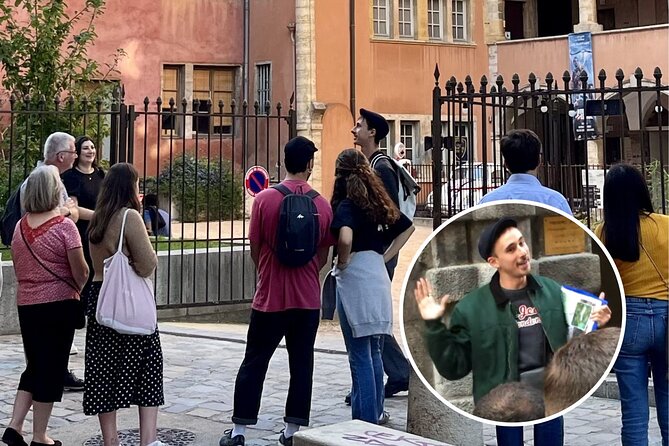
Lyon history runs through the streets. This is an English walking tour in Lyon led by local guide Quentin, built to connect big eras of the city in just 1 hour 45 minutes. You start with Lyon as Lugdunum and see how that story keeps reshaping the streets you walk today.
I especially like the Traboules side streets and passageways, plus the way food culture gets tied to real places like Rue du Bœuf and the rise of the bouchons. One consideration: the pace is fast, with short stops around 10 to 15 minutes each, so if you want long photo time or deep reading at every corner, you may feel a bit rushed.
In This Review
- Key highlights to expect
- Why this Lyon walk works so well for first-timers
- Starting at Place Saint-Jean and Saint-Jean Basilica inside access
- Vieux Lyon and the Traboules: the city’s shortcuts through time
- Rue du Bœuf and Lyon’s food identity, from bouchons to famous chefs
- The historic Palais de justice and WWII in Lyon
- Place des Jacobins and how Lyon’s 19th-century planning feels
- Grand Hôtel-Dieu: the hospital turned mall landmark
- Ending at Place Bellecour, plus Saint-Exupéry at the edges
- Time, group size, and logistics that affect your experience
- Who should book this Lyon History and Must-Sees walk
- Value for money: why the price feels fair here
- Should you book this Lyon tour?
- FAQ
- How long is the Lyon History and Must-Sees walking tour?
- What is the meeting point and where does the tour end?
- Is the tour guided in English?
- Is there a cost for entry tickets during the stops?
- What group size should I expect?
- Is there free cancellation?
Key highlights to expect
- Quentin’s storytelling links Roman Lyon, Renaissance neighborhoods, and WWII history without making it a lecture
- Vieux Lyon Traboules get you through the city’s famous covered passageways on foot
- Food culture on Rue du Bœuf, including references to Paul Bocuse and Mère Brazier and the bouchons tradition
- WWII history by the Saône, with Jean Moulin and Klaus Barbie mentioned in connection to the courthouse
- Hôtel-Dieu turned mall, so you see how one major landmark changed roles over centuries
- A smart ending at Place Bellecour, plus a stop at the lesser-known Antoine de Saint-Exupéry statue
Why this Lyon walk works so well for first-timers
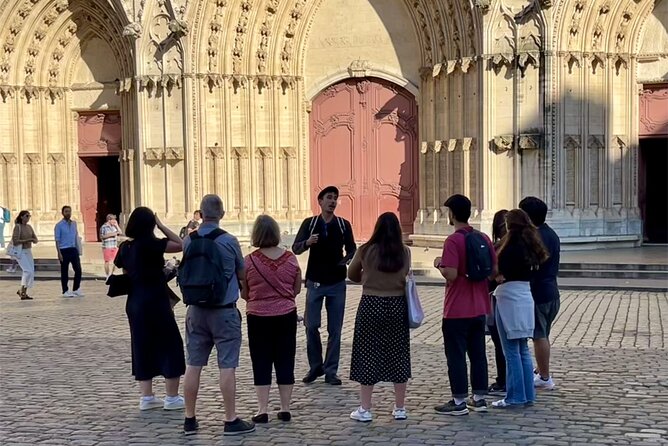
If Lyon is your first taste of France, it can feel like a lot at once. One day you’re staring at cathedrals, the next day you’re trying to understand what a traboule is, then someone mentions Resistance history and your brain scrambles again.
This tour is built to prevent that. You get a clear order: start in the Saint-Jean area, move into Vieux Lyon, then shift into food and WWII context, and finish in the lively center around Place Bellecour. Even when you’re just walking, the guide is constantly making the places click together.
Other Lyon tours, compared
Starting at Place Saint-Jean and Saint-Jean Basilica inside access
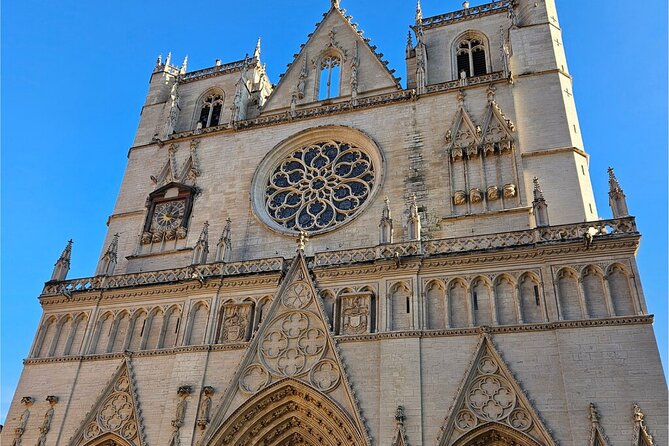
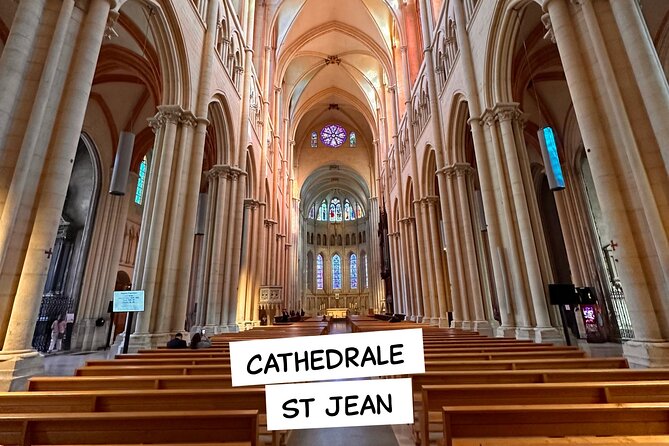
You meet at Place Saint-Jean in the Presqu’île (near the area people use to hop across the city). From there, you head to Cathedrale Saint-Jean-Baptiste de Lyon, and the focus is not just the exterior. The itinerary includes time to go inside the cathedral, and that matters because Lyon’s religious landmarks are full of different layers at different times.
The tour sets up Lyon as Lugdunum, the Roman-era name for the city when it was the capital of the Gauls during the Roman Empire. Then the guide connects that “old city identity” to later church building, including context around the basilica of Fourvière.
Practical note: the stop here is about 10 minutes. It’s enough to orient you and give you names and timelines, but it’s not meant to replace a slow cathedral visit later on your own.
Vieux Lyon and the Traboules: the city’s shortcuts through time
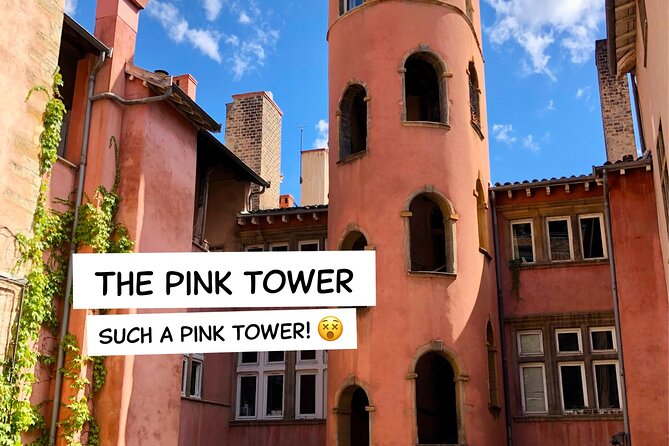
Next you move into Vieux Lyon, the older quarter known for Renaissance-era construction. This is where the tour turns from “history facts” into “walking experience.”
You’ll spend about 30 minutes here, and the standout is the emphasis on passageways known as Traboules. If you’ve only seen Lyon from main streets, these passageways are the surprise that changes how you see the whole area. They cut between buildings in ways that feel practical, like the city was designed for movement and shelter, not just sightseeing.
What I like about the way this is handled on the route is that it’s not treated like a random scavenger hunt. The guide sets expectations, shares a few hidden secrets about the city, then leads you through several of these passageways so you actually experience the space.
The trade-off is time. You’ll see plenty, but the window is limited. If your travel style is slow and photo-heavy, you might want to return to Vieux Lyon afterward for a second look.
Rue du Bœuf and Lyon’s food identity, from bouchons to famous chefs
Then the walk shifts to a very Lyon kind of topic: food culture. At Rue du Bœuf, you get the history of the bouchons and the idea of traditional recipes tied to local identity.
This stop is only around 10 minutes, but it’s packed with references that help you read Lyon like a food city, not just a pretty city. The tour also discusses how Paul Bocuse and Mère Brazier helped popularize this cuisine.
Why that’s useful: once you learn those names and the background, you’re better prepared to choose where to eat during the rest of your trip. Even without tasting on the tour, you’ll have a stronger sense of what “traditional bouchon” is pointing to.
If you’re coming to Lyon with a big appetite for restaurants, this stop gives you language you can use. You can ask better questions, notice details on menus, and avoid ordering something that doesn’t really match the tradition you came for.
The historic Palais de justice and WWII in Lyon
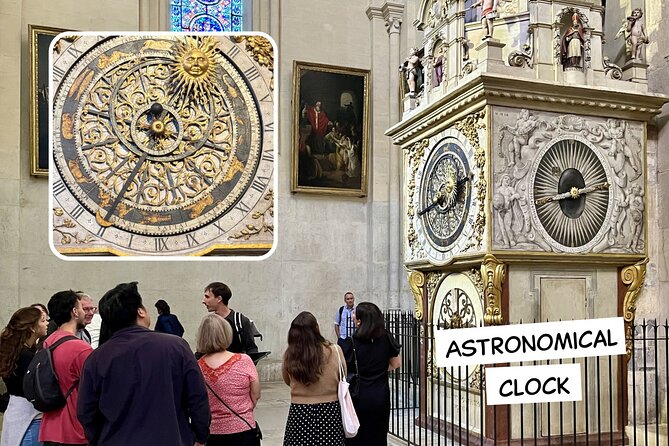
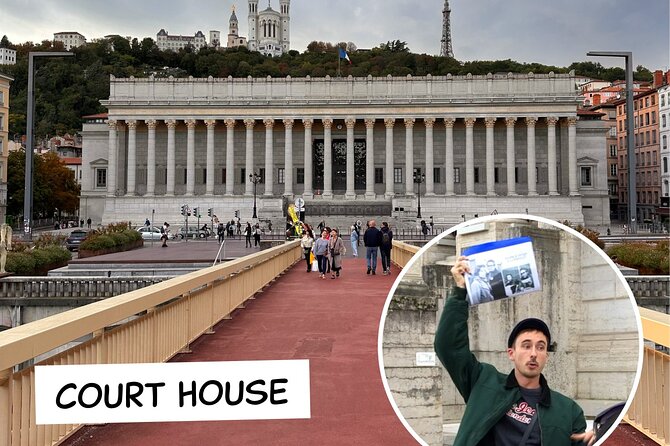
After food culture comes a sharper emotional turn. The tour stops at the historic Palais de justice de Lyon area, where you’ll also get a view toward the River Saône.
Here you get Lyon’s World War II role, framed through the Resistance. The guide connects the story to names you’ll recognize from broader French WWII history: Jean Moulin and Klaus Barbie. The detail that Klaus Barbie was judged in this courthouse more than 30 years later adds a different kind of weight. It turns the building into a timeline marker, not only a courthouse.
This stop is about 10 minutes, so the tour doesn’t try to be the only history lesson you’ll ever take. Instead, it plants the key references in your mind so that if you read more later, you’re not starting from scratch.
Place des Jacobins and how Lyon’s 19th-century planning feels
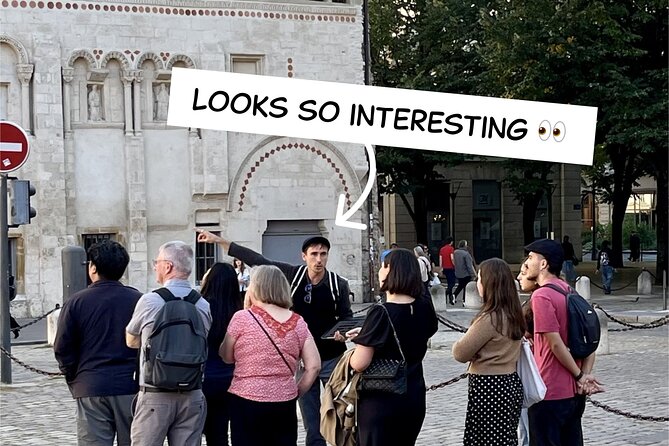
Next is La Place des Jacobins, with time around 15 minutes. The tour takes you through the renovated neighborhood and talks about new Lyon built in the 19th century for wealthy residents.
This is a nice change of pace from the heavier WWII context. It also helps you understand that Lyon is not frozen in “old town mode.” You’re seeing how different eras left different shapes in the city.
You also get a real-world angle: what it’s like to live in Lyon today. That kind of conversational context is where a local guide earns their pay. It turns your walk from a list of monuments into a sense of how the city works.
More Lyon walks on the list
- Lyon: City Highlights Walking Tour
★ 4.9 · 847 reviews - Lyon Highlights & Secrets Walking Guided Tour (small group) including Funicular
★ 5.0 · 831 reviews - Highlights and Hidden Gems of Lyon Guided Walking Tour (English)
★ 5.0 · 750 reviews - Lyon: Vieux Lyon Food Tasting Walking Tour
★ 4.9 · 453 reviews - 4h Complete Lyon Experience: E-Bike, Food Tasting & Old Town Walk
★ 5.0 · 228 reviews
Grand Hôtel-Dieu: the hospital turned mall landmark
Then you reach Grand Hôtel-Dieu, Lyon’s former hospital (Hôtel-Dieu) building. The tour frames it as a major hospital for centuries, then points out that the impressive structure has been transformed into a mall.
This is a smart stop for modern travelers because it shows you an honest kind of city evolution. Buildings don’t always stay in one role forever. When they shift, you can read the city’s priorities changing over time, including what people value now.
The stop is about 10 minutes, so you’ll likely notice major architectural features and understand the overall “hospital to public space” transformation, but you won’t spend all afternoon inside.
Ending at Place Bellecour, plus Saint-Exupéry at the edges
The tour concludes at Place Bellecour, one of Lyon’s main squares in the city center. It’s a fitting finish point because it’s easy to continue your day afterward, with lots of food options within a short walk.
You’ll spend about 10 minutes here, and the tour includes two nice touches. First, you get hidden secrets of the square, so it doesn’t feel like a dead end. Second, you visit a lesser-known statue honoring Antoine de Saint-Exupéry, the Lyonnaise author of The Little Prince.
That ending works especially well because it gives you something artistic and distinctly Lyon tied to a famous book. Even if you’re not a literature person, it’s an easy way to remember you were here, in a place locals actually move through.
Time, group size, and logistics that affect your experience
This tour runs about 1 hour 45 minutes. The listed itinerary has multiple short stops, so you’ll be on your feet the whole time, moving street to street. The good news is that the pace stays lively, so it usually feels like a tour, not a slow museum day.
It also has a maximum of 20 travelers, which I think is the sweet spot for a walking tour. You get group energy, but the guide can still steer you and keep the story clear.
You use a mobile ticket, and admission tickets for the stops listed are free within the itinerary. That’s helpful if you’re trying to control costs during a city trip.
Start time is 2:00 pm, and you meet and end at clear landmarks: Place Saint-Jean to Place Bellecour. Ending near the center is practical because you won’t need to figure out transportation right after the tour.
Who should book this Lyon History and Must-Sees walk
This tour is a strong match if you want a structured introduction to Lyon that covers:
- Old town layout (Vieux Lyon)
- Unique city spaces (Traboules)
- Food identity (bouchons and key names)
- WWII references tied to real buildings (Resistance context)
- Not just monuments, but how spaces evolved (Hôtel-Dieu to today)
It also fits a wide range of ages, since the tour is designed for all ages and “meet people from around the world” energy is part of the concept.
If you already know Lyon well and want only “maximum depth per street,” you might feel that the route is more of an overview than a deep dive. In that case, you could still book it for orientation, then plan separate longer visits afterward to the places that grabbed you most.
Value for money: why the price feels fair here
At $4.64 per person, this tour is priced in a way that’s hard to find for a guided walk. The value isn’t that it’s a bargain because it’s cheap. The value is that the route includes multiple major stops, includes interior access at Saint-Jean, and covers several distinct themes in one go.
Also, the tour’s format gives you practical benefit beyond facts. You walk away with names to search later, places to revisit, and better instincts for where to eat and what to notice.
If you’re building a budget for Lyon, this kind of low-cost guided orientation can help you spend your money on experiences that require reservations or tickets later.
Should you book this Lyon tour?
Yes, if you want an energetic introduction to Lyon that connects architecture, food culture, and WWII history in a way that’s easy to follow. It’s especially worth it if you like guided storytelling more than self-guided wandering.
Consider skipping or pairing it with extra time if your travel style is slow and detailed. The stops are short, so you’ll want to return to the places that you want to linger in, like Vieux Lyon or the cathedral area.
If you book, I’d plan your afternoon with room to continue walking afterward. Ending at Place Bellecour is perfect for that, and you’ll likely want to keep the momentum going.
FAQ
How long is the Lyon History and Must-Sees walking tour?
The tour lasts about 1 hour 45 minutes.
What is the meeting point and where does the tour end?
You start at Place Saint-Jean (69005 Lyon) and end at Place Bellecour (69002 Lyon).
Is the tour guided in English?
Yes, the tour is an English walking tour.
Is there a cost for entry tickets during the stops?
The itinerary lists admission tickets for the stops as free.
What group size should I expect?
The tour has a maximum of 20 travelers.
Is there free cancellation?
Yes, you can cancel for a full refund if you do it up to 24 hours in advance of the experience start time.
Everything Else Filed Under Lyon
- Lyon City Hop-on Hop-off Sightseeing Bus Tour
★ 4.0 · 1,614 reviews - Vieux Lyon Cultural & Historical Walking Guided Tour (English)
★ 5.0 · 942 reviews - Lyon: Private Walking Tour of “Traboules” in the Old Town
★ 5.0 · 866 reviews - Lyon: City Highlights Walking Tour
★ 4.9 · 847 reviews - Lyon Highlights & Secrets Walking Guided Tour (small group) including Funicular
★ 5.0 · 831 reviews
The Whole Lyon Shelf
- Lyon City Hop-on Hop-off Sightseeing Bus Tour
★ 4.0 · 1,614 reviews - Lyon: Musée de l’illusion Entrance Ticket
★ 3.9 · 1,023 reviews - Vieux Lyon Cultural & Historical Walking Guided Tour (English)
★ 5.0 · 942 reviews - Lyon: Private Walking Tour of “Traboules” in the Old Town
★ 5.0 · 866 reviews - Lyon: City Highlights Walking Tour
★ 4.9 · 847 reviews
More of Lyon
- Lyon City Hop-on Hop-off Sightseeing Bus Tour
★ 4.0 · 1,614 reviews - Lyon: Musée de l’illusion Entrance Ticket
★ 3.9 · 1,023 reviews - Vieux Lyon Cultural & Historical Walking Guided Tour (English)
★ 5.0 · 942 reviews - Lyon: Private Walking Tour of “Traboules” in the Old Town
★ 5.0 · 866 reviews - Lyon: City Highlights Walking Tour
★ 4.9 · 847 reviews
The rest of the Lyon write-ups
- From Lyon: Beaujolais Wine Route Half-Day Tour★ 4.7 · 81 reviews
- Lyon Old Town Food Tour: Full French Meal with Wine★ 4.9 · 83 reviews
- Lyon Old Town Private Food Tour with 6 French Delicacies & Wines★ 5.0 · 85 reviews
- Lyon’s History and Must-Sees with a Local! (English Walking Tour)★ 5.0 · 86 reviews
- Lyon: Discovery Tour by Segway★ 4.8 · 91 reviews
- Lyon: Private custom tour with a local guide★ 4.7 · 92 reviews
Lyon Tours, in full.
 ★ 4.0Lyon City Hop-on Hop-off Sightseeing Bus TourFrom $291,614 reviews
 ★ 3.9Lyon: Musée de l’illusion Entrance TicketFrom $221,023 reviews
 ★ 5.0Vieux Lyon Cultural & Historical Walking Guided Tour (English)From $6942 reviews
 ★ 5.0Lyon: Private Walking Tour of “Traboules” in the Old TownFrom $43866 reviews
 ★ 4.9Lyon: City Highlights Walking TourFrom $25847 reviews
 ★ 5.0Lyon Highlights & Secrets Walking Guided Tour (small group) including FunicularFrom $39831 reviews
 ★ 5.0Highlights and Hidden Gems of Lyon Guided Walking Tour (English)From $6750 reviews
 ★ 5.0Food Tour in Lyon – A Full Taste of France by Do Eat BetterFrom $92603 reviews
Also on these France lists