
Reviewed · MONTMARTRE & SACRE-COEUR TOURS
Montmartre Highlights – Bohemian Streets & Sacré-Coeur Basilica
Montmartre hits different up on the hill. This 2-hour walk ties Sacré-Cœur views to the cabaret streets, artist corners, and local charm that make the neighborhood feel like its own little world. You’ll get guided context in English as you move from the top of the hill toward Place du Tertre.
I love the small group size (maximum 15) because it keeps the pace human and the stories easy to follow. I also love the live commentary style, with guides using a loudspeaker to help everyone stay together.
The main consideration is physical effort. There’s a lot of uphill and downhill walking, so plan for steep hills and steps, especially around Sacré-Cœur.
In This Review
- Key highlights worth knowing
- Sacré-Cœur Views and Montmartre Stories: Why This Walk Works
- Starting at Blanche, Ending at Place du Tertre (a Nice One-Way Flow)
- Stop 1: Sacré-Cœur, the 480 m2 Fresco, and the Hilltop View
- Stop 2: Moulin Rouge Outside, Plus the Red Windmill Backstory
- Stop 3: Montmartre’s Artist Steps, From Monet to Zola
- Stop 4: Pigalle, the Red-Light District with Past and Present Layers
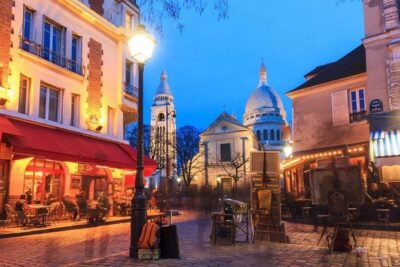
- Stop 5: Place du Tertre, Countryside-at-the-Edge Feeling in the Middle of Paris
- Price and value: What $47.79 Buys You in 2 Hours
- Group size, loudspeakers, and how the tour stays organized
- Pacing and physical fitness: The “steep hills” part is real
- Choosing morning, afternoon, or evening start times
- The guide matters, and the best guides teach with stories
- Who should book this Montmartre Highlights tour?
- Should you book this Montmartre tour?
- FAQ
- Is Sacré-Cœur admission included?
- Do I need a ticket for Moulin Rouge?
- How long is the tour?
- What group size should I expect?
- What time options are available?
- Is the tour in English?
- Is meals included in the price?
- Is the walking difficult?
- What happens if the weather is bad or I cancel?
Key highlights worth knowing
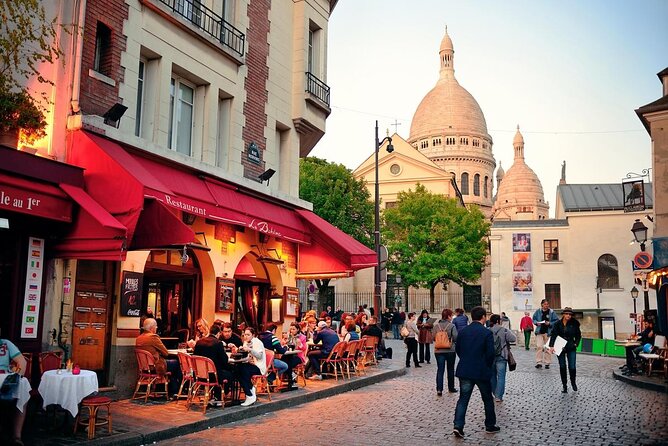
- Sacré-Cœur with a huge fresco (480 m2) plus a rewarding viewpoint from the hill
- Moulin Rouge story from outside, including why that red windmill is such an icon
- Artist-era streets made concrete, with names like Monet, Van Gogh, Picasso, and Zola
- Pigalle seen with context, from classic nightlife to the quieter “what’s left” layers
- Place du Tertre at the end, where the square’s painters and caricaturists bring the vibe full circle
Sacré-Cœur Views and Montmartre Stories: Why This Walk Works
Montmartre can feel like a postcard that decided to become real. The trick is knowing what you’re looking at, and this tour gives you that “what am I seeing and why does it matter” layer without turning it into a lecture.
You get a focused route that starts at Blanche 75018 and ends at Place du Tertre. In between, you move through the neighborhood’s headline moments, then into the side alleys where the artist and writer atmosphere lingers.
Deeper into Montmartre
Starting at Blanche, Ending at Place du Tertre (a Nice One-Way Flow)
One of the smartest parts is how the tour finishes. You wrap up in the main square at Place du Tertre, where you’ll find the painters and caricaturists working right on the spot, plus plenty of cafés and restaurants nearby if you want to slow down afterward.
Your walk doesn’t require you to keep backtracking uphill just to “get back to where you started.” It’s a clean loop from a central Montmartre point toward the classic viewing area and then down into the square.
If you like leaving with energy left for wandering on your own, this format is a big win. You’re not stuck in the tour for hours, and the ending location is perfect for continuing the day.
Stop 1: Sacré-Cœur, the 480 m2 Fresco, and the Hilltop View
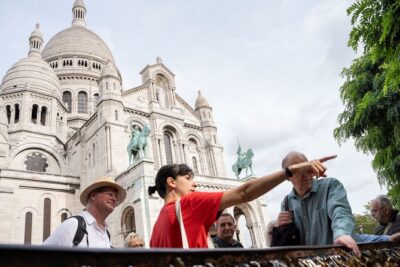
Sacré-Cœur is the obvious highlight, but the way you experience it makes it more than a checkbox. You visit one of the largest churches in Paris, and you’ll see the scale of its artwork, including a 480 m2 fresco on the walls. You also get a look at the church’s impressive cupola.
Then comes the payoff: you enjoy the viewpoint from the top of the hill Montmartre, with Paris stretching out in front of you. Even if you’ve seen photos, the height changes how the city reads, and it helps you understand why Montmartre became such a magnet for artists and visitors.
Practical note: this is where steps and uphill walking feel most real. If you want photos, don’t wait until the last moment. Take your time, but plan for the climb and the crowding around the viewpoint.
Stop 2: Moulin Rouge Outside, Plus the Red Windmill Backstory
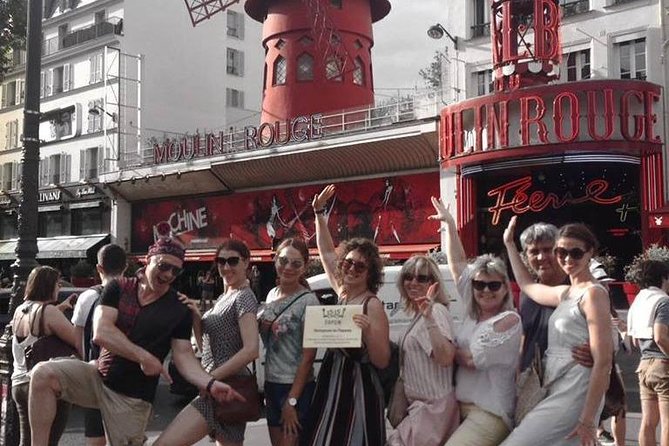
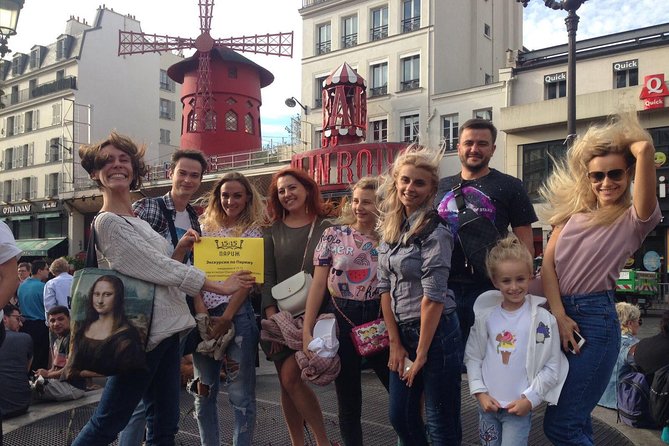
You won’t spend time inside Moulin Rouge on this tour. Instead, you’ll see it from the outside and get the history behind that famous emblem, the red windmill.
That detail matters because it turns the building from a famous facade into a symbol with a story. You’ll hear how the Moulin Rouge became legendary and how the French Cancan was introduced to the Parisian public there.
Why I like this approach: it respects your time. You still get the famous moment, but you don’t get stuck waiting or purchasing tickets if you’re not in “full show” mode.
If you do want to go inside later, you can, but the tour itself keeps the focus on streets and context rather than ticketing.
Stop 3: Montmartre’s Artist Steps, From Monet to Zola
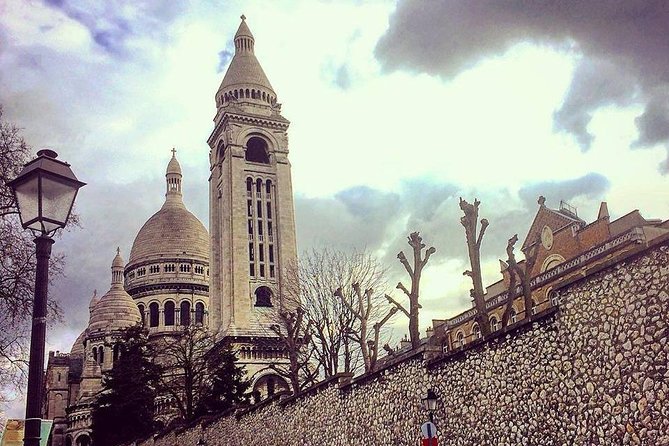
This is where the neighborhood becomes personal. You walk on the steps tied to artists, painters, and writers who lived and worked around here at the turn of the 20th century. Expect names like Monet, Manet, Van Gogh, Pissarro, Rodin, Picasso, Zola, and others.
The guide turns those big names into practical place-based storytelling. It’s one thing to recognize the names from textbooks, and another to understand what the streets and routines might have felt like back then.
You also get stories about where people went out and where they lived. That’s the difference between seeing Montmartre as a theme and understanding it as a real creative district that evolved over time.
A good tip: listen closely when the guide points out details around steps and street corners. In Montmartre, small turns change everything, and those cues help you navigate later on your own.
Stop 4: Pigalle, the Red-Light District with Past and Present Layers
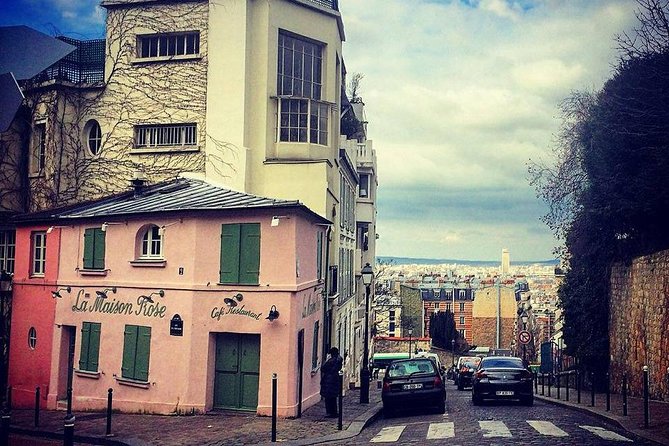
Next you head toward Pigalle, and you get a guided look at the famous red light district. The tour points out the area’s cafés, cabarets, and sex shops, but it doesn’t stop at the neon.
You’ll also hear about hidden pearls from the past, when Pigalle was home to painters and writers. That blend is what makes the stop interesting: it frames the area as part of the same artistic web, not just a nightlife zone.
What you should know: Pigalle is lively and can feel intense compared with the calmer corners elsewhere in Montmartre. Having context helps you feel less like you’re passing through a red-light street and more like you’re understanding how Paris layers change over time.
- Paris: Louvre Museum Timed-Entrance Ticket
★ 4.6 · 71,977 reviews - Disneyland® Paris 1-Day Ticket
★ 4.6 · 49,412 reviews - Paris: Versailles Palace and Gardens Full Access Ticket
★ 4.6 · 41,579 reviews - Paris: Evening River Cruise with Music
★ 4.4 · 22,721 reviews - Paris: Louvre Guided Tour with Reserved Access & Boat Cruise
★ 4.3 · 16,353 reviews
Stop 5: Place du Tertre, Countryside-at-the-Edge Feeling in the Middle of Paris
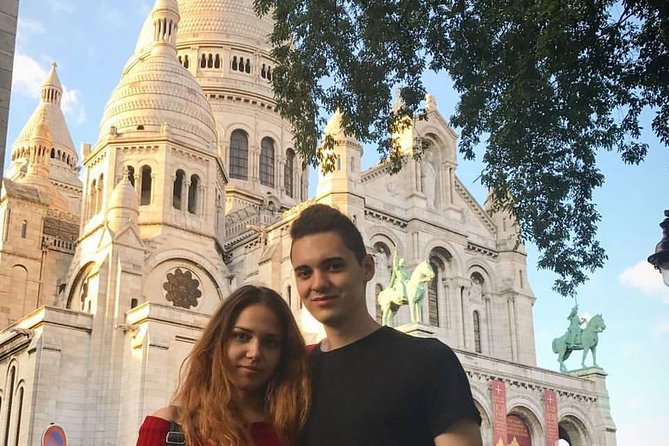
The ending mood shift is real. Place du Tertre feels like a little countryside in the middle of the city, and you’ll see why this square kept its bucolic charm.
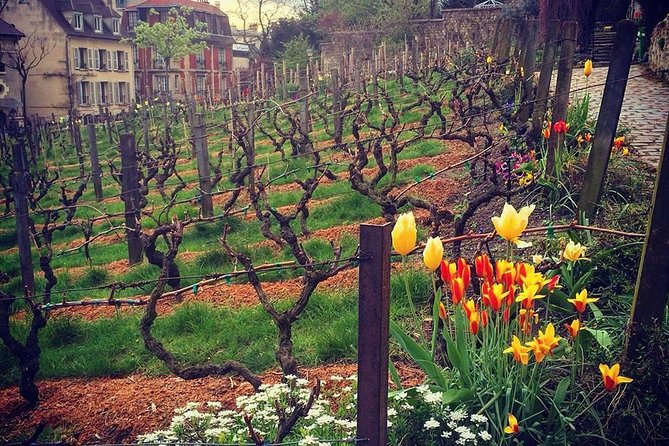
You’ll learn how only a few hundred meters from Pigalle nightlife, you can find a calmer village feeling with vineyards, bocce fields, and hidden parks. Then the tour naturally finishes at the square itself, surrounded by the painters and caricaturists that make it feel alive.
This is a perfect spot to take a breather and do two things at once: watch people, and plan your next step. If you want to keep exploring, you’re close to the heart of Montmartre’s walking streets. If you’re tired, you’re also surrounded by places to sit and eat.
Price and value: What $47.79 Buys You in 2 Hours
At $47.79 per person, you’re paying for guided orientation in a tight time window. The tour runs about 2 hours, which is ideal if you want Montmartre highlights without losing half your day to transit or wandering.
The value is strongest in two spots. First, you get a professional guide and walking tour, not a self-guided route. Second, you move with a small group size of maximum 15, which helps questions land and makes the pace manageable on crowded streets.
Admission smartness also helps. Sacré-Cœur admission is listed as free for this stop, so you’re not paying extra just to see the big church moment. Moulin Rouge viewing is from outside, and the tour notes that admission there is not included, so you’re paying mainly for the storytelling rather than entry fees.
If you’re the type who hates “standing around guessing,” this price feels fair. The guide helps you connect the dots fast, and that connection is the real souvenir.
Group size, loudspeakers, and how the tour stays organized
This is a small-group experience, capped at 15. That matters in Montmartre, because the area can get crowded quickly, especially near Sacré-Cœur and popular photo points.
You’ll also hear the guide via a loudspeaker to support physical distance. That makes the experience more comfortable for the whole group, especially when you’re on uneven streets and can’t always hear a guide over background noise.
One more practical perk: you’ll receive a mobile ticket. So you’re not dealing with paper tickets or last-minute printer problems while you’re trying to enjoy Paris.
Pacing and physical fitness: The “steep hills” part is real
The tour fits people with moderate physical fitness, but you should treat the hills seriously. You’ll be going up and down, with lots of walking and steps built into the route.
The good news is that the tour time is short, about 2 hours, and a small group helps keep the pace reasonable. You’re not signing up for a marathon of stairs.
My advice: wear grippy shoes, take water if it’s warm, and think about starting earlier in the day if you want better daylight for photos and less stress on crowded streets. If you know stairs exhaust you, plan to go slowly at the Sacré-Cœur area and rest when the guide gives a moment to pause.
Choosing morning, afternoon, or evening start times
The tour offers morning, afternoon, or evening starts, and the best choice depends on what you care about.
Morning often works well for daylight views and a calmer feeling as you climb. Afternoon is a strong middle ground if you’re sightseeing elsewhere first. Evening can feel great if you like the atmosphere, though the tradeoff is that you’ll still be dealing with uphill walking in a popular district.
If your goal is photos from viewpoints and you don’t want to fight dim light, pick a start time that gives you daylight at Sacré-Cœur. If your goal is vibe and you’re comfortable with crowds, evening can be a fun option.
The guide matters, and the best guides teach with stories
A huge part of the experience is how the guide tells the area’s story. In past tours, guides have been praised for combining art history, humor, and clear explanations, plus for sharing extra tools like maps and photographs to help you picture what you’re seeing.
If you want to “get” Montmartre fast, pick a tour that leans into storytelling rather than just site names. The strongest moments are when the guide connects an artist name, a street corner, and a reason the place mattered.
Guides also tend to give practical tips that make the walk smoother. For example, you may get reminders on how to stay alert around busy areas near Sacré-Cœur and keep your belongings secure.
That blend, history plus street-smart advice, is why people rate this kind of guided Montmartre walk so highly.
Who should book this Montmartre Highlights tour?
This tour is a great fit if you want:
- A quick introduction to Montmartre’s biggest landmarks and its lesser-known mood shifts
- Live English commentary with a guide who explains what you’re seeing
- A small group format that keeps you from feeling lost in crowds
- A viewpoint payoff at the top, plus an ending at Place du Tertre that makes continuing your day easy
It may not be the best match if you dislike hills and steps. You can still do Montmartre, but this specific route leans into the neighborhood’s geography, so plan for uphill walking.
If you’re visiting for a first time and want the neighborhood’s highlights without over-planning, this is an efficient choice. If you already know Montmartre well and want only deep off-the-map corners, you might prefer a longer, slower custom walk.
Should you book this Montmartre tour?
I’d book it if you want a smart, time-efficient Montmartre hit with Sacre-Cœur views, artist-era storytelling, and a finishing point that naturally invites you to keep wandering.
The price feels reasonable for what you get: a professional guide, live commentary, a max 15 group, and a route that connects the major Montmartre identities, church viewpoint, cabaret icon, artist streets, Pigalle layers, and Place du Tertre atmosphere.
Just be honest with yourself about the hills. If you’re comfortable with walking on steep streets for about two hours, you’ll come away with Montmartre not just seen, but understood.
FAQ
Is Sacré-Cœur admission included?
Yes. The Sacré-Cœur visit lists admission ticket as free for this tour.
Do I need a ticket for Moulin Rouge?
Moulin Rouge is viewed from the outside, and the admission ticket is not included. If you want to go inside, you would need to arrange that separately.
How long is the tour?
The tour lasts about 2 hours.
What group size should I expect?
The tour has a maximum of 15 travelers.
What time options are available?
You can choose a morning, afternoon, or evening start time.
Is the tour in English?
Yes, the tour is offered in English.
Is meals included in the price?
No, meals are not included.
Is the walking difficult?
The tour calls for moderate physical fitness because you’ll do a good amount of walking, including going up and down fairly steep hills.
What happens if the weather is bad or I cancel?
The experience requires good weather. If it’s canceled due to poor weather, you’ll be offered a different date or a full refund. You can cancel for a full refund up to 24 hours before the start time.
The Whole Paris Shelf
- Paris: Louvre Museum Timed-Entrance Ticket
★ 4.6 · 71,977 reviews - Disneyland® Paris 1-Day Ticket
★ 4.6 · 49,412 reviews - Paris: Versailles Palace and Gardens Full Access Ticket
★ 4.6 · 41,579 reviews - Paris: Evening River Cruise with Music
★ 4.4 · 22,721 reviews - Paris: Eiffel Tower Entry Ticket with Optional Summit Access
★ 4.4 · 20,035 reviews
Montmartre, Keep Climbing
- Montmartre Hidden Gems and Scenic Highlights Walking Tour
★ 5.0 · 2,684 reviews - Montmartre Hill French Gourmet Food and Wine Tasting Walking Tour
★ 5.0 · 2,588 reviews - Paris: Montmartre Cheese, Wine & Pastry Guided Walking Tour
★ 4.8 · 2,255 reviews - Paris: Montmartre Highlights Walking Tour with a Local Guide
★ 4.9 · 1,668 reviews - Private Montmartre Food Tour with Wine, Cheese & Pastries
★ 5.0 · 1,027 reviews
The rest of the Paris write-ups
- Montmartre: Guided Tour for Kids and Families★ 4.9 · 57 reviews
- From Paris: Versailles Palace and Gardens Guided Day Trip★ 4.5 · 57 reviews
- Versailles Palace and Garden Tour with Paris Private Transfers★ 5.0 · 58 reviews
- Louvre Evening Escape – Avoid The Crowds! Semi-Private 6ppl Max★ 5.0 · 58 reviews
- Summit Eiffel Tower Audio Guide Tour with Unlimited Time Access★ 4.5 · 58 reviews
- Private Half Day Historic Tour★ 5.0 · 58 reviews
Montmartre & Sacre-Coeur Tours, in full.
 ★ 5.0Montmartre Hidden Gems and Scenic Highlights Walking TourFrom $382,684 reviews
 ★ 5.0Montmartre Hill French Gourmet Food and Wine Tasting Walking TourFrom $1452,588 reviews
 ★ 4.8Paris: Montmartre Cheese, Wine & Pastry Guided Walking TourFrom $1272,255 reviews
 ★ 4.9Paris: Montmartre Highlights Walking Tour with a Local GuideFrom $341,668 reviews
 ★ 5.0Private Montmartre Food Tour with Wine, Cheese & PastriesFrom $3021,027 reviews
 ★ 4.1Paris: Sacré-Coeur and Montmartre Tour with Expert GuideFrom $281,027 reviews
 ★ 5.0Paris Montmartre Food Tour – A Full French Meal by Do Eat BetterFrom $95877 reviews
 ★ 5.0Hidden Montmartre: Paris’ Secret Streets Walking TourFrom $44809 reviews
Also on these France lists