
Reviewed · MONTMARTRE & SACRE-COEUR TOURS
Montmartre Hidden Gems and Scenic Highlights Walking Tour
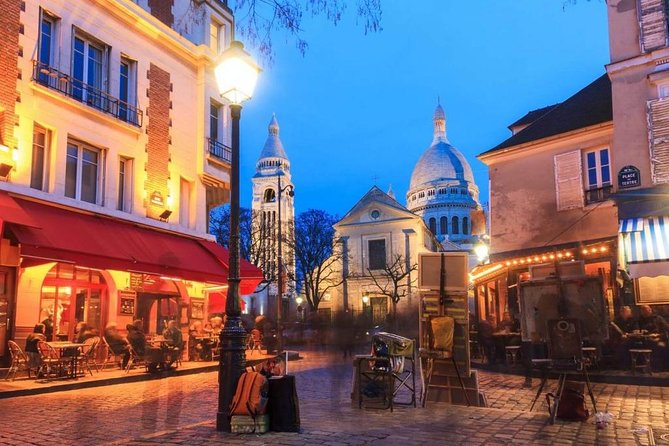
Montmartre has a talent for turning a stroll into a story. This 90-minute walking tour strings together poetic street art, artist legends, and some of the best city views up on the hill, without feeling like a checklist. You get an on-foot feel for the neighborhood, including the way locals move through narrow streets and small squares.
What I like most is the way the guide gives you context at each stop, so the sights make sense as you go. I also like that you see major icons from the outside, plus the quieter places that are easy to miss on your own. One thing to think about first is the terrain: it is mostly walkable with hills and tight streets, but it is not a flat stroll.
In This Review
- Key things to know before you go
- Why this Montmartre walk feels different than the big sights
- Price and pace: what 38.70 buys you in real value
- Start at Rue des Abbesses, end at La Bonne Franquette
- Stop by stop: the I Love You Wall to Place du Tertre
- I Love You Wall: a pocket of romance, in every language
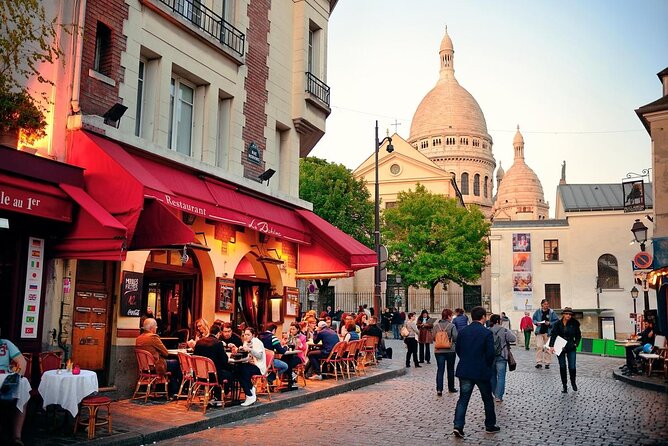
- Montmartre’s old streets and café energy
- Bateau-Lavoir: where art legends lived nearby
- Moulin de la Galette: a windmill symbol you recognize instantly
- A man passing through a wall: Passe-Muraille’s surreal wink
- Dalida bronze bust: tribute in a calm square
- La Maison Rose: the pink house that still works as a photo stop
- Clos Montmartre vineyard: winemaking history you can actually stand near
- Sacré-Cœur Basilica: viewpoints first, entry later if you choose
- Place du Tertre: painter energy and street performance
- The best part is the guide: how the storytelling lands in English
- Practical notes: hills, narrow streets, and how to plan your comfort
- What you can do after the tour to make it feel like a full day
- Who should book this Montmartre scenic highlights walk
- Should you book this Montmartre walking tour?
Key things to know before you go
- Up-close Montmartre atmosphere: you spend time in small squares and side streets, not just the big postcard stops
- Story-led stops: expect guide talk tied to artists, performers, and the neighborhood’s evolution
- Sacré-Cœur views, not the ticketed interior: you’ll see the basilica from the outside and get tips for if you enter later
- A focused 90 minutes: the route is short enough to fit a tight schedule, but it is still a real walk
- Group size capped at 25: intimate enough to hear details, but arrive early for the smooth start
Why this Montmartre walk feels different than the big sights

Montmartre can be crowded, but it does not have to feel mass-produced. The tour’s format keeps you moving through the neighborhood’s actual rhythm: corner cafés, artist corners, and those sudden bursts of view as the hill opens up. You do not just look at buildings, you learn what they meant to the people who lived there.
The strongest part is how the guide connects dots across time. You’ll hear why certain artists landed here, how places changed function over the years, and why the district became famous for creativity. Guides such as Laura, Sylvia, David, Denise, Sonia, Linda, Ben, and Anastasia are repeatedly praised for storytelling that stays clear, funny, and easy to follow in English.
The one drawback to keep in mind is that you are not getting a museum marathon. If you want a long, inside-only, ticket-heavy day, this route may feel too quick for your style. It is designed as an orientation walk you can build on afterward.
Deeper into Montmartre
Price and pace: what 38.70 buys you in real value
At $38.70 per person for about 1 hour 30 minutes, this is a bargain compared to paid-entry tours. You are paying mainly for the guide’s interpretation plus the time it saves you. Montmartre is one of those places where landmarks are everywhere, but meaning is not. The tour helps you spot what matters.
You also get practical value that does not show up in a photo. Guides commonly share advice on what to do next, including where to eat after you finish. One recurring theme is how helpful the guides are with local recommendations once you’re done climbing the hill.
The pace is casual, not rushed. That matters because Montmartre streets can be tight and busy, and you do not want to sprint from stop to stop. If you are the type who likes to pause and look, this kind of timing usually works better.
Start at Rue des Abbesses, end at La Bonne Franquette
The tour meets at 19 Rue des Abbesses in Paris, then finishes at La Bonne Franquette, 18 Rue Saint-Rustique. That ending spot is a nice way to wrap up, because you can transition straight into a relaxed meal instead of searching for somewhere new.
Arrive about 15 minutes early. The route starts on time, and Montmartre is the sort of area where you can lose a few minutes just figuring out where your group is. A mobile ticket makes the check-in easier, so you can focus on the walk.
If you can choose a departure time, an early slot is usually smarter. Montmartre gets busy quickly, and starting earlier helps the streets feel more like a neighborhood and less like a crowd funnel.
Stop by stop: the I Love You Wall to Place du Tertre
This walk is built around Montmartre’s key pockets, moving from poetic street art to artist squares and viewpoints. You’ll be outside most of the time, with the occasional stop where the guide will gather the group and talk through what you’re seeing.
Here’s the sequence and what each stop adds.
I Love You Wall: a pocket of romance, in every language
Your first major stop is the I Love You Wall in a small square. It’s a poetic art installation with the phrase I Love You written in over 300 languages. It is not just cute. It sets the tone for Montmartre as a place where art is public and readable, not locked behind museum walls.
Tip: hang back for a moment when you arrive. The wall is popular, and a quick look straight on is great, but the best photos come when you give your eyes a second to catch the layout and textures.
Montmartre’s old streets and café energy
Next, you’ll walk along one of Montmartre’s oldest streets, the kind that captures the district’s charm fast. Expect a mix of historic architecture with cafés and boutiques. Your guide uses this stretch to explain how Montmartre’s bohemian reputation formed and why the neighborhood evolved the way it did.
Practical note: narrow streets mean you’ll often feel close to passing pedestrians. Keep an eye on the group ahead of you, and if you want photos, pause on the edge of the sidewalk rather than in the middle where people need to pass.
More Paris walks on the list
- Paris Top Sights Half Day Walking Tour with a Fun Guide
★ 5.0 · 2,893 reviews - Montmartre Hidden Gems and Scenic Highlights Walking Tour
★ 5.0 · 2,684 reviews - Montmartre Hill French Gourmet Food and Wine Tasting Walking Tour
★ 5.0 · 2,588 reviews - Paris: Montmartre Cheese, Wine & Pastry Guided Walking Tour
★ 4.8 · 2,255 reviews - Paris in a Day: Louvre or Orsay, Eiffel Tower, City Walk & Cruise
★ 5.0 · 1,956 reviews
Bateau-Lavoir: where art legends lived nearby
Then comes Bateau-Lavoir, a former artists’ residence linked with big names such as Picasso, Modigliani, and Braque. This is where the tour shifts from charm to context. You begin to understand why Montmartre became shorthand for modern creativity.
Even without an indoor ticket, this stop works because the guide connects the location to the people and ideas that came through the area.
Moulin de la Galette: a windmill symbol you recognize instantly
Next you’ll see the historic windmill, known from paintings by Renoir and Van Gogh. It once served as a dance hall, so it is not only a pretty landmark. It represents the social side of the arts, when Montmartre was where people went to watch, dance, and talk culture late into the evening.
Tour reality check: you’ll experience it from the outside. That can be a plus. It keeps the walk flowing and saves your time for views and stories, instead of queueing.
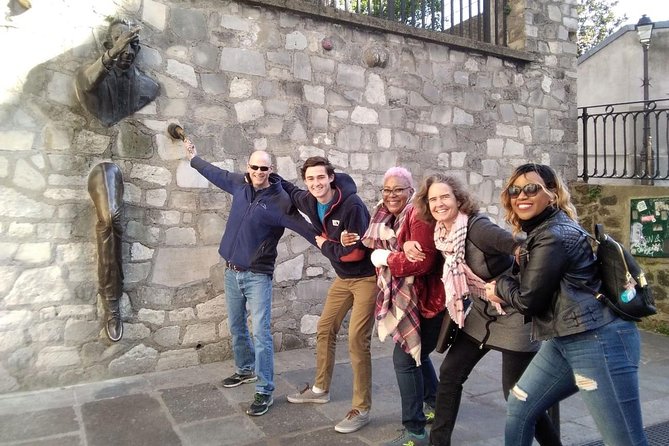
A man passing through a wall: Passe-Muraille’s surreal wink
Near the author’s former home, you’ll find the whimsical sculpture inspired by Marcel Aymé. It shows a man walking through a wall, a playful nod to the surreal side of Montmartre. This stop is a good reset after the big visual icon of the windmill because it’s smaller and more human.
If you like offbeat art, you’ll probably enjoy how the guide explains the meaning behind what looks like a joke at first glance.
Dalida bronze bust: tribute in a calm square
You’ll also learn about Dalida, a long-time Montmartre resident, remembered in a bronze bust located in a peaceful square. The tone here is different from the earlier artist stops. It feels like respect, not spectacle.
This is one of those moments where you’ll appreciate the tour pacing. Sitting in a quieter spot briefly helps you absorb the neighborhood instead of sprinting past it.
La Maison Rose: the pink house that still works as a photo stop
A favorite of artists and photographers for decades, La Maison Rose is a quaint pink house. Historically it’s been linked to figures like Picasso and Utrillo, and now it functions as a café offering French food. On this tour, it’s also a strong photo op because the color pops against the stone streets.
If you want to eat there after the walk, this is a good time to decide. If you do not, just enjoy the moment and keep moving.
Clos Montmartre vineyard: winemaking history you can actually stand near
Hidden in the heart of Montmartre is the small vineyard that produces wine capturing the neighborhood’s past. Established in 1933 to preserve Montmartre’s winemaking heritage, it’s a reminder that the hill was not always just artists and cafés.
What I like about this stop is how it adds something unexpected. You come away thinking of Montmartre as layered, not just stylish.
Sacré-Cœur Basilica: viewpoints first, entry later if you choose
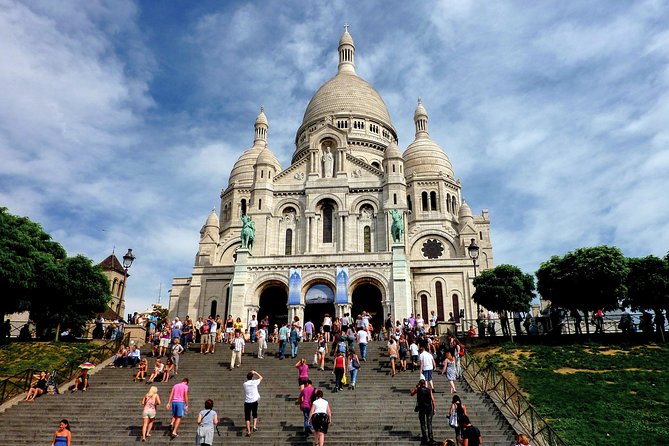
At the highest point in Paris, Sacré-Cœur Basilica appears with its white domes and intricate mosaics. On the tour you see it from the outside, and you get tips on what to look for if you decide to enter on your own after.
This approach makes sense. Sacré-Cœur interior visits can eat time, and the tour is already packed. You get the big view moment now, then you choose how to handle the official visit later.
Timing matters here too. If you go in a later slot, you’ll often see a denser crowd around the stairs and viewpoints. Even then, the exterior view is still the payoff.
Place du Tertre: painter energy and street performance
Finally, you reach the lively square often treated as the heart of Montmartre’s artistic spirit. Place du Tertre is full of painters, caricaturists, and street performers, with cozy cafés and restaurants around the edges.
This is where the neighborhood feels most like a performance stage, which is exactly why it’s useful at the end of the tour. You now understand the background, so the spectacle becomes more interesting, not just louder.
The best part is the guide: how the storytelling lands in English
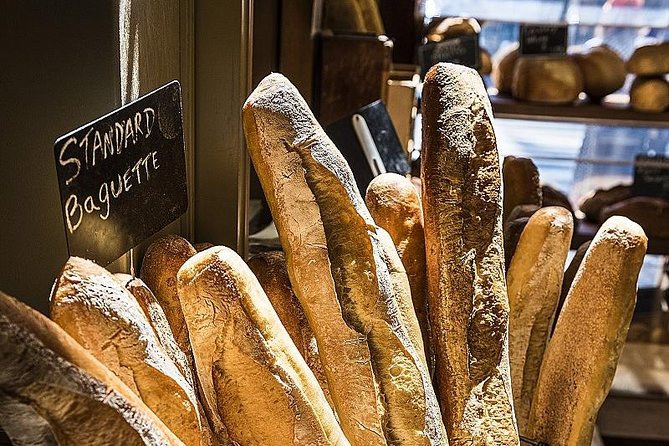
A lot of walking tours just point. This one tends to explain. That is why it stays popular, and why guides get praised so often.
In particular, many groups report that guides keep a casual pace, ask questions, and tailor explanations to what the group is curious about. You’ll also get guidance on what to do right after the tour, which can turn an evening plan from guesswork into a smooth flow.
If you get a guide like Laura, Sylvia, or Denise, you can expect a mix of humor and clarity. If you get David or Ben, the emphasis often leans toward art history connections and practical advice for using your time well.
Practical notes: hills, narrow streets, and how to plan your comfort
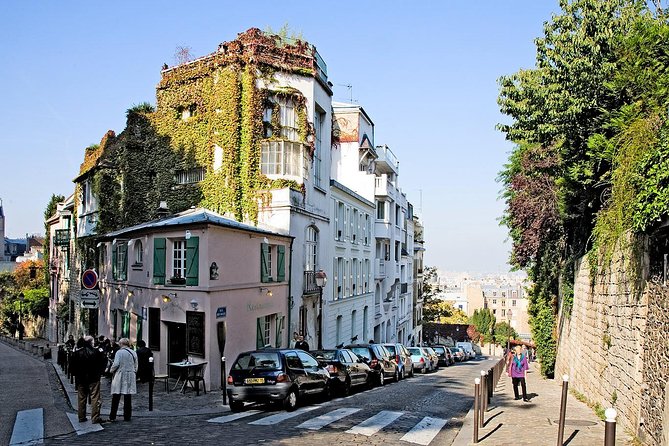
This route does not include stairs, but it still involves hills and narrow streets that can be busy. You’ll want moderate physical fitness to feel good throughout. Cobblestones and sloped streets are part of Montmartre’s charm, and they also add friction to your walking.
If you’re carrying a bag, keep it light. If you have fragile shoes, bring something that grips. This kind of neighborhood walk rewards steady footing more than speed.
Dress for the weather. The tour runs regardless of conditions, so if rain is in the forecast, plan for it. Montmartre can look romantic in drizzle, but wet stone is still wet stone.
What you can do after the tour to make it feel like a full day
Because the walk ends near La Bonne Franquette, you can roll right into lunch or an early dinner. That timing is useful. You finish with enough context to choose food and next stops without feeling lost.
If Sacré-Cœur interests you, the tour’s best advice is simple: go when you have time to slow down. You’ll already know where to look from the outside, so stepping inside becomes a bonus rather than a scramble.
For the rest of your Montmartre evening, Place du Tertre is a natural place to linger. You can keep the artsy vibe going with a final look around the square, then wander nearby side streets while you still have the story beats in your head.
Who should book this Montmartre scenic highlights walk
This is a strong choice if you want:
- A short Montmartre orientation with context, not just photos
- Art and culture stories tied to real places you can walk to in 90 minutes
- City views from Sacré-Cœur without committing to an indoor visit during the tour
- A guided way to understand why Montmartre matters beyond the obvious attractions
It may not be the best fit if you want a museum day, an exhaustive itinerary, or a tour focused on one single theme the whole way through. The route is designed to be balanced across streets, art, and viewpoints.
Also, if you really dislike hills or crowded narrow streets, you may find the terrain challenging even with the lack of stairs.
Should you book this Montmartre walking tour?
Yes, book it if you want a time-efficient way to understand Montmartre and come away with a clear picture of the neighborhood’s art side. At $38.70 for a well-led 90-minute walk, you’re paying for interpretation, practical pacing, and a sequence that naturally builds toward Sacré-Cœur views.
I’d especially book it early in the day if you like a calmer walk. Montmartre is pretty, but it fills up fast.
If you’re comfortable with hills and narrow streets and you’re happy seeing Sacré-Cœur from the outside, this tour should fit your trip nicely and give you a smarter, more enjoyable Montmartre day.
Everything Else Filed Under Paris
- Paris: Louvre Guided Tour with Reserved Access & Boat Cruise
★ 4.3 · 16,353 reviews - Paris: Big Bus Hop-On Hop-Off Tour with Optional Cruise
★ 4.4 · 13,279 reviews - Louvre Museum Masterpieces Guided Tour with Access
★ 4.5 · 12,023 reviews - Versailles: Skip-the-Line Tour of Palace with Gardens Access
★ 4.7 · 9,778 reviews - Mona Lisa & Louvre Masterpieces Tour with Reserved Access
★ 4.6 · 6,812 reviews
The Whole Paris Shelf
- Paris: Louvre Museum Timed-Entrance Ticket
★ 4.6 · 71,977 reviews - Disneyland® Paris 1-Day Ticket
★ 4.6 · 49,412 reviews - Paris: Versailles Palace and Gardens Full Access Ticket
★ 4.6 · 41,579 reviews - Paris: Evening River Cruise with Music
★ 4.4 · 22,721 reviews - Paris: Eiffel Tower Entry Ticket with Optional Summit Access
★ 4.4 · 20,035 reviews
Montmartre, Keep Climbing
- Montmartre Hill French Gourmet Food and Wine Tasting Walking Tour
★ 5.0 · 2,588 reviews - Paris: Montmartre Cheese, Wine & Pastry Guided Walking Tour
★ 4.8 · 2,255 reviews - Paris: Montmartre Highlights Walking Tour with a Local Guide
★ 4.9 · 1,668 reviews - Private Montmartre Food Tour with Wine, Cheese & Pastries
★ 5.0 · 1,027 reviews - Paris: Sacré-Coeur and Montmartre Tour with Expert Guide
★ 4.1 · 1,027 reviews
The rest of the Paris write-ups
- Montmartre: Guided Tour for Kids and Families★ 4.9 · 57 reviews
- From Paris: Versailles Palace and Gardens Guided Day Trip★ 4.5 · 57 reviews
- Versailles Palace and Garden Tour with Paris Private Transfers★ 5.0 · 58 reviews
- Louvre Evening Escape – Avoid The Crowds! Semi-Private 6ppl Max★ 5.0 · 58 reviews
- Summit Eiffel Tower Audio Guide Tour with Unlimited Time Access★ 4.5 · 58 reviews
- Private Half Day Historic Tour★ 5.0 · 58 reviews
Montmartre & Sacre-Coeur Tours, in full.
 ★ 5.0Montmartre Hill French Gourmet Food and Wine Tasting Walking TourFrom $1452,588 reviews
 ★ 4.8Paris: Montmartre Cheese, Wine & Pastry Guided Walking TourFrom $1272,255 reviews
 ★ 4.9Paris: Montmartre Highlights Walking Tour with a Local GuideFrom $341,668 reviews
 ★ 5.0Private Montmartre Food Tour with Wine, Cheese & PastriesFrom $3021,027 reviews
 ★ 4.1Paris: Sacré-Coeur and Montmartre Tour with Expert GuideFrom $281,027 reviews
 ★ 5.0Paris Montmartre Food Tour – A Full French Meal by Do Eat BetterFrom $95877 reviews
 ★ 5.0Hidden Montmartre: Paris’ Secret Streets Walking TourFrom $44809 reviews
 ★ 5.0Paris Montmartre Food & Wine Tour with Eating EuropeFrom $162718 reviews
Also on these France lists