
Reviewed · MONTMARTRE & SACRE-COEUR TOURS
Montmartre Hill French Gourmet Food and Wine Tasting Walking Tour
Food and wine up Montmartre Hill.
I really like the small-group pace, because it keeps the walk personal while you hit eight tasting stops across bakeries, cafés, and artisan shops. I also like that the tour is built around more than bites, you get the stories behind the neighborhood, from Picasso-era connections to the views at the finish.
One thing to plan for: this is a hilly walking tour, and the tastings lean sweet more often than you might expect. Bring comfortable shoes, and yes, bring your own water, because the wine adds up.
In This Review
- Key things that make this tour work in Montmartre
- Montmartre Food and Wine: why this is more than a snack crawl
- Starting at Place Blanche and getting your bearings near Moulin Rouge
- Mur des Je t’aime and Place du Tertre, where food and art share the same street
- Clos des Vignes, the Paris vineyard stop that changes how you see the hill
- The eight tasting venues, what you’re likely to eat and drink
- Landmark moments on the walk: windmills, old streets, and a very Montmartre climb
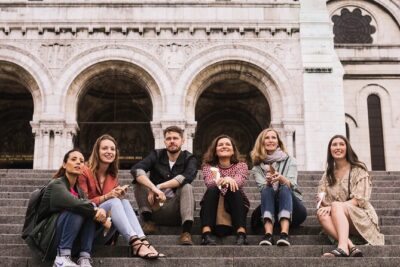
- Finish in front of Sacré-Cœur: the view is the payoff
- Price and value: is $145.12 a fair deal
- Practical tips that keep the experience comfortable
- Who should book this Montmartre food and wine tasting walk
- Should you book it?
- FAQ
- How long is the Montmartre Hill French Gourmet Food and Wine Tasting Walking Tour?
- How much does the tour cost?
- How many tastings and stops are included?
- What is included in the price?
- Where does the tour start and end?
- Do I need to bring water or anything else?
- Is dietary accommodation available?
- Is the tour family-friendly for children?
- What happens if bad weather cancels the tour?
Key things that make this tour work in Montmartre
• Eight venues, not just one or two: you sample a spread of savory and sweet, from cheeses and cured meats to chocolates and macarons
• Wine and cheese pairing time: you get a sit-down moment with wine alongside cheese and cured meat
• Clos des Vignes stop: you visit a working vineyard inside Paris, and the guide ties it to local wine culture
• Art stops built into the food route: Moulin Rouge area, Picasso-era storytelling, and the vibe around Place du Tertre
• Sweet and scenic finish: it ends in front of Sacré-Cœur, with a top-hill perspective over the city
• Max 15 people: small group size makes it easier to ask questions and stay together on narrow streets
Montmartre Food and Wine: why this is more than a snack crawl
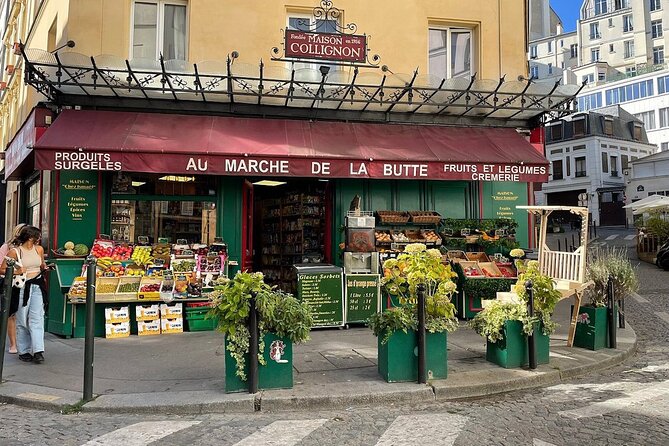
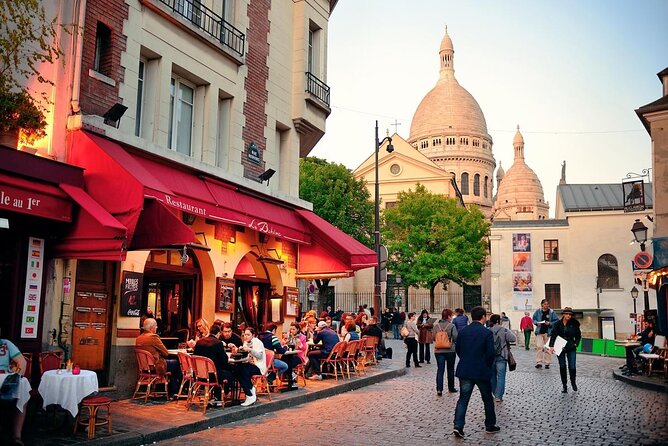
Montmartre is one of those Paris neighborhoods where the street views do half the work for you. You’re looking at cobblestones, old façades, and iconic landmarks like Moulin Rouge and Sacré-Cœur, and all of it pairs naturally with the idea of an apéritif on the hill.
What makes this tour satisfying is the way the tasting route is tied to place. You’re not just collecting samples, you’re being shown why certain foods fit the neighborhood, and how food culture and art history overlap here. That’s also why guides often mention the practical stuff as they go, which helps you understand what you’re seeing while you snack.
I’ll be honest: you should come with the mindset of grazing and sipping, not eating a full restaurant dinner. Portions are spread across stops, and the schedule includes breaks so you can keep walking, even if the hill makes you slow down a little.
Deeper into Montmartre
Starting at Place Blanche and getting your bearings near Moulin Rouge
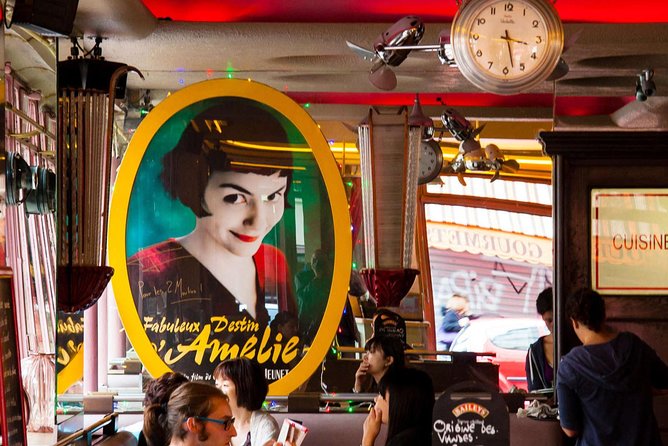
The tour starts at 5 Pl. Blanche (75009), across from the Moulin Rouge area. This is a smart starting point because you immediately step into the Montmartre mood, with the streets and landmark energy right there. It also makes the first part of the walk easy to follow, since you’re oriented fast.
From there, the guide sets the tone with Montmartre’s artistic reputation. You get context about the area as a meeting place for early 20th-century artists, including the kind of connections you might associate with Pablo Picasso and fellow creators from that era. Even if you’re not a museum person, this makes the neighborhood feel like more than a pretty backdrop.
This beginning stretch also matters because it establishes what you’re going to do next: you’re tasting your way through local artisans and specialty shops. When the first bites land, it feels like the tour has a rhythm, not just a series of random stops.
Mur des Je t’aime and Place du Tertre, where food and art share the same street
One of the most photogenic breaks is the Mur des Je t’aime, the Wall of Love. The wall is covered with the words I love you in many languages, including rarer ones like Navajo and Inuit. It’s a quick stop, but it adds a layer of meaning to the day, especially if you like how Paris hides symbolism in plain sight.
Next you reach Place du Tertre, Montmartre’s central artists’ square. This area has the classic “artists’ corner” feel, with street life and small stalls that often capture the Montmartre vibe for visitors. The guide uses the stop to connect the artistic reputation to everyday life, and then back to food, which is the whole point of the tour.
If you’re wondering whether there’s time to slow down and actually look, this is where it shows up. You’re not trapped in a marching line the whole time, and you get a chance to take in the square before you head back into tastings and walking.
Clos des Vignes, the Paris vineyard stop that changes how you see the hill
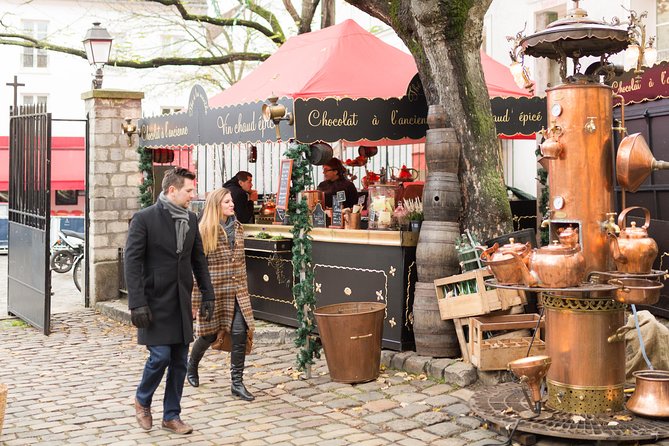
A standout part of the route is Clos des Vignes, described as the only vineyard in Paris. You’ll get taken there as part of the opening Montmartre exploration, and it’s one of those facts that makes the whole neighborhood feel surprising in the best way.
This stop matters because it links wine culture to real place. Instead of treating wine as a generic add-on, the guide helps you understand why wine fits here and how locals would think about it. You also get a nicer contrast to the tourist-heavy streets, because the vineyard setting feels different from the busy views around Moulin Rouge and Sacré-Cœur.
The vineyard visit also sets you up for the tasting portion. When you later get wine and pairing moments, it feels earned, not just scheduled.
The eight tasting venues, what you’re likely to eat and drink
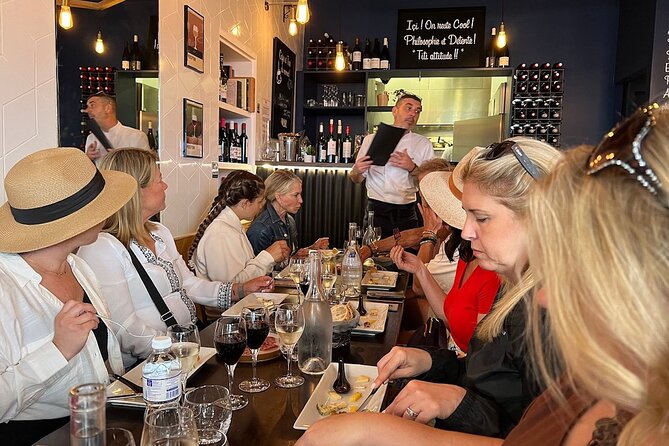
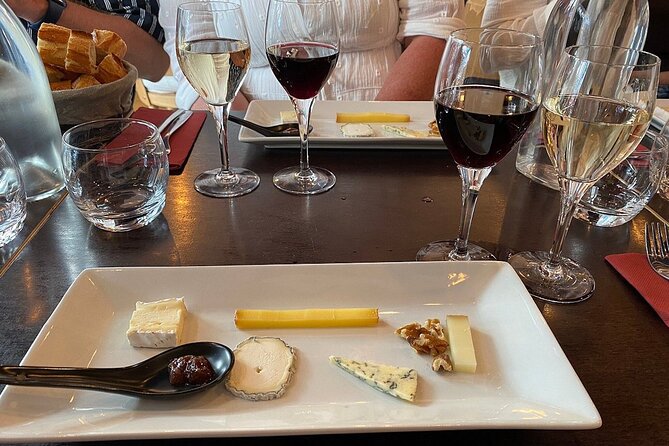
The tour includes stops at eight venues, with samples that range from savory to sweet. You can expect variety: cured meats and cheeses, plus classic French sweet treats like macarons and chocolates. If your taste preference is balanced, this is a good fit.
During the walk, the guide leads you through traditional cafés, artisan shops, bakeries, and delicatessens. It’s a practical way to experience Montmartre because these are the places that keep the neighborhood running, not just the postcard spots. And because it’s small group, you can ask questions about what you’re tasting and how it’s made, which is often where the real value sits.
You’ll also hit a wine moment, including a pairing with cheese and cured meat. One review detail that lines up with the tour design is that the wine and cheese pairing can feel like a sit-down break mid-tour. It’s a nice reset if you’re walking with any stiffness in your legs, since it gives your body a breather and gives your palate a clear “this is the point” moment.
What about sweets? You should expect them often. Several tastings trend dessert-forward, and one reason is simple: Montmartre is famous for things like macarons, handmade chocolates, and other indulgent treats. The drawback is that if you’re not a sweets person, you might feel a sugar rhythm that repeats more than you’d like.
Landmark moments on the walk: windmills, old streets, and a very Montmartre climb
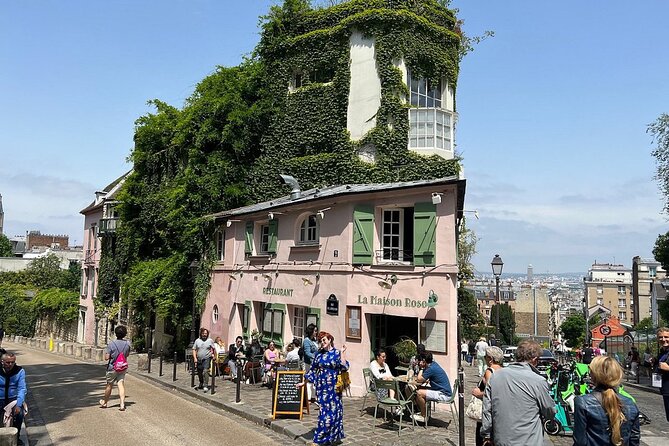
The route weaves through cobblestone lanes and historic squares, the kind of streets where you feel the neighborhood shape. You also get stops that highlight Montmartre’s built heritage, including an early 17th-century windmill. That windmill detail adds a sense of how long people have lived on this hill and worked within its landscape.
As you move higher, the walking becomes the main “logistics” factor. The tour is described as moderate physical fitness, and guides are good about splitting the climb with pauses along the way. Still, go in with honest expectations: you’re going uphill in Paris.
For most people, that’s part of the charm. The climb also makes the finish more rewarding, because your final view feels like a payoff instead of a destination you only rushed to.
Other tastings and blending sessions
- From Paris: Loire Valley Castles Day Trip With Wine Tasting
★ 4.6 · 1,727 reviews - Paris Le Marais District Original Food and Wine Tasting Tour
★ 4.5 · 880 reviews - Paris: French Wine Tasting Class with Sommelier
★ 4.8 · 505 reviews - Cheese & Wine Tasting in Montmartre with Local Cheesemonger
★ 5.0 · 470 reviews - Paris: Food and Wine Tasting Walking Tour in Le Marais
★ 4.9 · 446 reviews
Finish in front of Sacré-Cœur: the view is the payoff
The tour ends in front of Sacré-Cœur, at the top of the hill. That matters because the views over Paris are exactly what you want after eating, walking, and absorbing Montmartre’s atmosphere for a few hours.
The route is designed to bring you to this finish point without making the ascent feel like a single brutal push. You’ll likely have enough snack and break moments to keep your energy steady, especially if you take small sips of water through the tour.
It also helps that Sacré-Cœur is a “drop off” location where you can keep exploring right after. If you want to linger for photos, you’re in the right place, and if you want to head down afterward, you’re surrounded by transport options. The tour notes that taxis and a metro station are close by, which makes it easy to transition to dinner plans.
Price and value: is $145.12 a fair deal
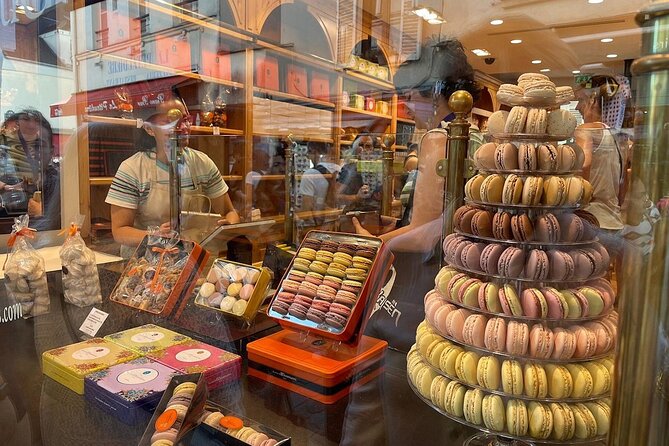
At $145.12 per person, this is not the cheapest thing you can do in Paris. But the value is built into the full structure: you’re paying for a local guide, a curated sequence of artisan stops, wine tasting, and food tastings across eight venues, not just one or two samples.
Where the price makes sense is that you’re getting organization and storytelling. The guide turns Montmartre into a walk with meaning, connecting places like Moulin Rouge and Place du Tertre to what you’re tasting. Guides you might hear named in feedback include Julie, Marie, Oscar, Elliot, Aude, Emiline, and Pierre-edouard, and that’s consistent with what you want in a food tour: someone who can explain why the food and the neighborhood belong together.
Also, the wine-and-cheese pairing is a key part of the cost logic. Wine in Paris is not “free flavor,” and when it’s paired and served properly, it’s a real expense line. If you prefer experiences where the guide brings you to places you would not easily find on your own, this pricing fits that goal.
Now the caution. Portions might feel small if you expect a heavy meal at each stop. But if you go hungry and treat the tour like a sampler that ends with a view, the spread becomes the point. Think of it like tasting your way through Montmartre, not eating your way through a restaurant menu.
Practical tips that keep the experience comfortable
This tour is built on walking, and the tour guidance recommends comfortable shoes and a raincoat. I’d add one more practical thought: dress for the hill and for weather changes, because Montmartre can feel breezy near the top.
The tour also suggests you bring your own water. That’s a good call even if you love wine, because you’ll be sipping and walking, and you don’t want to feel dehydrated. Keep water in your bag from the start, not at the end.
Group size is kept small, with a maximum of 15 travelers, which helps with flow. That also means the guide can keep an eye on the group and adjust pacing when the hill slows people down.
If you have dietary needs, the instructions are to advise specific dietary requirements at booking. That’s the best time to be clear, so the guide can match you with suitable tastings where possible.
Who should book this Montmartre food and wine tasting walk
This is a great fit for you if you want Montmartre to feel like a lived neighborhood, not just a checklist. It works especially well for first-time visitors who want the top sights like Sacré-Cœur plus a food-focused route in between.
It’s also a good match if you enjoy guided context. The tour is not only tasting, it’s explanations about what you’re seeing, from Picasso-era artistic connections to the Wall of Love symbolism.
On the other hand, you might want to skip or choose another option if you hate hill walking or you strongly prefer savory meals over sweets. The tastings do include savory items like cheeses and cured meats, but the schedule includes enough sweet stops that it can dominate the flavor arc.
This tour can also work for families with kids, since the rules say children must be accompanied by an adult. Still, because wine is part of the experience, it’s best suited for adults traveling with teens who enjoy tastings.
Should you book it?
I’d book this if you want a three to three and a half hour Montmartre experience with eight tastings, wine pairing, and a guided route that makes the sights make sense. At this price, you’re paying for organization, wine and pairing time, and a guide who knows how to connect the neighborhood to what you’re eating.
I’d pause before booking if you’re hoping for a light, mostly flat walk or if you’d rather do a self-guided food tour where you pick every stop. But if you’re happy to graze, sip, and walk uphill for a spectacular Sacré-Cœur finish, this tour hits a very sweet spot.
FAQ
How long is the Montmartre Hill French Gourmet Food and Wine Tasting Walking Tour?
The tour lasts about 3 hours to 3 hours 30 minutes.
How much does the tour cost?
The price is $145.12 per person.
How many tastings and stops are included?
The tour stops at eight venues for tastings.
What is included in the price?
It includes a local guide, food tastings (such as macarons, cheeses, and cured meats), wine tasting, and a small-group tour.
Where does the tour start and end?
It starts at 5 Pl. Blanche, 75009 Paris and ends in front of Basilique du Sacré-Cœur de Montmartre, at 35 Rue du Chevalier de la Barre, 75018 Paris.
Do I need to bring water or anything else?
The tour notes that you should bring your own water. Comfortable shoes and a raincoat are also recommended.
Is dietary accommodation available?
Yes. You’re asked to advise any specific dietary requirements at time of booking.
Is the tour family-friendly for children?
Children are allowed, but must be accompanied by an adult.
What happens if bad weather cancels the tour?
This experience requires good weather. If it is canceled due to poor weather, you’ll be offered another date or a full refund.
The Whole Paris Shelf
- Paris: Louvre Museum Timed-Entrance Ticket
★ 4.6 · 71,977 reviews - Disneyland® Paris 1-Day Ticket
★ 4.6 · 49,412 reviews - Paris: Versailles Palace and Gardens Full Access Ticket
★ 4.6 · 41,579 reviews - Paris: Evening River Cruise with Music
★ 4.4 · 22,721 reviews - Paris: Eiffel Tower Entry Ticket with Optional Summit Access
★ 4.4 · 20,035 reviews
More Tastings and Blending Sessions
- From Paris: Loire Valley Castles Day Trip With Wine Tasting
★ 4.6 · 1,727 reviews - Paris Le Marais District Original Food and Wine Tasting Tour
★ 4.5 · 880 reviews - Paris: French Wine Tasting Class with Sommelier
★ 4.8 · 505 reviews - Cheese & Wine Tasting in Montmartre with Local Cheesemonger
★ 5.0 · 470 reviews - Paris: Food and Wine Tasting Walking Tour in Le Marais
★ 4.9 · 446 reviews
Montmartre, Keep Climbing
- Montmartre Hidden Gems and Scenic Highlights Walking Tour
★ 5.0 · 2,684 reviews - Paris: Montmartre Cheese, Wine & Pastry Guided Walking Tour
★ 4.8 · 2,255 reviews - Paris: Montmartre Highlights Walking Tour with a Local Guide
★ 4.9 · 1,668 reviews - Private Montmartre Food Tour with Wine, Cheese & Pastries
★ 5.0 · 1,027 reviews - Paris: Sacré-Coeur and Montmartre Tour with Expert Guide
★ 4.1 · 1,027 reviews
The rest of the Paris write-ups
- Montmartre: Guided Tour for Kids and Families★ 4.9 · 57 reviews
- From Paris: Versailles Palace and Gardens Guided Day Trip★ 4.5 · 57 reviews
- Versailles Palace and Garden Tour with Paris Private Transfers★ 5.0 · 58 reviews
- Louvre Evening Escape – Avoid The Crowds! Semi-Private 6ppl Max★ 5.0 · 58 reviews
- Summit Eiffel Tower Audio Guide Tour with Unlimited Time Access★ 4.5 · 58 reviews
- Private Half Day Historic Tour★ 5.0 · 58 reviews
Montmartre & Sacre-Coeur Tours, in full.
 ★ 5.0Montmartre Hidden Gems and Scenic Highlights Walking TourFrom $382,684 reviews
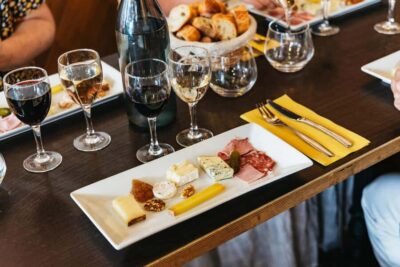 ★ 4.8Paris: Montmartre Cheese, Wine & Pastry Guided Walking TourFrom $1272,255 reviews
 ★ 4.9Paris: Montmartre Highlights Walking Tour with a Local GuideFrom $341,668 reviews
 ★ 5.0Private Montmartre Food Tour with Wine, Cheese & PastriesFrom $3021,027 reviews
 ★ 4.1Paris: Sacré-Coeur and Montmartre Tour with Expert GuideFrom $281,027 reviews
 ★ 5.0Paris Montmartre Food Tour – A Full French Meal by Do Eat BetterFrom $95877 reviews
 ★ 5.0Hidden Montmartre: Paris’ Secret Streets Walking TourFrom $44809 reviews
 ★ 5.0Paris Montmartre Food & Wine Tour with Eating EuropeFrom $162718 reviews
Also on these France lists