
Reviewed · MONTMARTRE & SACRE-COEUR TOURS
Montmartre/Sacre-Coeur/Paris- Artistic & Bohemian Epicenter
Montmartre plays like a living art show. I really love how Place du Tertre keeps things hands-on, with local artists working right there and offering instant sketches. I also love the payoff at Sacré-Cœur, after an uphill stroll that lands you with big, clear Paris views.
This is a short tour, but plan for long lines and an uphill climb on cobbled streets, especially if the weather turns. If you hate crowds, give yourself some extra time near Sacré-Cœur so you do not feel rushed.
In This Review
- Key things I think you will enjoy most
- Where the artistic and bohemian mood starts, Place des Abbesses
- Rue Lepic: the walk that ties impressionists, artists, and Amélie together
- Place du Tertre: watching working artists at work (and getting a sketch if you want)
- Dalida at La Maison de Dalida, pop stardom meets Montmartre legends
- Le Bateau-Lavoir: the early 1900s meeting place that pulls Picasso into the story
- Sacré-Cœur: the big views, the classic architecture, and the hill reality
- Montmartre windmills and the 17th-century village story
- What you get from a local guide, and why it feels different than a lecture
- Duration and pacing: how a 2-hour walk keeps the magic without dragging
- Price value: is $48.37 for two hours worth it?
- Where food fits, since coffee and tea are not included
- Should you book this Montmartre and Sacré-Cœur walking tour?
- FAQ
- How long is the Montmartre, Sacré-Cœur, and Paris artistic walking tour?
- What is the price per person?
- What language is the tour offered in?
- Is it a mobile ticket?
- How many people are in the group?
- Where does the tour start and where does it end?
- Is admission included for the stops?
- Is coffee or tea included?
- Are service animals allowed?
- What is the cancellation policy?
Key things I think you will enjoy most
- Small group, up to 15 people for more personal back-and-forth with your guide.
- Place du Tertre artist time where you can watch sketching and portraits happen in real time.
- Rue Lepic and Montmartre film vibes with stops tied to Amélie locations.
- Dalida and Bateau-Lavoir stops that connect pop culture to early 20th-century art hangouts.
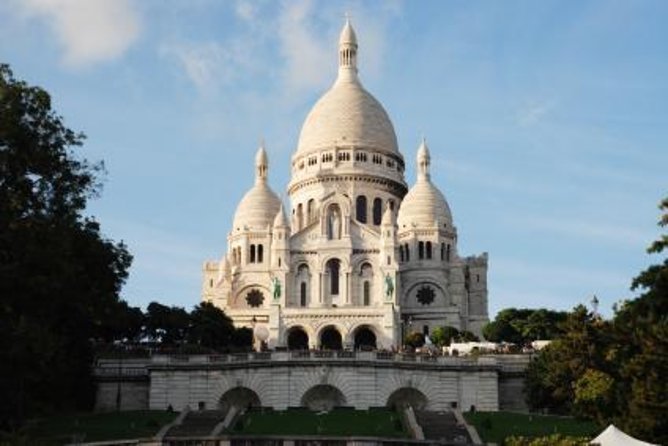
- Sacré-Cœur panorama after a calm climb through older lanes.
- Windmills of Montmartre and the 17th-century village story behind today’s views.
Where the artistic and bohemian mood starts, Place des Abbesses
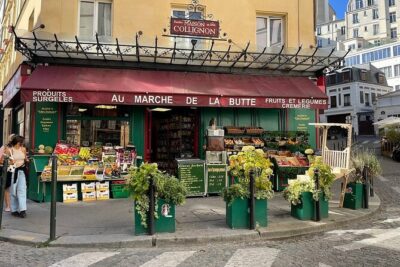
The tour meets at 22 Rue des Abbesses, in the Montmartre neighborhood where daily life feels layered with art. One of the first things you notice is the “village inside a city” feeling, plus the Art Nouveau touches around Place des Abbesses.
This is a smart place to begin because it sets expectations. You are not just chasing postcards, you are learning how the streets, corners, and architecture shaped the kind of people who came here for inspiration.
Deeper into Montmartre
Rue Lepic: the walk that ties impressionists, artists, and Amélie together
Rue Lepic is one of those streets where you start seeing connections. You follow the footsteps of impressionist painters who were inspired by local scenes, and your guide points out the kinds of details that artists actually noticed.
You also get film spot context tied to Amélie, so the neighborhood turns from “I’ve seen this in photos” into “I get why the filmmaker chose this spot.” It is the same neighborhood, but suddenly it feels like a story you can walk through.
If you are a movie fan, this part is especially fun. If you are not, it still works because the guide uses the streets as a visual map for how artists looked at Montmartre.
Place du Tertre: watching working artists at work (and getting a sketch if you want)
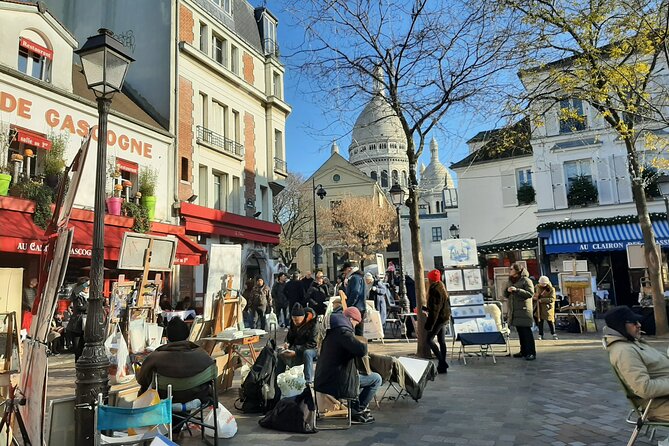
Place du Tertre is where Montmartre’s artistic reputation becomes real. You spend time here looking at artists working, and you can request an instant sketch directly from them.
This is one of those moments that is easy to over-romanticize, but the value is practical. You get to see art created in real time, and it is a low-effort way to take home something tied to this specific square, not just a souvenir shop.
Tip for the moment: if you want a sketch, keep your expectations simple. The experience is more about the live art and the interaction than perfect planning or quick turnaround.
Dalida at La Maison de Dalida, pop stardom meets Montmartre legends
Next you visit La Maison de Dalida, a stop that adds a different kind of celebrity energy to the walk. Dalida was a French and Italian star, born in Egypt, and in the mid-1950s she was also Miss Egypt.
What I like about adding a pop-culture figure like Dalida is that it breaks up the heavy art focus. Montmartre was not only painters and poets, it was also music, fame, and people chasing attention and identity.
Even if you only know a song or two, you will still get the point. You are seeing how Montmartre became a stage for many kinds of artists, not one narrow category.
Le Bateau-Lavoir: the early 1900s meeting place that pulls Picasso into the story
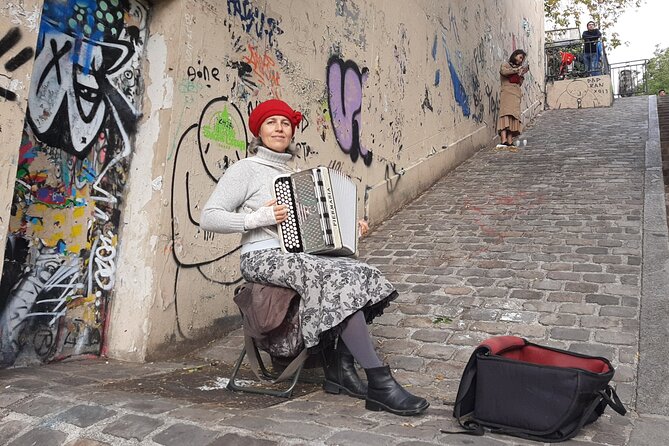
Le Bateau-Lavoir was known as a popular meeting place for famous artists in the early 20th century. You also pass key Picasso-related context, including the idea that Picasso first came to Paris in 1900 and fell for the city’s feel, plus references to his presence in Montmartre.
This stop matters because it connects you to a shift in how modern art gathered. You start to understand Montmartre not just as a tourist village, but as a social network where artists built momentum by being in the same spaces.
You will feel the pacing here, too. It is short, but it gives you enough context to look at the neighborhood with more “who was here and why” in mind.
Sacré-Cœur: the big views, the classic architecture, and the hill reality
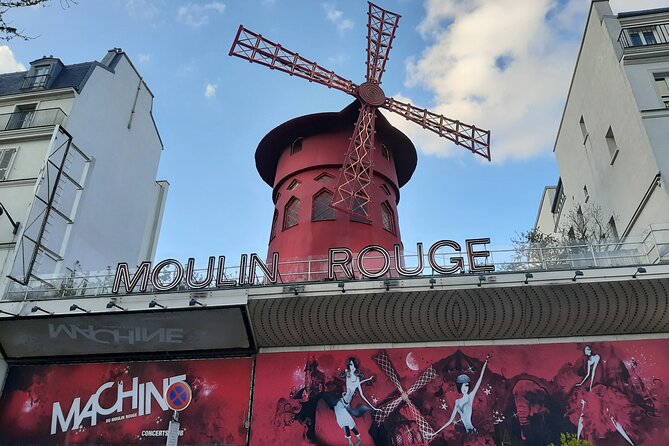
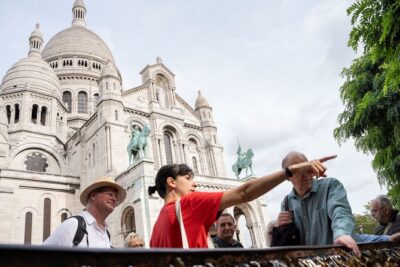
The heart of the tour is the climb to Basilique du Sacré-Cœur de Montmartre. You walk cobbled, older streets uphill, with a calmer vibe than you get at street level near the busiest squares.
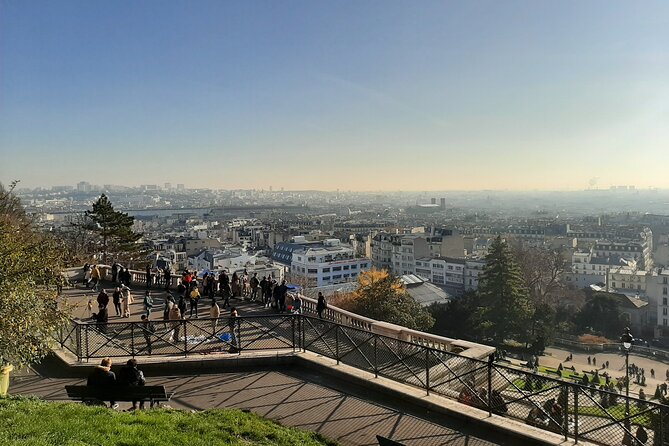
Once you reach Sacré-Cœur, the views are the main event. You get a panorama of Paris, and it is the kind of lookout that makes the whole morning feel earned.
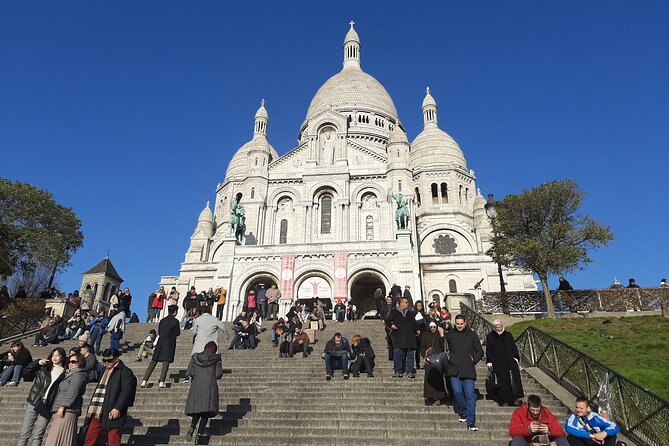
One consideration: expect lines around Sacré-Cœur access at peak times, and plan your timing accordingly. If the weather is windy or stormy, it can add to the wait and make the hill less fun, so dress for layers.
The tour notes admission as free for the visit. That said, free access does not always mean fast entry, so give yourself a little breathing room at the end of the segment.
- Paris: Louvre Museum Timed-Entrance Ticket
★ 4.6 · 71,977 reviews - Disneyland® Paris 1-Day Ticket
★ 4.6 · 49,412 reviews - Paris: Versailles Palace and Gardens Full Access Ticket
★ 4.6 · 41,579 reviews - Paris: Evening River Cruise with Music
★ 4.4 · 22,721 reviews - Paris: Louvre Guided Tour with Reserved Access & Boat Cruise
★ 4.3 · 16,353 reviews
Montmartre windmills and the 17th-century village story
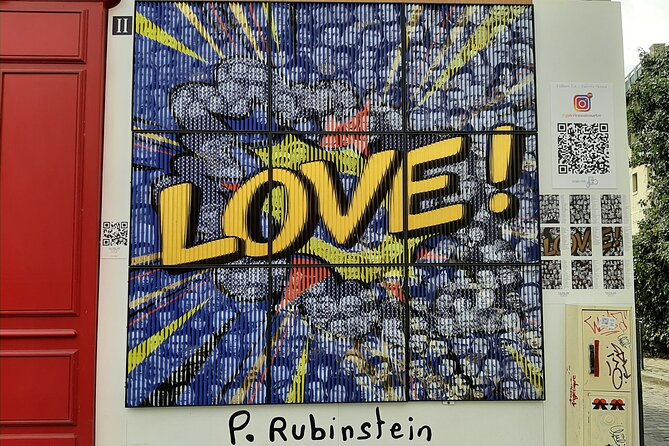
Later you get to windmill history, with a reference to the first windmill dating from the 17th century. It helps explain why Montmartre looked the way it did before it became an artist magnet and a tourism magnet.
This is more than trivia. It changes how you read the slopes and angles in your head, and suddenly the hill stops being just a climb and becomes a historical clue.
If you like old-city context, this is a neat closer because it ties today’s views back to how the neighborhood once functioned.
What you get from a local guide, and why it feels different than a lecture
The tour is led by a local Paris guide who is an art lover and Montmartre Village resident. That combination shows in how the walk moves: the story lands in the street, not in a classroom.
Guides like Jill or Matt are singled out for making history feel clear without drowning you in details. They focus on what matters in the moment, so you can keep looking up at buildings and down at the street while you learn.
This is also where the small group format pays off. With a maximum of 15 people, you are more likely to get questions answered, and it is easier for your guide to adjust the pace to the group.
Duration and pacing: how a 2-hour walk keeps the magic without dragging
This is about 2 hours total, with short stops built in. You are moving, but not sprinting, and each location gets just enough time to understand why it is famous.
What this means for you: you can do this early in a day and still have time for other Montmartre exploring on your own. You can also fit it into an itinerary where you want art and atmosphere without committing to a half-day museum plan.
Price value: is $48.37 for two hours worth it?
At $48.37 per person for about two hours, the value comes from what is included: a local guide, multiple major Montmartre stops, and free admission notes at the visited sites. You are also getting a tight route that brings together Place du Tertre, Sacré-Cœur, film-related spots, and artist-history stops without the mental work of planning it yourself.
To judge value honestly, ask yourself what you want from a guided walk. If you want stories that turn streets into context, this is a good use of time. If you only want to stand and take photos, you might spend less by DIY wandering, but you would miss the connections between artists, places, and pop culture references like Amélie.
Where food fits, since coffee and tea are not included
Coffee and/or tea is not included, so do not count on a built-in break. In practice, you should plan a snack before you go or grab something near your own schedule after the tour.
I like tours like this because the stops themselves are “visual snacks.” Still, Montmartre walking adds up, so bring water and keep an easy plan for later if you get hungry.
Also, if you do stop at the Place du Tertre area for a sketch, treat it like a mini activity and plan your budget for that interaction.
Should you book this Montmartre and Sacré-Cœur walking tour?
I think it is a strong booking if you want authentic-feeling Montmartre with real art connections in a short time window. It is especially good for first-timers who want a guided route that covers the neighborhood’s key personalities, including Dalida, early-20th-century artist gatherings, and Amélie film context.
Book it if you like stories you can see, and if you enjoy walking through streets that still feel lived-in. Skip it if you need lots of museum time, or if long waits near Sacré-Cœur would stress you out, because you should plan for crowds at the top.
FAQ
How long is the Montmartre, Sacré-Cœur, and Paris artistic walking tour?
It is approximately 2 hours.
What is the price per person?
The price is $48.37 per person.
What language is the tour offered in?
The tour is offered in English.
Is it a mobile ticket?
Yes, the tour provides a mobile ticket.
How many people are in the group?
The tour has a maximum of 15 travelers.
Where does the tour start and where does it end?
It starts at 22 Rue des Abbesses, 75018 Paris, France, and ends at Basilique du Sacré-Cœur de Montmartre, 35 Rue du Chevalier de la Barre, 75018 Paris, France.
Is admission included for the stops?
The tour information lists admission as free for the stops included in the itinerary.
Is coffee or tea included?
No, coffee and/or tea are not included.
Are service animals allowed?
Yes, service animals are allowed.
What is the cancellation policy?
You can cancel for a full refund up to 24 hours in advance of the experience start time.
The Whole Paris Shelf
- Paris: Louvre Museum Timed-Entrance Ticket
★ 4.6 · 71,977 reviews - Disneyland® Paris 1-Day Ticket
★ 4.6 · 49,412 reviews - Paris: Versailles Palace and Gardens Full Access Ticket
★ 4.6 · 41,579 reviews - Paris: Evening River Cruise with Music
★ 4.4 · 22,721 reviews - Paris: Eiffel Tower Entry Ticket with Optional Summit Access
★ 4.4 · 20,035 reviews
Montmartre, Keep Climbing
- Montmartre Hidden Gems and Scenic Highlights Walking Tour
★ 5.0 · 2,684 reviews - Montmartre Hill French Gourmet Food and Wine Tasting Walking Tour
★ 5.0 · 2,588 reviews - Paris: Montmartre Cheese, Wine & Pastry Guided Walking Tour
★ 4.8 · 2,255 reviews - Paris: Montmartre Highlights Walking Tour with a Local Guide
★ 4.9 · 1,668 reviews - Private Montmartre Food Tour with Wine, Cheese & Pastries
★ 5.0 · 1,027 reviews
The rest of the Paris write-ups
- Montmartre: Guided Tour for Kids and Families★ 4.9 · 57 reviews
- From Paris: Versailles Palace and Gardens Guided Day Trip★ 4.5 · 57 reviews
- Versailles Palace and Garden Tour with Paris Private Transfers★ 5.0 · 58 reviews
- Louvre Evening Escape – Avoid The Crowds! Semi-Private 6ppl Max★ 5.0 · 58 reviews
- Summit Eiffel Tower Audio Guide Tour with Unlimited Time Access★ 4.5 · 58 reviews
- Private Half Day Historic Tour★ 5.0 · 58 reviews
Montmartre & Sacre-Coeur Tours, in full.
 ★ 5.0Montmartre Hidden Gems and Scenic Highlights Walking TourFrom $382,684 reviews
 ★ 5.0Montmartre Hill French Gourmet Food and Wine Tasting Walking TourFrom $1452,588 reviews
 ★ 4.8Paris: Montmartre Cheese, Wine & Pastry Guided Walking TourFrom $1272,255 reviews
 ★ 4.9Paris: Montmartre Highlights Walking Tour with a Local GuideFrom $341,668 reviews
 ★ 5.0Private Montmartre Food Tour with Wine, Cheese & PastriesFrom $3021,027 reviews
 ★ 4.1Paris: Sacré-Coeur and Montmartre Tour with Expert GuideFrom $281,027 reviews
 ★ 5.0Paris Montmartre Food Tour – A Full French Meal by Do Eat BetterFrom $95877 reviews
 ★ 5.0Hidden Montmartre: Paris’ Secret Streets Walking TourFrom $44809 reviews
Also on these France lists