
Reviewed · PARIS ART MUSEUMS
Musée d’Orsay Skip-the-Line Tour with Expert Guide
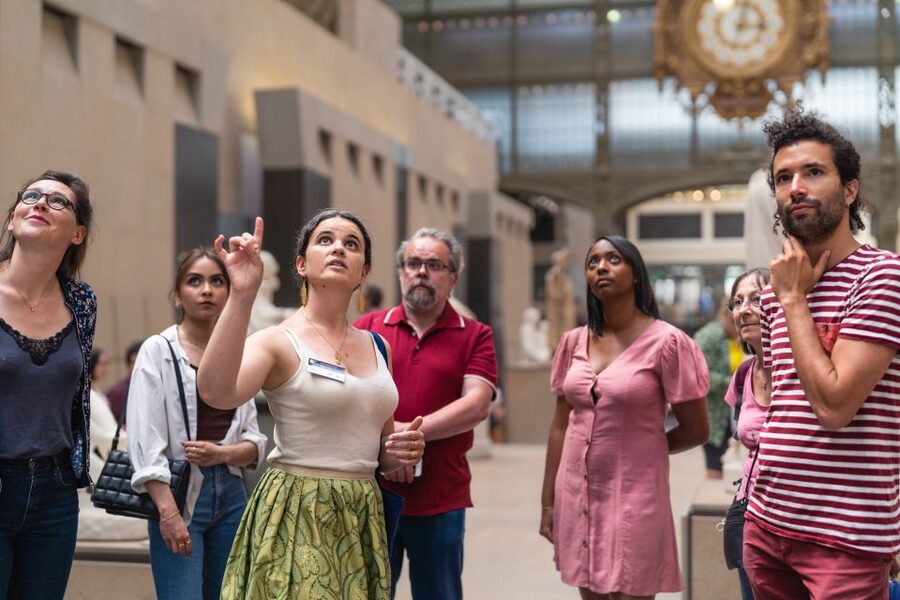
A museum with a built-in time machine. The Musée d’Orsay is housed in a former railway station, and this tour helps you make sense of it fast, before the crowds swallow your plans. Expect Impressionist shock stories paired with clear, guided looking.
I like that you start with the museum’s big picture, not just a list of paintings. You’ll also get expert-led context for why artists like Monet, Manet, Renoir, Degas, and Van Gogh were treated like troublemakers when their work first appeared.
One possible drawback: the experience is structured and paced, so if you want to slowly study every detail for hours, you may feel a little rushed during the guided portion. The good news is you can stay after the tour.
In This Review
- Key highlights to expect on this Musée d’Orsay tour
- First impressions: Orsay is the station, not just the museum
- The value of skipping the ticket line at Orsay
- Meeting point and getting there without stress
- What the guide actually does with your time
- The Impressionist shock: why these paintings caused outrage
- Major highlights, plus the “why did that one matter?” moments
- Crowds, pacing, and how not to lose your favorite paintings
- Who this tour fits best (and who might want to plan differently)
- After the tour: use your time like a pro
- Price check: is $82 good value for Orsay?
- Should you book this Musée d’Orsay Skip-the-Line Tour?
Key highlights to expect on this Musée d’Orsay tour
- Skip-the-line, dedicated entrance so you start seeing art sooner
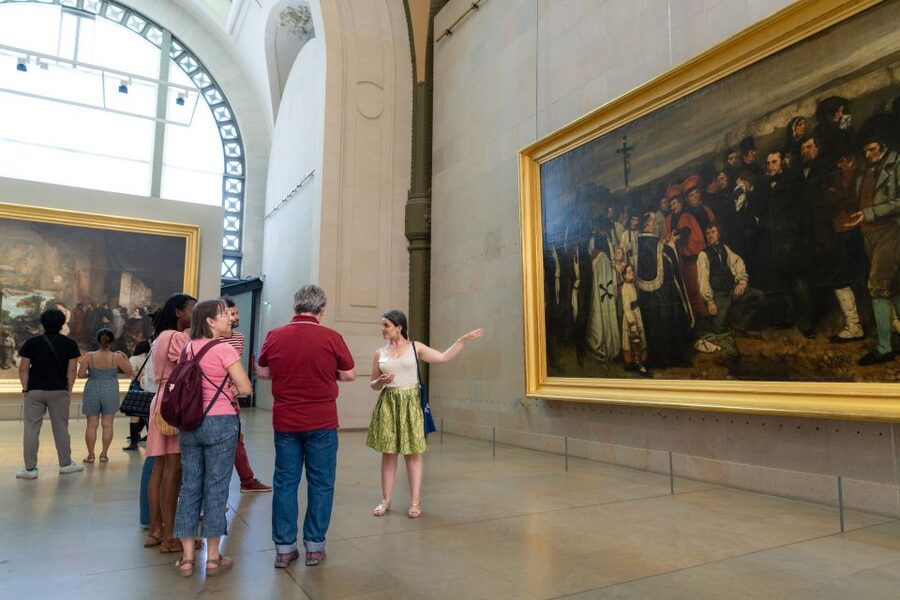
- English guide with headsets so the explanations stay clear in noisy galleries
- Impressionist scandal explained in practical, story-driven context you can remember
- Major highlights plus lesser-known stops so you leave with more than just the obvious
- Crowd handling that keeps you moving toward the best viewpoints
- Time to linger after the tour with the confidence to explore on your own
First impressions: Orsay is the station, not just the museum

Musée d’Orsay sits inside a magnificent Beaux-Arts railway station built for the World’s Fair. That matters, because it shapes how you experience the art. The space is tall, bright, and built for movement, so the museum feels like a journey rather than a quiet warehouse of paintings.
This tour is designed to help you enter with your bearings already in place. You get a focused guided pass that connects artists, ideas, and reactions from one room to the next. Then you’re free to linger once you’ve built the mental map.
Other Paris art collections we have written up

The value of skipping the ticket line at Orsay
Orsay gets crowded, especially around peak hours. When you’re stuck in a queue, you lose the best part of museum time, the part where you can actually look. That’s why I think the skip-the-line setup is more valuable than it sounds on paper.
You’re not just buying convenience. You also get a dedicated entrance and entrance fees included, so there’s less hassle and less uncertainty at the door. Add headsets when appropriate, and you end up with a tour that works even when the museum is loud and packed.
At $82 per person for a 1 hour 45 minutes guided visit, the price starts to make sense when you consider what’s included: guide time, entry, and headsets. If you were trying to “DIY” Orsay, you’d likely spend extra time figuring out what to prioritize. This gives you a plan from the start.
Meeting point and getting there without stress
You’ll meet your guide opposite the main entrance, next to the entrance of the Legion d’Honneur Museum. Your guide will be wearing a guide badge on an orange lanyard right by the entrance.
For transit, use RER Station Musée d’Orsay (Line C) or Metro Solferino (Line 12). This is one of those locations where being a few minutes early is smart, because the area around the entrances can get busy fast.
Practical note: no luggage or large bags are allowed. If you’re carrying a big daypack, keep it small enough to be comfortable and easy to manage in tight museum areas.
What the guide actually does with your time
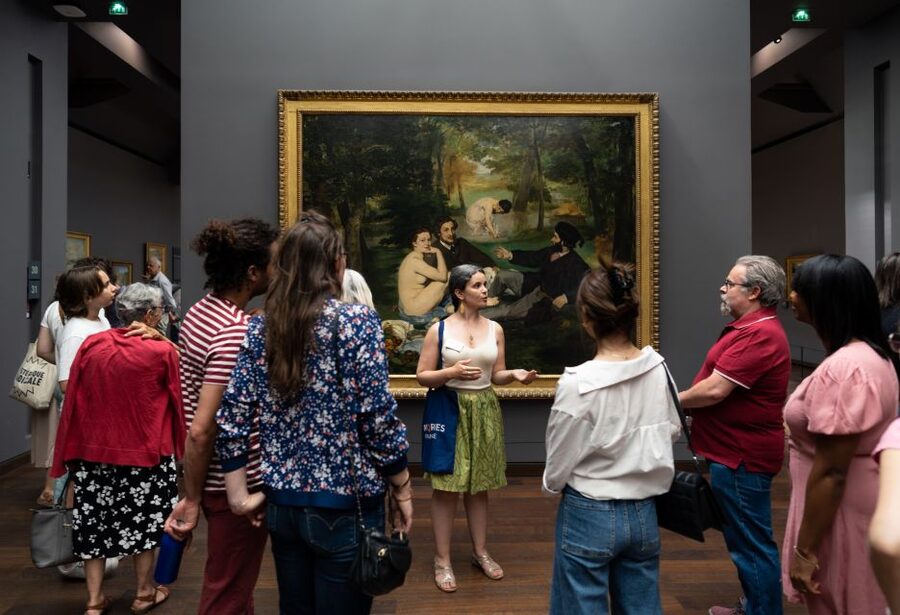
The core of the tour is a guided route through the museum’s main works and the connections between them. The goal is not only “see the famous paintings,” it’s “understand why they mattered.”
You’ll be led by an accredited local guide who uses clear storytelling to explain movements and relationships among artists. Based on common guide strengths from real experiences, the best ones manage the group well in crowds and keep questions coming. You’ll also have headsets when appropriate, which helps if you’re on the edge of the group or if the galleries are noisy.
One detail I appreciate is the tour’s structure: 1 hour 45 minutes of guided viewing, then your freedom afterward. So you get the benefits of an organized route without forcing the entire visit into a strict schedule.
The Impressionist shock: why these paintings caused outrage
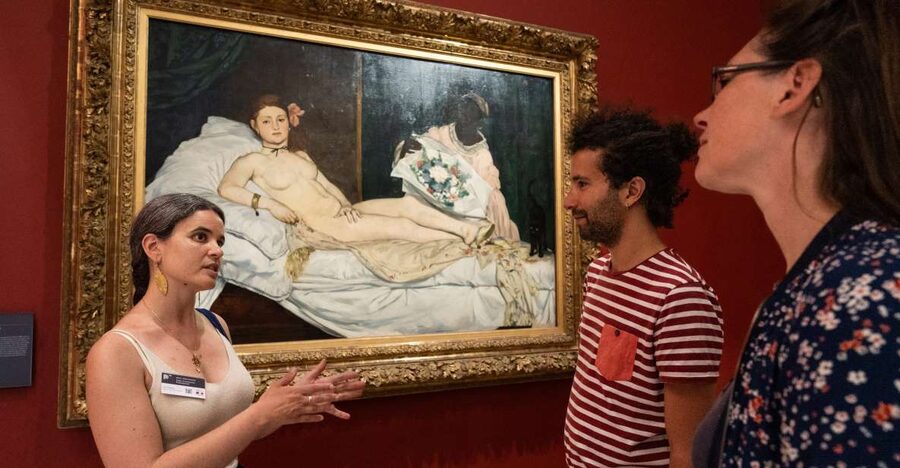
Here’s the heart of this tour: you learn to see Impressionism as a break with tradition, not just a style. When these works first showed up, many viewers expected smooth, polished subjects and “proper” scenes. Instead, they saw everyday life, visible brushstrokes, and vivid colors.
That combination was considered radical, and yes, scandalous by some standards. Your guide uses this context to help you read what you’re looking at. You’re not only observing paint and light, you’re understanding the cultural argument happening on the canvas.
Artists like Monet, Manet, Renoir, Degas, and Van Gogh come into focus through that lens. The explanations connect their choices to the reactions they triggered, which is exactly how the movement made waves in the art world.
Major highlights, plus the “why did that one matter?” moments
Orsay is packed, and even with a ticket in hand, it’s easy to see a lot without really knowing what you’re seeing. This is where a good guide pays off.
You’ll cover the museum’s major highlights, but you’ll also hit lesser-known gems along the way. That balance helps because it gives you more than souvenirs of famous names. You start noticing how artists built on each other, challenged conventions, and changed what “modern” could mean.
In practice, the guided stops act like anchor points. Later, when you roam on your own, you’ll recognize the themes you learned. That’s when Orsay goes from impressive to memorable.
More Paris tours that come with a guide
- Paris: Louvre Guided Tour with Reserved Access & Boat Cruise
★ 4.3 · 16,353 reviews - Louvre Museum Masterpieces Guided Tour with Access
★ 4.5 · 12,023 reviews - Louvre Museum – Exclusive Guided Tour (Entry Included)
★ 5.0 · 6,296 reviews - Louvre Priority Access with Mona Lisa Escort or Guided Option
★ 4.0 · 4,420 reviews - Louvre Museum: Skip-the-Line Small Group Guided Tour
★ 4.6 · 3,960 reviews
Crowds, pacing, and how not to lose your favorite paintings

A common challenge at Orsay is simple: it’s large, popular, and busy. A focused tour helps you avoid getting stuck in the wrong corridor or sprinting through rooms without time to actually look.
The tour generally feels like a “best-of with meaning” path. That said, there’s one trade-off. Some visitors find the guided portion moves quickly, and the guide may speak at a lively pace to keep the group on track. If you’re the type who loves slowing down at each frame, it can feel like there’s not enough time during the walk-through.
The workaround is built into the experience. After your guided time, you can stay as long as you like in the galleries. That’s when you can linger in your top rooms and re-spot details you might have missed earlier.
Who this tour fits best (and who might want to plan differently)
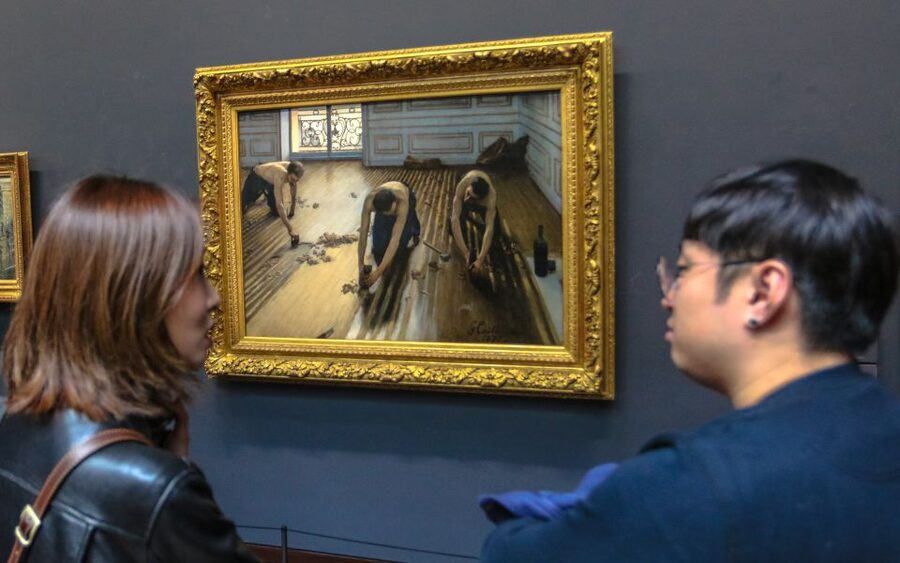
This is a great match for you if you want:
- A clear introduction to Impressionism and why it caused such a stir
- An expert who can explain paintings in plain language
- Help navigating a crowded museum without losing your momentum
You might want to plan differently if you:
- Need wheelchair-accessible options, because this tour is not suitable for wheelchair users
- Are traveling with a lot of luggage, since luggage or large bags are not allowed
- Want a fully unstructured museum day. This tour is guided first, then open after.
If you’re traveling with mixed interests, the guide storytelling often works well because it gives everyday hooks. You’re not only staring at brushwork, you’re following ideas, personality, and context.
After the tour: use your time like a pro
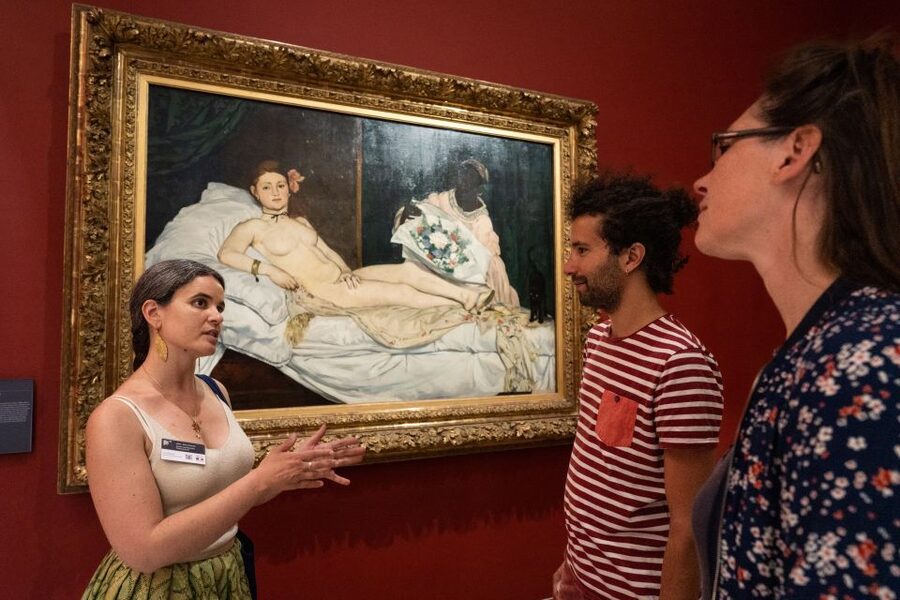
One of the best parts is what happens when the guide “lets you go.” You can remain in the museum for as long as you wish, and you can use what you learned during the tour to explore with more confidence.
Here’s how I’d do it in your place:
- Revisit your top rooms first, while the themes are still fresh in your mind
- Spend extra time on one artist you felt drawn to during the explanations
- If there’s a temporary exhibition, consider it while you’re already in the museum mindset
Orsay can reward you when you slow down. The guided route gives you permission to slow down later, instead of wandering randomly.
Price check: is $82 good value for Orsay?
Let’s break it down the practical way. You pay $82 per person for:
- A 1 hour 45 minutes guided tour
- A fully accredited local guide
- Dedicated entrance and entrance fees
- Headsets when appropriate
- The ability to stay as long as you like after the tour
If you would otherwise pay for general admission and still want a guide-like orientation, you’re basically paying to compress the learning and reduce the stress of crowds. You’re also paying for headsets, which can genuinely change how much you understand when galleries are full.
So is it worth it? For most people who want the “best of Orsay with meaning,” yes. If you’re the kind of visitor who reads every label slowly and never needs context, you might prefer a self-guided pass. But for anyone who wants to understand why these paintings mattered, this is a smart use of your time in Paris.
Should you book this Musée d’Orsay Skip-the-Line Tour?
Book it if you want a museum day that feels guided without turning into a rigid script. The biggest reason is the combination of skip-the-line entry, an English expert guide, and a route focused on Impressionism’s original shock. You get clear context, plus time to keep exploring after you’ve finished the guided highlights.
Skip it or consider an alternative if you strongly prefer slow, independent roaming during the entire visit, or if you need wheelchair accessibility, since this tour is not suitable for wheelchair users.
If you’re excited about Monet to Van Gogh, and you’d rather understand the drama behind the brushstrokes than just admire the surface, this is one of the easiest “yes” decisions for Orsay.
Everything Else Filed Under Paris
- Paris: Louvre Guided Tour with Reserved Access & Boat Cruise
★ 4.3 · 16,353 reviews - Paris: Big Bus Hop-On Hop-Off Tour with Optional Cruise
★ 4.4 · 13,279 reviews - Louvre Museum Masterpieces Guided Tour with Access
★ 4.5 · 12,023 reviews - Versailles: Skip-the-Line Tour of Palace with Gardens Access
★ 4.7 · 9,778 reviews - Mona Lisa & Louvre Masterpieces Tour with Reserved Access
★ 4.6 · 6,812 reviews
The Whole Paris Shelf
- Paris: Louvre Museum Timed-Entrance Ticket
★ 4.6 · 71,977 reviews - Disneyland® Paris 1-Day Ticket
★ 4.6 · 49,412 reviews - Paris: Versailles Palace and Gardens Full Access Ticket
★ 4.6 · 41,579 reviews - Paris: Evening River Cruise with Music
★ 4.4 · 22,721 reviews - Paris: Eiffel Tower Entry Ticket with Optional Summit Access
★ 4.4 · 20,035 reviews
Other Paris Art Museums
- Paris in a Day: Louvre or Orsay, Eiffel Tower, City Walk & Cruise
★ 5.0 · 1,956 reviews - Paris: Musée d’Orsay Skip-the-Line Tour with Expert Guide
★ 4.5 · 1,145 reviews - The Musée d’Orsay Guided Tour Orsay Museum Semi-Private 6ppl Max
★ 5.0 · 904 reviews - Louvre & Musée d’Orsay Guided Museum Tour Semi-Private 6ppl Max
★ 5.0 · 619 reviews - Paris Musée d’Orsay Fully Guided Tour
★ 4.5 · 556 reviews
The rest of the Paris write-ups
- Montmartre: Guided Tour for Kids and Families★ 4.9 · 57 reviews
- From Paris: Versailles Palace and Gardens Guided Day Trip★ 4.5 · 57 reviews
- Versailles Palace and Garden Tour with Paris Private Transfers★ 5.0 · 58 reviews
- Louvre Evening Escape – Avoid The Crowds! Semi-Private 6ppl Max★ 5.0 · 58 reviews
- Summit Eiffel Tower Audio Guide Tour with Unlimited Time Access★ 4.5 · 58 reviews
- Private Half Day Historic Tour★ 5.0 · 58 reviews
Paris Art Museums, in full.
 ★ 5.0Paris in a Day: Louvre or Orsay, Eiffel Tower, City Walk & CruiseFrom $1571,956 reviews
 ★ 4.6Paris: Musée d’Orsay Entry Ticket and Seine River CruiseFrom $491,344 reviews
 ★ 4.5Paris: Musée d’Orsay Skip-the-Line Tour with Expert GuideFrom $671,145 reviews
 ★ 3.9Lyon: Musée de l’illusion Entrance TicketFrom $221,023 reviews
 ★ 5.0The Musée d’Orsay Guided Tour Orsay Museum Semi-Private 6ppl MaxFrom $144904 reviews
 ★ 5.0Louvre & Musée d’Orsay Guided Museum Tour Semi-Private 6ppl MaxFrom $288619 reviews
 ★ 4.5Paris Musée d’Orsay Fully Guided TourFrom $71556 reviews
 ★ 4.0Paris: Orsay Museum Daily Entry TicketFrom $24508 reviews
Also on these France lists