
Reviewed · BORDEAUX WINE TOURS
Tasting of 6 Bordeaux wines and pairing charcuterie & cheese
A Bordeaux wine lesson in 75 minutes, with a mystery bottle to test your nose. I love the small group size, because it feels like you get time to ask questions and actually practice tasting. I also like that you sample six Bordeaux wines, including a mystery wine, so the session is more than just drinking and nodding along.
One thing to consider: it is a fast format. If you are expecting cheese and charcuterie to arrive with every single wine, you might find the food focus is lighter and more concentrated during certain parts of the tasting.
In This Review
- Key Highlights Worth Your Time
- Six Bordeaux Wines, One Clever Way to Learn Fast
- Who Guides the Tasting: Mathilde, Cécilia, and a Practical Teaching Style
- The Wine Flight: How the Session Walks You Through Bordeaux
- Left Bank and Right Bank: Taste the Difference Without Getting Stuck in Lectures
- Where the Tasting Happens: Courtyard, Cellar, or a Furnished Room
- Charcuterie and Cheese Pairing: How to Get More From the Food
- The Tasting Booklet: Your Aftercare for the Flight
- Buying a Bottle With Confidence, Not Guesswork
- Value Check: Why This Tasting Feels Fair for $54.44
- Timing Tips: How to Fit the Tasting Into a Busy Bordeaux Day
- Who This Experience Suits Best
- Final Call: Should You Book This Bordeaux Wine and Pairing Tasting?
- FAQ
- How long is the Bordeaux wine tasting?
- How many wines will I taste?
- Is the tasting offered in English?
- What food is included?
- What is included in the price?
- Where does the tasting take place?
- Can I choose only red or only white?
- Are the wines available to buy?
- Is lunch included?
Key Highlights Worth Your Time
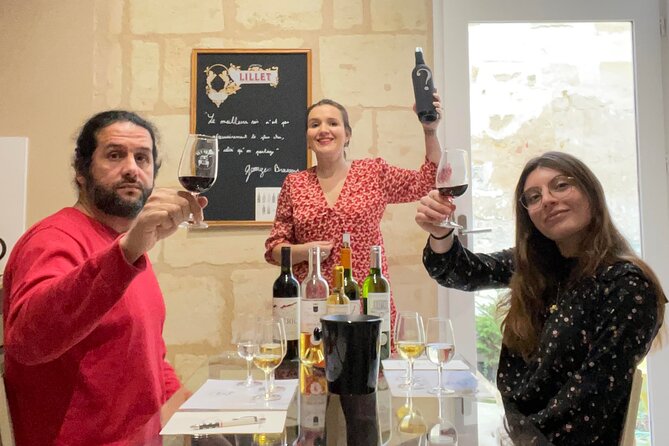
- Mathilde or Cécilia guide the tasting with a structured approach that covers grapes, blends, terroir, and how Bordeaux classifications work
- Six wines in one flight: 2 dry whites, 3 reds, 1 soft style, plus 1 mystery wine to sharpen your senses
- Left bank vs right bank tasting is built in, not an afterthought
- Organic family estates and Grands Crus Classés are part of the lineup, so you see a range of Bordeaux styles
- Charcuterie and cheese pairings help you connect aromas and flavors to real food, not just theory
Six Bordeaux Wines, One Clever Way to Learn Fast
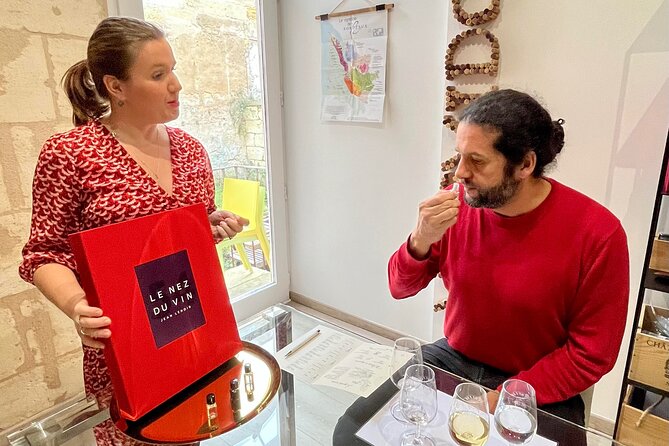
If you want to understand Bordeaux without spending a whole day on a bus, this is a smart move. You get a tight, guided tasting where you learn the basic mechanics of tasting wine, then apply them right away.
The format is simple: you work through six carefully selected wines and then use charcuterie and cheese as a real-world flavor test. You still come away with a fun finish, not a homework assignment.
And the best part is how the flight is arranged. It is designed to give you repeated chances to practice spotting differences between white and red styles, and between left bank and right bank Bordeaux.
More Bordeaux estates and tastings
Who Guides the Tasting: Mathilde, Cécilia, and a Practical Teaching Style
You are not left alone with a pour and a vague explanation. You taste with professional hosts, and the teaching has a clear structure.
Mathilde and Cécilia lead the experience. They are trained at the University of Wine, and you can feel that in how they break things down: they explain what to look for, then you smell and taste for yourself. It is a bit like learning a map reading skill. Once you know what to pay attention to, you start seeing Bordeaux patterns everywhere.
In reviews, the hosting comes up again and again for clarity, patience, and the ability to make the session feel friendly rather than stiff. One consistent theme is that you learn how to read labels in France and how to connect grape varieties and blends to what you actually taste in the glass.
That matters because Bordeaux can be confusing on your own. A tasting like this gives you a mental shortcut before you hit the wine shops.
The Wine Flight: How the Session Walks You Through Bordeaux
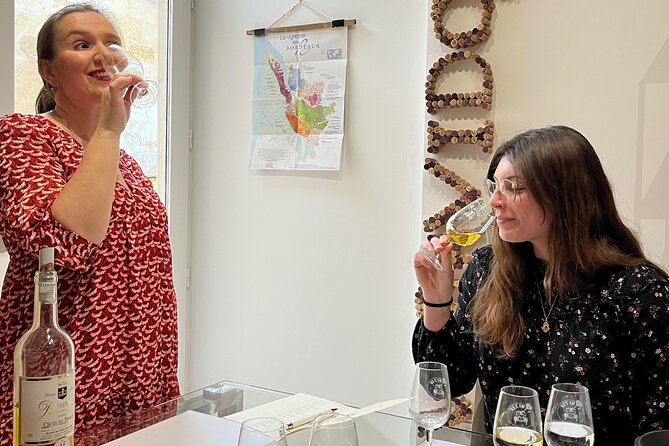
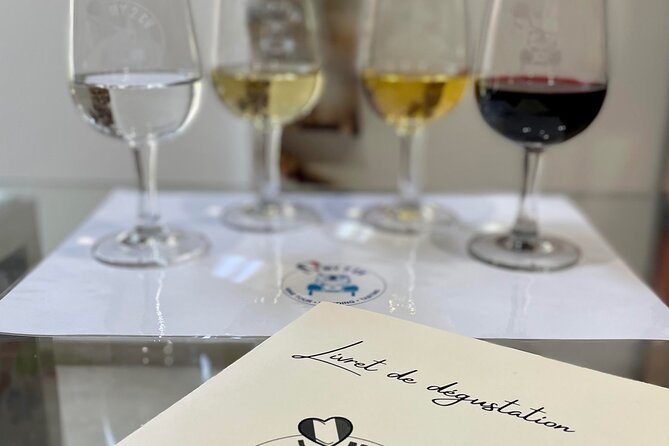
This tasting is built around Bordeaux variety, but also around Bordeaux logic. You go step by step through a mix of whites, reds, and one softer style.
Here is the structure you can expect:
- 1 mystery wine
- 2 dry whites (one tied to the left bank style, one tied to the right bank style)
- 3 reds (mixtures that cover left bank and right bank differences)
- 1 soft wine (lighter, not a typical heavy red experience)
That mystery wine slot is not just for fun. It pushes you to slow down and use your senses like a wine student. If you want to learn, this is a good trick, because you have to guess based on aroma and flavor clues, not on what you were told to expect.
For the rest of the flight, the left bank and right bank split is the educational backbone. You do not just hear about terroir. You taste it, then you start to build your own preferences.
Left Bank and Right Bank: Taste the Difference Without Getting Stuck in Lectures
Bordeaux has a reputation for being complicated. This session helps you get unstuck by putting the idea into your mouth.
As you move through the wines, the hosts explain what different styles tend to look like, including how blends are used and what grape types bring to the glass. Then you test those ideas yourself.
When you taste both sides of the river styles, you begin to notice patterns that are hard to learn from a wine list. You start understanding why certain reds feel more structured while others can taste fruit-forward, and why some whites lean more crisp or aromatic depending on where they are rooted.
You also get context about Bordeaux classifications. You will hear how appellations, terroirs, grape varieties, and blends connect to what ends up on your table. The goal is that, after this, you can walk into a shop and make a more confident choice, even if the label text looks intimidating.
And because family estates and organic farming are part of the lineup, you see that Bordeaux is not one uniform style. It is many choices under the same big regional umbrella.
Where the Tasting Happens: Courtyard, Cellar, or a Furnished Room
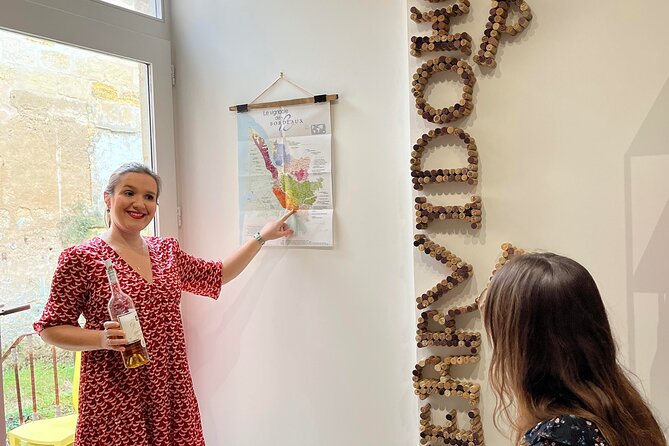
Timing and setting can affect how you experience a short tour, and this one is flexible. Depending on the season, the tasting takes place in a private courtyard, cellar, or a furnished room.
That is a practical detail. A courtyard can feel relaxed and airy, while a cellar tends to make the whole process feel more focused and cellar-cool. Either way, the set-up supports the teaching style: small, controlled, and designed for tasting, not for loud sightseeing chaos.
Also, the session is small. With a maximum of 6 travelers, it is easier to hear explanations and ask questions when something does not make sense.
Charcuterie and Cheese Pairing: How to Get More From the Food
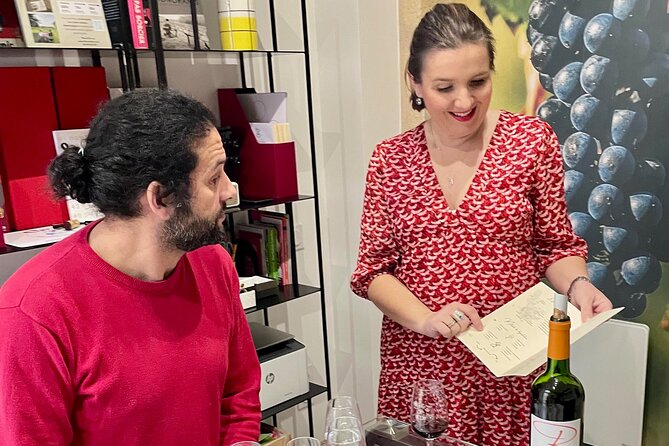
The food is not an afterthought. You get charcuterie and cheese as part of the tasting, and you use it to understand pairing logic.
The big value of this pairing step is that it forces you to pay attention to how flavors shift. Salt, fat, and texture can change how a wine tastes, sometimes making fruit seem brighter or tannins feel softer. That connection is what makes the pairing part actually useful later, when you cook or order food.
That said, there is one consideration to flag. Some experiences lean more toward a small selection, served in a concentrated way rather than a full pairing for each wine. If you are the kind of person who wants a big bite with every pour, you might want to come in with flexible expectations.
My advice: treat the food as a flavor lab. Take a slow bite between wines and focus on what changes in aroma and taste. It is the fastest way to learn pairing beyond the obvious.
More Bordeaux bistro tables and cellar visits
- Saint Emilion Half-Day Trip with Wine Tasting & Winery Visit from Bordeaux
★ 4.5 · 1,034 reviews - From Bordeaux: Half-Day Saint-Émilion Tour and Wine Tasting
★ 4.6 · 657 reviews - Bordeaux Wine and Trade Museum Admission Ticket with Wine Tasting
★ 4.5 · 599 reviews - Bordeaux: Vineyards Wine Tasting Half-Day Trip
★ 4.2 · 470 reviews - From Bordeaux: Saint-Émilion Half-Day Tour with Wine Tasting
★ 4.9 · 389 reviews
The Tasting Booklet: Your Aftercare for the Flight
This experience includes a tasting booklet, which you can use to practice at home. That sounds simple, but it is one of the best value add-ons for short tours.
Wine tasting at home can turn into guesswork unless you have a system. A booklet gives you a structure so you can compare what you tasted to what you read later. It also helps you remember which wines you liked and why.
If you are traveling for a week or two, this kind of takeaway can keep the experience from fading after a single afternoon. You can replay the same ideas when you are shopping, or when you are comparing bottles at dinner.
Buying a Bottle With Confidence, Not Guesswork
You are not just consuming a flight and walking away. The wines you taste are available for sale, which is great if you already know you like one or two styles.
This is where the learning pays off. Bordeaux buying can be tricky because the label system is its own language. After a focused tasting where you connect grapes, blends, and regional style to flavors, your purchase becomes less random.
If you prefer to shop based on taste, bring what you learned:
- Decide if you prefer the style of dry whites versus reds
- Use the left bank and right bank ideas as a quick filter
- Pick a bottle that matches the flavors you actually noticed in the glass
You can also tell the host what you liked and ask for guidance. In reviews, this comes up as a helpful way to walk out with a bottle you really enjoy, even if you are new to Bordeaux.
Value Check: Why This Tasting Feels Fair for $54.44
At $54.44 per person, you are paying for a short, guided learning session plus real wine and food.
Here is what you actually get:
- 6 glasses of wine
- a food and wine pairing
- a tasting booklet
- professional hosting in English
- a small group capped at 6 travelers
- about 1 hour 15 minutes
In Bordeaux, you can certainly find tastings priced less than this, but many of the cheaper ones give you less context. You might get wine, but not a clear explanation of how to taste it like a pro.
For this price, the value is in the structure. You are not just sampling. You are being taught how to taste, how to connect what you sense to Bordeaux categories, and how to interpret what you see on labels. That kind of instruction is hard to replicate on your own.
Timing Tips: How to Fit the Tasting Into a Busy Bordeaux Day
The session is about 1 hour 15 minutes, so it works best as a focused stop rather than a side quest.
One review point that matters for your planning: timing can get tight if you are connecting from a cruise schedule or a long train ride. If your day already includes travel time, you will have a better experience with a more relaxed buffer.
If you have flexibility, aim for a time slot when you do not feel rushed at the end. Short tastings give you a lot of information, but there is a limit to how much can fit when everyone has to run.
Who This Experience Suits Best
This tasting is a strong fit if:
- you want a fast introduction to Bordeaux
- you are curious about left bank vs right bank styles
- you like learning through tasting, not through slides
- you enjoy charcuterie and cheese with wine
- you want to leave with practical advice for buying bottles
It might be less ideal if:
- you want a full meal pairing with a large selection at each stage
- you have very strict timing and no margin for delays
- you want only red or only white without any other styles (though you can request a specialized tasting)
Final Call: Should You Book This Bordeaux Wine and Pairing Tasting?
Yes, I would book it if you want a compact, high-impact Bordeaux education with real wine, real food, and a small-group vibe. The combination of six wines, structured teaching from Mathilde or Cécilia, and charcuterie and cheese makes it a good value for the time you spend.
Book it especially if you plan to shop for wine afterward. You will get enough language and tasting habits to make choices feel simpler, not scarier.
FAQ
How long is the Bordeaux wine tasting?
It lasts about 1 hour 15 minutes.
How many wines will I taste?
You taste 6 wines total, including 1 mystery wine, 2 dry whites, 3 reds, and 1 soft wine.
Is the tasting offered in English?
Yes, the experience is offered in English.
What food is included?
Charcuterie and cheese pairing snacks are included.
What is included in the price?
The price includes a tasting booklet, 6 glasses of wine, and food for the wine pairing.
Where does the tasting take place?
The tasting happens at 25 Av. Thiers, 33100 Bordeaux. Depending on the season, it may be in a private courtyard, cellar, or a furnished room.
Can I choose only red or only white?
Yes. Specialized tastings are available if you prefer only red or only white.
Are the wines available to buy?
Yes. The wines tasted are available for sale.
Is lunch included?
No. A lunch picnic with local products is not included, but it may be available on reservation.
More Bordeaux Bistro Tables and Cellars
- Bordeaux: Cité du Vin Entry Ticket and Wine Tasting
★ 4.6 · 3,885 reviews - From Bordeaux: Afternoon Saint-Emilion Wine Tasting & snack
★ 4.8 · 1,581 reviews - Medoc or Saint Emilion Wine Tasting and Chateau from Bordeaux
★ 5.0 · 1,415 reviews - Saint Emilion Half-Day Trip with Wine Tasting & Winery Visit from Bordeaux
★ 4.5 · 1,034 reviews - From Bordeaux: Half-Day Saint-Émilion Tour and Wine Tasting
★ 4.6 · 657 reviews
The Whole Bordeaux Shelf
- Bordeaux: Cité du Vin Entry Ticket and Wine Tasting
★ 4.6 · 3,885 reviews - Bordeaux: River Garonne Cruise with Glass of Wine and Canelé
★ 4.5 · 3,630 reviews - From Bordeaux: Afternoon Saint-Emilion Wine Tasting & snack
★ 4.8 · 1,581 reviews - Medoc or Saint Emilion Wine Tasting and Chateau from Bordeaux
★ 5.0 · 1,415 reviews - Saint Emilion Day Trip with Sightseeing Tour & Wine Tastings from Bordeaux
★ 5.0 · 1,120 reviews
More Bordeaux Estates
- Bordeaux: Cité du Vin Entry Ticket and Wine Tasting
★ 4.6 · 3,885 reviews - Bordeaux: River Garonne Cruise with Glass of Wine and Canelé
★ 4.5 · 3,630 reviews - From Bordeaux: Afternoon Saint-Emilion Wine Tasting & snack
★ 4.8 · 1,581 reviews - Medoc or Saint Emilion Wine Tasting and Chateau from Bordeaux
★ 5.0 · 1,415 reviews - Saint Emilion Day Trip with Sightseeing Tour & Wine Tastings from Bordeaux
★ 5.0 · 1,120 reviews
The rest of the Bordeaux write-ups
- Bordeaux: Saint-Emilion Village Day Trip, 2 Chateaux & Lunch★ 4.8 · 57 reviews
- The Ultimate Bordeaux Food Tour: Full Meal & Fine Wines★ 4.8 · 61 reviews
- Bordeaux Food and Wine Tour : Authentic Artisanal Flavors★ 5.0 · 62 reviews
- No Diet Club : Bordeaux Food Tour in Bordeaux center !★ 4.9 · 62 reviews
- Bordeaux: Private Tour in a Citroën 2CV★ 4.7 · 64 reviews
- Bordeaux: St-Emilion and Medoc Wine Day Tour with Lunch★ 4.8 · 64 reviews
Bordeaux Wine Tours, in full.
 ★ 4.6Bordeaux: Cité du Vin Entry Ticket and Wine TastingFrom $273,885 reviews
 ★ 4.5Bordeaux: River Garonne Cruise with Glass of Wine and CaneléFrom $223,630 reviews
 ★ 4.8From Bordeaux: Afternoon Saint-Emilion Wine Tasting & snackFrom $1121,581 reviews
 ★ 5.0Medoc or Saint Emilion Wine Tasting and Chateau from BordeauxFrom $1141,415 reviews
 ★ 5.0Saint Emilion Day Trip with Sightseeing Tour & Wine Tastings from BordeauxFrom $2501,120 reviews
 ★ 4.6Saint-Émilion: Grand Cru Classé Winery Visit and TastingFrom $231,118 reviews
 ★ 4.5Saint Emilion Half-Day Trip with Wine Tasting & Winery Visit from BordeauxFrom $1331,034 reviews
 ★ 4.7From Bordeaux: St. Emilion Village Half-Day Wine TourFrom $129728 reviews
Also on these France lists