
Reviewed · BORDEAUX WINE TOURS
Workshop Bordeaux wine tasting: 4 reds & charcuterie pairing
Four reds. One smart way to taste.
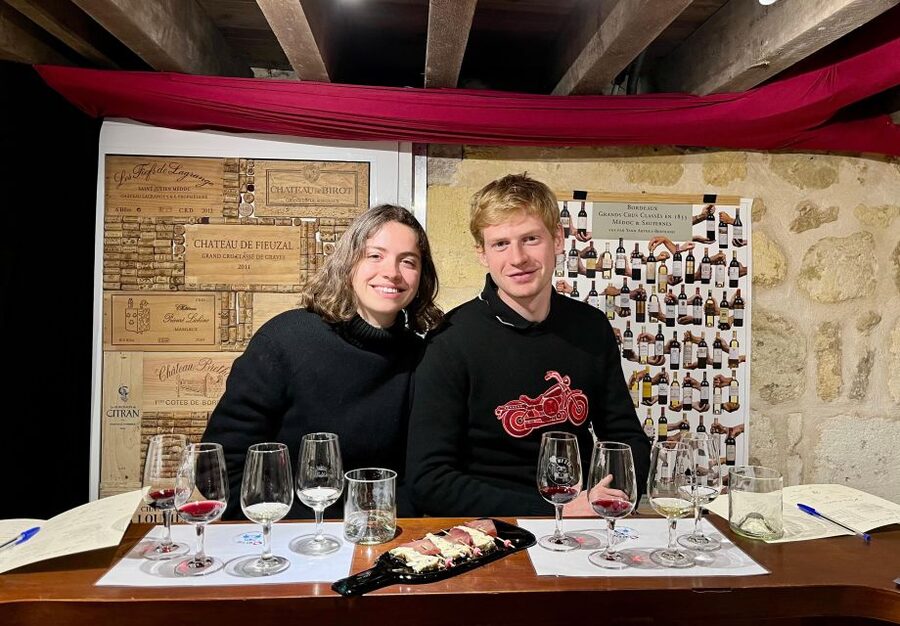
This 1-hour Bordeaux wine workshop is a fun, guided tasting in a tiny group, built around real learning tools like a take-home booklet and hands-on games, not just sipping. You also get charcuterie pairings that make the wines easier to understand and remember, fast. The main thing to weigh is that it is not suitable for people with mobility impairments, and you should plan to walk to a small hidden room behind the street.
I especially like how it teaches the big Bordeaux story in plain terms, from Left Bank structure to Right Bank fruit, using the wines in your glass. I also like that the hosts, Cécilia and Mathilde, run the session like a conversation, so you can ask questions instead of sitting through a lecture.
One possible drawback: you only have 1 hour, so if you want a long, slow tasting with lots of extra bottles, this might feel short.
In This Review
- Key highlights worth your attention
- Why this 1-hour Bordeaux red workshop makes sense
- Meeting at 25 Avenue Thiers, and finding the hidden tasting room
- The Cécilia and Mathilde style, small group energy, no lecture vibe
- What you taste: four Bordeaux reds plus a mystery pour
- Left Bank vs Right Bank, explained with Cabernet and Merlot
- Charcuterie pairing, how it teaches your palate faster
- The aroma game and tasting method you can reuse
- Price, duration, and why $46 is a solid value for this format
- Who this workshop fits best, and who might want a different plan
- Should you book this Bordeaux red tasting workshop?
- FAQ
- How long is the Bordeaux wine tasting workshop?
- How much does it cost?
- How many people are in the group?
- What languages are offered?
- What is included in the tasting?
- Where do I meet, and how do I find the door?
- Can I cancel or pay later?
Key highlights worth your attention
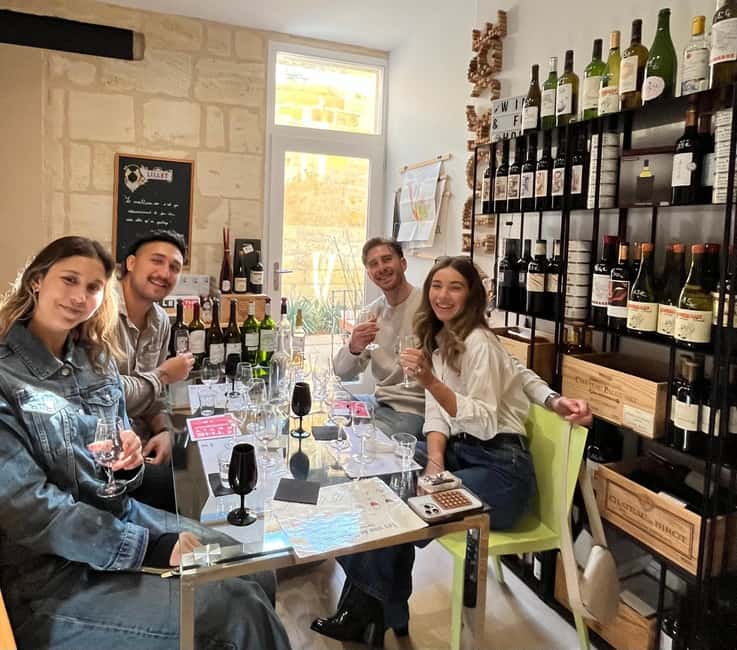
- Small group limited to 6, so you actually get time to talk and smell
- Four Bordeaux red wines plus a mystery glass, each chosen to show a different side of Bordeaux
- Left Bank vs Right Bank lessons using real examples like Médoc Cabernet Sauvignon and Saint-Émilion Merlot
- Aroma game to help you identify scents and build your own tasting vocabulary
- Charcuterie pairings matched to each wine so you learn what food can do to flavor
- A take-home tasting booklet so you can keep practicing after Bordeaux
Why this 1-hour Bordeaux red workshop makes sense
Bordeaux can feel intimidating at first. Names, classifications, and blends pile up fast. This workshop keeps it human. In 1 hour, you get a guided tasting experience that focuses on the fundamentals: what you smell, what you taste, and why Bordeaux reds vary so much.
The structure is the secret sauce. You are tasting multiple wines side-by-side, which makes the differences easier to spot than if you just try one bottle. You also get taught how to connect the wine to the glass, like how grape variety and blend choices shape aroma and texture, and how terroir and vinification choices affect what you experience. That is practical wine knowledge you can use immediately at a shop or restaurant.
And then there is the food. The charcuterie pairing is not just a snack. It is part of the teaching. When the host matches a wine with a savory bite, you start to notice how fat, salt, and spice can change how fruit or tannins come across. That is how you learn pairing without pretending you were born with a sommelier nose.
If you like a plan that stays focused and does not waste time, this is a strong fit.
More Bordeaux estates and tastings
Meeting at 25 Avenue Thiers, and finding the hidden tasting room
The meeting point is at 25 Avenue Thiers, 33100 Bordeaux, about 100 meters from the tram A stop called Stalingrad. That location matters because it keeps your day simple. You do not need hotel pickup or a long commute.
There is also a small practical detail that can save you time: the tasting room is hidden behind a building. When you arrive at the gray door next to the Guy Hoquet panel, ring the bell labeled I ♥️ TASTING. If you are arriving a few minutes early, you should have plenty of time to spot the entrance.
Plan to walk at least a little bit with confidence. This is a short, focused workshop, not a long guided stroll. Your goal is to show up, settle in, and taste.
Also, language coverage is useful if your French is rusty. The class runs in English, French, and Spanish, so you can follow the tasting method and the pairing tips without guesswork.
The Cécilia and Mathilde style, small group energy, no lecture vibe
Two hosts are named for this experience, Cécilia and Mathilde, and the common theme in how the workshop feels is approachable. This is the kind of session where you can ask questions and get answers that connect to the wine in front of you, instead of hearing a memorization contest.
Both hosts are described as certified wine experts trained at the Université du Vin. That matters for you because it suggests the teaching is systematic. You are not just being told what to think, you are being given a method for how to taste.
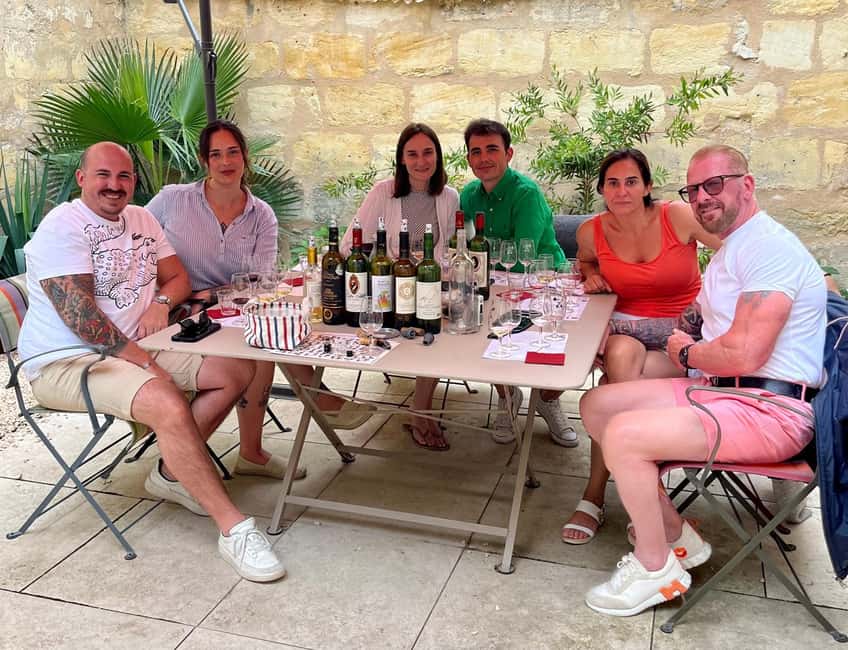
The group size is limited to 6 participants. That alone changes the experience. With a small group, the host can slow down, adjust the pace, and guide you through tasting steps like aroma identification. It also makes it more social in a good way, especially if you are traveling solo or want to meet friendly people without being thrown into a big crowd.
One more subtle point: the workshop location can change depending on the season. You might taste in a stone-built room, a private courtyard, or an underground cellar. Each setting keeps the mood calm and wine-friendly, which helps when you are focusing on aromas and texture.
What you taste: four Bordeaux reds plus a mystery pour
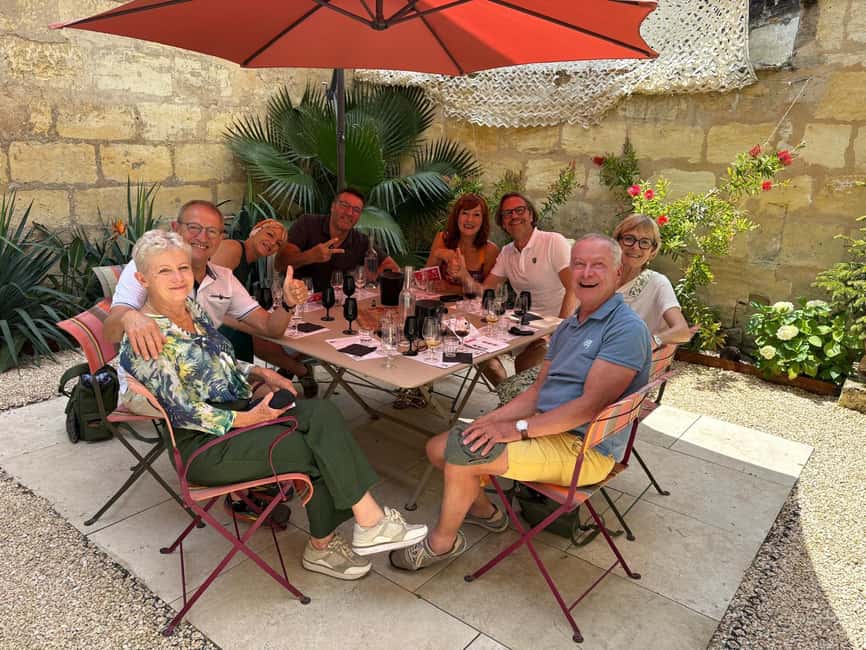
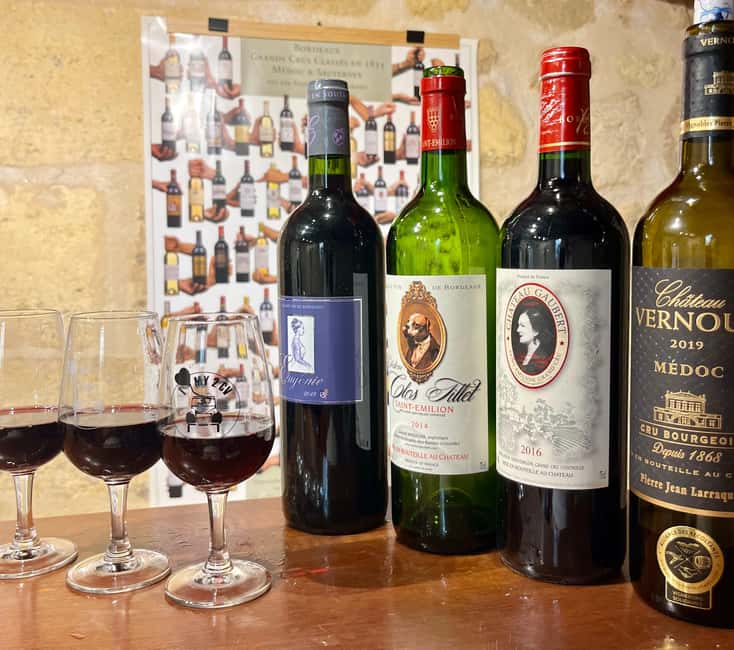
The tasting includes four carefully selected Bordeaux red wines, plus one mystery glass. That mystery element keeps the experience playful. It also forces you to pay attention instead of letting your brain go on autopilot.
The host uses the wines to cover the main Bordeaux learning themes:
- grape variety and what it does in the glass
- blend choices and how they change aroma and mouthfeel
- terroir and how place shows up in the wine
- vinification choices and how those choices affect texture, not just flavor
- ageing potential, so you understand what makes some Bordeaux drink beautifully now and others better later
You also get a real-world pathway through Bordeaux styles. The workshop contrasts classic Left Bank Cabernet Sauvignon character with Right Bank Merlot smoothness. The description calls out the structured, age-worthy side of Bordeaux from the Médoc, and the smooth, fruit-forward style linked to Saint-Émilion Merlot. Even if you have never heard those terms before, tasting them in a guided sequence helps them become concepts you can actually use.
One wine in the set is described as mature, which is a big deal for learning. Youthful wine can be loud. Mature wine teaches balance and how aromas shift over time. You start to notice how time can soften edges, round flavors, and change how tannins feel.
And because the host uses a mix of styles, from single-grape expressions to elegant blends, you get a fuller sense of the range Bordeaux can offer.
Left Bank vs Right Bank, explained with Cabernet and Merlot
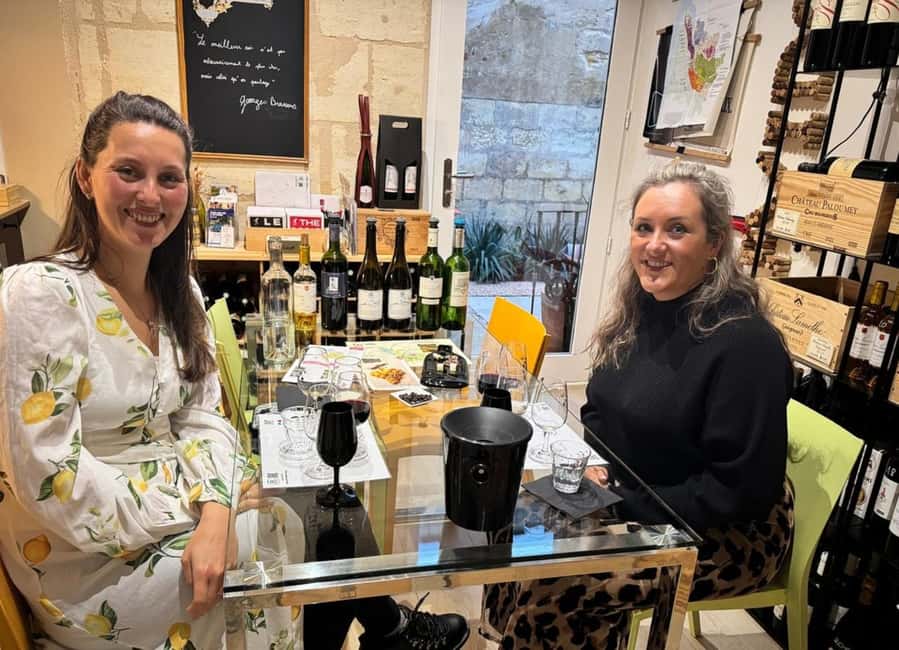
Bordeaux is often talked about like it is one thing. It is not. This workshop makes the split feel obvious.
On the Left Bank side, the focus is typically on the Médoc, with Cabernet Sauvignon leading to a more structured profile. That usually shows up as firmer tannins and a more angular feel, and it often comes with a strong backbone for ageing. In a tasting like this, you learn to connect that structure to what you are experiencing, instead of just memorizing that Cabernet is strong.
On the Right Bank side, the workshop highlights Saint-Émilion and its more smooth, fruit-forward impression, especially with Merlot in the mix. Merlot is often softer on the palate, and it can feel rounder in texture. In a guided setting, you can compare how that softness changes the overall balance, especially when you eat.
The value for you is that these are not abstract regional labels. You can taste the difference in aroma, texture, and finish. You can also start asking better questions when you shop, like what style you prefer and what kind of Bordeaux best matches your taste.
If you like a clear framework, this is one of the strongest parts of the workshop. It gives your brain a map for Bordeaux, which makes the rest of your trip easier.
Charcuterie pairing, how it teaches your palate faster
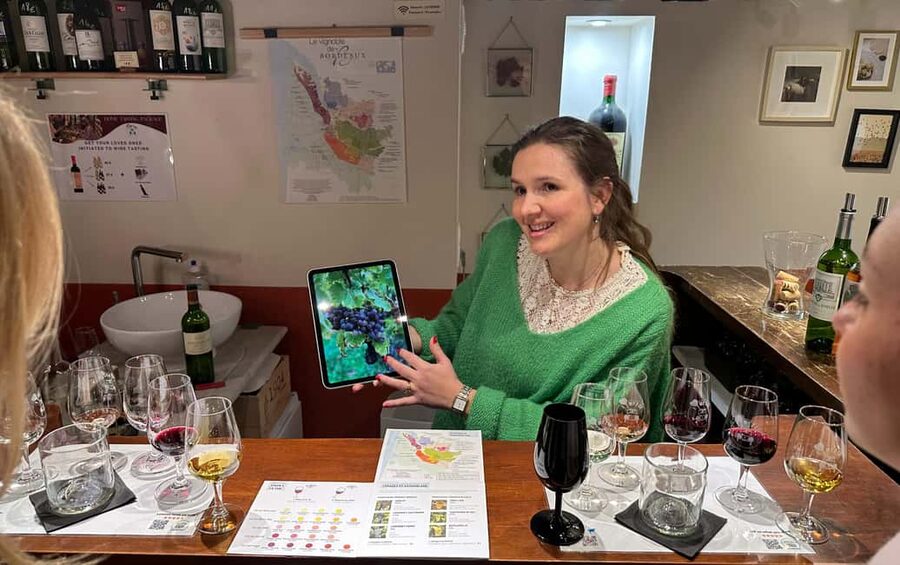
Wine and food pairing can be confusing because people often make it sound like a mystical art. This workshop keeps it grounded by pairing each wine with artisanal charcuterie chosen to complement it.
Why that matters: charcuterie is made for wine. Salt brings out fruit perception. Fat can soften tannins, making a more structured Cabernet feel less aggressive. Spices can highlight certain aromatic notes and change how the wine tastes in the moment.
In practice, you taste, eat, then taste again. That back-and-forth is exactly how your palate learns. Instead of reading about pairing, you experience what it does. And since the workshop explains the pairing logic, you are not just relying on luck.
You should also know the workshop mentions wines available for purchase on site. If you find a favorite pairing, you can ask what bottle fits that style and consider taking the lesson home with you. Buying a bottle right after tasting is one of the easiest ways to lock in what you liked, because your memory is still fresh.
Other tastings and blending sessions
- Saint Emilion Half-Day Trip with Wine Tasting & Winery Visit from Bordeaux
★ 4.5 · 1,034 reviews - From Bordeaux: Half-Day Saint-Émilion Tour and Wine Tasting
★ 4.6 · 657 reviews - Bordeaux Wine and Trade Museum Admission Ticket with Wine Tasting
★ 4.5 · 599 reviews - Bordeaux: Vineyards Wine Tasting Half-Day Trip
★ 4.2 · 470 reviews - From Bordeaux: Saint-Émilion Half-Day Tour with Wine Tasting
★ 4.9 · 389 reviews
The aroma game and tasting method you can reuse
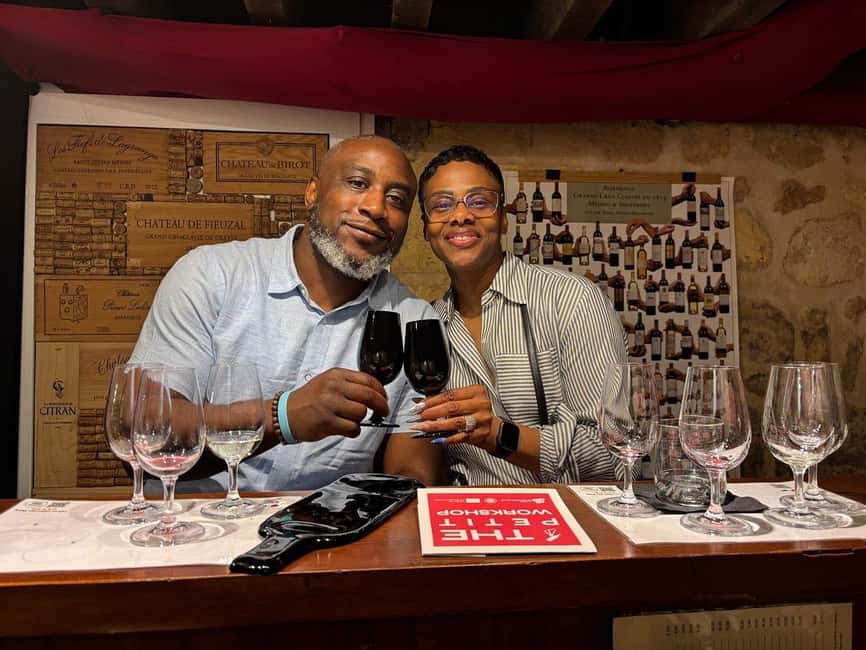
A big part of this workshop is the aroma game. You are guided through smelling steps that help you identify scents in the wine. This turns tasting into something you can practice, instead of something you either have talent for or do not.
The goal is simple: help you build a vocabulary for what you notice. When you learn that a scent you enjoy likely connects to specific grape or winemaking choices, tasting becomes less random. It also becomes more fun, because you start recognizing patterns.
One of the teaching highlights is described as tasting like a professional by learning how choices in grape variety, terroir, vinification style, and blending affect aroma, texture, and ageing potential. In plain terms, that means you learn which part to focus on first when a wine tastes confusing.
The workshop also includes playful elements like blending. The notes describe blending and how flavors and depth can shift when you combine components. Even if you have never blended anything before, you quickly learn that wine is not just one flavor. It is structure plus fruit plus aromatic compounds plus balance.
And you get a personal tasting booklet to take home. That matters because you can keep practicing beyond the workshop. You will likely remember the wines more clearly when you can replay the method later, whether you are tasting at home or comparing Bordeaux bottles in a shop.
Price, duration, and why $46 is a solid value for this format
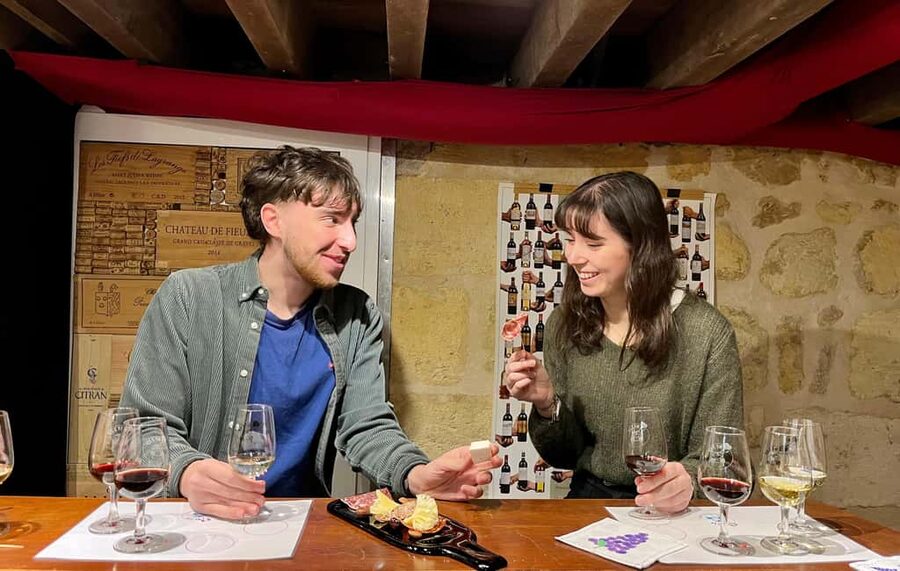
The price is $46 per person for a 1-hour small-group session. At first glance, it might look like a lot for a short time. But the value is not only the wine.
You also get:
- guided tasting instruction
- a take-home booklet and tasting method
- multiple Bordeaux red wines in a guided sequence
- a mystery glass that keeps you focused
- charcuterie pairing
- an aroma game that teaches you how to taste
Many wine experiences charge similarly for fewer learning components or without the food. Here, the food pairing is part of the curriculum, not a throw-in. And the small group limit to 6 improves the odds that you actually get help, not just sit with a glass.
So for a quick Bordeaux stop where you want the learning payoff, this is a strong use of time. If you are doing half-day trips to the bigger wine areas like Médoc and Saint-Émilion, this workshop becomes the glue. It gives you a tasting framework so your later visits make more sense.
Who this workshop fits best, and who might want a different plan
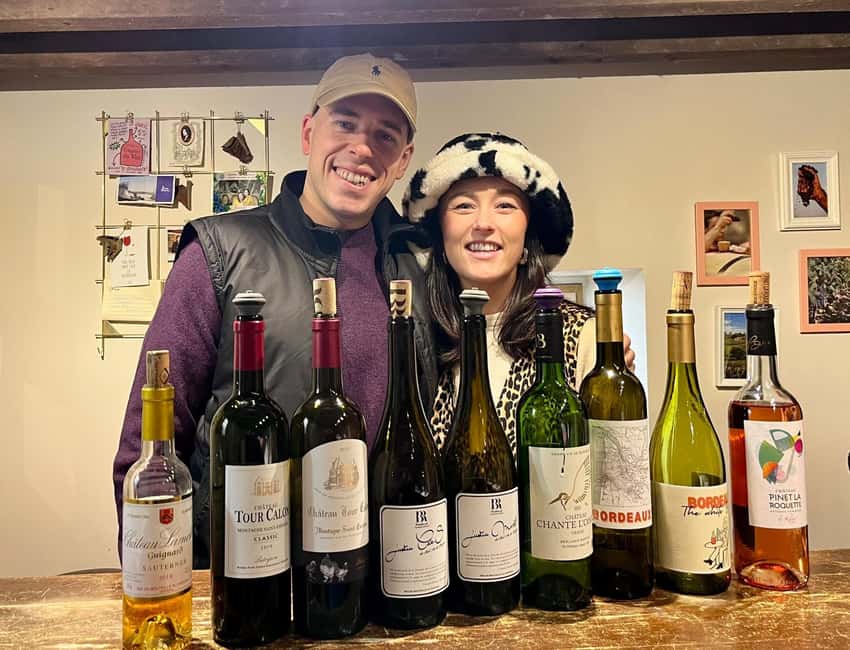
This workshop is ideal if you:
- want a fast way to understand Bordeaux reds
- like hands-on, interactive teaching
- enjoy food pairings and learning why they work
- prefer a small group atmosphere
- are beginner curious, but also want a real method you can build on
It also works well if you feel intimidated by Bordeaux. The host approach is designed to be approachable, and the Left Bank versus Right Bank comparison gives you instant structure.
You might consider a different option if you:
- want a long, slow tasting session with many extra bottles
- need mobility accessibility support, since this activity is listed as not suitable for people with mobility impairments
- want hotel pickup, since there is no pickup or drop-off included
Should you book this Bordeaux red tasting workshop?
If you want a smart, friendly way to understand Bordeaux in a short amount of time, yes, book it. The combination of small group instruction, four reds plus a mystery pour, and charcuterie pairings is exactly the kind of focused experience that turns random wine drinking into real tasting skills. You will leave with a booklet, a clearer sense of Left Bank versus Right Bank, and a method you can use for the rest of your trip.
If you are the type who learns best by tasting and comparing, this is an easy win for your Bordeaux schedule.
FAQ
How long is the Bordeaux wine tasting workshop?
The experience lasts 1 hour.
How much does it cost?
It is priced at $46 per person.
How many people are in the group?
The workshop is a small group limited to 6 participants.
What languages are offered?
The live tour guide offers English, French, and Spanish.
What is included in the tasting?
The class includes a wine tasting with your own tasting booklet, an aroma game, 4 Bordeaux red wine glasses, and wine and food pairing with charcuterie.
Where do I meet, and how do I find the door?
Meet at 25 Avenue Thiers, 33100 Bordeaux, about 100 meters from tram A stop Stalingrad. The room is hidden behind a building, and you should look for the gray door next to the Guy Hoquet panel, with the bell labeled I ♥️ TASTING.
Can I cancel or pay later?
You can cancel up to 24 hours in advance for a full refund. You can also reserve now and pay later to keep plans flexible.
The Whole Bordeaux Shelf
- Bordeaux: Cité du Vin Entry Ticket and Wine Tasting
★ 4.6 · 3,885 reviews - Bordeaux: River Garonne Cruise with Glass of Wine and Canelé
★ 4.5 · 3,630 reviews - From Bordeaux: Afternoon Saint-Emilion Wine Tasting & snack
★ 4.8 · 1,581 reviews - Medoc or Saint Emilion Wine Tasting and Chateau from Bordeaux
★ 5.0 · 1,415 reviews - Saint Emilion Day Trip with Sightseeing Tour & Wine Tastings from Bordeaux
★ 5.0 · 1,120 reviews
More Tastings and Blending Sessions
- Bordeaux: Cité du Vin Entry Ticket and Wine Tasting
★ 4.6 · 3,885 reviews - From Bordeaux: Afternoon Saint-Emilion Wine Tasting & snack
★ 4.8 · 1,581 reviews - Medoc or Saint Emilion Wine Tasting and Chateau from Bordeaux
★ 5.0 · 1,415 reviews - Saint Emilion Half-Day Trip with Wine Tasting & Winery Visit from Bordeaux
★ 4.5 · 1,034 reviews - From Bordeaux: Half-Day Saint-Émilion Tour and Wine Tasting
★ 4.6 · 657 reviews
More Bordeaux Estates
- Bordeaux: Cité du Vin Entry Ticket and Wine Tasting
★ 4.6 · 3,885 reviews - Bordeaux: River Garonne Cruise with Glass of Wine and Canelé
★ 4.5 · 3,630 reviews - From Bordeaux: Afternoon Saint-Emilion Wine Tasting & snack
★ 4.8 · 1,581 reviews - Medoc or Saint Emilion Wine Tasting and Chateau from Bordeaux
★ 5.0 · 1,415 reviews - Saint Emilion Day Trip with Sightseeing Tour & Wine Tastings from Bordeaux
★ 5.0 · 1,120 reviews
The rest of the Bordeaux write-ups
- Bordeaux: Saint-Emilion Village Day Trip, 2 Chateaux & Lunch★ 4.8 · 57 reviews
- The Ultimate Bordeaux Food Tour: Full Meal & Fine Wines★ 4.8 · 61 reviews
- Bordeaux Food and Wine Tour : Authentic Artisanal Flavors★ 5.0 · 62 reviews
- No Diet Club : Bordeaux Food Tour in Bordeaux center !★ 4.9 · 62 reviews
- Bordeaux: Private Tour in a Citroën 2CV★ 4.7 · 64 reviews
- Bordeaux: St-Emilion and Medoc Wine Day Tour with Lunch★ 4.8 · 64 reviews
Bordeaux Wine Tours, in full.
 ★ 4.6Bordeaux: Cité du Vin Entry Ticket and Wine TastingFrom $273,885 reviews
 ★ 4.5Bordeaux: River Garonne Cruise with Glass of Wine and CaneléFrom $223,630 reviews
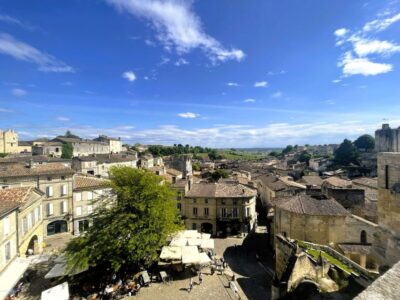 ★ 4.8From Bordeaux: Afternoon Saint-Emilion Wine Tasting & snackFrom $1121,581 reviews
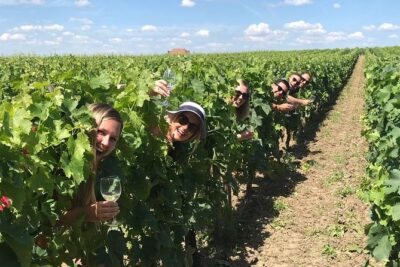 ★ 5.0Medoc or Saint Emilion Wine Tasting and Chateau from BordeauxFrom $1141,415 reviews
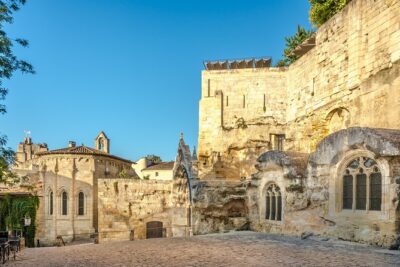 ★ 5.0Saint Emilion Day Trip with Sightseeing Tour & Wine Tastings from BordeauxFrom $2501,120 reviews
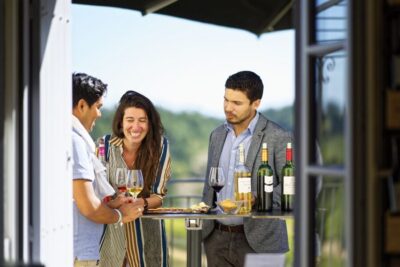 ★ 4.6Saint-Émilion: Grand Cru Classé Winery Visit and TastingFrom $231,118 reviews
 ★ 4.5Saint Emilion Half-Day Trip with Wine Tasting & Winery Visit from BordeauxFrom $1331,034 reviews
 ★ 4.7From Bordeaux: St. Emilion Village Half-Day Wine TourFrom $129728 reviews
Also on these France lists