
Reviewed · MONTMARTRE & SACRE-COEUR TOURS
German private Walking Tour through Montmartre & Passages
A morning in Paris can start in song. This private German walking tour strings together Montmartre, 19th-century passages, and ends at Opéra Garnier, with a guide who makes the city feel like a place that has layers, not just landmarks. You begin at the edge of Moulin Rouge, then work your way through the artsy neighborhoods and back-street corridors that most people rush past.
I really like two things about this tour. First, the Montmartre section is built around artists and atmosphere, not checklists, with time at Sacré-Cœur and Place du Tertre. Second, you get the classic Paris sightlines plus a detour into the enclosed passageways of the 19th century, including Passage Jouffroy and Passage Verdeau. One thing to consider: the tour is four hours on foot, so if you plan to add a long lunch break, you can easily lose precious guided time.
In This Review
- Key highlights to look forward to
- A private German walk from Moulin Rouge to Opéra Garnier
- Montmartre climb: Moulin Rouge, Sacré-Cœur, and the artists’ mindset
- Place du Tertre: where the art scene became a stage
- Finding Montmartre’s calmer streets away from the crowd
- Grands Boulevards and the older Paris streets for real city views
- Passage Jouffroy and Passage Verdeau: the 19th-century Paris you can walk through
- Opéra Garnier finish: history, architecture, and the Phantom connection
- Price and value: is 183 USD per person worth it?
- Timing, walking comfort, and how to avoid losing time
- Who this tour is perfect for
- Should you book this Montmartre and Passages tour?
- FAQ
- What language is the tour offered in?
- How long is the tour?
- Where do I meet the guide?
- Where does the tour end?
- Is this a private tour?
- What sights are included?
- Does the tour include stories about the arts in Montmartre?
- Are there discounts or special rates for children?
- How much does it cost?
- Can I cancel if my plans change?
- Can I reserve without paying immediately?
Key highlights to look forward to
- Private German guide for your group, with stories and local context rather than just dates
- Montmartre artist quarter time around Sacré-Cœur and Place du Tertre
- Off-the-beaten-path corners of Montmartre for calmer streets away from the main crowd
- Grands Boulevards views as you continue through older, major streets of Paris
- Passage Jouffroy and Passage Verdeau, two standout 19th-century covered arcades
- Opéra Garnier finish, plus the Phantom of the Opera connection in context
A private German walk from Moulin Rouge to Opéra Garnier
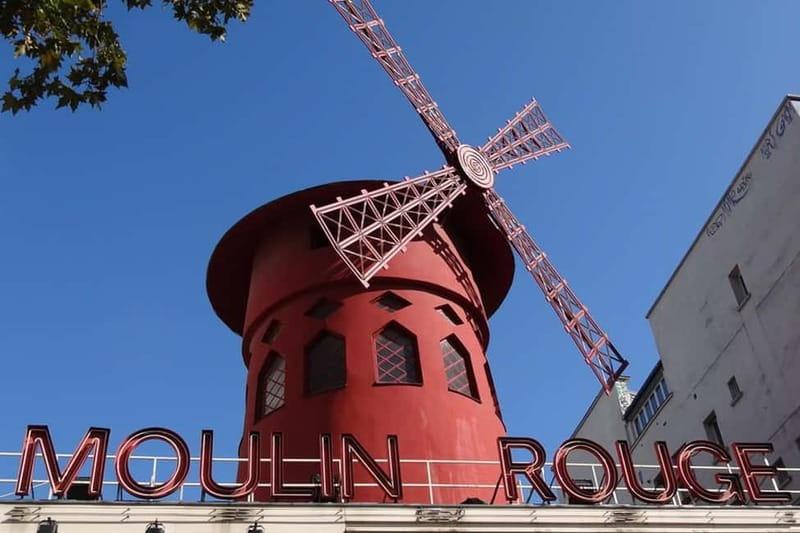
This is the kind of Paris tour that feels built for people who want more than photos. Starting near Moulin Rouge sets a clear mood shift right away, from showy boulevard energy into the quieter, more human scale streets you reach as you work your way up toward Montmartre.
Because the guide speaks German, the experience stays smooth. You are not stopping every few minutes to translate or asking someone else’s interpretation. One of the best bits I took from the overall feedback was the way the guide quality really matters here, especially when the guide brings local storytelling. Katharina, specifically, was praised for giving lots of local detail, stories, and useful information around the 19th arrondissement.
Deeper into Montmartre
Montmartre climb: Moulin Rouge, Sacré-Cœur, and the artists’ mindset
You start on the edge of Montmartre at 1 Pl. Blanche, right by the famous Moulin Rouge area. It is a smart first move. You get oriented fast, then your guide can explain how Montmartre became associated with painters, performers, and writers at the end of the 19th century and into the early 20th.
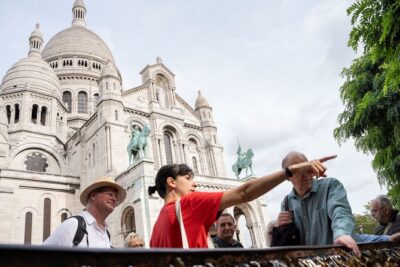
From there, you head toward Sacré-Cœur Basilica, where the views are part of the point. Even if you have seen images before, you will get a better sense of how the city spreads out around that hill. Your guide’s job is to connect what you see in front of you to why the neighborhood drew artists in the first place, not just to repeat postcard facts.
At Sacré-Cœur, expect a mix of big-sight atmosphere and human-scale detail. The tour description emphasizes history tied to the artists who lived and worked in Montmartre, and that theme continues as you move away from the basilica and into the creative heart of the area.
Place du Tertre: where the art scene became a stage
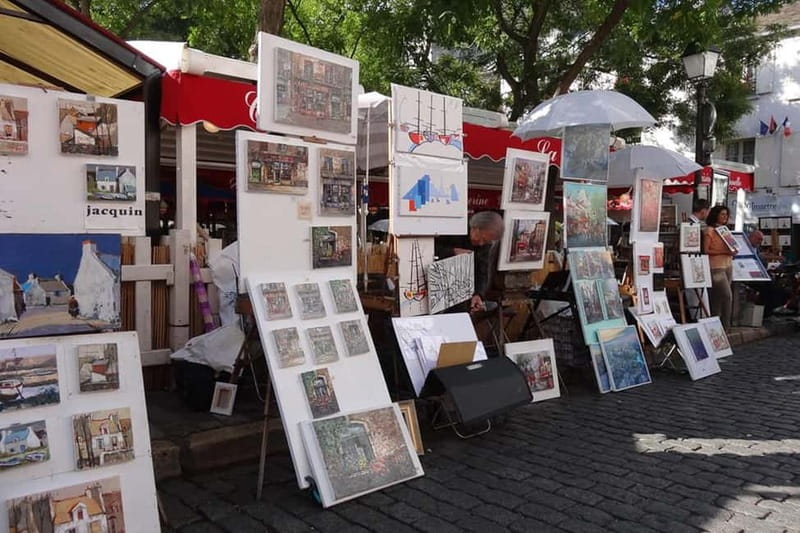
Place du Tertre is one of those squares that can feel overly familiar from screens and posters. On a good guided walk, it becomes something else: a window into how artists shaped the public face of Montmartre.
This tour is designed to help you interpret what you are seeing. You are not just standing at the edges of the square and moving on. You learn insider context about the square and its famous Paris artists, which makes the whole place feel more intentional. It also helps that you follow the “artists’ footsteps” idea rather than treating Montmartre like a museum with stops.
If your group enjoys history that connects to real daily life, this part is especially valuable. Places like Place du Tertre are where art culture turns into street culture, and the guide can help you spot what is tradition, what is performance, and what changed over time.
Finding Montmartre’s calmer streets away from the crowd
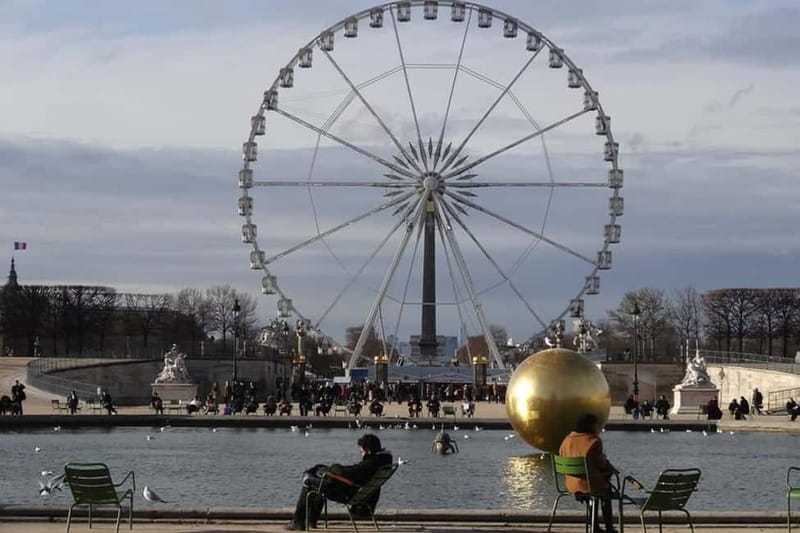
Montmartre is famous for a reason, which also means it can get crowded. The tour deliberately includes less-touristy corners, describing “beautiful places away from the crowds.” That matters, because it is often in the quieter streets that you understand the neighborhood’s character.
This is where a private format shines. In a larger group tour, you tend to move as fast as the group can keep up. With a private group, your guide can slow down when the street texture matters, or speed up when the route needs to keep you on schedule.
A practical way to use this segment: go in ready to look at small details. Think street layout, building edges, and how the neighborhood shifts between open views and enclosed lanes. Your guide will frame those moments with stories tied to the artists-era context, so the calmer streets do not feel like filler.
Grands Boulevards and the older Paris streets for real city views
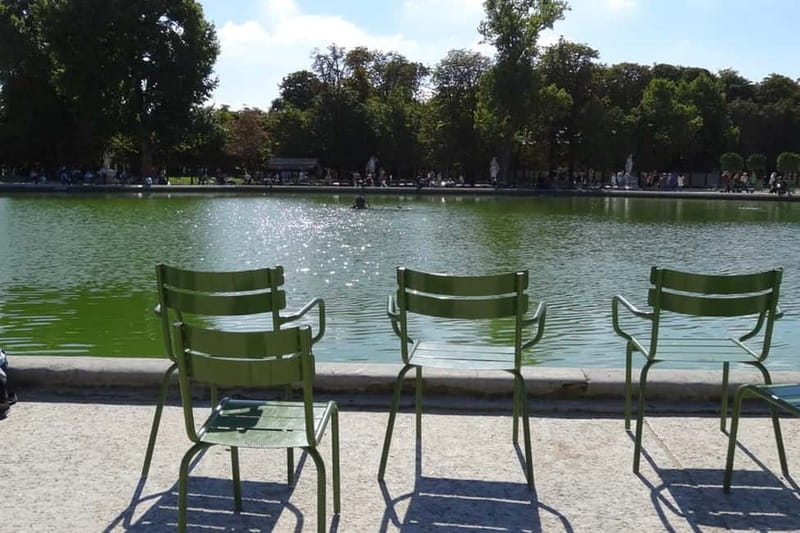
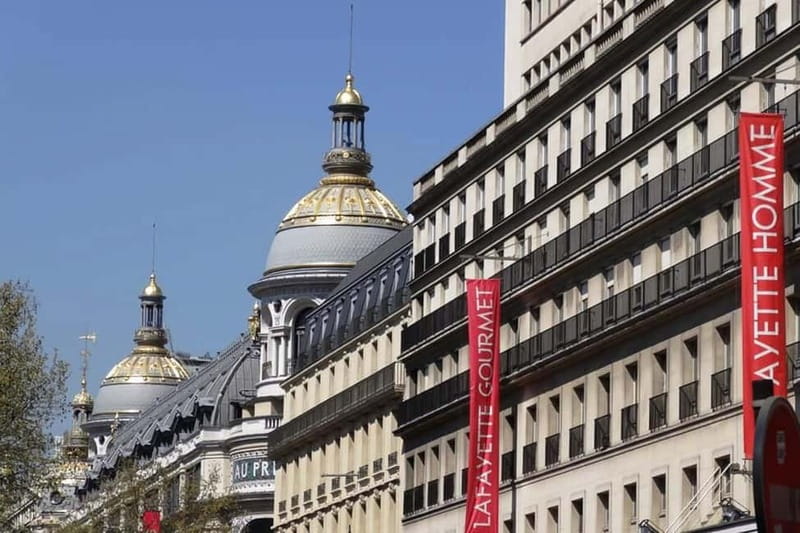
After the Montmartre focus, you continue into the Grands Boulevards area. This change of scenery is not just geographic, it is mental. Boulevards move differently. They open up your sightlines and make Paris feel more like an organized city you can navigate, not only a set of dramatic views from one hill.
The tour also highlights a sense of “the oldest boulevards in the city” and includes unique viewpoints along the way. That is the value of combining Montmartre with boulevards in one walk. You see both the artistic hill identity and the larger urban spine of Paris.
If you like urban photos that show both architecture and the feel of movement, this is where you will want to slow down. Let your guide talk while you watch how the streets channel people, traffic, and light.
Passage Jouffroy and Passage Verdeau: the 19th-century Paris you can walk through
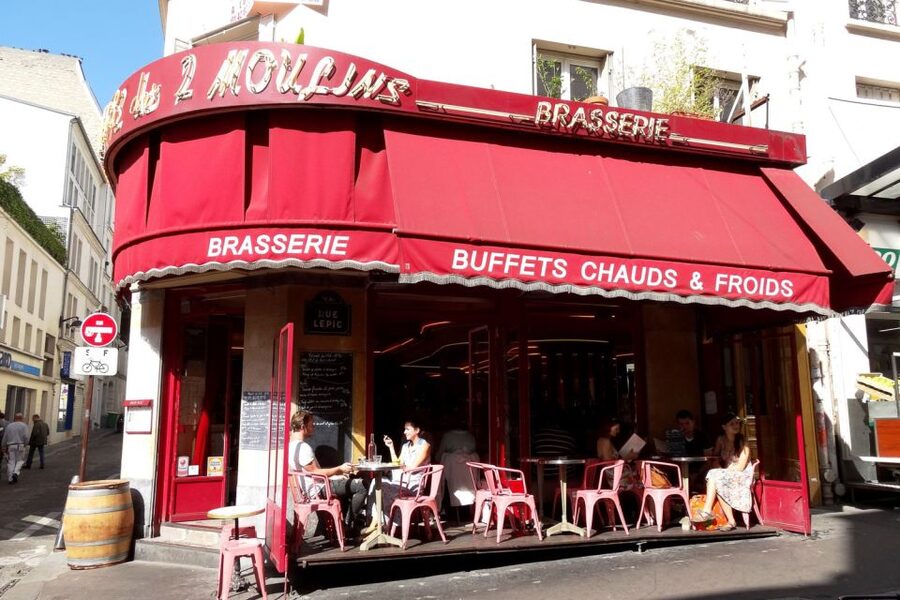
Now for one of the most fun elements of the whole experience: the hidden passages from the 19th century. These are covered arcades where Paris can feel surprising and slightly theatrical, like you stepped into a different scale of the city.
The tour explicitly includes Passage Jouffroy and Passage Verdeau. What makes passages worth your time is that they change how you experience Paris. Instead of fighting crosswalk traffic on a wide street, you walk in a sheltered corridor with a roof overhead and shopfront rhythm around you. It feels calmer, even though you are still in the middle of central Paris.
Also, passages are one of the easiest ways to get a sense of Paris as a city of commerce and design, not only monuments. Your guide’s historical framing gives you a lens for what you are seeing, so you understand why these spaces exist, not just that they look pretty.
Tip for enjoying this segment: take one slower minute in each passage. Look up first, then look at the storefront edges. You will usually catch more detail when you do not rush the entry.
More Paris walks on the list
- Paris Top Sights Half Day Walking Tour with a Fun Guide
★ 5.0 · 2,893 reviews - Montmartre Hidden Gems and Scenic Highlights Walking Tour
★ 5.0 · 2,684 reviews - Montmartre Hill French Gourmet Food and Wine Tasting Walking Tour
★ 5.0 · 2,588 reviews - Paris: Montmartre Cheese, Wine & Pastry Guided Walking Tour
★ 4.8 · 2,255 reviews - Paris in a Day: Louvre or Orsay, Eiffel Tower, City Walk & Cruise
★ 5.0 · 1,956 reviews
Opéra Garnier finish: history, architecture, and the Phantom connection
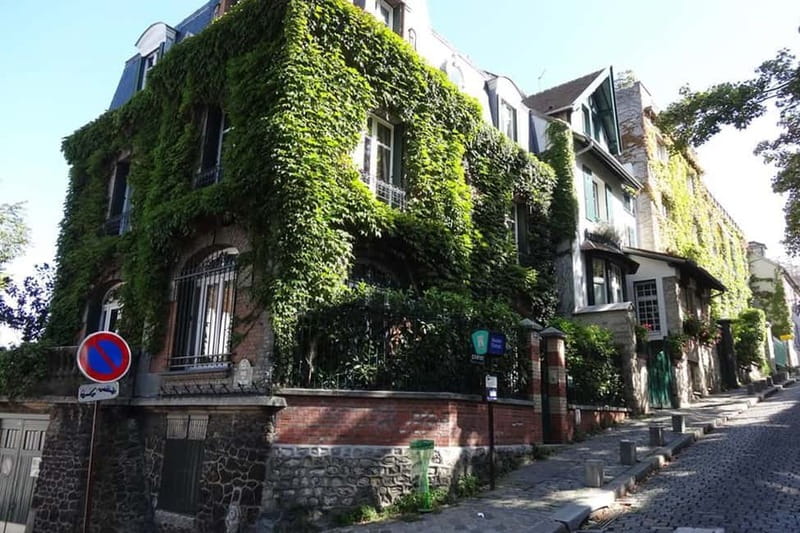
You end at Opéra Garnier, and that finish is well-chosen. It gives you a grand payoff after Montmartre’s artists’ vibes and the covered passage atmosphere.
The tour description notes that you pass the opéra and learn more about the history of the Phantom of the Opera. Even if you already know the story, the value here is context. The guide can connect the setting to why this building became so linked with popular imagination.
If you are the type who likes architecture to feel alive, Opéra Garnier is ideal. It is not only a final stop, it is a reset point. After hours of story-led streets, you get a moment of scale and drama that helps the whole day click into place.
Price and value: is 183 USD per person worth it?
At $183 per person for a 4-hour private German walking tour, this is not the cheapest way to do Montmartre. But it also is not trying to be. The value is in three areas you actually use:
- Language match. German-speaking guidance means you can ask questions and absorb details without a translation gap.
- Private pacing. You are not stuck with a rigid group tempo, which helps especially when Montmartre streets and passage entries require patience.
- Coverage in one loop. You get Sacré-Cœur and Place du Tertre, then the Grands Boulevards viewpoint segment, then Passage Jouffroy and Passage Verdeau, and finally Opéra Garnier.
If your group includes someone who struggles with languages on tours, or you simply want to get more meaning out of each stop, this format can feel like a smart upgrade. If your priority is speed and low cost, you might prefer a self-guided approach or a cheaper group tour.
Timing, walking comfort, and how to avoid losing time
This is a walking tour, and it covers multiple neighborhood changes. Montmartre involves uphill terrain around the Sacré-Cœur area, and you also spend time moving through compact streets and indoor passageways.
Here is the main caution based on real feedback patterns: the tour is four hours. If you try to add a long restaurant break, you can end up eating into the guided time. One shared experience described spending a lot of time in a restaurant when a quick meal was the plan, which effectively cut into valuable tour moments.
My advice: if you want food, choose a quick stop and keep it tight, or ask your guide for a strategy that fits the schedule. Even on a private tour, the clock matters.
Who this tour is perfect for
This tour works best if you:
- Want Montmartre with context, especially the artists’ era connection
- Prefer German as your tour language
- Like a mix of big sights (Sacré-Cœur, Opéra Garnier) and smaller architectural surprises (19th-century passages)
- Value a private guide who can slow down where stories and street texture matter
It is a strong match for couples, friends, and adults who like walking tours that explain what you are seeing. Families might still enjoy it, and there is a specific perk for kids (more below), but plan meal breaks carefully.
Should you book this Montmartre and Passages tour?
Book it if you want Montmartre to feel meaningful, not just photogenic, and you are happy paying for a private German guide who connects artists, architecture, and the city layout. The Montmartre segment around Sacré-Cœur and Place du Tertre, paired with the included passages and the Opéra Garnier finish, is a smart way to cover a lot without turning the day into a rushed checklist.
Skip or reconsider if you are cost-sensitive or if your plan includes long, unpredictable breaks that could swallow the four-hour window. Otherwise, this is a polished way to see Paris with better pacing and more story per minute.
FAQ
What language is the tour offered in?
The tour is offered in German with a German-speaking city guide.
How long is the tour?
The duration is 4 hours.
Where do I meet the guide?
You meet at the Metro station Blanche (line 2), on the small traffic island in front of Moulin Rouge. Look for your guide with a HelpTourists bag.
Where does the tour end?
The activity ends at Opéra Garnier. The meeting point information also states it ends back at the meeting point, so you should confirm the exact finish details with the provider when you book.
Is this a private tour?
Yes, it is a private guided walking tour for your group only.
What sights are included?
You will see the Moulin Rouge area, Sacré-Cœur Basilica, Place du Tertre, Montmartre, the Grands Boulevards, Passage Jouffroy, Passage Verdeau, and you will finish at Opéra Garnier.
Does the tour include stories about the arts in Montmartre?
Yes. The tour includes facts and stories about the history of Montmartre and the artists who lived and worked there around the end of the 19th century and beginning of the 20th century.
Are there discounts or special rates for children?
Children younger than 12 can join the tour free of charge.
How much does it cost?
The price is listed as $183 per person.
Can I cancel if my plans change?
The tour offers free cancellation up to 24 hours in advance for a full refund.
Can I reserve without paying immediately?
Yes. It offers reserve now & pay later, so you can keep your plans flexible.
Everything Else Filed Under Paris
- Paris: Louvre Guided Tour with Reserved Access & Boat Cruise
★ 4.3 · 16,353 reviews - Paris: Big Bus Hop-On Hop-Off Tour with Optional Cruise
★ 4.4 · 13,279 reviews - Louvre Museum Masterpieces Guided Tour with Access
★ 4.5 · 12,023 reviews - Versailles: Skip-the-Line Tour of Palace with Gardens Access
★ 4.7 · 9,778 reviews - Mona Lisa & Louvre Masterpieces Tour with Reserved Access
★ 4.6 · 6,812 reviews
The Whole Paris Shelf
- Paris: Louvre Museum Timed-Entrance Ticket
★ 4.6 · 71,977 reviews - Disneyland® Paris 1-Day Ticket
★ 4.6 · 49,412 reviews - Paris: Versailles Palace and Gardens Full Access Ticket
★ 4.6 · 41,579 reviews - Paris: Evening River Cruise with Music
★ 4.4 · 22,721 reviews - Paris: Eiffel Tower Entry Ticket with Optional Summit Access
★ 4.4 · 20,035 reviews
Montmartre, Keep Climbing
- Montmartre Hidden Gems and Scenic Highlights Walking Tour
★ 5.0 · 2,684 reviews - Montmartre Hill French Gourmet Food and Wine Tasting Walking Tour
★ 5.0 · 2,588 reviews - Paris: Montmartre Cheese, Wine & Pastry Guided Walking Tour
★ 4.8 · 2,255 reviews - Paris: Montmartre Highlights Walking Tour with a Local Guide
★ 4.9 · 1,668 reviews - Private Montmartre Food Tour with Wine, Cheese & Pastries
★ 5.0 · 1,027 reviews
The rest of the Paris write-ups
- Montmartre: Guided Tour for Kids and Families★ 4.9 · 57 reviews
- From Paris: Versailles Palace and Gardens Guided Day Trip★ 4.5 · 57 reviews
- Versailles Palace and Garden Tour with Paris Private Transfers★ 5.0 · 58 reviews
- Louvre Evening Escape – Avoid The Crowds! Semi-Private 6ppl Max★ 5.0 · 58 reviews
- Summit Eiffel Tower Audio Guide Tour with Unlimited Time Access★ 4.5 · 58 reviews
- Private Half Day Historic Tour★ 5.0 · 58 reviews
Montmartre & Sacre-Coeur Tours, in full.
 ★ 5.0Montmartre Hidden Gems and Scenic Highlights Walking TourFrom $382,684 reviews
 ★ 5.0Montmartre Hill French Gourmet Food and Wine Tasting Walking TourFrom $1452,588 reviews
 ★ 4.8Paris: Montmartre Cheese, Wine & Pastry Guided Walking TourFrom $1272,255 reviews
 ★ 4.9Paris: Montmartre Highlights Walking Tour with a Local GuideFrom $341,668 reviews
 ★ 5.0Private Montmartre Food Tour with Wine, Cheese & PastriesFrom $3021,027 reviews
 ★ 4.1Paris: Sacré-Coeur and Montmartre Tour with Expert GuideFrom $281,027 reviews
 ★ 5.0Paris Montmartre Food Tour – A Full French Meal by Do Eat BetterFrom $95877 reviews
 ★ 5.0Hidden Montmartre: Paris’ Secret Streets Walking TourFrom $44809 reviews
Also on these France lists