
Reviewed · PARIS ART MUSEUMS
Paris: Best of Orsay Museum Small Group Tour with Tickets
Orsay turns paintings into a fast story. With a small-group format and a guided tour built around key works, you get the Impressionist and post-Impressionist hits, plus the station-to-museum backstory. I love how the guide’s narrative makes style and politics feel connected, and I love that the pacing leaves room to actually stop and look.
One thing to plan for: the security line can’t be skipped, even with your quick-access tickets, so busy days still mean a bit of waiting. Still, most of the time savings come from entering smartly and focusing your route.
And if you’re picking this for the art brain, you’re in good hands. Guides named in recent departures, like Miriam, Mae, Marine, and Olga, are repeatedly praised for clear storytelling, room management, and explaining what to notice in the paintings.
In This Review
- Key highlights worth knowing before you go
- Meeting at Orsay, and the small rules that save time
- Why Orsay’s old railway station is part of the show
- The guided route through Impressionists and post-Impressionists
- How realism paved the way, and why the guide starts earlier than you think
- What to notice in the paintings, not just what they look like
- Sculptures, art nouveau, Rodin, and the oddball thrill of Lady Liberty
- Two hours and the $102 question: is it worth it?
- Who this tour is for, and who should look elsewhere
- Small-group size and guide quality, the real engine of this experience
- Should you book this Orsay small-group tour?
- FAQ
- How long is the Orsay museum tour?
- Where do I meet my guide?
- Does the price include museum tickets?
- Can I skip the security line with my ticket?
- What ID should I bring?
- Are bags, backpacks, or umbrellas allowed?
- What languages is the tour offered in?
- Is the tour suitable for wheelchair users or mobility impairments?
- What if strikes or closures affect the museum?
Key highlights worth knowing before you go

- Start at the elephant statue, meeting your guide from CONNECTING FRANCE and getting oriented before you enter
- 2 hours that stay on track, with a route designed around major schools from realism to Impressionism and beyond
- Big names, plus context, including Monet, Renoir, Van Gogh, Degas, Sisley, and related movements
- Politics meets paint, with explanations of how social change and artistic change influenced each other
- Sculpture and design too, including Rodin pieces, art nouveau elements, and an original Lady Liberty
- Orsay’s identity matters, with the “railway station turned museum” story woven into your visit
Meeting at Orsay, and the small rules that save time
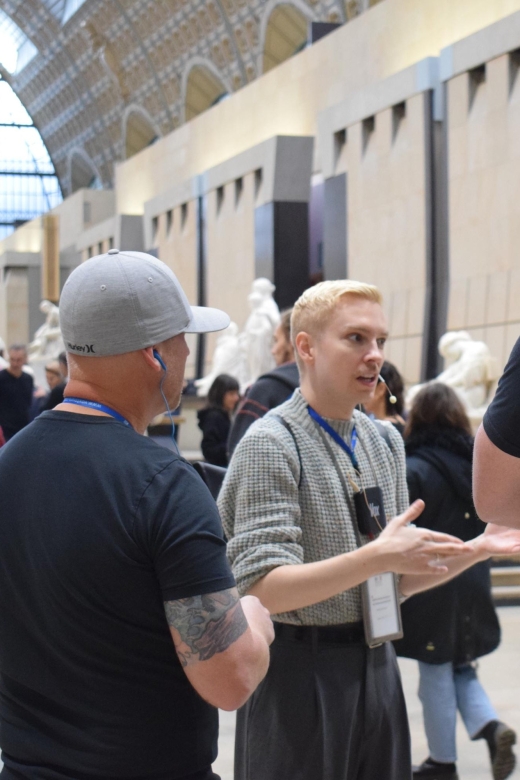
Your tour starts outside the Musée d’Orsay by the huge elephant statue. Your guide is holding a CONNECTING FRANCE sign, which makes the meet-up simple if you arrive a few minutes early. The first “win” here is psychological: you walk in with a plan instead of treating Orsay like a maze.
Before you head inside, check what you’re bringing. Luggage or large bags, backpacks, and umbrellas are not allowed. You’ll also want your passport or ID card, and if you’re traveling with anyone up to 17 years old, their ID card with a photo is required. This matters because without the right paperwork, you can lose the entire momentum of a tight two-hour experience.
Also, keep expectations realistic about the entry flow. Your tickets are meant for quick access to collections, but they do not remove the need for security screening. That’s the one snag you can’t fully control, especially when Orsay is crowded.
Other Paris art collections we have written up
Why Orsay’s old railway station is part of the show
The Musée d’Orsay is not just a container for art. The building is the first lesson. This tour includes the history of how the Orsay railway station became a fine arts museum, and that context helps you understand why the galleries feel like they do.
When the guide explains the station-to-museum transformation, you start seeing the space differently. The architecture and layout stop being background noise and become part of the storytelling. And once you grasp that, the art lands with more meaning, because the museum is itself a symbol of transition.
There’s another practical benefit to this. When you know how Orsay organizes its collections through time, you’re less likely to zigzag randomly. That matters here, because you only have two hours.
The guided route through Impressionists and post-Impressionists

This is a small-group guided museum tour, and the focus stays squarely on the heart of Orsay’s reputation: Impressionist and post-Impressionist painting. You’ll see major works by artists such as Monet, Renoir, and Van Gogh, and you’ll also be guided through related artists like Degas and Sisley.
The tour covers works spanning roughly the mid-19th century to the beginning of the 20th century, which is the sweet spot where modern art starts to take shape. You do not just hear names. You learn how the styles connect, and what changed as artists pushed against the rules of earlier academic painting.
One standout mentioned in the experience is Renoir’s Dance at Le Moulin de la Galette. Pieces like that are not just beautiful. They’re useful anchors. When your guide frames what you’re seeing, you start noticing patterns, like how movement is created, how people are arranged, and why everyday life became a serious subject for artists who wanted to break from tradition.
How realism paved the way, and why the guide starts earlier than you think
A smart thing about this tour is that it does not begin with Impressionism as if it appeared out of nowhere. You’ll spend time with realist artists, including Manet, who helped lay groundwork for what came next. Degas, Pissarro, Renoir, and Monet are treated as the next chapters, not isolated icons.
That structure pays off fast, especially if this is your first time at Orsay. If you only see the famous Impressionist galleries, you might miss the logic behind the shift. With a guide telling you the story of academic standards and the revolt against them, the brushwork, color choices, and subject matter start making sense.
More than once, guides are praised for linking art to social and political change. Olga is one example, with an approach that connects the practical realities of the periods painters lived in to the art they made. Nadia is another example, with commentary that frames art in terms of social change. Even if your guide differs, the tour’s goal stays the same: help you see what artists were reacting to, not just what they painted.
What to notice in the paintings, not just what they look like
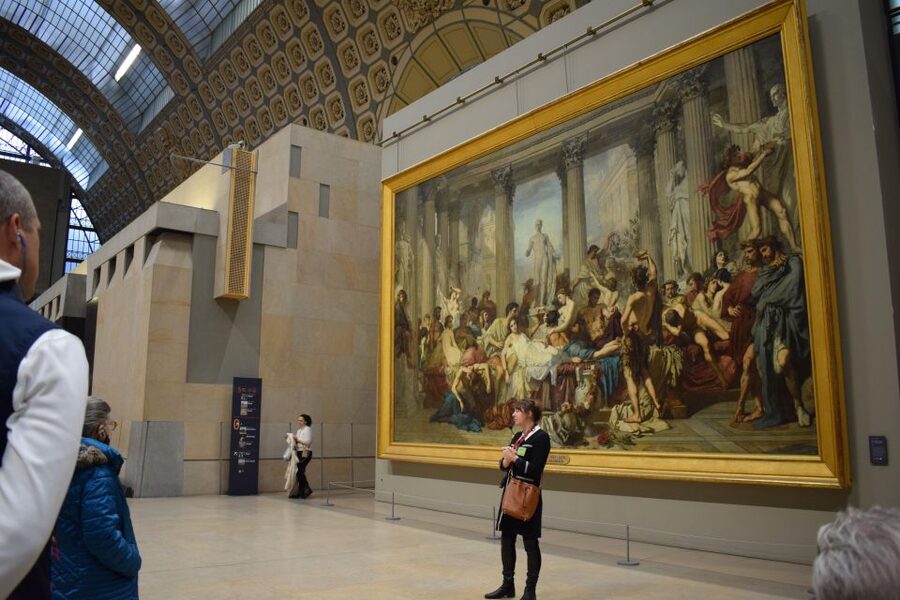
The best part of a guided museum tour is when it changes your eyes. Here, you’ll get help reading paintings like visual arguments. Guides often point out symbols, composition choices, and techniques that are easy to miss if you’re just scanning.
For example, one guide style described is using an iPad to add extra information. That can mean comparisons, close-ups, or context that makes a painting’s details click. Even without that tool, you’ll still be taught how to look: where the eye should land, how light behaves, and how the figures or scenes are constructed.
Marine’s narration is one example of how the tour can work in your favor. The storyline tied Monet and Manet together, and the guide explained symbols and clues you can actually use on your own later. That’s the real value. You leave with a method for seeing, not just a list of artists.
Also watch for what the guide does with pacing. Several experiences mention that guides manage crowds smoothly and keep you close to the main works when galleries get busy. In a museum where lines and shoulders happen fast, that kind of steering keeps your two hours from turning into a slow shuffle.
Sculptures, art nouveau, Rodin, and the oddball thrill of Lady Liberty
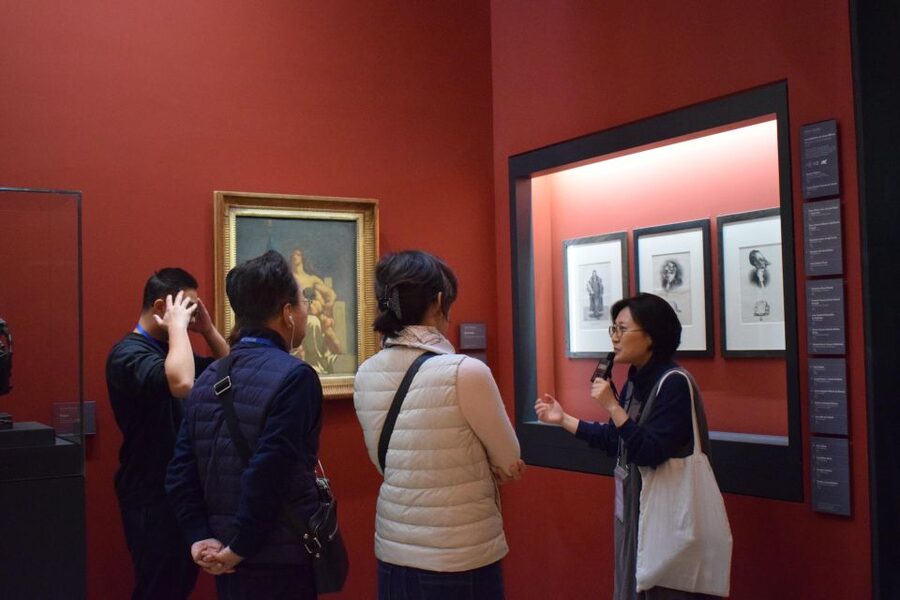
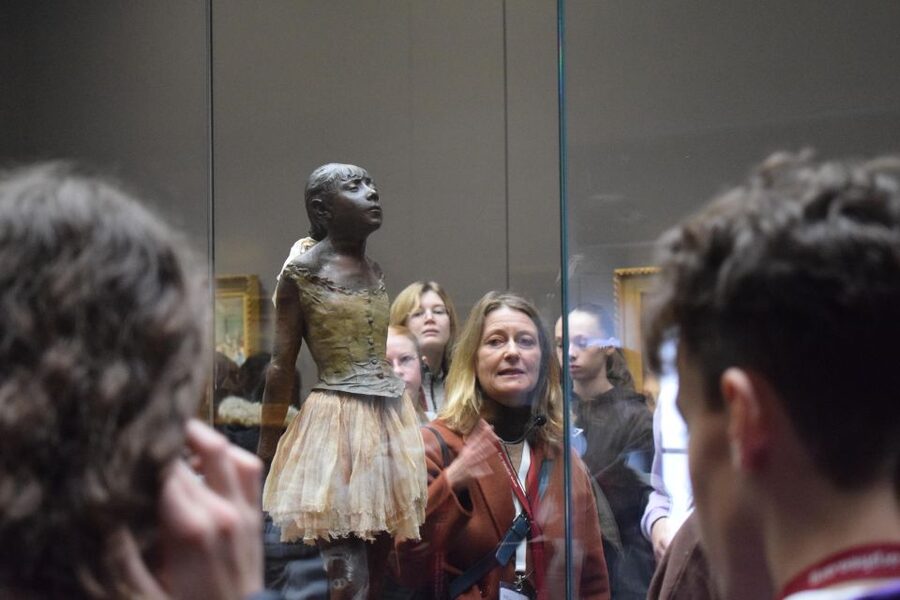
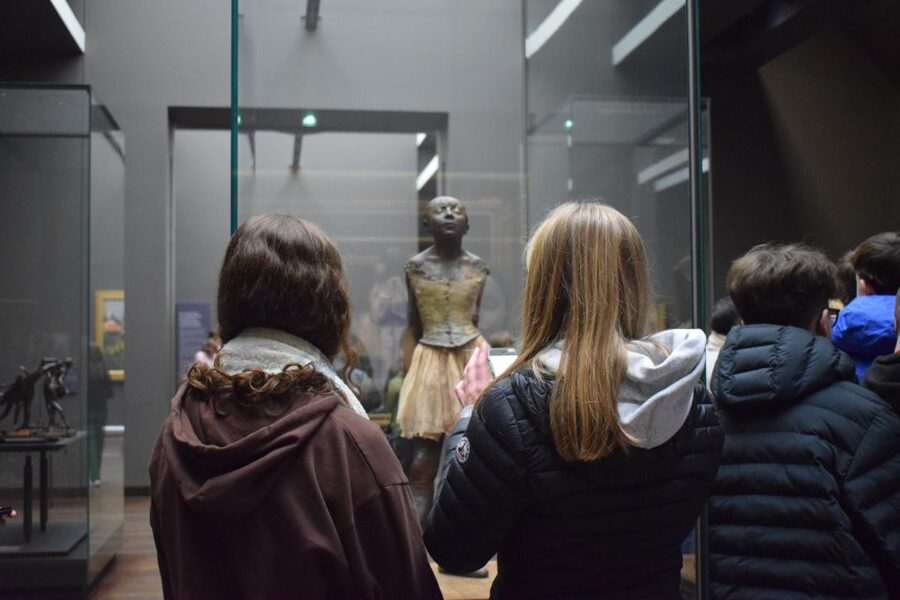
Orsay is famous for painting, but this experience also pulls you into other parts of the museum. You’ll see art nouveau elements and incredible sculpture by Rodin. Sculptures can sound like a detour when you buy an Impressionist tour. But here, they act like punctuation marks between painting “chapters.”
The inclusion of an original Lady Liberty is the kind of detail that keeps Orsay from feeling like a straight lecture. It also gives your brain a break from brushwork and back to form and symbolism. You’ll also be hearing how techniques and influences connect across art movements, including how later developments led toward modern art.
If you’re the type who likes your museums to feel like a whole culture, not just a gallery of masterpieces, this extra layer is a big reason the tour works.
Other Paris musees worth the detour
- Les Invalides: Napoleon’s Tomb & Army Museum Entry
★ 4.6 · 9,185 reviews - Louvre Museum – Exclusive Guided Tour (Entry Included)
★ 5.0 · 6,296 reviews - Paris: Louvre Museum Hosted Entry and Mona Lisa Audioguide
★ 4.6 · 5,235 reviews - Paris: Louvre Museum Tour Mona Lisa & Iconic Masterpieces
★ 4.7 · 4,536 reviews - Paris Museum Pass: 2, 4, or 6 Days
★ 4.1 · 4,421 reviews
Two hours and the $102 question: is it worth it?

At $102 per person for a 2-hour small-group tour with entrance tickets, you’re paying for two things: interpretation and time management. You’re not just buying access to Orsay. You’re buying a guide to help you prioritize, understand what you’re seeing, and keep moving through the most meaningful highlights.
Here’s why that value can feel high or low depending on you:
- If you like to wander, Orsay can be tempting to do solo. But wandering in a museum this packed often turns into missing your own favorites. A guided route reduces that risk.
- If you want context, the $102 makes more sense because Orsay’s art is tied to shifts in politics, technique, and culture. Without that framework, you might see style changes but not feel the “why.”
- If you’re sensitive to crowds, the guide’s ability to navigate groups becomes part of the value. Several descriptions emphasize that guides kept things organized and helped people get closer to main works as galleries filled.
Also, the “two hours” piece is honest and practical. It’s long enough to catch major works and learn a storyline, short enough to avoid turning your day into a museum marathon. If you’re doing other Paris sights the same day, this timing can fit better than a longer tour.
One note: the tour is not described as suitable for wheelchair users. And more than one experience flags crowd noise as a real issue in busy rooms. If you tend to struggle hearing in crowds, plan to arrive well rested and come ready to focus.
Who this tour is for, and who should look elsewhere
This tour is a great match if you:
- Want a guided route through Orsay’s most important Impressionist and post-Impressionist works
- Like art history told through cause and effect, especially how political and artistic movements influence each other
- Appreciate a mix of painting plus sculpture and design, not only wall after wall of canvases
It might be a mismatch if you:
- Use a wheelchair, since the tour is not suitable for wheelchair users
- Need a slower pace tailored to mobility needs, because the information provided says the pace can’t be modified in shared semi-private tours
If you have mobility impairments, you may be able to book a private tour. Just know the tour notes that shared semi-private pacing cannot be adjusted.
Small-group size and guide quality, the real engine of this experience
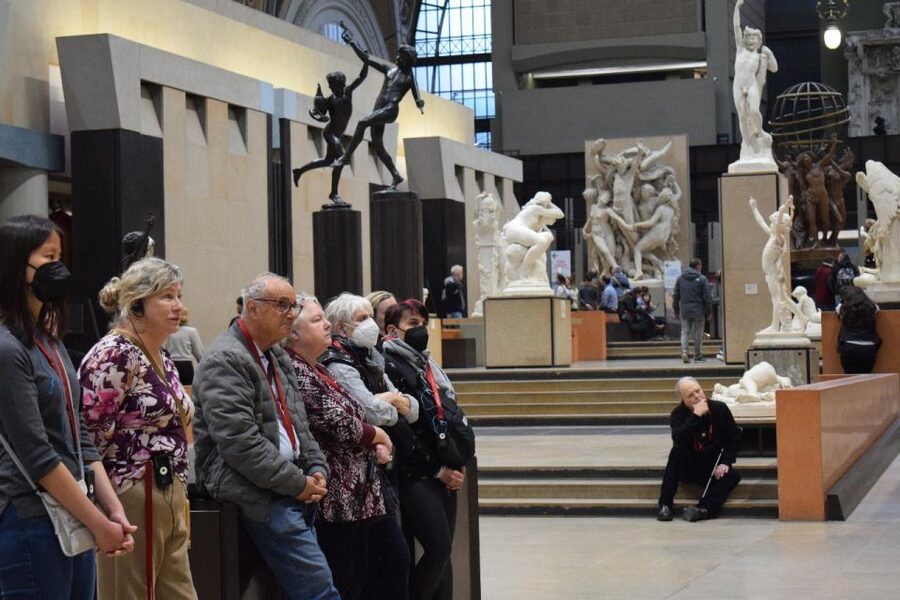
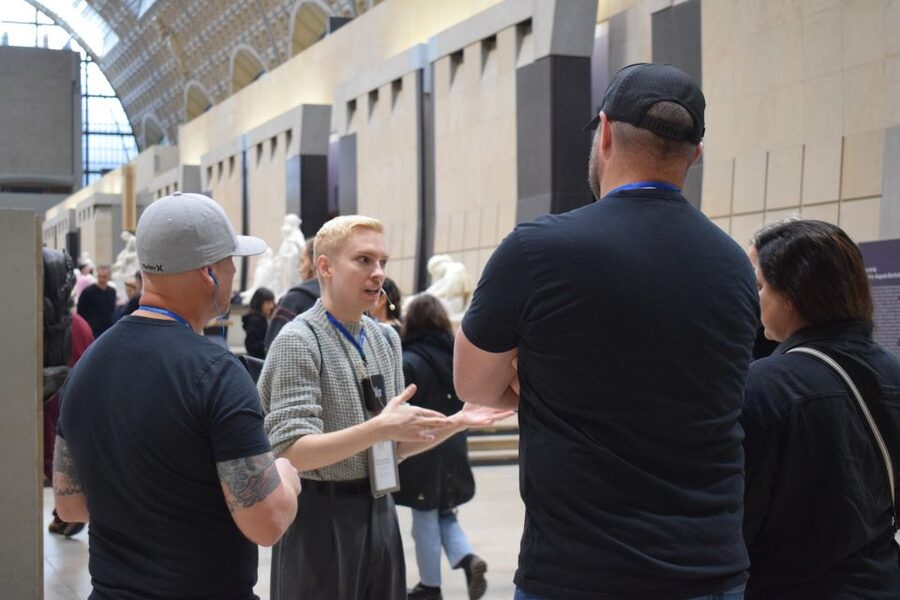
The reviews and descriptions keep circling back to one thing: the guide makes the difference. When the group is small, you can hear the story, ask questions, and stay near the art you’re discussing. People mention groups as small as two, and small groups around three to six, which is exactly the kind of size where you do not feel like a passenger in a moving crowd.
You’ll also notice that the guide skill is not just reciting dates. Guides like Miriam and Mae are described as presenting insights in a smooth flow. Marine is singled out for explaining symbols and clues. Olga gets praise for connecting art to social change. Blerta is noted for setting the stage from academics and realists into Impressionism. Vanina is praised for walking through the academic standards the rebels pushed against and for including overlooked contributors like Berthe Morisot.
That range is useful. Even if you’re repeating Orsay for a second visit, a guide who frames the collection differently can still change the way you see.
Should you book this Orsay small-group tour?
Yes, if you want a structured, high-impact way to see Orsay’s best-known Impressionist and post-Impressionist works with real context. The two-hour length is ideal for first-timers and for people who already love these artists but want sharper “what to notice” guidance. The small-group format is a major part of the value, and the guide storytelling focus, including the politics and movement connections, is the reason this tour feels more like learning how to look than just sightseeing.
Skip it or rethink if you rely on a wheelchair, need a highly flexible pace, or you’re determined to do Orsay fully on your own time. Even then, don’t ignore the building itself, because Orsay’s station-to-museum identity makes the art experience feel tied together.
If you’re aiming to get Orsay right in one go, this is a solid bet.
FAQ
How long is the Orsay museum tour?
The tour lasts 2 hours.
Where do I meet my guide?
Meet in front of the Musée d’Orsay by the huge elephant statue. Your guide will be holding a CONNECTING FRANCE sign.
Does the price include museum tickets?
Yes. Entrance tickets to the Orsay Museum are included.
Can I skip the security line with my ticket?
No. The tickets allow quick access to collections, but the security line cannot be skipped.
What ID should I bring?
Bring a passport or ID card. Tickets are personal, and guests up to 17 years old should have their ID card with a photo.
Are bags, backpacks, or umbrellas allowed?
No. Luggage or large bags, backpacks, and umbrellas are not allowed.
What languages is the tour offered in?
The live tour guide is available in English, French, Spanish, Italian, and German.
Is the tour suitable for wheelchair users or mobility impairments?
It is not suitable for wheelchair users. If you have mobility impairments, you may book a private tour, but the pace cannot be modified in shared semi-private tours.
What if strikes or closures affect the museum?
France can have strikes, and closures may happen at Orsay. If this occurs without prior warning, you will receive alternatives to modify the booking to available slots or a walking tour option. If the alternative does not suit you, the booking can be canceled and you receive a refund, before the 24-hour cut off.
Everything Else Filed Under Paris
- Paris: Louvre Guided Tour with Reserved Access & Boat Cruise
★ 4.3 · 16,353 reviews - Paris: Big Bus Hop-On Hop-Off Tour with Optional Cruise
★ 4.4 · 13,279 reviews - Louvre Museum Masterpieces Guided Tour with Access
★ 4.5 · 12,023 reviews - Versailles: Skip-the-Line Tour of Palace with Gardens Access
★ 4.7 · 9,778 reviews - Mona Lisa & Louvre Masterpieces Tour with Reserved Access
★ 4.6 · 6,812 reviews
The Whole Paris Shelf
- Paris: Louvre Museum Timed-Entrance Ticket
★ 4.6 · 71,977 reviews - Disneyland® Paris 1-Day Ticket
★ 4.6 · 49,412 reviews - Paris: Versailles Palace and Gardens Full Access Ticket
★ 4.6 · 41,579 reviews - Paris: Evening River Cruise with Music
★ 4.4 · 22,721 reviews - Paris: Eiffel Tower Entry Ticket with Optional Summit Access
★ 4.4 · 20,035 reviews
Other Paris Art Museums
- Paris in a Day: Louvre or Orsay, Eiffel Tower, City Walk & Cruise
★ 5.0 · 1,956 reviews - Paris: Musée d’Orsay Skip-the-Line Tour with Expert Guide
★ 4.5 · 1,145 reviews - Musée d’Orsay Skip-the-Line Tour with Expert Guide
★ 4.8 · 1,088 reviews - The Musée d’Orsay Guided Tour Orsay Museum Semi-Private 6ppl Max
★ 5.0 · 904 reviews - Louvre & Musée d’Orsay Guided Museum Tour Semi-Private 6ppl Max
★ 5.0 · 619 reviews
The rest of the Paris write-ups
- Montmartre: Guided Tour for Kids and Families★ 4.9 · 57 reviews
- From Paris: Versailles Palace and Gardens Guided Day Trip★ 4.5 · 57 reviews
- Versailles Palace and Garden Tour with Paris Private Transfers★ 5.0 · 58 reviews
- Louvre Evening Escape – Avoid The Crowds! Semi-Private 6ppl Max★ 5.0 · 58 reviews
- Summit Eiffel Tower Audio Guide Tour with Unlimited Time Access★ 4.5 · 58 reviews
- Private Half Day Historic Tour★ 5.0 · 58 reviews
Paris Art Museums, in full.
 ★ 5.0Paris in a Day: Louvre or Orsay, Eiffel Tower, City Walk & CruiseFrom $1571,956 reviews
 ★ 4.6Paris: Musée d’Orsay Entry Ticket and Seine River CruiseFrom $491,344 reviews
 ★ 4.5Paris: Musée d’Orsay Skip-the-Line Tour with Expert GuideFrom $671,145 reviews
 ★ 4.8Musée d’Orsay Skip-the-Line Tour with Expert GuideFrom $821,088 reviews
 ★ 3.9Lyon: Musée de l’illusion Entrance TicketFrom $221,023 reviews
 ★ 5.0The Musée d’Orsay Guided Tour Orsay Museum Semi-Private 6ppl MaxFrom $144904 reviews
 ★ 5.0Louvre & Musée d’Orsay Guided Museum Tour Semi-Private 6ppl MaxFrom $288619 reviews
 ★ 4.5Paris Musée d’Orsay Fully Guided TourFrom $71556 reviews
Also on these France lists