
Reviewed · PARIS PASTRY & MACARON WORKSHOPS
Paris: French Croissant Baking Class with a Chef
Croissants are science you can eat. This French croissant baking class at Maison Fleuret Ateliers Parisiens in Paris teaches the hands-on technique behind true laminated dough, not just a quick recipe. I especially love the small group size (up to 8) and the way the chefs coach you through each step, with instructors like Chef Felix and Chef Guillaume listed in past sessions. One thing to consider before you book: at $159, it’s a pricier foodie activity, so you’ll want to treat it like a real skill-building experience.
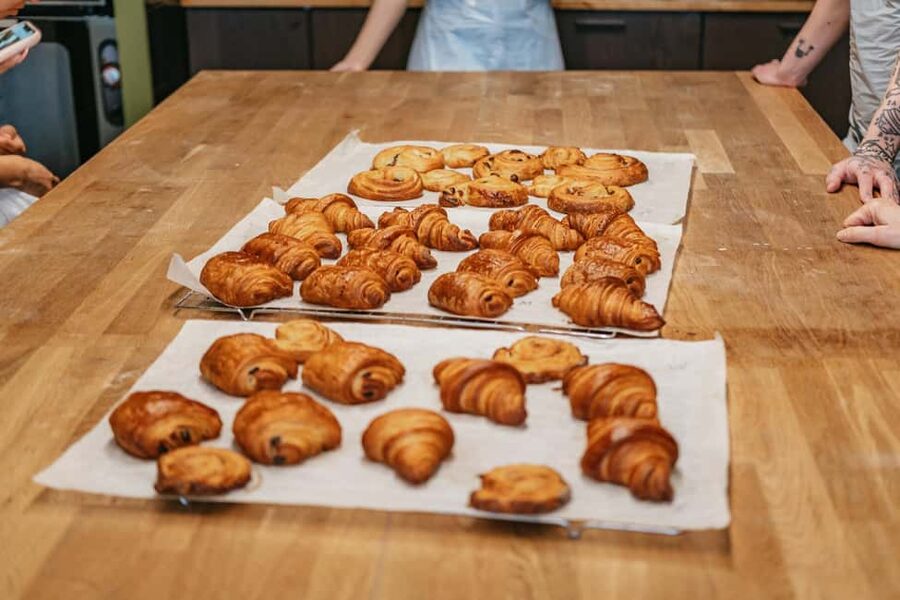
The 150 minutes also work as a fun Paris reset. You’ll mix, fold, roll, shape, and bake, then leave with pastries you made yourself, which turns the class into both a lesson and a meal. The focus stays on quality, from butter handling to that crisp, layered texture people travel for.
In This Review
- Quick hits before you go
- Where You Start in Paris: 3 Rue des 3 Portes (Left Bank)
- Maison Fleuret Ateliers Parisiens: a pastry school vibe, not a tourist show
- The 150-minute plan: what you do, and why each step matters
- Step 1: Get oriented to laminated dough
- Step 2: Practice the folds for layers (not shortcuts)
- Step 3: Shaping croissants and preparing chocolate styles
- Step 4: Bake, then taste the results immediately
- Beyond plain croissants: chocolate croissants and chocolate snails
- What you take home, and how to use it on your trip
- Instructor quality is the real value add
- Price and value: is $159 worth it?
- Who should book this croissant class
- Practical tips so your croissant day goes smoothly
- Should you book this French croissant baking class with a chef?
- FAQ
- Where does the class meet?
- How long is the class?
- What is the price per person?
- Is the class taught in English?
- How large is the group?
- Is the experience wheelchair accessible?
- What is included in the ticket price?
- What is not included?
- Do I get to make more than one pastry type?
- What are the cancellation and payment options?
Quick hits before you go
- Maison Fleuret is a real pastry school, not a demo with no hands-on time.
- Up to 8 participants means you get close coaching and faster corrections.
- You learn the key move of French pastry, working laminated dough for lift and layers.
- In addition to croissants, the class covers chocolate croissants and chocolate snails.
- Past instructors have included Chef Felix, Chef Guillaume, Chef Erika, and Chef Alice, and classes are run in English.
Where You Start in Paris: 3 Rue des 3 Portes (Left Bank)
Your session begins at 3 Rue des 3 Portes, on the Left Bank. This matters more than you’d think. Meeting in a fixed Paris address keeps the experience simple, and it gets you into the area where you can calmly orient yourself, grab a coffee nearby, and then settle in for the workshop.
If you’re using the Left Bank as a base, this is a comfortable way to spend part of your day. It also pairs well with a morning out or a lighter afternoon, because the work happens indoors and you do not need to plan around a long sightseeing route.
A practical note: France runs on walking and timing, and croissant making is timing-sensitive. Plan to arrive with a little buffer so you can start the dough process without rushing.
Still hungry? More Paris pastry sessions

Maison Fleuret Ateliers Parisiens: a pastry school vibe, not a tourist show
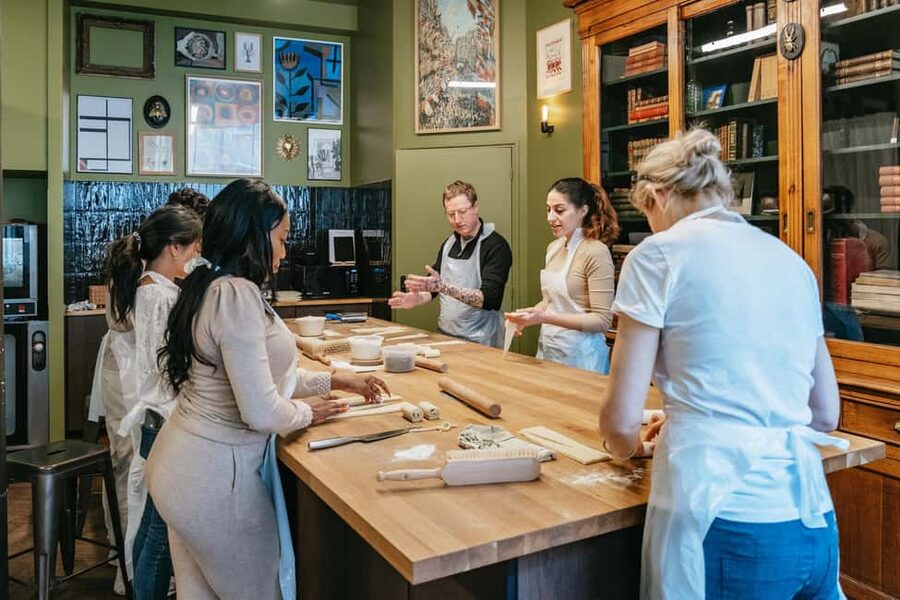
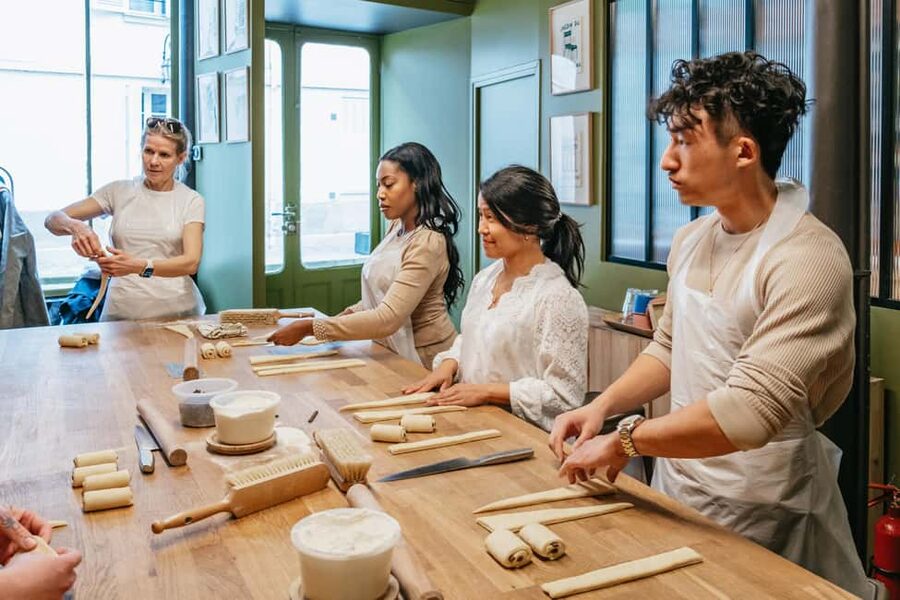
The class takes place at Maison Fleuret Ateliers Parisiens, a dedicated baking school space. The setting feels like you’re stepping into a workroom built for teaching pastry technique. That shows in the way the class flows: you’re not just watching dough transform, you’re learning how to control it.
The biggest value here is the coaching culture. With a small group limited to 8, you’re more likely to get hands-on feedback right when you need it. That’s crucial for croissants, because the dough can go wrong in a dozen tiny ways, from butter that melts too fast to folds that aren’t even.
The class also includes an English instructor. That might sound like a basic listing detail, but it’s a big deal in baking. When you understand the why behind a step, you can repeat it at home without guesswork.
The 150-minute plan: what you do, and why each step matters
The session runs about 150 minutes, which is just enough time to cover real technique without turning it into a half-day project. Here’s the experience in plain terms, with what the time is really for.
Step 1: Get oriented to laminated dough
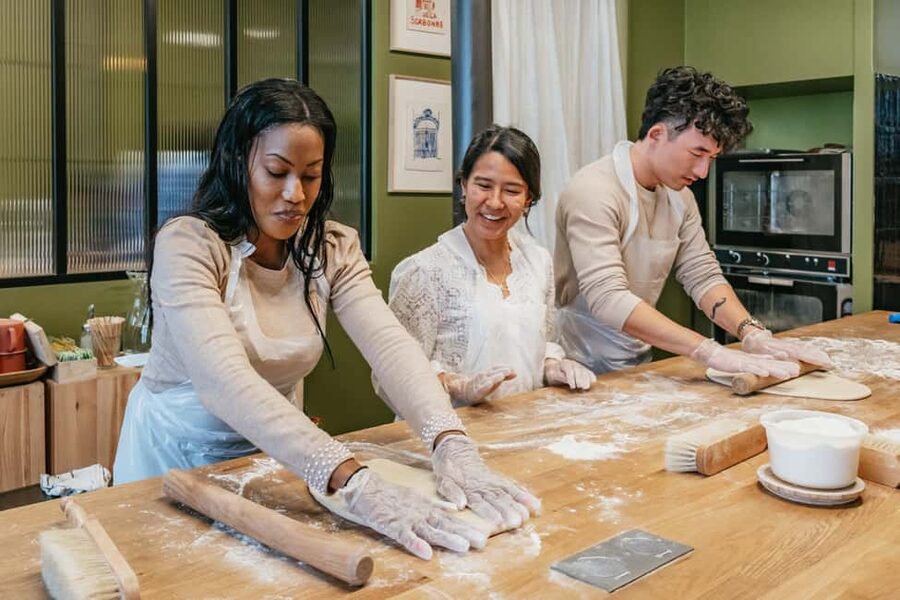
Croissants are built on buttery laminated pastry, basically layers of dough and butter that are rolled and folded so the final pastry puffs in the oven. In this class, you learn what makes laminated dough behave: temperature control, butter consistency, and the discipline of rolling without tearing.
Why this matters for you at home: most people fail on croissants because they skip the “process rules.” You’ll walk away understanding how the dough should feel, not just what to do.
Step 2: Practice the folds for layers (not shortcuts)
Next comes the core skill: shaping the dough so you create those signature layers. You’ll practice the rhythm of rolling and folding, then learning how to keep layers intact.
This is the part I love most in a good croissant class, because it turns baking from a mysterious outcome into a controllable method. When you can see your own layers forming, the rest of the process becomes easier to troubleshoot.
Step 3: Shaping croissants and preparing chocolate styles
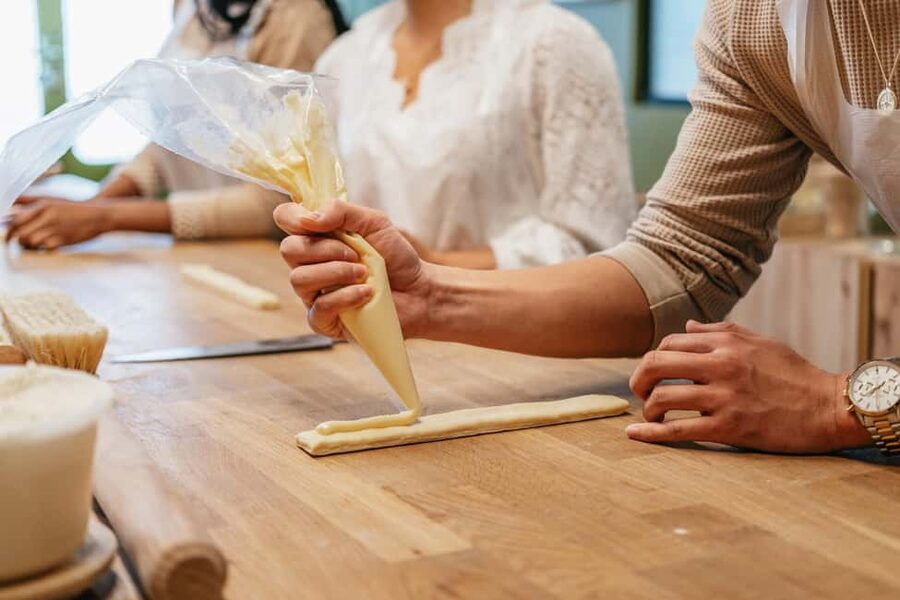
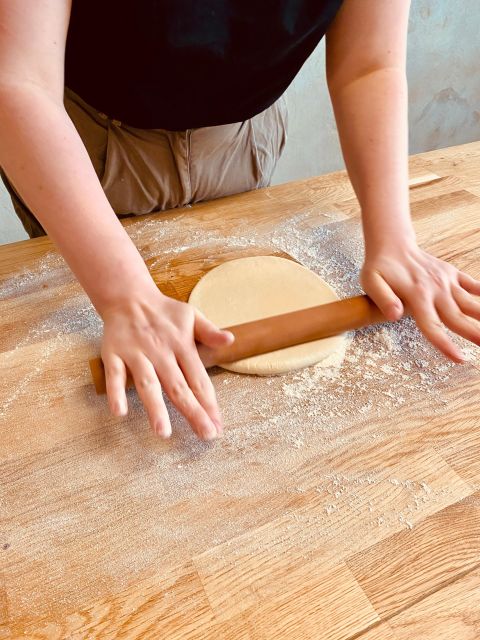
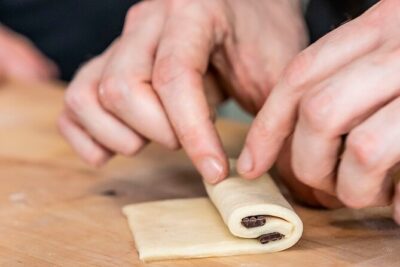
Once the dough is ready, you shape. That means cutting, portioning, rolling, and forming the distinctive crescent shapes. The class also includes options like chocolate croissants and chocolate snails.
If you’re a beginner, the shaping stage is where you gain confidence fast. It’s tangible. You can hold the proof in your hands, and you can feel when you’re doing it right.
More Paris kitchens to book
- Paris Croissant Small-Group Baking Class with a Chef
★ 5.0 · 910 reviews - Paris: French Croissant Baking Class with a Chef
★ 4.9 · 712 reviews - Paris Cooking Class: Learn How to Make Macarons
★ 5.0 · 634 reviews - Paris Evening Cooking Class French Dinner and Market Visit Option
★ 5.0 · 430 reviews - Paris French Cuisine Small Group Cooking Class with Lunch
★ 4.5 · 418 reviews
Step 4: Bake, then taste the results immediately
Croissants are best when you taste them fresh. Your class is built around the full experience, from dough work to baking. You’ll eat what you made, and that fresh, crisp result is your reference point for future bakes.
One repeated theme from past participants: it’s hard to beat the taste of pastries straight from the oven that you created yourself. You’re not guessing whether your dough worked, you’re seeing it in the final texture.
Beyond plain croissants: chocolate croissants and chocolate snails
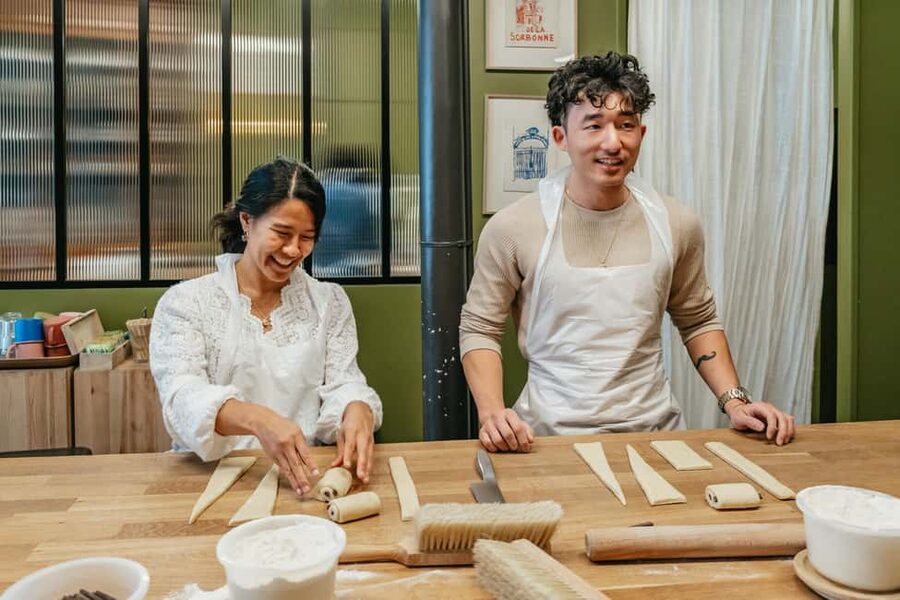
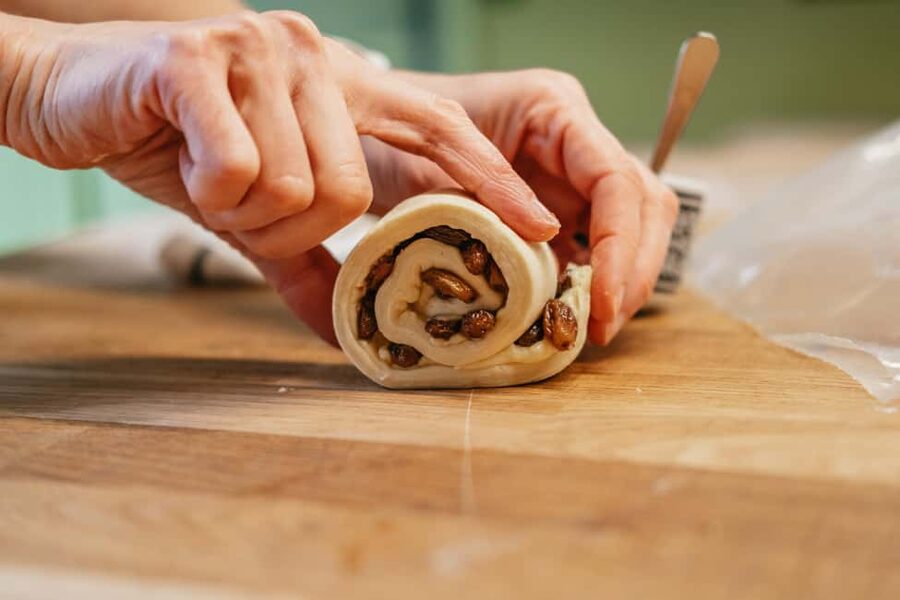
If you only learn one style, you might still enjoy the class. But you’ll get more value by learning a few variations, and this workshop includes chocolate croissants and chocolate snails.
That matters for two reasons:
First, it teaches you how the same base dough can become multiple pastries. The skill transfers. Once you can handle laminated dough and shaping, you’re no longer limited to plain croissants.
Second, it keeps the class fun and varied. Chocolate pastries are a natural crowd-pleaser, and having more than one final product means you get more chances to understand what works.
In short, you’re practicing for real-life baking. You can host, bring something special to family, or simply enjoy a pastry spread over a couple breakfasts.
What you take home, and how to use it on your trip
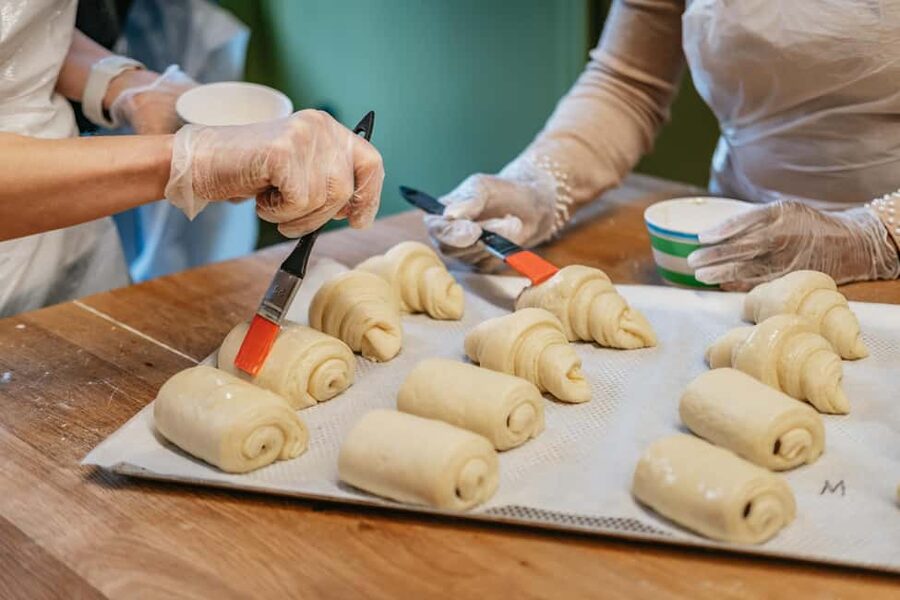
A practical perk of this class is that you leave with the pastries you make, so it can cover part of your next day too. Some participants mention having enough for more than one meal, especially when you bake early.
That’s good travel logic. Paris days can be pricey, and you might end up spending your whole budget on snacks you could have made. Here, your pastry cost gets converted into real food plus a recipe you can repeat.
Also, because the instruction is in English and the class is structured with guided steps, you’re not just leaving with croissants. You’re leaving with a method. That makes it easier to replicate the experience at home and not just relive it once.
Instructor quality is the real value add
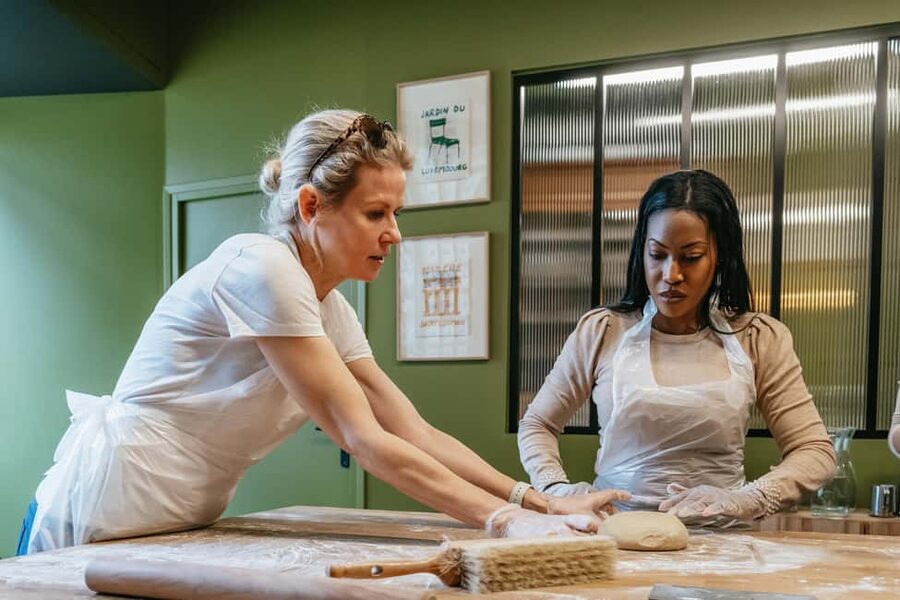
The ingredients and tools matter, but the instructor is what makes croissant baking click. This school uses a chef instructor, and past sessions have featured instructors including Chef Felix, Chef Guillaume, Chef Erika, Chef Alice, Chef Ke, and Chef Ines.
Across those different names, the praise pattern is consistent: step-by-step guidance, patience, and a focus on making technique understandable. That’s what you want in a skill class. You can be curious and still feel capable.
You should also know: croissants have a learning curve. If your dough melts or your layers look uneven, that’s not a personal failure. It’s an expected part of learning laminated pastry, and a strong instructor helps you correct it quickly.
Price and value: is $159 worth it?
At $159 per person for about 150 minutes, this isn’t a budget activity. But the price starts to make sense when you look at what’s included and what you learn.
You get:
- The chef instructor
- Cooking equipment
- The full hands-on class experience
What you don’t get:
- Hotel pickup and drop-off
So the value hinges on two things: learning quality and the amount of finished product.
From the way the class is designed, you’re getting both. You do the work yourself, you bake, and you take pastries home. That means you’re not paying only for entertainment. You’re paying for a structured lesson that ends with edible results.
If you enjoy hands-on food experiences, especially pastry, this can be a top-tier use of your Paris time. If you just want to eat one pastry and move on, you might decide it’s better to spend less elsewhere.
Who should book this croissant class
This class fits best if you fall into one of these groups:
- You want a real culinary skill you can reproduce, not just a meal.
- You like structured cooking instruction and want English guidance for the technique.
- You’re traveling with a teen who enjoys food projects, or with family members who like to do something together.
It can also be a smart rainy-day plan. Baking is indoor, structured, and timed, so the weather does not hijack your day.
One small consideration: some classes use partner work for efficiency. If you’re a family, that’s usually manageable, but you should expect that not everyone will always work next to the exact person they want.
Practical tips so your croissant day goes smoothly
A few things will help you enjoy the class even more:
- Wear comfortable clothes you can move in. Croissant work involves rolling and handling dough for stretches of time.
- Bring patience for the learning curve. Croissants require practice, and the goal is technique, not instant perfection.
- Treat the tasting as your feedback loop. When the texture is crisp and layered, you’ll understand what the instructor was aiming for.
- If you’re thinking about making chocolate versions later, pay attention to how the class handles fillings and shaping, because that’s where home success varies.
If you want the skill to stick, take mental notes on how the dough feels during rolling and after rest periods. That sensory part is what turns recipes into results.
Should you book this French croissant baking class with a chef?
I think you should book if you want the best of Paris in one practical package: hands-on French pastry technique, English instruction, a small group, and pastries you helped create. At 4.9 out of 5 from 712 ratings, it’s clearly popular for a reason: the teaching style and the final results tend to land.
Skip it if you’re not interested in technique and you’d rather spend your time doing tastings, museums, or long walks. This class is about learning laminated dough and shaping croissants, and you’ll get the most value if you actually want to take that home.
If you do book, choose it early in your trip if you want to gain skills fast, but you can also plan it later if you prefer to learn after exploring the city. Either way, you’ll leave with something better than a souvenir: the method to make your own real croissants.
FAQ
Where does the class meet?
The class meets at 3 Rue des 3 Portes. The session then takes place at the Maison Fleuret space on the Left Bank.
How long is the class?
The class lasts 150 minutes (about 2.5 hours).
What is the price per person?
The price is $159 per person.
Is the class taught in English?
Yes. The instructor speaks English.
How large is the group?
The group is small, limited to 8 participants.
Is the experience wheelchair accessible?
Yes. The venue is wheelchair accessible.
What is included in the ticket price?
The ticket includes the cooking class, cooking equipment, and a chef instructor.
What is not included?
Hotel pickup and drop-off are not included.
Do I get to make more than one pastry type?
Yes. The class focuses on French croissants and also includes chocolate croissants and chocolate snails.
What are the cancellation and payment options?
There is free cancellation up to 24 hours in advance for a full refund, and you can reserve now and pay later.
More Paris Kitchens to Book
- Paris Cooking Class and Lunch with Wine plus Market Visit Option
★ 5.0 · 1,024 reviews - Paris Croissant Small-Group Baking Class with a Chef
★ 5.0 · 910 reviews - Paris Cooking Class: Learn How to Make Macarons
★ 5.0 · 634 reviews - Paris Evening Cooking Class French Dinner and Market Visit Option
★ 5.0 · 430 reviews - Paris French Cuisine Small Group Cooking Class with Lunch
★ 4.5 · 418 reviews
The Whole Paris Shelf
- Paris: Louvre Museum Timed-Entrance Ticket
★ 4.6 · 71,977 reviews - Disneyland® Paris 1-Day Ticket
★ 4.6 · 49,412 reviews - Paris: Versailles Palace and Gardens Full Access Ticket
★ 4.6 · 41,579 reviews - Paris: Evening River Cruise with Music
★ 4.4 · 22,721 reviews - Paris: Eiffel Tower Entry Ticket with Optional Summit Access
★ 4.4 · 20,035 reviews
Another Round of Pastry
- Paris Croissant Small-Group Baking Class with a Chef
★ 5.0 · 910 reviews - Paris: Macaron Class at Galeries Lafayette
★ 4.3 · 905 reviews - Paris Cooking Class: Learn How to Make Macarons
★ 5.0 · 634 reviews - Paris: French Macaron Culinary Class with a Chef
★ 4.9 · 591 reviews - Paris: Chocolate & Patisserie Walking Tour with Tastings
★ 4.8 · 397 reviews
The rest of the Paris write-ups
- Montmartre: Guided Tour for Kids and Families★ 4.9 · 57 reviews
- From Paris: Versailles Palace and Gardens Guided Day Trip★ 4.5 · 57 reviews
- Versailles Palace and Garden Tour with Paris Private Transfers★ 5.0 · 58 reviews
- Louvre Evening Escape – Avoid The Crowds! Semi-Private 6ppl Max★ 5.0 · 58 reviews
- Summit Eiffel Tower Audio Guide Tour with Unlimited Time Access★ 4.5 · 58 reviews
- Private Half Day Historic Tour★ 5.0 · 58 reviews
Paris Pastry & Macaron Workshops, in full.
 ★ 5.0Paris Croissant Small-Group Baking Class with a ChefFrom $157910 reviews
 ★ 4.3Paris: Macaron Class at Galeries LafayetteFrom $67905 reviews
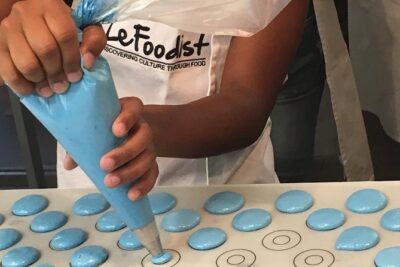 ★ 5.0Paris Cooking Class: Learn How to Make MacaronsFrom $156634 reviews
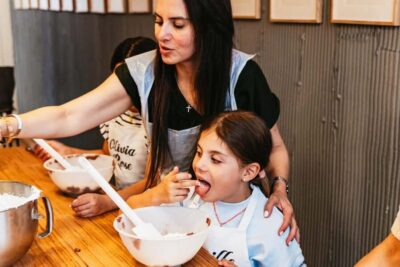 ★ 4.9Paris: French Macaron Culinary Class with a Chef591 reviews
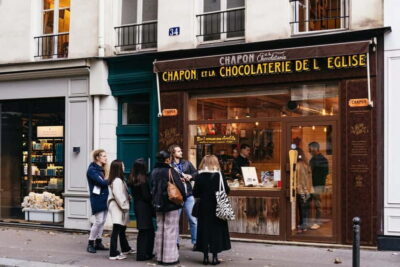 ★ 4.8Paris: Chocolate & Patisserie Walking Tour with TastingsFrom $113397 reviews
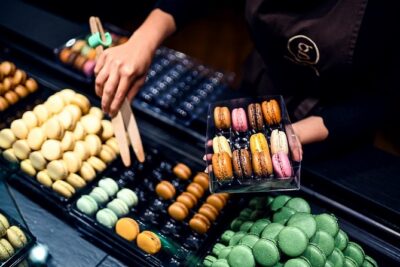 ★ 5.0Paris Chocolate, Macaron & Pastry Food Tour: 10 Gourmet TastingsFrom $118339 reviews
 ★ 5.0Paris Macarons Small-Group Baking Class with a ChefFrom $157316 reviews
 ★ 4.0Macaron Bakery Class at Galeries Lafayette ParisFrom $71280 reviews
Also on these France lists