
Reviewed · PARIS PASTRY & MACARON WORKSHOPS
Paris Croissant Small-Group Baking Class with a Chef
Croissant class in Paris actually teaches technique. You trade lines for a chef led studio session near Place des Vosges in the 3rd arrondissement, and you get hands on instruction with a group kept small. I like that you also leave with what you bake, not just a demo.
There is one thing to consider before booking: this is time in the studio, about 2 hours 30 minutes, so it is not built around walking major sights. The class runs with a small class feel, but the maximum is 12 people, so don’t expect total one on one in every moment.
In This Review
- Key moments that make this class worth it
- Where the class starts near Place des Vosges
- Inside the pastry studio: what happens in about 2.5 hours
- Drinks and tasting, not just samples
- Health and safety basics are included
- Croissant making: the butter, the folds, the timing
- A small group means real corrections
- Pain au chocolat and pain au raisin: using the same dough, changing the payoff
- Pain au chocolat
- Pain au raisin
- Takeaways: what you get to eat now and bring home later
- Value check: is $157.21 worth it?
- English friendly, chef led, and actually interactive
- What you should know before you go
- Who this class is best for
- Should you book this Paris croissant baking class?
- FAQ
- What is the duration of the Paris croissant baking class?
- Where is the class meeting point in Paris?
- What pastries will I make during the workshop?
- Are drinks included?
- Is the class offered in English?
- Is private transportation included?
- Can I cancel for a full refund?
Key moments that make this class worth it
- Small group coaching with a tight student to teacher feel, and lots of chances to ask why
- Three classic bakes in one session: croissant plus pain au chocolat and pain au raisin
- Lamination and shaping time so you see how butter layers turn into flaky pastry
- Complimentary hot and cold drinks during the workshop, plus a tasting of what comes out of the oven
- Takeaway pastries and an illustrated recipe booklet to help you repeat the steps at home
Where the class starts near Place des Vosges
This Paris croissant baking class meets at 7 Rue de Béarn in the 3rd arrondissement. That puts you close to the Marais area, near Place des Vosges, a part of Paris that feels calm and historic compared to the nonstop hustle around the big monuments.
I like the location for one simple reason: you can build this into a real Paris day. Before the class, you can wander the Marais streets and plan a meal nearby. After the class, you are basically in pastry mode, so you already have the mindset for whatever sweet stop you pick next.
You also get that practical bonus of being near public transportation. Since private transportation is not included, it matters that you can reach the meeting point without a complicated plan.
Still hungry? More Paris pastry sessions
Inside the pastry studio: what happens in about 2.5 hours
Your workshop begins inside a fully equipped pastry studio. The flow is straightforward, and it is designed for you to participate instead of watch.
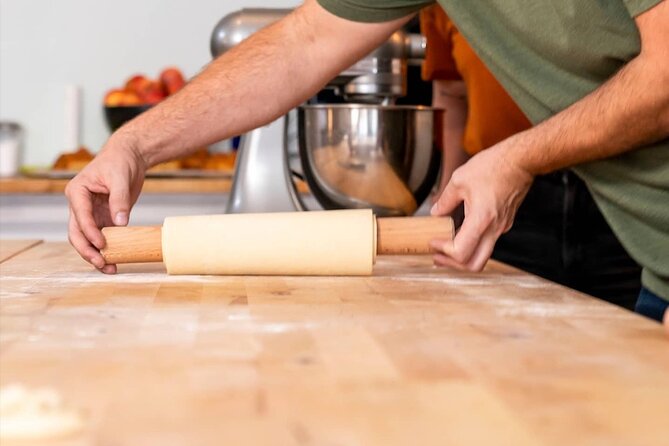
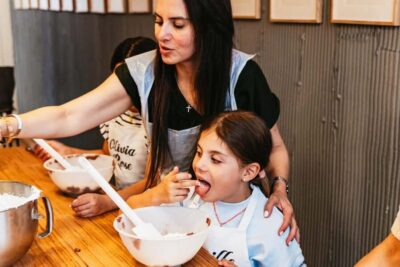
You start by meeting your professional chef and the rest of the group. In many sessions, the class size is small enough that the instructor can keep an eye on your dough and your technique. You receive aprons and the utensils you need, then you move into the work itself: kneading the dough, then shaping it.
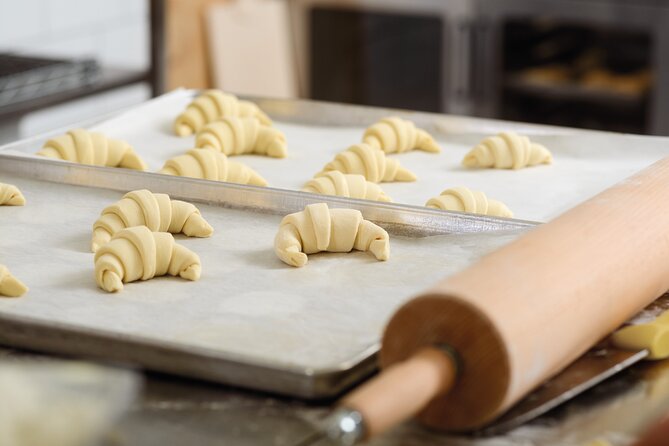
The class is structured like real production, with you handling each stage as the chef guides you step by step. You will then bake the pastries, take them out of the oven, taste them warm, and pack up your results to take home.
Drinks and tasting, not just samples
You get hot and cold drinks throughout the workshop. That is more useful than it sounds. Baking is hands on and timing matters, so sipping something while you work helps you stay focused and not feel drained mid session.
At the end, you eat what you made. You are also taking away the baked goods, so this is not only a quick bite and a pat on the back.
Health and safety basics are included
The class includes adapted health and safety equipment, including face masks and hand solution. This keeps things simple for travelers who do not want to think about bringing extras for a short workshop.
Croissant making: the butter, the folds, the timing
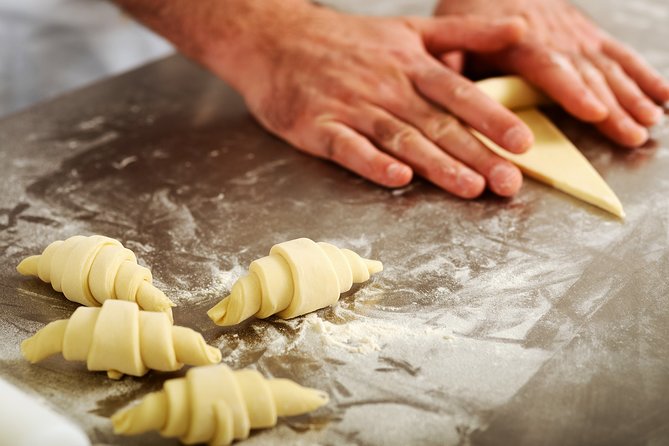
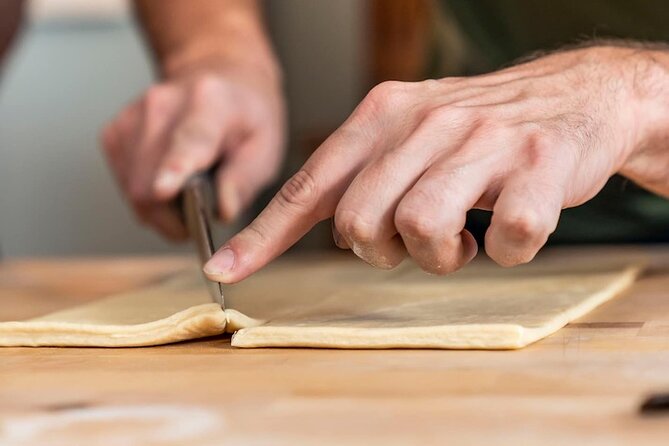
This is the main event, and the technique is the point. Croissants are not just dough shaped into triangles. They rely on lamination, controlled butter layers, and careful handling so the dough stays workable when it hits the oven.
What I like about a class like this is that it teaches you the logic behind the steps. You get guidance while you laminate and shape. One review even calls out that the session includes laminating the dough with butter, not just pretending to do it. That matters because the hardest part of making croissants at home is knowing what you are trying to achieve, not just copying a video.
When you are hands on, you also learn how the dough should feel at each stage. You are not doing it perfectly in your first try, but you are building muscle memory for later. That is exactly how you go from watching French pastry content online to actually making it.
A small group means real corrections
Croissants punish guesswork. If your dough is too warm, if your folds are rushed, or if you cut corners, the final pastry suffers. The reason this class gets such high praise is that instructors can correct what you are doing while you are doing it.
Several instructors are praised by name in past sessions, including Clara, Chef Felix, Milly, Prisca, Rosalie, Lizzy, Delphine, and Ines. You are not guaranteed a specific chef, but the pattern is consistent: clear explanations, patience, and an interactive style that keeps you from getting lost.
More Paris kitchens to book
- Paris Croissant Small-Group Baking Class with a Chef
★ 5.0 · 910 reviews - Paris: French Croissant Baking Class with a Chef
★ 4.9 · 712 reviews - Paris Cooking Class: Learn How to Make Macarons
★ 5.0 · 634 reviews - Paris Evening Cooking Class French Dinner and Market Visit Option
★ 5.0 · 430 reviews - Paris French Cuisine Small Group Cooking Class with Lunch
★ 4.5 · 418 reviews
Pain au chocolat and pain au raisin: using the same dough, changing the payoff
After croissants, you move into two more French favorites that use the same general pastry foundation but deliver totally different results.
Pain au chocolat
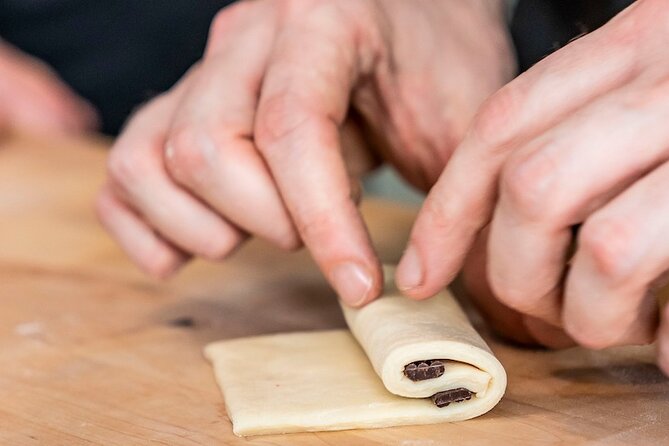
Pain au chocolat is the sibling to croissant, built with chocolate in the fold. In a hands on class, you get practice shaping and filling so the pastry bakes properly and the chocolate behaves like chocolate, not like a puddle that escaped early.
You get to make these as part of the workshop, so it is not just a croissant makeover. It is real pastry work with a different final feel in the mouth.
Pain au raisin
Pain au raisin adds another kind of sweetness, and it changes the look and flavor profile. This is where many people realize that French pastries are not random treats. They are built on repeatable technique, with flavor changes added through filling and shaping.
I like that this class includes both chocolate and raisin options. If you have family members or friends with different tastes, you get variety without booking separate classes.
Takeaways: what you get to eat now and bring home later
One of the big reasons people recommend this class is the food outcome. You are not leaving hungry and empty handed.
You can expect:
- A tasting of what comes out of the oven
- All produces baked during the class to take home
- A free illustrated booklet of recipes
That booklet is genuinely practical. If croissants are the goal, you will want a step by step guide for home practice, including the sequence you used in class. The illustrated format also helps you follow the steps without constantly checking your phone.
Value check: is $157.21 worth it?
At $157.21 per person for about 2 hours 30 minutes, this is not a budget activity. But when you look at what is included, the value adds up.
You are paying for:
- Professional chef instruction
- All cooking supplies and the teaching process
- Hot and cold drinks during the workshop
- Tasting at the end
- Takeaway pastries, meaning you actually eat your results
- An illustrated recipe booklet
If your goal is buying pastries in Paris, you can spend money on croissants anywhere. The difference is this class buys you skill, plus a box of food you made yourself. That is why high ratings keep focusing on technique, patience, and the fun of doing it together.
It also helps that the class is small. A bigger group usually means less attention per person. The class limits participants to eight in many sessions, and the overall maximum is 12. Either way, it is designed to keep the experience interactive rather than showroom style.
English friendly, chef led, and actually interactive
This experience is offered in English, and the teaching style is part of why it scores so well. Past sessions highlight instructors like Milly and Prisca for speaking excellent English, with clear explanations and a patient approach.
In a class like this, the chef can also translate technique. You do not just learn what to do. You learn why certain steps matter. That is a huge difference when you try again at home.
Also, the workshop tends to include a bit of cultural context. Some instructors have been praised for explaining culture and even teaching French words alongside the baking tips. It makes the class feel more connected to Paris, not just a kitchen workout.
What you should know before you go
A few practical points will help you get the most out of it.
- No private transportation is included, so plan to use public transit or walk.
- You are in a working studio for 2 hours 30 minutes, so treat it like an activity, not a side stop.
- The maximum group size is 12, even though the class often feels smaller than that.
- You will likely leave with several pastries per person since the class is structured around producing and taking away what you bake.
And here is the reality check. Baking classes can sometimes face last minute problems if a chef is unavailable. One past experience noted a cancellation on the day due to the chef being unable to work for health reasons, and another involved an instructor not arriving. Those seem to be rare, but it is still smart to keep your schedule flexible and have a backup plan for that day.
Who this class is best for
This is a great pick if you want a hands on Paris food experience that gives you something to practice later. It is also a good use of time if you want a break from museum fatigue.
You will probably like it if you:
- Want to learn technique, not just taste croissant
- Travel with kids or teens, since several instructors have been praised for handling families and even working well with children
- Prefer a smaller group setting with room for questions
- Want a memorable, practical souvenir, since you take home pastries and a recipe booklet
If you only want a quick bite and zero cleanup, this may not be for you. You will be involved in dough work. That is the deal.
Should you book this Paris croissant baking class?
I think this is an easy yes if your priority is technique and a fun, small group class in a central area. The combination of croissant plus pain au chocolat and pain au raisin gives you variety, and the take home portion means you leave with a real payoff. The consistently high rating and strong recommendation rate are also a good sign that the format works for most people.
Book it if you:
- Want a chef led, English friendly experience
- Plan to practice at home, since you get an illustrated booklet
- Like the Marais area and want to anchor your day near Place des Vosges
Skip it if you:
- Want a classic monument sightseeing tour
- Hate hands on activities
- Have zero flexibility on your schedule, since last minute disruptions can happen with any kitchen based business
FAQ
What is the duration of the Paris croissant baking class?
The class lasts about 2 hours 30 minutes.
Where is the class meeting point in Paris?
It starts at 7 Rue de Béarn, 75003 Paris, France.
What pastries will I make during the workshop?
You will make croissants, pain au chocolat, and pain au raisin.
Are drinks included?
Yes. Hot and cold beverages are included throughout the workshop.
Is the class offered in English?
Yes. The experience is offered in English.
Is private transportation included?
No. Private transportation is not included.
Can I cancel for a full refund?
Yes. You can cancel up to 24 hours in advance for a full refund.
More Paris Kitchens to Book
- Paris Cooking Class and Lunch with Wine plus Market Visit Option
★ 5.0 · 1,024 reviews - Paris: French Croissant Baking Class with a Chef
★ 4.9 · 712 reviews - Paris Cooking Class: Learn How to Make Macarons
★ 5.0 · 634 reviews - Paris Evening Cooking Class French Dinner and Market Visit Option
★ 5.0 · 430 reviews - Paris French Cuisine Small Group Cooking Class with Lunch
★ 4.5 · 418 reviews
The Whole Paris Shelf
- Paris: Louvre Museum Timed-Entrance Ticket
★ 4.6 · 71,977 reviews - Disneyland® Paris 1-Day Ticket
★ 4.6 · 49,412 reviews - Paris: Versailles Palace and Gardens Full Access Ticket
★ 4.6 · 41,579 reviews - Paris: Evening River Cruise with Music
★ 4.4 · 22,721 reviews - Paris: Eiffel Tower Entry Ticket with Optional Summit Access
★ 4.4 · 20,035 reviews
Another Round of Pastry
- Paris: Macaron Class at Galeries Lafayette
★ 4.3 · 905 reviews - Paris: French Croissant Baking Class with a Chef
★ 4.9 · 712 reviews - Paris Cooking Class: Learn How to Make Macarons
★ 5.0 · 634 reviews - Paris: French Macaron Culinary Class with a Chef
★ 4.9 · 591 reviews - Paris: Chocolate & Patisserie Walking Tour with Tastings
★ 4.8 · 397 reviews
The rest of the Paris write-ups
- Montmartre: Guided Tour for Kids and Families★ 4.9 · 57 reviews
- From Paris: Versailles Palace and Gardens Guided Day Trip★ 4.5 · 57 reviews
- Versailles Palace and Garden Tour with Paris Private Transfers★ 5.0 · 58 reviews
- Louvre Evening Escape – Avoid The Crowds! Semi-Private 6ppl Max★ 5.0 · 58 reviews
- Summit Eiffel Tower Audio Guide Tour with Unlimited Time Access★ 4.5 · 58 reviews
- Private Half Day Historic Tour★ 5.0 · 58 reviews
Paris Pastry & Macaron Workshops, in full.
 ★ 4.3Paris: Macaron Class at Galeries LafayetteFrom $67905 reviews
 ★ 4.9Paris: French Croissant Baking Class with a ChefFrom $159712 reviews
 ★ 5.0Paris Cooking Class: Learn How to Make MacaronsFrom $156634 reviews
 ★ 4.9Paris: French Macaron Culinary Class with a Chef591 reviews
 ★ 4.8Paris: Chocolate & Patisserie Walking Tour with TastingsFrom $113397 reviews
 ★ 5.0Paris Chocolate, Macaron & Pastry Food Tour: 10 Gourmet TastingsFrom $118339 reviews
 ★ 5.0Paris Macarons Small-Group Baking Class with a ChefFrom $157316 reviews
 ★ 4.0Macaron Bakery Class at Galeries Lafayette ParisFrom $71280 reviews
Also on these France lists