
Reviewed · PARIS PASTRY & MACARON WORKSHOPS
Paris Small-Group Macaron Making Class with a French Chef
Macarons are tiny, but the technique matters. In Paris, this small-group class with a French chef teaches you Italian meringue and ganache the way French pastry actually gets it right, and the end result is gluten-free macarons you can take seriously. The flip side: it is hands-on and can feel more technical than a casual baking demo.
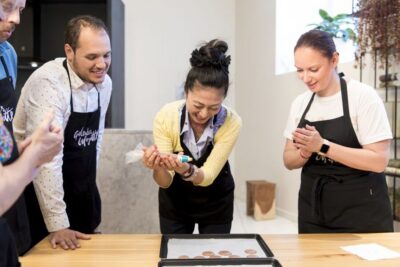
What I like most is how tightly the class is paced for a small group. You get coaching as you mix, pipe, and finish, with time for questions, not just a watch-and-hope format.
You’ll also get a proper food break built in, with tea and coffee, then you can enjoy your macarons on the spot or pack them up in take-home bags.
In This Review
- Key highlights worth your time
- Why this Paris macaron class feels more “workshop” than “show”
- Italian meringue technique, the touch test, and the skill behind “perfect” shells
- Ganache filling: the whisking lesson you’ll remember on your next bake
- Garnish options that let you build a flavor set, not just one cookie
- The 2.5 hours at Patisserie a la Carte, and how the session is paced
- Price and value: what $114.65 actually buys you in Paris
- Who should book this macaron class, and who might want a different style
- Should you book this Paris macaron workshop?
- FAQ
- How long is the Paris macaron making class?
- What is the maximum group size?
- Is the class taught in English?
- Is the class gluten-free, and can I mention allergies?
- What’s included besides the cooking class?
- What is not included in the ticket price?
- Where do I meet the class, and where does it end?
- What is the cancellation window for a refund?
- What is the minimum age to participate?
Key highlights worth your time
- Italian meringue method for lighter, crunchier macaron shells
- Ganache precision training, including how to hold your whisk
- Small group of up to 6 for real, hands-on guidance
- Custom garnish choices like pistachios, vanilla, raspberries, passionfruit, and chocolate shavings
- Everything provided: recipes in English, aprons, all cooking equipment, take-home bags, and drinks
- Gluten-free outcome with finishing tips that help you replicate at home
Why this Paris macaron class feels more “workshop” than “show”
If you’ve ever tried making macarons at home, you already know the problem: one wrong step and the whole batch goes sideways. This class is built around that reality. Instead of treating macarons like magic, you practice the mechanics that create a good shell and a smooth filling.
The small-group setup matters. With a maximum of 6 people, the chef can correct your technique before it turns into a repeat mistake. In the reviews, instructor names like Hiba, Gaëlle, Marie, and Julie come up a lot, and the consistent thread is patient, specific direction, not generic “add a little more” baking advice.
Also, this is not only about taste. You’re learning texture cues and finishing judgment. The class focuses on why things work, like how to tell when your batter is ready and how to pipe for even results.
The only real catch is the class can feel intense. One review described it as more advanced than they expected, and the style is often calm and precise. If you want a super high-energy party vibe, this might feel more like a focused skill session than a comedy sketch.
Still hungry? More Paris pastry sessions
Italian meringue technique, the touch test, and the skill behind “perfect” shells
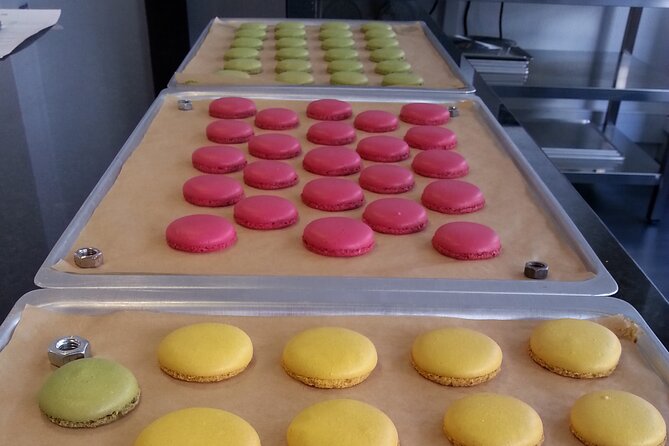
Macarons have a reputation for being fussy. The chef’s approach is technical, and that’s a good thing for you. This class uses the Italian meringue method, which replaces the slower sugar process with a hot sugar syrup added to whipped egg whites. The payoff is stability, which helps you get consistent structure in the shells.
Here’s what you’re actually learning, not just being told:
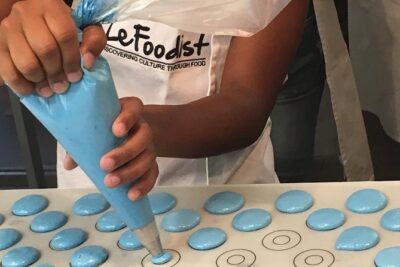
- How to get your paste ready for piping, so you end up with lighter, crisp shells rather than heavy, uneven cookies
- How to judge doneness by touch, not only by timing
- How the batter consistency impacts the final shell, including the look and bite
That touch-and-consistency focus is what separates a workshop from a food performance. You leave with a mental checklist, so when your batter looks slightly different at home, you know what to watch for.
And because this is hands-on, you’re doing the steps yourself, including mixing and assembling. One review specifically noted that ingredients may be pre-weighed for the class, but you still do the real work: mixing, making ganache, piping, and finishing.
Ganache filling: the whisking lesson you’ll remember on your next bake
If macarons are the shell, ganache is the filling that makes people stop talking mid-bite. The chef training here is built for texture, not just flavor.
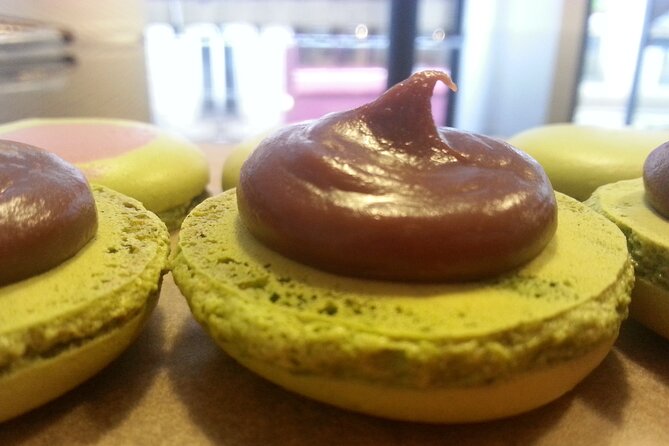
One of the most distinctive parts of the class is the emphasis on the mechanics of mixing. You learn that there’s essentially one good way to hold your whisk to keep ganache silky. That might sound small, but ganache goes wrong in very specific ways: it can look grainy, feel too thick, or separate.
The class also gives you “little tricks” for a reliable filling. In practice, that means you’re not just following a recipe, you’re learning the technique behind the recipe. You’ll also cover different garnish and filling pairings, like chocolate ganache and fruit-based options, so the final sandwich tastes balanced instead of overly sweet.
For first-time bakers, that ganache instruction is a big deal. Reviews repeatedly point out that the class helps people succeed when they’ve failed before. The reason makes sense: the chef corrects technique while you’re still at the stage where it matters.
Garnish options that let you build a flavor set, not just one cookie
The class doesn’t lock you into one flavor. You learn how to finish macarons with different types of garnishes, including:
- Chocolate ganache
- Pistachios
- Vanilla
- Raspberries
- Chocolate shavings
- Passionfruit
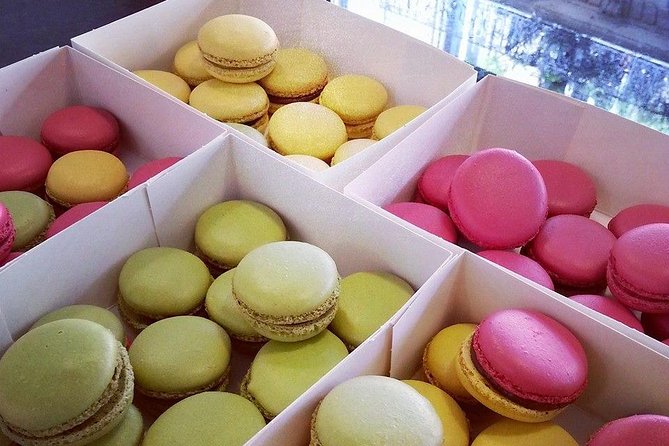
This is where the class becomes more fun and more personal. You can think of it as building a small lineup of macarons with different personalities, so your take-home box feels like a curated assortment.
It’s also practical for you if you plan to bake again at home. Once you understand how the shell behaves and how the filling texture should look, changing the flavor is much less intimidating. You’re not starting from scratch each time.
The 2.5 hours at Patisserie a la Carte, and how the session is paced
Your class begins at 9 Rue Thimonnier, 75009 Paris. This is where the workshop runs, and it ends back at the meeting point, so you can plan your day around a clean, single-location experience.
Time-wise, it runs about 2 hours 30 minutes. That matters because macarons involve multiple steps that each need attention. If a class is rushed, you get one chance at getting consistency right, and if it goes wrong, you just move on. Here, the small group helps keep the pace manageable.
During the session, the chef walks you through the entire workflow: from mixing and preparing the paste through piping and finishing. You also get tea and coffee, which may sound minor, but it helps you stay calm and focused, especially if macarons are new to you.
Also note that while it is hands-on, for certain preparations you may work in a group of 2. That can actually be a good thing. You’ll still get guidance, but you won’t be stuck waiting for one huge mixer moment with nothing to do.
At the end, you can eat what you made on the spot. If you’d rather avoid instant cookie indulgence, you can take them home in the provided take-home bags.
Price and value: what $114.65 actually buys you in Paris
At $114.65 per person, this class isn’t a cheap snack. But you’re not paying for just ingredients and a seat.
You’re paying for:
- A professional French pastry chef directing your technique
- A maximum group size of 6, which reduces the “crowd correction” problem
- Aprons, all cooking equipment, and ingredient support so you can focus on doing the work
- Recipes in English, so you can recreate the process after your trip
- Tea and coffee during the class
- Take-home bags, so the experience keeps paying you back after you leave
- A gluten-free approach, plus the garnishes and filling training to make the final product feel complete
There’s also an anniversary bonus: to celebrate the operator’s 10th anniversary, you get an Everyday Gourmet French Tarts eBook. It’s not the main attraction, but it adds extra value, especially if you like expanding your baking repertoire beyond macarons.
In plain terms, this is a good value if you care about technique. If your goal is only to eat dessert, you could find macarons almost anywhere. If your goal is to understand how macarons behave and how to reproduce results at home, the chef time and small-group attention are what justify the price.
- Paris: Louvre Museum Timed-Entrance Ticket
★ 4.6 · 71,977 reviews - Disneyland® Paris 1-Day Ticket
★ 4.6 · 49,412 reviews - Paris: Versailles Palace and Gardens Full Access Ticket
★ 4.6 · 41,579 reviews - Paris: Evening River Cruise with Music
★ 4.4 · 22,721 reviews - Paris: Louvre Guided Tour with Reserved Access & Boat Cruise
★ 4.3 · 16,353 reviews
Who should book this macaron class, and who might want a different style
This class is a great fit for:
- Bakers and visiting food lovers who want hands-on guidance, not just a tasting
- People who have tried macarons before and want to fix the real failure points
- Teens and adults. The class is age 12 and up, and children must attend with a registered adult (one adult per child)
Reviews also suggest it works for different skill levels. Several people highlighted that first-time bakers were able to succeed because the instructions were clear and steps were explained with the why, not just the what.
The main consideration is the intensity and tone. One review described the instructor as very businesslike, which can be a mismatch if you’re expecting an energetic, hype-your-way-through atmosphere. If you prefer calm and precise teaching, that style can be a plus.
Also, because it’s a technical class, don’t expect to wing it with vague cooking instincts. You’ll have the support of the chef, but macarons still demand focus.
Should you book this Paris macaron workshop?
I’d book it if you want a structured, chef-led path to something notoriously hard. The Italian meringue focus, the ganache mechanics, and the touch-based technique instruction make it a serious skill-builder.
I’d also book it if gluten-free is important to you. The class is designed to produce gluten-free macarons, and you’ll learn filling and garnish ideas that keep the experience from feeling like a compromise.
Skip it only if you want a casual, low-effort activity with a big social buzz. This is more “learn and practice” than “wander and snack,” and it may feel intense if you’re expecting a relaxed demo.
If that matches your mood, this is an excellent way to spend a chunk of time in Paris. You’ll leave with macarons you made yourself, plus the confidence to try again back home.
FAQ
How long is the Paris macaron making class?
The class runs about 2 hours 30 minutes.
What is the maximum group size?
The class is limited to a maximum of 6 participants.
Is the class taught in English?
Yes. The recipes are provided in English, and the experience is offered in English.
Is the class gluten-free, and can I mention allergies?
Yes, the class is described as gluten-free. You should advise the operator of any allergies or special dietary requirements at the time of booking.
What’s included besides the cooking class?
You get a professional French pastry chef, small-group instruction, English recipe copy, aprons, all cooking equipment, take-home bags, tea and coffee, and an eBook called Everyday Gourmet French Tarts.
What is not included in the ticket price?
Hotel pickup and drop-off are not included, and transportation to or from attractions is not included.
Where do I meet the class, and where does it end?
The meeting point is 9 Rue Thimonnier, 75009 Paris, France. The class ends back at the meeting point.
What is the cancellation window for a refund?
You can cancel up to 24 hours in advance for a full refund. If you cancel less than 24 hours before the start time, the amount paid is not refunded.
What is the minimum age to participate?
The minimum age is 12. Children must attend with a registered adult, with 1 adult per child.
The Whole Paris Shelf
- Paris: Louvre Museum Timed-Entrance Ticket
★ 4.6 · 71,977 reviews - Disneyland® Paris 1-Day Ticket
★ 4.6 · 49,412 reviews - Paris: Versailles Palace and Gardens Full Access Ticket
★ 4.6 · 41,579 reviews - Paris: Evening River Cruise with Music
★ 4.4 · 22,721 reviews - Paris: Eiffel Tower Entry Ticket with Optional Summit Access
★ 4.4 · 20,035 reviews
Another Round of Pastry
- Paris Croissant Small-Group Baking Class with a Chef
★ 5.0 · 910 reviews - Paris: Macaron Class at Galeries Lafayette
★ 4.3 · 905 reviews - Paris: French Croissant Baking Class with a Chef
★ 4.9 · 712 reviews - Paris Cooking Class: Learn How to Make Macarons
★ 5.0 · 634 reviews - Paris: French Macaron Culinary Class with a Chef
★ 4.9 · 591 reviews
The rest of the Paris write-ups
- Montmartre: Guided Tour for Kids and Families★ 4.9 · 57 reviews
- From Paris: Versailles Palace and Gardens Guided Day Trip★ 4.5 · 57 reviews
- Versailles Palace and Garden Tour with Paris Private Transfers★ 5.0 · 58 reviews
- Louvre Evening Escape – Avoid The Crowds! Semi-Private 6ppl Max★ 5.0 · 58 reviews
- Summit Eiffel Tower Audio Guide Tour with Unlimited Time Access★ 4.5 · 58 reviews
- Private Half Day Historic Tour★ 5.0 · 58 reviews
Paris Pastry & Macaron Workshops, in full.
 ★ 5.0Paris Croissant Small-Group Baking Class with a ChefFrom $157910 reviews
 ★ 4.3Paris: Macaron Class at Galeries LafayetteFrom $67905 reviews
 ★ 4.9Paris: French Croissant Baking Class with a ChefFrom $159712 reviews
 ★ 5.0Paris Cooking Class: Learn How to Make MacaronsFrom $156634 reviews
 ★ 4.9Paris: French Macaron Culinary Class with a Chef591 reviews
 ★ 4.8Paris: Chocolate & Patisserie Walking Tour with TastingsFrom $113397 reviews
 ★ 5.0Paris Chocolate, Macaron & Pastry Food Tour: 10 Gourmet TastingsFrom $118339 reviews
 ★ 5.0Paris Macarons Small-Group Baking Class with a ChefFrom $157316 reviews
Also on these France lists