
Reviewed · PARIS PASTRY & MACARON WORKSHOPS
Paris Cooking Class: Learn How to Make Macarons
Making macarons in Paris is strangely doable.
This small-group class at Le Foodist turns a famous, fussy dessert into a step-by-step process, with you starting from meringue and ending with macarons you can box up and keep. I especially like the focus on hands-on instruction, including making the meringue shells and learning how to pipe the buttercream filling, and I like the cozy finish with tea or coffee while your host adds cultural context.
One thing to keep in mind: macarons are sweet, and they are also delicate. If you’re planning a long day after class, you may want to think about how you’ll transport the box so your results still look good when you arrive.
In This Review
- Key points before you go
- Le Foodist and the easy 3:00 pm start
- What happens after you arrive, welcome drink included
- Building the macaron shells: meringue, color, and the crucial technique
- Piping and filling: buttercream that actually behaves
- The tea or coffee tasting and the French macaron context
- Taking home 20 to 30 macarons, plus keeping them pretty
- Price and value: is $156 worth it?
- Upgrade option: advanced macarons and the subtleties
- Who should book this macaron class, and who might skip it
- Should you book it?
- FAQ
- Where is the meeting point?
- What time does the class start?
- How long is the experience?
- Is the class offered in English?
- How many people are in the class?
- What are the age rules for participants?
- Is it suitable for gluten allergies?
- What do I get at the end of class?
- Can I cancel and get a refund?
Key points before you go
- Small-group class (up to 4) means more time with your instructor
- Make your macarons from scratch, including colored meringue shells
- Hands-on piping of buttercream filling, with practical guidance
- Tea or coffee tasting at the end, plus cultural talk on the macaron
- Take home a box of 20 to 30 macarons after about three hours
Le Foodist and the easy 3:00 pm start
Your class meets at Le Foodist, 59 Rue du Cardinal Lemoine, in Paris’s 5th arrondissement (right in a busy student and café part of town). The start time is 3:00 pm and the session runs about three hours.
This timing is smart if you’ve done the usual Paris morning routine already. You get an afternoon activity that feels very Paris, without needing to rush through museums or monuments again. And since the location is near public transportation, you can usually pair this with nearby walking plans before dinner.
Still hungry? More Paris pastry sessions
What happens after you arrive, welcome drink included
You’ll head to the cooking school in central Paris, then meet your macaron instructor over a refreshing welcome drink. From there, it’s straight into the work, with step-by-step direction so you know what to do next and why you’re doing it.
Instructors rotate, but the teaching style is consistently practical: clear explanations, lots of checks, and corrections in real time. Some classes have featured chefs like Luc, Paulo, Fanny, and Ann, and at least one instructor is described as Michelin-star pastry chef Stéphane. The common thread is personality too, from relaxed humor to patient focus, so you’re not stuck silently trying to copy what you see.
Building the macaron shells: meringue, color, and the crucial technique
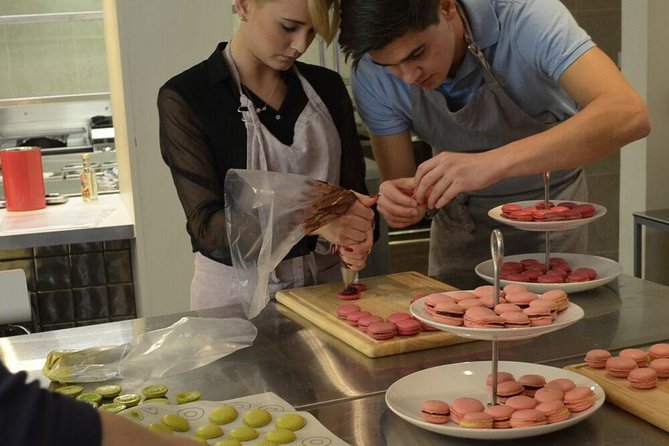
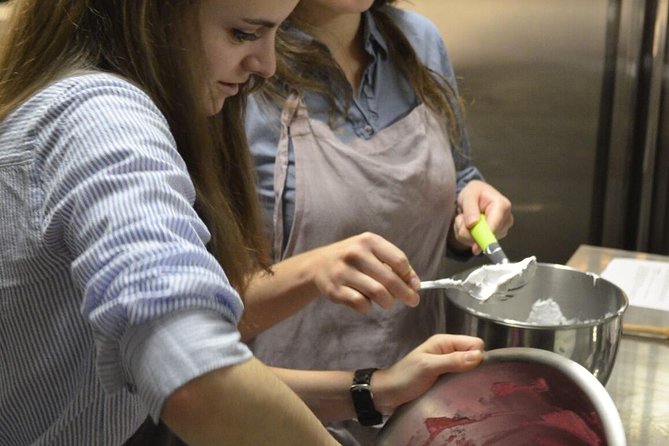
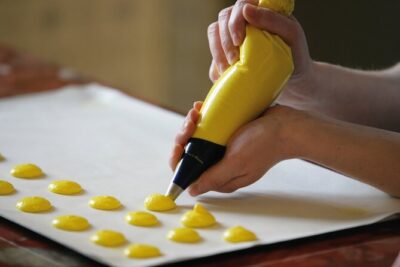
The heart of the class is making the meringue shells from scratch. You’ll learn how to build the meringue and shape the shells, plus how to choose the colors you want.
Macarons fail in predictable ways, and the class is built to prevent the most common problems. The teaching approach matters here, because you don’t just get a recipe. You learn the technique behind it, like what the batter should look and how the process changes as you mix, portion, and prepare.
You’ll also get hands-on practice with the parts that usually scare people. Even if you’ve never piped anything in your life, you’re guided through it, and you’re not expected to nail everything alone. With a maximum of four people, it’s easier for an instructor to spot what’s going wrong and help you fix it before the mix becomes wasted.
Piping and filling: buttercream that actually behaves
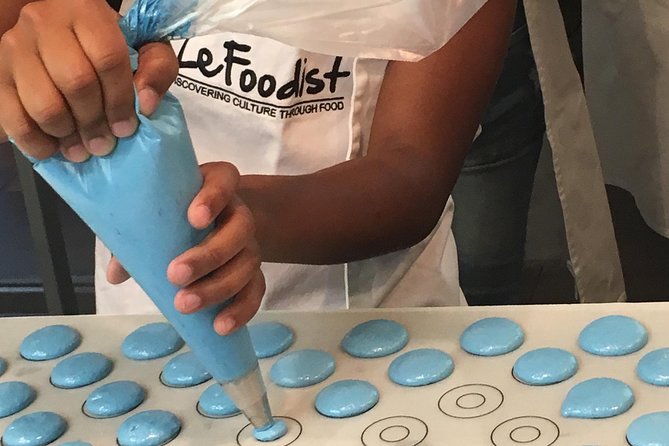
Once the shells are ready, you move into assembling and learning the piping of the buttercream filling. This is where macarons stop being just meringue cookies and start becoming the real deal.
Piping sounds simple until you do it while someone is watching for the exact moment the texture is right. Here, the class is paced so you can focus on control: how to hold the piping bag, how much pressure to use, and how to keep each filling portion consistent.
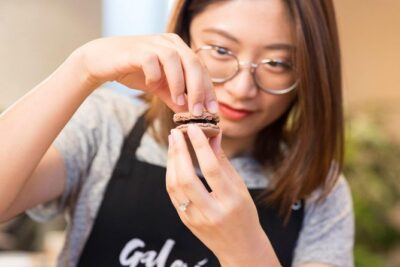
You’ll also learn how to pair the right shell sizes and assemble without crushing what you just made. In other words, the class doesn’t only chase looks. It helps you understand the mechanics so your macarons have a fighting chance at a clean, professional finish.
The tea or coffee tasting and the French macaron context
After baking and assembling, you get to sample what you made. The experience includes tea or coffee, which turns the end of class into a relaxed break rather than a rushed wrap-up.
Then your host talks about the macaron’s place in French culture and tradition. It’s not just trivia. You get a bit of framing for why this dessert matters, and it helps the whole activity feel less like a gimmick and more like learning an authentic craft.
You also get the satisfaction of tasting the final results soon after you made them. That feedback loop is huge. If you’re curious about what went right, what went sweet, or why one flavor worked better than another, this is the moment you can connect your choices to your bite.
Taking home 20 to 30 macarons, plus keeping them pretty
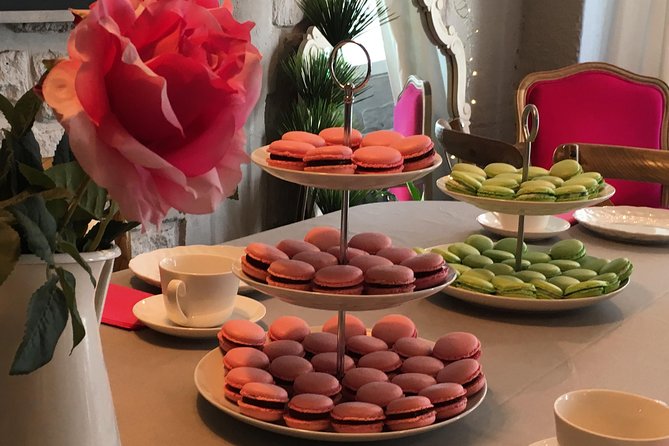
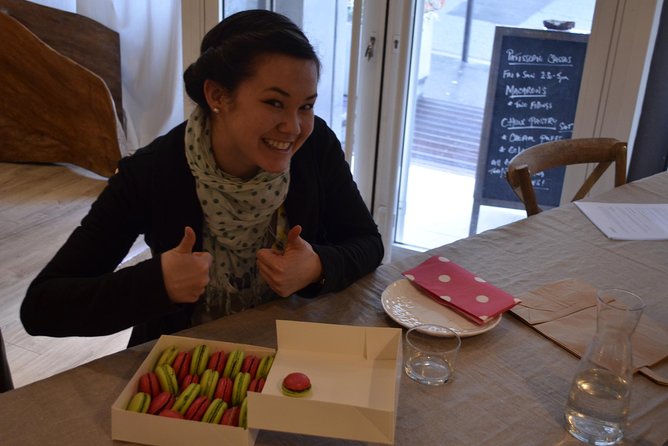
You leave with a box of 20 to 30 macarons to take home. That’s a great value piece because most baking classes are heavy on the lesson and light on the payoff. Here, you get enough to share, taste again later, or stash for dessert plans.
Transport is the one practical risk. Macarons are delicate, and at least one participant noted that the take-home box may not survive rough handling. If you’re leaving straight for a train, a long walk, or an airport, plan to keep the box stable in your carry option, not tossed into the bottom of a bag.
Also, be prepared for how sweet they are. Even when your technique is perfect, macarons are meant to be rich and sugary. If you know you prefer less sweet desserts, consider treating them as a small portion dessert rather than an all-afternoon snack.
More Paris kitchens to book
- Paris Croissant Small-Group Baking Class with a Chef
★ 5.0 · 910 reviews - Paris: French Croissant Baking Class with a Chef
★ 4.9 · 712 reviews - Paris Cooking Class: Learn How to Make Macarons
★ 5.0 · 634 reviews - Paris Evening Cooking Class French Dinner and Market Visit Option
★ 5.0 · 430 reviews - Paris French Cuisine Small Group Cooking Class with Lunch
★ 4.5 · 418 reviews
Price and value: is $156 worth it?
At $156 per person for about three hours, this class can look pricey at first glance. But the math changes when you look at what’s included.
You get:
- equipment and required attire
- a welcome drink
- coffee or tea
- and a take-home box of 20 to 30 macarons
Most of that value sits in the instruction plus the ingredients and output. You’re paying for technique support in a small room, not just for ingredients. And since the class is capped at a small group size, you’re less likely to feel like a passive observer.
If you’re coming specifically for macarons, this is often a good use of time because you’ll likely leave with a box full of results, plus a clear sense of what you’d try differently next time.
Upgrade option: advanced macarons and the subtleties
If you choose the upgrade, you get an advanced macarons class that focuses on subtleties. The exact details of the advanced session aren’t listed here, but the intent is clear: more nuance, more technique refinement, and more guidance on how macarons are supposed to turn out.
This upgrade can be worth it if you’re the type who wants to understand the why, not just the how. It’s also a good fit if you’ve tried macarons before and your shells didn’t behave, or your filling looked right but the assembly wasn’t quite balanced.
Who should book this macaron class, and who might skip it
This class fits pastry lovers who want a hands-on experience rather than a quick demonstration. It’s also a nice Paris break if you want something different from walking and sightseeing, especially when you’re ready for a structured afternoon with delicious results.
It’s suitable for those with gluten allergies based on the information provided. Minimum age is 12, and no unaccompanied children are accepted, so families should plan to attend together.
If you’re someone who hates any kitchen mess at all, keep your expectations realistic. This is an active baking workshop, not a sit-and-watch show. But if you like learning by doing and getting immediate feedback from an instructor, you’ll probably find the experience fun and confidence-building.
Should you book it?
Yes, I think you should book it if your goal is to learn macarons in a way that feels practical, guided, and rewarding. The small-group setup, the focused attention on shells and piping, and the fact that you take home a full box after just about three hours make it a strong use of time in Paris.
I’d hesitate only if you know you dislike very sweet desserts, or if you can’t manage delicate food transportation after the class. Otherwise, this is the kind of activity that turns a famous Paris treat into a skill you can actually repeat at home.
FAQ
Where is the meeting point?
The class meets at Le Foodist, 59 Rue du Cardinal Lemoine, 75005 Paris, France.
What time does the class start?
The start time is 3:00 pm.
How long is the experience?
It lasts about 3 hours.
Is the class offered in English?
Yes, the class is offered in English.
How many people are in the class?
The maximum group size is 4 travelers.
What are the age rules for participants?
The minimum age is 12 years. No unaccompanied children are accepted.
Is it suitable for gluten allergies?
Yes, the tour is suitable for those with gluten allergies.
What do I get at the end of class?
You’ll get coffee or tea, and you take home a box of 20 to 30 macarons. The class also includes a welcome drink and use of required equipment and attire.
Can I cancel and get a refund?
You can cancel up to 6 days in advance for a full refund. For a 50% refund, cancel 2 to 6 days in advance. If you cancel less than 2 days before the experience, you will not be refunded.
More Paris Kitchens to Book
- Paris Cooking Class and Lunch with Wine plus Market Visit Option
★ 5.0 · 1,024 reviews - Paris Croissant Small-Group Baking Class with a Chef
★ 5.0 · 910 reviews - Paris: French Croissant Baking Class with a Chef
★ 4.9 · 712 reviews - Paris Evening Cooking Class French Dinner and Market Visit Option
★ 5.0 · 430 reviews - Paris French Cuisine Small Group Cooking Class with Lunch
★ 4.5 · 418 reviews
The Whole Paris Shelf
- Paris: Louvre Museum Timed-Entrance Ticket
★ 4.6 · 71,977 reviews - Disneyland® Paris 1-Day Ticket
★ 4.6 · 49,412 reviews - Paris: Versailles Palace and Gardens Full Access Ticket
★ 4.6 · 41,579 reviews - Paris: Evening River Cruise with Music
★ 4.4 · 22,721 reviews - Paris: Eiffel Tower Entry Ticket with Optional Summit Access
★ 4.4 · 20,035 reviews
Another Round of Pastry
- Paris Croissant Small-Group Baking Class with a Chef
★ 5.0 · 910 reviews - Paris: Macaron Class at Galeries Lafayette
★ 4.3 · 905 reviews - Paris: French Croissant Baking Class with a Chef
★ 4.9 · 712 reviews - Paris: French Macaron Culinary Class with a Chef
★ 4.9 · 591 reviews - Paris: Chocolate & Patisserie Walking Tour with Tastings
★ 4.8 · 397 reviews
The rest of the Paris write-ups
- Montmartre: Guided Tour for Kids and Families★ 4.9 · 57 reviews
- From Paris: Versailles Palace and Gardens Guided Day Trip★ 4.5 · 57 reviews
- Versailles Palace and Garden Tour with Paris Private Transfers★ 5.0 · 58 reviews
- Louvre Evening Escape – Avoid The Crowds! Semi-Private 6ppl Max★ 5.0 · 58 reviews
- Summit Eiffel Tower Audio Guide Tour with Unlimited Time Access★ 4.5 · 58 reviews
- Private Half Day Historic Tour★ 5.0 · 58 reviews
Paris Pastry & Macaron Workshops, in full.
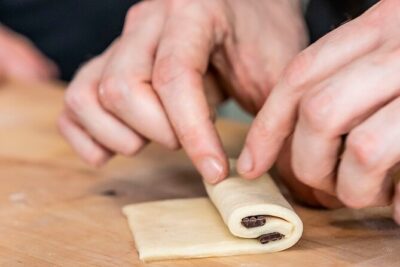 ★ 5.0Paris Croissant Small-Group Baking Class with a ChefFrom $157910 reviews
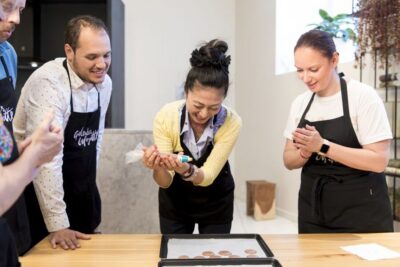 ★ 4.3Paris: Macaron Class at Galeries LafayetteFrom $67905 reviews
 ★ 4.9Paris: French Croissant Baking Class with a ChefFrom $159712 reviews
 ★ 4.9Paris: French Macaron Culinary Class with a Chef591 reviews
 ★ 4.8Paris: Chocolate & Patisserie Walking Tour with TastingsFrom $113397 reviews
 ★ 5.0Paris Chocolate, Macaron & Pastry Food Tour: 10 Gourmet TastingsFrom $118339 reviews
 ★ 5.0Paris Macarons Small-Group Baking Class with a ChefFrom $157316 reviews
 ★ 4.0Macaron Bakery Class at Galeries Lafayette ParisFrom $71280 reviews
Also on these France lists