
Reviewed · MONTMARTRE & SACRE-COEUR TOURS
Small Group Walking Tour of Montmartre -10 people max
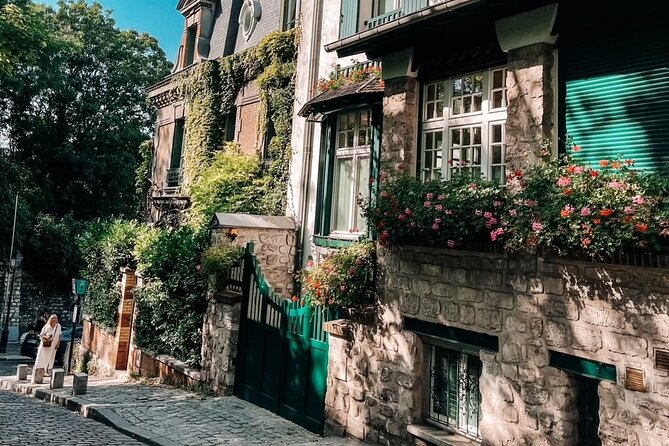
Montmartre feels like Paris in miniature. This 10-person max walk strings together art, politics, and street myths, guided by Sébastien, who delivers fluent English with a great sense of humor.
I love how the stories stay human, not textbook, and I also love the mix of big-name landmarks with quick details you might miss on your own.
The route also makes practical sense for a first visit: it’s about 2 hours 30 minutes and every main stop is admission-free. You’ll see views and landmarks plus a real interior moment at Sacré-Cœur.
One thing to plan for: there’s steep uphill walking and several church stops. If you prefer flat ground or want a longer sit-down at each place, this format may feel a bit fast.
In This Review
- Key highlights you will actually feel
- Starting at Place Pigalle, with Napoleon III in the background
- Church on stilts and the Mur des Je t’aime, quick stops with big personality
- Picasso’s shadow at Le Bateau-Lavoir, then the painters behind the Moulin
- A pink house, a working vineyard, and the artists’ playground energy
- Place du Tertre, still drawing today, then the oldest column in France
- Inside Sacré-Cœur, with the right kind of guidance
- The walk itself: hill effort, photo breaks, and an easy group pace
- Value check: $60.34 for 2.5 hours in Montmartre
- Who should book this Montmartre walking tour?
- Should you book it?
- FAQ
- How many people are on this small-group Montmartre walking tour?
- How long is the tour?
- What is the price per person?
- What language is the tour offered in?
- Where does the tour start?
- Do I need tickets to enter the stops?
- Is the tour physically demanding?
- Is a mobile ticket provided?
- Is free cancellation available?
Key highlights you will actually feel
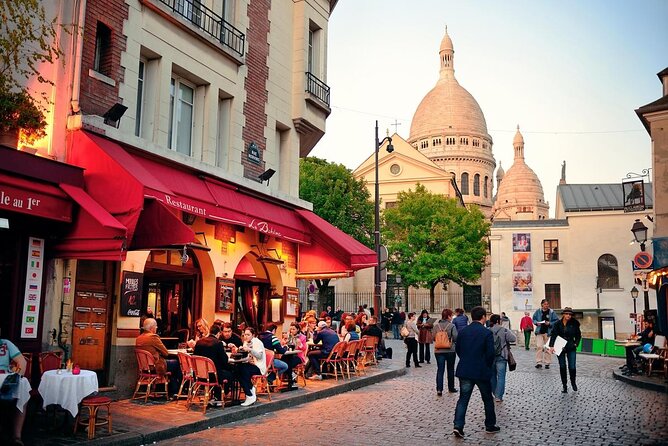
- Small group size (max 10) for an easier pace and more time for questions
- Sébastien’s English and humor keep history moving, not stuck in facts
- Admission-free stops across the walk so you can spend your money on meals, not entry fees
- Art and culture hits from Picasso connections to Le Lapin Agile
- A rare vineyard moment with Vigne du Clos Montmartre, still producing wine
- Sacre-Cœur inside plus a Roman-era column stop, not just exterior photos
Starting at Place Pigalle, with Napoleon III in the background
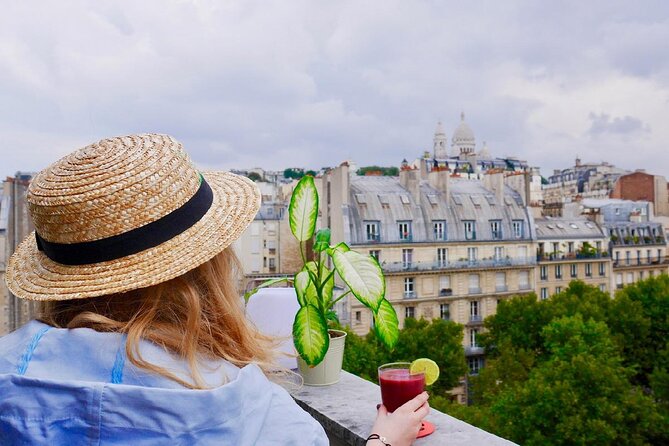
Your walk begins at Place Pigalle (10:00 am). This is a good start point because it gets you oriented fast, then pushes you upward into the Montmartre layers people talk about, but rarely explain well.
At the first stop, you learn how the area’s identity shifts around the era of Napoleon III, before and after his reign. It’s not just name-dropping. The guide frames why Montmartre became a magnet for artists and dreamers, and why the neighborhood has always mixed glamour with grit.
What to watch for: even if you mostly care about art, pay attention here to the “why.” The rest of the walk clicks better when you understand how and why Montmartre developed its reputation.
Possible drawback: because this is an early history primer, it works best if you’re willing to listen for a few minutes before you’re fully in photo mode.
Deeper into Montmartre
Church on stilts and the Mur des Je t’aime, quick stops with big personality
Right after the start, you hit Église Saint-Jean de Montmartre, known for its unusual design, often described as a church on stilts. You only spend about 10 minutes, but that’s the point. This isn’t a long architectural tour. It’s a “spot it, understand it, move on” stop that adds texture to the neighborhood.
Next comes the Mur des Je t’aime, the wall that spells I love you in many languages and was created in 2000. This is one of those places where it’s easy to think you already get it because you’ve seen photos. The guide adds context so it feels like a deliberate message, not just a selfie wall.
Why this pairing works: a quirky church detail, then a public art statement. Together, they help you see Montmartre as a place where symbolism matters.
Possible drawback: these are short photo-and-story moments. If you want to linger and read every element yourself, you may have to do that during your free time after the tour.
Picasso’s shadow at Le Bateau-Lavoir, then the painters behind the Moulin
At Le Bateau-Lavoir, you pass the artist studio connection tied to Picasso, including the idea that he painted some of his famous works there. Even if you’re not a deep art historian, this stop matters because it places modern art energy into a very walkable real location.
Then the route heads toward Le Moulin de la Galette. This is more than a famous name on a postcard. You get the story of the place as an artist-frequented restaurant, linked with artists such as Renoir, Pissarro, and Van Gogh. You also hear about why it shows up in painting history, including inspiration connected to Renoir’s Bal du Moulin de la Galette.
What makes it memorable: you’re learning from the physical setting. Montmartre feels like it’s still acting out the same roles, just with different costumes.
Possible drawback: because you pass it and keep moving, you might not get the slow, lingering “paint me a picture” experience. The payoff is that you see more variety overall.
A pink house, a working vineyard, and the artists’ playground energy
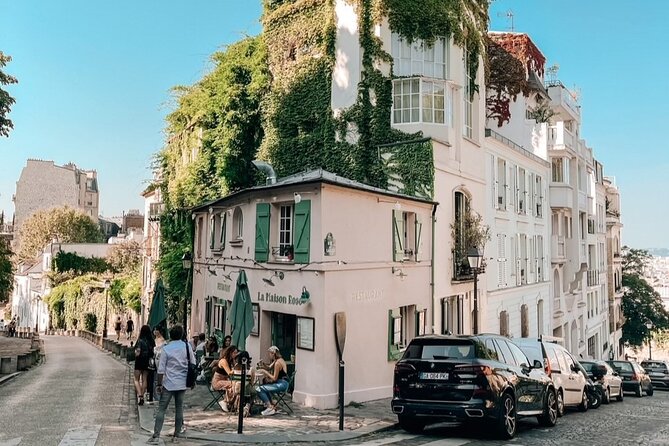
Then you get a string of stops that feel like Montmartre’s personality in snapshots.
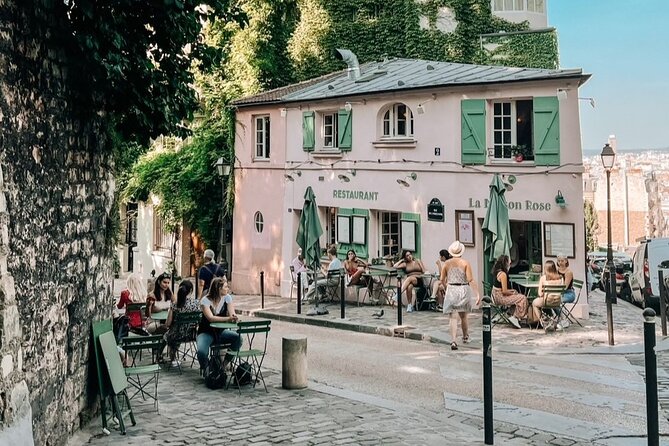
First is La Petite Maison Rose de Montmartre. It’s famous for being pink, but you’re also given the context of the house dating back to 1920. Yes, it’s a strong photo opportunity. But the value is that the guide shows you how locals and artists used the neighborhood’s style cues to create a recognizable identity.
After that, you reach Vigne du Clos Montmartre, a little vineyard up at the hilltop where wine is still produced today. This is one of those “wait, Paris has a vineyard here” moments. It’s also a reminder that Montmartre wasn’t only entertainment and art salons. It had work embedded in it too.
Next is Au Lapin Agile, where you stop in front of the famous venue and hear an anecdote about a donkey. It’s the kind of story that only makes sense in a place like this, where legends float around the corners and people remember them.
Why these stops feel authentic: they balance well-known landmarks with smaller, more character-driven points. You’re not just collecting icons. You’re seeing how Montmartre stays myth-friendly and lived-in.
Possible drawback: the route intentionally keeps each stop to around 10 minutes. If you hate quick transitions, pick your best photo angles early, and let the guide’s stories carry the rest.
Place du Tertre, still drawing today, then the oldest column in France
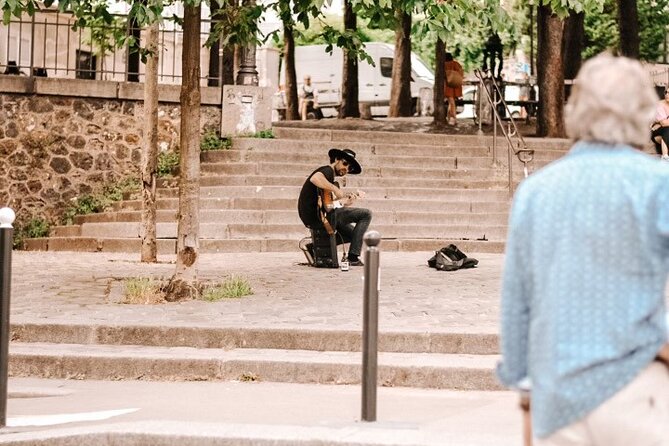
At Place du Tertre, you see the square where artists still gather. This stop is important because it shows the continuity. Montmartre didn’t just produce artists in the past. The neighborhood still supports that “artists at work” vibe.
Then you head toward Église Saint-Pierre de Montmartre, where the big wow factor is the oldest column in France dating back to Roman times, plus the note that it’s at the highest point of the city. It’s a clever pairing: you get a physical relic, then you get the geography. The guide helps connect both, so the area’s height and age feel linked, not random trivia.
What to watch for: keep your eye up and forward here. If you only look down at streets, you’ll miss the “highest point” feeling. Even a short stop can reset your understanding of where you are in Paris.
Possible drawback: if you’re tired from the earlier hill walking, this is where you’ll notice it. Bring good shoes, and take photos during moments when you are standing comfortably, not mid-stumble.
Inside Sacré-Cœur, with the right kind of guidance
The tour visits Basilique du Sacré-Cœur de Montmartre with time inside to learn about its history. This is the centerpiece stop, but the timing matters. You get a real interior look, not just exterior views, yet you’re still moving at a walking-tour pace.
Why this matters: Sacré-Cœur can feel like a “big famous church” from the outside. Inside is where the guide helps you understand what you are looking at and why it matters. You’re not left trying to piece together meaning from your phone.
Possible drawback: inside time is limited. If you want a slow devotional experience or you’re easily distracted by crowds, plan to come back later on your own for deeper quiet.
More Paris walks on the list
- Paris Top Sights Half Day Walking Tour with a Fun Guide
★ 5.0 · 2,893 reviews - Montmartre Hidden Gems and Scenic Highlights Walking Tour
★ 5.0 · 2,684 reviews - Montmartre Hill French Gourmet Food and Wine Tasting Walking Tour
★ 5.0 · 2,588 reviews - Paris: Montmartre Cheese, Wine & Pastry Guided Walking Tour
★ 4.8 · 2,255 reviews - Paris in a Day: Louvre or Orsay, Eiffel Tower, City Walk & Cruise
★ 5.0 · 1,956 reviews
The walk itself: hill effort, photo breaks, and an easy group pace
This is a walking tour with moderate physical fitness needed. Translation: you will climb, and you will climb more than you expect if you’re used to flat city strolls. Reviews repeatedly point out that there’s quite a bit of uphill, so your best move is to dress for walking and pace yourself.
The group size helps a lot. With up to 10 people, you’re not stuck behind a huge line. You also tend to get more flexibility for photos, which matters around places like the pink house and the basilica area.
Also, you’re not walking in silence. The guide keeps the flow going with anecdotes and fun facts, and you can ask questions as you go. One recurring theme from people who have done the tour: Sébastien’s humor and Paris-native context make it feel personal, not canned.
My practical tip: if you’re planning lunch right after, use the tour time to mentally bookmark where you want to sit. The guide can help with ideas for a typical French restaurant once you return toward the end.
Value check: $60.34 for 2.5 hours in Montmartre
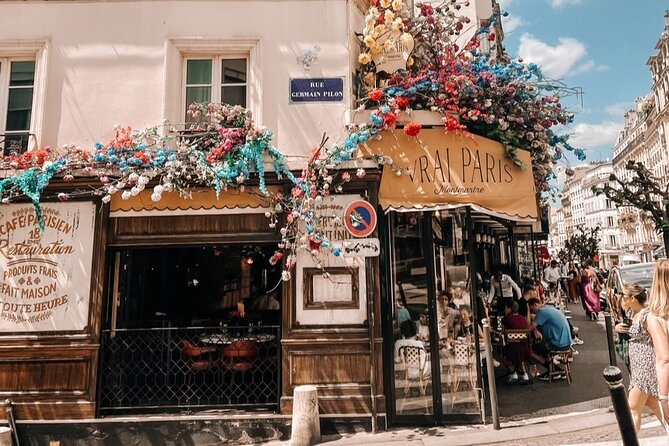
At $60.34 per person for about 2 hours 30 minutes, the price is less about paying for admissions and more about paying for guidance, pacing, and connection. Here’s how you can judge value for yourself:
- You get a small group experience that makes conversation realistic.
- The route covers a wide range of Montmartre themes, from art connections to working vineyard details.
- Most of the stops are admission-free, so you’re not paying extra just to step inside or look around.
- The guide often adds practical recommendations for what to do next, including lunch.
In plain terms, this is a good value when you want your first Montmartre visit to feel organized and meaningful, without turning into a museum day.
Possible drawback on value: if you already know Montmartre deeply and you want unhurried time at each site, a guide-led 2.5-hour route may feel too structured.
Who should book this Montmartre walking tour?
This one fits best if you want:
- A first-time Montmartre walk that covers the major themes without long gaps
- A guide who can explain art and local culture in normal human language
- A manageable group size, up to 10 people, so the experience stays friendly
- A route that includes both iconic names and quirky Montmartre touches
It can also suit families, since the stories and humor are built into how the guide teaches the neighborhood, and the walking pace is kept easy.
If you struggle with hills, need long rest breaks, or want a very slow, in-depth visit at each location, you might prefer a different kind of tour or to explore Sacré-Cœur and the hill area on your own.
Should you book it?
Yes, I’d book it if you want Montmartre to feel coherent fast. The combo of small-group pacing, English-speaking guidance, and a route that mixes big art names with street-level details is exactly what a first visit needs.
I’d skip or reconsider if hills exhaust you quickly, you dislike church interiors, or you want more time at fewer stops. Otherwise, this is the kind of walk that helps you understand why Montmartre keeps reinventing itself, even as it stays recognizable.
FAQ
How many people are on this small-group Montmartre walking tour?
The tour is limited to a maximum of 10 travelers.
How long is the tour?
It runs for about 2 hours 30 minutes.
What is the price per person?
The price is $60.34 per person.
What language is the tour offered in?
The tour is offered in English.
Where does the tour start?
It starts at Place Pigalle, 75018 Paris, France.
Do I need tickets to enter the stops?
The stops listed are marked as admission ticket free.
Is the tour physically demanding?
It’s intended for people with moderate physical fitness, and you should expect walking up the hill.
Is a mobile ticket provided?
Yes, the tour includes a mobile ticket.
Is free cancellation available?
Yes. You can cancel up to 24 hours in advance for a full refund.
Everything Else Filed Under Paris
- Paris: Louvre Guided Tour with Reserved Access & Boat Cruise
★ 4.3 · 16,353 reviews - Paris: Big Bus Hop-On Hop-Off Tour with Optional Cruise
★ 4.4 · 13,279 reviews - Louvre Museum Masterpieces Guided Tour with Access
★ 4.5 · 12,023 reviews - Versailles: Skip-the-Line Tour of Palace with Gardens Access
★ 4.7 · 9,778 reviews - Mona Lisa & Louvre Masterpieces Tour with Reserved Access
★ 4.6 · 6,812 reviews
The Whole Paris Shelf
- Paris: Louvre Museum Timed-Entrance Ticket
★ 4.6 · 71,977 reviews - Disneyland® Paris 1-Day Ticket
★ 4.6 · 49,412 reviews - Paris: Versailles Palace and Gardens Full Access Ticket
★ 4.6 · 41,579 reviews - Paris: Evening River Cruise with Music
★ 4.4 · 22,721 reviews - Paris: Eiffel Tower Entry Ticket with Optional Summit Access
★ 4.4 · 20,035 reviews
Montmartre, Keep Climbing
- Montmartre Hidden Gems and Scenic Highlights Walking Tour
★ 5.0 · 2,684 reviews - Montmartre Hill French Gourmet Food and Wine Tasting Walking Tour
★ 5.0 · 2,588 reviews - Paris: Montmartre Cheese, Wine & Pastry Guided Walking Tour
★ 4.8 · 2,255 reviews - Paris: Montmartre Highlights Walking Tour with a Local Guide
★ 4.9 · 1,668 reviews - Private Montmartre Food Tour with Wine, Cheese & Pastries
★ 5.0 · 1,027 reviews
The rest of the Paris write-ups
- Montmartre: Guided Tour for Kids and Families★ 4.9 · 57 reviews
- From Paris: Versailles Palace and Gardens Guided Day Trip★ 4.5 · 57 reviews
- Versailles Palace and Garden Tour with Paris Private Transfers★ 5.0 · 58 reviews
- Louvre Evening Escape – Avoid The Crowds! Semi-Private 6ppl Max★ 5.0 · 58 reviews
- Summit Eiffel Tower Audio Guide Tour with Unlimited Time Access★ 4.5 · 58 reviews
- Private Half Day Historic Tour★ 5.0 · 58 reviews
Montmartre & Sacre-Coeur Tours, in full.
 ★ 5.0Montmartre Hidden Gems and Scenic Highlights Walking TourFrom $382,684 reviews
 ★ 5.0Montmartre Hill French Gourmet Food and Wine Tasting Walking TourFrom $1452,588 reviews
 ★ 4.8Paris: Montmartre Cheese, Wine & Pastry Guided Walking TourFrom $1272,255 reviews
 ★ 4.9Paris: Montmartre Highlights Walking Tour with a Local GuideFrom $341,668 reviews
 ★ 4.1Paris: Sacré-Coeur and Montmartre Tour with Expert GuideFrom $281,027 reviews
 ★ 5.0Private Montmartre Food Tour with Wine, Cheese & PastriesFrom $3021,027 reviews
 ★ 5.0Paris Montmartre Food Tour – A Full French Meal by Do Eat BetterFrom $95877 reviews
 ★ 5.0Hidden Montmartre: Paris’ Secret Streets Walking TourFrom $44809 reviews
Also on these France lists