
Reviewed · PARIS PASTRY & MACARON WORKSHOPS
Croissant Baking Class, Mastering the Art with a Pastry Chef
Butter, dough, and Paris in three hours. This croissant baking class at Studio Pâtisserie (85 Rue de Rome) keeps it hands-on, with a pastry chef guiding you through the key steps of flaky layers, in a small group of up to eight.
I especially like the small 8-person size for real feedback while you work, and the focus on learning the actual technique of folding, rolling, and shaping dough. One thing to consider: you do need some physical strength to knead and shape the dough, and you may want to jot down exact cutting dimensions and be comfortable with metric-to-English conversions for baking at home.
In This Review
- Key takeaways before you go
- Getting to Studio Pâtisserie, and what the studio setup means for you
- Inside the 3-hour flow, what happens from dough to the oven
- Why the max 8-person group is the real value
- Laminating and shaping, what you’re actually learning (and how to use it at home)
- What to expect while the croissants bake, and the camaraderie part
- What you take home, croissants and pain au chocolat
- Price and value, is $143.92 per person worth it?
- Language, age, and the physical reality of kneading dough
- Who this croissant class suits best
- Should you book this croissant baking class in Paris?
- FAQ
- How long is the croissant baking class?
- What group size should I expect?
- Is the class offered in English?
- What will I make during the class?
- Are there age or physical requirements?
- What is the cancellation policy?
Key takeaways before you go
- Small group, big attention: up to 8 people, so your instructor can correct your dough and your technique as you go
- From scratch, not shortcuts: you learn the importance of quality ingredients, measurements, and the folding and rolling balance
- Real laminated-dough practice: shaping crescent pastries is the point, not just watching
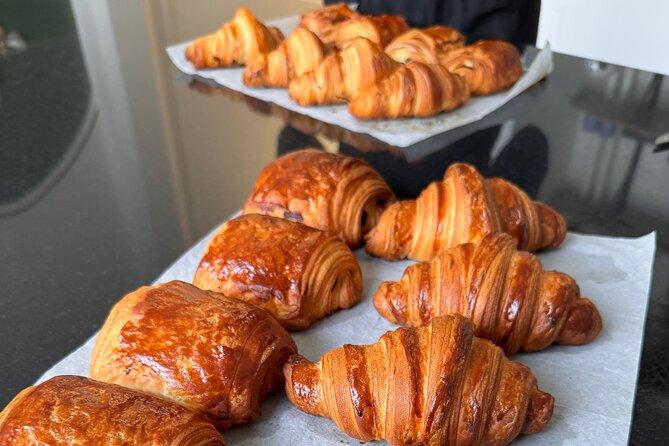
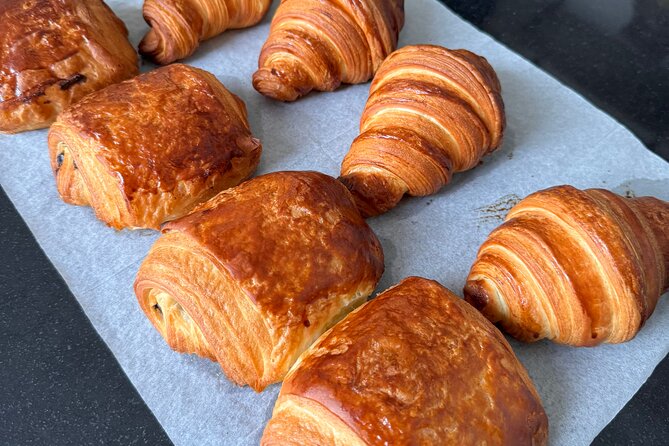
- You leave with baked results: multiple reviews mention take-home batches that include croissants and pain au chocolat
- English-led: the class is offered in English, and it stays relaxed while you learn
- Studio location in Paris: meet at Studio Pâtisserie, then you finish back at the same spot
Getting to Studio Pâtisserie, and what the studio setup means for you
The class meets at Studio Pâtisserie, 85 Rue de Rome, 75017 Paris. The studio is near public transportation, which matters in Paris where walking can turn into a time trap if your schedule is tight.
You’ll get a mobile ticket, so have it ready on your phone when you arrive. Service animals are allowed, and the whole setup is designed for a small workshop vibe, not a big lecture room.
Still hungry? More Paris pastry sessions
Inside the 3-hour flow, what happens from dough to the oven
This experience runs about 3 hours, with a clear rhythm from start to finish. You begin with a friendly intro to French pastry basics, then you jump into the techniques that actually create that croissant texture.
Here’s the overall progression you can expect:
- You’ll get the practical foundation: why quality ingredients and precise measurements matter for laminated dough.
- Then it’s hands-on: you’ll work with dough and learn the core motions behind laminating and shaping.
- As your pastries bake, you’ll have a moment to enjoy the payoff and the easy back-and-forth with your fellow bakers.
One detail that shows how the class is structured is that the dough used during your session may be prepared ahead so proofing stays on track. A review specifically mentioned dough made from a previous day’s class, which helps the batch timing work out and keeps results more consistent.
Why the max 8-person group is the real value
Croissant making is touchy. If your butter breaks out of the dough, your layers suffer. If your shaping is off, you can still get tasty rolls, but they may not look or bake the way you hoped.
That’s exactly why I think the maximum of eight travelers is a big deal. With a group this size, you’re not waiting your turn to ask questions, and you’re more likely to get the kind of small corrections that make a difference in lamination and shaping.
The reviews reinforce this with instructors who stay patient and interactive. Chef Leo and Chef Maria are specifically named in multiple reviews as being funny, supportive, and step-by-step helpful, which tells me this isn’t just a class for confident bakers. It’s also built for people who are nervous about getting the folds right.
Laminating and shaping, what you’re actually learning (and how to use it at home)
The class focuses on the parts of croissant baking that most people struggle with: folding, rolling, and shaping. The description calls out that you’ll learn the delicate balance needed to get that classic flaky texture, and that’s the heart of laminated dough.
You’ll practice:
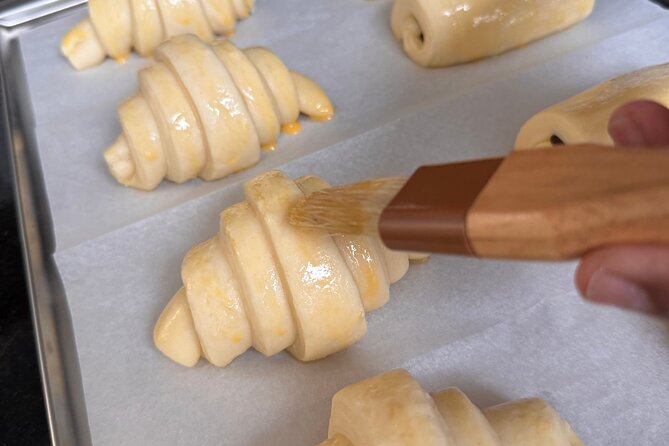
- Laminating: building layers by folding dough with butter in a controlled way
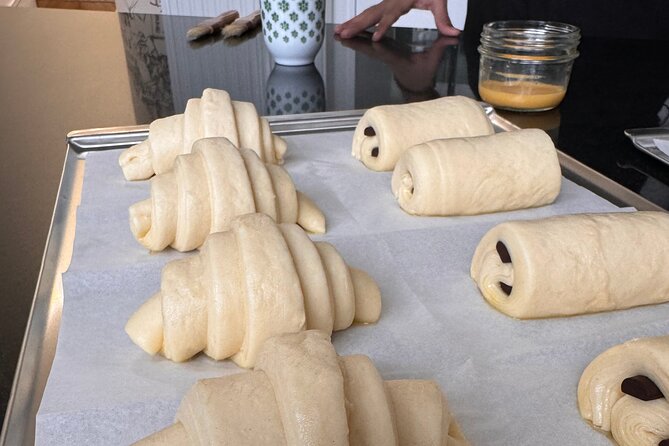
- Shaping: forming the crescent shape so it bakes into the right structure
- Rolling and cutting motions: turning rectangles into triangles and then shaping them into pastries
One review notes learning the dough process in a way that led to a 16-layer pastry, without problems. That’s the kind of learning outcome you want, because it suggests the class doesn’t stop at theory. You’re doing the process, and you’re getting guidance when it gets fiddly.
Also, don’t skip the homework part that shows up in real life after class. One review advised future attendees to write down the dough dimensions used in the rolling and cutting steps, because you’ll want those at home. If you’re used to measuring in cups and inches, get ready to convert metric weights and lengths too, since croissant baking is more exact than most casual baking.
What to expect while the croissants bake, and the camaraderie part
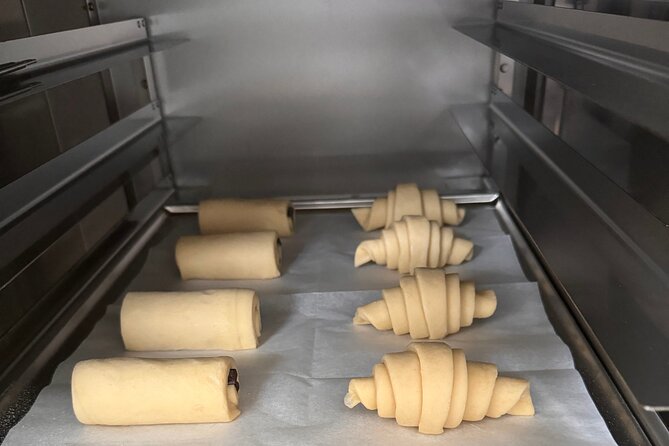
Croissants are one of those bake projects where patience matters, and the payoff is immediate when the oven does its job. As your pastries bake, you’ll likely get a chance to compare notes with the group and swap tips.
This is where a small class shines. With only up to eight people, the room feels like a working kitchen group, not a crowd. Reviews repeatedly describe a laidback, fun tone, with instructors creating a friendly environment and keeping people at ease.
In practical terms, it’s also when you can step back for a second and notice what makes good croissants different, like the look of the layers and how the pastries open up as they bake. That’s useful, because you’ll be able to judge your results later when you try again.
What you take home, croissants and pain au chocolat
A key benefit is that the class doesn’t just end with skills. It ends with food you can eat right away and take home.
One review specifically mentions leaving with 4 croissants and 4 pain au chocolat each. Another review talks about learning the steps for both croissants and pan au chocolate, which suggests your final batch may include both types of pastries.
Even if your exact take-home count varies by session, the pattern is clear: you’re baking enough to enjoy the results and bring some home. That makes the value easier to justify than a class where you leave empty-handed except for photos.
There’s also evidence that recipes may be shared. One review said the instructor emailed recipes after the class, which is exactly what helps you repeat the technique later instead of relying on memory.
More Paris kitchens to book
- Paris Croissant Small-Group Baking Class with a Chef
★ 5.0 · 910 reviews - Paris: French Croissant Baking Class with a Chef
★ 4.9 · 712 reviews - Paris Cooking Class: Learn How to Make Macarons
★ 5.0 · 634 reviews - Paris Evening Cooking Class French Dinner and Market Visit Option
★ 5.0 · 430 reviews - Paris French Cuisine Small Group Cooking Class with Lunch
★ 4.5 · 418 reviews
Price and value, is $143.92 per person worth it?
At $143.92 per person for about 3 hours, this class sits in the price range of a real workshop, not a casual demo. So what makes it feel like a good deal is the mix of small-group instruction and tangible results.
Here’s how I’d judge the value if I were booking:
- Instructor time: with a max of eight people, you’re getting more attention per person than in big classes.
- Hands-on output: you create shaped croissants and baked pastries, not just learn the concept.
- A skills jump: laminated dough technique is hard to learn from a book, and the class is built around the exact steps that matter.
- Take-home pastries: reviews mention taking home croissants and pain au chocolat, which turns part of the cost into real food value.
You do give up comfort, though. This is a knead, roll, shape kind of experience, not a passive tasting tour. If you’re hoping for a totally relaxed afternoon where you mostly watch, you might feel like you’re working too hard.
Language, age, and the physical reality of kneading dough
The class is offered in English, which is a major plus if you want to focus on technique without translating pastry terms on the fly.
There’s also an age and physical requirement: participants need to be 17 years of age and above, and strength is needed to knead the dough. That means you should go in with realistic expectations. Even if you’ve never baked before, the guidance can help you succeed, but your hands still have to do the work.
If you’re traveling with family, this age rule matters. It’s more of a teen-and-adult activity than a younger-kid family class.
Who this croissant class suits best
This is a great fit if you want a true craft experience in Paris, with personal attention and a clear end result. I’d point you here if you like hands-on cooking, you enjoy learning technique, and you want to leave feeling like you can actually reproduce croissants later.
It’s also a solid choice for:
- Couples who want a shared activity that ends with good food
- Travelers who love structured lessons, not vague wandering
- People who enjoy baker-to-baker conversation in a small group
In reviews, Chef Leo and Chef Maria come up as being fun, patient, and interactive. That kind of teaching style helps a lot when the steps are technical, and it makes the class feel welcoming even if you’re not an experienced baker.
The main mismatch would be for anyone who wants low-effort, fully passive sightseeing. You’ll knead dough. You’ll shape dough. That’s the deal.
Should you book this croissant baking class in Paris?
I’d book it if your goal is to learn laminated dough technique in a small group, in English, and leave with baked pastries you can share. The value leans heavily on the up-to-eight-person format and on the way instructors like Chef Leo and Chef Maria teach step-by-step.
Skip it or reconsider if you’re uncomfortable with physical kneading and rolling, or if you strongly prefer not to deal with exact measurements. And if you plan to bake at home, be ready to take notes, especially for dough dimensions and metric conversions, since those details matter for repeat results.
If that sounds like your kind of trip activity, this class is a very practical way to experience Paris beyond just eating croissants.
FAQ
How long is the croissant baking class?
The class lasts about 3 hours.
What group size should I expect?
The class has a maximum of 8 travelers.
Is the class offered in English?
Yes, the class is offered in English.
What will I make during the class?
You will learn how to create croissants from scratch, including techniques like laminating and shaping. Some classes also include pain au chocolat in the baked batch, as shown in past take-home results.
Are there age or physical requirements?
Participants must be 17 years of age and above, and strength is needed to knead the dough.
What is the cancellation policy?
You can cancel for free up to 24 hours before the experience’s start time for a full refund.
More Paris Kitchens to Book
- Paris Cooking Class and Lunch with Wine plus Market Visit Option
★ 5.0 · 1,024 reviews - Paris Croissant Small-Group Baking Class with a Chef
★ 5.0 · 910 reviews - Paris: French Croissant Baking Class with a Chef
★ 4.9 · 712 reviews - Paris Cooking Class: Learn How to Make Macarons
★ 5.0 · 634 reviews - Paris Evening Cooking Class French Dinner and Market Visit Option
★ 5.0 · 430 reviews
The Whole Paris Shelf
- Paris: Louvre Museum Timed-Entrance Ticket
★ 4.6 · 71,977 reviews - Disneyland® Paris 1-Day Ticket
★ 4.6 · 49,412 reviews - Paris: Versailles Palace and Gardens Full Access Ticket
★ 4.6 · 41,579 reviews - Paris: Evening River Cruise with Music
★ 4.4 · 22,721 reviews - Paris: Eiffel Tower Entry Ticket with Optional Summit Access
★ 4.4 · 20,035 reviews
Another Round of Pastry
- Paris Croissant Small-Group Baking Class with a Chef
★ 5.0 · 910 reviews - Paris: Macaron Class at Galeries Lafayette
★ 4.3 · 905 reviews - Paris: French Croissant Baking Class with a Chef
★ 4.9 · 712 reviews - Paris Cooking Class: Learn How to Make Macarons
★ 5.0 · 634 reviews - Paris: French Macaron Culinary Class with a Chef
★ 4.9 · 591 reviews
The rest of the Paris write-ups
- Montmartre: Guided Tour for Kids and Families★ 4.9 · 57 reviews
- From Paris: Versailles Palace and Gardens Guided Day Trip★ 4.5 · 57 reviews
- Versailles Palace and Garden Tour with Paris Private Transfers★ 5.0 · 58 reviews
- Louvre Evening Escape – Avoid The Crowds! Semi-Private 6ppl Max★ 5.0 · 58 reviews
- Summit Eiffel Tower Audio Guide Tour with Unlimited Time Access★ 4.5 · 58 reviews
- Private Half Day Historic Tour★ 5.0 · 58 reviews
Paris Pastry & Macaron Workshops, in full.
 ★ 5.0Paris Croissant Small-Group Baking Class with a ChefFrom $157910 reviews
 ★ 4.3Paris: Macaron Class at Galeries LafayetteFrom $67905 reviews
 ★ 4.9Paris: French Croissant Baking Class with a ChefFrom $159712 reviews
 ★ 5.0Paris Cooking Class: Learn How to Make MacaronsFrom $156634 reviews
 ★ 4.9Paris: French Macaron Culinary Class with a Chef591 reviews
 ★ 4.8Paris: Chocolate & Patisserie Walking Tour with TastingsFrom $113397 reviews
 ★ 5.0Paris Chocolate, Macaron & Pastry Food Tour: 10 Gourmet TastingsFrom $118339 reviews
 ★ 5.0Paris Macarons Small-Group Baking Class with a ChefFrom $157316 reviews
Also on these France lists