
Reviewed · LATIN QUARTER & LE MARAIS WALKS
Hidden Paris: Explore Medieval Marais on a Walking Tour
The Marais has secrets in plain sight. This Hidden Paris walk threads you through medieval streets and under-the-radar corners of Le Marais, right at the hour when the neighborhood feels most like Paris. You start near modern art at Centre Pompidou, then ease into older Paris as you move stop to stop through squares, churches, and the Jewish quarter.
I love the small-group size. With a maximum of 12 people, it stays conversational, and guides can point out details you would miss if you wander on your own. I also love the French gouter element. The tour includes a late-afternoon sweet treat, including a local-style meringue called a merveille.
One thing to consider: this is a 2 km walk with several short stops, so the pace is focused. If you want long, slow time in just one place, you may feel the clock moves faster than you’d like.
In This Review
- Key highlights you will feel on the walk
- Why this Le Marais route feels different
- Walking pace, distance, and how to be comfortable
- Start at Centre Pompidou, then switch to older Paris
- Le Marais: best-preserved medieval Paris in a walkable chunk
- Stravinsky Fountain: photo stop with a story
- Hôtel de Ville and the chilling medieval-to-revolution link
- Saint-Gervais church interior views, without rushing past
- The gouter moment: merveilleux and a proper late-afternoon pause
- Rue des Rosiers: Jewish quarter energy and snack-shop cues
- Place des Vosges: Paris’s oldest classic square
- Finishing near Place de la Bastille: your next steps get easy
- What makes the guides stand out on this tour
- Value and pricing: is $55.87 worth it?
- Who should book this tour
- What to do before and after the tour
- Should you book Hidden Paris: Medieval Marais?
Key highlights you will feel on the walk
- Medieval Le Marais focus, geared to show the best-preserved old neighborhood beyond the busiest tourist spots
- French gouter sweet treat, including a merveille-style meringue stop
- Street-level Paris culture, from street art and hidden squares to iconic (and less obvious) landmarks
- Jewish quarter food street time, with Rue des Rosiers and plenty of people-watching
- Prime afternoon route, when Le Marais is lively but still easy to walk
- Expert local English guide, with tips on what else to see, do, and eat after the tour
Why this Le Marais route feels different
Le Marais is one of Paris’s most famous neighborhoods, but that fame can flatten it. You end up darting between the same photo spots, then wondering where the quieter streets went. This tour is built to fix that feeling by aiming for the parts of Le Marais that still show their medieval bones, plus a few landmarks most people skip.
The timing helps too. The tour starts at 3:00 pm and runs about 2 hours. That’s late enough to shake off the morning rush, and early enough that you are not sprinting through Paris in peak night energy. You also finish near major sights, so you can keep going without the hassle of planning your next move.
More walks through the Latin Quarter and the Marais
Walking pace, distance, and how to be comfortable
You cover about 2 km total, with seven or eight main stops. Each stop is short, around 10 to 15 minutes, so think of it like a guided “route plus context,” not a museum-type slow tour. Most people can handle it, and it is even listed as child-friendly, with children under 6 joining for free.
If you want to enjoy it fully, wear comfortable shoes. The Marais has uneven sidewalks and busy pedestrian streets, especially near the Jewish quarter. Bring water if you run warm, since this is an afternoon walk.
Start at Centre Pompidou, then switch to older Paris
You begin in front of Centre Pompidou, a huge modern-art anchor in a striking contemporary building. The stop is brief, and that is the point. It sets up the contrast: modern Paris here, medieval Paris just ahead.
From there, you transition into Le Marais itself. The tour’s theme is medieval survival, meaning you focus on how the neighborhood preserves older layouts and spaces even as Paris evolves around it. It is a smart way to “get” the area fast, because you stop treating Le Marais like one big postcard and start noticing patterns.
Le Marais: best-preserved medieval Paris in a walkable chunk
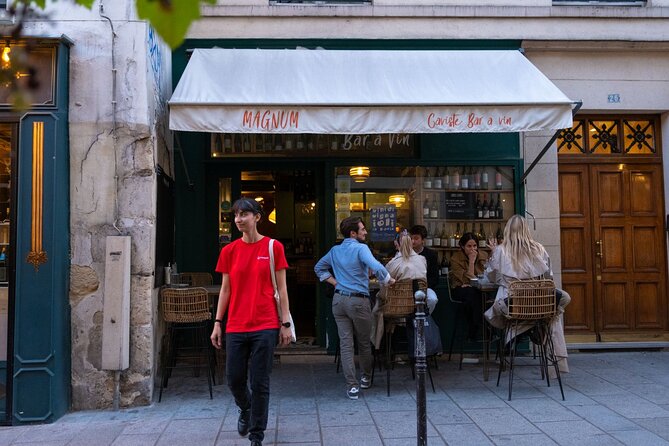
Your Le Marais segment is where the tour earns its name. You get time to look around Le Marais, described as the best-preserved medieval area in the Marais. This is also one of Paris’s most visited zones, which is exactly why a guide matters. They can help you read the neighborhood.
What you should aim to spot:
- Hidden or quieter lanes that branch off the main streets
- Little squares that feel like breathing space
- The way old architecture shapes the street grid and flow
Even if you think you know Marais, this is the part where the neighborhood starts to look new, because you are walking with a map in your head, not just a route on your phone.
Stravinsky Fountain: photo stop with a story
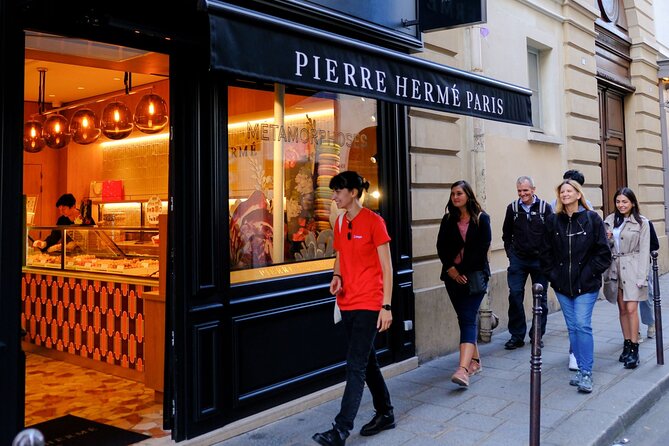
Next up is the Stravinsky Fountain, one of the most photographed fountains in Paris. Your guide’s job here is not just pointing, but explaining what you are looking at, and how the fountain fits into the surrounding area.
This stop is only about 15 minutes, so treat it like a quick reset. Get your photos, but also listen for the context. It is the kind of landmark that looks playful and artistic, but it often has a clear backstory that makes it click.
Hôtel de Ville and the chilling medieval-to-revolution link
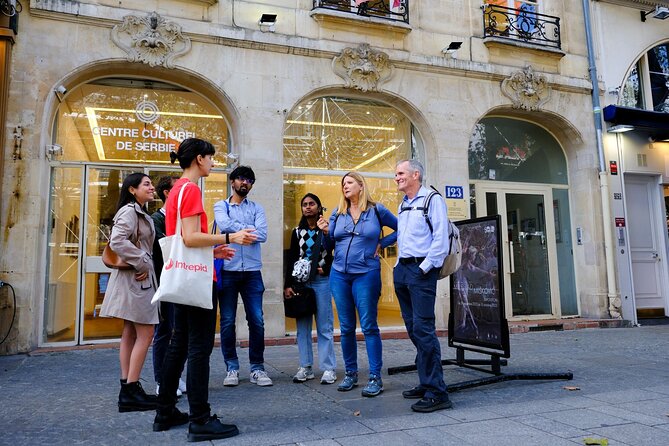
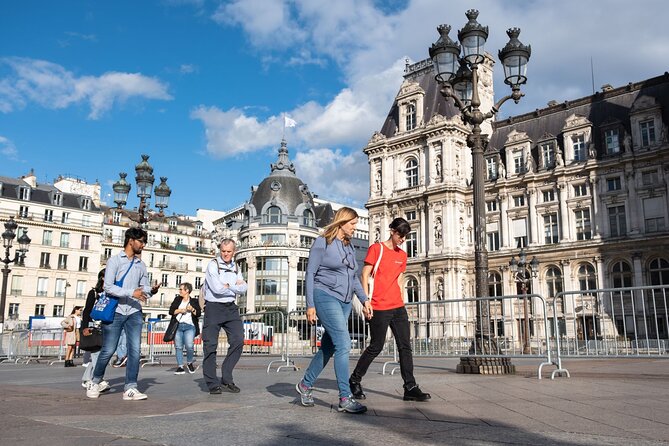
The tour moves to Hôtel de Ville, Paris’s town hall, with a stop framed by history that reaches far beyond the building’s pretty façade. You learn that the esplanade in front of it was used for medieval executions, and that it was also tied to an early moment in the guillotine era.
This is a stop where you might feel the tone shift. The guide keeps it factual, but the subject is heavy. If you prefer lighter sightseeing, you can still appreciate it as part of how Paris became the city you see today. Places like this are why a neighborhood walking tour can feel more real than a checklist.
More Paris walks on the list
- Paris Top Sights Half Day Walking Tour with a Fun Guide
★ 5.0 · 2,893 reviews - Montmartre Hidden Gems and Scenic Highlights Walking Tour
★ 5.0 · 2,684 reviews - Montmartre Hill French Gourmet Food and Wine Tasting Walking Tour
★ 5.0 · 2,588 reviews - Paris: Montmartre Cheese, Wine & Pastry Guided Walking Tour
★ 4.8 · 2,255 reviews - Paris in a Day: Louvre or Orsay, Eiffel Tower, City Walk & Cruise
★ 5.0 · 1,956 reviews
Saint-Gervais church interior views, without rushing past
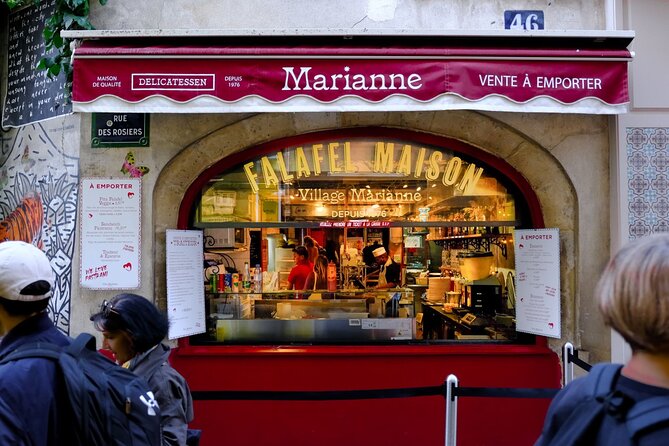
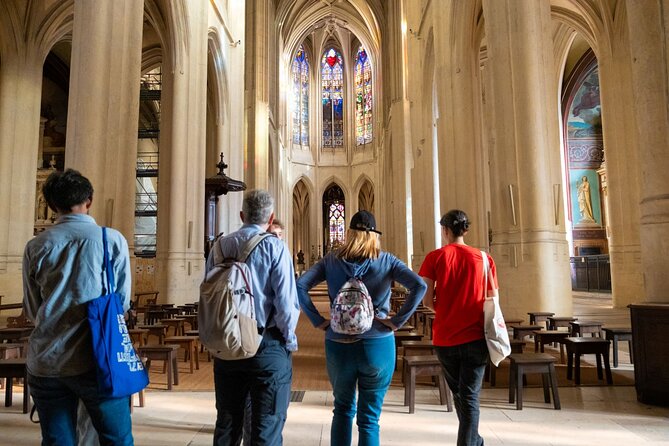
You pass Church of Saint-Gervais, just behind the square. The highlight is a peek into the interiors, which is the right way to do church stops on a walking tour. You are not stuck for an hour. You get a quick visual sense and a bit of architectural context.
It helps set you up for the next part, the sweet treat. This is a great pairing because the tour uses the church stop as a contrast moment. Old stone and art, then dessert.
The gouter moment: merveilleux and a proper late-afternoon pause
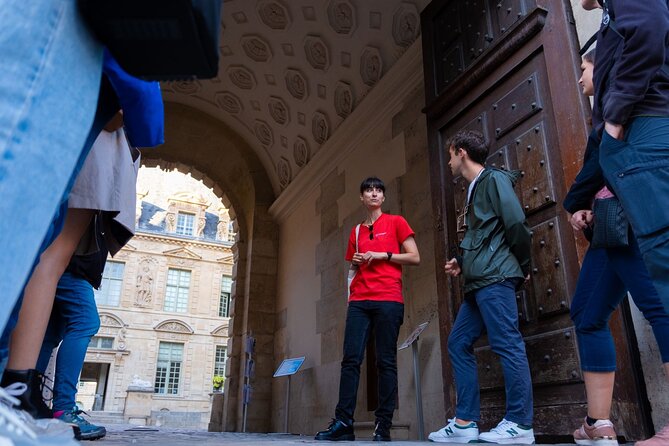
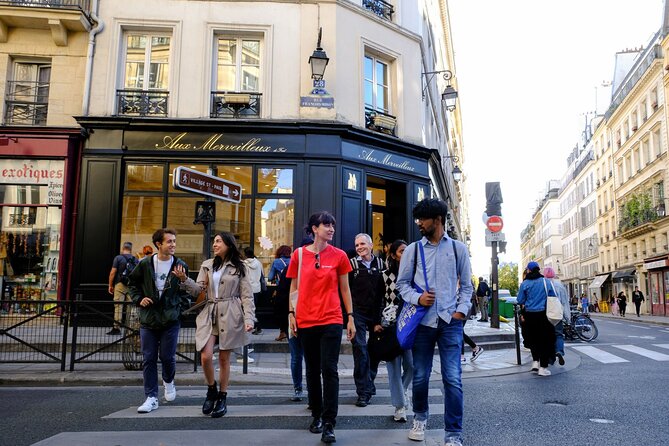
Here comes the heart of the tour’s food-and-culture balance. You fuel up with the included sweet treat: a delicious meringue called a merveille. This is a classic French late-afternoon snacking moment, a gouter, and the timing matters.
A gouter is not just dessert. It is how Parisians live in the afternoon. You feel it on this tour because you are literally moving through the neighborhood while taking a small break to reset your energy.
If you have strong preferences, you should know the tour can cater to vegetarians. The tour also lists dietary flexibility for this category, which is useful for planning.
Rue des Rosiers: Jewish quarter energy and snack-shop cues
After Saint-Gervais, the walk shifts to La Rue des Rosiers, the heart of the Jewish community. This is a pedestrian street with food options, and it gives you that street-life Paris experience that no guide can truly replace once you have left.
You are not just walking past it either. You get around 15 minutes here, enough to take in:
- Falafel stands and casual eats
- Jewish-influenced delis and bakeries
- The bustle of a neighborhood that is alive, not staged
This is also a smart place to start planning your next meal. Even when the tour’s included items are light, the guide’s tips can steer you toward what to try after the walk.
Place des Vosges: Paris’s oldest classic square
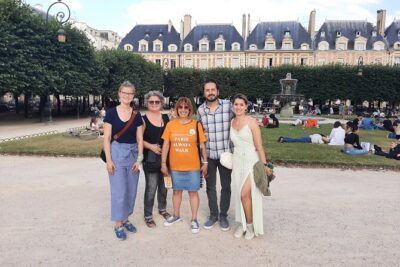
Then you reach Place des Vosges, one of Paris’s oldest and most beautiful squares. The tour gives you about 15 minutes, which is enough for a first look and a short guided moment about what makes it special.
It is a good stop because it slows you down. Squares like this let you breathe, stand still, and actually take in the building rhythm. You also learn where Victor Hugo fits into the story, which helps you see more than just symmetry and benches.
Finishing near Place de la Bastille: your next steps get easy
The tour ends with a short walk to Place de la Bastille. This is former prison ground tied to July 14, 1789, a trigger point for the French Revolution. It is history with a big echo in the present, because the surrounding area is full of bars and restaurants.
In practice, this matters for you. You do not finish in the middle of nowhere. You finish near an area where it is easy to grab dinner and keep exploring without hunting down transit plans.
What makes the guides stand out on this tour
Guides make or break a walking tour, and this one has a track record of guides who can balance storytelling and pacing. Names that show up again and again include Benoit, Paloma, Linda, Camille, Cecilia, Sarah, and Vivien.
What you should look for in the way the best guides lead this walk:
- They keep the history understandable, not like a lecture
- They connect details to what you can see in front of you
- They offer practical food and route tips so your afternoon does not end when the tour ends
If you get a guide like Benoit, for example, you should expect a focus on the way medieval Paris still shows in the neighborhood layout. If you get someone like Linda, you are likely to get a blend of architecture plus easy humor and helpful next-stop suggestions.
Value and pricing: is $55.87 worth it?
At $55.87 per person for about 2 hours, the value comes from three places. First, you get a local English-speaking guide and a structured route through Le Marais that you might struggle to assemble on your own without losing time. Second, you get the included sweet pastry that makes the afternoon feel like a true French rhythm, not just a sightseeing walk. Third, several key stops use free admission, so you are paying mainly for guidance and access to context, not entrance tickets.
Also, the tour runs with a maximum of 12 travelers. That small-group feel is part of the price justification. It is why the tour can feel personal, especially if you want to ask a question or two while you walk.
Who should book this tour
This is a strong fit if:
- You want the Marais story beyond the main tourist lanes
- You like guided walking tours with short stops and context
- You enjoy French afternoon snacks and small local tastings
- You want an afternoon plan that ends in a great area for dinner
It might not be your best match if:
- You hate fast pacing and want long stays at fewer sites
- You are expecting a heavy food tour with multiple full tastings
- You want a slow, museum-style deep dive into one single monument
What to do before and after the tour
Before you go, do two small things:
- Plan comfy walking shoes for streets and crossings
- Look at a map once so you understand where you’ll start near Rue Saint-Martin and finish around Place des Vosges and/or Bastille
After the tour, use the guide’s tips to steer your next hour or two. If you want more medieval feel, go looking for nearby side streets that feel less commercial. If you want modern Paris energy, Centre Pompidou is close enough to revisit later once you have the neighborhood context.
Should you book Hidden Paris: Medieval Marais?
I think you should book it if you want a clean, efficient way to understand Le Marais without spending your whole afternoon trapped in the obvious highlights. The combination of medieval neighborhood focus, a proper gouter sweet treat, and a finish near Bastille is a practical win.
Skip it only if you prefer slow time in one site, or if you want a food-heavy itinerary. This walk is first about place and story, with the pastry stop acting as a delicious pause in the middle.
If you want to make it even better, ask your guide how they recommend you continue the route after you finish. That one question often turns a good afternoon into a memorable one.
Everything Else Filed Under Paris
- Paris: Louvre Guided Tour with Reserved Access & Boat Cruise
★ 4.3 · 16,353 reviews - Paris: Big Bus Hop-On Hop-Off Tour with Optional Cruise
★ 4.4 · 13,279 reviews - Louvre Museum Masterpieces Guided Tour with Access
★ 4.5 · 12,023 reviews - Versailles: Skip-the-Line Tour of Palace with Gardens Access
★ 4.7 · 9,778 reviews - Mona Lisa & Louvre Masterpieces Tour with Reserved Access
★ 4.6 · 6,812 reviews
The Whole Paris Shelf
- Paris: Louvre Museum Timed-Entrance Ticket
★ 4.6 · 71,977 reviews - Disneyland® Paris 1-Day Ticket
★ 4.6 · 49,412 reviews - Paris: Versailles Palace and Gardens Full Access Ticket
★ 4.6 · 41,579 reviews - Paris: Evening River Cruise with Music
★ 4.4 · 22,721 reviews - Paris: Eiffel Tower Entry Ticket with Optional Summit Access
★ 4.4 · 20,035 reviews
Latin Quarter and Marais, More Walks
- Award-Winning Paris French Bakery Experience — Le Marais, 4th Arr
★ 4.5 · 1,186 reviews - Paris Le Marais Food Tour With 10+ Tastings, Cheese, Wine & More
★ 5.0 · 985 reviews - Paris Le Marais District Original Food and Wine Tasting Tour
★ 4.5 · 880 reviews - Paris Bike Tour Hidden Secrets in the Latin Quarter & Le Marais neighborhoods
★ 5.0 · 766 reviews - Paris: Food and Wine Tasting Walking Tour in Le Marais
★ 4.9 · 446 reviews
The rest of the Paris write-ups
- Montmartre: Guided Tour for Kids and Families★ 4.9 · 57 reviews
- From Paris: Versailles Palace and Gardens Guided Day Trip★ 4.5 · 57 reviews
- Versailles Palace and Garden Tour with Paris Private Transfers★ 5.0 · 58 reviews
- Louvre Evening Escape – Avoid The Crowds! Semi-Private 6ppl Max★ 5.0 · 58 reviews
- Summit Eiffel Tower Audio Guide Tour with Unlimited Time Access★ 4.5 · 58 reviews
- Private Half Day Historic Tour★ 5.0 · 58 reviews
Latin Quarter & Le Marais Walks, in full.
 ★ 4.5Award-Winning Paris French Bakery Experience — Le Marais, 4th ArrFrom $1141,186 reviews
 ★ 5.0Paris Le Marais Food Tour With 10+ Tastings, Cheese, Wine & MoreFrom $102985 reviews
 ★ 4.5Paris Le Marais District Original Food and Wine Tasting TourFrom $157880 reviews
 ★ 5.0Paris Bike Tour Hidden Secrets in the Latin Quarter & Le Marais neighborhoodsFrom $54766 reviews
 ★ 4.9Paris: Food and Wine Tasting Walking Tour in Le MaraisFrom $113446 reviews
 ★ 4.5Paris Latin Quarter Pub Crawl Bars and ClubsFrom $30394 reviews
 ★ 5.0Le Marais District & Jewish Quarter Guided Walking Tour 12ppl MaxFrom $59361 reviews
 ★ 5.0Le Marais/Paris – The Historic, Trendy, Jewish, LGBT districtFrom $48341 reviews
Also on these France lists