
Reviewed · WALKING TOURS
Paris by Night Walking Tour: Ghosts, Mysteries and Legends
Paris at night turns dark fast. This 2-hour walk starts near Pont Neuf and uses real streets and sites to tell chilling stories, from the French Revolution to the Paris Commune and even Nazi occupation. I like that it stays small, with a local guide keeping you moving and explaining what you’re seeing, not just reading off a brochure.
I also like the way the route anchors big names to specific places, especially the stop at the Conciergerie and its link to Marie Antoinette’s imprisonment. One drawback to keep in mind is that the tour can feel more like a dark history stroll than a true ghost-and-mystery scare show, depending on what you’re hoping for.
In This Review
- Key Things To Know Before You Go
- A Night Walk Through Paris’s Real Dark Corners
- Price and Time: How Much Value You Get for $18.10
- Where the Tour Starts and How the Route Flows at Night
- The Square du Vert-Galant: When Romance Meets Fire
- Eglise St-Germain l’Auxerrois: St. Bartholomew’s Day Massacre
- Conciergerie and Marie Antoinette: Prison Instead of Pageantry
- Île de la Cité: The Center Where Power and Fear Converge
- Palais de Justice: Trials, Torture, and the Guillotine Era
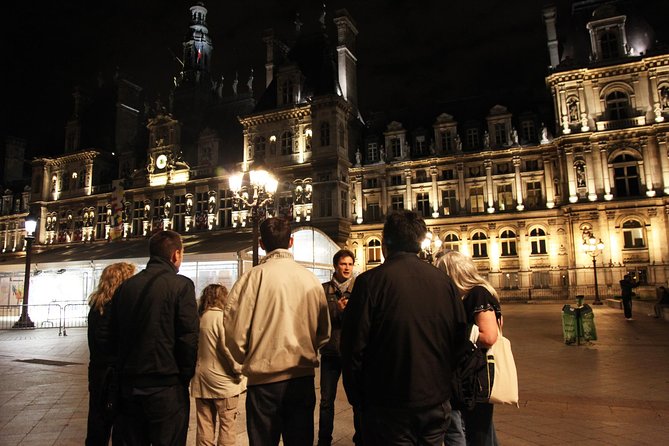
- Place de l’Hôtel de Ville: The End Point Built on Executions
- What This Tour Gets Right About Ghosts and Legends
- A Reality Check: Not Every Version Hits the Spooky Level
- Guides, Pace, and the Question-and-Answer Moment
- Comfort Tips That Make the Difference
- Accuracy Concerns: How to Think About Historical Storytelling
- Who This Tour Is For (and Who Might Skip It)
- Should You Book This Paris By Night Tour?
- FAQ
- How long is the Paris by Night walking tour?
- Where does the tour start and end?
- Is the tour offered in English?
- How large are the groups?
- What kind of stories and history are covered?
- Is it really a ghost tour?
Key Things To Know Before You Go
- Small-group feel: maximum of 20 people, so questions are actually possible.
- A night-focused route: you’ll walk after dark, which changes how Paris feels as you hear stories about murder, war, and plague.
- Marie Antoinette’s prison stop: the itinerary includes the Conciergerie, tied to her incarceration.
- Streets as a timeline: you go from Revolution-era justice to executions at Hôtel de Ville, with extra stops that other tours often miss.
- Short, packed stops: many locations are listed as free to pass by, and you only get brief moments at each.
- Comfort matters: you’ll cover about 10,000 steps at a relaxed pace, so comfy shoes help a lot.
A Night Walk Through Paris’s Real Dark Corners
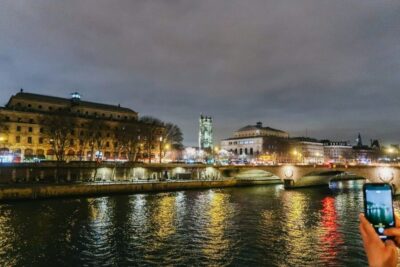
This tour is built around one idea: Paris looks romantic on postcards, but its past includes brutal violence and political terror. At night, that contrast hits harder. You meet in central Paris and follow your guide through a sequence of places tied to executions, religious massacres, and famous prisoners.
What makes this different from most “ghost tours” is the mix. The content leans toward legends and lesser-known episodes, but it also treats Paris like a living archive. You’re meant to connect names to streets, and streets to what happened there.
Guides are a big part of the payoff. Multiple guides are praised by name, including Sophia, Thelma, Daniel, Emmy, Ami, Sylvia, and Kritika. The pattern is consistent: clear storytelling, friendly answers, and a pace that keeps the group together.
Other after-dark story walks
Price and Time: How Much Value You Get for $18.10
At about $18.10 per person for roughly 2 hours, this is priced like a “quick hit” rather than a long excursion. That matters in Paris, where you can easily burn half a day on big-ticket sights. Here, you’re buying time-efficient context and atmosphere.
You should also consider the walking math. One review notes about 10,000 steps, which is not extreme, but it is enough to make evening legs tired if you’ve already had a busy day. If you want something after a packed itinerary, this can fit well because it’s short.
You’ll be walking between stops rather than spending lots of time inside museums. So if you’re the type who wants long, quiet contemplation, you may feel it’s a bit fast. If you like your history in story form while you stroll, that’s the sweet spot.
Where the Tour Starts and How the Route Flows at Night
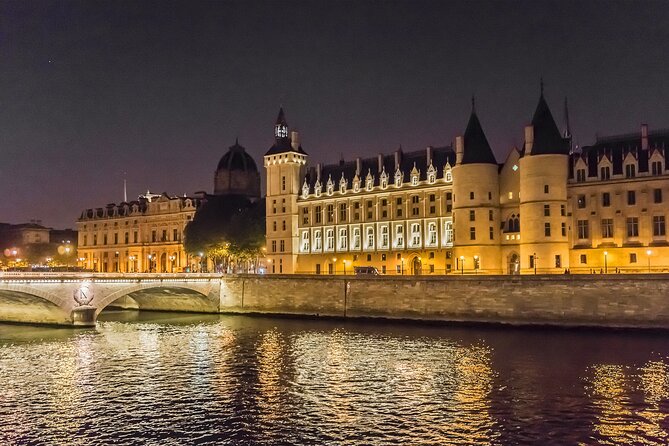
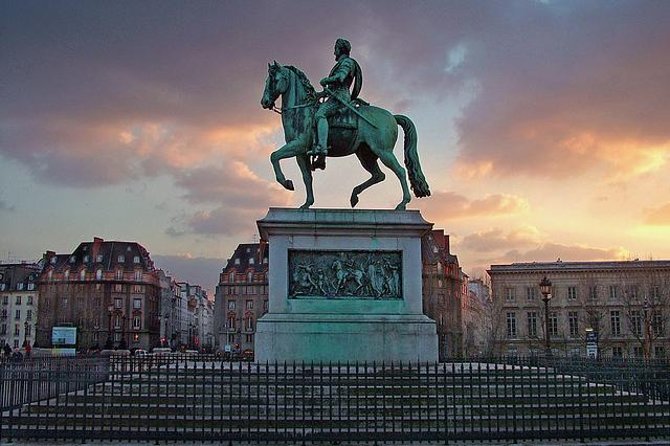
The start point is the Equestrian Statue of Henri IV at 15 Pl. du Pont Neuf, 75001 Paris. Ending point is Hotel La Ville, 70 Rue de Rivoli, 75004 Paris, near Place de l’Hôtel de Ville. The meeting area is very central, and the tour is listed as near public transportation.
The route is set up like a loop. You begin close to Île de la Cité and then move through key nearby sites tied to justice and punishment. You also hit smaller, less-touristy stops that act like “chapters” between the bigger landmarks.
And yes, it’s night. That changes the feeling of places like old churches and judicial buildings. It also means you’ll want to keep your head up when crossing streets and moving at pace, because the focus is storytelling, not sightseeing selfies.
The Square du Vert-Galant: When Romance Meets Fire
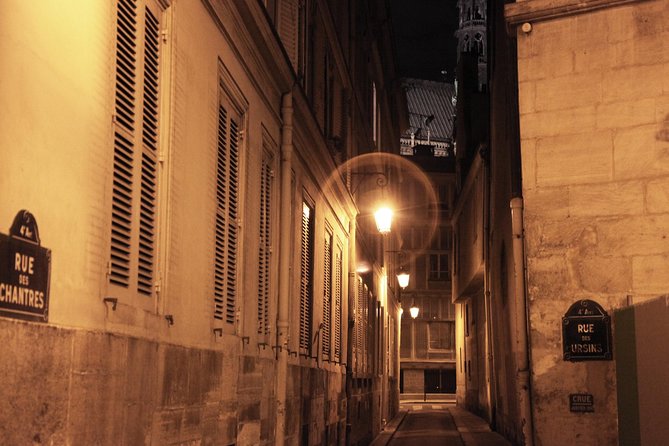
One stop is Square du Vert-Galant, a green space associated with Henry IV and his mistresses. It’s also described as an ecological green space, which makes the setting feel peaceful. But your guide uses that calm as a contrast.
The darker story tied here is the burning at the stake of the last Knights Templar. It’s the kind of connection that makes the tour feel like more than just famous names. You see a place you might otherwise treat as scenery, then hear how it connects to a real moment of violence.
This stop is short, about 5 minutes, and it’s listed as free. So don’t expect a long explanation on the grass. The payoff is more about the shock of switching from pretty views to grim history in under an hour of walking.
Eglise St-Germain l’Auxerrois: St. Bartholomew’s Day Massacre
Another stop is Eglise St-Germain l’Auxerrois, a church with roots reaching back to the 7th century. The story attached here is one of the most infamous religious events in France, the St. Bartholomew’s Day Massacre of 1572.
Your guide’s focus is on how and why around 30,000 Huguenots were killed during that period. This isn’t a light topic, and it’s not presented like spooky fun. It’s presented as a historical event with human consequences.
If you prefer your horror supernatural, this is a reminder that the tour often chooses historical brutality over ghostly theatrics. Still, hearing it tied to a real church you can point to helps the story land.
Conciergerie and Marie Antoinette: Prison Instead of Pageantry
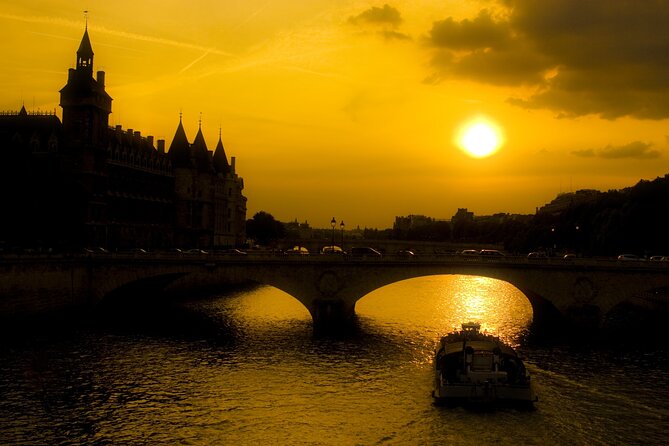
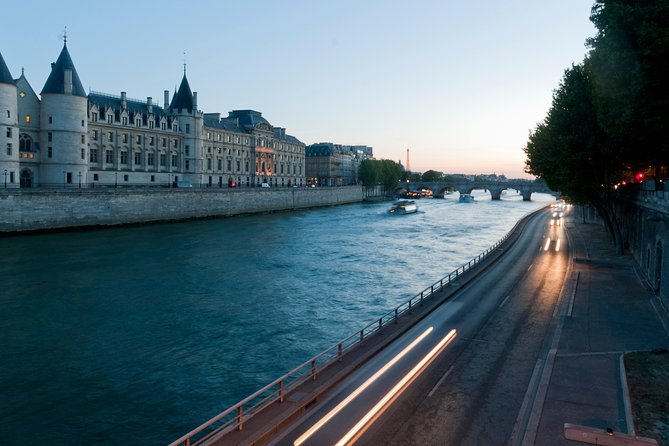
The itinerary includes the Hotel de Concierge, which is the Conciergerie complex associated with Marie Antoinette’s imprisonment. This is one of the standout segments in the tour description because the prisoner links are so iconic.
Why it works: it turns a famous name into a tangible location. Instead of saying Marie Antoinette as a symbol, you’re learning about her while standing near the building linked to her time there.
In the reviews, this kind of stop gets extra credit. People highlight that the guide makes you see Paris’s power structures and punishment systems, not just the pretty façade. If you’ve read about the Revolution before but want it grounded in the city itself, this is where the tour delivers.
More Paris walks on the list
- Paris Top Sights Half Day Walking Tour with a Fun Guide
★ 5.0 · 2,893 reviews - Montmartre Hidden Gems and Scenic Highlights Walking Tour
★ 5.0 · 2,684 reviews - Montmartre Hill French Gourmet Food and Wine Tasting Walking Tour
★ 5.0 · 2,588 reviews - Paris: Montmartre Cheese, Wine & Pastry Guided Walking Tour
★ 4.8 · 2,255 reviews - Paris in a Day: Louvre or Orsay, Eiffel Tower, City Walk & Cruise
★ 5.0 · 1,956 reviews
Île de la Cité: The Center Where Power and Fear Converge
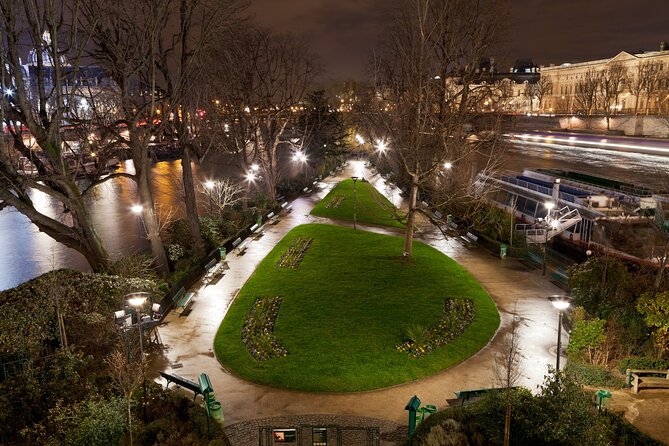
The tour passes by Île de la Cité, the island in the Seine that sits in central Paris. You’ll learn that it was the site of a Roman governor’s fortress back in the 4th century.
This isn’t a “ghost story” moment. It’s a perspective move. It reminds you that Paris has been a seat of authority for centuries, so violence and trials are not random plot points. They’re part of a long pattern.
Even if you’ve visited the area before, hearing it tied to the tour’s darker theme can change how you see familiar streets.
Palais de Justice: Trials, Torture, and the Guillotine Era
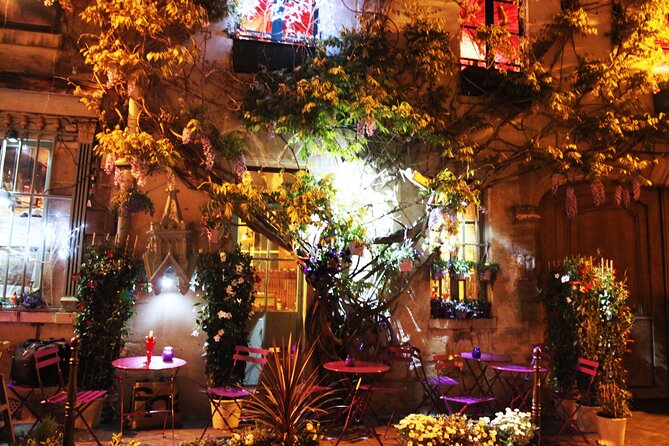
The Palais de Justice de Paris is one of the itinerary anchors. Your guide explains that this is where people were judged guilty during the French Revolution and sentenced to the guillotine, including royals and revolutionaries.
The description also points to how public punishment worked, including torture in front of audiences. That detail matters. It explains why Paris’s darkest periods feel so theatrical and public, not private.
There’s also mention that the Palais de Justice had major artistic recognition in its era, which adds a layer of contrast. You’re standing in a place tied to beauty and justice, while hearing about punishment as spectacle. That tension is a big reason this tour holds attention, especially in the evening when the streets feel more serious.
Place de l’Hôtel de Ville: The End Point Built on Executions
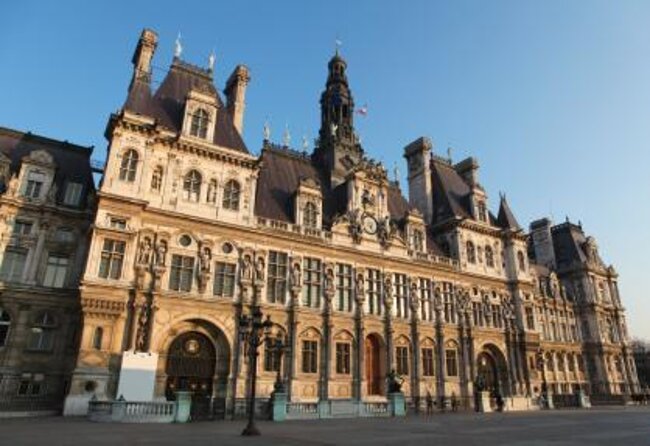
The tour ends near Place de l’Hôtel de Ville. This square is described as a place used for municipal celebrations like births and royal family events, but also a place for major executions from 1310 to 1830.
The itinerary specifically includes executions tied to Ravaillac and La Brinvilliers. Your guide uses this final location to close the loop of the story arc, taking you from revolutionary justice and religious violence toward the long timeline of execution in Paris.
This is a good ending zone because you’re finishing in a central area where it’s easy to keep exploring on your own. You can also use the final stop as a launching point for a later night snack or a calmer walk back along the Seine.
What This Tour Gets Right About Ghosts and Legends
Here’s the honest picture. The title calls it Ghosts, Mysteries and Legends, but the tour content described is heavily grounded in historical terror: wars, plagues, murder, torture, and executions. Some guides lean more legend-forward, and some groups want more supernatural mood.
The best reviewed versions of the experience are the ones where the guide brings story energy. Reviews praise guides like Sophia for tying locations together and making the walking loop feel connected. Other good marks go to guides who keep pace at night and clearly answer questions.
So how should you expect it? Think of it like this: you’re not signing up for a jump-scare script. You’re signing up for Paris as a place that still feels haunted because of what happened there. That approach works if you like dark storytelling even when it stays factual.
A Reality Check: Not Every Version Hits the Spooky Level
Some reviews complain that it’s not spooky enough. The criticisms are consistent: not enough ghost or mystery content, more “gory history facts,” and occasional confusion about why certain places appear on the route.
One reviewer specifically said they left after about an hour because it did not match expectations. Another pointed out that the description sounded more supernatural than what they received. This matters because the title sets a certain emotional promise.
I’d treat the tour as a dark history walk with legends as seasoning. If you want real paranormal vibes, you might end up wanting more atmosphere and less courtroom detail. If you’re happy with dark episodes told well, the experience tends to land.
Guides, Pace, and the Question-and-Answer Moment
The group stays small, and that’s a real advantage for two reasons. First, it can keep the tour from becoming a long single-person monologue. Second, it gives you a chance to ask “why” questions that turn facts into understanding.
That said, engagement can vary by guide and by group energy. A couple of reviews mention the guide talking to the group rather than interacting much, and some mention long stretches of walking between points. Another mentions feeling the pace was fast.
Your best move is simple: ask at least one question early, ideally at the first or second stop. If your guide is the type who takes questions, you’ll feel it right away. If they stick mostly to narration, you can still get value by paying attention to how they link one place to the next.
Bring patience for the walking. This isn’t a trolley tour where you stop every ten steps. You’ll move, listen, and then get brief moments at each site.
Comfort Tips That Make the Difference
Wear comfortable shoes. The walk is roughly two hours and around 10,000 steps for at least one group. Even if the pace feels casual, you’ll feel it if you’ve already done a lot of daytime walking.
Also plan your energy. This is an evening tour, so keep it in mind if you’re coming off a long museum session. A short night outing can be great, but only if you’re not already exhausted.
Bring a small water bottle if it’s a warm evening. The itinerary doesn’t mention refreshments, and you’ll want to avoid the “halfway dry” feeling.
Accuracy Concerns: How to Think About Historical Storytelling
One of the roughest critiques came from an academic who raised concerns about historical accuracy, estimating a large portion of the material was wrong or at least inaccurate. That review also gave specific examples, including details about Catherine de Medici, Henri IV, and events tied to the Templars.
I can’t verify those claims here. What I can say is that, with story-based tours, you can encounter interpretation and mistakes. If you’re a serious history person, approach this as a guided narrative that may need fact-checking, especially around dates and famous figures.
The good news is that even with imperfect accuracy, the tour’s real value is the location awareness. You come away knowing which buildings and squares held trials, prisons, and public punishment, and that can lead you to check deeper on your own afterward.
Who This Tour Is For (and Who Might Skip It)
I think this works best for first-timers or anyone who wants a quick way to understand Paris through its darker turning points. It’s also strong if you enjoy history told as stories, not as textbook timelines.
It may not be ideal if you already know lots of French history, because some reviewers said they didn’t learn much new. It may also disappoint you if you specifically want ghostly atmosphere over executions and massacres.
If you love the macabre but still like structure, choose it. If you’re chasing chills, read the title carefully and adjust expectations. You’ll probably get more “Paris as a haunted court of history” than “real ghosts on street corners.”
Should You Book This Paris By Night Tour?
Book it if you want a short, small-group evening that shows Paris through its crueler chapters, with guides who can tell gripping stories and keep you moving through real places like the Conciergerie, Palais de Justice, and Hôtel de Ville.
Consider skipping or switching to a more purely supernatural tour if you want ghost effects and mystery theatrics first, history second. Also consider skipping if you know you’re sensitive to heavy topics like murder, massacres, executions, and torture.
If you do book, do it for the right reason: Paris at night is already atmospheric. This tour adds context, names, and locations to that mood, and that combination is hard to beat for the price and time.
FAQ
How long is the Paris by Night walking tour?
It runs for about 2 hours.
Where does the tour start and end?
It starts at the Equestrian Statue of Henri IV, 15 Pl. du Pont Neuf, 75001 Paris, and ends near Hotel La Ville, 70 Rue de Rivoli, 75004 Paris.
Is the tour offered in English?
Yes, it is offered in English.
How large are the groups?
The tour lists a maximum of 20 travelers, and it is described as groups of 20 people or less.
What kind of stories and history are covered?
The tour focuses on darker parts of Paris’s past, including murder, wars, plagues, the French Revolution, the Paris Commune, and Nazi occupation. It also highlights places connected to Marie Antoinette’s imprisonment, the Knights Templar, the St. Bartholomew’s Day Massacre, and guillotine-era justice.
Is it really a ghost tour?
It is marketed as Ghosts, Mysteries and Legends, but the described content heavily emphasizes historical events and execution sites. If you want supernatural spookiness above all else, you may find it more history-focused than you expected.
Everything Else Filed Under Paris
- Paris: Louvre Guided Tour with Reserved Access & Boat Cruise
★ 4.3 · 16,353 reviews - Paris: Big Bus Hop-On Hop-Off Tour with Optional Cruise
★ 4.4 · 13,279 reviews - Louvre Museum Masterpieces Guided Tour with Access
★ 4.5 · 12,023 reviews - Versailles: Skip-the-Line Tour of Palace with Gardens Access
★ 4.7 · 9,778 reviews - Mona Lisa & Louvre Masterpieces Tour with Reserved Access
★ 4.6 · 6,812 reviews
The Whole Paris Shelf
- Paris: Louvre Museum Timed-Entrance Ticket
★ 4.6 · 71,977 reviews - Disneyland® Paris 1-Day Ticket
★ 4.6 · 49,412 reviews - Paris: Versailles Palace and Gardens Full Access Ticket
★ 4.6 · 41,579 reviews - Paris: Evening River Cruise with Music
★ 4.4 · 22,721 reviews - Paris: Eiffel Tower Entry Ticket with Optional Summit Access
★ 4.4 · 20,035 reviews
More Story Walks After Dark
- Paris: Haunted Père Lachaise Cemetery Guided Tour
★ 4.6 · 3,591 reviews - Paris: Dark History and Ghostly Guided Walking Tour
★ 4.7 · 1,000 reviews - Paris: Haunted Père Lachaise Cemetery Guided Tour
★ 4.5 · 344 reviews
The rest of the Paris write-ups
- Montmartre: Guided Tour for Kids and Families★ 4.9 · 57 reviews
- From Paris: Versailles Palace and Gardens Guided Day Trip★ 4.5 · 57 reviews
- Versailles Palace and Garden Tour with Paris Private Transfers★ 5.0 · 58 reviews
- Louvre Evening Escape – Avoid The Crowds! Semi-Private 6ppl Max★ 5.0 · 58 reviews
- Summit Eiffel Tower Audio Guide Tour with Unlimited Time Access★ 4.5 · 58 reviews
- Private Half Day Historic Tour★ 5.0 · 58 reviews
Walking Tours, in full.
 ★ 5.0Paris Top Sights Half Day Walking Tour with a Fun GuideFrom $762,893 reviews
 ★ 5.0Montmartre Hidden Gems and Scenic Highlights Walking TourFrom $382,684 reviews
 ★ 5.0Montmartre Hill French Gourmet Food and Wine Tasting Walking TourFrom $1452,588 reviews
 ★ 5.0Paris Île de la Cité and Notre-Dame Walking Tour With CryptFrom $482,272 reviews
 ★ 4.8Paris: Montmartre Cheese, Wine & Pastry Guided Walking TourFrom $1272,255 reviews
 ★ 5.0Paris in a Day: Louvre or Orsay, Eiffel Tower, City Walk & CruiseFrom $1571,956 reviews
 ★ 4.9Paris: Montmartre Highlights Walking Tour with a Local GuideFrom $341,668 reviews
 ★ 5.0Paris City Center Free Walking Tour (Tip-Based)From $31,340 reviews
Also on these France lists