
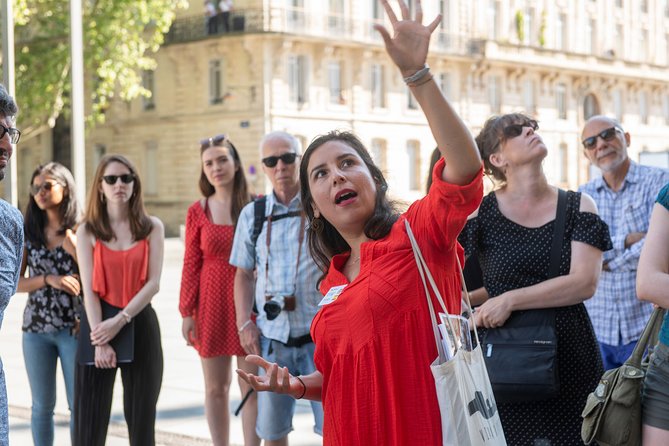
Reviewed · WALKING TOURS
2-Hour Walking Tour of the City’s Iconic Sights and History
Two hours, and Bordeaux clicks into place. This walking tour strings together the city’s big visual landmarks with clear context, so you can understand why Bordeaux looks the way it does, and what it has been through.
I like the route logic: you walk the classic core in a tight loop, hitting set-piece views like the Monument aux Girondins, Place de la Comédie, and the riverfront squares without feeling rushed. I also love that the tour is led by a licensed local guide, with commentary in English and French, plus a mobile ticket that keeps things simple.
One thing to watch: the language split can be uneven. Several reviews mention moments where French takes over, or bilingual delivery slows the pace, so if you’re strongly English-only, bring patience and be ready to use the provided audio devices if they’re issued.
In This Review
- Quick hits: Bordeaux’s iconic stops, in the right order
- Starting at the Tourist Office: what sets the tone for the walk
- Monument aux Girondins: the Revolution told in stone and bronze
- Allées de Tourny: reading 18th-century Bordeaux while you stroll
- Église Notre-Dame de Bordeaux: the Baroque details you can actually see
- Place de la Comédie and the Grand-Théâtre: a façade built for attention
- Place du Parlement: a smaller square that still adds context
- Place de la Bourse and the riverfront: finishing at the mirror and the water
- The guide experience: why language balance can make or break it
- Price and value: $17.37 for a compact city education
- Timing, walking pace, and what to expect day-of
- Who this tour fits best
- Should you book this Bordeaux iconic sights walking tour?
- FAQ
- How long is the walking tour?
- Is the tour offered in English?
- Where do I meet the guide?
- What is included in the price?
- Do I need to bring anything?
- Can I get a refund if I cancel?
Quick hits: Bordeaux’s iconic stops, in the right order
- Monument aux Girondins: a tall, dramatic column with sculptural details tied directly to the French Revolution
- Allées de Tourny: an elegant promenade that helps you read Bordeaux’s 18th-century style fast
- Église Notre-Dame de Bordeaux: Baroque exterior and a vaulted interior that’s worth slowing down for
- Place de la Comédie and the Grand-Théâtre: neoclassical grandeur and a façade you will want to photograph twice
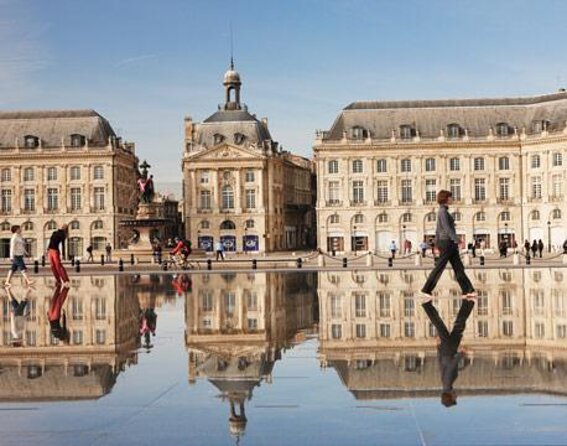
- Place de la Bourse and the Miroir d’eau: one of the city’s most recognizable riverfront scenes
Starting at the Tourist Office: what sets the tone for the walk
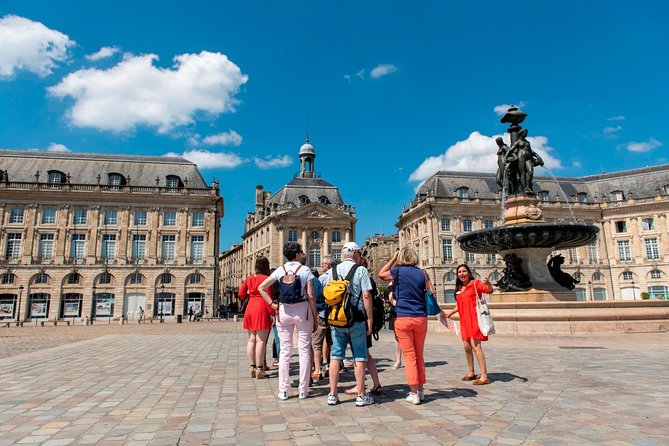
Your tour begins at the Office de Tourisme et des Congrès de Bordeaux Métropole on Cr du 30 Juillet. The planned start time is 10:30 am, and it’s near public transportation, which matters if you’re trying to build a smooth day around it.
This is a 2-hour walk, and you need to be comfortable walking for the full duration. You’ll also want to bring your own mask, since it’s required. Group size is capped at 25, and there’s a minimum of 5 for the tour to run, so it’s designed to be manageable rather than a huge crowd.
In practice, the experience depends a lot on the guide. Some are hilarious, some are very calm and structured, but the best ones do the same thing: they help you notice details while you’re still moving. If you like architecture and short, clear historical links, you’ll feel like you’re getting value every few minutes.
More Bordeaux walks on the list
Monument aux Girondins: the Revolution told in stone and bronze
The first major stop is the Monument aux Girondins at Place des Quinconces. This is not a small statue moment. It’s a soaring column with dramatic fountains and bronze sculptures, built as a tribute connected to the Girondists, 18th-century deputies executed in 1793 for their counter-revolutionary role.
The top of the column includes a winged Statue of Liberty motif, so don’t rush past the base. If you crane your neck, you get the payoff: it’s easy to understand this monument as a symbol, not just a pretty landmark.
I also like that the guide ties the monument to broader Bordeaux storylines. Even when the tour language toggles between English and French, this is the kind of subject where a good guide makes the topic click. It helps you read later sites with better context, especially when you reach squares tied to prosperity and civic identity.
Allées de Tourny: reading 18th-century Bordeaux while you stroll
Next comes the Allées de Tourny. This stop is shorter, but it’s a smart one. It gives you a visual lesson in what Bordeaux’s money, taste, and urban design looked like in the 1700s.
You’ll walk through a promenade area lined with elegant architecture and stop at a spot that works as a breather between bigger monuments. If you’ve ever felt lost in a city where everything is beautiful but you do not know what you are seeing, this kind of stop is useful. It teaches your eyes what to look for.
Some guides add extra color here, and you may hear tips about seasonal events like the Christmas market. Even if you visit outside those times, the sense of place is still there. Think of it as the city’s style on display, without needing a museum ticket.
Église Notre-Dame de Bordeaux: the Baroque details you can actually see
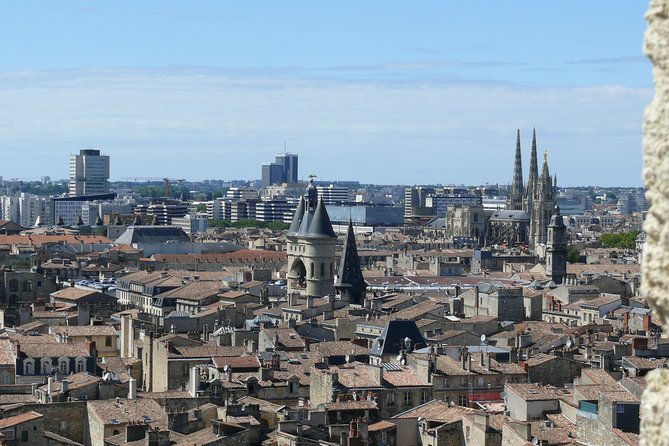
Then you’ll head to the Église Notre-Dame de Bordeaux. This church is described as Baroque, and that shows on the façade first, with rich sculptural detail. The real win is the interior, where the vaulted space creates a strong sense of height and structure.
Because this is a walking tour, you likely won’t spend long here. That said, it’s a great stop to reset your focus. You get a change of pace from fountains and civic monuments, and you start noticing how Bordeaux blends religion and public life in the same urban fabric.
If your guide is very strong in both languages, you’ll also get more of the “why it looks like this” explanation, which is where the church becomes more than a quick photo stop.
Place de la Comédie and the Grand-Théâtre: a façade built for attention
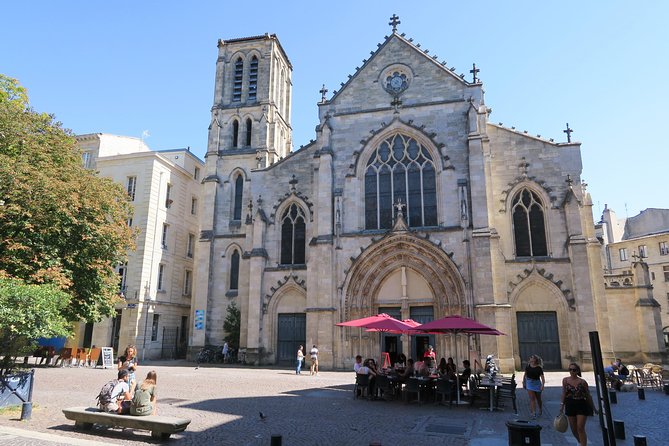
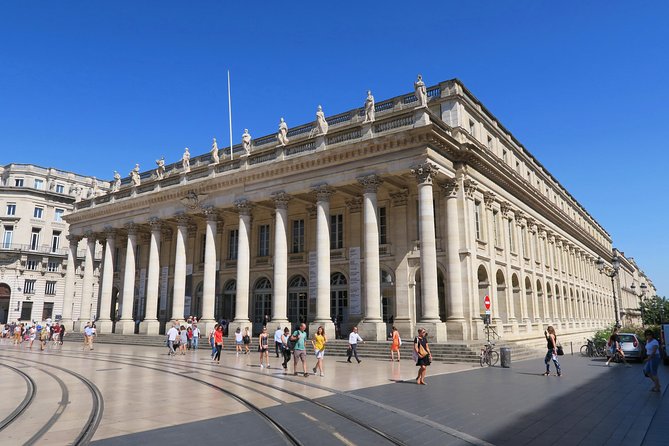
Place de la Comédie is the lively heart of the tour. Dominating the square is the Grand Théâtre de Bordeaux, one of the city’s most iconic structures.
You’ll get photos outside the Grand Théâtre and hear how the theater was completed in 1780. The building is neoclassical, with a sweeping, columned portico that is practically made for dramatic angles. It also helps to understand that the theater was tied to Bordeaux’s emerging bourgeoisie and the city’s growing wealth at the time.
One practical note: this stop is visually popular. It can get busy, so be ready to take your photos quickly and keep an eye on the guide. If you’re with a guide who alternates English and French regularly, the pacing can slow slightly, but you’ll still benefit because this building is the type of landmark that rewards paying attention.
Also, some reviews mention guides who explained architectural details clearly and pointed out small features you might otherwise miss. If you’re the kind of person who likes to zoom in on stonework, columns, and symmetry, this is where the tour tends to shine.
Place du Parlement: a smaller square that still adds context
After the theater, you’ll move to Place du Parlement. This is not as famous as the big squares, but it’s a smart connector stop.
It gives you a different slice of old Bordeaux: historic architecture, charming cafés, and a lively square feel, all in a compact space. The value here is rhythm. It helps keep the walk from feeling like a nonstop rush from highlight to highlight.
If your guide is chatty and confident, this is also a good place to ask questions, especially about how Bordeaux’s civic power evolved. Some guides are generous with Q-and-A, while others speed you along. Either way, you’ll leave this stop with an easier time orienting yourself later.
More Bordeaux history on foot
- Bordeaux: Historic Center & Chartrons District Bike Tour
★ 4.8 · 709 reviews - Bordeaux: Top Landmarks & Historic Bike Tour
★ 4.9 · 346 reviews - Bordeaux’ Best Boulangeries & History Tour
★ 5.0 · 126 reviews - Bordeaux Historic and Gourmet Food Walking Tour
★ 4.5 · 82 reviews
Place de la Bourse and the riverfront: finishing at the mirror and the water
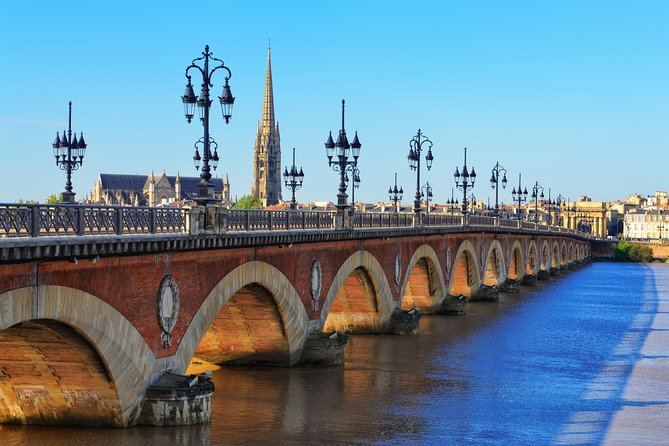
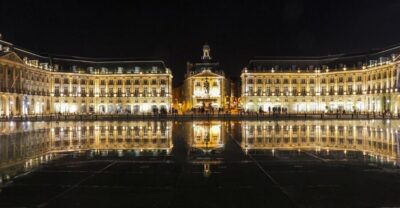
The final major stop is Place de la Bourse. This square is one of Bordeaux’s signature sights, facing the Garonne River. It’s known for classical architecture and the reflective magic of the Miroir d’eau.
You’ll also learn that the square was created by Ange-Jacques Gabriel, who was Louis XV’s chief architect, in the 18th century. That detail matters because it frames the square as intentional city design. This is not a random pretty corner. It was planned as a statement space tied to the Stock Exchange, or Bourse.
The fountains matter here too, especially the fountain of the three graces. Even if you only see it briefly, it’s the kind of element that makes the whole square feel cohesive, not piecemeal.
Tour ending notes can vary. The end point is listed as Place de la Bourse, but you’ll likely be given guidance on how to return to the Tourist Office. It’s worth asking the guide directly, especially if the finish timing shifts due to weather or group size.
The guide experience: why language balance can make or break it
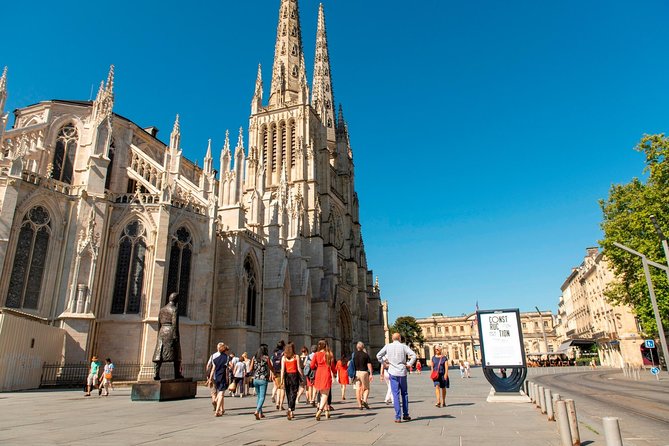
The tour is offered in English, and the commentary is bilingual in English and French. That sounds straightforward, but the delivery style can affect how much you catch.
A few patterns show up in real-world feedback. Some guides primarily speak French with short English summaries, which can leave English-only travelers feeling like they are missing details. Other guides alternate languages in a way that feels smoother. Some are praised for making the English clear and full, while others keep English brief or delayed.
There are also mentions of audio devices or earphones being used, with at least one case where they didn’t work at first. If you’re handed any audio equipment, test it early. Give it ten seconds. If it’s not working, raise your hand immediately so the group can fix it before you lose a big chunk of the 2 hours.
Name-check time: guides like Bruno, Christine, Hubert, Veronique, Jenny, Nicholas, Carol, and Brigette come up in feedback for being funny, engaging, and especially good at turning Bordeaux landmarks into story. The best matches are often the guides who switch between languages naturally and keep moving with purpose, not as a lecture that stops every sentence.
Price and value: $17.37 for a compact city education
At $17.37 per person for about 2 hours, this is priced like an entry-level orientation tour. The key question is what you get for the time.
You get a local professional licensed guide, a route through major landmarks, and commentary in English and French. For first-timers in Bordeaux, that combination can be a smart way to avoid wandering for half a day with no plan.
It also helps that the stops are iconic, not filler. Monument aux Girondins, the Grand Théâtre, Place de la Bourse, and the core squares are the kind of places you would otherwise seek out one by one. In a limited time window, this tour bundles them together and gives you the story context that turns photos into understanding.
The value drops a bit if your language needs are not handled well. If you are English-only and the guide leans heavily into French, your “education per minute” can feel lower than the price suggests. Still, the architecture and squares are strong enough that you will likely feel satisfied with what you see, even if some details slip by.
Timing, walking pace, and what to expect day-of
This is a 2-hour walking tour, so you should plan around comfort. You are moving through central Bordeaux on foot, with a route that can vary depending on weather and group size.
It’s also possible to feel the weather quickly. One review points out that it can be wet, which is believable near riverfront areas. Bring a light rain layer if the forecast looks uncertain, and wear shoes you trust.
Stops are short, which is normal for a tour that tries to cover several big sights. The upside is you see a lot in limited time. The downside is you do not get long museum-style pacing. If you want deep interior time or long cathedral-style wandering, you should treat this as a way to choose what to revisit after.
Who this tour fits best
This walking tour is best if you want:
- a fast, structured first look at Bordeaux’s top sights
- an easy way to learn what the buildings and monuments mean
- a guide to point out architectural details while you walk
It may not be ideal if you need a strictly English-only narrative with zero language mixing, or if you dislike tours that move quickly between photo stops.
Should you book this Bordeaux iconic sights walking tour?
Book it if you want a guided orientation that covers the city’s most recognizable landmarks in a clean 2-hour window. The payoff is high when the guide keeps English clear and uses the walk to connect each stop to the bigger Bordeaux story.
Consider skipping or pairing it with a self-guided plan if you know you will struggle with bilingual delivery. If language balance is a deal-breaker, check your own comfort level and be prepared to use any audio devices offered.
For most people doing Bordeaux for the first time, this is a solid way to get your bearings fast and to understand why the city’s grandeur shows up where you expect it, from the theater façade to the riverfront reflections.
FAQ
How long is the walking tour?
It runs for about 2 hours.
Is the tour offered in English?
Yes. The tour is offered in English, and the commentary is bilingual in English and French.
Where do I meet the guide?
You meet at the Office de Tourisme et des Congrès de Bordeaux Métropole, 12 Cr du 30 Juillet, 33000 Bordeaux, France.
What is included in the price?
The included item is a local professional licensed guide. Food and drinks are not included.
Do I need to bring anything?
You must bring your own mask. You also need to be able to walk during the full 2 hours.
Can I get a refund if I cancel?
Yes, you can cancel for a full refund if you cancel at least 24 hours in advance of the experience start time.
More Bordeaux Walks on the List
- Private – Best of Bordeaux Walking Tour + Glass of Bordeaux Wine
★ 5.0 · 240 reviews - Professional – Bordeaux Wine and Cheese Tasting with a walking tour
★ 5.0 · 218 reviews - Bordeaux City – Private Guided Walking Tour with Local Sophia
★ 5.0 · 164 reviews - Welcome to Bordeaux: Private Walking Tour with a Local
★ 4.4 · 116 reviews - Bordeaux Walking Tour with a Local Private Guide
★ 5.0 · 97 reviews
Everything Else Filed Under Bordeaux
- Saint Emilion Day Trip with Sightseeing Tour & Wine Tastings from Bordeaux
★ 5.0 · 1,120 reviews - From Bordeaux: St. Emilion Village Half-Day Wine Tour
★ 4.7 · 728 reviews - From Bordeaux: St-Emilion Day Tour with Tastings and Lunch
★ 4.9 · 714 reviews - Bordeaux: Historic Center & Chartrons District Bike Tour
★ 4.8 · 709 reviews - Saint-Emilion Electric Bike Day Tour with Wine Tastings & Lunch
★ 5.0 · 696 reviews
The Whole Bordeaux Shelf
- Bordeaux: Cité du Vin Entry Ticket and Wine Tasting
★ 4.6 · 3,885 reviews - Bordeaux: River Garonne Cruise with Glass of Wine and Canelé
★ 4.5 · 3,630 reviews - From Bordeaux: Afternoon Saint-Emilion Wine Tasting & snack
★ 4.8 · 1,581 reviews - Medoc or Saint Emilion Wine Tasting and Chateau from Bordeaux
★ 5.0 · 1,415 reviews - Saint Emilion Day Trip with Sightseeing Tour & Wine Tastings from Bordeaux
★ 5.0 · 1,120 reviews
The rest of the Bordeaux write-ups
- Bordeaux Historic and Gourmet Food Walking Tour★ 4.5 · 82 reviews
- Exclusive! Bordeaux: Nighttime Highlights Walking Tour★ 4.9 · 85 reviews
- Arcachon Bay Full Day Trip from Bordeaux with lunch and Pyla Dune★ 4.5 · 95 reviews
- Bordeaux Walking Tour with a Local Private Guide★ 5.0 · 97 reviews
- Bordeaux Wines Masterclass paired with cheeses & charcuterie★ 5.0 · 110 reviews
- Bordeaux: Garonne River Yacht Cruise with Brunch★ 4.5 · 112 reviews
Walking Tours, in full.
 ★ 5.0Paris Top Sights Half Day Walking Tour with a Fun GuideFrom $762,893 reviews
 ★ 5.0Montmartre Hidden Gems and Scenic Highlights Walking TourFrom $382,684 reviews
 ★ 5.0Montmartre Hill French Gourmet Food and Wine Tasting Walking TourFrom $1452,588 reviews
 ★ 5.0Paris Île de la Cité and Notre-Dame Walking Tour With CryptFrom $482,272 reviews
 ★ 4.8Paris: Montmartre Cheese, Wine & Pastry Guided Walking TourFrom $1272,255 reviews
 ★ 5.0Paris in a Day: Louvre or Orsay, Eiffel Tower, City Walk & CruiseFrom $1571,956 reviews
 ★ 4.9Paris: Montmartre Highlights Walking Tour with a Local GuideFrom $341,668 reviews
 ★ 5.0Paris City Center Free Walking Tour (Tip-Based)From $31,340 reviews
Also on these France lists