
Reviewed · WALKING TOURS
Historic Paris Walking Tour in English
Paris starts here, on foot. In 150 minutes and in English, this walking tour threads together the Louvre, Notre-Dame, Pont des Arts, and the Tuileries with a narrative that makes the city’s big eras feel logical. I especially like how the guide turns famous landmarks into real cause-and-effect history, not just a list of dates and facts.
I also like that the tour’s energy is human and varied. Guides such as Tom, Yazid, Harry, Francesca, Victoria, Thomas, Gurvan aka Jay, Dawie, Toto, and Tank show up in past sessions with the same goal: keep the group engaged with strong storytelling, clear explanations, and answers to questions. One drawback to plan for, you are outside most of the time, so bring layers and expect to walk in all conditions.
In This Review
- Key things you’ll notice on this Historic Paris walk
- Where the walk starts, and why Hotel de Ville is a smart anchor
- The $31 value question, and what you actually get for it
- Louvre stories: the palace, the museum, and why art theft became legend
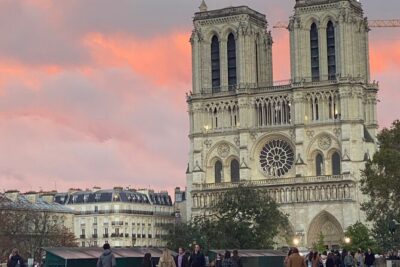
- Notre-Dame Cathedral: how the city’s symbolism hits in person
- Pont des Arts: a bridge stop that teaches you how Paris works
- Tuileries Gardens and the 19th-century Paris makeover
- Eiffel Tower, Sainte-Chapelle, and the big-picture route through central Paris
- Guides and storytelling style: what consistently earns the high marks
- Timing and group feel, what to expect in the real world
- What I would pack and plan if you want this to feel easy
- Who should book, and who might want a different Paris plan
- Should you book this Historic Paris Walking Tour?
- FAQ
- Where is the meeting point for the tour?
- How long is the Historic Paris Walking Tour?
- Is the tour offered in English?
- What is included in the price?
- Is hotel pickup or drop-off included?
- How does cancellation and pay later work?
Key things you’ll notice on this Historic Paris walk
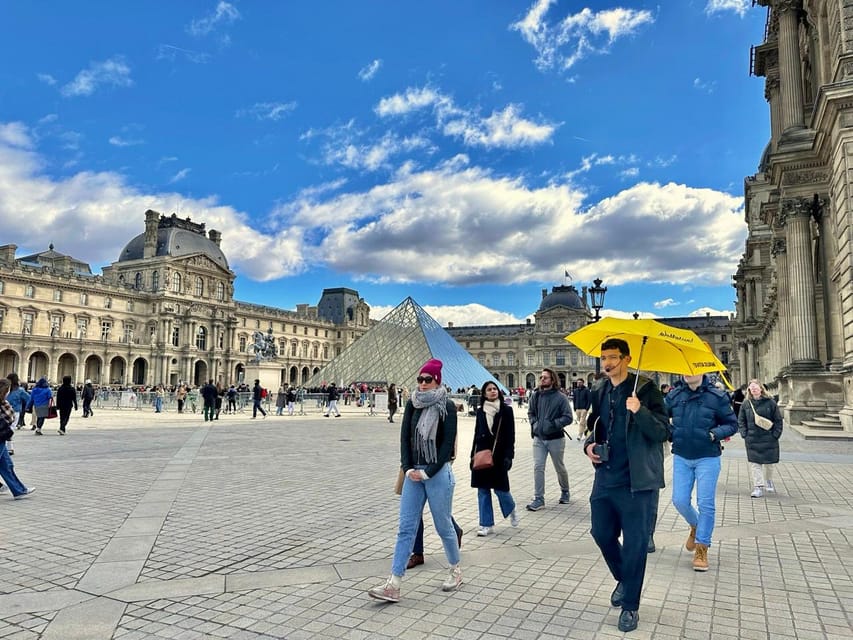
- Hotel de Ville start point makes it easy to anchor your Paris map fast, and you meet by the yellow umbrella
- Story-driven stops that connect the Louvre, Notre-Dame, and the Seine instead of treating them like separate attractions
- Pont des Arts views that help you understand why the river mattered for trade, power, and daily life
- Tuileries Gardens pacing that gives you breathing room after cathedral and palace scale
- Art theft and revolution stories like the Mona Lisa episode and Paris uprisings that shaped modern streets
- Guides who match your pace, with humor and questions welcomed for solo visitors and first-timers
Where the walk starts, and why Hotel de Ville is a smart anchor
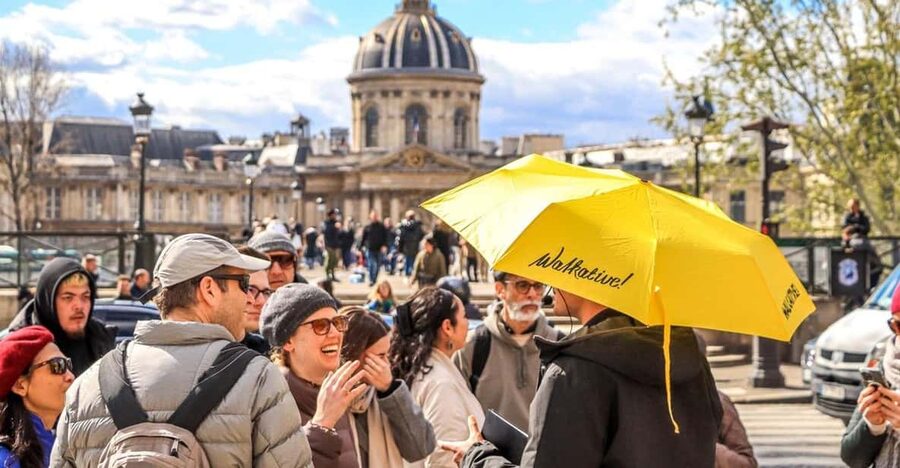
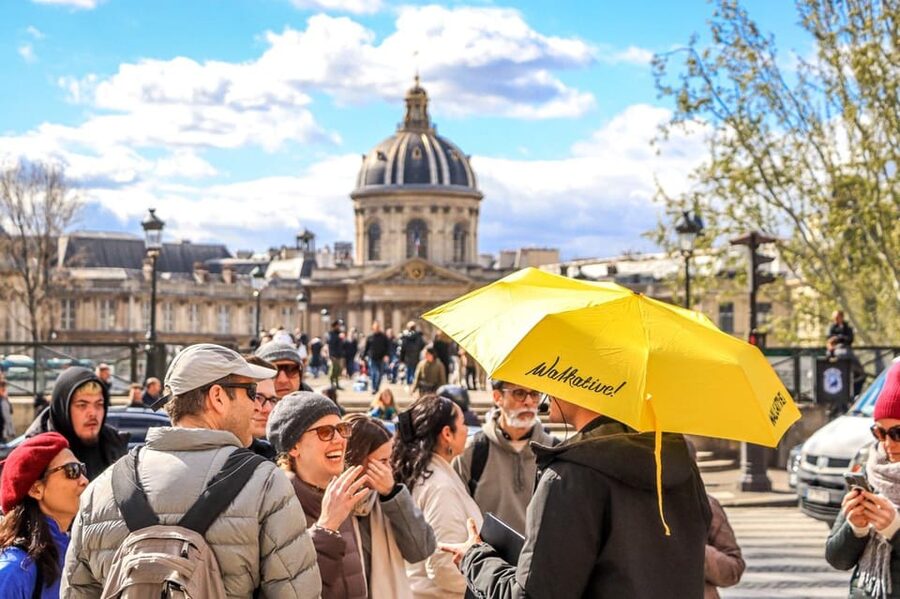
You meet at Hotel de Ville, outside the metro at exit 5. Look for the yellow umbrella, and aim to arrive about 10 minutes early so you’re not rushed when the group is formed. There is no hotel pickup or drop-off, so you will want to get yourself to the metro stop first, then settle in.
What I like about this meeting point is that it places you in a very “Paris map” spot. From here, you can start building a sense of how the Seine, the major bridges, and the grand boulevards link together. It also keeps the vibe practical. You are not starting in a far-off neighborhood, you are starting where you can walk onward and still feel close to the city’s core.
And since this is a walking tour with a tight 150-minute window, the “where” matters as much as the “what.” If your first day in Paris feels like a blur, this kind of start gives you a framework you can reuse later, when you are choosing what to see next.
More Paris walks on the list
The $31 value question, and what you actually get for it
This tour lists around $31 per person for about 150 minutes with an expert local guide and a carefully constructed narrative. That’s not just a bargain on paper, it can be good value because you are getting orientation plus context at the same time. You are seeing major landmarks you would likely want to visit anyway, and the guide helps you understand what you are looking at while you’re still close to it.
One key detail: booking here joins a pay as you wish general tour format. The amount you pay covers the reservation fee and the guide’s payment. That means the guide is still actively working for your experience, but you get a bit more flexibility in how you handle the final tip.
Now, here’s the practical caution. A walking tour can explain the Louvre and Notre-Dame in depth, but it can’t replace slow time inside every museum room or every chapel. If you want long entry visits on top of this, plan to add them after, or choose a separate skip-the-line attraction day.
Louvre stories: the palace, the museum, and why art theft became legend
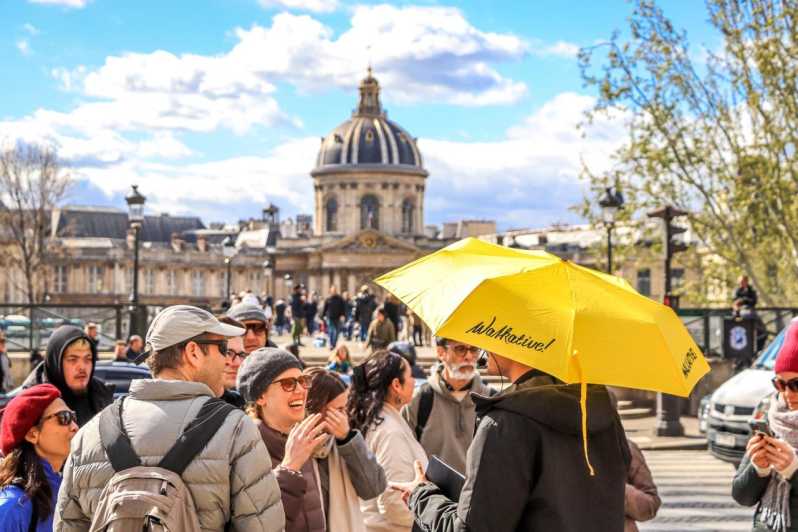
The Louvre comes up early in the experience, with both its palace history and its life as a world-famous museum. The way the tour frames it is what makes it worth your time. Instead of only pointing at beauty, the guide helps you understand why rulers and institutions cared so much about collections, display, and prestige.
You also hear about one of the most famous art crimes in history, the Mona Lisa theft. Even if you’ve seen Mona Lisa photos a hundred times, hearing the story in the Louvre area changes how the painting feels. It turns a single image into a symbol of risk, power, and global obsession.
For me, the best part is that this section helps you switch from “I’m looking at famous stuff” to “I’m watching the city explain itself.” The Louvre is massive, so your brain can get overwhelmed if you show up cold. A good guide gives you a handle to grab onto, even if you don’t plan to tour every wing that day.
Notre-Dame Cathedral: how the city’s symbolism hits in person
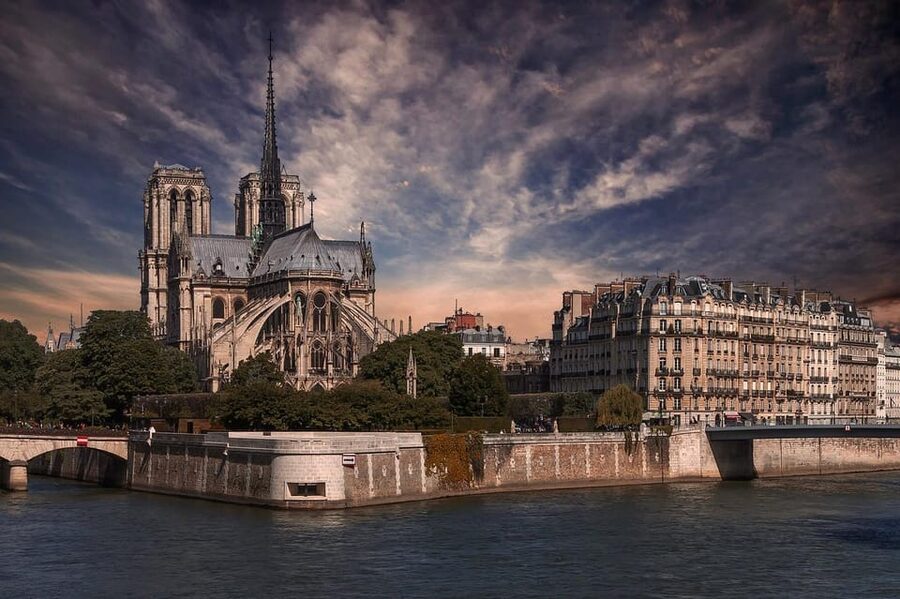
Notre-Dame is the kind of stop that draws everyone, even people who say they are not into cathedrals. On this tour, you get stories tied to the landmark’s cultural imagination, including the world-famous figure of Quasimodo. That’s a smart move because it connects the architecture to character and emotion, not just stonework.
What to expect is a moment where the scale clicks. Notre-Dame is not subtle. When you approach it, you feel the “why” behind Paris’s reputation for mixing faith, politics, and big public identity. The guide helps you connect the cathedral to the broader sweep of Paris history that the tour keeps returning to.
If you are photographing, keep this in mind. Cathedral exteriors can look different depending on angle and cloud cover. So even if you’ve seen images online, give yourself a few minutes at the right spot, and don’t rush your first set of shots while you’re still processing the story.
Pont des Arts: a bridge stop that teaches you how Paris works
Pont des Arts might sound like just a photo stop, but it becomes a real geography lesson on this tour. The guide uses it to explain why the Seine is not just scenery. It’s a backbone for the city’s growth, commerce, and movement, including the way Paris developed around the river.
The bridge also gives you a change of pace. After palace and cathedral scale, you get a wide city view. You can look across the water and start noticing how buildings, bridges, and boulevards line up. This helps later, because you stop relying on memory alone.
One practical note: bridges can get windy. If you’re sensitive to cold air, wear a layer you can zip up. Also, keep your phone and camera straps secure, because outdoor stops can mean quick gusts and people stopping suddenly for photos.
Tuileries Gardens and the 19th-century Paris makeover
The Tuileries Gardens are where the walk turns from stone drama to city calm. On this tour, the guide uses the gardens to bring the 19th-century modernization of Paris into focus. You hear about how wide boulevards, parks, aqueducts, and major infrastructure projects were shaped partly by the reality of frequent uprisings.
That detail matters because it reframes what you might otherwise see as “just pretty city planning.” The guide connects public spaces to politics and control. In other words, Paris was not only building for beauty, it was building to manage power and crowd behavior.
You may also hear about Napoleon and how his era links into the city’s path forward. And you might get references to the Eiffel Tower era, including the fact that Parisians protested the tower for years before growing attached to it. That kind of story is useful because it makes modern Paris feel less inevitable and more human.
If you want a picnic moment later, the Tuileries area is a natural place to imagine it. Even if you don’t bring food, the garden stop is where your legs and brain get a reset.
More Paris history on foot
- Paris: Dark History and Ghostly Guided Walking Tour
★ 4.7 · 1,000 reviews - Le Marais/Paris – The Historic, Trendy, Jewish, LGBT district
★ 5.0 · 341 reviews - Paris City of Fashion History Private Guided Walking Tour
★ 5.0 · 221 reviews - History of Paris City Center w/ Notre Dame Semi-Private 12ppl Max
★ 5.0 · 194 reviews - Paris: Le Marais & Montmartre Jewish History Walking Tour
★ 4.8 · 170 reviews
Eiffel Tower, Sainte-Chapelle, and the big-picture route through central Paris
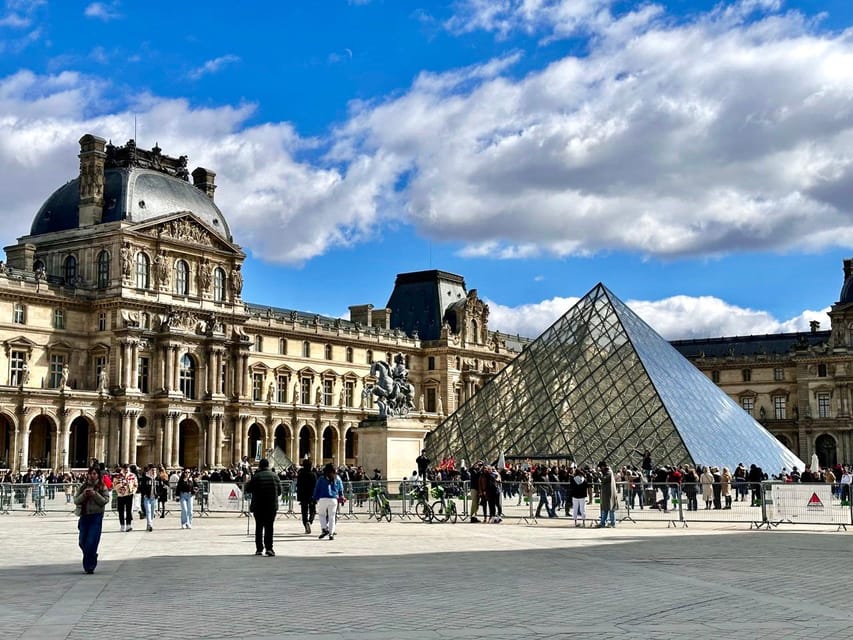
Depending on the timing of your group, the walk also includes references and sightlines to other major stops such as Sainte-Chapelle and the Eiffel Tower, plus elegant boulevards and bridges. Even if you do not get long viewing time at every spot, you still benefit because the guide stitches them into the same timeline.
This is where the tour’s narrative style shines. Paris can feel like a museum where everything is separate: one building, one era, one vibe. The route approach helps you see continuities. Church art and royal ambitions, revolutionary energy and urban engineering, and the city’s obsession with how it looks all connect.
If you’re the type who likes to walk away with a mental map, this part helps a lot. After, you can look at a street and guess what kind of period it reflects. That is not guaranteed with every walking tour, but it’s the payoff you get here.
Guides and storytelling style: what consistently earns the high marks
The most praised aspect is how well the guide keeps people engaged. That shows up in a very practical way: the narration stays clear enough to follow, but detailed enough to satisfy history and art fans. I’ve also seen strong feedback on humor and responsiveness, which matters because Paris is complex. A guide who can answer questions makes the whole experience feel smoother.
You can get a sense of the range from past guides mentioned in English-led sessions. Tom delivered an excellent, fast-paced first visit experience, including strong Q and A. Yazid was praised for art-history passion and lively explanations. Harry was repeatedly described as a great storyteller who makes you feel like you’re moving through time. Francesca was noted for sharing otherwise easy-to-miss gems. Victoria was highlighted for being inclusive, using natural conversation flow and icebreaker style group bonding.
Other names also came up, including Thomas and Dawie for humor and broad coverage, Gurvan aka Jay for art-history enthusiasm, and Toto and Tank for friendly, dramatic delivery. The common thread is not the personal style alone. It’s the way the guide uses stories as structure, so the landmarks feel connected instead of random.
Timing and group feel, what to expect in the real world
This is a 150-minute walk. That duration is long enough to cover major highlights like the Louvre and Notre-Dame area and still explain why they matter. It is also short enough that you should not feel stuck for half a day.
Group size is not listed as a fixed number, but from past experiences shared, the group can feel small rather than huge, with comments pointing to fewer than 20 people in at least one session. That kind of size helps because you get a better chance to ask questions and hear answers without shouting.
Pace-wise, plan for walking as the core activity. It is not described as strenuous, but it is still a “wear real shoes” situation. Also expect some outdoor waiting while the group gathers around key points, especially near bridges and big facades.
What I would pack and plan if you want this to feel easy
Because you are outdoors for most of the tour, basic comfort planning goes a long way. Bring layers you can adjust, especially in shoulder seasons and winter when crisp mornings can turn chilly fast.
Also, consider this: you are seeing some of the city’s most famous visual targets. If you go in with a camera expectation that every stop will be Instagram-perfect, you might get disappointed. If instead you go in ready to learn and to adjust your photos based on angles, you’ll get more satisfaction.
One more practical tip: treat this as a first-day orientation move. Several past experiences point to it as a great early activity, including for solo visitors. If you book it on day one, you’ll recognize streets and squares later, and you’ll know which areas to return to for deeper time.
Who should book, and who might want a different Paris plan
This tour fits best if you want a high-impact introduction to Paris with stories you can remember. If you’re a first-timer, a solo traveler, or someone who enjoys art and history without needing to sit still for hours, this format is a strong match.
It’s also a good choice if you like human, narrative guides. The consistent feedback is that guides make the city feel alive through humor and clear storytelling, and that answers questions in a way that keeps the group engaged.
If you want only quiet self-guided time, or you already know a lot and only need ticket logistics, a self-paced museum ticket day may suit you better. This walk is built to explain and connect sights, not to replace deep, room-by-room museum hours.
Should you book this Historic Paris Walking Tour?
Yes, I think you should book it if you want Louvre to Notre-Dame to the Seine in one coherent storyline. It’s a smart first-day investment because it builds your Paris mental map quickly, and it gives you context that makes the city feel more understandable and less intimidating.
Book it especially if you care about story threads like revolution-era change, how Paris modernized, and why art legends like the Mona Lisa theft still stick in the public imagination. And if you are the type who enjoys asking questions, this tour format is friendly to that.
If you hate walking, or you know you’ll struggle in windy bridge weather, then think carefully about timing and clothing. But for most visitors, this is exactly the kind of first taste that makes the rest of Paris easier to enjoy.
FAQ
Where is the meeting point for the tour?
You meet at Hotel de Ville, outside the metro at exit 5. Look for a yellow umbrella.
How long is the Historic Paris Walking Tour?
The tour lasts 150 minutes.
Is the tour offered in English?
Yes, the tour is in English.
What is included in the price?
The tour includes an expert local tour guide and a thoroughly constructed narrative.
Is hotel pickup or drop-off included?
No, hotel pickup and drop-off are not included.
How does cancellation and pay later work?
You can cancel up to 24 hours in advance for a full refund, and you can reserve now and pay later to keep your plans flexible.
More Paris Walks on the List
- Paris Top Sights Half Day Walking Tour with a Fun Guide
★ 5.0 · 2,893 reviews - Montmartre Hidden Gems and Scenic Highlights Walking Tour
★ 5.0 · 2,684 reviews - Montmartre Hill French Gourmet Food and Wine Tasting Walking Tour
★ 5.0 · 2,588 reviews - Paris Île de la Cité and Notre-Dame Walking Tour With Crypt
★ 5.0 · 2,272 reviews - Paris: Montmartre Cheese, Wine & Pastry Guided Walking Tour
★ 4.8 · 2,255 reviews
Everything Else Filed Under Paris
- Paris: Louvre Guided Tour with Reserved Access & Boat Cruise
★ 4.3 · 16,353 reviews - Paris: Big Bus Hop-On Hop-Off Tour with Optional Cruise
★ 4.4 · 13,279 reviews - Louvre Museum Masterpieces Guided Tour with Access
★ 4.5 · 12,023 reviews - Versailles: Skip-the-Line Tour of Palace with Gardens Access
★ 4.7 · 9,778 reviews - Mona Lisa & Louvre Masterpieces Tour with Reserved Access
★ 4.6 · 6,812 reviews
The Whole Paris Shelf
- Paris: Louvre Museum Timed-Entrance Ticket
★ 4.6 · 71,977 reviews - Disneyland® Paris 1-Day Ticket
★ 4.6 · 49,412 reviews - Paris: Versailles Palace and Gardens Full Access Ticket
★ 4.6 · 41,579 reviews - Paris: Evening River Cruise with Music
★ 4.4 · 22,721 reviews - Paris: Eiffel Tower Entry Ticket with Optional Summit Access
★ 4.4 · 20,035 reviews
The rest of the Paris write-ups
- Montmartre: Guided Tour for Kids and Families★ 4.9 · 57 reviews
- From Paris: Versailles Palace and Gardens Guided Day Trip★ 4.5 · 57 reviews
- Versailles Palace and Garden Tour with Paris Private Transfers★ 5.0 · 58 reviews
- Louvre Evening Escape – Avoid The Crowds! Semi-Private 6ppl Max★ 5.0 · 58 reviews
- Summit Eiffel Tower Audio Guide Tour with Unlimited Time Access★ 4.5 · 58 reviews
- Private Half Day Historic Tour★ 5.0 · 58 reviews
Walking Tours, in full.
 ★ 5.0Paris Top Sights Half Day Walking Tour with a Fun GuideFrom $762,893 reviews
 ★ 5.0Montmartre Hidden Gems and Scenic Highlights Walking TourFrom $382,684 reviews
 ★ 5.0Montmartre Hill French Gourmet Food and Wine Tasting Walking TourFrom $1452,588 reviews
 ★ 5.0Paris Île de la Cité and Notre-Dame Walking Tour With CryptFrom $482,272 reviews
 ★ 4.8Paris: Montmartre Cheese, Wine & Pastry Guided Walking TourFrom $1272,255 reviews
 ★ 5.0Paris in a Day: Louvre or Orsay, Eiffel Tower, City Walk & CruiseFrom $1571,956 reviews
 ★ 4.9Paris: Montmartre Highlights Walking Tour with a Local GuideFrom $341,668 reviews
 ★ 5.0Paris City Center Free Walking Tour (Tip-Based)From $31,340 reviews
Also on these France lists